In this interview from Phi Moments at Google Cloud Next, Dinesh Kabaleeswaran, regional sales leader for North America at Quantiphi, joins Nik Acheson, vice president of data strategy, data architecture and engineering at Highmark Health, to talk with theCUBE's Rebecca Knight about how a patient-centered, outcome-first data strategy is powering Highmark's shift to an open data lakehouse on Google Cloud. Acheson contextualizes the stakes: U.S. healthcare spending sits at roughly $1.6 trillion, nearly 25% of which is waste and $255 billion of which is attributable to administrative inefficiency alone. Kabaleeswaran adds that Highmark is not a greenfield project — it's a mature organization grappling with a "third standard deviation" problem, where modular, future-proof architecture must accommodate unknowns rather than just near-term requirements.
The conversation also explores what interoperability means in practice inside a payvider ecosystem spanning insurance, hospital networks and dental coverage. Acheson details Highmark's patient 360 vision, leveraging open formats and Google Cloud's analytics strengths to unify clinical, claims and social determinants of health data — a category that drives roughly 80% of healthcare costs. Rather than optimizing for technology metrics alone, Acheson argues that trust is the ultimate measure: delivering the right message at the right moment, whether a member has just received a diagnosis or is navigating a billing question. Both guests close with hard-won advice for senior leaders tackling large-scale transformation — start with desired outcomes, invest in every team member who raises their hand and build data literacy into the organization's DNA. For Highmark, that discipline is already paying off, with delivery timelines cut to a fraction of their former length and generative AI now accelerating the pace further.
Forgot Password
Almost there!
We just sent you a verification email. Please verify your account to gain access to
Phi Moments @ Google Cloud Next '26. If you don’t think you received an email check your
spam folder.
In order to sign in, enter the email address you used to registered for the event. Once completed, you will receive an email with a verification link. Open the link to automatically sign into the site.
Register for Phi Moments @ Google Cloud Next '26
Please fill out the information below. You will receive an email with a verification link confirming your registration. Click the link to automatically sign into the site.
You’re almost there!
We just sent you a verification email. Please click the verification button in the email. Once your email address is verified, you will have full access to all event content for Phi Moments @ Google Cloud Next '26.
I want my badge and interests to be visible to all attendees.
Checking this box will display your presense on the attendees list, view your profile and allow other attendees to contact you via 1-1 chat. Read the Privacy Policy. At any time, you can choose to disable this preference.
Select your Interests!
add
Upload your photo
Uploading..
OR
Connect via Twitter
Connect via Linkedin
EDIT PASSWORD
Share
Forgot Password
Almost there!
We just sent you a verification email. Please verify your account to gain access to
Phi Moments @ Google Cloud Next '26. If you don’t think you received an email check your
spam folder.
In order to sign in, enter the email address you used to registered for the event. Once completed, you will receive an email with a verification link. Open the link to automatically sign into the site.
Sign in to gain access to Phi Moments @ Google Cloud Next '26
Please sign in with LinkedIn to continue to Phi Moments @ Google Cloud Next '26. Signing in with LinkedIn ensures a professional environment.
Are you sure you want to remove access rights for this user?
Details
Manage Access
email address
Community Invitation
Nik Acheson, Highmark Health & Dinesh Kabaleeswaran, Quantiphi
Rebeccas Knight hosts a discussion with Nik Acheson, VP of Data Strategy, Data Architecture and Engineering at Highmark Health & Dinesh Kabaleeswaran, Regional Sales Leader - North Americaat Quantiphi as part of theCUBE's coverage of Phi Moments @ Google Cloud Next ’26
Nik Acheson, Highmark Health & Dinesh Kabaleeswaran, Quantiphi
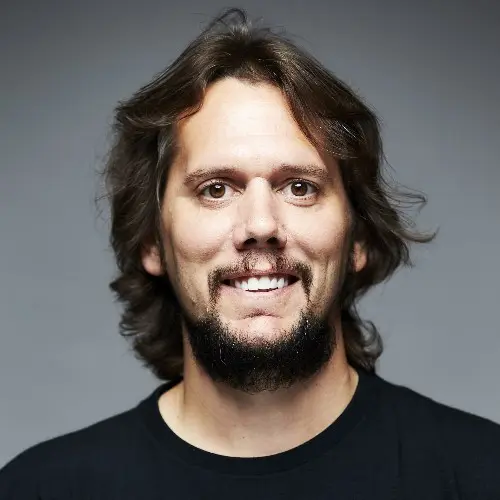
Nik Acheson
VP of Data Strategy, Data Architecture and EngineeringHighmark Health
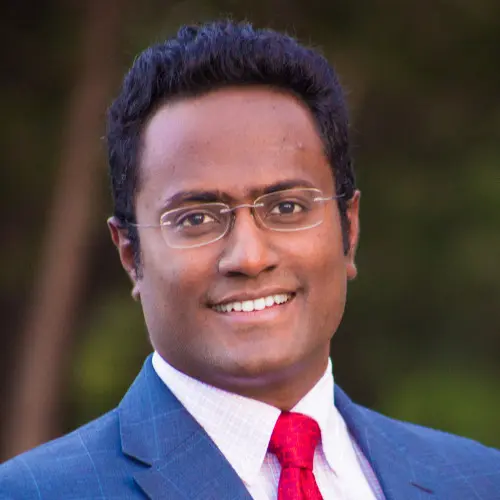
Dinesh Kabaleeswaran
Regional Sales Leader - North AmericaQuantiphi
In this interview from Phi Moments at Google Cloud Next, Dinesh Kabaleeswaran, regional sales leader for North America at Quantiphi, joins Nik Acheson, vice president of data strategy, data architecture and engineering at Highmark Health, to talk with theCUBE's Rebecca Knight about how a patient-centered, outcome-first data strategy is powering Highmark's shift to an open data lakehouse on Google Cloud. Acheson contextualizes the stakes: U.S. healthcare spending sits at roughly $1.6 trillion, nearly 25% of which is waste and $255 billion of which is attributa...Read more
Nik Acheson, Highmark Health & Dinesh Kabaleeswaran, Quantiphi
search
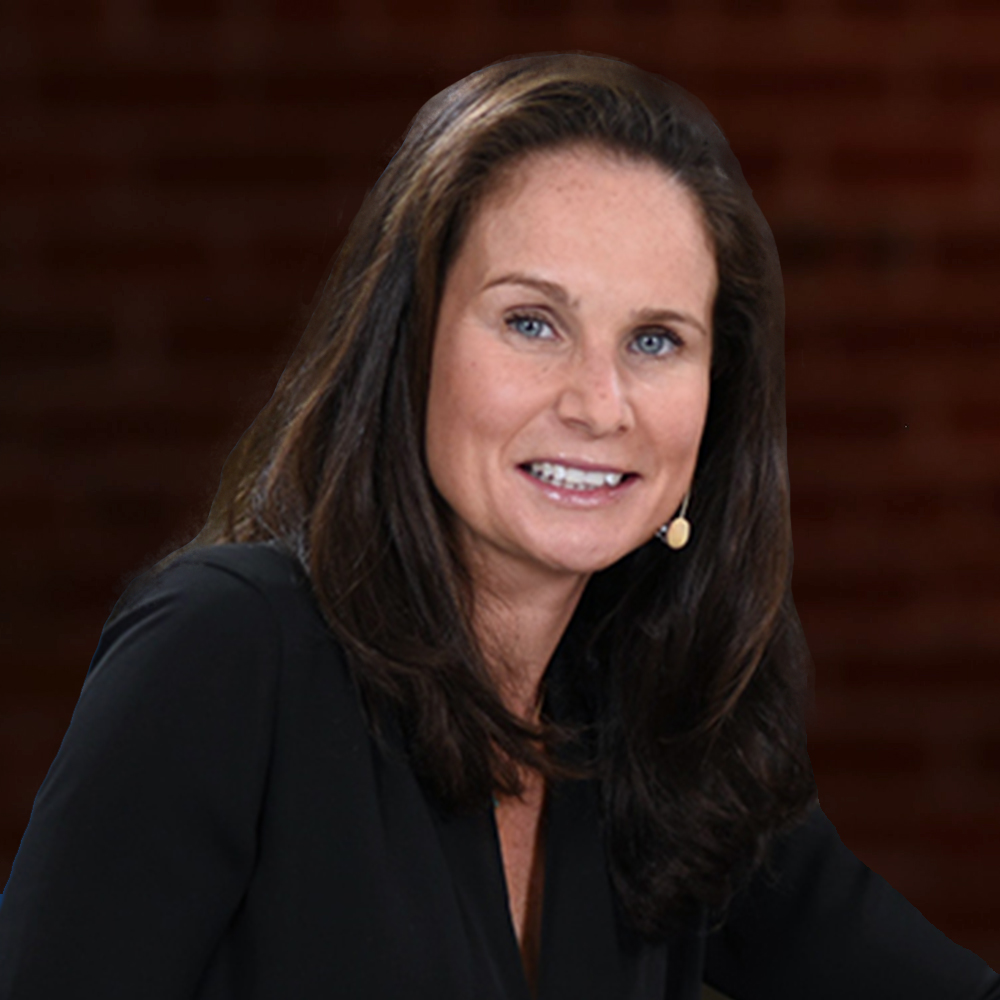
Rebecca Knight
>> Good morning everyone and welcome back to day two of theCUBE's live coverage of Phi Moments here at Google Cloud Next, powered by Quantify. I'm your host, Rebecca Knight, and I've got two fantastic guests for this next segment. I would like to first welcome back to the show Dinesh Kabaleeswaran, Regional Sales Leader North America at Quantify. Thank you so much for coming on the show.
Dinesh Kabaleeswaran
>> Thank you.
Rebecca Knight
>> And also Nik Acheson, VP of Data Strategy, Data Architecture and Engineering at Highmark Healthcare. Thank you so much.
Nik Acheson
>> Thank you. Thanks for having me.
Rebecca Knight
>> Yeah. So we're going to be talking today about how Highmark is really rethinking its data strategy, moving to an open lakehouse on Google Cloud, of course, partnered with Quantify. But I want to start with you, Nik, to ground us briefly. Talk a little bit about Highmark Healthcare and what scale you operate within healthcare.
Nik Acheson
>> Yeah. And I think a lot of people think of Highmark as Highmark Blue Cross. It's actually only a part of our larger organization. So we're actually more of a, I'll say, conglomerate of many different pieces of the healthcare ecosystem. So we're one of the few payviders. So we are obviously a payer, but we also have AHN and Allegheny Hospital Network. So we have a large provider network. We're continuing to grow in that space as well. We have stop loss insurance. We have one of the largest dental insurance providers in the US as well. So I think all in, we're a roughly between 30 to $40 billion company across all the healthcare ecosystem. And then I actually operate within Engine, which is effectively the technology arm of all of these across board.
Rebecca Knight
>> And what was it that shifted in the landscape that made you feel that an open lakehouse was what was necessary right now?
Nik Acheson
>> Yeah. So I think my first metric I'll throw at you, and I'm sure people out there are going to be like, "No, here's the actual numbers," but let's say they're roundabout, is I think everybody generally knows healthcare is a problem. It doesn't work well, right? And the way I looked at it is we can either do something about it or we can keep talking about it. And so for me, that was the major inspiration. And we say, "Well, what doesn't work well?" I think the number actually doubled in the last seven years is the cost of healthcare in the US is roughly about $1.6 trillion. Almost 25% of that is waste. So literally almost I think it's like 23% of our GDP and it's waste. So I think even the administrative part of that, it's like $255 billion a year just on administrative waste in there. So when I look at it, it's like, well, what could we do with that? And it's not just how do we drive more funding? How do we do more cool stuff? It's no, how do we self-fund some of that? What's possible? And how do we take the capabilities that we learn in all these other industries and bring that to healthcare? And I think with all the headwinds that we see in all these different markets, there's also a lot of talent available now that maybe wasn't even thinking about the healthcare space. So I think that's where I'm really excited to go, well, what have we seen in these other markets? And I think everybody across board is going, well, how do I leverage Iceberg? How do I leverage open formats? How do I leverage these advanced capabilities and context graphing and context windows? So I think that's where, as we're driving forward, to go, what could that bring to healthcare? And again, this is not new. And if you think about the gaming industry has done next best for the last 25 years, right? If you look at the FSIs in the world, they've already done secure transport for the last 10 to 15 years. So again, it's like, let's not reinvent some of these, but also let's drive at the forefront with them now. Let's bring that same energy and same capabilities into the healthcare space.
Rebecca Knight
>> So Dinesh, I want to bring you in here because as Nik was saying, there's a lot of waste, it's a slow moving organization, industry, I should say, highly regulated. But from what you see, what tends to break first when these data silos are not unified?
Dinesh Kabaleeswaran
>> To Nik's point, I think there's a lot of effort going on. Sure, today, every healthcare provider or payer, they are in the journey of building data lakehouse. This has been a common conversation, right? But when it comes to what is the actual patient outcome, those are the areas where it becomes challenging because downstream, they're not really seeing, the anticipation they had, it's not translating into real-time value. That's where when you're thinking about these problems, you need to have a mindset where, yes, this is a large effort you're doing, but you need to have those smaller wins as you move on. I think that's where I think Nik's team has been thoughtful thinking about, okay, as we move this, we want to make sure that we are making those incremental wins for the businesses so that you can actually look at patient outcomes, better access. All those things are taken care as we move on, right? One of the things they said... The other thing I need to put it out, Highmark is not in a journey of creating something new. They're already on their journey. So we are not dealing with a first standard deviation problem, you're dealing with a third standard deviation problem. So it takes much more thoughtfulness on how we are breaking down. So having a good context of industry is really important for you to solve the problem. It's not just engineering.
Rebecca Knight
>> Nik, when it came to choosing a platform, what made it clear that Google Cloud was the direction you wanted to go?
Nik Acheson
>> Yeah, I think everybody can generally agree when you look at historical of what are each of the cloud providers amazing at. And I think Google's always been at the forefront on AI and advanced analytics. I've been a Google customer way too many companies because I've been at way too many companies at this point in my career, and it's always really delivered in that spectrum. And so I think when we're looking at where's innovation kind of driving, where's a lot of the open standards, especially around data and analytics, I think that's where we've kind of continued to ground. And so a lot of our strategy at Highmark overall is part of this living health acceleration. And I love what you're talking about. I think I was in a meeting a couple weeks ago and somebody was actually advocating for the lakehouse that we were bringing in to be able to deliver against a project. And I just stood up and I was like, who cares about the technology? Let's make the technology invisible for a minute. And that's when we all win. If we can, we can deliver that in six weeks without the cool tech we're bringing in. As much as I'm driving the transformation, it's really always about the customer.
Rebecca Knight
>> I love that. And so what was the reaction to that? And what did you actually mean by, guys, let's not focus on the tech, let's focus on the outcome here. And talk a little bit about that moment.
Nik Acheson
>> Yeah, no, it was a really weird conversation because it was an advocate and an ally in our organization. And I think again, it's this part. A lot of these transformations, it's much more cultural, right? The technology is always going to be the easy part. It's that people and process of going, how do we think about the problems differently? And one of the difficulties we even had in the last year as we've been rolling this out is it sounds a lot of technology, right? But it's like, no, a lot of these are just the core building blocks of every experience we're going to drive to our customers moving forward. And everything we do for the next three to five years should be foundational to the next thing we do as well. So even where we take that debt to go faster, make it visible, right? Bring a new platform. Let's stop talking about the platforms now. What do you want to do with it?
And I think that's where we were in that meeting. And it was like, well, this is what we can do with a Monte Carlo and Atlan, a GCP. And then it's like, well, hold on folks. Let's not talk about what we can do about the tech. We can bring that part of the conversation. What do you want to do? What's the experience we want to drive next? And then how do I do that in six months instead of 18 months? And let's learn from it and keep building on it. And I think that's where it became, you get the head nods in the room of going, okay, they're not just coming in to talk about tech, we're coming to talk about true transformation.
Rebecca Knight
>> Right, because it's rethinking the experience for the customer, the patient, but also rethinking how teams are working together to provide that experience. Dinesh, from the implementation side, what made this especially complex, particularly with the clinical and claims data at this scale?
Dinesh Kabaleeswaran
>> Like I said previously, right, Highmark is not on a journey of discovering things right now. They're already ahead. While they're on this pace, they're thinking about the last mile we wanted to be really good. Right? That's a complex problem statement they've laid out. And while we are doing it, their goal is make it completely future-proof. Everybody talks about future-proofing, right? But the rate of change that is happening in the markets today, what you thought about two years ago becomes irrelevant. That's the problem we are trying to solve for. So you're not solving for what I see ahead in next six months. You're thinking, whatever that future is going to be, we should be prepared for the unknowns. And that's where the modularization comes into picture. That adds extra level of complexity. If I have to put it succinctly, you're trying to build a data foundation where irrespective of what is going to change, you want to stay there. That's a very big, hard statement to solve for, and that adds to the chaos.
Rebecca Knight
>> Nik, what does being open really mean in practice and how do you think about the interoperability across tools?
Nik Acheson
>> Oh, interoperability is such a hot topic in our space right now, especially as we try to leverage in that payvider ecosystem/ right? We're one of the few that are truly payviders. And then even on top of that, we're one of the top three blues in terms of size and the amount of patients that we serve. And so again, it's always about service. But I think the way we keep looking at it is we're a multi-cloud provider. Right? But again, where's the heart of our analytics and AI happen? But that doesn't mean all of it has to move into one cloud, right? It all doesn't have to mean that... We think about SDOH, like social determinants of health, where effectively almost 80% of all of our healthcare costs really drive into. And it's really optimizing to go, how do I help that mom with, a single mom in the inner city that has four or five jobs trying to figure it out? She doesn't have a car. How do I get her to a hospital? That's not her priority. And it's like, how do we show up with empathy for her? What do I know about her? What do I know about her kids? How do I serve her and her family better and make sure that, hey, these are investments in you and where you're going and we're going to improve your life and actually be a trusted partner? And I think for us, as we think about interoperability, it's, well, what does that care life cycle look like? It's not just Highmark. It's not just AHN. It's your PCP. It is your wallet, right? And how do I grab all of those signals and then give you a natural, easy way to understand that? If I pulled up an EOB right now for your benefit, you'll have no idea what you're looking at. How do I just give that in a couple of easy sentences, but still meet the regulations? So again, it's work that customer back and that experience back, build that trust ,so that way when we are giving you that experience and trying to guide you in your journey, you take that guidance. And I think that's where we really started our foundation as we think about interoperability is to go, how do we create that 360 view of a patient or a member? No different than every going like customer 360. But for us, it's patient 360. And then what does that mean to them and their life cycle around their healthcare experience?
Rebecca Knight
>> And how does that change the experience for that mom you're talking about? How does that change how she experiences Highmark in a meaningful way?
Nik Acheson
>> Yeah. And this is, I would say not a problem in Highmark, but I have enough horror stories that I've experienced and other folks have shared is somebody coming out, unfortunately, like having a miscarriage at a hospital. Don't send them a package of like, "Welcome to your new baby." We all want to move to real time. Don't do that in real time. And the other side of that is don't triple bill somebody real time. If you walked out of a hospital and you just got a cancer diagnosis, don't send you the EOB. Send you a message like, "I'm here with you. You've got a partner." Because when you walk out, the first thing you're doing is Googling of, what even is this? What problem do I have? How do I talk to my family about this? What options do I have to be able to get the care? Can I even afford that? That's what you're thinking about when you walk out. We want you to think about, you've got a partner. We're in the journey with you and we can do this together. And I think for us, interoperability is, that's what interoperability is. It's touching you the right way, the moment you walk out of a experience and we're already ahead of it and you can trust. And I do have one thing I've said a few times internally that I'd love to share here too, is we were just talking about our kids before this started. My daughter the one day looked at me and was just like, "I don't like you right now." I was like, "I don't like you right now either." It just killed her. I was like, "But I love you. You don't always have to like me, but you know I love you. You don't always listen to me." But when you have the moments in your life that really matter, that voice is in the back of your head and you know you can call me and you know you can trust what I tell you and what we walk through and you're not going to churn from that experience if that trust is there. I think that's really what we're trying to build here is trust.
Rebecca Knight
>> And having real empathy and compassion for your members too.
Nik Acheson
>> Yes. And you know they're not showing up believing you have that in the beginning. So we have to earn that back if we ever even had it, to be frank. And I think that's again where, how do you measure that? Those are the types of things that we're looking to be able to shift and measure and go, hey, utilization rates, they're important. The customer experience and trust, frankly, that's more important. And then that's where we'll see utilization goes down if you're taking the guidance.
Rebecca Knight
>> We're talking about Phi Moments here, the moment where something really shifts from pilot to something that is happening at real scale. Dinesh, why don't you start with talking a little bit about when you experienced that with Highmark?
Dinesh Kabaleeswaran
>> Sure. I would say when we had the workshop, when we came together, the goal setting was very clear. Normally in the industry when you look at it, this is a slow moving industry because of a lot of complexities involved, but the mindset is no, we don't have enough time. We are not chasing profitability goals, but there are real patient outcomes you're chasing, so we need to get to this point. And it was clearly laid out and the goal itself is to kind of future-proof it, like I said. And the other part that Nik spoke about, how they built the team around is fantastic. Right? Whatever he was talking about, you'd notice that these are things happening in the industry. For retail customer, if you're talking about a nice shoe or something, immediately you see that pop up in your phone. When you can get the pulse of a customer so easily, why can't we do the same with healthcare where you can drive better patient outcomes, right? Driving access, right? So those are the parts which will be transformative for organizations and that's what makes it really passionate. Given our experience across industry where we can bring in people to share that view, helps us to be like, "Oh, this is a great partnership. I think we can go much forward."
Rebecca Knight
>> Right. And that's so important and meaningful, not just showing them a pair of shoes they want to see, but actually meeting them where they are at something so intimate and personal as their health. How about you, Nik? What was your Phi Moment for this transformation?
Nik Acheson
>> Yeah, I'd actually love to go back for a second is we put them through the ringer. It was not an easy day for them.
Rebecca Knight
>> But he's lived to tell.
Nik Acheson
>> Yeah, exactly. And I think for us, it was really about the partnership. Right? Are you going to show up with us? Are you focusing on the same outcomes that we're trying to focus on? And even when we did the RFP, to be frank with you, we put some landmines in there of like, are you going to lie about capabilities because we know some of these things aren't available yet. And they were fully upfront and they were in it with us and showing up. So I do want to give kudos to the Quantify team and a number of other partners too have kind of really done the same thing, but Quantify has really been there for us from the beginning.
Rebecca Knight
>> Excellent. Well, I want to close by asking you about your best advice to other senior leaders who are maybe struggling with balancing modernization and maintenance, where you would tell them to start. Dinesh?
Dinesh Kabaleeswaran
>> I would always say start with how you're thinking about the outcomes. Do not start with solving technology problems. Time and again when we are going through the transformation efforts, what I've seen, we try to take, hey, these are the technologies available, how can we use?. That's not the question to answer. You need to answer, this is what we are approaching. This is where we want to get to. How fast can we get there? With what reliance can we get there? That kind of sets the tone, which means you have to go through a lot of process re-engineering. I keep repeating this part because today a lot of organizations, when they look at technology, they're like, "Hey, this is how we do our process. How can we fit technology to automate that process?" We need to take a step back and look at it and say, "Okay, this is where we want to get to. How will that process look like efficiently?" And then suddenly you realize all the processes you have today need some drastic change. So I would say start there and then build a team which facilitates that for you. Right? I think that's one thing they've done. Highmark has a secret sauce. They've assembled a team which is not just traditional healthcare, just with the healthcare vision. They've brought in people from outside industry to bring the value. I think it's going to be a key driver. That'll be an encouragement for any other CTO.
Rebecca Knight
>> Nik?
Nik Acheson
>> Yeah. I think the two biggest areas where I've seen companies fail in transformation, one is, as you were kind of saying, not bringing along enough people. And that was one thing we really established early on was, I think I've said this now in four different all handses that we've had. There's not anyone in our whole company that hasn't walked to my office and said, "I want to learn this," that we didn't invest in. Every single hand raiser we've invested in. And then on top of that is building in a data culture series, right? So just making this a DNA thing where it's not just a skunkworks project and a back that did a really cool demo and probably put that in production, but it didn't transform the company. Didn't transform the people. It didn't transform how fast we deliver. And that was really the last year where we spent going, "Before we make too many big promises, let's make sure we can deliver to those promises." And that's not just the demo. And then I think that's put us really in a position we're at this year, is this year we're in full delivery mode. We are already seeing effectively timelines to be able to deliver things in production cut in half, cut into a third of what it used to be. And then as we now really start using these advanced AI capabilities, it's not just playing with them, it's now augmenting the great work that we've done underneath the covers and we're cutting the timelines in half again. So that's the one part. The other area that normally these transformations fail is not doing business back. Again, it's got to be back to customer. It's got to be back to the member. It's got to be back to the physician. And I would love to, I know we're getting close to time, but I'd love to just kind of note that too on even the AHN side of our ecosystem that's really now driving in, which is, there's a massive physician shortage coming in. And then I think it's every 76 days, the data available in the healthcare space doubles. And I think the last number I saw was 52% of physicians want to actually get out of the space. They're overwhelmed and overworked and there's already a shortage coming. But we've seen in the last three years double the usage up to I think it's 67% of the time every single day, physicians are actually using gen AI now. And that's doubled every three years since it's been rolling out. So again, there's a desire and an interest. Right? And transformation is not this what goes into the cloud. Sorry, Google. Transformation is how do we give a better experience that your customers and your members expect? And in this case, some of our customer is the physician, right? They're serving the member right there at the bedside. How do we get them not taking notes? We brought a bridge in for active listening inside. Right? Take the notes for them so they can deliver to the patient. Having that available now for gen AI to be able to go, "Hey, here's additional research to be able to give a recommendation," but the physician's still giving the recommendation. And I think that's where we've just seen a massive transformation. But remember who you're serving. It's not the tech, it's business back. And you know what? Cool. I can deliver some of that with some of our operational, I won't say legacy capabilities, but the other ones, let me cut that time in half for you. Let me give you a better experience for your patient. Here's what's possible. And I think that's where all the barriers drop. That's where people are going, okay, you do get what we're trying to do here and it is about mission and not about technology and not about the next project.
Rebecca Knight
>> Yeah. So it's giving healthcare providers as well as patients a better healthcare experience.
Nik Acheson
>> All centered around that member.
Rebecca Knight
>> Exactly. Business back. I love it. Nik, Dinesh, thank you both so much for a great conversation.
Dinesh Kabaleeswaran
>> Thank you.
Nik Acheson
>> Thank you.
Rebecca Knight
>> I'm Rebecca Knight. Stay tuned for more of theCUBE's live coverage of Phi Moments here at Google Cloud Next. You're watching theCUBE, the leader in enterprise tech news and analysis.








 Rebecca Knight