In order to sign in, enter the email address you used to registered for the event. Once completed, you will receive an email with a verification link. Open this link to automatically sign into the site.
Register For Cube365 Events Platform
Please fill out the information below. You will recieve an email with a verification link confirming your registration. Click the link to automatically sign into the site.
I want my badge and interests to be visible to all attendees.
Checking this box will display your presense on the attendees list, view your profile and allow other attendees to contact you via 1-1 chat. Read the Privacy Policy. At any time, you can choose to disable this preference.
In the latest episode of Breaking Analysis, theCUBE Research’s Dave Vellante and George Gilbert take a look at Google Cloud Next 2026, where the emphasis is less on sudden change and more on steady execution. The conversation zeroes in on Google’s agent platform, the Gemini ecosystem and TPU v8 capacity, framing how these pieces connect to a broader system of intelligence for enterprise AI execution.Gilbert outlines why Google’s vertically integrated stack — from silicon through data and applications — creates a credible path to agent-driven automation. Vellante and Gilbert focus on governance, evaluation loops and incremental migration, showing how enterprises can move from fragmented data systems toward coordinated, agent-enabled service architectures that deliver dependable, business-level outcomes.
Dave Vellante of SiliconANGLE Media, Inc. provides a data-driven analysis of Google's artificial intelligence, AI-led cloud strategy drawing on theCUBE Research and Enterprise Technology Research, ETR data. Vellante examines Google’s full-stack advantages, TPU and GPU economics, BigQuery and transactional integration and the transition from human-scale analytics to agentic always-on execution; they contextualize market momentum, capital expenditure trends and technical implications ahead of Google Cloud Next.Vellante highlights Google’s advantage from integrated stack control and its TPU/GPU strategy and explains how this approach optimizes cost per token and enables real-time execution at scale. Analysts emphasize strong Google Cloud growth and rising AI and machine learning adoption in customer spending while urging attention to frontier model roadmaps, infrastructure economics, agentic data cloud capabilities, data-platform differentiation and partner ecosystem expansion.
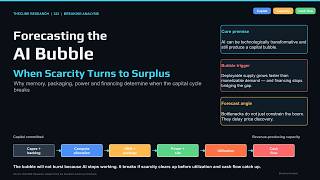
Geopolitical dislocations are ripping through the stock market and are filtering down to IT budgets in the form of increased uncertainty. It seems that every quarter of budget optimism is followed with some external event that causes organizations to tighten their belts. Specifically, we’ve seen the increased momentum in January CIO sentiment on spending, pull back as war, oil prices, the threat of inflation and even the prospect of Fed tightening now loom larger. While big tech players continue to spend massively on CAPEX, and the genuine enthusiasm from this month’s Nvidia GTC and RSAC events is still being felt, mainstream enterprises are once again expressing caution in their spending intentions. In addition to economic and world affairs, AI success still eludes most mainstream organizations. Our observation is the tech industry is in the third inning of the AI wave, which started in earnest mid last decade with Deep Mind and other significant research milestones that led to the ChatGPT and subsequent moments like Claude Code and OpenClaw. Yet organizations are still in the first inning. The data suggests that while virtually all firms are leaning into AI, those realizing ROI at scale remain the minority. While leading thinkers like Jensen Huang advise not focusing on ROI and letting innovation flourish irrespective of hard dollar returns, the reality is in the land of enterprise customers, tangible returns and risk management remain key governors of spending.
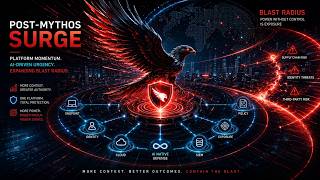
This episode of Breaking Analysis previews RSA Conference 2026, RSAC 2026 and examines how artificial intelligence reshapes the security operations center, SOC, and aligns with operating-model realities. Host Dave Vellante of SiliconANGLE welcomes guest Jon Oltsik of theCUBE Research, a principal analyst in residence who focuses on security operations identity and resilience. Oltsik frames the conversation around practical deployments data requirements and vendor claims.Oltsik outlines five key trends: AI SOC agents, continuous threat exposure management, CTEM, cyber resilience, identity-driven security and platform consolidation. They emphasize the importance of realistic deployment pathways data accessibility and accountable vendor evaluation.Oltsik recommends prioritizing high-fidelity telemetry accessible data sources and phased automation for AI SOC capabilities while keeping humans in the loop. They advise treating continuous threat exposure management as an outcome-driven program investing in identity threat detection and adaptive training and approaching platform consolidation selectively based on operational fit and integration maturity. They note that organizations may partner with managed security service providers, MSSP, when consolidation does not meet operational needs.Subscribe for further coverage of RSA Conference 2026 and concise analysis of cybersecurity trends in security operations identity management threat intelligence and AI-driven defenses.
On this week’s Breaking Analysis episode from MWC 2026 in Barcelona, theCUBE Research’s Dave Vellante is joined by John Furrier to examine how AI, AI factories and the hyperconverged edge push compute closer to where data is created. Their discussion explores how distributed AI workloads reshape telecom infrastructure and industry strategy.Furrier describes hyperconverged edge platforms that integrate compute, storage, networking and radio into unified systems designed for low-latency AI inference. These architectures support mini AI factories in hospitals, warehouses, retail sites and manufacturing environments, while unified control planes and on-premises GPUs help organizations address sovereignty, security and operational demands.Vellante and Furrier also examine the business implications for telecom providers as the market evolves. Rather than focusing solely on connectivity, operators may shift toward managed AI platforms and service-based revenue models. The conversation highlights a three- to five-year rollout window and the growing importance of sovereignty and cybersecurity for enterprises deploying edge AI.