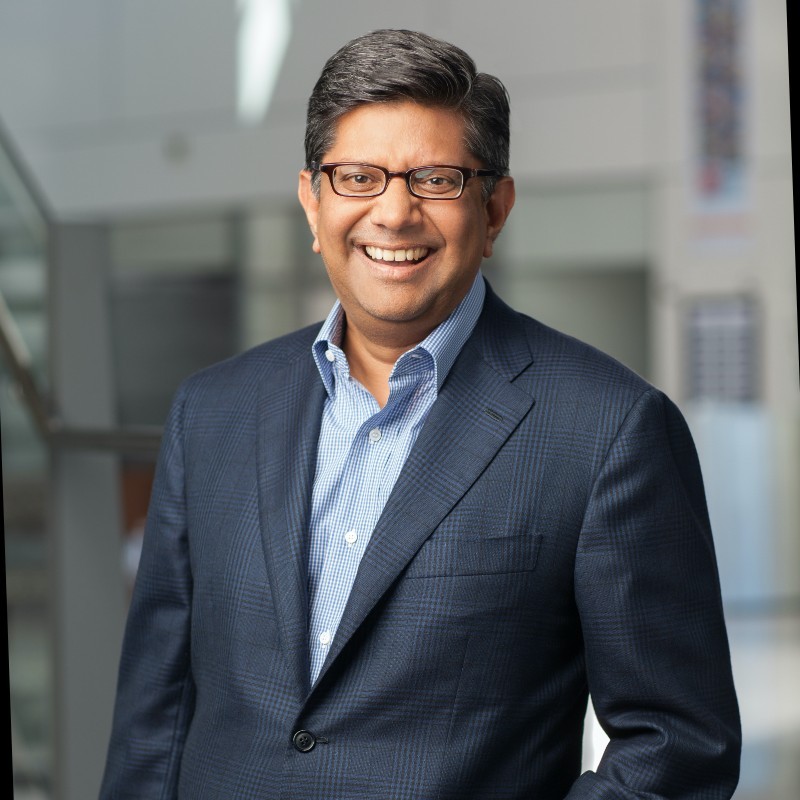
Anand Chandrasekher, CEO of Aira Technologies, discusses the company's mission to make cellular networks autonomous using machine learning and AI for improved performance. They address challenges faced by telecom operators with OpEx and CapEx solutions, involving automation and beam management. Aira Technologies recently closed a funding round and is working on getting their platform Navik into the marketplace. Anand also mentioned the significance of Open RAN in the telco industry.
Forgot Password
Almost there!
We just sent you a verification email. Please verify your account to gain access to
theCUBE + NYSE Wired: Zero Trust Cyber Series. If you don’t think you received an email check your
spam folder.
Sign in to theCUBE + NYSE Wired: Zero Trust Cyber Series.
In order to sign in, enter the email address you used to registered for the event. Once completed, you will receive an email with a verification link. Open this link to automatically sign into the site.
Register For theCUBE + NYSE Wired: Zero Trust Cyber Series
Please fill out the information below. You will recieve an email with a verification link confirming your registration. Click the link to automatically sign into the site.
You’re almost there!
We just sent you a verification email. Please click the verification button in the email. Once your email address is verified, you will have full access to all event content for theCUBE + NYSE Wired: Zero Trust Cyber Series.
I want my badge and interests to be visible to all attendees.
Checking this box will display your presense on the attendees list, view your profile and allow other attendees to contact you via 1-1 chat. Read the Privacy Policy. At any time, you can choose to disable this preference.
Select your Interests!
add
Upload your photo
Uploading..
OR
Connect via Twitter
Connect via Linkedin
EDIT PASSWORD
Share
Forgot Password
Almost there!
We just sent you a verification email. Please verify your account to gain access to
theCUBE + NYSE Wired: Zero Trust Cyber Series. If you don’t think you received an email check your
spam folder.
Sign in to theCUBE + NYSE Wired: Zero Trust Cyber Series.
In order to sign in, enter the email address you used to registered for the event. Once completed, you will receive an email with a verification link. Open this link to automatically sign into the site.
Sign in to gain access to theCUBE + NYSE Wired: Zero Trust Cyber Series
Please sign in with LinkedIn to continue to theCUBE + NYSE Wired: Zero Trust Cyber Series. Signing in with LinkedIn ensures a professional environment.
Are you sure you want to remove access rights for this user?
Details
Manage Access
email address
Community Invitation
Anand Chandrasekher, Aira Technologies
Anand Chandrasekher, CEO of Aira Technologies, discusses the company's mission to make cellular networks autonomous using machine learning and AI for improved performance. They address challenges faced by telecom operators with OpEx and CapEx solutions, involving automation and beam management. Aira Technologies recently closed a funding round and is working on getting their platform Navik into the marketplace. Anand also mentioned the significance of Open RAN in the telco industry.
Aira Tech Technologies was formed with a mission to improve wireless cellular networks using machine learning and AI to make them autonomous. The company aims to release efficiencies that will benefit customers and network operators. The technologies they have developed focus on improving productivity for RF engineers and beam management to increase spectral efficiency. Aira Tech recently closed a strategic series B round, raising $15 million with key investors such as Juniper Networks, Intel Capital, and AT&T. The company is focused on getting their core pla...Read more
exploreKeep Exploring
What is the mission of Aira Tech Technologies?add
What are some features and capabilities of the Navik platform?add
What is the speaker's focus and goals for their core platform Navik in the marketplace?add
>> Hello, welcome back to theCUBE. We are here wrapping up our day three. We've got two more interviews left. We're going to break it down. It's media week with the bell ringing going on right now during this segment. My favorite part of theCUBE at our East Coast studio, here at the NYSE, of course, we've got the Palo Alto connecting Wall Street with Silicon Valley, creating an open network of the NYSE CUBE Wired network as an open source team of experts here all contributing into the CUBE content. Anand is here, he is the CEO of Aira Tech. We were just talking about his Intel days, a legend in the industry. Great to see you. Thanks for coming on theCUBE.
Anand Chandrasekher
>> Great to see you too, John, thanks for having me.>> First time on theCUBE, but we've seen each other around. We're going back on some glory days, story about Centrino. Chip said you worked on a lot of the key products at Intel.
Anand Chandrasekher
>> Yep.>> What's Aira Tech doing? Give a quick update, then we can jump in.
Anand Chandrasekher
>> So Aira Tech Technologies was formed with a very single mission. Our view is there's a tremendous amount of opportunity in wireless cellular networks in particular because a lot of the data is not being used, right? And using machine learning and AI, you can use that data and substantially improve performance. Not only improve performance, we believe the cellular networks can be autonomous. In an age where we're talking about cars being autonomous, planes being autonomous, and trains, it's criminal that your wireless network is not autonomous or is not being talked about being autonomous. So our mission is to make the cellular networks autonomous and in the process release efficiencies and performance that's going to delight customers like you and I on the network as well as delight the operators that have to run it.>> Okay. So performance, let's just take a pause there because there's a lot to unpack there. Are you referring to performance of the actual radios themselves, the spectrum, the connectivity, or all of the above? What data specifically are you referring to?
Anand Chandrasekher
>> So the technologies that we've developed fall broadly into two categories. And now if you'll allow me, I'll just back up a little bit->> Yeah, please do....
Anand Chandrasekher
>> and do a wide angle view of what's going on in an operator environment. Every telco around the globe is facing a challenge in that the data that is being transferred on the network is going like this, going from bottom left to top right. That demand for more data on the networks translates almost directly into a demand for CapEx. CapEx is going up similarly. However, about the same time their average revenue per unit is not doing that, it's flat to slightly up. So as a consequence, there's a tremendous amount of pressure on the OpEx side of it. So if our take was, if there's a way, and I'll add one more point. Cellular networks today cover maybe a billion connections. That's soon going to be trillion connections. Pick the timeframe, whether it's five years or six years, it's going to happen. Now there're not a trillion people on the planet, but there are a lot of things on the planet and we people like to connect things to things and things to people, and that's where the trillion connections come from. And anytime you have an order of magnitude change like that, the conventional way of approaching improvement in spectrum performance or efficiencies won't work. You've got to look at it freshly. So we look at a bit of a long-winded way of saying why do we do what we do? And the technology we've developed approaches two aspects of this problem. We approach OpEx and we approach CapEx. So let's start with the OpEx first. OpEx is we look at how do you improve the productivity of an RF engineer? RF engineers are the guys running these networks. Deep, deep technology guys, know a lot, but they're not necessarily software programmers and their jobs are getting hard and getting harder as you look at the complexity of the networks going up. So what we're doing is we've invented this or developed this software platform called Navik. Navik is a GenAI plus traditional AI-based software platform that helps automate a lot of the routine tasks an RF engineer does, right?>> Like what?
Anand Chandrasekher
>> So for example, if you wanted to observe and analyze the network and pick up->> Hold on. Hold on. Hold that thought. The bell's ringing, closing bell right now here on the big day where President-elect Trump came in, first president since Ronald Reagan to come to the NYSC, closing out a pretty spectacular day of chaos security. Here it is.
Anand Chandrasekher
>> And there it goes. And there's the special food.>> A lot of red on that board today. I'm not sure what that means. All right, so big day today. Obviously Donald Trump here, President-elect came in. A lot of fanfare. Certainly a lot of excitement talking about the business of the country. First president since Ronald Reagan.
Anand Chandrasekher
>> Yeah.>> It's a pretty store.
Anand Chandrasekher
>> Huge. Yeah.>> Okay, so go back to the CapEx, OpEx. You're an OpEx engineer does what tasks?
Anand Chandrasekher
>> So for example, today, if you wanted to observe and analyze the network and say, "Hey, what's going on in downtown New York City near the Wall Street area?" You would have to write scripts, programs to extract the information out of the network and then, graph, et cetera. Our Navik platform, you simply query it in English, Navik will go scan the various databases, pull it, will write the code that it does that, and it'll just present it to you in the way you need to see it right? I'm just giving the most trivial example that it does. It gets a lot more sophisticated beyond that. It can do anomaly detection, it can do root cause analysis. You can even write small automation or complex automations using Navik and then deploy it instead of having your IT group do it or wherever you would go to. So all of those things improve the efficiency of the RF engineers in the company.>> Yeah. Productivity check.
Anand Chandrasekher
>> Exactly.>> CapEx, that's the hard line.
Anand Chandrasekher
>> CapEx is the hard one. So CapEx, what we do is we've developed this technology, again that allows us to do a much better job of beam management. So how do we do that? So we're able to classify->> What kind of management?
Anand Chandrasekher
>> Beam management.>> Okay, beam, the beam.
Anand Chandrasekher
>> The task of forming the beam itself, right? >> Yeah. Yeah.
Anand Chandrasekher
>> And the way we do that is we actually are able to classify at the base station the personality of the base station. Machine learning is actually phenomenal for classification. So we use those classification capabilities to determine, is the base station sitting in downtown New York City near Wall Street, or is it near Hudson someplace? You can determine that personality. And then by how do we determine that? Well, we can assess the SNR, we can assess the delay spread.>> So the spread rate... So basically you know the environment it's kicking into. There's a lot of trees in the area, I want to go over them.
Anand Chandrasekher
>> Exactly. We were talking about trees earlier, right?>> Yeah.
Anand Chandrasekher
>> Exactly. And once you know that environment, you can actually do a much better job of forming the beam using the ->> You see there's a big event like a festival, you can organize the beam-
Anand Chandrasekher
>> Bingo.... >> for higher concentration and high density.
Anand Chandrasekher
>> Exactly. So with that technology, we're able to improve spectral efficiency on average by about 2X.>> Everyone's had their phones on five bars and no video uploads.
Anand Chandrasekher
>> That's right.>> You solved that problem?
Anand Chandrasekher
>> We solved that.>> That's a real problem. Everyone has to experience that.
Anand Chandrasekher
>> Exactly right. So that's how we attacked those two things, right? The OpEx solutions are easier to kind of roll out into the marketplace. The CapEx->> Yeah, domain expertise. Look at the workflows.
Anand Chandrasekher
>> Exactly.>> Chip away at those. You'll knock those out in a heartbeat. But the CapEx is the true tuning-
Anand Chandrasekher
>> Yes.... >> of the signal-
Anand Chandrasekher
>> That's right.... >> of how that's going to work. And you can know things like it's a highway.
Anand Chandrasekher
>> Exactly right.>> Speed.
Anand Chandrasekher
>> Yes.>> That's awesome.
Anand Chandrasekher
>> Right.>> So there's a good business model.
Anand Chandrasekher
>> It is.>> But what kind of funding? You must have a boatload of funding.
Anand Chandrasekher
>> Not a boatload of funding because we are targeting telco.>> Okay.
Anand Chandrasekher
>> If we were a pure AI company, our funding would be astronomical. But we're applying AI to telco.>> But they're transforming very fast.
Anand Chandrasekher
>> They are.>> I mean, they're getting the business model transformation.
Anand Chandrasekher
>> Absolutely. And so that's pretty exciting. We just closed our series B and this was a strategic round that we did. We raised $15 million and we had Juniper Networks participate, we had Intel Capital participate. AT&T participated, and that's huge for us. And we also had In-Q-Tel participate in this round. So we're good right now on money and we've got customers.>> Then you also got all kinds of agility edge network scenarios.
Anand Chandrasekher
>> Exactly.>> Pop-up cellular for events. You got edge of the network, you got computer vision coming around the pike. You mentioned cars traveling by uploading the old vision-
Anand Chandrasekher
>> That's right.... >> was driving down the highway and you upload as these upload stations-
Anand Chandrasekher
>> That's right.... >> these towers are taking in uploads.
Anand Chandrasekher
>> Yes. Actually, when you look at AI, AI is actually changing the way the traffic is actually being consumed. So historically, you cared mostly about downlink in terms of performance. With AI, you're also sending up a lot of data on the uplink. That's a paradigm shift as well. So all of this adds to complexity on these networks. And we are trying to use AI to simplify->> Well, we'll do a deeper dive in Palo Alto. And I know we got a tough schedule today from the Trump disruption. Let's get into some of the business milestones.
Anand Chandrasekher
>> Sure.>> Give a quick update on the business momentum and what you guys are doing, some of the highlights, some of the things you're working on, maybe a plug-in to what you're trying to hire. Some of the growth strategies.
Anand Chandrasekher
>> Yeah.>> Take a minute to explain some of the business objectives and goals and milestones.
Anand Chandrasekher
>> So from a business standpoint, we are largely focused very much right now on getting our core platform Navik into the marketplace. We first started talking about that about a year and a half ago, and now we are engaged solidly with several customers. Those customer relationships unfortunately are not public so I can't talk about the customers, but there's a very large customer in the US, several overseas that are basically going to go to market with this product. And Navik, as I said, is... The reason I call it a platform, is it has a lot of sweets. So energy savings for example, which has been a big issue. To put that in perspective, that's one of the things that we are making a big dent on. 2 to 3% of energy consumption on a global basis is telecoms. Out of that 2 to 3%, 60% of that energy consumption is in the radio access network and and telecoms. Out of that, half is on the radio, sitting on the tower. Our energy saving solutions takes a technique out of the PC world throttling. When you're not using the PC, it actually goes to sleep. We're taking that same idea, applying it to radios. And we showed this summer at a trade show in Copenhagen->> Saves power.
Anand Chandrasekher
>> Yeah. We saved 25%.>> You put a GPU right there too. More horsepower.
Anand Chandrasekher
>> That's exactly.>> Use that power, recycle that power.
Anand Chandrasekher
>> That's right. That's one way you could do it.>> What do you think about Open RAN?
Anand Chandrasekher
>> Open RAN is a phenomenal idea. Open RAN needs to happen because it will speed innovation in the telco industry. And I kind of like an Open RAN to what happened to the computing industry between the 1980s and 2000, a vertical industry became horizontal. However->> Open standards come in.
Anand Chandrasekher
>> Exactly.>> A lot of disruption, a lot of enablement.
Anand Chandrasekher
>> Exactly. However, it's been slow to take off. I think very slow to take off, right? It's been operator-led initiative. It's been relatively slow to take off. Governments are pushing it. I think it'll eventually happen, but so far it's been->> Anand, great to have you on theCUBE. We'll certainly do a deeper dive. Mobile-
Anand Chandrasekher
>> Likewise.... >> Congress is coming up.
Anand Chandrasekher
>> Yes.>> We'll have you on.
Anand Chandrasekher
>> We'll be there.>> I'll be there. And come next week to our event and we're going to be in Palo Alto for our AI CFO event on 17th and then AI Innovators. Your French Rep's going to be on. I think he's going to be on-
Anand Chandrasekher
>> Yes.... >> whose going to come on theCUBE. All the Intel alumni are out there innovating. It's the Intel mafia, they're out there creating companies, continuing to do well. I call them the OGs. I want to go to the Intel. I want to see what the current situation is there. We're having an hour podcast for that one.
Anand Chandrasekher
>> We can. It's unfortunate what's going on. I wish them well.>> Yeah, but we remember the glory days. I'm John Furrier with theCUBE. Stay with us. Thanks for watching.