We just sent you a verification email. Please verify your account to gain access to
theCUBE + NYSE Wired: Zero Trust Cyber Series. If you don’t think you received an email check your
spam folder.
Sign in to theCUBE + NYSE Wired: Zero Trust Cyber Series.
In order to sign in, enter the email address you used to registered for the event. Once completed, you will receive an email with a verification link. Open this link to automatically sign into the site.
Register For theCUBE + NYSE Wired: Zero Trust Cyber Series
Please fill out the information below. You will recieve an email with a verification link confirming your registration. Click the link to automatically sign into the site.
You’re almost there!
We just sent you a verification email. Please click the verification button in the email. Once your email address is verified, you will have full access to all event content for theCUBE + NYSE Wired: Zero Trust Cyber Series.
I want my badge and interests to be visible to all attendees.
Checking this box will display your presense on the attendees list, view your profile and allow other attendees to contact you via 1-1 chat. Read the Privacy Policy. At any time, you can choose to disable this preference.
Select your Interests!
add
Upload your photo
Uploading..
OR
Connect via Twitter
Connect via Linkedin
EDIT PASSWORD
Share
Forgot Password
Almost there!
We just sent you a verification email. Please verify your account to gain access to
theCUBE + NYSE Wired: Zero Trust Cyber Series. If you don’t think you received an email check your
spam folder.
Sign in to theCUBE + NYSE Wired: Zero Trust Cyber Series.
In order to sign in, enter the email address you used to registered for the event. Once completed, you will receive an email with a verification link. Open this link to automatically sign into the site.
Sign in to gain access to theCUBE + NYSE Wired: Zero Trust Cyber Series
Please sign in with LinkedIn to continue to theCUBE + NYSE Wired: Zero Trust Cyber Series. Signing in with LinkedIn ensures a professional environment.
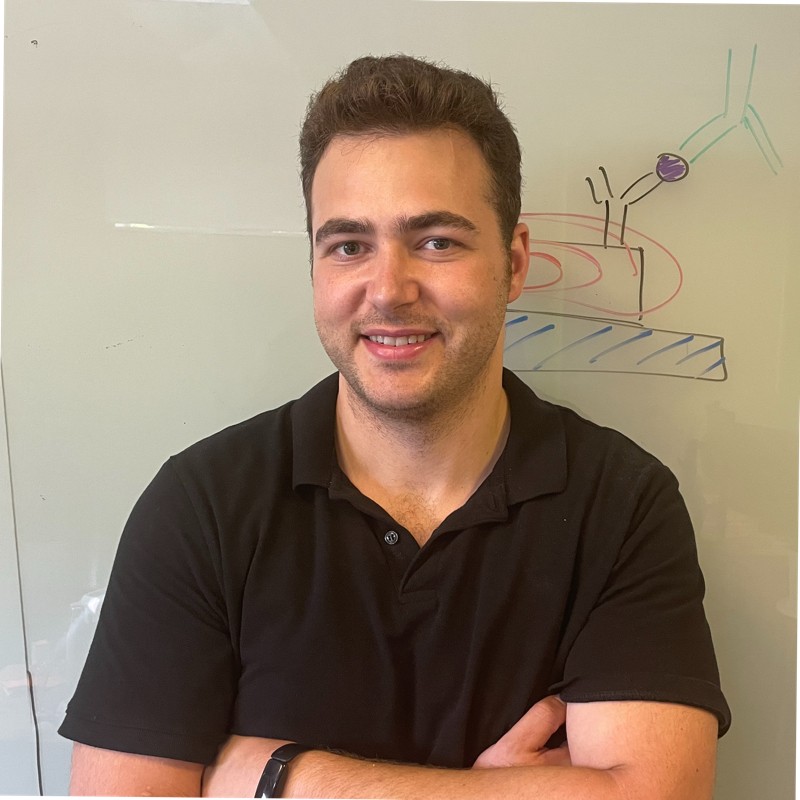
Siphrx, founded by Michael Dabrowski, developed a miniaturized blood testing device using silicon photonic chips that can perform a 20 plex blood test on a disposable chip. Results are provided within an hour on a phone, aiming to make home blood testing more accessible for individuals with chronic diseases. The company is preparing for FDA clearance, scaling up production, and offering mail-in testing services. Their long-term vision includes expanding the device's functionality to include different types of blood tests. Funding for series B is planned for n...Read more
exploreKeep Exploring
What led you and your co-founder to decide to focus on home blood testing and develop a lab-grade chip for this purpose?add
What is the process and technology behind producing disposable chips that can perform a 20 plex blood test for 20 different biomarkers?add
What website would patients go to in order to order a mail-in test for a product that has been de-risked and prepared for an FDA submission?add
What are some companies working on bringing blood testing devices into the home setting?add
>> Hello everyone. Welcome to theCUBE. I'm John Furrier, your host. We are here at the NYSC for our three days of media week coverage cyber week, AI innovations, all tech innovations. Part of theCUBE's East Coast Super Studio, our access point will be connecting Silicon Valley Studio in Palo Alto here with NYSC and Wall Street. We've got a great lineup of great guests sharing their innovations and their stories. Our next guest got a great company. Him and his co-founder are here. We only had one chair. Next time we'll get them both in. Michael Dabrowski is here, co-founder and chief product officer of Siphrx doing some really killer work in the area of healthcare and blood testing and other cool things. Thanks for coming on theCUBE. Appreciate it.>> Yeah, thanks for having me.>> So, first of all, talk about what you guys are doing and the innovation that you have and the key to this around the healthcare and the blood aspect of it.>> Sure. So, every time you use the internet, your data has to be converted to light to go through fiber optic cables, and then at the end of those cables it has to be converted back into electricity for computers to understand it. And so there are these silicon chips using this technology called silicon photonics that do this conversion. So that's happened over the last 20 years and that's enabled the boom in data transfers, AI, Zoom everything that we're using today. And the next logical step for this technology now that it's available is to miniaturize optics in other fields. And so, my co-founder and I got together about five years ago and looked at it and said, "Okay, the next thing is probably going to be something from the biotech sphere," because if you open up things like a tool in a biolab or specifically a blood testing device, it's full of very expensive optics. So there's a big opportunity to make something lab grade on a chip. And if you look at where's the greatest need? It's for chips. You really want something that needs scale. You want millions, hundreds of millions of them and so we decided to focus on home blood testing because it's something personal and local, right? Like a cell phone or a printer, it's something you need in your home, especially if you have chronic disease or something like that. You need frequent blood tests. So we decided to miniaturize one of the typical immunoassays, it's called immunoassay tool, one of the typical blood testing tools from a central lab onto silicon photonic chips.>> And how's that going? What's the product look like right now?>> So, we landed, originally when we were showing renderings of what we were going to do, it looked more like a USB stick or something like that, but it landed up a little bit more like an espresso. So, we produced the disposable chips on 12 inch wafers, which straight out of the telecom space so that's extremely scalable. You can make a billion of them a month in a single foundry, a billion sensors, which is performs a 20 plex blood test, 20 different biomarkers. And then we produce like an espresso device, which does all the, you basically put a patch on your arm, you press a button, then you put the patch into a cartridge, cartridge goes into the device, you walk away and in an hour on your phone you have all the data, 20 different proteins and hormones.>> That's awesome. I mean, I think this is just phenomenal innovation. And if you look at some of the advances in silicon right now, custom silicon, I mean, it's just an incredible time. I love how you guys took that use case and pointed it at something else. It's becoming an entrepreneurial pattern we're seeing right now where it's like the domain expertise aren't stuck at one thing and the connectors to seeing optical connectors being reduced into what used to be 10 to one, the form factor shrinking. I mean, are we just scratching the surface in your opinion? How do you scope this? I mean, this is mind-blowing for folks. Okay, we're going to get down from a big machine, going into an appointment to home care in this case is mind-blowing, right? So, scope the magnitude of where it goes and what it means.>> So, I think, there's already a really good precedent for this. So, six out of 10 Americans have a chronic disease. It's become a whole political issue now, right?>> Yeah.>> Three out of 10 have more than one. There's only one chronic disease where you can get a really good blood test at home and that's diabetes. So, you can get a quantitative glucose test at home and that went from you had to go into the lab to get a glucose test, then they made the glucometers and eventually now you have wearable devices. So you see Dexcom for example, their whole business is one wearable device. So, you're probably going to see an evolution like that for the rest of the chronic diseases. So, if you have a thyroid condition, you have to get your thyroid hormones checked every month or every quarter. And so today it's super onerous. It makes your life very difficult. So, it's something that's going to become as easy as a glucometer with what we're building. And probably the next generation of the technology is something where you're actually wearing it as a patch.>> Yeah, that's awesome.>> And that's supported, there's no physics that says that can't be done, but definitely the patches are further away and we're focused on the near-term thing that can really make a change in people's lives in the next few years.>> The real breakthrough is the form factor silicon.>> Yes.>> That's the way you guys see it right now.>> Exactly. Yeah.>> All right, so give us a little taste of the business you're at. How big are you? Where are you in the progress, breakthrough? Okay, we can see the vision. We get the foundry going. What's the progress? Take us through the progression.>> So, we started the company a little bit before Covid out of the MIT community in Cambridge. Now we have a 7,000 square foot R&D lab a little bit north of Boston where we do almost everything in-house. So, wafers come in and then we process. We have a whole biochip, small biochip foundry that we've built that I would say is probably the cutting edge. For this kind of thing we are at the cutting edge in the world. We also have an entire additional commercial arm where we today do mail-in testing where people can collect a blood sample at home and mail it to a central lab and get their biomarker results without ever coming in. So, once we have FDA->> Nice.... >> clearance for our device, we'll be able to deliver those same results fully at home. But today we already serve tens of thousands of people with home testing in this intermediate form factor where you still have to mail the blood back.>> It's a nice little gift because you're basically getting ready to go mass produce, why not take the self-service option?>> And it's another thing where this market is poorly understood so we really wanted to be active in it. I mean, it takes five years to commercialize a chip, but we really wanted to be active in home blood testing even before that. That's why we spun up this whole commercial arm for doing mail-in testing as well.>> Where are you on that five-year clip now? What year are you in?>> So, next year is the big commercialization year for us for the hardware. So we've de-risked all of the science and engineering and it's really about preparing it for an FDA submission so that we can actually bring it to the patients.>> So, the product's ready from a chip standpoint, silicon standpoint, get the products, get the approval, and then you've got the testing, mail-in. Self-service, hit a portal. What website would they go to do that?>> So, siphrx.com, S-I-P-H-R-X.com. People can already order a mail-in test from us, and that's with more traditional technology. And there are other companies that do mail-in tests. It's a whole industry. But basically our innovation there is that we offer the most markers in single box in a single mail-in test.>> Is there anyone else doing to the level of hardware innovation that you're doing right now?>> So, there are probably three or four companies working on a blood test in a box. There was the nuclear winter after Theranos, and then some companies came out, survived that and basically all of them are working on, there are actually several credible companies, but they're all working on doctor's office devices. Because these aren't fully chip-based devices they're somewhat expensive so you have to amortize it over many tests and you can't put it in a home. Probably, as far as we know, SIPHRX is the one company really credible with the funding people and technology to make it realistic to do this fully at home.>> Because you take it from a hardware standpoint, you innovate on the hardware,->> Yes.... >> get that down, hardcore reliable performance, lock that down.>> Yeah, so just focusing on making it truly a consumer product in terms of cost and just also how you use it, right? So removing any difficult steps, making it seamless like Nespresso style. That's something that other companies haven't focused on because there's still this push to improve the way blood testing is done in clinic, which is important. But we just think the blue ocean market is really in the home because of how telehealth has grown and because of how much need there is due to chronic disease.>> Telehealth and these also rapid service like One Medical where you're going to have this fast delivery of service. They're all bottlenecks by either inbound logistics, like note taking, capturing data. I mean, Amazon's got HealthScribe I think, I guess that's out there. But the bottleneck is all that inbound data that would accelerate the hell out of all the primary care.>> Yeah, so basically 70% of... The diagnostics industry group loves to say this, 70% of all medical decisions require diagnostic. A lot of those are blood tests. And so basically most telehealth companies rely on some kind of blood test to start the treatment or monitor the treatment and so on. Right now, that is the most broken part of anybody's business if they're in telehealth.>> I mean, the blood test is standard. It's the first qualifying real data point.>> Yeah, exactly.>> How many markers do you guys do?>> So, we're focused on, we don't do the same blood tests that you get every year at the doctor, we assume that you're going to get that anyway. We're focused on the top 20 chronic disease markers, which also makes for a very good preventative and longevity panel. But it's across metabolic health, hormonal health, cardiovascular, and some grab bag of other chronic disease markers. So you have your vitamin D, ferritin, things like that.>> And personal health has gotten so great with all the devices, the rings on iPhone, all kinds of wearables. How do you see that marker because I think that's an interesting also accelerant driver.>> Yeah, for sure. I mean, I think that ideally you have more silver bullets. I think some of the things that have come out really have the feeling in some ways of a silver bullet, like Ozempic. I love the Oura ring, which is as far as wearables goes, it's just extremely easy to wear. So, it's very small. So, these silver bullet devices where there's not a lot of cost to using it, it doesn't change your life in a big way, but it has a big health impact. I think, hopefully, there are more of these things and they're also synergistic, right, and that's the great thing about it.>> What's the big learnings that you've had as the chief product officer, co-founder in the process here? I mean, this is a really big idea, so it probably wasn't easy. What was the->> Yeah, I think coming from prior to this, I was working more in materials and semiconductors and originally actually I trained in undergrad in biotech and biochemistry. But I think coming from semiconductor field, this big surprise going into something that's closer to healthcare is that there's not a big pull for innovation. So, the semiconductor space, every two years, everybody's got to double everything->> Yeah, exactly.... >> so even large companies are looking for new things, right? Whereas in healthcare, there is not as much of a pull for innovation even when it's possible, so you just have to approach the market in a very different way than you would in the semiconductor space. You can't really be a component supplier in healthcare if you want to really innovate, you have to be more full stack. Because there's not going to be really that big company that wants to like, "Okay, we're going to drive to improve this tenfold," right? The industry doesn't work that way.>> And you mentioned earlier you used the word de-risk, you have to take a very intentional approach. I'm sure you hit the markers that probably match to what the needs are, one criticality and also demand. But also, once that's done, the scope could expand. I mean, you're going to get smaller, faster, cheaper on the device. The next espresso version, metaphor, would be better, right? More markers, right? I mean, that's the vision?>> Yeah, for sure. So, there are three types of blood tests. One is immunoassays, which is what we focus on now, and that's proteins and hormones. The other two are cell counts where you're actually looking at the cells under their microscope. And then you have some chemistry tests as well, like ions, salts and so on. So, we're very focused now on immunoassays because there was already an intermediary chip-based device that's out there for clinics that's FDA cleared. So, we knew, okay, this has gone through the FDA, this type of approach, we can just make it cheaper and smaller. But there's a lot of innovation also in the other two categories of blood tests. And obviously, eventually, it's just like printers. Eventually printers, they added scanners and so on so you're going to have all the functionality in a single box.>> And then the 3D printer blows everyone's mind. Whoa, that's unbelievable.>> Yes.>> I didn't know they could do that. Okay. What are the key milestones that you have now on the hurdles? Approval, what's your expectations on that?>> Yeah, so next year is a big year for us in terms of, we'll be going through all the preparation so that when we actually do our studies for FDA clearance, they have to be done with devices that were produced under design control and so on. So, there's a stack of preparation that we're going through now to do that. And then obviously everything that goes into getting ready to manufacture at a larger scale.>> Got it.>> So, scaling up some of what we're doing in our current 7,000 square foot facility to a larger space.>> Michael, great to have you on theCUBE. I wish we can go longer. We got disrupted by President Trump who gave the opening bell here today. You should have seen this place. It was locked down like nobody's business. It was crazy. Final 30 seconds or a minute, what are you guys looking to do? Hiring, funding? Give us status of the company, put a plug-in for what you guys are doing and what you're working on->> Sure.... >> in the company.>> So, definitely, we're looking to have more people try our current product, the beta product, the mail-in test, so go to our website and test it out. We're also, actually, I'll say something funny. We did this study on other founders and we found that testosterone and founders, we did a study on a hundred male founders. Testosterone founders peaks at series B, and then it actually drops afterwards. I don't know, in anticipation of the IPO, people get nervous or something. But basically it starts, it's the worst when you're at pre-seed. It's maybe you're the most anxious, not getting enough sleep, and then it peaks at series B. So we're working on raising our series B next year.>> So that's peak testosterone's A to B?>> Yes. Well, it's the biggest change is probably C to A and then A to B, you get another bump. According to our data, it's not a huge data set. So, we're working on raising our series B next year. And then, obviously, we're always hiring and looking for great engineers and business people to join the team.>> Awesome. Great mission. Thanks for coming on. I wish we had the extra chair for your co-founder, but we'll get you guys back in, certainly be part of the network here. And in Palo Alto, when you're out there, come by and visit our studio. Certainly going to do remotes too. But love what you're doing. And again, the breakthrough in hardware is phenomenal, so thanks for doing that. Appreciate it.>> Sounds good.>> Okay. Coverage here at the NYCM, John Furrier with theCUBE. Thanks for watching wall-to-wall because we've got 12 interviews all backed up. Thanks to President Trump who came and rang the bell this morning. I got some footage up close. I shared that. Watching all the trades, trying to get the videos he laid down. He says, "We're going to make more money this year." So we'll see. Of course, we're bringing all the coverage here with theCUBE. Thanks for watching.