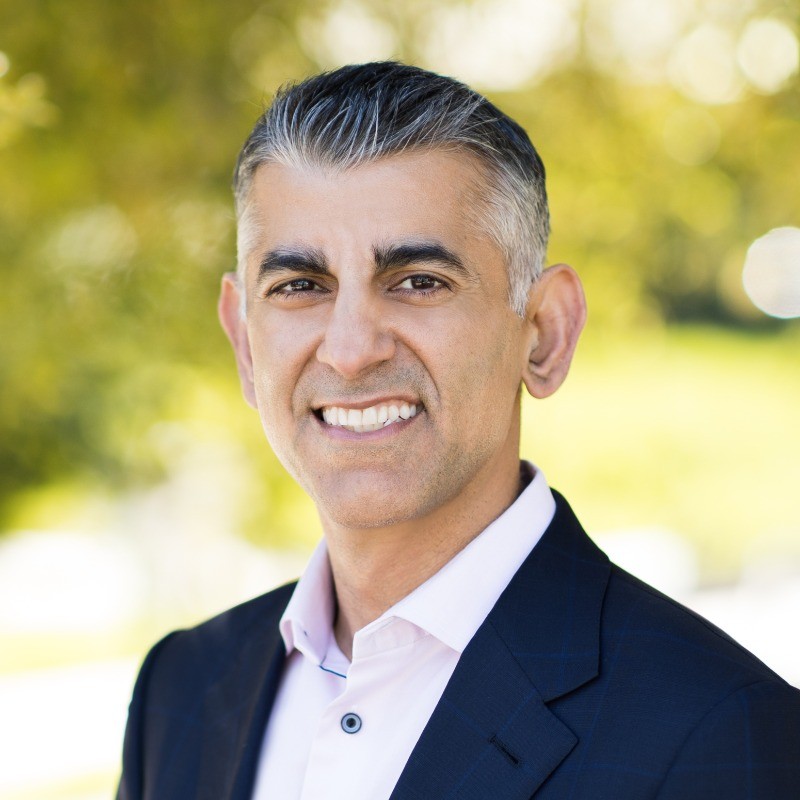
Sumit Dhawan of Proofpoint appears in this theCUBE interview hosted by John Furrier of theCUBE for NYSE Wired: Cyber Security Leaders — mergers and acquisitions, artificial intelligence and data protection. Dhawan discusses Proofpoint’s $6.3 billion acquisition of Varonis and the strategic push to secure data in the era of artificial intelligence, AI. They explain the integrated data security control plane and the role of a unified knowledge graph, describe agentic defenses and demonstrate how combined signals improve visibility across people, identity and data.
Dhawan identifies the knowledge graph as a core asset and projects near-term combined annual recurring revenue, ARR, near $3.5 billion. They advocate human-in-the-loop governance while enabling automated triage and remediation at machine speed. Furrier highlights the deal’s implications for the evolving cybersecurity control plane and the companies’ ability to deliver end-to-end data security. The conversation provides actionable insights for security leaders evaluating mergers and acquisitions strategies, data security architectures and AI-driven defenses.
Forgot Password
Almost there!
We just sent you a verification email. Please verify your account to gain access to
theCUBE + NYSE Wired: Zero Trust Cyber Series. If you don’t think you received an email check your
spam folder.
Sign in to theCUBE + NYSE Wired: Zero Trust Cyber Series.
In order to sign in, enter the email address you used to registered for the event. Once completed, you will receive an email with a verification link. Open this link to automatically sign into the site.
Register For theCUBE + NYSE Wired: Zero Trust Cyber Series
Please fill out the information below. You will recieve an email with a verification link confirming your registration. Click the link to automatically sign into the site.
You’re almost there!
We just sent you a verification email. Please click the verification button in the email. Once your email address is verified, you will have full access to all event content for theCUBE + NYSE Wired: Zero Trust Cyber Series.
I want my badge and interests to be visible to all attendees.
Checking this box will display your presense on the attendees list, view your profile and allow other attendees to contact you via 1-1 chat. Read the Privacy Policy. At any time, you can choose to disable this preference.
Select your Interests!
add
Upload your photo
Uploading..
OR
Connect via Twitter
Connect via Linkedin
EDIT PASSWORD
Share
Forgot Password
Almost there!
We just sent you a verification email. Please verify your account to gain access to
theCUBE + NYSE Wired: Zero Trust Cyber Series. If you don’t think you received an email check your
spam folder.
Sign in to theCUBE + NYSE Wired: Zero Trust Cyber Series.
In order to sign in, enter the email address you used to registered for the event. Once completed, you will receive an email with a verification link. Open this link to automatically sign into the site.
Sign in to gain access to theCUBE + NYSE Wired: Zero Trust Cyber Series
Please sign in with LinkedIn to continue to theCUBE + NYSE Wired: Zero Trust Cyber Series. Signing in with LinkedIn ensures a professional environment.
Are you sure you want to remove access rights for this user?
Details
Manage Access
email address
Community Invitation
Sumit Dhawan, Proofpoint
Sumit Dhawan of Proofpoint appears in this theCUBE interview hosted by John Furrier of theCUBE for NYSE Wired: Cyber Security Leaders — mergers and acquisitions, artificial intelligence and data protection. Dhawan discusses Proofpoint’s $6.3 billion acquisition of Varonis and the strategic push to secure data in the era of artificial intelligence, AI. They explain the integrated data security control plane and the role of a unified knowledge graph, describe agentic defenses and demonstrate how combined signals improve visibility across people, identity and data.
Dhawan identifies the knowledge graph as a core asset and projects near-term combined annual recurring revenue, ARR, near $3.5 billion. They advocate human-in-the-loop governance while enabling automated triage and remediation at machine speed. Furrier highlights the deal’s implications for the evolving cybersecurity control plane and the companies’ ability to deliver end-to-end data security. The conversation provides actionable insights for security leaders evaluating mergers and acquisitions strategies, data security architectures and AI-driven defenses.
>> Hello, I'm John Furrier, host of theCUBE here in theCUBE's NYSE Wired studio. Of course, we have our Palo Alto studio connecting Silicon Valley to Wall Street as the community comes together in the age of AI. This is our Cybersecurity Leaders series. We talk to the leaders making it happen, making deals happen. And this hard news here is the M&A with Proofpoint and Varonis. Sumit Dhawan's here, CEO of Proofpoint. Just saw you in San Diego at your conference. Great to see you again with some news that was out there, not confirmed, but now confirmed. Great to see you again.
Sumit Dhawan
>> Great to see you, John.
John Furrier
>> Okay. So you did a deal with Varonis. It's an acquisition. You acquired them for $6.3 billion. They're a publicly held company coming into the fold at Proofpoint. We had a long-ranging conversation with you and your team around what you guys were doing, the momentum you have with AI and some of the security challenges. Okay. Why Varonis? It was speculated. Kind of— it was kind of kept under the covers. But now that it's out there, talk about the deal, the deal specifics and why.
Sumit Dhawan
>> Yeah, look, we're very, very excited. The deal specifics, let's just start with that and get it out of the way. And then most importantly, the exciting part, why, will follow. Look, the deal specifics are straightforward. It's a deal of Proofpoint acquiring or intent to acquire Varonis and paying a cash price for each of the shares of Varonis when the transaction closes, and that amounts to roughly $6.3 billion. And so we are in the process of going through all the regulatory approvals so that we can close this in the first half of '27. We do anticipate with minimal competitive aspect, but more importantly, combined solution providing great value to our customers. The process of closing should be straightforward and we can do it as we enter next year. That's the deal specifics. Answering your question on— I can go and answer a little bit of question on what led to the deal. So, yeah, so look, if you think about as a big picture, zoom out, every CEO every board member, there are two major priorities: enablement of AI and making sure that cybersecurity, especially in the era of AI, is strengthened. And the two are obviously interrelated. What's common between the two is AI feeds off of data, and almost all of cybersecurity eventually goes after data. Okay, so data is becoming the next frontier. Of cybersecurity. And when we look at our assets and what we do in protecting data, which is when people and AI are using data, we are able to make sure it doesn't leak, which is Proofpoint. And what Varonis does with data, which is to ensure that data is privileged, right? It can be discovered properly regardless of where the information is when it's being stored. The combination provides industry's only more and the most comprehensive solution to protect data in the era when AI is accelerating risks on data. So we thought the best thing to do is to combine these two technologies and assets together. So the intent that we had was to give our customers a comprehensive solution for protecting data. Data is becoming a key priority for cybersecurity, and together our assets give our customers a unique and comprehensive solution for data security. That was as simple as it gets. And we are seeing tremendous interest.
John Furrier
>> To me, what's interesting about this story is not about Proofpoint buying Varonis, it's really the assembly of the new security control plane because you mentioned you already got the human email communication insider risk, user behavior, data loss prevention nailed. They bring the information of where the sensitive data lives, who has access to it, what permissions exist. So talk about how this will impact as agents start taking action autonomously. How does the combination make that better? Because that's a core issue right now.
Sumit Dhawan
>> That is a core issue. And obviously the risk of data loss through humans is not gone. But what's new is AI actually has access to all the data. Without data, agents are not powerful. So you need to feed agents data. And if you don't privilege the data right and then you don't monitor the AI activity on what it's doing with data, you actually create a new frontier of cyber risk. That's why I say data is the next frontier of cybersecurity. So that's what Varonis does, perfectly complements what customers are using Proofpoint solutions for today already. And when you combine the two together, making sure that you are able to get visibility and control over when the data is at rest, when you're giving AI access to it, And then getting control over when data is in motion and is being used by human and AI and have intent-based protection across that entire system. That's what Proofpoint and Varonis combination will be able to bring uniquely and comprehensively to our customers.
John Furrier
>> I like the end-to-end view there about the unification. We just put it together. See if I got this. What's valuable is the equation of people, identity, intent, the agent, the permissions, the data, and then ultimately the action. Did I get that correct?
Sumit Dhawan
>> That's right. All of these are signals right now. You're talking about why the combination versus standalone companies that could have partnered together. Look, in the world of agents which are creating new risks at a really, really high speed, you want a system that can act at machine speeds. A human-based sort of security operation center that's monitoring all the possible alerts and logs and doing all kinds of correlations and search, that's not going to be sufficient in the world of AI when the risks are moving at true agent and machine speed. You need a cybersecurity system that needs to move at the machine speed. And for that, you need signals. And all the things you mentioned— humans, AI signals, data signals, identity signals, they all need to feed together in an integrated fashion to provide the best comprehensive protection. And we believe that that is only feasible when we have assets in a single company so that they can be providing integrated solutions that act and defend our customers at machine speed.
John Furrier
>> You know, you and I have talked in the past about strategic assets and how the growth strategies, how you go to market. This is a strategic acquisition, not necessarily a cash flow deal from what I could see. They're a public company, so they did have some numbers. It's close to $1 billion in SaaS revenue, maybe 3/4 of a billion. And so they have some numbers. So put this financial thesis aside. Talk about the growth thesis. What does the Proofpoint and Varonis growth strategy look like? Because individually, this growth you guys both were seeing, but put it together, where does it become more valuable together on the growth side? Can you share your thoughts on that?
Sumit Dhawan
>> Yeah, happy to. Look, combined company, based on what we have publicly sort of discussed as well as Varonis's obviously public numbers exiting their Q2 of June, we anticipate and expect as we go into the next year The combined company is going to be almost $3.5 billion in ARR. And we are going to have strong cash flows with north of rule of 40 right away. Okay. Now, our business from a top line perspective is growing at it. We've sort of talked about it. It's been growing at double digit plus rate. Our data security business is almost growing at high teens. You combine that with even a slightly higher growth rate of Varonis's business in data security, it will add to Proofpoint's growth rate while still maintaining very, very healthy rule of 40 for the combined company. And strategic rationale for the acquisition, as I mentioned, is to provide integrated solutions with unique value proposition for comprehensive data security And our goal with this acquisition is not to drive any kind of, optimizations and whatnot. It's to drive that integrated solution and top line growth for the combined company.
John Furrier
>> Product market fit will drive the scoreboard, as you know. So I appreciate that. I want to get into the weeds a little bit on the asset underneath the numbers. Well, then that is the discussion we had at your event in San Diego. Again, we talked about with you and your team when they went and did a drill down on it is the data security graph. You guys, Agentic data security graph data is key. The knowledge graph created by joining the datasets and applying AI to them to me seems very moat-like. It's not dashboarding or notifications, which is great. It seems like the potential moat here is that knowledge graph joining the datasets. What's your reaction to that? Do you agree? Is that a key piece? Is that the real asset underneath the numbers?
Sumit Dhawan
>> Yeah, knowledge graph is the technology implementation of what I just went through, which is signals and control points working together. Knowledge graph enables you to store all of these signals that now we are collecting and be able to run sophisticated AI models so that you can provide protection at machine speed. So now with us having detailed signals on when the data is stored and how the data is being accessed by human and AI, you combine those signals together, you're getting the richest possible intelligence to protect data security. That's a simple way of thinking of knowledge graph. And we've already talked about it as two companies. We believe that integration is possible in a very short order. We do believe that we will be able to bring together the power of these integrated knowledge graph as well as integrated control points from endpoints to data sources, from AI agents to gateways, all working together for our customers so that they get a comprehensive data security solution.
John Furrier
>> So I want to ask you about the security posture because that— okay, first of all, I love everything you're talking about, but let's talk about security. Security in the perimeter. Remember the old days, the perimeter's dead, the network was the perimeter, then identity became the perimeter. In the agentic era, the data's the perimeter, or is the new perimeter the relationship between identity, intent, and data? Talk about that. This is really nuanced, but I want to get it out there because identity was the key before, but now you've got data as the perimeter, but you've got relationships between identity intent and data. It's a little bit more complicated with Agentic. Everyone might have different control plane features.
Sumit Dhawan
>> There have always been different frontiers of protection in cybersecurity, so I wouldn't say one replaces the other. They have typically been additive, right? Endpoint has been a frontier of risk and there are strong technologies and providers of solutions that provide endpoint network. Became a frontier of protection, which is where it became the perimeter beyond the enterprise. Identity is an important element of protection, especially as identities go beyond humans to AI and machines. But all of those three things by themselves in the world of AI are no longer sufficient. There is a new frontier that you must protect, which is data. Why? Because think about it, you can have all the protection on endpoint, all the protection on network, all the protection on identity, it takes one social engineering attack or one AI attack or one incorrectly configured and controlled data to lose your most sensitive information, which is how the whole cybersecurity started. It used to be called information protection, protecting information, which is data, okay? So we sort of lost track of it because data got sort of a mechanism to get to data was endpoint, network, identity, et cetera. But look, now data must be protected as its own frontier. Okay. And that's what Proofpoint and Varonis bring together to our customers.
John Furrier
>> I'm smiling because we both got gray hair. We both remember those days when that was the norm. And in fact, the department of IT was actually called data processing. That's what we're doing now. I like your angle on that one little crack in the foundation and it's over. This brings up the heterogeneous market we're in. I want to bring up what has been kind of the state cybersecurity standard. you got vendors out there, they all have their point solutions, but let's just take one as an example, just as a random example, Microsoft. They got identity, productivity, email, Copilot, enormous amount of enterprise context, but they're one company. Okay. They also coexist in the enterprise with everybody else. So where does Proofpoint and Varonis as an independent platform differentiate? What would be your answer to that one? Because this is the core question. Well, Microsoft's got me covered, or do they?
Sumit Dhawan
>> Yeah, look, Microsoft is a partner as well as naturally they provide baseline capabilities as part of their overall solution portfolio, whereby all the providers in the technology landscape have to add value above and beyond by having domain-level expertise and solution depth that serve the needs of the enterprise. That's how the industry ecosystem has worked for the last two decades and will likely work in the future because there are going to be underlying baseline platform providers like Microsoft. And then there are enterprise needs that require domain expertise and solutions, sophistication and richness that meet the needs of different types of enterprises or even smaller managed service providers. Proofpoint's focus is to make sure that when it comes to data security and protecting people to collaborate with each other, that is our domain of expertise where we go deep and provide industry's best solution to serve the needs against the risks in the enterprise. So we don't think of Microsoft always as a competitor. We think of them as a partner whose core productivity tools and data platforms we are protecting for the enterprise. And they view it that way as well. It's our job to continually add value. How we look at from a customer's point of view, if you think about it from a customer point of view, they think of their network security, endpoint security, identity security, and collaboration and data security. We typically are one of the 3 or 4 strategic partners for CIOs and CISOs for how they bring their overall cybersecurity stack. And typically we partner with Microsoft and complement Microsoft platform and extend it to provide that protection for our customers.
John Furrier
>> And plus, we're living in a heterogeneous environment and you can hear the traders behind me trading. They love this Agentic Data AI security product you got. So I can hear them yelling behind me. It's a new category. I really like the end-to-end. I think you'd have to play well with others. This is one of those things where being independent is interesting. I want to get into autonomy because you got— you're building detection agents, investigation agents, remediation agents. Varonis brings source of data and permission context. How far are you willing to let the security system autonomously remediate risk without asking the human?
Sumit Dhawan
>> I think the world we are in, we are likely going to be— our fundamental thesis is enable the system to work at machine speed. With humans in positions to do monitoring and governance and training other agents. Do you have to do that in this period of time? Because still the technology is developing and the technology in the world of protecting information is in a state whereby it can do a lot of things right. But taking the humans out of the loop for governance, monitoring, as well as ongoing training of agents It's not ready in our perspective. Okay. So that's the principles we have taken in designing our agent.
John Furrier
>> Okay. So then I guess the question is, where in the loop does the human disappear? Because we'll see machine speeds. Explain where you see that happening.
Sumit Dhawan
>> I look today it's human speed. Human speed means you're looking at signals across multiple systems of protection, aggregating them into some other data system, then doing engineering on top of that to look at, search and correlate. And then based on that, you're triggering manual processes to triage. That's the world of today. Machine speed is different. Machine speed is this knowledge graph is correlating all the signals on itself, creating fewer alerts because certain alerts are triaged on their own. How each alert was triaged is available for humans to go back and inspect. Anything that the agents cannot triage Humans are alerted and humans can say going forward, use the following principles to do the triage. That's the change from human speed to machine speed. That's what the modern systems— again, coming back to the acquisition, when you bring that knowledge graph, when you bring all these signals together and you power this agentic platform that we announced at Protect, that's what it enables customers to do. For data.
John Furrier
>> Well, congratulations on the big acquisition. It's a big deal. You guys had a Thoma Bravo, private equity transaction. This certainly is going to give you a lot more leverage operationally, going to pop the top line and some good technical synergies. You and I have joked in person about going public. I'm here at the NYSE. You got a lot of revenue. Is this going to help you scale and grow your profile to go public soon?
Sumit Dhawan
>> Well, look, I think our obviously immediate focus every minute, every hour, back into the integration and closing this acquisition. But we do think, as I do think about it, as we have talked to public investors, public investors are looking at platform providers solving a core foundational cybersecurity challenge for customers with healthy financial growth. And profitability. We have now with this acquisition, I feel like we are in a good position without Varonis, but with Varonis we get— meeting all of those sort of criteria I went through. So we think that public investors would be very interested. And look, after closing, we're going to contemplate what the right time is for us.
John Furrier
>> Yeah, AI has been a great thing and we talked about it at your event, but I've been talking on theCUBE a lot about how the private equity market has changed. You guys have done a phenomenal job of balancing the discipline in margin and cash flow needs against what is investment-backable and being aggressive on the product-led growth. So I want to congratulate you on execution. So hats off to you, and I love this deal. Good synergies. I guess my final question is, 5 years from now, with autonomous agents, with human-in-the-loop, everyone's going to have their own worker. What does Proofpoint look like? Are you still a cybersecurity company or effectively the policy trust layer that governs how humans and
Sumit Dhawan
>> agents—I think it's an interesting question. 5 years is certainly— it seems like a long time in the agentic era. Things move probably in half the time that you envision would move in 5 years. But look, as this industry of adopting AI takes shape at a certain pace, the key systems of protection and governance end up becoming the most strategic asset for information, and technology groups in my assessment, because much of the cloud technologies and sort of AI technologies are getting enabled through, to some extent outside systems. So really the jobs of even CIOs and CDOs end up becoming how they inherently protect their core information against the risks that potentially accelerate. Look, as AI accelerates and enablement of AI is a key priority for chief AI officer, digital officers, information officers, one of the core things that becomes foundational for them is how AI is connected to data. Okay. And that's why we believe that Proofpoint becomes a key governance, enablement, and to some extent even operational layer in providing that bridge between agents and data. In addition to cybersecurity, a true enablement layer for enterprises.
John Furrier
>> Sumit, congratulations. I love this $6.3 billion acquisition of Varonis. Architectures come together. We'll be tracking it. We're going to unpack the use cases. We'll follow up and we'll look at how this effectively transitions your organization to scale and grow. Thanks for your time. Appreciate it.
Sumit Dhawan
>> Thank you so much, John.
John Furrier
>> I'm John Furrier, host of theCUBE. This is a big deal. Private equity, nimble, disciplined executing, product-market fit, pre-IPO. But the bigger picture is whether agents force cybersecurity to reorganize around data, intent, autonomy, and action rather than around endpoints, networks, and traditional human identities. This is the beginning of the shift where agents are forcing cybersecurity to think, rethink, how they execute and protect enterprises. I'm John Furrier, host of theCUBE. Thanks for watching.