This conversation examines identity security and artificial intelligence agents in the enterprise during NYSE Wired and Black Hat week as part of theCUBE and NYSE Wired Cyber Security Leaders coverage. Paul Zolfaghari of Saviynt appears on the program. Zolfaghari presents Saviynt's identity-first approach to securing the AI era, emphasizing machine identities, agent governance and cloud-native architectures. They explain how AI agents reshape access controls, introduce Zuma, Saviynt's end-to-end AI management and governance solution, and why modernizing identity platforms is critical for safe scalable AI adoption across the enterprise.
Key takeaways include Zolfaghari's recommendation that enterprises move to just-in-time transaction-level authorization instead of standing privileges and gain visibility into who builds and operates agents. Furrier and Vellante observe growing C-suite and board-level sponsorship for AI initiatives, new budget lines tied to AI outcomes and rising investor interest in identity security as an infrastructure layer.
Forgot Password
Almost there!
We just sent you a verification email. Please verify your account to gain access to
theCUBE + NYSE Wired: Zero Trust Cyber Series. If you don’t think you received an email check your
spam folder.
Sign in to theCUBE + NYSE Wired: Zero Trust Cyber Series.
In order to sign in, enter the email address you used to registered for the event. Once completed, you will receive an email with a verification link. Open this link to automatically sign into the site.
Register For theCUBE + NYSE Wired: Zero Trust Cyber Series
Please fill out the information below. You will recieve an email with a verification link confirming your registration. Click the link to automatically sign into the site.
You’re almost there!
We just sent you a verification email. Please click the verification button in the email. Once your email address is verified, you will have full access to all event content for theCUBE + NYSE Wired: Zero Trust Cyber Series.
I want my badge and interests to be visible to all attendees.
Checking this box will display your presense on the attendees list, view your profile and allow other attendees to contact you via 1-1 chat. Read the Privacy Policy. At any time, you can choose to disable this preference.
Select your Interests!
add
Upload your photo
Uploading..
OR
Connect via Twitter
Connect via Linkedin
EDIT PASSWORD
Share
Forgot Password
Almost there!
We just sent you a verification email. Please verify your account to gain access to
theCUBE + NYSE Wired: Zero Trust Cyber Series. If you don’t think you received an email check your
spam folder.
Sign in to theCUBE + NYSE Wired: Zero Trust Cyber Series.
In order to sign in, enter the email address you used to registered for the event. Once completed, you will receive an email with a verification link. Open this link to automatically sign into the site.
Sign in to gain access to theCUBE + NYSE Wired: Zero Trust Cyber Series
Please sign in with LinkedIn to continue to theCUBE + NYSE Wired: Zero Trust Cyber Series. Signing in with LinkedIn ensures a professional environment.
Are you sure you want to remove access rights for this user?
Details
Manage Access
email address
Community Invitation
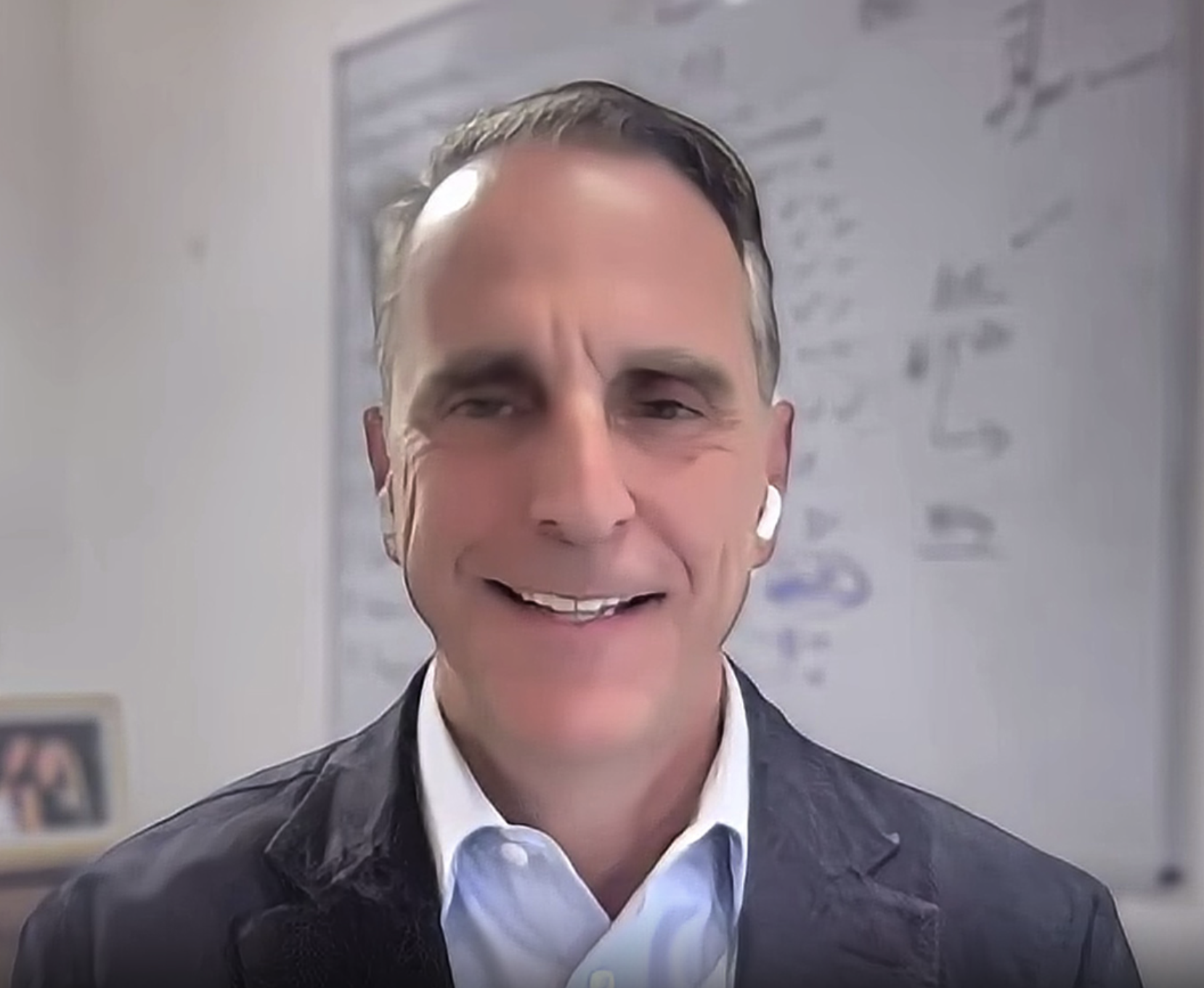
Paul Zolfaghari, Savinyt
This conversation examines identity security and artificial intelligence agents in the enterprise during NYSE Wired and Black Hat week as part of theCUBE and NYSE Wired Cyber Security Leaders coverage. Paul Zolfaghari of Saviynt appears on the program. Zolfaghari presents Saviynt's identity-first approach to securing the AI era, emphasizing machine identities, agent governance and cloud-native architectures. They explain how AI agents reshape access controls, introduce Zuma, Saviynt's end-to-end AI management and governance solution, and why modernizing identity platforms is critical for safe scalable AI adoption across the enterprise.
Key takeaways include Zolfaghari's recommendation that enterprises move to just-in-time transaction-level authorization instead of standing privileges and gain visibility into who builds and operates agents. Furrier and Vellante observe growing C-suite and board-level sponsorship for AI initiatives, new budget lines tied to AI outcomes and rising investor interest in identity security as an infrastructure layer.
In this interview from theCUBE + NYSE Wired: Cyber Security Leaders 2026, Paul Zolfaghari, president of Saviynt, joins theCUBE's John Furrier to discuss how the rise of AI agents is reshaping identity security. Zolfaghari explains why first-generation identity platforms, built for human workers, cannot keep pace with an AI-first, cloud-first era defined by machine identities and autonomous agents. He details Saviynt's new solution, Zuma, an end-to-end AI governance platform that grants access at the moment of transaction rather than through static, standing p...Read more
exploreKeep Exploring
How is the rise of AI affecting identity security, and how is your company (Saviynt) responding?add
Why did you build and launch Zuma, and how does it address enterprises' needs for AI management, governance, security, and visibility without impeding innovation?add
Should access/authorization be based on static identity-based privileges, or granted dynamically at the moment of the transaction/credential exchange?add
How should organizations balance enabling business users to deploy AI tools to boost productivity with ensuring appropriate access controls, governance, and cybersecurity visibility?add
How does Saviynt differentiate itself from competitors, especially regarding its approach to building an end-to-end, cloud-native, AI-first identity security solution?add
>> Hello, I'm John Furrier, host of theCUBE here at our NYSE CUBE studios. Of course, we have our Palo Alto studio connecting Silicon Valley to Wall Street. This is our cybersecurity series here at the NYSE Wired program. We talk to the leaders who are making it happen, who are entering in the innovation cycle with AI era, and I see security as top of mind with Black Hat going on this week. It's been a top story. Paul Zolfaghari is here President of Saviynt. Paul, did I get that right, the last name?
Paul Zolfaghari
>> Close enough.Good enough.
John Furrier
>> I'm super excited to talk to you. Thanks for coming on. Black Hat, you're seeing all the discussion. Agents are now mainstream. Black Hat, very operational show, very team-oriented with all that's going on. But the AI agent identity, Identity is what you guys are focused on. Revenue's up, $300 million annual recurring revenue. Big financing at the end of last year and acquisition. The security paradigm has changed. First thoughts for you is what is the biggest impact right now with security and identity with the AI era and the agents among us?
Paul Zolfaghari
>> Yeah, great, great. First of all, thank you. Thanks for inviting me on the show. And honestly, thanks for having a show like this that helps educate the marketplace on a lot of these changing initiatives and momentum. Look, we see what's happening in the age of AI as a real accelerant on identity security, which is what Saviynt does as its core mission. So our mission is providing platforms and solutions that allow companies to better manage their digital identities. And so what's happening as more and more of these companies start adopting AI is it's driving them to really reevaluate. the investments they've made in their first-generation infrastructure. And most of them are coming to the conclusion that the decisions that they made around solutions and platforms to support the first generation, which was really mostly focused on managing the identities of human headquarters workers, don't really work in the modern era. The modern era is a cloud-first era. It's an AI-first era. It's one in which you have machine identities and AI agents all now part of the mission that these solutions have to address. So it's a great era for us. I think you just identified a few of the key milestones that indicate there's a tremendous amount of growing interest in what we do, and we're really excited about the future.
John Furrier
>> Yeah, Paul, talk about the macro environment, because we saw AI come in in that first early stage. Hey, we had retrieval, great, got some good search, get some chatbots, and then coding really opened up the enterprise to the realization that there's real impact. Revenue impact, costs are now clearly visible, revenue is tied to it. What's that do to usher in the age? And what is the biggest factor that's driving your growth right now? Is it the infrastructure reset or modernization, transformation? Is the business model SaaS? Is it just pure blocking and tackling infrastructure?
Paul Zolfaghari
>> Yeah. Well, the way we look at it is the adoption of AI is a transformational change. And Saviynt is really an essential accelerant, if you will, on that change, because what companies are coming to realize is there's a tremendous amount of promise using AI within your company to improve your operations, to improve your revenue, to improve your customer service, your customer support. But in order to adopt it widely, safely, and agilely, you essentially need an identity security partner who can make sure that these AI agents are being properly governed and managed. So we see it as really the golden era for identity security companies, which we happen to be proud to be leading. And the other thing, too, is we're a strong adopter of AI ourselves. we have AI infused into all of our products and platforms. Our engineering organization uses AI in the creation and adoption of our engineering processes and procedures. And we've seen huge uplifts in that. So we're certain a lot of companies are seeing the same productivity increases. And so we're very, very excited about this future where I think the adoption of AI is going to drive interest in making sure there's a good identity security partner solution in place as well.
John Furrier
>> I want to get into some of the operational impacts on the technology. But I first want to ask you about the customers you're talking to. traditional IT projects, CIOs involved, obviously security, CISOs involved. Are you seeing more C -suite awareness with the rise of the shadow AI and all these kinds of projects that are emerging? Is there a new decision process? Is there a new stakeholder? Or is it the classic CISO, CIO dynamic? What's your view on that?
Paul Zolfaghari
>> That's a really insightful question. No, we're absolutely seeing a change. And I think the change is coming from the fact that in many companies, it's a chairman or board -led decision about really leaning into and adopting AI. And as a result, then, they're saying, if we're going to be adopting this widely across the company, if we want to be using it to improve productivity, improve revenue, if we want to be an AI -first company, if that's what they're telling themselves, and that's a core strategic initiative, Then that initiative is getting the insights and the time, really, of the most senior executives. So we're actually seeing new budgets opening up, budgets sometimes that are tied to innovation. Sometimes they're tied to what might be called their AI initiative. Many of them are tied to improvements in operating results, improvements in top-line revenue. So I think your question is a really insightful one. I would say over the last 18 months, we've seen a broadening of C -suite interest in AI. We see other constituents at the table making sure that the AI adoption is being done widely, that it's achieving the business goals. And, of course, you have a lot of interest now as well in CFOs because they want to make sure that it's being done in a predictable and fiscally responsible manner as well.
John Furrier
>> Yeah, when revenue is tied to things, you get the CFO involved. We're seeing some of the same things emerging. Great, great call out there. As it comes down from the top, chairman level, all the senior execs at the C -suite, it pops down to the executors, the operators who have to deploy it. we're seeing a lot of people talking about this control plane. it seems like every company wants to be the control plane of the enterprise. you got data lakes out there, so you're starting to see the data environment be very nice for AI. How does the security with the identity come in? Because the old ways of doing identity, LDAP database, Active Directory if you're a Microsoft shop. All kinds are out there, all based upon old paradigms, GUI -based. And we're shifting to AI in an environment the way people think and work, which is like I just want to access the things. Talk about that control plane. What needs to be in place? So I'm going to implement AI for my business, essentially a business brain. I got to have intelligence. How do you guys think about that and talk about that specifically?
Paul Zolfaghari
>> Well, I think you essentially just described kind of the foundational thesis behind why we just released our solution, which we call Zuma, which is really an end-to-end AI management and governance solution. And that's exactly because of what you just described. What companies want is an end-to-end enterprise solution that doesn't impede the adoption of AI but provides the security and the governance around the adoption of AI with access to data and information. So that's essentially why we built and launched our new solution, which we released last week, but it's exactly on this issue. How do you give companies a powerful solution that can help them get visibility into their AI agents, understand what those agents are doing, protect the company with the right levels of access, but also do it in a way where it doesn't impede innovation? And you're exactly right that to do that, we had to basically take a bottoms-up view and build a solution that's really designed around, I would suggest, the new parameters of the problems that are created by AI. They're solvable problems. And that's why we went to the trouble of releasing the solution. But they are new problems, and they needed a new solution. And that's why we were excited to release that platform last week.
John Furrier
>> I love the progression of governance because governance is baked into everything. That's standard. You've got to have great governance. Check. The new thing that's being discussed is, okay, agents are acting on behalf of workers and also talking to other agents. They're not just getting an answer. They have to get the right answer. And so you're seeing determinism become a big feature. So what's after governance? How should operators think about what they need to think about? Because if you've got an agent out there making decisions, writing code, they've got to have all the credentials. They've got to be authorized to do things. And so you're starting to see things move from test beds. We saw the Hugging Face thing recently, other examples. This is becoming the new area. What are your thoughts on this? How do you see this?
Paul Zolfaghari
>> So as a company, what we're seeing is a lot of interest in a solution that can be literally at the moment of the transaction, at the moment of the exchange itself. So rather than being tied to the identity, actually being tied to the transaction. So think of it as giving companies a solution where there's zero standing privileges. And when the agent goes to do something, only at that moment in time is it granted access to take that action. And at that moment in time, you're bringing in all the context, all the information at that time, making sure that that particular action that the agent is engaging in is authorized and something that you want to see the company complete. So your question is very insightful, and it goes to the point that we believe the solutions that will prosper are ones that are thinking about providing that access, that authorization at the moment of need as opposed to something that's statically applied to something kind of in perpetuity.
John Furrier
>> You know, in the niche areas a few years ago, governance was a small part of it. Now it's much more standard. It always is a balance between innovation and risk management. Can you talk about the blind spots that enterprises have? You guys have a risk study out on what the agents are doing. What are some of the gotchas or blind spots that enterprises need to be aware of when they look at standing up and operating agents at scale?
Paul Zolfaghari
>> I think, John, what you have to think of is the balance between providing this powerful toolkit, which is what AI is, to your business leaders and your business users, wanting them to deploy it to improve your company's productivity, but at the same time, wanting to make sure that whatever they're doing on the innovation side, it's done consistent with the rules of the company, right? The right level of access, the right level of governance. So what we are very focused on providing, and I think what the market really needs is something that can have that balance between innovation and security. What won't work is a cybersecurity solution that really causes companies to slow down. So what we're actually seeing and what we saw in the report that you referenced is a lot of CIOs and CISOs literally don't even have visibility into who's building these agents and what are these agents doing. And so that's one of the foundational components of our new solution is to basically give them that visibility, then also give them the ability to determine how they want to manage and govern that agent. So understand where it is, understand who launched it, and then make sure that the company can provide some guidelines around how that agent acts.
John Furrier
>> Paul, I was just watching on LinkedIn some old friends. I used to work at Intel back in the day with Andy Grove, and we've been saying on theCUBE for years, let chaos reign, then rein in the chaos. That's an Andy Grove expression. if people know the inside baseball in the Silicon Valley circles. That's kind of the situation in cyber right now and with agents. They're letting chaos reign, but you just kind of pointed out there's a lot of action that needs to be reined in. How do you frame that? What's your advice? What needs to be reined in specifically?
Paul Zolfaghari
>> Well, first off, we are strong proponents of the adoption of AI. And I would say that a lot of cybersecurity solutions and companies start out with a lot of don't do this, don't do that. And they kind of impede what I think are really the innovation and productivity advantages that AI brings. We view it a little differently. We think that this technology can be deployed widely. You just have to make sure that you're doing it consistent with a good identity security set of protocols and a platform that can support that innovation. So our advice is exactly that, because we see profound advantages within our company, adopting AI in our engineering, our customer service, our product management, really all functions of our company. So we see the promise, but we also understand that it's got to be well managed in order to make sure that it operates consistent with the company's mission statement and guiding principles. But thankfully, we think these solutions are now here. We are happy, we believe, to be providing the leading solution, and we're excited to see the market adopt that so that this acceleration on AI can continue.
John Furrier
>> I love the commentary around the changes in the old way, new way of cybersecurity. In fact, it validates something that we've been watching very closely is that the cybersecurity infrastructure, whatever you want to call it, is one of the fastest growing areas from an investment standpoint and platform shift. Right now, obviously, AI infrastructure is super hot. You're seeing that totally went vertical, super fast. There's demand for AI infrastructure, great, different conversation. But you're starting to see kind of a slower but same kickup in cybersecurity interest from investors. The platform characteristics are changing. We see Palo Alto resetting. You're seeing all these kind of discussions, a little bit slower, but it's still kind of the same pattern. It's the same game, but it's configured a little bit differently. Why the investment interest? What specifically do you see as the change in the structural aspect of the industry?
Paul Zolfaghari
>> I think it goes back to your preceding question. I think a lot of these companies understand that this innovative technology, which is AI, is something companies need to be adopting. They're seeing in early stage rollouts within their own companies some of the profound benefits and therefore want to see it more widely adopted. But they're coming to realize that the adoption of AI, non-human identities and AI agents is just simply not capable of being managed in these first generation identity security or cybersecurity solutions. So all the companies are basically coming to the conclusion if they want to be an AI first company, if they want to drive productivity, they've got to make sure that they now provide the proper identity security framework under which that innovation can live. So we are seeing what I think is the very, very natural evolution of the adoption of the technology, the excitement about the profound benefits, and now the realization, hey, now let's roll this out, widely, globally across the enterprise. And to do that, let's make sure we've got the proper guidelines and protocols.
John Furrier
>> It's not a vertical anymore. It's an infrastructure software layer. It's got data. It's got everything. It's got the business models. this is the issue, right? This is a business model transformation because it's not IT anymore. IT is everywhere. So the issue is, okay, how do you think as a system, this is becoming very consistent in the AI pattern, this new structure. It's becoming business critical. Obviously, security, we know that. You can quantify it. Right.
Paul Zolfaghari
>> Well, again, this is why we don't really think of ourselves uniquely as a cybersecurity company. We actually think of ourselves as an enabler of operational excellence and outcomes. And what we say is we provide a service and solution that allows people to engage in profound improvements of their operating results, but that needs to be done securely. So we think our primary focus is helping companies really accelerate the proper adoption of AI. We see that as a great wave or a trend that we're behind. We picked the name Zuma because it's a famous surfing beach in Los Angeles where our company is headquartered because we want to be the illustration of providing people with solutions that let them ride that wave just like they would ride a wave in Malibu.
John Furrier
>> Well, to bring up the surfing analogy is a good example. There's a lot of competition for those waves in L.A., as you know. So what's the competition look like for you guys? Because, again, if there's going to be people on the right side of this, you guys got revenue growth that's showing it. You're thinking about it as a system, enablement, build, operate, and invest. That seems to be the theme on the winners. But you've got other people on that wave. It's like, get off my wave. I'm a local. I've been in the territory. I'm an incumbent. There's a lot of new changes. How do you guys look at the competition for this wave?
Paul Zolfaghari
>> It's a great illustration and the way to think about it. We feel great about it because there's a few things that are profoundly distinct about Saviynt and our ability to compete. One, unlike almost every other company, Saviynt is one of the only companies, certainly the only company I know of in our space where every single line of code has been written by a Saviynt engineer. So no M&A, no acquisition. So when we talk about a complete full end-to-end solution, we're talking about a profound company mission statement, which is to build that solution end-to-end to work together and have it provide really the best administrative and operational experience for our end customers. And we see that as a huge, with all due respect, a huge differentiation from a lot of the other companies that would consider themselves competitors that are really cobbling together a solution that's a bunch of acquisitions. So that's a very important difference from us. The second is we've already been in this space. We've been cloud native and AI first for years. It's nice to see everybody else wanting to join that wave, if you will. But one of the advantages that we have is we've taken really our experience being one of the leaders in identity security and applying it to this new use case of AI. But we did it by building a solution from the ground up using really all those best principles and practices. So I do think it's a bit of a rising tide lifts all boats. It's raising the awareness everywhere, which is great for us because we love being considered in that environment and feel very good about our competitive differentiation.
John Furrier
>> It's an interesting point about the cloud native experience and how you guys built it organically as a system, not cobbling it together with M&A, which can cause some optimization issues. It's that Kubernetes is in almost every conversation you hear. And I was just talking with a friend the other day about how microservices are kind of like agents. They touch a lot of things. And so you have a lot of things going on in the background that you need to have intelligence on, abstract away, create efficiencies. And we've kind of seen that movie with Cloud Native. So having that experience, how do you talk about that to the customers? You've been there, done that. What's the view there? there.
Paul Zolfaghari
>> Yeah, again, I think we have as a company been very, very focused on the principles that with all respect, many of the other companies have woken up to and that's being cloud native AI first, build a solution that's end to end, right, that has everything a company would need, do it organically, build it with your own people have the best administrative experience. don't just be a holding company that's acquiring, other companies and showing up with really what's more of a commercial presentation than a technology one. our big differentiation is the company was founded by practitioners. It's led by practitioners. It's led by people that are thinking deeply about the customer experience and innovation. And we tell ourselves every day, our differentiation is the customer experience that we provide and the focus that we have on innovation. And being focused in just this area, I think, has given us a profound advantage that we feel very good about.
John Furrier
>> Well, congratulations. The growth obviously speaks to the way you guys are organized. What's next for Saviynt? What are you optimizing for now? What's the goals?
Paul Zolfaghari
>> Yeah, as you indicated, we raised a substantial round. I think it was the largest private round raised in the cybersecurity industry, which closed earlier this year. We brought two tier one investors onto our cap table, so Sixth Street and KKR. They are very, very committed to the same vision that we have, which is to be the number one player in identity security and particularly leaning into identity security for non -human and AI. So for us, crossing over 300 million was an important milestone, but it's like very, very early innings. We have the long -term focus on being the dominant player in this space. We think there's an opportunity for somebody with our focus on innovation, organic growth, excellence in technology development to provide the most powerful solution that provides the best value. So for us, we honestly believe we're just entering the golden era of identity security. The interest in what we do is growing. The interest is growing in customers and the market. And so we're very excited about the next year.
John Furrier
>> Yeah. You got to have an identity on those machines and those agents all talking to each other, talking to humans, acting on our behalf. Congratulations. Thanks for coming on, Paul. Appreciate the insights. And again, you have that historical perspective, but you're in the trenches executing this new era of AI infrastructure. The key pillars are security. You're starting to see the formation of these key areas. Thanks so much for coming on.
Paul Zolfaghari
>> Thank you so much for giving me the opportunity. It's great to have this chance to talk to all of you. And thank you again for hosting a show like this, which I think helps educate the market on really what's a transformational technology.
John Furrier
>> Well, I appreciate your expertise. I'm John Furrier, host of theCUBE. The cybersecurity layer is a key pillar that's emerging to be obviously the most important with the AI infrastructure. You've got to have the security. You've got to have the performance. You've got to have the new architecture. The shift has happened. The AI wave is here. A lot of people are trying to catch that wave, and we'll see how it plays out. We're doing our part to track it and share the data with you. Thanks for watching. Thank you.





















 John Furrier