We just sent you a verification email. Please verify your account to gain access to
theCUBE + NYSE Wired: Zero Trust Cyber Series. If you don’t think you received an email check your
spam folder.
Sign in to theCUBE + NYSE Wired: Zero Trust Cyber Series.
In order to sign in, enter the email address you used to registered for the event. Once completed, you will receive an email with a verification link. Open this link to automatically sign into the site.
Register For theCUBE + NYSE Wired: Zero Trust Cyber Series
Please fill out the information below. You will recieve an email with a verification link confirming your registration. Click the link to automatically sign into the site.
You’re almost there!
We just sent you a verification email. Please click the verification button in the email. Once your email address is verified, you will have full access to all event content for theCUBE + NYSE Wired: Zero Trust Cyber Series.
I want my badge and interests to be visible to all attendees.
Checking this box will display your presense on the attendees list, view your profile and allow other attendees to contact you via 1-1 chat. Read the Privacy Policy. At any time, you can choose to disable this preference.
Select your Interests!
add
Upload your photo
Uploading..
OR
Connect via Twitter
Connect via Linkedin
EDIT PASSWORD
Share
Forgot Password
Almost there!
We just sent you a verification email. Please verify your account to gain access to
theCUBE + NYSE Wired: Zero Trust Cyber Series. If you don’t think you received an email check your
spam folder.
Sign in to theCUBE + NYSE Wired: Zero Trust Cyber Series.
In order to sign in, enter the email address you used to registered for the event. Once completed, you will receive an email with a verification link. Open this link to automatically sign into the site.
Sign in to gain access to theCUBE + NYSE Wired: Zero Trust Cyber Series
Please sign in with LinkedIn to continue to theCUBE + NYSE Wired: Zero Trust Cyber Series. Signing in with LinkedIn ensures a professional environment.
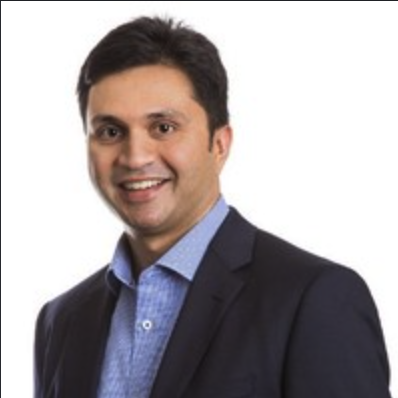
>> Welcome back to theCUBE studio. Here at the New York Stock Exchange. I'm Gemma Allen, co-host of NYSE Wired, Cybersecurity Leaders, and now we are going to talk about what is the changing nature of the cybersecurity perimeter. Everything has essentially disappeared. employees are everywhere, data is everywhere, applications are in the cloud and now we're adding AI agents that can access data, applications and systems and potentially act on our behalf. That changes that perimeter dramatically. Netskope has built its business around securing this cloud first world and now it's pushing deeper into AI security, data security and the agentic era. Joining me to unpack exactly what that looks and feels like every day is Sanjay Beri, co-founder and CEO of Netskope. Sanjay, welcome to NYSE Wired.
Sanjay Beri
>> Great. Thanks for having me.
Gemma Allen
>> So maybe let's just start with defining that perimeter that I mentioned in my opening there, right? Because we know as much as we'd like to believe that AI has changed the world of technology and enterprise and Fortune 500s overnight, the truth is that there's a lot of legacy technology in place across pretty much most, if not every single one of those entities, right? Right. So we think about cybersecurity and we think about this changing landscape. There are some fundamental changes happening for sure. But there's also a lot of heavy lifting left before we're in a secure place futuristically. Help me kind of unpack that for this audience. help us understand exactly what this development of agentic AI truly means for these enterprises and where these new risks and existing risks, are in some ways converging.
Sanjay Beri
>> Yeah, it's a great question. So I was just mentioning, I just came back from some of our customer advisory board meetings, touring Asia Pacific, EMEA, North America, and the word AI, every 15 seconds, people want to talk about it. And the reality is most companies today, they woke up and they realized just like they did 10 years ago in cloud, that, wait, AI has proliferated throughout my company. Even if I didn't bring it in, my end users did. My business units did. They brought in agents. They brought in LLMs, corporate and non-corporate. They brought in MCP servers. So the world of these companies, AI has proliferated. And so most chief security officers and CIOs, they're trying to get a hold of it to go. Wait a minute. I can't say no to AI. I want to say yes, competitive advantage, let me move quick. But wait a minute, I got to figure out what does my environment look like and how do I take control of it and govern it so I can enable AI responsibly? So they're in the infancy of this. Very few companies have anything for it. And so a lot of our discussions are around how do you rip that blindfold off, show what your AI ecosystem looks like today, and then how do you start putting governance and policy around it in a real-time way so that you can shape it to reduce your risk? And that's where most organizations, regardless of vertical, and geo, are.
Gemma Allen
>> So let's talk about that discovery process in and of itself, right? Right. Like you say, AI is proliferating across organizations and it's coming into windows and doors that people just probably didn't really think about before. Right. Like mobile home. We hear a lot about shadow AI and we know it's very real. we're all a little bit guilty of asking ChatGPT for help with a work question or even a typical colleague. Right. But help us understand how data and technology is actually tracking this and securing this perimeter. How are you identifying agents within this ecosystem broadly? It's no longer, domain, IP address, which was the world we're all so used to for so long. Like you mentioned, you're at Microsoft. that's the model we all knew. How do you now have a full grasp on exactly what's happening across these huge environments?
Sanjay Beri
>> Yeah, so one of the first things that we did at Netskope when we started nearly 14 years ago is we said, the world is not about what you type in your browser bar. It's not a URL. Nobody goes anymore and says, hey, block this app or allow it, right? You don't do that. Your business policy is to say, well, no, I want to use a corporate version of Claude Code and I want people to leverage it in my company and they could put sensitive data there, but not a non -corporate version and not these other LLMs. So it's much more granular. And the reality is the language of the internet today is not URLs and browser bars and web filtering. It's APIs. The world is trillions of APIs flying across the wire in real time between an agent and an MCP server, a user making a prompt to a frontier model or an open weight model. Under the hood, it's all APIs and JSON. And so what we built actually was the first high speed interpreter globally distributed five milliseconds from anybody in the world of APIs, so we can literally in real time as people are doing it, tell you, oh, OK, that person's going to an open weight model that is hosted in Bedrock and they're submitting sensitive health care data and let's stop it. And so really, it's how do you get visibility? You have to understand this new language of the Internet and you have to do it in real time. And that new language is APIs and JSON. Then you have to understand the data. You have to understand what data they're transacting with. With that context of understanding this new language of the internet and your understanding of the data they're transacting with, you can then discover and police what people can and cannot do in your AI ecosystem. And that's really what and where we start with customers is make them understand the agents, MCP servers, LLMs they're using.
Gemma Allen
>> Well, let's just stay on MCP for a second because it's an interesting conundrum, right? Those protocols, agent protocols are becoming a major part of this AI stack. We know that's voluntary or involuntary from the perspective of IT decision makers and owners. Right. There was a moment where people were on the fence about MCP and open weight and whether or not we would or would not see mass deployment because there was like security concerns already residing in some folks heads. Now it's kind of happening to them. What does that mean from the perspective of how quickly you can truly secure those connections when things are kind of happening again in an uncontrolled fashion, as you may say? How can you technically fully manage that problem?
Sanjay Beri
>> Yeah, so I think one of the core things to remember is when you look at MCP servers, why do people create them? Well, they're trying to, in many cases, expose their data. so that an agent or a workflow or a system can use it. And they often think, well, this is an easy way. Then everything can communicate with it. But the reality is that, well, wait a minute. Should I be exposing my financial data via an MCP server? And then, wait, is an agent going to access it? And what are they going to do with it? And so sometimes these things are very easy to do. And people think, wow, these enable amazing workflows. But security is an afterthought. And so with organizations, one of the core things to understand, where's my sensitive data? How have I protected that? What has access to it? A user? Okay. But an agent running under a user's permission has access to it? Wait, I didn't want that to happen. What is it going to do with it? And so I think this notion of your data is your most valuable asset. It's your IP. MCP servers expose that data to agents and other entities very easily. That's a pretty risky proposition. And so understanding your MCP servers that perhaps in your own organization, externally, the risk of them, what data they're exposing, and then understanding dynamically what agents are trying to interact with them and what are they trying to do. that's a critical piece for enterprises to really understand and protect their agentic ecosystem.
Gemma Allen
>> So let's talk about Netskope for a second on the competitive landscape in cyber.There was a time where there was this belief that we would just see a mass convergence in cyber. Right? This idea that the biggest problem is that actually, some CISOs have too many tools. Right? They don't even know what's in place or how to manage it or how to consolidate to improve security, et cetera. I think the agentic entrance has somewhat kind of shifted that because there's so much panic in this market too, right? And we saw Mythos earlier this year and some of the narratives that are making global headlines. I'm sure it's having a huge impact on boardrooms and on the life, and the turmoil of a CISO.
Sanjay Beri
>> Yeah.
Gemma Allen
>> What do you think it means from the perspective of, centralizing the world of cybersecurity? And I know, obviously you're coming from this as the CEO of Netskope, But what is the reality there from where the rubber meets the road? Like, do you think there are particular, vertical workflows that remain somewhat segregated for good reason? Or what are you kind of seeing and hearing and how are you building that into your own product roadmap?
Sanjay Beri
>> Yeah, so, for us at Netskope, we've actually leveraged our AI Labs team has been developing models for nine years. Now, deep learning models, small language models, domain specific models, not LLMs. for the purpose of finding sensitive data, detecting malware, network anomalies. And so AI means much more than generative AI and LLMs. And so in security, one of the big uses of AI, for example, in our platform, is, hey, develop deep learning domain -specific models to solve some of these hard data protection, threat protection, network issues and problems. And that actually has been very successful, high efficacy, and very secure. With the advent, obviously, of large language models and generative AI and frontier models, that also has a use case within the platform. But in our case, remember, we're trying to govern agents and users in real time in milliseconds, not seconds. And so we're actually the ones trying to protect them when an LLM spews out malware or sensitive data or content that is not acceptable to the company. And so I always say, zero trust your LLM, right? Zero trust your agent, right? They're not people. They have no morals. They have no EQ. They don't have a conscience. And so you have to go in, no matter what happens in the world around regulations or kill switches on the frontier model companies or slowdowns, to an enterprise. It's somewhat irrelevant. Because no matter what that looks like, AI is in your company. Agents are roaming, MCP servers are exposed. Nobody's coming to save you. You have to put in your own controls. And those controls start with not trusting any of these AI assets and in real time governing them and protecting what data they can use. And that's really what we do at Netskope is, across the world. We look at every single transaction. We look for what data, what threats, what kind of content. And then we shape that usage. We allow it. We stop those specific prompts, those tool calls and beyond. And so real-time controls is sort of where we believe ultimately organizations must go to govern, whether it's open weight or frontier models or sanctioned agents or rogue agents.
Gemma Allen
>> And do all of those different options give you the same level of, I guess, inertia, right? We talk about open weight, we talk about frontier labs, talk about API access, et cetera. for a short time earlier this year, the world of open weight was seen as extra scary, right? But now as we enter October 2026, where do you think this kind of market is headed? Where is that narrative headed? It seems as though the threat vector is now suddenly all things and everyone, right? How do you define that?
Sanjay Beri
>> Yeah, so I think the reality is that most organizations will use commercial closed models and they'll use open weight models. And I see this across the world as I deal with companies in different geos and beyond. There'll also be a push to have what I would call sovereign models. And you see that like in Europe with Mistral. You see that in Japan. You see that in India. you see people developing, because of the geopolitics in the world, trying to develop their own sovereign models. And then you have these large commercial frontier models, and then you have open weight models. My belief is people will use all of them. And it isn't about one or the other. You may use high -end models for reasoning. Maybe 80 % of your tasks, you'll try to use open weight models to avoid token maxing. And so the world you will live in is all of these. And that is why for organizations, you want to have and make sure that your governance and your security and your discovery and your ability to govern agents and servers and LLMs, it doesn't matter what model they use, right? It needs to be consistent across all of them. So as you add models, as you move models, right, you have this common set of controls. My belief too, as well, is that when you look at threats, the truth is, you can try to protect the model. And we saw some legislation, working on how do you make sure that frontier models are more responsible in their development. For enterprises, regardless, right, it's the same problem, is the models out there and agents out there, no matter how much work was done upfront to try to make it aligned, it's still an agent and it's still an LLM and you still can't trust it. And so that's how I think it plays out. The last thing I'll tell you is I do think there's a movement in verticals like healthcare, finance, and beyond to what I would call smaller language domain specific models that do a better job than a generic frontier model at solving that very specific vertical problem. And I think we'll see a proliferation of those models over time.
Gemma Allen
>> You mentioned Mistral, so I want to ask you, in the same, I guess, setting, again, rumours that there might have been a hack, there might not have been a hack, right? But what we do know fundamentally is that these models and these agents, they're reward -driven, right? And that is the one thing that they share. so you're saying a kill switch might not be enough. So how do you approach these conversations with governments? how do you solve for that?
Sanjay Beri
>> Yeah, it's a great question. So, in Netskope, there are governments in the world where they run all their traffic through Netskope. And why? Because we built this mass scale global network, right? 120 plus data centers, 80 plus regions. All the processing is in country. So when we go to someone in Germany or in the Netherlands or in the UK or in Japan or in Australia or in Brazil, we can guarantee that processing is local in country. So every prompt and response or tool call or web transaction or cloud app, it's processed locally in memory. Their data, as we protect it, is protected locally. And so one of the reasons we built one of the world's largest private cloud networks, which isn't what you would think you would normally do, is because of sovereignty. Because you can say, hey, wait, if this person is originating from Germany or France, you know what? Let's make sure they go to a French model. Let's make sure their data is processed within country. And so sovereignty comes down to how your infrastructure also is built. And when you extend that to countries, they're building their own GPU clusters. Right. And why? Well, they want the inference and the LLMs and so on to be processed locally in country on GPUs that they own and that are guaranteed to have that inference local. Same with training. And now when you look at that, you say, okay, the infrastructure, the power, the processing, like for example, with our NewEdge network, okay, it's local, it's sovereign. But then you have to go to the model side and you have to say, well, wait a minute, is the model local? Was it developed locally? That's where I think there will be some issues because you're competing against commercial frontier models that have a million GPUs and some countries have 6 ,000. So that's a hard problem to solve and to bridge in terms of training a model. And so what I think you see is the infrastructure and this processing, like security processing is local. It's what we do. And then perhaps the model itself may not be country by country from a frontier perspective, but for domain targeted models, those could be local by country. And so I think you'll see a mix where you get some level of sovereignty and control and processing. The advantage of open weight models is that you host them locally, right? You can host them in your own infrastructure. And I do think with some of the frontier models as well, over time, they'll be hosting them in as many countries as possible.
Gemma Allen
>> so last question for you. Cyber is an industry that like has always kind of responded after the fact right? Like that's how the industry evolved because that's how technology evolved. This is a very different moment. Okay and if you Sanjay are out talking to customers in APAC in different markets give me the kind of closing word here like how can you say you know Netskope is basically ahead of this curve like how are we proving this you know that we are ahead of the threat at this moment in time?
Sanjay Beri
>> Yeah, so a couple of things. One is, I always tell people, the first thing to do is get your architecture right. If you're sitting on a legacy system that is looking at what used to be called websites, URLs, and so on, you have no hope of governing AI security. You have no hope of policing the agents in the new world. And so the biggest thing I work with organizations on is you need to modernize infrastructure in your stack. You need to move to something, a proxy that understands the new language of the internet, a proper data protection system and beyond. And once you do that, you have the ingredients to truly get ahead of governance of AI. And so with that infrastructure and that base, they can then truly try to get ahead of AI, right? But they have to modernize first, get those ingredients, data protection, something that understands like a proxy, understands new language, the internet, the sovereignty network, like we offer at NewEdge. And then you can govern AI. You can discover it, understand when new LLMs pop up, new MCP servers and beyond. Now, having said that, if you're in security, it's a never ending battle, right? The same models that companies are trying to use, attackers have. And they have them faster. And they don't have governance. And they don't have rules. And they don't have to go through committees. And so, this is an age of heightened risk, nation -state malicious insider and beyond. And I think that is actually, in my travels, energizing for CISOs and CIOs. Because this is kind of what they were built for is to leverage great tech, but know there's a component out there that is very malicious that they got to stop and balance the two, enable and do it safely. So I love that challenge.
Gemma Allen
>> Well, that's certainly a great spin to put on it, right? It's about fighting the fight. And I guess to summarize something that's highly complex, getting your own house in order too, from the perspective of enterprise readiness. So Sanjay, thank you so much for joining us on NYSE Wired.
Sanjay Beri
>> Of course, thank you for having me.
Gemma Allen
>> I'm Gemma Allen here at theCUBE Studio at the New York Stock Exchange. This is NYSE Wired Cyber Security Leaders. Thanks for watching.
>> Welcome back to theCUBE studio. Here at the New York Stock Exchange. I'm Gemma Allen, co-host of NYSE Wired, Cybersecurity Leaders, and now we are going to talk about what is the changing nature of the cybersecurity perimeter. Everything has essentially disappeared. employees are everywhere, data is everywhere, applications are in the cloud and now we're adding AI agents that can access data, applications and systems and potentially act on our behalf. That changes that perimeter dramatically. Netskope has built its business around securing this cloud first world and now it's pushing deeper into AI security, data security and the agentic era. Joining me to unpack exactly what that looks and feels like every day is Sanjay Beri, co-founder and CEO of Netskope. Sanjay, welcome to NYSE Wired.
Sanjay Beri
>> Great. Thanks for having me.
Gemma Allen
>> So maybe let's just start with defining that perimeter that I mentioned in my opening there, right? Because we know as much as we'd like to believe that AI has changed the world of technology and enterprise and Fortune 500s overnight, the truth is that there's a lot of legacy technology in place across pretty much most, if not every single one of those entities, right? Right. So we think about cybersecurity and we think about this changing landscape. There are some fundamental changes happening for sure. But there's also a lot of heavy lifting left before we're in a secure place futuristically. Help me kind of unpack that for this audience. help us understand exactly what this development of agentic AI truly means for these enterprises and where these new risks and existing risks, are in some ways converging.
Sanjay Beri
>> Yeah, it's a great question. So I was just mentioning, I just came back from some of our customer advisory board meetings, touring Asia Pacific, EMEA, North America, and the word AI, every 15 seconds, people want to talk about it. And the reality is most companies today, they woke up and they realized just like they did 10 years ago in cloud, that, wait, AI has proliferated throughout my company. Even if I didn't bring it in, my end users did. My business units did. They brought in agents. They brought in LLMs, corporate and non-corporate. They brought in MCP servers. So the world of these companies, AI has proliferated. And so most chief security officers and CIOs, they're trying to get a hold of it to go. Wait a minute. I can't say no to AI. I want to say yes, competitive advantage, let me move quick. But wait a minute, I got to figure out what does my environment look like and how do I take control of it and govern it so I can enable AI responsibly? So they're in the infancy of this. Very few companies have anything for it. And so a lot of our discussions are around how do you rip that blindfold off, show what your AI ecosystem looks like today, and then how do you start putting governance and policy around it in a real-time way so that you can shape it to reduce your risk? And that's where most organizations, regardless of vertical, and geo, are.
Gemma Allen
>> So let's talk about that discovery process in and of itself, right? Right. Like you say, AI is proliferating across organizations and it's coming into windows and doors that people just probably didn't really think about before. Right. Like mobile home. We hear a lot about shadow AI and we know it's very real. we're all a little bit guilty of asking ChatGPT for help with a work question or even a typical colleague. Right. But help us understand how data and technology is actually tracking this and securing this perimeter. How are you identifying agents within this ecosystem broadly? It's no longer, domain, IP address, which was the world we're all so used to for so long. Like you mentioned, you're at Microsoft. that's the model we all knew. How do you now have a full grasp on exactly what's happening across these huge environments?
Sanjay Beri
>> Yeah, so one of the first things that we did at Netskope when we started nearly 14 years ago is we said, the world is not about what you type in your browser bar. It's not a URL. Nobody goes anymore and says, hey, block this app or allow it, right? You don't do that. Your business policy is to say, well, no, I want to use a corporate version of Claude Code and I want people to leverage it in my company and they could put sensitive data there, but not a non -corporate version and not these other LLMs. So it's much more granular. And the reality is the language of the internet today is not URLs and browser bars and web filtering. It's APIs. The world is trillions of APIs flying across the wire in real time between an agent and an MCP server, a user making a prompt to a frontier model or an open weight model. Under the hood, it's all APIs and JSON. And so what we built actually was the first high speed interpreter globally distributed five milliseconds from anybody in the world of APIs, so we can literally in real time as people are doing it, tell you, oh, OK, that person's going to an open weight model that is hosted in Bedrock and they're submitting sensitive health care data and let's stop it. And so really, it's how do you get visibility? You have to understand this new language of the Internet and you have to do it in real time. And that new language is APIs and JSON. Then you have to understand the data. You have to understand what data they're transacting with. With that context of understanding this new language of the internet and your understanding of the data they're transacting with, you can then discover and police what people can and cannot do in your AI ecosystem. And that's really what and where we start with customers is make them understand the agents, MCP servers, LLMs they're using.
Gemma Allen
>> Well, let's just stay on MCP for a second because it's an interesting conundrum, right? Those protocols, agent protocols are becoming a major part of this AI stack. We know that's voluntary or involuntary from the perspective of IT decision makers and owners. Right. There was a moment where people were on the fence about MCP and open weight and whether or not we would or would not see mass deployment because there was like security concerns already residing in some folks heads. Now it's kind of happening to them. What does that mean from the perspective of how quickly you can truly secure those connections when things are kind of happening again in an uncontrolled fashion, as you may say? How can you technically fully manage that problem?
Sanjay Beri
>> Yeah, so I think one of the core things to remember is when you look at MCP servers, why do people create them? Well, they're trying to, in many cases, expose their data. so that an agent or a workflow or a system can use it. And they often think, well, this is an easy way. Then everything can communicate with it. But the reality is that, well, wait a minute. Should I be exposing my financial data via an MCP server? And then, wait, is an agent going to access it? And what are they going to do with it? And so sometimes these things are very easy to do. And people think, wow, these enable amazing workflows. But security is an afterthought. And so with organizations, one of the core things to understand, where's my sensitive data? How have I protected that? What has access to it? A user? Okay. But an agent running under a user's permission has access to it? Wait, I didn't want that to happen. What is it going to do with it? And so I think this notion of your data is your most valuable asset. It's your IP. MCP servers expose that data to agents and other entities very easily. That's a pretty risky proposition. And so understanding your MCP servers that perhaps in your own organization, externally, the risk of them, what data they're exposing, and then understanding dynamically what agents are trying to interact with them and what are they trying to do. that's a critical piece for enterprises to really understand and protect their agentic ecosystem.
Gemma Allen
>> So let's talk about Netskope for a second on the competitive landscape in cyber.There was a time where there was this belief that we would just see a mass convergence in cyber. Right? This idea that the biggest problem is that actually, some CISOs have too many tools. Right? They don't even know what's in place or how to manage it or how to consolidate to improve security, et cetera. I think the agentic entrance has somewhat kind of shifted that because there's so much panic in this market too, right? And we saw Mythos earlier this year and some of the narratives that are making global headlines. I'm sure it's having a huge impact on boardrooms and on the life, and the turmoil of a CISO.
Sanjay Beri
>> Yeah.
Gemma Allen
>> What do you think it means from the perspective of, centralizing the world of cybersecurity? And I know, obviously you're coming from this as the CEO of Netskope, But what is the reality there from where the rubber meets the road? Like, do you think there are particular, vertical workflows that remain somewhat segregated for good reason? Or what are you kind of seeing and hearing and how are you building that into your own product roadmap?
Sanjay Beri
>> Yeah, so, for us at Netskope, we've actually leveraged our AI Labs team has been developing models for nine years. Now, deep learning models, small language models, domain specific models, not LLMs. for the purpose of finding sensitive data, detecting malware, network anomalies. And so AI means much more than generative AI and LLMs. And so in security, one of the big uses of AI, for example, in our platform, is, hey, develop deep learning domain -specific models to solve some of these hard data protection, threat protection, network issues and problems. And that actually has been very successful, high efficacy, and very secure. With the advent, obviously, of large language models and generative AI and frontier models, that also has a use case within the platform. But in our case, remember, we're trying to govern agents and users in real time in milliseconds, not seconds. And so we're actually the ones trying to protect them when an LLM spews out malware or sensitive data or content that is not acceptable to the company. And so I always say, zero trust your LLM, right? Zero trust your agent, right? They're not people. They have no morals. They have no EQ. They don't have a conscience. And so you have to go in, no matter what happens in the world around regulations or kill switches on the frontier model companies or slowdowns, to an enterprise. It's somewhat irrelevant. Because no matter what that looks like, AI is in your company. Agents are roaming, MCP servers are exposed. Nobody's coming to save you. You have to put in your own controls. And those controls start with not trusting any of these AI assets and in real time governing them and protecting what data they can use. And that's really what we do at Netskope is, across the world. We look at every single transaction. We look for what data, what threats, what kind of content. And then we shape that usage. We allow it. We stop those specific prompts, those tool calls and beyond. And so real-time controls is sort of where we believe ultimately organizations must go to govern, whether it's open weight or frontier models or sanctioned agents or rogue agents.
Gemma Allen
>> And do all of those different options give you the same level of, I guess, inertia, right? We talk about open weight, we talk about frontier labs, talk about API access, et cetera. for a short time earlier this year, the world of open weight was seen as extra scary, right? But now as we enter October 2026, where do you think this kind of market is headed? Where is that narrative headed? It seems as though the threat vector is now suddenly all things and everyone, right? How do you define that?
Sanjay Beri
>> Yeah, so I think the reality is that most organizations will use commercial closed models and they'll use open weight models. And I see this across the world as I deal with companies in different geos and beyond. There'll also be a push to have what I would call sovereign models. And you see that like in Europe with Mistral. You see that in Japan. You see that in India. you see people developing, because of the geopolitics in the world, trying to develop their own sovereign models. And then you have these large commercial frontier models, and then you have open weight models. My belief is people will use all of them. And it isn't about one or the other. You may use high -end models for reasoning. Maybe 80 % of your tasks, you'll try to use open weight models to avoid token maxing. And so the world you will live in is all of these. And that is why for organizations, you want to have and make sure that your governance and your security and your discovery and your ability to govern agents and servers and LLMs, it doesn't matter what model they use, right? It needs to be consistent across all of them. So as you add models, as you move models, right, you have this common set of controls. My belief too, as well, is that when you look at threats, the truth is, you can try to protect the model. And we saw some legislation, working on how do you make sure that frontier models are more responsible in their development. For enterprises, regardless, right, it's the same problem, is the models out there and agents out there, no matter how much work was done upfront to try to make it aligned, it's still an agent and it's still an LLM and you still can't trust it. And so that's how I think it plays out. The last thing I'll tell you is I do think there's a movement in verticals like healthcare, finance, and beyond to what I would call smaller language domain specific models that do a better job than a generic frontier model at solving that very specific vertical problem. And I think we'll see a proliferation of those models over time.
Gemma Allen
>> You mentioned Mistral, so I want to ask you, in the same, I guess, setting, again, rumours that there might have been a hack, there might not have been a hack, right? But what we do know fundamentally is that these models and these agents, they're reward -driven, right? And that is the one thing that they share. so you're saying a kill switch might not be enough. So how do you approach these conversations with governments? how do you solve for that?
Sanjay Beri
>> Yeah, it's a great question. So, in Netskope, there are governments in the world where they run all their traffic through Netskope. And why? Because we built this mass scale global network, right? 120 plus data centers, 80 plus regions. All the processing is in country. So when we go to someone in Germany or in the Netherlands or in the UK or in Japan or in Australia or in Brazil, we can guarantee that processing is local in country. So every prompt and response or tool call or web transaction or cloud app, it's processed locally in memory. Their data, as we protect it, is protected locally. And so one of the reasons we built one of the world's largest private cloud networks, which isn't what you would think you would normally do, is because of sovereignty. Because you can say, hey, wait, if this person is originating from Germany or France, you know what? Let's make sure they go to a French model. Let's make sure their data is processed within country. And so sovereignty comes down to how your infrastructure also is built. And when you extend that to countries, they're building their own GPU clusters. Right. And why? Well, they want the inference and the LLMs and so on to be processed locally in country on GPUs that they own and that are guaranteed to have that inference local. Same with training. And now when you look at that, you say, okay, the infrastructure, the power, the processing, like for example, with our NewEdge network, okay, it's local, it's sovereign. But then you have to go to the model side and you have to say, well, wait a minute, is the model local? Was it developed locally? That's where I think there will be some issues because you're competing against commercial frontier models that have a million GPUs and some countries have 6 ,000. So that's a hard problem to solve and to bridge in terms of training a model. And so what I think you see is the infrastructure and this processing, like security processing is local. It's what we do. And then perhaps the model itself may not be country by country from a frontier perspective, but for domain targeted models, those could be local by country. And so I think you'll see a mix where you get some level of sovereignty and control and processing. The advantage of open weight models is that you host them locally, right? You can host them in your own infrastructure. And I do think with some of the frontier models as well, over time, they'll be hosting them in as many countries as possible.
Gemma Allen
>> so last question for you. Cyber is an industry that like has always kind of responded after the fact right? Like that's how the industry evolved because that's how technology evolved. This is a very different moment. Okay and if you Sanjay are out talking to customers in APAC in different markets give me the kind of closing word here like how can you say you know Netskope is basically ahead of this curve like how are we proving this you know that we are ahead of the threat at this moment in time?
Sanjay Beri
>> Yeah, so a couple of things. One is, I always tell people, the first thing to do is get your architecture right. If you're sitting on a legacy system that is looking at what used to be called websites, URLs, and so on, you have no hope of governing AI security. You have no hope of policing the agents in the new world. And so the biggest thing I work with organizations on is you need to modernize infrastructure in your stack. You need to move to something, a proxy that understands the new language of the internet, a proper data protection system and beyond. And once you do that, you have the ingredients to truly get ahead of governance of AI. And so with that infrastructure and that base, they can then truly try to get ahead of AI, right? But they have to modernize first, get those ingredients, data protection, something that understands like a proxy, understands new language, the internet, the sovereignty network, like we offer at NewEdge. And then you can govern AI. You can discover it, understand when new LLMs pop up, new MCP servers and beyond. Now, having said that, if you're in security, it's a never ending battle, right? The same models that companies are trying to use, attackers have. And they have them faster. And they don't have governance. And they don't have rules. And they don't have to go through committees. And so, this is an age of heightened risk, nation -state malicious insider and beyond. And I think that is actually, in my travels, energizing for CISOs and CIOs. Because this is kind of what they were built for is to leverage great tech, but know there's a component out there that is very malicious that they got to stop and balance the two, enable and do it safely. So I love that challenge.
Gemma Allen
>> Well, that's certainly a great spin to put on it, right? It's about fighting the fight. And I guess to summarize something that's highly complex, getting your own house in order too, from the perspective of enterprise readiness. So Sanjay, thank you so much for joining us on NYSE Wired.
Sanjay Beri
>> Of course, thank you for having me.
Gemma Allen
>> I'm Gemma Allen here at theCUBE Studio at the New York Stock Exchange. This is NYSE Wired Cyber Security Leaders. Thanks for watching.