In this episode of theCUBE's Cyber Security Leaders series, we explore cyber security leadership and innovative financing with Chainguard. The discussion features Dan Lorenc, founder and Chief Executive Officer of Chainguard, during the NYSE Wired program at the New York Stock Exchange CUBE Studio. Alongside John Furrier, co-founder and co-Chief Executive Officer of SiliconANGLE Media Inc., Lorenc examines the implications of Chainguard's recent $280 million funding from General Catalyst's Customer Value Fund and its impact on the company's growth strategy in evolving cyber security landscapes.
Lorenc offers valuable insights into Chainguard's pioneering approach to zero trust environments and open source security validation. The conversation, led by experts from theCUBE Research, highlights the significance of safe guardrails in cloud-native architectures and the convergence of AI and Kubernetes. As KubeCon approaches, the session examines the ongoing integration of AI, cloud-native technologies, and the enterprise focus.
Key takeaways from the discussion include understanding the impact of non-dilutive capital investments on Chainguard's scaling strategies, the accelerated convergence of AI and cloud-native environments, and the shifting responsibilities within development teams as AI tooling advances. Lorenc emphasizes the importance of establishing robust security frameworks and leveraging long-standing investments in development velocity to adapt to a rapidly changing tech landscape.
Forgot Password
Almost there!
We just sent you a verification email. Please verify your account to gain access to
theCUBE + NYSE Wired: Zero Trust Cyber Series. If you don’t think you received an email check your
spam folder.
Sign in to theCUBE + NYSE Wired: Zero Trust Cyber Series.
In order to sign in, enter the email address you used to registered for the event. Once completed, you will receive an email with a verification link. Open this link to automatically sign into the site.
Register For theCUBE + NYSE Wired: Zero Trust Cyber Series
Please fill out the information below. You will recieve an email with a verification link confirming your registration. Click the link to automatically sign into the site.
You’re almost there!
We just sent you a verification email. Please click the verification button in the email. Once your email address is verified, you will have full access to all event content for theCUBE + NYSE Wired: Zero Trust Cyber Series.
I want my badge and interests to be visible to all attendees.
Checking this box will display your presense on the attendees list, view your profile and allow other attendees to contact you via 1-1 chat. Read the Privacy Policy. At any time, you can choose to disable this preference.
Select your Interests!
add
Upload your photo
Uploading..
OR
Connect via Twitter
Connect via Linkedin
EDIT PASSWORD
Share
Forgot Password
Almost there!
We just sent you a verification email. Please verify your account to gain access to
theCUBE + NYSE Wired: Zero Trust Cyber Series. If you don’t think you received an email check your
spam folder.
Sign in to theCUBE + NYSE Wired: Zero Trust Cyber Series.
In order to sign in, enter the email address you used to registered for the event. Once completed, you will receive an email with a verification link. Open this link to automatically sign into the site.
Sign in to gain access to theCUBE + NYSE Wired: Zero Trust Cyber Series
Please sign in with LinkedIn to continue to theCUBE + NYSE Wired: Zero Trust Cyber Series. Signing in with LinkedIn ensures a professional environment.
Are you sure you want to remove access rights for this user?
Details
Manage Access
email address
Community Invitation
Dan Lorenc, Chainguard
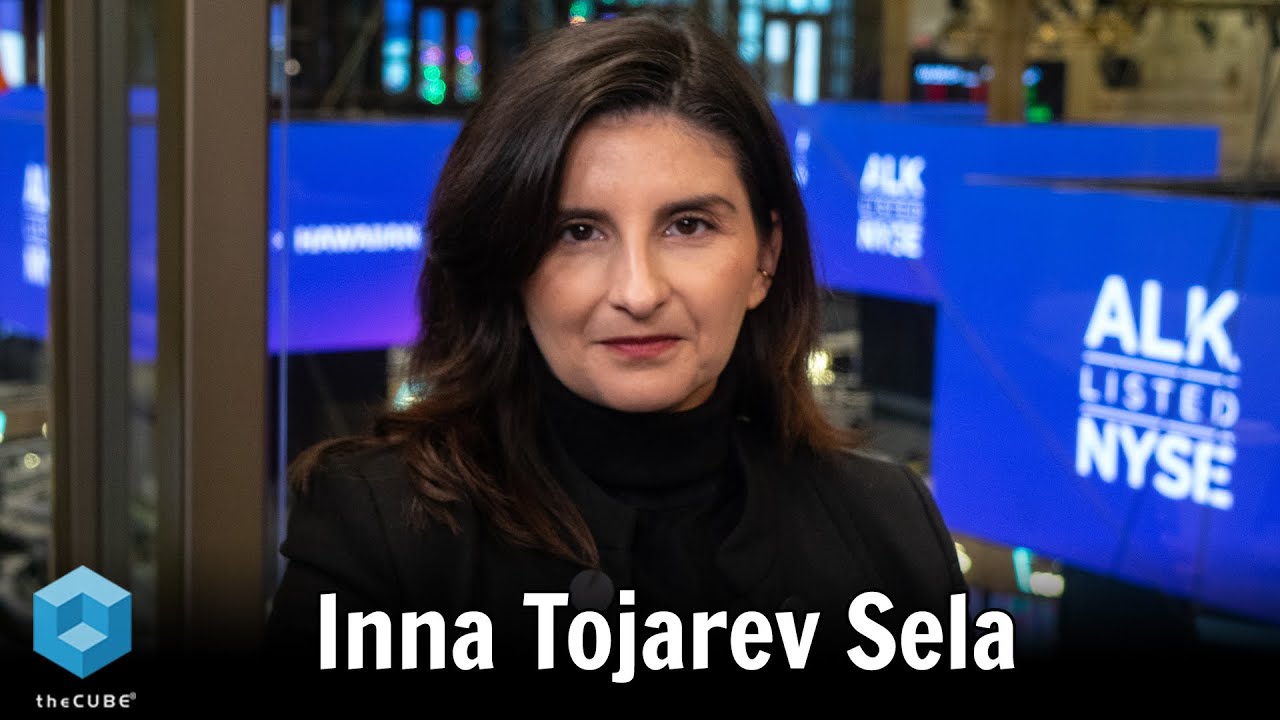
Inna Tokarev Sela is the CEO and founder of Illumex. The platform enables companies to extract value from structured data, creating a virtual semantic graph for users to interact with in natural language. Illumex focuses on contextualizing data in real-time and offers built-in governance features. By partnering with major data platform providers, Illumex has increased data usage for customers. The company has raised $13 million and has a diverse workforce. Inna's leadership style is described as empathetic. Illumex envisions a future where data interactions are seamless and efficient. Overall, the company aims to lead the industry towards a more streamlined application-free future.
>> Hello, I'm John Furrier, host of theCUBE. We're here at our New York Stock Exchange CUBE Studio for the NYSC Wired program and community. Of course, theCUBE is bringing all the action here in the show floor, connecting Wall Street and Silicon Valley. We've got our Palo Alto studio. Of course, we cover all the events and one event we were just recently at was Chainguard Assemble. We have their co-founder and CEO, Dan is here. Dan, great to see you. Congratulations on the fresh financing. October 23rd last week. Congratulations.
Dan Lorenc
>> Yeah, thanks for having me on. Yeah, love the venue you're at there. I wish I could be there in person.
John Furrier
>> The trades are going on behind me. We are featuring the Cyber Leaders zero trust environment. You guys have been really the platform certainly validated by this next round of funding that you secured. The trust and open source security, you guys are doing it all. Take us through the news real quick. The round, was it expected? What's the use of funds going to be used for? What's the plans?
Dan Lorenc
>> Yeah, sure. So, we just announced a $280 million funding from General Catalyst and it's actually a pretty interesting vehicle. This is not a traditional venture funding round. This is a different vehicle General Catalyst has set up over the last couple of years called their Customer Value Fund and it's non-dilutive capital, so it's not like a normal equity round where you price the company and stuff like that. This is a flexible vehicle that allows us to invest in sales and marketing. So, it pairs really well with the other financing we did earlier this year. You asked if this was planned. Yeah, we've been working on this one in parallel since we did that series D round. But it's really dynamic vehicle. It can scale up and down and it lets us invest in our growth. That's getting customers is what we're spending a lot of time and money on right now as we hit this point in our scaling journey.
John Furrier
>> Nice escape velocity strategy as you guys kind of go supernova. I want to ask you about, we've been following your business, great developers' traction, the velocity you guys enable. KubeCon's coming up November 10th that theCUBE we'll be there. You're there. That's your community, but the AI world is kicking into high gear, so the cloud native is on a full, I won't say collision course, but certainly the enablement of those two worlds are coming together, having the velocity, the trust, and all these use cases. We're seeing people saying, "Hey, I cloned Salesforce in a weekend." You got to wire that together, and so there's a lot of work on containers, security. Can you share your view of the current state that you guys are executing into with this AI agentic infrastructure emerging? Essentially kind of an extension of what you've been living and we've been covering microservices, Kubernetes. That's the foundational layer, but take us through your point of view on this.
Dan Lorenc
>> Yeah, AI, it's like hitting the gas or turning everything up to 11 in open source and software development and all this stuff put together. These models are trained on open source code. They're great at writing code the same way people have been writing code before just doing it a lot faster. You talk about us hitting escape velocity, it's also escape velocity for Kubernetes. That's the platform powering almost everyone's AI infrastructure from the big ones out there like OpenAI and Anthropic down to everybody's setting up their own inference platforms and training platforms and all these data lakes that's all flowing through Kubernetes. That's all flowing through these cloud-native architectures. Collision course probably isn't the right word, but yeah, it's a critical-
John Furrier
>> Accelerated connection coming together.
Dan Lorenc
>> Yeah. Yeah, another 10 years of Kubernetes I think is what this is guaranteed the world.
John Furrier
>> Yeah.
Dan Lorenc
>> And yeah, KubeCon is the place to be for discussing all of that.
John Furrier
>> You guys had a great success and continue to thunder away on bridging the tooling and the platforms to the enterprise needs. With this now accelerated convergence of AI and cloud native, there's a real focus on the enterprise side of things. What do you see there because this is where it's still the same game, developers? I was just talking with Nvidia in GTC last week. They're going full in on ecosystem around developers trying to bring that AI factory to the edge and then to the enterprise, but you got to run software on these things. It's programmable. It's an infrastructure, so it feels like IaaS meets PaaS on the cloud, but it look a little bit different, a little bit different horizontal scale. What's your thoughts on the developer angle and how do we bridge this?
Dan Lorenc
>> Yeah. Yeah. KubeCon's a really interesting place for this. You talked about... What was the first KubeCon you were at?
John Furrier
>> First one ever, I've been at all KubeCons.
Dan Lorenc
>> First one ever, yeah.
John Furrier
>> Yeah.
Dan Lorenc
>> I was at a couple of those first ones and it was small back then. Enterprises were talking about Kubernetes and containerization and public cloud and all this stuff for years. Probably three years ago was when it really happened. AI is like that except that compression cycle it's like six months now instead of this six-year kind of warm up phase we all had before. So, yeah, that's kind of the place we serve. How do we bring these technologies safely into the enterprise and everyone's trying to do it all this quarter and next quarter instead of planning these things over four or five years like it's happened in the past.
John Furrier
>> When I talked to Justin Kirkland before he joined your company, he was telling me how excited he was to join Chainguard and for certainly it's get a good vote from him, but the topic at that time was containers were there, Kubernetes was developing, S-bombs were the big conversation, software bill of materials. Now, as we get into software being written maybe by agents, does that change the nature of pipelining containers? You guys are continuing that velocity. What's your view on that and how should people be thinking about setting up and provisioning for essentially an autonomous programming layer?
Dan Lorenc
>> Yeah, it is everything faster and more of it is an easiest way to think about it. I had a dinner in Dallas a couple of weeks ago with a bunch of Fortune 100 CIOs. Just had lunch today with some building developer platforms at one of the big five banks in the US, and everybody's trying to grapple with the same things, right? Everyone knows anecdotally and sit over the shoulder of someone working with these tools and these models. You're now writing code 10 times faster or 10 times as much code in the same amount of time. And everyone's sitting and asking the same question too of, "Well, why aren't my projects getting done 10 times faster?" And I think what we've seen happen here is developers were never actually, the bottleneck in software development or writing code was never actually the bottleneck. All of the systems downstream from that were even before. But so now we've taken this one piece that wasn't the bottleneck, made it 10 times faster and everything else sitting downstream of that that has been the bottleneck is now under enormous strain. How do we make sure what they're doing is secure? How do we review all of this code, whether it's written by a person going 10 times faster or by an autonomous form of agents? Those are the problems people are figuring out because once we can solve that, that is when you're actually going to start to see these velocity improvements across the board and start shipping and delivering value faster.
John Furrier
>> So, when you see the security landscape, you guys, you really hang your hat on that piece, as security comes into beyond the APIs, you got A2A, you got AP2, you have all these new mechanisms. Is there an architecture that you see developing or an area that people should pay attention to that may not know to look there? What are some of the key areas that you're watching around how to maintain the security posture while accelerating kind of the innovation and the integration?
Dan Lorenc
>> Yeah. The people that invested the most in prior years in developer velocity, developer productivity, golden paths to production, safe guardrails, kind of all of those terms that we've heard are the ones that are benefiting the most from this because those are the people set up to start increasing the velocity. The more code that's being written, the more security vulnerabilities you're going to have, the more stuff you're going to find downstream, the more of that you can shift left, the more that you can put into the hands of developers as they become faster, the better those benefits you're going to see. So, it's really nothing fancy, nothing new, just all those investments that people knew we should have been making this whole time. Now all of a sudden they're paying off a lot quicker because everything is going faster to the left.
John Furrier
>> You guys were showing some stuff at your Assemble event. I know you got your March date set up for next year, March 2026. What was the key takeaway in the use cases from customers? Was it the cell healing, security modeling, that's my word, but probably you have a better word for it, but you guys were automating a lot of things. What's the trend? What are some of the patterns and use cases that emerged and what's emerging now?
Dan Lorenc
>> Yeah, our marketing team loved that term. I think you were the one that made it up. Yeah. So, we've been trying to build a safe source for open source this whole time. We're trying to give people a trusted place to get all the open source their developers are going to build on from. Everybody knows this, KubeCon knows this, but 90% to 98% of the code by lines of code that you're writing is open source. We might see that number come down a little bit now that people are writing 10 times as much code on the other end, but the vast majority of this stuff that people are bringing into their organizations is open source. I mean, it's just not written by them. We've been known for our containers product. That's probably what we talked about the majority of at KubeCon, but earlier this year we announced more types of open source that were doing that same thing for. So, we announced our Libraries product. That's that same thing, but for entire ecosystems of open source programming language libraries, those things the people pull in on top of our containers or wherever they're writing code, our Python Libraries product. It's basically our own version of IPI where everything in there is trusted built by us and you don't have to worry about malware. We just went GA with that earlier this month. We've also included CD backporting in that too, so these libraries, if you can't do an update for some reason on this timeline, backporting vulnerability fixes to the last three years worth of versions for all of those libraries to make it even easier for developers to do updates. Java and Java is in beta. Yeah, a lot's coming.
John Furrier
>> I mean, people think about the importance of that. Can you share the operational benefit besides the blue screen of death you might've seen at Delta Air Lines, not to say that was an error on updates? But these are hygiene issues. You guys are doing the heavy lifting on all the corner cases and your developer-centric approach works. I get that, but there's now a data-centric view. If you can't handle the volume of the data or the updates, this is where AI could help. How do you explain that benefit operationally and then dealing with just the velocity of change, whether it's inbound system changes or just data itself?
Dan Lorenc
>> Yeah. Yeah. The way I think of it is we're building a very stable, very rock solid foundation for you to do your development on. If you're building things with hammers and screwdrivers and now all of a sudden you give people power tools and machines and they're going to start building a lot faster, those investments down at that foundational layer are even more important, and that's what a stable, safe, secure source for open source allows you to do. That's the foundation for all the infrastructure we're building.
John Furrier
>> One of the things I was talking with someone on the AI side, they were talking about energy and they were saying about with AI factories and I want to get your thoughts on this because you guys have a similar situation. They said that the energy wasted on first order problems, like just changing stuff after you did things like you're building a building. Okay, let's break that down. There's a lot of build and tear down mechanics, whether it's a data center or an application. You guys really kind of made your way on this minimal rebuild concept and again, this productivity gain. Could you share the challenges now with, I want to build without tearing stuff down or making the right changes? What is available and what's your just philosophy on that?
Dan Lorenc
>> Yeah. I think with this velocity increase, agentic tooling, errors magnify the farther down the development pipeline you get. We've always known that from Mythical Man-Month back in the 70s and 80s. The cost of fixing something when it's in production is 10 to 100 times higher than fixing it while it's still in development. The role of the developer is changing. You're not really the one writing those four loops anymore. The more involved you are in watching the agent in the early stages, reviewing those plans that they're writing, critiquing those plans, making sure the research they do is accurate, that stops the errors from magnifying all the way down to that code that then is now churning because you're writing something and realizing you have to throw it away the next day. And so, getting people comfortable with that, everyone is now a senior architect and you're not really writing the code yourself. You're reviewing the work of your more junior team members, and those junior team members are very, very cheap now, so people can have teams of 10 or 20 of them, but it does mean you have to pay a lot more attention at those early stages to avoid having those huge places later.
John Furrier
>> Yeah, it's great to have you on. You mentioned Mythical Man-Month, kind of throwback, a little triggering moment for me, but I get this question on, I want to get your thoughts on this since you're here. Senior leader, a ton of experience. The most common question I get from friends, relatives, people in the industry, mostly from either younger, just grad computer science grads, and then older systems guys like me are like, "Hey, I want to get back in the game." And you're seeing a lot of that, right? AI is just intoxicating innovation curve. I mean, like you said, you got superpowers. If you know architecture and system design, you can build anything. But the question I get is what should I do? How do I get in the game? And with open source thriving, what's your advice for where to jump in? How should people navigate the landscape of just either getting in the game of coding, building, innovating, obviously open source, that's an easy answer, but once in there's kind like what's the playbook? It's really being written. I mean, you could jump into CNCF, but Linux Foundation has got a bunch of new projects popping out, so there's a ton of surface area to land. What's your take on that and what's your advice for folks who might be like, "I just don't know what to do. I got skills. Where do I go?"
Dan Lorenc
>> Yeah, your point is correct. The playbook is still being written right now. It's a fast moving space. Everything is changing every day, every week, every month. If you're a company, get your team, get your developers familiar with all of the tools because the ones we're using today probably aren't going to be the ones that are around in a quarter a year from now. Get comfortable with change is probably the simplest answer to that.
John Furrier
>> Okay, great. Any plans for KubeCon and teaser? I've seen-
Dan Lorenc
>> We've got a lot going on. It's going to be a busy week. Yeah, it's one of my favorite events every year.
John Furrier
>> Well, great to have you on theCUBE on our Cybersecurity Leaders Program, and congratulations on the continued success and the financing vehicle and hit that escape velocity. Keep it going. Thanks for coming on.
Dan Lorenc
>> Thanks.
John Furrier
>> Appreciate it.
Dan Lorenc
>> Thanks for having me on.
John Furrier
>> I'm John Furrier here at theCUBE for the Cyber Leaders Zero Trust Environment. You're starting to see the security paradigm built in and the AI era of infrastructure platform codifying with Kubernetes cloud-native, all kind of coming together. It's just distributed computing with software and it's going to be scaling rapidly. Get involved, learn the tools. We're doing our best to bring that content to you. Thanks for watching.
>> Hello, I'm John Furrier, host of theCUBE. We're here at our New York Stock Exchange CUBE Studio for the NYSC Wired program and community. Of course, theCUBE is bringing all the action here in the show floor, connecting Wall Street and Silicon Valley. We've got our Palo Alto studio. Of course, we cover all the events and one event we were just recently at was Chainguard Assemble. We have their co-founder and CEO, Dan is here. Dan, great to see you. Congratulations on the fresh financing. October 23rd last week. Congratulations.
Dan Lorenc
>> Yeah, thanks for having me on. Yeah, love the venue you're at there. I wish I could be there in person.
John Furrier
>> The trades are going on behind me. We are featuring the Cyber Leaders zero trust environment. You guys have been really the platform certainly validated by this next round of funding that you secured. The trust and open source security, you guys are doing it all. Take us through the news real quick. The round, was it expected? What's the use of funds going to be used for? What's the plans?
Dan Lorenc
>> Yeah, sure. So, we just announced a $280 million funding from General Catalyst and it's actually a pretty interesting vehicle. This is not a traditional venture funding round. This is a different vehicle General Catalyst has set up over the last couple of years called their Customer Value Fund and it's non-dilutive capital, so it's not like a normal equity round where you price the company and stuff like that. This is a flexible vehicle that allows us to invest in sales and marketing. So, it pairs really well with the other financing we did earlier this year. You asked if this was planned. Yeah, we've been working on this one in parallel since we did that series D round. But it's really dynamic vehicle. It can scale up and down and it lets us invest in our growth. That's getting customers is what we're spending a lot of time and money on right now as we hit this point in our scaling journey.
John Furrier
>> Nice escape velocity strategy as you guys kind of go supernova. I want to ask you about, we've been following your business, great developers' traction, the velocity you guys enable. KubeCon's coming up November 10th that theCUBE we'll be there. You're there. That's your community, but the AI world is kicking into high gear, so the cloud native is on a full, I won't say collision course, but certainly the enablement of those two worlds are coming together, having the velocity, the trust, and all these use cases. We're seeing people saying, "Hey, I cloned Salesforce in a weekend." You got to wire that together, and so there's a lot of work on containers, security. Can you share your view of the current state that you guys are executing into with this AI agentic infrastructure emerging? Essentially kind of an extension of what you've been living and we've been covering microservices, Kubernetes. That's the foundational layer, but take us through your point of view on this.
Dan Lorenc
>> Yeah, AI, it's like hitting the gas or turning everything up to 11 in open source and software development and all this stuff put together. These models are trained on open source code. They're great at writing code the same way people have been writing code before just doing it a lot faster. You talk about us hitting escape velocity, it's also escape velocity for Kubernetes. That's the platform powering almost everyone's AI infrastructure from the big ones out there like OpenAI and Anthropic down to everybody's setting up their own inference platforms and training platforms and all these data lakes that's all flowing through Kubernetes. That's all flowing through these cloud-native architectures. Collision course probably isn't the right word, but yeah, it's a critical-
John Furrier
>> Accelerated connection coming together.
Dan Lorenc
>> Yeah. Yeah, another 10 years of Kubernetes I think is what this is guaranteed the world.
John Furrier
>> Yeah.
Dan Lorenc
>> And yeah, KubeCon is the place to be for discussing all of that.
John Furrier
>> You guys had a great success and continue to thunder away on bridging the tooling and the platforms to the enterprise needs. With this now accelerated convergence of AI and cloud native, there's a real focus on the enterprise side of things. What do you see there because this is where it's still the same game, developers? I was just talking with Nvidia in GTC last week. They're going full in on ecosystem around developers trying to bring that AI factory to the edge and then to the enterprise, but you got to run software on these things. It's programmable. It's an infrastructure, so it feels like IaaS meets PaaS on the cloud, but it look a little bit different, a little bit different horizontal scale. What's your thoughts on the developer angle and how do we bridge this?
Dan Lorenc
>> Yeah. Yeah. KubeCon's a really interesting place for this. You talked about... What was the first KubeCon you were at?
John Furrier
>> First one ever, I've been at all KubeCons.
Dan Lorenc
>> First one ever, yeah.
John Furrier
>> Yeah.
Dan Lorenc
>> I was at a couple of those first ones and it was small back then. Enterprises were talking about Kubernetes and containerization and public cloud and all this stuff for years. Probably three years ago was when it really happened. AI is like that except that compression cycle it's like six months now instead of this six-year kind of warm up phase we all had before. So, yeah, that's kind of the place we serve. How do we bring these technologies safely into the enterprise and everyone's trying to do it all this quarter and next quarter instead of planning these things over four or five years like it's happened in the past.
John Furrier
>> When I talked to Justin Kirkland before he joined your company, he was telling me how excited he was to join Chainguard and for certainly it's get a good vote from him, but the topic at that time was containers were there, Kubernetes was developing, S-bombs were the big conversation, software bill of materials. Now, as we get into software being written maybe by agents, does that change the nature of pipelining containers? You guys are continuing that velocity. What's your view on that and how should people be thinking about setting up and provisioning for essentially an autonomous programming layer?
Dan Lorenc
>> Yeah, it is everything faster and more of it is an easiest way to think about it. I had a dinner in Dallas a couple of weeks ago with a bunch of Fortune 100 CIOs. Just had lunch today with some building developer platforms at one of the big five banks in the US, and everybody's trying to grapple with the same things, right? Everyone knows anecdotally and sit over the shoulder of someone working with these tools and these models. You're now writing code 10 times faster or 10 times as much code in the same amount of time. And everyone's sitting and asking the same question too of, "Well, why aren't my projects getting done 10 times faster?" And I think what we've seen happen here is developers were never actually, the bottleneck in software development or writing code was never actually the bottleneck. All of the systems downstream from that were even before. But so now we've taken this one piece that wasn't the bottleneck, made it 10 times faster and everything else sitting downstream of that that has been the bottleneck is now under enormous strain. How do we make sure what they're doing is secure? How do we review all of this code, whether it's written by a person going 10 times faster or by an autonomous form of agents? Those are the problems people are figuring out because once we can solve that, that is when you're actually going to start to see these velocity improvements across the board and start shipping and delivering value faster.
John Furrier
>> So, when you see the security landscape, you guys, you really hang your hat on that piece, as security comes into beyond the APIs, you got A2A, you got AP2, you have all these new mechanisms. Is there an architecture that you see developing or an area that people should pay attention to that may not know to look there? What are some of the key areas that you're watching around how to maintain the security posture while accelerating kind of the innovation and the integration?
Dan Lorenc
>> Yeah. The people that invested the most in prior years in developer velocity, developer productivity, golden paths to production, safe guardrails, kind of all of those terms that we've heard are the ones that are benefiting the most from this because those are the people set up to start increasing the velocity. The more code that's being written, the more security vulnerabilities you're going to have, the more stuff you're going to find downstream, the more of that you can shift left, the more that you can put into the hands of developers as they become faster, the better those benefits you're going to see. So, it's really nothing fancy, nothing new, just all those investments that people knew we should have been making this whole time. Now all of a sudden they're paying off a lot quicker because everything is going faster to the left.
John Furrier
>> You guys were showing some stuff at your Assemble event. I know you got your March date set up for next year, March 2026. What was the key takeaway in the use cases from customers? Was it the cell healing, security modeling, that's my word, but probably you have a better word for it, but you guys were automating a lot of things. What's the trend? What are some of the patterns and use cases that emerged and what's emerging now?
Dan Lorenc
>> Yeah, our marketing team loved that term. I think you were the one that made it up. Yeah. So, we've been trying to build a safe source for open source this whole time. We're trying to give people a trusted place to get all the open source their developers are going to build on from. Everybody knows this, KubeCon knows this, but 90% to 98% of the code by lines of code that you're writing is open source. We might see that number come down a little bit now that people are writing 10 times as much code on the other end, but the vast majority of this stuff that people are bringing into their organizations is open source. I mean, it's just not written by them. We've been known for our containers product. That's probably what we talked about the majority of at KubeCon, but earlier this year we announced more types of open source that were doing that same thing for. So, we announced our Libraries product. That's that same thing, but for entire ecosystems of open source programming language libraries, those things the people pull in on top of our containers or wherever they're writing code, our Python Libraries product. It's basically our own version of IPI where everything in there is trusted built by us and you don't have to worry about malware. We just went GA with that earlier this month. We've also included CD backporting in that too, so these libraries, if you can't do an update for some reason on this timeline, backporting vulnerability fixes to the last three years worth of versions for all of those libraries to make it even easier for developers to do updates. Java and Java is in beta. Yeah, a lot's coming.
John Furrier
>> I mean, people think about the importance of that. Can you share the operational benefit besides the blue screen of death you might've seen at Delta Air Lines, not to say that was an error on updates? But these are hygiene issues. You guys are doing the heavy lifting on all the corner cases and your developer-centric approach works. I get that, but there's now a data-centric view. If you can't handle the volume of the data or the updates, this is where AI could help. How do you explain that benefit operationally and then dealing with just the velocity of change, whether it's inbound system changes or just data itself?
Dan Lorenc
>> Yeah. Yeah. The way I think of it is we're building a very stable, very rock solid foundation for you to do your development on. If you're building things with hammers and screwdrivers and now all of a sudden you give people power tools and machines and they're going to start building a lot faster, those investments down at that foundational layer are even more important, and that's what a stable, safe, secure source for open source allows you to do. That's the foundation for all the infrastructure we're building.
John Furrier
>> One of the things I was talking with someone on the AI side, they were talking about energy and they were saying about with AI factories and I want to get your thoughts on this because you guys have a similar situation. They said that the energy wasted on first order problems, like just changing stuff after you did things like you're building a building. Okay, let's break that down. There's a lot of build and tear down mechanics, whether it's a data center or an application. You guys really kind of made your way on this minimal rebuild concept and again, this productivity gain. Could you share the challenges now with, I want to build without tearing stuff down or making the right changes? What is available and what's your just philosophy on that?
Dan Lorenc
>> Yeah. I think with this velocity increase, agentic tooling, errors magnify the farther down the development pipeline you get. We've always known that from Mythical Man-Month back in the 70s and 80s. The cost of fixing something when it's in production is 10 to 100 times higher than fixing it while it's still in development. The role of the developer is changing. You're not really the one writing those four loops anymore. The more involved you are in watching the agent in the early stages, reviewing those plans that they're writing, critiquing those plans, making sure the research they do is accurate, that stops the errors from magnifying all the way down to that code that then is now churning because you're writing something and realizing you have to throw it away the next day. And so, getting people comfortable with that, everyone is now a senior architect and you're not really writing the code yourself. You're reviewing the work of your more junior team members, and those junior team members are very, very cheap now, so people can have teams of 10 or 20 of them, but it does mean you have to pay a lot more attention at those early stages to avoid having those huge places later.
John Furrier
>> Yeah, it's great to have you on. You mentioned Mythical Man-Month, kind of throwback, a little triggering moment for me, but I get this question on, I want to get your thoughts on this since you're here. Senior leader, a ton of experience. The most common question I get from friends, relatives, people in the industry, mostly from either younger, just grad computer science grads, and then older systems guys like me are like, "Hey, I want to get back in the game." And you're seeing a lot of that, right? AI is just intoxicating innovation curve. I mean, like you said, you got superpowers. If you know architecture and system design, you can build anything. But the question I get is what should I do? How do I get in the game? And with open source thriving, what's your advice for where to jump in? How should people navigate the landscape of just either getting in the game of coding, building, innovating, obviously open source, that's an easy answer, but once in there's kind like what's the playbook? It's really being written. I mean, you could jump into CNCF, but Linux Foundation has got a bunch of new projects popping out, so there's a ton of surface area to land. What's your take on that and what's your advice for folks who might be like, "I just don't know what to do. I got skills. Where do I go?"
Dan Lorenc
>> Yeah, your point is correct. The playbook is still being written right now. It's a fast moving space. Everything is changing every day, every week, every month. If you're a company, get your team, get your developers familiar with all of the tools because the ones we're using today probably aren't going to be the ones that are around in a quarter a year from now. Get comfortable with change is probably the simplest answer to that.
John Furrier
>> Okay, great. Any plans for KubeCon and teaser? I've seen-
Dan Lorenc
>> We've got a lot going on. It's going to be a busy week. Yeah, it's one of my favorite events every year.
John Furrier
>> Well, great to have you on theCUBE on our Cybersecurity Leaders Program, and congratulations on the continued success and the financing vehicle and hit that escape velocity. Keep it going. Thanks for coming on.
Dan Lorenc
>> Thanks.
John Furrier
>> Appreciate it.
Dan Lorenc
>> Thanks for having me on.
John Furrier
>> I'm John Furrier here at theCUBE for the Cyber Leaders Zero Trust Environment. You're starting to see the security paradigm built in and the AI era of infrastructure platform codifying with Kubernetes cloud-native, all kind of coming together. It's just distributed computing with software and it's going to be scaling rapidly. Get involved, learn the tools. We're doing our best to bring that content to you. Thanks for watching.



























 John Furrier