We just sent you a verification email. Please verify your account to gain access to
theCUBE + NYSE Wired: Zero Trust Cyber Series. If you don’t think you received an email check your
spam folder.
Sign in to theCUBE + NYSE Wired: Zero Trust Cyber Series.
In order to sign in, enter the email address you used to registered for the event. Once completed, you will receive an email with a verification link. Open this link to automatically sign into the site.
Register For theCUBE + NYSE Wired: Zero Trust Cyber Series
Please fill out the information below. You will recieve an email with a verification link confirming your registration. Click the link to automatically sign into the site.
You’re almost there!
We just sent you a verification email. Please click the verification button in the email. Once your email address is verified, you will have full access to all event content for theCUBE + NYSE Wired: Zero Trust Cyber Series.
I want my badge and interests to be visible to all attendees.
Checking this box will display your presense on the attendees list, view your profile and allow other attendees to contact you via 1-1 chat. Read the Privacy Policy. At any time, you can choose to disable this preference.
Select your Interests!
add
Upload your photo
Uploading..
OR
Connect via Twitter
Connect via Linkedin
EDIT PASSWORD
Share
Forgot Password
Almost there!
We just sent you a verification email. Please verify your account to gain access to
theCUBE + NYSE Wired: Zero Trust Cyber Series. If you don’t think you received an email check your
spam folder.
Sign in to theCUBE + NYSE Wired: Zero Trust Cyber Series.
In order to sign in, enter the email address you used to registered for the event. Once completed, you will receive an email with a verification link. Open this link to automatically sign into the site.
Sign in to gain access to theCUBE + NYSE Wired: Zero Trust Cyber Series
Please sign in with LinkedIn to continue to theCUBE + NYSE Wired: Zero Trust Cyber Series. Signing in with LinkedIn ensures a professional environment.
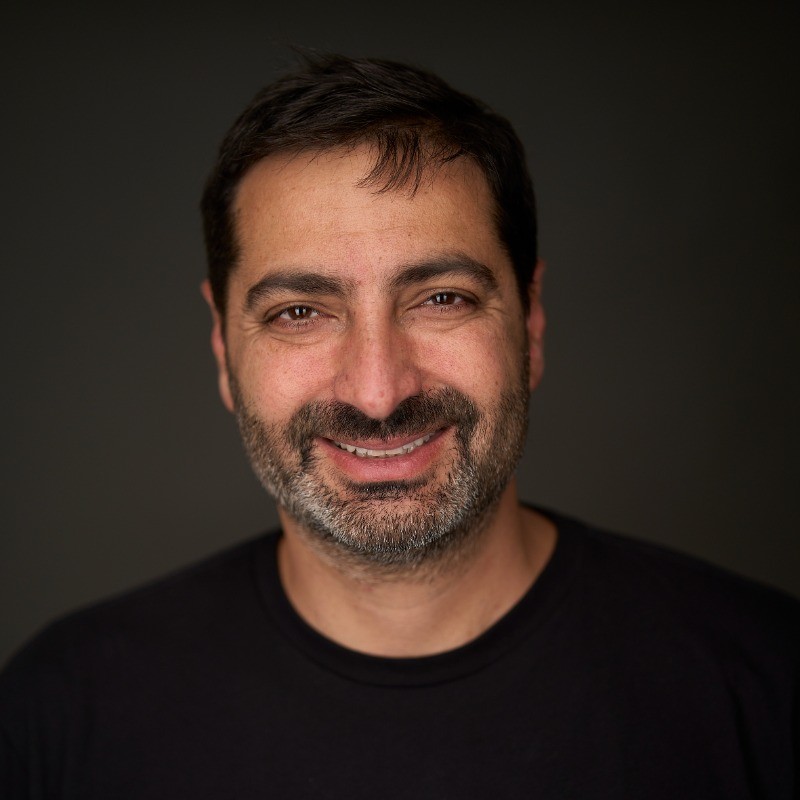
Dave Vellante and John Furrier will cover cyber and AI innovations at NYSE Wired and theCUBE Community for three days. Gil Geron, CEO of Orca Security, discusses the company's focus on enabling secure cloud operations and the growth in the cloud security market. Orca's platform integrates AI and prioritization for easy and effective security. CNAP offers multiple security capabilities in one platform. Orca partners with other companies to provide solutions to customers. The company differentiates itself by being agentless. By leveraging AI, Orca detects anoma...Read more
exploreKeep Exploring
What was the initial focus of Orca and what approach did they take to make security an enabler rather than an inhibitor?add
What are some sectors that are combined in CNAP in terms of data center protection?add
What are some ways in which legacy AI and generative AI are being leveraged for communication and querying purposes?add
What are some key details about the financial status and goals of the mentioned company?add
>> Hi, everybody. Welcome back to Media Week, cyber and AI innovators here at the New York Stock Exchange, NYSE Wired and theCUBE Community. My name is Dave Vellante and John Furrier is also here. We'll be here for three days of wall-to-wall coverage on cyber innovations, AI innovations. This is part of our Media Week series that we've been doing since the summer. I'm super excited to have Gil Geron, who's the CEO and co-founder of Orca Security. CUBE alum. Welcome back. Good to see you face to face.
Gil Geron
>> Thank you for having me.
Dave Vellante
>> Isn't this amazing here? Come on.
Gil Geron
>> Amazing.
Dave Vellante
>> This fantastic.
Gil Geron
>> Last time was over Zoom.
Dave Vellante
>> Yeah, yeah, it's much better. Okay, I'm going to start with why did you start Orca Security and what's the vision you can lay out for our audience?
Gil Geron
>> When we started Orca, we were focused on allowing companies in our organization to thrive securely in the cloud. And to do that you really need to figure out how to make security easy and how you can make security an enabler instead of an inhibitor. And so when we look at this vast, huge market, it was all around how can we deploy security easier with site scanning, with the innovation of agentless cloud security platform, but also with context with the prioritization and the ability to remediate stuff. And over the last 12 months, what we've been seeing is that the move to the cloud only grows and continues. Even when companies are trying to be more effective, they're also looking at their velocity of their engineering. And over the last 12 months, we had more than hundreds of companies joining our customer base. We had more than 300% growth in daily usage of our platform. And even in matrixes like SaaS Magic Number, we've almost doubled year over year. And so we are seeing tremendous, tremendous, tremendous success in the move to the cloud.
Dave Vellante
>> So security as an enabler, okay, this is like a holy grail in security because naturally if I put handcuffs on somebody, I block somebody, I don't let them out of the office or I confine them in their own little brick space. They're secure, but they can't do anything. So how are you able to achieve that vision? Because it's been elusive over the last several decades.
Gil Geron
>> So there's something around making sure that your vision is looking far enough and is it hard? Yes. But it creates a framework for you to think about how do I do that day in, day out, and allows us to do a lot of innovation. So for example, making it easy is also around creating remediation steps, making it easy is also around attribution. Finding from all of those millions of issues you have to tackle, which are the 10 that you have to fix now, and who needs to fix them, and what will be more impactful. And so it propels innovation and it creates a framework for us to think of how we are impactful.
Dave Vellante
>> So basically you're saying you're operationalizing that framework so it becomes part of your day-to-day workflow, not something that's bolted on, not something that's an afterthought or something that's disruptive to the workflow. It's just a rigor. Okay. Let's talk about CNAP. I think this is a Gartner term originally. Cloud native application protection is what it stands for?
Gil Geron
>> Yes.
Dave Vellante
>> What does it mean?
Gil Geron
>> Well, it means that you need to look at your cloud as an environment, as an architecture that requires multiple tools to protect it or multiple capabilities to protect it. So for example, it includes application security, it includes data security, it includes cloud detection and response, Kubernetes. And so there's multiple technologies. Now even AI goes into the mix where basically when you try to put it in layman's terms, how do I protect my data centers in the broadest way?
Dave Vellante
>> This is always the discussion about consolidation. And when you talk to customers, they have a very hard time reducing the number of tools, but you just described several sectors. People might think CNAP is just yet another stovepipe in security. But the way you described it, you're combining several areas, application, your cloud, your data. Are you a consolidator of tooling?
Gil Geron
>> So that's exactly our approach. Our approach is to create a platform. Does it also means that a platform should include all of your solutions? And the answer is no. When you think about platforms, platforms is something you can attach on different tooling when you want to have best of breed according to your focus. A platform allows you to make the decision. A platform allows you to control your workflow. And so we've consolidated solutions like data security and API security and vulnerability management and malware detection and many, many, many others. But at the end of the day, we also allow customer the choice of best of breed. So for example, we recently announced partnership with Snyk and Aqua so that you can bring in the best of reads when you're protecting your application. You can bring in best of breed when you're protecting containers. And so that collaboration really allows customers to build a one platform that has attachments that allow you to have best of breed in this area or that realm in SIEM, in SOAR. And so we have many examples like that.
Dave Vellante
>> This is an interesting conversation, Gil, because you guys obviously are the sort of startup, the innovative disruptor. Others have a Palo Alto Networks, big platform, so they can bring in whatever, maybe they make an acquisition. They say, "We have this too." I don't know if I'd call it copycat. Maybe you would. But how do you feel about that? Were you first, are others copying you? What differentiates you guys?
Gil Geron
>> Well, as you know me, I'm a very honest guy. And of course it bothers me when we are investing so much in certain technology and then it being copycatted by others. But at the other end of it is it makes you tremendously proud when you manage to revolutionize an industry and you manage to revolutionize the way that security is being done. Every cloud security tool today leverage the agentless approach. And what we are doing is that we are being pushed and pushing ourselves to that mission, how to thrive securely in the cloud and how we can continue to innovate. We've first to introduce data into our posture management. We've introduced AI into our platform, the first both for security purposes, but also, we are leveraging AI in our platform as the first in market. And so I hope we'll be able to continue to revolutionize and evolutionize this market.
Dave Vellante
>> It's interesting. So of course take a company like CrowdStrike, they talk about their lightweight agent, but even they have an agentless approach and they also take a similar approach as what you described. And I'd love for you to differentiate. For instance, they'll work with Zscaler or they'll work with an Okta because they're not doing IM. So they have a similar approach. Okay, we're going to be partnering with best of breed and we're going to focus on our space. It sounds like you have a similar philosophy, but you are a newer company, but you started with agentless, they did not. So help us understand. Agents have to be managed. They always stress, "Oh, it's a lightweight agent." But it's still an agent. So then how are you able to achieve such a functionality without the agent?
Gil Geron
>> So I think that CrowdStrike is a great company and a great technology company, and at the same time, we've all seen the challenges you have with agents and it's not only around the risk, it's also around your ability to really deploy it and harvest the data from it. And so what we really did is actually we've built a unified data platform that allows you to get context on your entire workspace. So for example, when we detect the vulnerability, we prioritize it based on the risk of your environment. Is it internet facing? Does it has access to PII? And so what would be the impact of that breach? And then when you track back to what we started to say in the beginning of the conversation, it was around how can we make teams more effective? How can we make them thrive? So if they understand why they need to fix an issue, they're happy, they're moving fast, they're doing their business instead of focusing on chasing the whack-a-mole approach of fixing issues in the cloud.
Dave Vellante
>> Interesting. You're in the risk business and when I think of risk, I think what's the probability of an incident occurring and what's the impact of that incident? You're saying you're able to contextualize the impact because you have a consolidated, unified data platform and that allows you to be effective without having to deploy agents.
Gil Geron
>> Exactly. And even we are consuming data from other sensors, from our own, from CrowdStrike, from Aqua, from CloudFlare. So many other sensors are being used also for our decision. That's really a platform. When you're thinking a platform, it's not about consolidation of billing, it's about really having the ability to make the smartest and best decisions when you're reducing the risk of your environment.
Dave Vellante
>> And you partner. Just was at AWS re:Invent last week. You partner with AWS. Do you also feed things into, for instance, like Security Lake or how are you partnering with AWS?
Gil Geron
>> So that's exactly the type of relationship that pushes the industry forward because for example, we are pushing data to Security Lake, but we are partnering with other partners. Even on the main stage with the AWS CEO, PagerDuty came on stage and the security partner, Orcas Logo on the main stage.
Dave Vellante
>> I saw that. Yeah. Congratulations. That was huge. I think that was day one. That was Max Armin's presentation.
Gil Geron
>> Yeah, it's on the main. And so he said that security is the beginning of everything and it's so fundamental. And so it's not about making your customers taking compromises and compromising their security practice. It is around giving them the choice, but it is also around giving them the choice to select the platform that will allow them to become best of breed in their security, where they want to focus, how they want to budget it. And so that's why we have collaboration with SIEM and source solutions. That's why we're working on new tech with the cloud providers, also with Google and Azure. We are leveraging AI in order to give you really remediation code and pull requests so you can fix things in seconds and not in days or weeks. And so at the end, if your mission is clear and your mission is to secure the cloud, you can do amazingly well for your customers.
Dave Vellante
>> Gil, help us understand how you're using AI. Everybody says, we've been using AI for a long time, maybe legacy machine learning. Now of course gen AI is the AI heard around the world, I like to say. How are you applying these various technologies? What's their utility? And help us break through all the noise. What really matters?
Gil Geron
>> So we found that we are leveraging more of the so-called legacy AI For detection. And it's really effective when you're trying to detect anomalies or misbehavior based on events. Where you look at generative AI, it's allowed us to leverage that communication. So think about asking a random question. I want to ask, do I have any buckets that contains credit cards into my environment? Do I have any databases that are publicly exposed? And so instead of learning how to ask the platform, you're doing it in free form. And we've created the generative AI model that translates that free from question into Orcas query. And so anyone from any country, I just did a demo to a Japanese partner, they wrote the question in Japanese and it translated it to Orca and allowed them to use the platform without us needing to rebuild the platform for Japan. And same goes for remediation. And so leveraging it for communication purposes is extremely effective.
Dave Vellante
>> So it's really a combination. It's the hardcore machine learning is where you really address some of the hard security problems. It sounds like gen AI just makes it easier to interact with the system.
Gil Geron
>> It is, but it's not less important because at the end, no one needs more alerts.
Dave Vellante
>> Yeah, for sure. And that's how I was going to ask you about the security analysts' experience and the whole SecOps demand for CNAP. It's a really hot market. I'm not sure, you may know the size of the market, the TAM. You must think about these things as CEO, but talk about the market and how it affects the DevSecOps, DevSecDataOps analyst experience?
Gil Geron
>> The market as mentioned is growing quite rapidly. It's estimated it'll reach 40 billion the next few years.
Dave Vellante
>> Four zero?
Gil Geron
>> Yeah.
Dave Vellante
>> Okay.
Gil Geron
>> And it's huge markets. And when you combine all of the CNAP vendors, we are just scrapping the surface of this market. We're just at the beginning. So it means that there's a huge gap in knowledge, but it means also there's a huge challenge in hiring the right people. And so what we've built is a strategy where we are leveraging more of the company's resources like Devs and DevSecOps to contribute to the security. And so we've created a lot of capabilities around shifting left, around generating preventative rules in the pipeline so that you're avoiding issues in production. And today, we have tens of thousands of engineers, not security teams, engineers using the platform. And so that leverage, it's just a multiplier of the force of the security team where in many cases, it's just a small portion of the organization that we are protecting.
Dave Vellante
>> And I think this underscores the notion that security is not just the problem of the SecOps team or even the IT team. You're extending to engineers. Of course, I would argue it's everybody. Bad user behavior beats good security every time. So it's everybody's business. Where are you at with the company? How much money have you raised? What's your status? A headcount, what can you share with us?
Gil Geron
>> So we've raised more than $650 million, significant sum. We are around 270 employees worldwide. We are in more than 20 countries. And really our focus is to grow, but to create a lifetime company. If you truly believe that the cloud security market is in front of us, and I do, and everyone agrees that companies will grow in the cloud, we need to build for the long term. And look at what happens in the public market. You're accountable for effectiveness, for your gross margins, for all of the metrics that account for a good, healthy company. And that's exactly where we end.
Dave Vellante
>> Is IPO part of your objectives down the road or?
Gil Geron
>> I think that when you're thinking about a lifetime company, it has to be a point in your journey. And so it's not that I'm going to do it tomorrow or this year, but it's definitely the way that we are measuring our success. And company metrics are the same as public company metrics. Because when you do this transition, it's a multi-year transition and it requires maturity of the company and understanding of these numbers.
Dave Vellante
>> Has there been a mindset shift from your part of the world where you originated? Obviously amazing innovation, but not a lot of companies go public and now we're hearing several, certainly Snyk, yourselves. We'll see what happens with Wiz. They turn down a big chunk of dough from Google. Is there a mindset shift?
Gil Geron
>> So I think that the mindset shift is that we can create lifetime companies. That's the mindset shift. And then the IPO becomes a point in time more than the goal. And so the-
Dave Vellante
>> Right, it's a milestone to get you to that long-term vision, wherever that takes you.
Gil Geron
>> Exactly. And that's patience, resilience, and grit of us as founders and truly obsession with customers and their challenges in the cloud leads us to a point where we are saying, "Hey, we should aim for something that is more bigger and more significant." That's exactly what we're doing. And it challenges our way of thinking day in, day out.
Dave Vellante
>> And maybe all these exits over the years have just been a stepping stone to get to this point. But I feel like we're in a new phase of startup nation where building durable companies is increasingly an objective, which is great to see.
Gil Geron
>> I'm definitely hopeful for the near future.
Dave Vellante
>> Well, thank you so much for coming into our NYSE studio. It's great to have you in here face to face. I really appreciate it, Gil.
Gil Geron
>> Thank you. Thank you for having me.
Dave Vellante
>> You're welcome. Okay. And thank you for watching. This is Dave Vellante for John Furrier. We're here at NYSE and theCUBE's Media Week for cyber and AI innovators. Keep it right there. We're back right after this short break.