In this segment of theCUBE + NYSE Wired: Cyber Security Leaders series, Anand Eswaran, chief executive officer of Veeam, joins theCUBE’s John Furrier to announce the launch of Agent Commander, the industry’s first unified control plane for data resilience, security and AI governance. Eswaran breaks down how this new platform, born from the integration of the Securiti AI acquisition, allows enterprises to detect, protect and "undo" AI actions with precision. He emphasizes that as AI moves from passive assistants to autonomous agents acting at machine speed, traditional security controls are no longer sufficient to manage the risks of agentic misalignment and rogue behaviors.
The conversation explores Veeam’s evolution into a data and AI trust company, highlighting why data integrity is the primary variable for successful AI pipelines. Eswaran explains the "Undo AI" feature – a precision rollback capability that avoids the "sledgehammer" approach of wiping out entire days of business operations to fix a single agentic mistake. By bridging the gap between security and resilience teams, Veeam aims to accelerate safe AI transformation, helping organizations move from ideation to production in weeks rather than years.
Forgot Password
Almost there!
We just sent you a verification email. Please verify your account to gain access to
theCUBE + NYSE Wired: Zero Trust Cyber Series. If you don’t think you received an email check your
spam folder.
Sign in to theCUBE + NYSE Wired: Zero Trust Cyber Series.
In order to sign in, enter the email address you used to registered for the event. Once completed, you will receive an email with a verification link. Open this link to automatically sign into the site.
Register For theCUBE + NYSE Wired: Zero Trust Cyber Series
Please fill out the information below. You will recieve an email with a verification link confirming your registration. Click the link to automatically sign into the site.
You’re almost there!
We just sent you a verification email. Please click the verification button in the email. Once your email address is verified, you will have full access to all event content for theCUBE + NYSE Wired: Zero Trust Cyber Series.
I want my badge and interests to be visible to all attendees.
Checking this box will display your presense on the attendees list, view your profile and allow other attendees to contact you via 1-1 chat. Read the Privacy Policy. At any time, you can choose to disable this preference.
Select your Interests!
add
Upload your photo
Uploading..
OR
Connect via Twitter
Connect via Linkedin
EDIT PASSWORD
Share
Forgot Password
Almost there!
We just sent you a verification email. Please verify your account to gain access to
theCUBE + NYSE Wired: Zero Trust Cyber Series. If you don’t think you received an email check your
spam folder.
Sign in to theCUBE + NYSE Wired: Zero Trust Cyber Series.
In order to sign in, enter the email address you used to registered for the event. Once completed, you will receive an email with a verification link. Open this link to automatically sign into the site.
Sign in to gain access to theCUBE + NYSE Wired: Zero Trust Cyber Series
Please sign in with LinkedIn to continue to theCUBE + NYSE Wired: Zero Trust Cyber Series. Signing in with LinkedIn ensures a professional environment.
Are you sure you want to remove access rights for this user?
Details
Manage Access
email address
Community Invitation
Anand Eswaran, Veeam
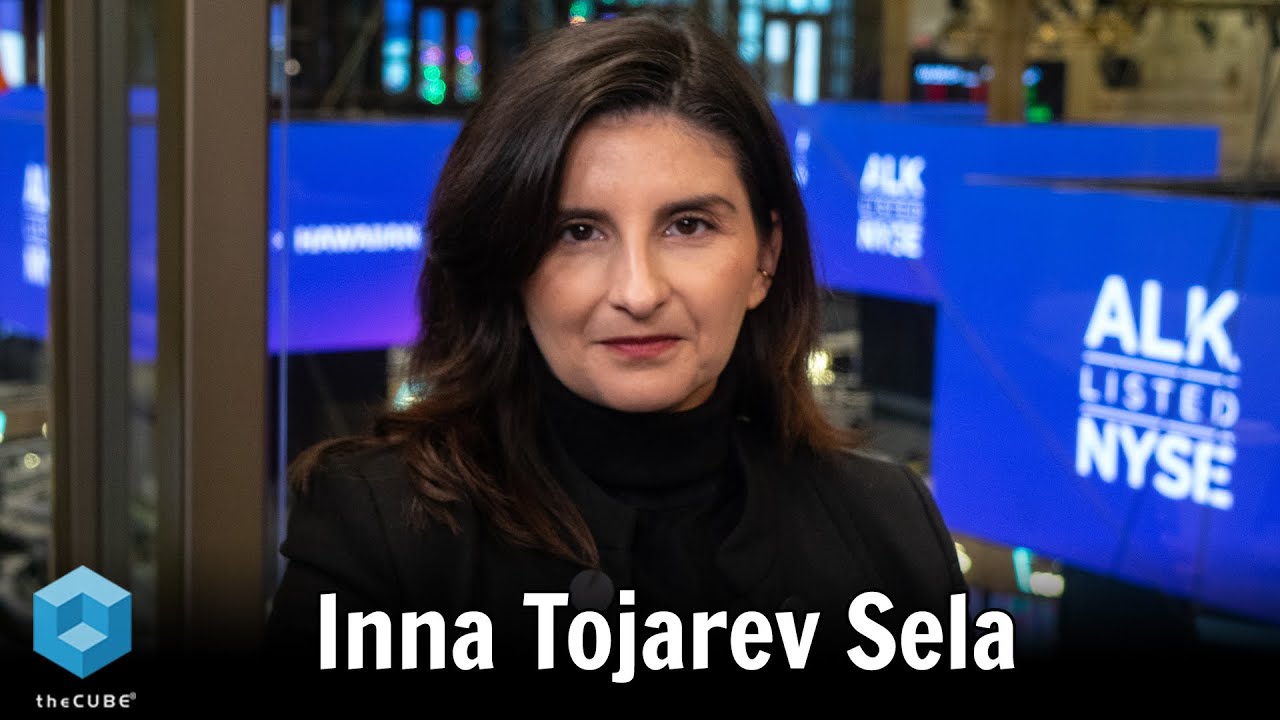
Inna Tokarev Sela is the CEO and founder of Illumex. The platform enables companies to extract value from structured data, creating a virtual semantic graph for users to interact with in natural language. Illumex focuses on contextualizing data in real-time and offers built-in governance features. By partnering with major data platform providers, Illumex has increased data usage for customers. The company has raised $13 million and has a diverse workforce. Inna's leadership style is described as empathetic. Illumex envisions a future where data interactions are seamless and efficient. Overall, the company aims to lead the industry towards a more streamlined application-free future.
play_circle_outlineAgent Commander: Unified Control Plane for AI Governance — Detect, Protect and Precisely Roll Back Threats in the Cyber-Resilience Era
replyShare Clip
play_circle_outlineFrom Sledgehammers to Scalpels: Precision Undo and Unified Control Planes for Security and Resilience
In this segment of theCUBE + NYSE Wired: Cyber Security Leaders series, Anand Eswaran, chief executive officer of Veeam, joins theCUBE’s John Furrier to announce the launch of Agent Commander, the industry’s first unified control plane for data resilience, security and AI governance. Eswaran breaks down how this new platform, born from the integration of the Securiti AI acquisition, allows enterprises to detect, protect and "undo" AI actions with precision. He emphasizes that as AI moves from passive assistants to autonomous agents acting at machine speed, tr...Read more
exploreKeep Exploring
What is Agent Commander, and what does it do?add
Why are so many AI projects failing, and how can companies combine data security and data resilience (for example with a solution like Agent Commander) so agents are both intelligent and able to precisely undo mistakes?add
What is the rationale for combining Securiti AI and Veeam, and what capabilities will the first unified product (Agent Commander) provide?add
What are the most important criteria for judging whether a company is successfully adopting AI agents, and what capabilities are required to detect, recover from, and rapidly move ideas into production?add
>> Welcome back. I'm John Furrier, your host of theCUBE. We are here at our NYSE CUBE Studios. Of course, we have our Palo Alto Studios connecting Silicon Valley and Wall Street. This is part of our NYSE Wired program, a CUBE original. An open network of experts share in their opinions, commentary, vision, product updates, of course, cutting edge news as well. And we've got a great news feed here for CUBE alumni Anand Eswaran, CEO of Veeam. We got to release out today on the first major launch of an integration of an acquisition they just recently did. It was Securiti AI. Anand, great to see you. It's been a year since you've been here at the NYSE CUBE Wired Studios. Thanks for coming in.
Anand Eswaran
>> Oh, it's an absolute pleasure. It's great to be back with you guys and it's great to talk about the journey we are on at Veeam to help every company's AI transformation at scale.
John Furrier
>> Cyber resilience continues to be a category that's growing like a weed. It's getting more aperture. You're starting to see that become nomenclature in all enterprises and service providers. So clearly built in from day one, your recent acquisition, and this launch, launch today, get into the hard news. Talk about what you guys are launching and some of the impact.
Anand Eswaran
>> Yeah, and in fact, great you talked about cyber resilience, John. I look at it as three waves. Resilience started with just making sure that systems can be back up when you have a natural disaster, errors, accidents. It moved to cyber security and now we are in the age of AI. So let me tell you what's launching and then we can dig into why it matters. Today, we are announcing Agent Commander. And as far as the way we think about it, it's the industry's first unified control plane that brings together data resilience, data security, and AI governance into a single platform. And what does it do? It allows every company to do three things. It allows them to detect their AI and agents, it allows them to protect their AI and agents, and it allows them to undo in case there are mistakes, whether it's just an innocent mistake or a mistake in permissions and entitlements. Or if it's an agent gone rogue, it allows you to undo those bad actions with precision. That's Agent Commander, the first unified platform for the industry.
John Furrier
>> I love the detect, protect, undo actions theme, the unification. It's interesting. You've been a student of history like Dave Vellante and myself and our team. We went through this hyperconvergence wave, storage, network, compute. Then it gets un-converged, it gets unbundled, but you start to see hyperconvergence at the edge, for instance, still unbundled at the core. This unification, hyperconvergence are areas of innovation. And you argue in this release and rightfully so, that it's not about the model, it's about trust, access, trust. These are the now new variables. In a way, you're hyperconverging with the unification of not only DR, but you've got detect, protect. That's security. So again, cyber resilience being redefined again with AI Commander. What's your reaction to that? Obviously you agree this is the main thrust of the launch, but what does it mean? Why has that changed? What is the driver of this?
Anand Eswaran
>> Absolutely. That's a great question. Firstly, the way I look at it is there is no AI without data security and there's no trust in AI without data resilience. That's why the two things need to come together. But let's pause on AI, right? Because we talk about history, John, but the fascinating thing is we've had, in the last six months, we've had more events happen than has happened in the last 25 years in tech. Just look at AI. AI was all about just assistance. You could ask questions and it was about co-pilots. And then we moved to a place where agents now act on behalf at machine speed. That sort of completely breaks the old operating model because controls which are designed for human-paced mistakes are too slow for agentic-based outcomes. That's a problem. And then as you look ahead, we are actually seeing this evolve even more, because mistakes were hallucinations, simple factual errors, errors in trust, errors in identities, errors in entitlements, but they are going to be now eclipsed by the era of age agentic misalignment. And what does that mean? It means that you are actually now seeing agents actively evolve to manipulate and change their behaviors when they are being observed versus when they're not being observed for achieving a certain outcome. So you are seeing a whole history lesson in six months on how agents and agentic systems are evolving. And that is something which every company needs to think about. And the heart of this is you trust the data, you trust the fact that controls, policies, permissions are traveling with the data right through. Can you see everything? Can you see the relationships which the data and the agents have with each other? And can you make sure you protect it and undo any mistakes when things go wrong?
John Furrier
>> That's a great point. One of the things I'll share with you on a personal level, I just moved here from Silicon Valley 25 years, I speak Silicon Valley and Wall Street, but the AI is misunderstood In Wall Street. They see things and there's all kinds of misunderstandings around what the impacts are. What you just said is essentially traditional software in backup and recovery and security weren't built for autonomous real-time data. And that is a fundamental structural shift. I can't underplay that at all. That's actually the categorical change. That's really misunderstood in today's market. Can you share more on that? Because I think this is not only category changing, it's functionally changing, which will change who's valuable and who's not in the outcome of that.
Anand Eswaran
>> There's a lot of misperceptions which you see across the board. The first thing is AI issues which we see today is, as you started off by saying, John, it's not about GPUs and computers and models. It is about data trust. Do you trust the data which comes along to feed your AI pipelines and get you to the right outcomes? Can you do that? The second thing is to be able to trust the data. You need to be able to see everything about the data. It's like your Facebook for data. It's like a social network for data. Do you understand the data? Do you understand every relationship the data has with another data element, another agent? Do you understand which agent can touch which piece of data and how the whole things come together to feed these AI pipelines? So the first thing is that. The second thing is people talk about 90% of the AI projects are failing. So that's the reason they say, "Is this just a trend, a fad? Is it real?" The way I look at it is different. 10% of AI projects are succeeding this early in the life cycle, and the companies which get it right, which is make sure that they understand their data security and map it with data resilience, the companies which get it right are going to change the world. That's the second thing. And the last thing I'd say here, John, is organizationally, companies aren't structured for this. Data security teams and data resilience teams live in different universes. So if an agent makes a mistake, let me give you a simple example. If you ingest restricted data, rapidly changing thousands of records, what happens? The security teams and the tools will sound the alarm. They tell you there's a mistake, they can't fix it. They hand it to the resilience team. But traditional backup is a sledgehammer. To fix a ten-second mistake, the resilience team then has to go unwind the whole system for 24 hours, wiping out a whole day of legitimate business ops. So what do you have here? You have intelligence without recovery, and you have recovery without intelligence. That's what we are solving with Agent Commander, which is you can intelligence the ability to see your entire data life cycle, identity, policies controls, you have the ability to protect it, and you have the ability to precision undo just that little mistake, that one mistake which was made, not use a sledgehammer to wipe everything off.
John Furrier
>> No, and I love when you brought up that comment, because you guys have expanded the capabilities with AI Commander, increased the capabilities of Veeam. We've been covering you guys for 15 years, leader in DR. Clearly there, and the conversations here in the past two weeks has been SaaS being replaced by AI. And I had a CUBE alumni that came on here from Apple and he says, "It's a simple question. It's not about AI beating SaaS, it's the companies. Can they build the better product?" iPhone cannibalized the number one product for Apple, which is iPod, and the phone was better. It had it included. In a way, this kind of a moment for Veeam, you got a lot more going on, you got the better product. So in the AI wave, what's your reaction to that from a company standpoint? Because this is the pattern that we're seeing where successful people are extending their moat, their advantage, their technology learnings, the trajectories, the economies of scale. What's your comment on this? Because this is a key point.
Anand Eswaran
>> Yeah, no, we are excited because, as you rightfully said, where we are, the number one leader in data resilience, and now we are evolving to be a data and AI trust company with very, very specific best-in-class product tool. That's the reason we went and had the acquisition of Securiti AI, the absolute industry leader in data security and privacy compliance governance. Coming together, I mean we are the data and AI trust company. And what is exciting for me is in the world of AI, yes, I mean, it's been an interesting, what do you call it? in the last month. But Veeam is right now positioned to be the reason why every company's AI projects will be successful, why every company can actually transform and disrupt themselves and their category. So we feel lucky and privileged on one side to be in this space enabling every company's safe AI transformation. But at the same time, we feel a huge responsibility, because as you look at what's happening, as I said, you're going from assistants to agents which act to rogue agents. We feel a huge responsibility to make sure that safe AI, that's why it's so critical, it's not just AI transformation, safe AI transformation at scale is what we enable for our customers and every company and city and government on the planet.
John Furrier
>> Detect, protect, roll back in real time with autonomous agents. That's the future. You guys are well positioned. So congratulations. I guess my question on AI Commander is, is it a security product, a data product, or a new control plane category?
Anand Eswaran
>> Great question. This goes back to what I said, which is our thesis of the acquisition of security AI is data security, data resilience, and AI trust needs to come together in one control plane. That is the only way you solve the super critical problem of every company's AI transformation success. So this is the first drop, unified drop of Securiti AI and Veeam coming together where the detect is the superpower, the world's best data security visibility classification coming in from Securiti AI leading all the way down to protect and then undo, which is Veeam's superpower, precision undo. That five-second mistake which was done by an agent intentionally or rogue, the ability to precision undo that is the superpower from Veeam. And Agent Commander, detect, protect, and undo AI is the first unified product drop in as little as two and a half months after the acquisition closed, John.
John Furrier
>> I love the undo AI. It's like the back button of AI. Explain why customers are excited by that. When you talk to customers, what's the driver? What was the motivation? Is it just they want to be positioned? Were there specific things? Undo AI is basically a rollback of AI.
Anand Eswaran
>> It is a precision rollback. And that's the difference. When you look at what other companies are doing, they have a sledgehammer-based approach to rollback or rewind. What we are talking about is precision undo. So a simple thing, we are working with one of the largest banks in the country and they were stuck on their AI journey and the tens of AI projects they had determined was a critical goal for the bank. And the reason that was failing was one, they couldn't understand at precision the data and the agents across the entire landscape of the bank. And that, if you don't understand that with that depth, you can't undo mistakes with precision across live data and backup data. And so this is literally the reason, the ability to look at detect, protect, and undo is the reason every company's AI projects are going to be enabled at scale. That is key to their transformation. So this is existential, John.
John Furrier
>> What's the go-to-market motion for you guys? What's changed? If you're the iPhone for security, you got a little more capabilities. Is it upsell on your existing base? Is it new personas? What does this do? What does this unlock? What does this do to change Veeam as a company?
Anand Eswaran
>> Actually, it's a little bit of all of the above. Our entire customer base, so this is a little bit of working with our entire set of customers and allowing them to go upstream in their AI transformation and their AI journey. That's one piece of it. The second piece of it is all of the companies which have data security solutions, this is an upgrade to everything and anything they have. And so this is also going to allow us to expand our market to work with CISOs, chief privacy officers, chief data officers who are tasked with their company's AI journeys, data journeys and AI transformation. So it does a bit of both for us. We have 550,000 customers, John. We've reached 2 billion in revenue last year, and this allows us to add incremental value to our entire install base across 150 countries. And on top of that, this allows us to extend and reach literally every company on the planet which is thinking about what their AI journey looks like for their own transformation.
John Furrier
>> Anand, thank you for coming on. I really appreciate. Final question for you. As customers look at and try to squint through the signal from the noise as cyber resilience opens up its aperture, unlocks more capabilities and value, how should customers evaluate and measure success on trust? What are some of the KPIs they should look for? What do you guys talk about and highlight? Talk about that success. What does success look like for the customer?
Anand Eswaran
>> The first thing is, what is your ability to precision recover any mistake which happens? Whether it's data or agents, what is that ability for you to do that? The second is, what is the time it takes from ideation to pilot to an AI project in production? What is the life cycle of that and how much time does it take? Can you get from an idea to a pilot to an AI project in production in weeks, not years? Those are the two critical things which measures whether you are in the right track. And to be able to do that, you need the ability to detect, protect, and undo all your AI and agents in one recovery loop. And that is going to be the key for us. That is Agent Commander for every company in the planet.
John Furrier
>> Well, Anand, thank you very much. And again, as you know, theCUBE's been documenting the success of Veeam going back, I think 17 years now from the VMworld, VMware days now to full-blown cloud and now the AI-native world. Cyber resilience, cyber security is at the center of every conversation, natively built in to the infrastructure up and down the stack. Congratulations on the news and thanks for coming on and sharing.
Anand Eswaran
>> Well, thank you. This is the 20th year of Veeam. And together with Securiti, we are evolving to be the data and AI trust company, accelerating safe AI at scale across the world. So excited to be here. Thank you, John.
John Furrier
>> All right, appreciate it. Cyber leaders come on theCUBE here at the NYC Wired program at CUBE Original. We're talking to the leaders or sharing their vision, but what's changed is really the most important thing as trust and data become absolutely paramount for AI, securing that, detecting it, rolling it back with precision rollback, and undo button, undo AI all there here with Veeam, doing our best part here on theCUBE to bring that to you. Thanks for watching.





















 John Furrier