We just sent you a verification email. Please verify your account to gain access to
theCUBE + NYSE Wired: Zero Trust Cyber Series. If you don’t think you received an email check your
spam folder.
Sign in to theCUBE + NYSE Wired: Zero Trust Cyber Series.
In order to sign in, enter the email address you used to registered for the event. Once completed, you will receive an email with a verification link. Open this link to automatically sign into the site.
Register For theCUBE + NYSE Wired: Zero Trust Cyber Series
Please fill out the information below. You will recieve an email with a verification link confirming your registration. Click the link to automatically sign into the site.
You’re almost there!
We just sent you a verification email. Please click the verification button in the email. Once your email address is verified, you will have full access to all event content for theCUBE + NYSE Wired: Zero Trust Cyber Series.
I want my badge and interests to be visible to all attendees.
Checking this box will display your presense on the attendees list, view your profile and allow other attendees to contact you via 1-1 chat. Read the Privacy Policy. At any time, you can choose to disable this preference.
Select your Interests!
add
Upload your photo
Uploading..
OR
Connect via Twitter
Connect via Linkedin
EDIT PASSWORD
Share
Forgot Password
Almost there!
We just sent you a verification email. Please verify your account to gain access to
theCUBE + NYSE Wired: Zero Trust Cyber Series. If you don’t think you received an email check your
spam folder.
Sign in to theCUBE + NYSE Wired: Zero Trust Cyber Series.
In order to sign in, enter the email address you used to registered for the event. Once completed, you will receive an email with a verification link. Open this link to automatically sign into the site.
Sign in to gain access to theCUBE + NYSE Wired: Zero Trust Cyber Series
Please sign in with LinkedIn to continue to theCUBE + NYSE Wired: Zero Trust Cyber Series. Signing in with LinkedIn ensures a professional environment.
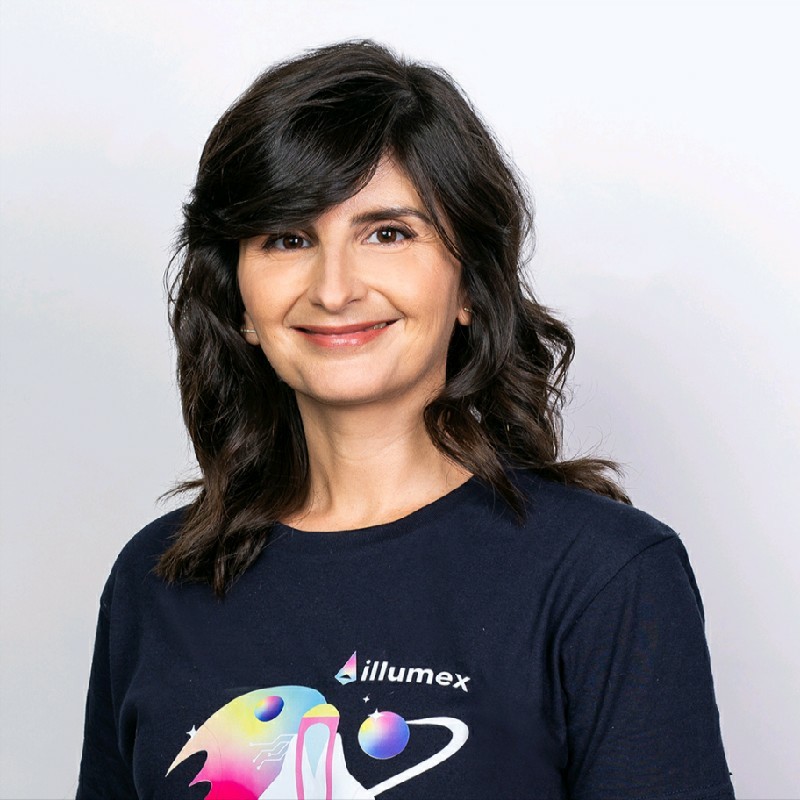
Inna Tokarev Sela is the CEO and founder of Illumex. The platform enables companies to extract value from structured data, creating a virtual semantic graph for users to interact with in natural language. Illumex focuses on contextualizing data in real-time and offers built-in governance features. By partnering with major data platform providers, Illumex has increased data usage for customers. The company has raised $13 million and has a diverse workforce. Inna's leadership style is described as empathetic. Illumex envisions a future where data interactions a...Read more
exploreKeep Exploring
What is the purpose of Illumex and who is the target audience for the company's services?add
What value does Illumex provide to users of big data platforms like Databricks, Snowflake, and others in terms of increasing data usage significantly?add
What leadership style does the person being interviewed describe themselves as having?add
>> Hi, welcome to our Media Week Cyber and AI Innovators with New York Stock Exchange, NYSE Wired community and the Cube. My name is Dave Vellante. We're here all week myself, John Furrier. We're covering AI innovations, we're covering innovations in cybersecurity. High above court side here at the New York Stock Exchange. Inna Tokarev Sela is here. She's the CEO and founder of Illumex and a CUBE alum, founder of the company. Great to see you again. Thanks so much for coming on.
Inna Tokarev Sela
>> Thanks so much for inviting me.>> Why did you start your company?
Inna Tokarev Sela
>> I started Illumex to enable every company to realize data value for any type of non-technical users. So think about the self-service experience where you can answer any questions you have with as many data sources you might imagine.>> Okay. So you're appealing to, sometimes they'll call them maybe citizens data scientists, or even is it even more the business user that you're targeting and trying to democratize that data?
Inna Tokarev Sela
>> Yeah. We're speaking about think about support center, a marketing department, sales organization. Every employee in the company as of today supposed to back up the decisions with data. And right now it's very frustrating and long process to actually get answers. Illumex provides self-service for those folks, which is hallucination free and governed.>> So let's describe how this industry has evolved. So back in the day, I would shove everything into a data warehouse, an enterprise data warehouse. There were maybe two or three or four folks who understood how to get data out of that data warehouse. It was a very slow process. You had to get in line. They were very technical. You had to beg them. They would build a cube. By the time you got your data, the market would have shifted, and so you'd have to go back at the beginning of the line and it was a very, very painful process. Now over time, we tried data marts. We tried to dupe. Really didn't make anything easier. There were certainly were thin layers put on, thin BI layers maybe to allow you to query data. But it sounds like you've tried to leapfrog all that mess of process to where you are today. So how do you get to the point where a business user can actually ask a question, get an answer, and that answer is semantically correct?
Inna Tokarev Sela
>> Yeah. So to your point, right now in this reality where everyone is building data lakes, which is great, but it's very cost prohibitive to actually bring data to your generative AI, to your analytics. It's very complicated process to go over. We believe in this reality where your data stays where it is, but we do have the semantic reconciliation and context and reasoning built in automatically around it. And then a governance layer, which enables domain experts or governance folks to actually certify what's built for them. And only then, business users can actually touch data. But when they touch data, they actually have explainability, they have transparency, they have access control, they adhere to all this new legislation coming our way around AI and generative AI. So all of those guiderails are in place.>> So it's expensive because why? Because you have to move the data. Then you have to have somebody actually making sure that we manage the data. Then you bring in the governance on top of that. So what do you do? I don't know if it's the right term, but do you virtualize the view of the data, and then you bring in context? Is that right?
Inna Tokarev Sela
>> Yeah. Yeah. So it connects to structured data sources and applications. So think about your CRM system, your ERP system, your operational system, your data lakes, and we only touch metadata to build this virtual semantic graph of your organization with reconciled definitions, with a metric store with context for every semantic entity and its usage. So metadata is activated to create this knowledge graph of semantic embeddings, but it's all transparent to business users because business users are getting the application workflows. They might be in their Slack because they might be corresponding in the customer support system, and they have all this goodness plugged in into the existing environments.>> Okay. So you've mentioned structured data, and so what about... All this AI seems to be very focused on unstructured data. What are your thoughts on do you eventually bring that into the equation? Can I interact with natural language to the system? How do you see that roadmap playing out?
Inna Tokarev Sela
>> Yeah. So you already, today, can interact with the system in natural language and not only natural language, but also free language. So right now, generative AI, LLM, it requires you to basically communicate in the same language the answer is articulated in. So you ask about unstructured data, yes. A majority of the companies are focusing on the low hanging fruit of document summarization or maybe having sources to be facilitated to the business users. So the access is facilitated, but it's nothing but summary. Structured data is where the hardship is. A, because every table, every column, every transformation has to be labeled. Same way that we labeled computer vision images, structured data in databases has to be labeled. And then it has to become a single source of truth, the consolation thing. And then you need to bring your LLM to actually understand the meaning of your company data, which is what we call fine-tuning, RAG, all those things. So some industry analysts actually estimate the cost of fine-tuning is 80% either of infrastructure cost of token usage. So only 20% is spent on the runtime and 80% is spent to teach those models to understand your specific company data. And not to speak about context. So we had this nice chat over coffee before that, and what you speak about context is very important because business user, especially do not really think that I need to provide this chatbot all the context of my way of thinking to get a right answer. All of that should be captured automatically.>> So you build a knowledge graph of all these different data sources. It focuses on structured data so that for example, when I say revenue, it means revenue. It doesn't mean a ARR or NRR. It could differentiate between calendar year or fiscal year. So we're talking about the same thing. Are you contextualizing at runtime?
Inna Tokarev Sela
>> Yes, exactly. It's contextualized to this point of conversation to the different interactions of the user, not only with this agentic analytics, but with any organizational application because we connect it to metadata. We know what users usually doing in the systems. We know how the day look like, so we know what they're actually asking, even a specific timeframe.>> So everybody talks about agents now. It's the new buzzword and agents and agentic. I'm going to have a premise and I want to see what you think as a technical leader, I don't think you can have agents, effective agents, without contextualized and harmonized data. True or false?
Inna Tokarev Sela
>> True. So true. So right now, everyone is focusing on a feeding and fine-tuning specific model like this Catholic marriage, this lock in. I believe in context which is shared. You create organizational context on top of your data wherever it is, and then you feed this context to any type of runtime. Your runtime could be SQL, relational database, your runtime could be warehouse, the runtime could be LLM. So the same context and reasoning is created once, governed once, but then share it to different stakeholders.>> And the knowledge graph is your IP, is that right?
Inna Tokarev Sela
>> A combination of knowledge graph and vector of semantic embedding. So think about the Illumex architectures, combination of vector database and graph, but virtual, with all built out of data, it's built out of metadata.>> And this is again, your IP?
Inna Tokarev Sela
>> Yes.>> Is that correct?
Inna Tokarev Sela
>> Yes.>> Yes. So I wonder, sometimes I wonder, is Vector and things like knowledge gap, are they features or are they actual markets? You're treating them as a feature of your platform.
Inna Tokarev Sela
>> Yes.
Inna Tokarev Sela
>> Is that fair?
Inna Tokarev Sela
>> That's true, that's true.>> And I don't know. I don't know if vectors a market or not. There seem to be some companies out there doing quite well, but then you see companies like yours actually and you couldn't. And I see in this nice sheet that you gave me, you've got all kinds of cool stuff. You've got built-in governance. That's something that struck my fancy here. Tell me about that. Because right now, there's so much confusion around the governance. There's open table formats, there's iceberg tables, there's governance going open source with you see what Databricks has done with Unity, what Snowflake has done with Polaris, technical metadata, business metadata, operational metadata. There's a lot of confusion out there. If I understand it, you're taking care of the governance inside of your platform. Can you talk a little bit more about that?
Inna Tokarev Sela
>> So governance in illumex is not only governance, which is basically surfaced from metadata, but it's also part of the interaction itself. So to me, it's prohibitive to think about governance as something that data teams supposed to be managing or those GRC folks supposed to be managing. To me, governance is something that domain experts should be able to validate. Button scale, you don't want to have this night job. You have day job of, I don't know, analytics, and then night job to go and certify tables. Basically you have to bring prioritized conflicts to the main experts to be able to review them. And how we do it is actually creating this context and reasoning automatically out of structured metadata. But then we have application workflows which are usable enough. User experience is very important. So their friendly enough for business users and domain experts to see, "Yeah, this is revenue. This Is profit definition," and so on, so forth.>> Which is very, very important. And it also says hallucination free. Now I have to ask you is that because you're somehow probably a combination, doing some things with your magic sauce to reduce hallucinations, but also you're confining your data set and focusing your workflows. Is that a fair assertion?
Inna Tokarev Sela
>> Yeah. It is very good summary. So what's happening right now is when a user as a question, this general available LLM on structured data, they have this answer of seven.>> , yeah.
Inna Tokarev Sela
>> So how did you come to this conclusion? What I supposed to do with this seven? And I'm confident enough to make decision based on that. So all of that, of course, it's not is exactly ideal. And not to say no governance is embedded in RUG or any other customization techniques. So data scientists do that thing in basement or this fancy Manhattan office, and then they give it to business users. But does it have access right to this data? It'll makes a difference. So what we do is actually passing this question to this semantic layer, to this business glossary of definition, and then basically giving back this feedback to the users. "This is how we understood the question. This is how we map it to data. This is definition and do you confirm?" And once user is confirming, we have the smooth mobility. This is how we calculate the answer. So you're actually able to go, not go and reverse engineer your question. I believe that three times, you check the system, you're not going to check it again, but you're going to trust it.>> It's interesting. You say, okay, the answer's seven, and then when you ask again, the answer's eight. And then you ask again, and the answer's nine. Now you recognized by Gartner, a cool vendor, that's cool. Check, you got that. Now next, you'll be in the Magic Quadrant.
Inna Tokarev Sela
>> We couldn't be. We're the opposite of cool. We are boring, right? We do the boring stuff.>> You are but you're going to-
Inna Tokarev Sela
>> So our Users don't have to,>> It's true, but you're solving hard problems. Metadata management, which is, again, a real problem. Now you've got partnerships with all the big three hyperscalers, Microsoft, Google, and AWS. And also the two big data platform players, Snowflake and Databricks. Now, all these companies, they have their own catalogs, they have their own governance in varying degrees. How do you interact with them? Where do you add value? Where do they pick up or you pick up where they leave off?
Inna Tokarev Sela
>> Yeah. So every CISP or data platform is interested to bring more value to the users and also expand the usability of the platform, the usage. Illumex, because we provide this automated context and reasoning, construction of data and the workflows to actually build your agents in weeks and not months, we increase the usage significantly. So if we speak about Databricks, Snowflake or any other provider enjoys, we have customers who increase data usage up to tenfold.>> Okay. Your company you've raised, is it correct, 13 million to date? Is that a correct figure?
Inna Tokarev Sela
>> 13 million.>> 13 million?
Inna Tokarev Sela
>> Yes.>> One, three?
Inna Tokarev Sela
>> Yes.>> Yes. Okay. And I think we first met when you were at Sisense, is that right? Maybe before that or I don't know.
Inna Tokarev Sela
>> It might be, yeah, yeah.>> Okay. And then I'm interested in the whole women in data, women in tech angle. How did you get into this business? What's your background? For young women who are interested in pursuing a career in tech, maybe even maybe becoming a CEO. It's like Frank Slootman says, "You got to really want to be a CEO to be a CEO because it's not a fun job." But how did you get into the business? What would you tell young people out there?
Inna Tokarev Sela
>> You have to have this desire to solve a very hard problem, and this is what I had. I have this passion to basically solve problems, especially around data analytics. Because to me, I'm very rational. I'm very number person. I haven't compete with Waze or any navigation systems, so I have to be driven by facts, and this is what was missing through my whole career. And I was working for enterprise companies and for growth startups and so on and so forth. So it was like this emergency that I have to suggest, and this is why I started Illumex in the first place, but I do see this wave of female founders, especially in data analytics. This area is so prone to innovation and also deep innovation. So this is where I see female founders flourish. And Illumex is female majority on every level in research and development, in data science and every department.>> Really?
Inna Tokarev Sela
>> Yes.>> Oh, awesome. So really a diverse culture. How would you describe your leadership style?
Inna Tokarev Sela
>> Empathetic. Empathetic to users, to our employees. Our average age, it's about 35, so not a typical startup, so to say. I believe in balance and I believe in long-term. So we here to stay. And empathy should be, to me, it's so different from where the industry right now, a majority of data analytics solutions are less empathetic about users, and especially, non technical users.>> And so the last query, what's your vision for the company where you do you want to take it? How do you see the trajectory of Illumex?
Inna Tokarev Sela
>> I see that industry is getting into a fast-tracked application-free future, and Illumex built this playground where machines can talk to machines to humans. Humans can talk to data. So everyone meets in the same place around the same context. Frictionless.>> Well, Inna, thanks so much for coming back on theCUBE. It's great to have you. Really appreciate you coming down to New York and being part of our program. And thank you for watching. This is the NYSE and theCUBE Media Week, Cyber and AI Innovators. Keep it right there. I'm Dave Vellante. John Furrier is also here. We'll be right back right after this short break.