Tarek Alaruri of Stuut, chief executive officer, discusses how artificial intelligence drives accounts receivable automation and cash collection, supports dispute resolution and enables agent-driven workflows. John Furrier of theCUBE and Dave Vellante of theCUBE guide the conversation and reference theCUBE Research framing on business transformation in the artificial intelligence era. Alaruri describes implementation timelines, customer examples and integration with legacy enterprise resource planning, ERP systems.
Alaruri reports measurable return on investment and rapid deployment from AI-native solutions. They state Stuut customers achieve approximately a 47% reduction in overdue invoices, about a 95% payment match rate and a 40% reduction in days sales outstanding, DSO, within six months. They highlight seven-day average implementations, deterministic agent workflows and a product-led approach that enables quick proofs of value for finance and revenue teams.
This segment provides practical guidance for finance and revenue teams evaluating accounts receivable automation and cash flow optimization solutions that integrate with legacy ERP systems. It emphasizes measurable metrics, implementation speed and integration with enterprise systems to accelerate collections and reduce DSO.
Forgot Password
Almost there!
We just sent you a verification email. Please verify your account to gain access to
theCUBE + NYSE Wired: C-Suite Business Transformation. If you don’t think you received an email check your
spam folder.
Sign in to theCUBE + NYSE Wired: C-Suite Business Transformation.
In order to sign in, enter the email address you used to registered for the event. Once completed, you will receive an email with a verification link. Open the link to automatically sign into the site.
Register for theCUBE + NYSE Wired: C-Suite Business Transformation
Please fill out the information below. You will receive an email with a verification link confirming your registration. Click the link to automatically sign into the site.
You are already logged into TheCUBE Network as
You’re almost there!
We just sent you a verification email. Please click the verification button in the email. Once your email address is verified, you will have full access to all event content for theCUBE + NYSE Wired: C-Suite Business Transformation.
I want my badge and interests to be visible to all attendees.
Checking this box will display your presense on the attendees list, view your profile and allow other attendees to contact you via 1-1 chat. Read the Privacy Policy. At any time, you can choose to disable this preference.
Select your Interests!
add
Upload your photo
Uploading..
OR
Connect via Twitter
Connect via Linkedin
EDIT PASSWORD
Share
Forgot Password
Almost there!
We just sent you a verification email. Please verify your account to gain access to
theCUBE + NYSE Wired: C-Suite Business Transformation. If you don’t think you received an email check your
spam folder.
Sign in to theCUBE + NYSE Wired: C-Suite Business Transformation.
In order to sign in, enter the email address you used to registered for the event. Once completed, you will receive an email with a verification link. Open the link to automatically sign into the site.
Sign in to gain access to theCUBE + NYSE Wired: C-Suite Business Transformation
Please sign in with LinkedIn to continue to theCUBE + NYSE Wired: C-Suite Business Transformation. Signing in with LinkedIn ensures a professional environment.
Are you sure you want to remove access rights for this user?
Details
Manage Access
email address
Community Invitation
Tarek Alaruri, Stuut
Tarek Alaruri of Stuut, chief executive officer, discusses how artificial intelligence drives accounts receivable automation and cash collection, supports dispute resolution and enables agent-driven workflows. John Furrier of theCUBE and Dave Vellante of theCUBE guide the conversation and reference theCUBE Research framing on business transformation in the artificial intelligence era. Alaruri describes implementation timelines, customer examples and integration with legacy enterprise resource planning, ERP systems.
Alaruri reports measurable return on investment and rapid deployment from AI-native solutions. They state Stuut customers achieve approximately a 47% reduction in overdue invoices, about a 95% payment match rate and a 40% reduction in days sales outstanding, DSO, within six months. They highlight seven-day average implementations, deterministic agent workflows and a product-led approach that enables quick proofs of value for finance and revenue teams.
This segment provides practical guidance for finance and revenue teams evaluating accounts receivable automation and cash flow optimization solutions that integrate with legacy ERP systems. It emphasizes measurable metrics, implementation speed and integration with enterprise systems to accelerate collections and reduce DSO.
In this interview from theCUBE + NYSE Wired: Business Transformation Edge, Tarek Alaruri, co-founder of Stuut, joins theCUBE's John Furrier to discuss how AI-native automation is transforming cash management and accounts receivable. Alaruri explains how Stuut helps businesses collect and match cash while resolving disputes and deductions, driving a 47% reduction in overdue bills and a 95% match rate for customers. He details how the platform cuts Days Sales Outstanding by 40% within six months, freeing revenue teams from collections work they were never built...Read more
exploreKeep Exploring
How does your company help businesses manage accounts receivable and cash collection, and what makes your solution effective?add
How does your solution reduce days sales outstanding (DSO) and unlock cash, what results have customers seen, and how quickly/how is it implemented on legacy ERP systems like SAP?add
How can customers engage with your service, what does it cost for different-sized businesses (self-serve vs. enterprise/white‑glove), and what requirements must customers meet to use it?add
>> I'm John Furrier, host of theCUBE here in theCUBE's NYSE Studio. Of course, we're at Palo Alto Studio connecting Silicon Valley to Wall Street. This is our business transformation. So we talk to leaders who are making it happen in the AI era. as the business models shift, the data, the intelligence is going to impact the role of the CFO and the C -suite are highly impacted as the instrumentation and now the ability to execute with autonomous agents, everything's kind of moving into a whole other level. Tarek Alaruri, the co -founder of Stuut. Welcome to theCUBE, good to see you again.
Tarek Alaruri
>> Good to see you, thanks for having me on.
John Furrier
>> So that intro kind of hits you perfectly. You are actually enabling this, you're in the transition. You are a poster child. We're in the trenches as you would say.
Tarek Alaruri
>> You're in the arena. You're in the trenches. Try to be.
John Furrier
>> You guys are leading this area. This is one of the things you're doing. You're bringing the AI native to AR teams. You have the agents. Explain what you guys do.
Tarek Alaruri
>> Yeah, so Stuut is a pretty simple concept. We help businesses collect cash, match cash, and also handle issues like disputes or deductions in the CPG space. And so our customers find about a 47 % reduction in overdue bills and about a 95 % match rate of what they got paid. Pretty simple. the secret's making it work.
John Furrier
>> cash management, cash flow, is the lifeblood of all business.
Tarek Alaruri
>> Yeah.
John Furrier
>> Not a hard sell. What's the pitch? What gets you over the top?
Tarek Alaruri
>> Yeah, there's so many smoke and mirrors companies right now that are AI this, AI that. It's like cats and dogs. you're going to the grocery store, and you're overwhelmed with choices. Really, the secret sauce is actually making it work and automating. So our customers are able to drive like 95 % automation. And it's not like a job that people wanted to have. Our tagline is Stuut punches in so you can punch off, punch out, sorry, or go watch your kid's soccer game. And so you think accounts receivable, this kind of job, it's really a revenue customer facing function. What's happened is you have revenue leaders and they're like, hey, I'm too busy to collect the bills, deal with this, finance, can you take care of it? And so we're really aggregating these fragmented sources of data and driving actions and decisions on top of that in automation.
John Furrier
>> And so you're accelerating the role. First of all, that's a serious dynamic in companies. Sales leaders are there to sell, keep customers happy, not be collecting.
John Furrier
>> Yeah.
John Furrier
>> I mean, most people would say, hey, keep schmoozing the customers, pitching and marketing and do what they do. And then accounts receivables, they have to do that, but sometimes they don't have that savvy. This is where there's a disconnect. What are your thoughts on that? Where does the AI come in and help?
Tarek Alaruri
>> Well, you're cueing me up for this. So one of our investors, Andreessen Horowitz, or a16z as they go by, we just released a study with them today. and we found that in the US, $7 .4 trillion, US alone in B2B, is kept in this space. And of that, it's a really shocking statistic, but 1 % of your invoices or your revenue, it makes up like 40 % of the work. And so you think about this, those are actually touched by about 5%. So no one's really doing the work today. And what's happening is it's a lot of clerical issues, a lot of paper, and that's the job of what we're freeing up to help unlock and deliver a better customer experience. So just think about it this way, if one of our customers, Honeywell, huge multinational corporation, they have this long tail of tier three, tier two customers, we're now able to deliver a better customer experience or CSAT score to them by proactively telling them, hey, something's shipping late, something might not be on time, hey, we're updating this invoice for you, and we're doing that on top of legacy systems like SAP.
John Furrier
>> So you're increasing more touch points, driving more mind share, and how does that play into the cash?
Tarek Alaruri
>> Yeah, so we're able to unlock about, you know, think of this metric, it's called DSO, or Days of Sales Outstanding. Some people know it, some people don't. We reduced that by 40 % in the first six months of deploying.
John Furrier
>> That's a real metric.
Tarek Alaruri
>> Yeah.
John Furrier
>> Let's unpack that. So what is DSO? I'm interested.
Tarek Alaruri
>> You have my attention.
John Furrier
>> How do I implement?
Tarek Alaruri
>> How fast do I go?
John Furrier
>> What do I do?
Tarek Alaruri
>> This is a great question.So one of our customers, it's called PerkinElmer, they're a medical device company. And so in the first year of working with them, we unlocked $600 million dollars that they were able to acquire two businesses with so how we actually do it is we sit on top of your ERP system or your financial systems your bank accounts your CRM and then your email and your phone systems you're like hey this is crazy it sounds like it's so complex our average implementation time's about seven days we've spent a lot of resources internally to build AI frameworks that take, cleanse, and taxonomize your data so for instance the old way of doing things, you have these old systems, Oracle, SAP, Infor, you see a lot of bills being collected in Swiss francs, that might be your Swiss entity. AI is really good at deciphering that, so that decreases a customer's implementation time almost instantaneously.
John Furrier
>> Yeah, I mean this is great. And now, let's get back to the AI piece of it, because this is the threshold question in this series, is the Business Transformation Edge a competitive edge. You just gave a couple great examples. Free cash flow to buy companies. You're getting efficiency. efficiency, how should executives think about AI integration into their business because again, finance is money, but finance also has purview into other systems, other apps, other legacy systems, you mentioned a few of those, what should people be thinking about the C -suite? Because now it's not just the CFO, you've got the CHRO, the HR department, of course you've got the CIO, and the CISO, traditionally managing the old IT world or cloud. How does the C -suite operate? What should they be thinking about? what's your best take on this?
Tarek Alaruri
>> So, it's a really interesting and timely question because I think there's two camps of thought right now. There's the token -based, how do I save on tokens? And then there's the application layer, right? We're attacking the application layer and the ROI. So I can't help you on Claude, can't help you on a better strategy for OpenAI credits, et cetera. But what we can tell you is that having a clear -cut ROI on a project, something like receivables, for instance, 5 .4 % of your bills just haven't been touched. Like that is a clear cut ROI that we can deliver a better customer experience to. And so, we're also a business owner. We have about 100 people. And so when we do AI projects, our default is can we use AI to automate this role before we hire somebody externally? And so an example, our CFO, he has one person working for him. That's it. And so we've automated a lot of these things, whether it's receivables, FP &A, travel and expense. And so a lot of these things are very tangible data sets that you can actually do work on top of.
John Furrier
>> Talk about the agent piece of it. Agents become a big role. What's the role of agents?
Tarek Alaruri
>> Yeah, that's an awesome dynamic question again. I think it's the hugest fugazi right now. You got Matthew McConaughey talking AI agents, great looking guy, won Oscars. What does it actually mean? We view agents as the ability to look at something that you have to do as a deterministic event. And how we link those together is your workflow. So there's two layers that we can help build customers moat and really use their, it's acquiring the data, which is a moat, and then it's the workflow. And so taking those deterministic events, linking them together, compiles and builds a learning loop for that customer. And so when we're looking at both of those, the product that you start with isn't the product that you're going to be delivered with, and we're going to get smarter. It's just like onboarding a customer.
John Furrier
>> Yeah, got it. So on the customer side, how do I engage with you to do the service, how much does it cost? I'm sure people are interested hearing this, hey, that's music to my ears. More money, better operations, pragmatic, agentic, layer, what's the cost?
Tarek Alaruri
>> Yeah, it's a great question.Yeah, so our cost price is around six figures for medium sized businesses, it goes lower. If you go to our website, stuut.ai, you can actually sign up and try the product live. And then if you're a bigger enterprise and you need more of a white glove, We offer that as well for a deployed engineering model. We'll hold your hand, make sure it works. A lot of the technologies today are masquerading as AI. If you're an AI technology, you should just be able to sign up on a website. We offer that, product-led, you can just sign up, you can try it, see if it's for you. It's just like trying a car. You're able to test drive. I'm not going to spend $50 ,000. And so really that's what we're driving for our customers.
John Furrier
>> You got to have a license, so you got to be old enough to drive. So the question is, what's the requirements for the customer? Is there a threshold or a bar to reach? Is it like a certain amount of data? Is it beyond QuickBooks? Is it like mostly enterprise? What's the threshold?
Tarek Alaruri
>> Yeah, our threshold is really if you're a business that's trying to deliver a better customer service. And so we have a company called 2020 On-site in Boston. They help businesses with optometry for their employees. And then we have companies as large as Honeywell or DIRECTV.
John Furrier
>> So pretty much open.
Tarek Alaruri
>> Yeah.
John Furrier
>> As long as you get access to the data.
Tarek Alaruri
>> Yeah, 100%. And a lot of that data is super accessible, whether it's a spreadsheet just being directly uploaded to us, or you sign up on our website, or you hook in your API or MCP server.
John Furrier
>> So click on the site, get online. You guys are saying you have some AI behind the scenes to get people onboarded to get a taste.
John Furrier
>> Yeah, exactly.
John Furrier
>> A little taste test. Do they integrate their system right there on the fly?
Tarek Alaruri
>> Yeah, they can.They can integrate right on the website. Versus if you look at the way software was doing this before, it was six, 24 months. Yeah. You got McKinsey coming in, selling you a multimillion dollar project. Nobody wants to do that anymore. They want to go to their kid's soccer game.
John Furrier
>> Yeah, of course. Save me time and money. Save me time, make me money. Money while I sleep. I love that. All right, final question for you. Since this is a CFO series with a little bit of C -suite kind of dynamics, there are many people out there watching, thinking about this right now, saying, okay, I need to take what he's saying and implement it. I need to have a broad plan and some basic use cases and jump in. What advice would you give to that CFO who's trying to look holistically and be more operational, get more results, to deliver those savings, make the people more productive, have the agents and their staff touch the customer. What's your advice to them?
Tarek Alaruri
>> So it's an interesting question because we work with a lot of different size companies. And the thing we see that is the most successful is when you have a lean team that's driving towards a result. So our customers might be driving towards a DSO reduction. They might be driving towards a better cash matching so they don't get into audit issues later, or it might be a disputes or deduction issue for CPG customers. And really a lean team with somebody on IT, finance, really understanding the business and what kind of outcome they're trying to drive to, but able to test things and iterate. I'm not naive. If people want to test other products side by side, we want to be confident that our product can win. But we're totally fine. Bake us off. Try us out. Sign up on our website. Try a couple others.
John Furrier
>> Let the proof be in the pudding.
Tarek Alaruri
>> Yeah, exactly.And that's how products should be sold. Our business is to generate results for you. And so, the biggest thing that I see companies struggle with is when you have these massive committees, or massive buy-ins, just find a really quick proof point. Does this work for our company? And then explore what it looks like past that.
John Furrier
>> Yeah, you see organizational drift happen all the time with committees. Decision making loops get slower. Just try it. Yeah. Jump right in. Alright, final question. What's the momentum? Share some stats, share some momentum points that you guys are seeing in your customers?
Tarek Alaruri
>> Yeah, so we started about two years ago. We have over 150 clients now. We'll probably finish the year around 500. We're seeing really good organic growth. The thing that I'm most proud about as a business leader is we've never lost a customer. And so that's my goal until the day I die is to deliver the best customer service. So any of our customers, I tell them to sign up on the website, but secret sauce, my email's tarek@stuut. If you ever have a problem, email, call, text. And it's been great. So last week I was in Romania visiting with one of our customers and they asked me on Friday, hey, can you come out? My wife's six months pregnant. She understands. I was out there the next day. And so, we want to deliver great customer service, a great product and deliver results for our clients.
John Furrier
>> Well, great job. I love the momentum. Again, this is an era where, when transition's happening, people win in transitions. Includes AI startups as well as companies. Yeah. And we're seeing big, small, medium, large, all changing. And we'll see who's left at the end.
Tarek Alaruri
>> Yeah, at the end of the day, we're a corporation, and we're going to build a massive company by helping companies deliver better customer service and unlock cash flow and solve problems that are really pesky for them.
John Furrier
>> Yeah, it's a great value proposition. Thanks for coming on, appreciate it.
Tarek Alaruri
>> Thank you so much for having us.
John Furrier
>> I'm John Furrier, host of theCUBE. We're here at the NYSE Studio, the NYSE Wired program and community. Thanks for watching.







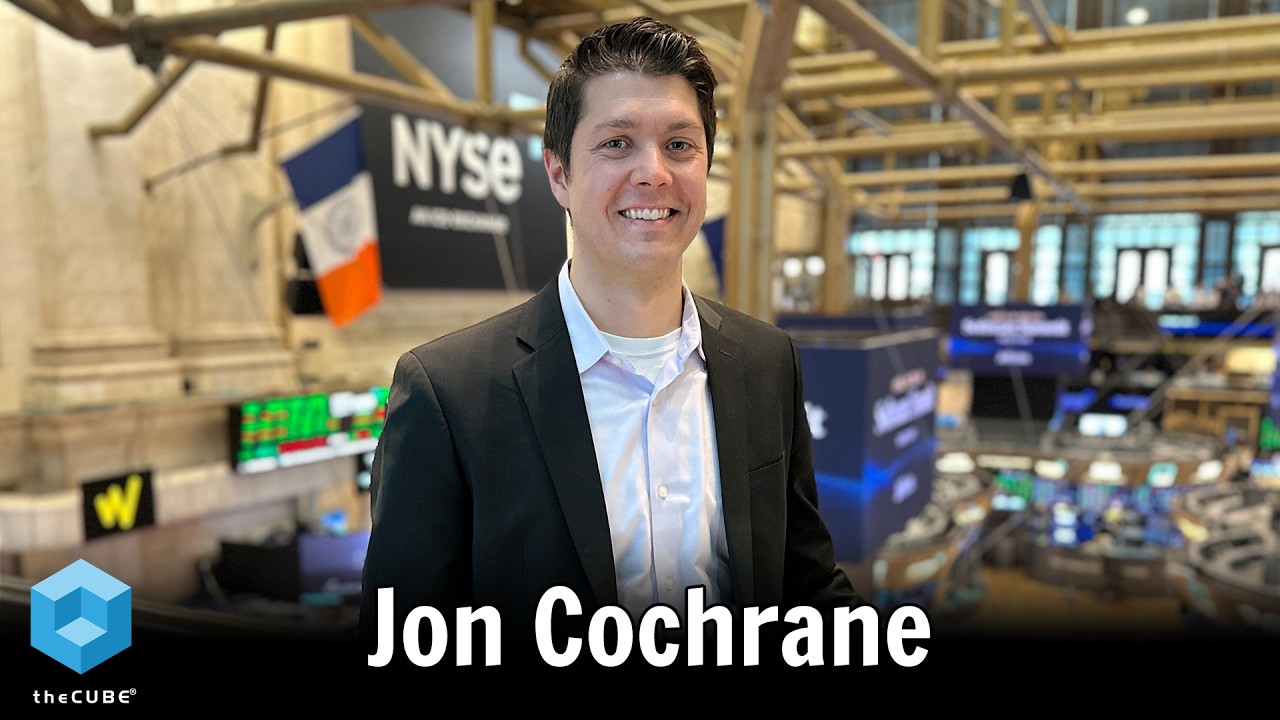




 John Furrier