Dr. Yasin Bostanci of Monq holds a Doctor of Philosophy in statistical machine learning and serves as co-founder and chief executive officer of Monq. Bostanci presents Monq's negotiation intelligence engine and explains how artificial intelligence, AI-driven game theory, simulations and real-time data integration upskill negotiators and optimize enterprise spend. They describe the company's Palantir startup fellowship and detail how the platform merges accounts payable records, invoices and external benchmarks in real time to reduce overpayment, detect price creep and fraud and simulate walkaway scenarios.
theCUBE hosts and analysts observe that this infrastructure-focused approach scales top negotiator expertise across teams enabling enterprises to improve earnings before interest taxes depreciation and amortization, EBITDA, manage supply chain risks and convert negotiation outcomes into measurable cost savings. Viewers receive practical insights on procurement optimization, negotiation intelligence and procurement technology to support strategic sourcing, supplier risk management and measurable spend reduction.
Forgot Password
Almost there!
We just sent you a verification email. Please verify your account to gain access to
theCUBE + NYSE Wired: C-Suite Business Transformation. If you don’t think you received an email check your
spam folder.
Sign in to theCUBE + NYSE Wired: C-Suite Business Transformation.
In order to sign in, enter the email address you used to registered for the event. Once completed, you will receive an email with a verification link. Open the link to automatically sign into the site.
Register for theCUBE + NYSE Wired: C-Suite Business Transformation
Please fill out the information below. You will receive an email with a verification link confirming your registration. Click the link to automatically sign into the site.
You are already logged into TheCUBE Network as
You’re almost there!
We just sent you a verification email. Please click the verification button in the email. Once your email address is verified, you will have full access to all event content for theCUBE + NYSE Wired: C-Suite Business Transformation.
I want my badge and interests to be visible to all attendees.
Checking this box will display your presense on the attendees list, view your profile and allow other attendees to contact you via 1-1 chat. Read the Privacy Policy. At any time, you can choose to disable this preference.
Select your Interests!
add
Upload your photo
Uploading..
OR
Connect via Twitter
Connect via Linkedin
EDIT PASSWORD
Share
Forgot Password
Almost there!
We just sent you a verification email. Please verify your account to gain access to
theCUBE + NYSE Wired: C-Suite Business Transformation. If you don’t think you received an email check your
spam folder.
Sign in to theCUBE + NYSE Wired: C-Suite Business Transformation.
In order to sign in, enter the email address you used to registered for the event. Once completed, you will receive an email with a verification link. Open the link to automatically sign into the site.
Sign in to gain access to theCUBE + NYSE Wired: C-Suite Business Transformation
Please sign in with LinkedIn to continue to theCUBE + NYSE Wired: C-Suite Business Transformation. Signing in with LinkedIn ensures a professional environment.
Are you sure you want to remove access rights for this user?
Details
Manage Access
email address
Community Invitation
Dr. Yasin Bostanci, Monq
Dr. Yasin Bostanci of Monq holds a Doctor of Philosophy in statistical machine learning and serves as co-founder and chief executive officer of Monq. Bostanci presents Monq's negotiation intelligence engine and explains how artificial intelligence, AI-driven game theory, simulations and real-time data integration upskill negotiators and optimize enterprise spend. They describe the company's Palantir startup fellowship and detail how the platform merges accounts payable records, invoices and external benchmarks in real time to reduce overpayment, detect price creep and fraud and simulate walkaway scenarios.
theCUBE hosts and analysts observe that this infrastructure-focused approach scales top negotiator expertise across teams enabling enterprises to improve earnings before interest taxes depreciation and amortization, EBITDA, manage supply chain risks and convert negotiation outcomes into measurable cost savings. Viewers receive practical insights on procurement optimization, negotiation intelligence and procurement technology to support strategic sourcing, supplier risk management and measurable spend reduction.
In this interview from theCUBE + NYSE Wired: Business Transformation Edge, Dr. Yasin Bostanci, chief executive officer and co-founder of Monq, joins theCUBE's John Furrier to discuss how AI is transforming direct procurement negotiation. Bostanci details Monq's Negotiation Intelligence Engine, which integrates natively with a company's procurement stack and merges internal and external data using game theory frameworks such as BATNA and Nash equilibrium. He explains why human relationships remain essential in direct procurement, even as AI helps replicate the...Read more
exploreKeep Exploring
What is the startup's current status — team size, stage (e.g., pre-seed), funding status, and any notable partnerships or programs?add
What is the big opportunity you see in procurement, and what is your company's vision for addressing it?add
How does your system detect and quantify overpayment, fraud, and savings, and how are those findings turned into metrics to evaluate procurement/department performance?add
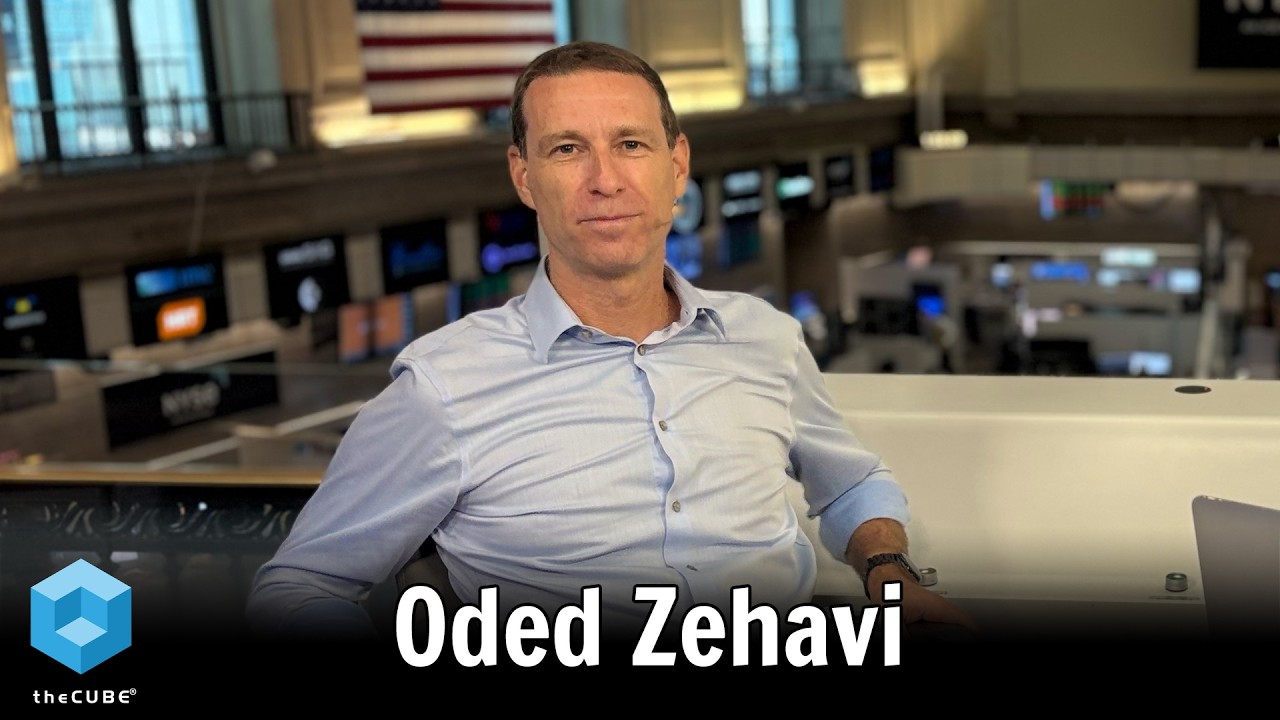
>> John Furrier with theCUBE. We're here in theCUBE's NYSE studios here in New York City, part of the NYSE Wired program and community. Of course, we have a Palo Alto studio connecting Silicon Valley to Wall Street. This is our Business Transformation Edge series. We talk to leaders who are out there with AI, making it happen as we transform with AI. The business is impacted, not just an IT project, it's a business model innovation. It's an opportunity, you start to see revenue as a key metric in all of this. Of course, the efficiency of AI and the user experience all factoring in. Yasin Bostanci is here, CEO, co -founder of Monq, a startup that's targeting an area that will have quite a payout. It may not be on everyone's bingo card, but procurement, negotiation, that's where the money is. Yasin, thanks for coming on theCUBE, appreciate it.
Dr. Yasin Bostanci
>> Thank you very much for inviting me.
John Furrier
>> Okay, so talk about the status of your, you guys are a startup, so how big are you guys, what's the stage, you're funded, but you're coming out of the blocks.
Dr. Yasin Bostanci
>> Okay, so Monq is currently around eight people. In a few weeks time, we are about to be 10. We are a pre -seed stage startup. We established Monq last year in August in the UK. Now we are a British American startup. And around November, we announced our first funding round, backed by both UK -based, Europe -based, and United States -based investors. We are also a Palantir Startup Fellowship company. And yeah, we are working there at 19%.
John Furrier
>> What does Palantir Startup Fellowship company mean?
Dr. Yasin Bostanci
>> It's basically a program where Palantir will be just looking at all the promising startups from the pre-seed to Series B startups and effectively choose the ones that are worthy of utilizing their products to deliver better value for enterprises.
John Furrier
>> So it's a product deal. Is there money involved?
Dr. Yasin Bostanci
>> Money is always involved when we talk about procurement. But yeah.
John Furrier
>> No, no, on the Palantir side, you're in the fellowship, so it's a good designation, so it's a major accomplishment.
Dr. Yasin Bostanci
>> It's basically allowing us to utilize their platforms and products to deliver value faster, if that makes sense.
John Furrier
>> Okay, got it. And they're very entrenched in the enterprise, as well as other sectors. Yeah. Well documented, controversial founder. Soon to have him on theCUBE. We'll get Alex on soon. Love Palantir. Palantir brings up complexity. You mentioned procurement. This is the area you guys are targeting. Procurement is one of those areas, it's not the shiny new toy, but it runs everything. Procurement, you're starting to see procurement, even with Amazon Web Services and Google, the big clouds, those marketplaces have been a great procurement vehicle. Starting to see the connection of digital and physical procurement coming together. What is the big opportunity that you guys see? What's the vision?
Dr. Yasin Bostanci
>> Well, in procurement, effectively, it's all about remembering why we have procurement today, or why we have procurement. in the first place. It's all about delivering the ultimate value. Yes, we can always optimize and improve how procurement works, do better intakes, do better automations, but effectively what matters for a company, a company's board of directors, investors, it's about how much money we saved out of the money we were planning to pay. So now the vision that we have as a company, Monq, it's to further help enterprises with direct procurement and optimize the bottom line for them even further.
John Furrier
>> And describe the problem. Is it overpayment? Is it complexity? Is it leverage, operational leverage for negotiation? what are the key things you're going after and solving or optimizing for?
Dr. Yasin Bostanci
>> At a high level, we are looking at time and money. If we drill down into it, then we are talking about lack of leverage or lack of proper utilization of leverage. We are looking at the increased risk around globalization and everything happening in the world today. And of course, the current supply chain issues that we are having in different parts of the world, in different verticals. We are trying to gather companies' information with real -time information and make sure that the negotiators, direct procurement negotiators, are way better prepared to bring better value for the company. Just not doing manual work anymore as much as possible.
John Furrier
>> You mentioned manual work. One of the things that comes up in the AI era is skills, skill gaps, skill reskilling. What's the skill base look like? So if you come in and bring Monq in for a solution, what do you envision the application being? Are humans involved? Are there agents? What's the skill level? Are there skills needed? Take us through the mechanics.
Dr. Yasin Bostanci
>> In indirect procurement, where the companies will be going for easier to buy type of things, now AI has reached a stage where it can actually replace humans. And there are so many examples of that, both in the States and across the world. But when it comes to direct procurement as a company, we argue that we cannot replace humans. A personal relationship of a CPO or a very senior negotiator, the relationship we have cannot be properly replaced or easily replaced by a model. But effectively, until we get to that stage, AI can totally help our team to cover any holes or gaps to deliver better value. So that's effectively what we do. So our intention here is to upskill people to get to a stage where they can actually negotiate for direct procurement. But at the same time, those very skilled, highly skilled, very valuable negotiators, they can be scaled across the organization, if that makes sense.
John Furrier
>> So I won't use the word digital twins. I'll put quotes in it. Every company has the killer negotiator. Yeah, let's call the big person in. Let's call Mary or Joe. They negotiate the big deals. That's not scalable. So are you guys essentially bringing AI in to help others negotiate at that level? Is it a skill transfer? Is it an agent? How does that work?
Dr. Yasin Bostanci
>> Well, Mary, John, Yasin, whoever that is, will be running a few deals for us, but we have hundreds of deals as a company. So what our tool, for example, does at this point in time, it learns the patterns, learns the behaviors of what works for John and the company effectively, and gives the ability to way more junior or mid-level negotiators to replicate that approach without wasting John's time. So effectively, what that does mean is that you can just literally work with an online coach, let's say, for a live negotiation that is extremely important for EBITDA as a company without necessarily suspending or slowing down another deal that could be very important and that could be something that John is working on.
John Furrier
>> I love the skill thing. Can machines negotiate? We're seeing a lot of machine identities with agents. I'm just kind of connecting the dots real time here. Okay, I got agents, just send me the request and the agent will negotiate on my behalf, machines to machines, and ultimately maybe the supplier and the vendor's relationship could be agent to agent. What's your vision there?
Dr. Yasin Bostanci
>> In indirect procurement, that's already doable, and some companies are doing it. In direct procurement, the AI layer can either help you as a negotiator to get an overall understanding and take it from there, or depending on your appetite for AI as a company, because different companies will have different appetites and understanding of AI from a governance perspective, you can either choose AI to do the work for you, you can choose AI to do some part of the work for you, or you can choose AI to not do the work for you. But in direct procurement, most of the customers we have, in different parts of the world, they will always be using AI to an extent until the time we just have to go for a dinner ourselves.
John Furrier
>> You know in business school I remember game theory was a big part of negotiation. There's a lot of math involved. This is great for machines. GPUs could come in. It's all kinds of permutations of scenarios. How does that factor into your product? Is that in the system? Is that built into the DNA, the intelligence engine? Do you have one? Take me through some of the tech.
Dr. Yasin Bostanci
>> Okay. So Monq will just come to your company. will natively integrate with your super old and nice -looking, or maybe not so nice -looking, procurement stack you have. Look at your internal data, get it, merge it with any external data, private or public, and we call it Negotiation Intelligence Engine. And this engine will already have these game theory approaches from BATNA to Nash to signaling to all these players. Also, the fun fact is it's my research area. So effectively, what it does, it just merges the information on a real -time basis to give you real -time insights so that you don't have to restudy anything from the very beginning. But at the same time, you always have the right up-to-date levers to either push in favor of the deal or against the deal at any time. Again, until the time some people will have to jump in, go for that dinner, go for that Starbucks, or go for that specific weekend getaway in Hamptons and so on and so forth, if that makes sense.
John Furrier
>> So there's a lot of intelligence in there. You said you got a PhD from Harvard. What was the area that you studied?
Dr. Yasin Bostanci
>> Statistical machine learning.
John Furrier
>> Okay, so there's a lot of game theory in that.
John Furrier
>> Yeah.
John Furrier
>> What was your main thesis that's applying here? Is there a direct correlation to some of the things you worked on in your thesis?
Dr. Yasin Bostanci
>> I think my research definitely laid down very fundamental product part of our company, but the problem statement comes from some of the companies that I worked for. A startup in the UK, a super big global retailer in the States and a Chinese telecommunications company.
John Furrier
>> Yeah, so there's a lot of direct procurement there.
Dr. Yasin Bostanci
>> Exactly.
John Furrier
>> And indirect. They probably do a lot of the automated stuff on indirect. Okay, so talk about, I hear a lot, again, you're deeper than I am on this, but I've seen and heard a lot of comments. The biggest one is, I overpaid. Or how much did I save in the negotiation? So there's metrics, success metrics. How do you guys look at overpayment or even fraud? people are getting invoices now and they're paying it. That's the fraud side. So I'll add that into the mix. You got fraud, overpayment, and then savings. How do you guys roll that up into metrics like, hey, our department did good?
Dr. Yasin Bostanci
>> So when this data are all brought together into the negotiation intelligence engine, in that data set, we may have AP records, invoices, our transactions. And effectively, the system will then also seek for price creeps, any additional payments that we shouldn't have done but have done, ended up paying, and so on and so forth. At the same time, it will look at your historical payment data, how it changed throughout time, look at the benchmarks out there and make a comparison in real time without you deep diving into pivots and Excel and stuff like that and effectively it'll tell you, this is what we have paid but we shouldn't have so it needs to create the right alerts for the right people in the company to take action on it. But separately in the current deal that we are looking at, these are the potential deviations we have in terms of the money spent and everything, we should be mindful about it. But of course in light of cost performance and all other factors that we normally should take into account as human beings with, let's say, slower working brains than AI.
John Furrier
>> So you're bringing comprehensive math to the procurement process and you use AI to understand scenarios. I'm sure there's all kinds of calculations, and maybe you can enlighten me on this one, which is, statistically, there's always an option to abandon that skews all the NPVs and all calculations. So when you look at some of the math, knowing when to walk away in certain scenarios at scale, does that yield, are these things that pop out of the analysis?
Dr. Yasin Bostanci
>> Exactly.When you're negotiating, one of the things that you look at is not only, let's say, what the vendor or the supplier is providing you with, but at the same time, you need to clearly understand what is the floor, what are the walk-away numbers and stuff like that. And effectively, you need to be always able to simulate between, okay, if I give up on the SLAs, should I also give up on the pricing? And all that simulation should have to be done. So with the current system we have developed so far, and we are still developing everything day by day as soon as we have more customers. We have now the ability to run more than 200 simulations at the same time. That will give you a very comprehensive understanding of whether you should stop, ask for more, push for more, or just retreat at some point to make sure that you are keeping the relationship in a working, let's say, state, but at the same time, the deal just works in your favor as a company, as a buyer.
John Furrier
>> All right, so this final question for you. First of all, thanks for explaining all this. This is good stuff. There's real business model impact. There's money involved. There's happy employees, there's success. Yeah. Fraud, walk away, don't overpay. Who are you targeting for customers now? Put a plug in. Who should be working with you? What's the profile of your personas you're going after now to get beachhead and to grow the business?
Dr. Yasin Bostanci
>> We are working from SMB level to midsize to extremely big, giant enterprises who will have billions of spend every single year. In terms of verticals right now, we are quite agnostic, but I would say manufacturing, chemicals, pharma, let's think about some others that we have recently started working with, automotive. They're all B2B-ish, though.
John Furrier
>> So it's not a vertical thing or it's not a market size.
Dr. Yasin Bostanci
>> It's an infrastructure thing. And all these companies, now you asked me for my vision. Moving forward in procurement, what we see is the infrastructure layer of the companies in terms of how they run procurement, not just how they automate intake or how they read invoices will be way more important, but all these AI tools also being available to the sellers. And sellers, they always have the comparative advantage because you may buy one vacuum cleaner from a, let's say, company, but they're selling it to thousands of people. So they know their margins way better than you as a buyer. So effectively, we are trying to create the right leverages for the companies and effectively building an infrastructure layer as a moat.
John Furrier
>> So you see a peer -to -peer relationship, not peer -to -peer directly, but just a connection between two parties. You're instrumenting that with the software.
Dr. Yasin Bostanci
>> Exactly.And scaling from it. And that's why we are able to replicate John's skills so that a junior like Yasin can actually deliver at the level of John.
John Furrier
>> Hopefully. It's a Johari Window. You don't know what their margins are. Maybe they're not going to volunteer. Maybe they will.
Dr. Yasin Bostanci
>> Could be, yeah. But we will have scenarios for that as well.
John Furrier
>> Okay. Quoting Johari Window on theCUBE is a first. Great to have you on, thanks for coming on, I appreciate it.
Dr. Yasin Bostanci
>> Thank you very much.
John Furrier
>> negotiation and procurement, it's this infrastructure problem, and again, as the physical world connects with digital, what we're seeing in the business model transformation is that a lot of these practices are becoming infrastructure for companies, and again, the science behind it, the computer science and also the data, is all about intelligence and the engines that power it. It's another great example. I'm John Furrier, host of theCUBE, thanks for watching. Thank you.









 John Furrier