This discussion examines business transformation in finance, focusing on artificial intelligence, AI‑native financial planning and analysis, FP&A, forecasting, automation and the evolving role of the Chief Financial Officer, CFO. It addresses data strategy, semantic models, autonomous agents, remote‑first operations and governance to improve forecasting accuracy, reduce file sprawl and enable finance to move from reporting to strategic execution.
Alok Goel of Drivetrain, co‑founder and chief executive officer and chief financial officer, explains Drivetrain’s approach as an AI‑native FP&A platform built to help the office of the CFO forecast, anticipate risk and create a single source of truth. Goel describes methods for data ingestion and semantic modeling, automation with autonomous agents and enabling finance teams to self‑serve analytics while reducing file sprawl. They emphasize how faster forecasting, clear data ontologies and robust governance unlock actionable insights and accelerate decision cycles.
In conversation with theCUBE Research and hosts John Furrier and Gabe Olave, the discussion highlights remote‑first operations and practical factors to consider for finance transformation. theCUBE analysts highlight rapid revenue and productivity gains for early AI‑native adopters and stress the importance of semantic knowledge, a clear data ontology and governance to realize measurable business impact.
Forgot Password
Almost there!
We just sent you a verification email. Please verify your account to gain access to
theCUBE + NYSE Wired: C-Suite Business Transformation. If you don’t think you received an email check your
spam folder.
Sign in to theCUBE + NYSE Wired: C-Suite Business Transformation.
In order to sign in, enter the email address you used to registered for the event. Once completed, you will receive an email with a verification link. Open the link to automatically sign into the site.
Register for theCUBE + NYSE Wired: C-Suite Business Transformation
Please fill out the information below. You will receive an email with a verification link confirming your registration. Click the link to automatically sign into the site.
You are already logged into TheCUBE Network as
You’re almost there!
We just sent you a verification email. Please click the verification button in the email. Once your email address is verified, you will have full access to all event content for theCUBE + NYSE Wired: C-Suite Business Transformation.
I want my badge and interests to be visible to all attendees.
Checking this box will display your presense on the attendees list, view your profile and allow other attendees to contact you via 1-1 chat. Read the Privacy Policy. At any time, you can choose to disable this preference.
Select your Interests!
add
Upload your photo
Uploading..
OR
Connect via Twitter
Connect via Linkedin
EDIT PASSWORD
Share
Forgot Password
Almost there!
We just sent you a verification email. Please verify your account to gain access to
theCUBE + NYSE Wired: C-Suite Business Transformation. If you don’t think you received an email check your
spam folder.
Sign in to theCUBE + NYSE Wired: C-Suite Business Transformation.
In order to sign in, enter the email address you used to registered for the event. Once completed, you will receive an email with a verification link. Open the link to automatically sign into the site.
Sign in to gain access to theCUBE + NYSE Wired: C-Suite Business Transformation
Please sign in with LinkedIn to continue to theCUBE + NYSE Wired: C-Suite Business Transformation. Signing in with LinkedIn ensures a professional environment.
Are you sure you want to remove access rights for this user?
Details
Manage Access
email address
Community Invitation
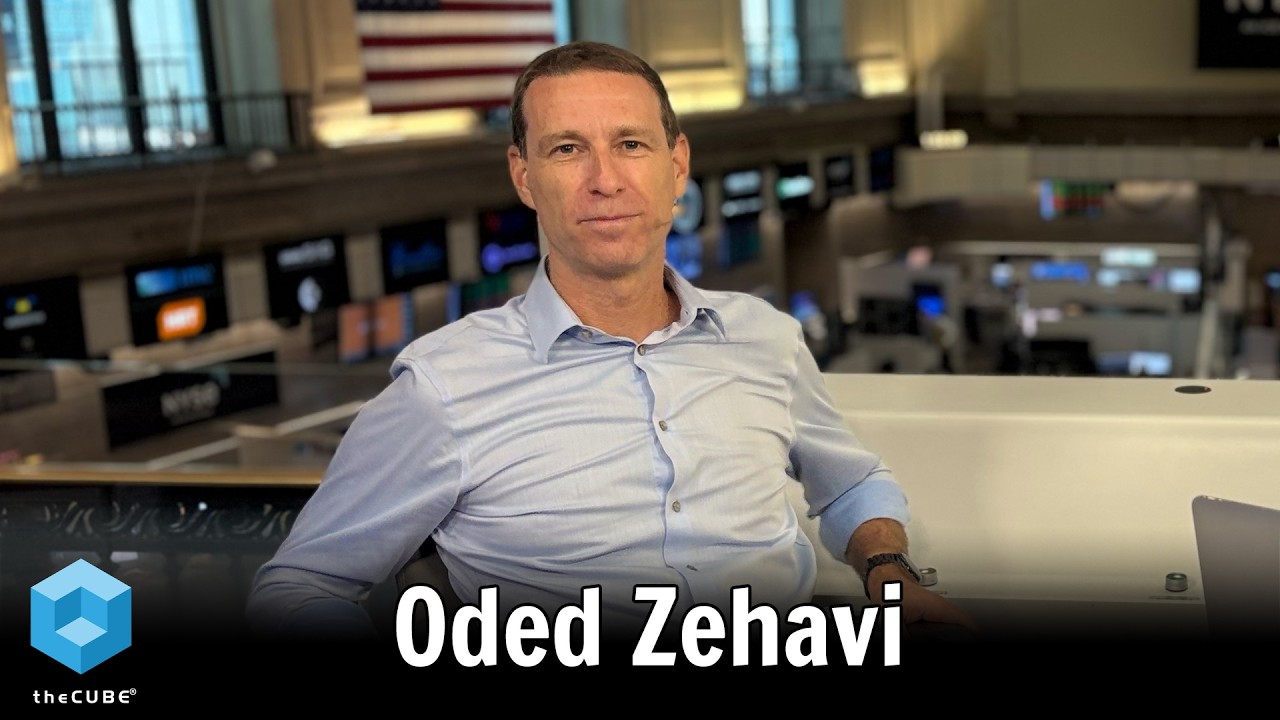
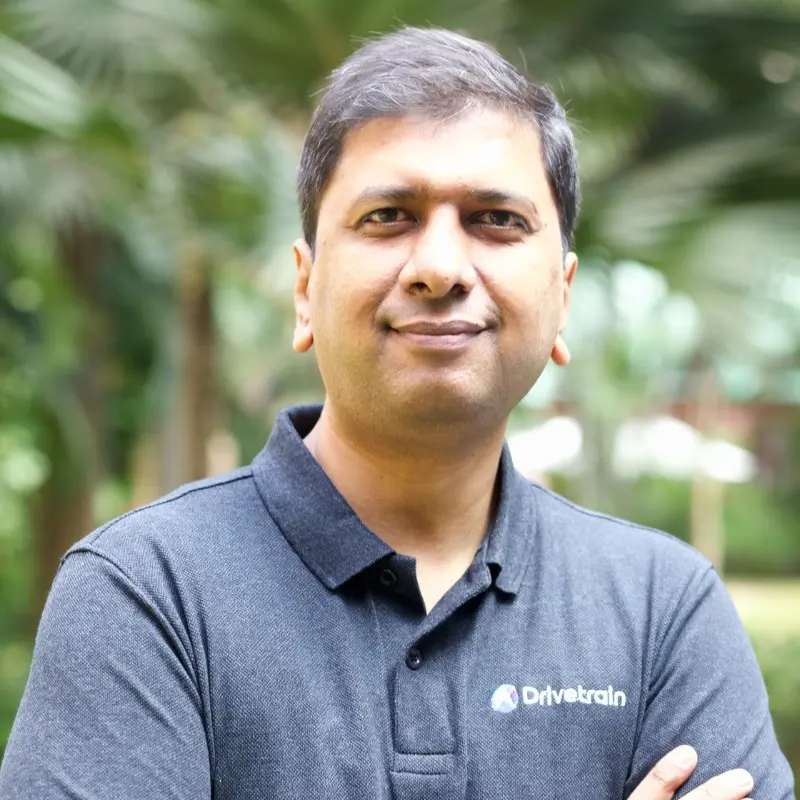
Alok Goel, Drivetrain
This discussion examines business transformation in finance, focusing on artificial intelligence, AI‑native financial planning and analysis, FP&A, forecasting, automation and the evolving role of the Chief Financial Officer, CFO. It addresses data strategy, semantic models, autonomous agents, remote‑first operations and governance to improve forecasting accuracy, reduce file sprawl and enable finance to move from reporting to strategic execution.
Alok Goel of Drivetrain, co‑founder and chief executive officer and chief financial officer, explains Drivetrain’s approach as an AI‑native FP&A platform built to help the office of the CFO forecast, anticipate risk and create a single source of truth. Goel describes methods for data ingestion and semantic modeling, automation with autonomous agents and enabling finance teams to self‑serve analytics while reducing file sprawl. They emphasize how faster forecasting, clear data ontologies and robust governance unlock actionable insights and accelerate decision cycles.
In conversation with theCUBE Research and hosts John Furrier and Gabe Olave, the discussion highlights remote‑first operations and practical factors to consider for finance transformation. theCUBE analysts highlight rapid revenue and productivity gains for early AI‑native adopters and stress the importance of semantic knowledge, a clear data ontology and governance to realize measurable business impact.
In this interview from theCUBE + NYSE Wired: Business Transformation Edge, Alok Goel, co-founder, chief executive officer and chief financial officer of Drivetrain, joins theCUBE's John Furrier to discuss how AI-native platforms are transforming the office of the CFO from a historical number-reporting function into a forward-looking strategic engine. Goel explains why he holds both the CEO and CFO titles, arguing that building for finance leaders requires sitting directly in their shoes. He details how Drivetrain, born remotely during the second wave of COVID...Read more
exploreKeep Exploring
Why does the company's leader serve as both CEO and CFO, and what is the company's product, target customers/use case, size, and geographic presence?add
How and why are finance teams increasingly taking ownership of sales operations and broader operational roles, and how is AI enabling finance to both design and execute the business architecture previously dependent on IT?add
Why are companies moving from Excel/spreadsheets to Drivetrain (an FP&A platform), and what problems does it solve?add
>> I'm John Furrier, host of theCUBE here in theCUBE's NYSE studio, part of the NYSE Wired programming community. Of course, we have our Palo Alto studio connecting Silicon Valley to Wall Street. This is our Transformation Edge series as business models transform into the AI era. It's not just an IT project, all business is impacted by IT. Of course, the office of the CFO and the entire C -suite is rethinking how they do business. Alok Goel is here, co -founder and CEO and CFO of Drivetrain. Alok, thanks for coming on theCUBE, appreciate it.
John Furrier
>> Thank you, John, for having me here.
John Furrier
>> So your title, CEO and CFO, you're both the CEO and CFO. You got to run the company and manage the numbers, but it's really operational. Talk about why you're the CEO and CFO. I love this.
Alok Goel
>> So first of all, our product is all about finance. We sell to the office of CFO. We help CFOs forecast their business and make it a little bit more predictable. And if you're doing that, you better be in the shoes of the customer, and that's how it ended up being. So I handled the CEO and CFO charter both for the company.
John Furrier
>> A company built by a CFO for CFOs, basically, because you have to – this is the tribe you're trying to sell to.
Alok Goel
>> Oh, that is correct. You obviously have to be in the shoes of the customer, understand what their pain points are. That's how you build a good product. that's how you build a good user experience.
John Furrier
>> All right, talk about your company. Give us an update on how big it is, what you guys are doing for customer base, what's the use case, what's the target?
Alok Goel
>> Yeah, we are actually the leading AI-native FP&A platform. We sell to the office of CFOs, and as I mentioned, we help them forecast their business, which is all about understanding what's going to happen in the business, anticipate risk, anticipate what are the bottlenecks to growth, and kind of take decisions well in advance so that you don't see a situation where you are missing your targets. you are able to predictably achieve your growth. That's what we do. As a company, we are well spread across entire United States, a bunch of different locations. People are spread across seven different locations, about 110 odd employees in the company.
John Furrier
>> Are you guys virtual? Do you have offices? Are you guys mostly work at home kind of virtual company?
Alok Goel
>> We were actually born right in the middle of second wave of COVID.
John Furrier
>> Okay, so you're a virtual company from day one. Well, HashiCorp was very virtual. They were proud of it.
Alok Goel
>> But the good part was that the entire infrastructure of the company got built during that time. So the entire processes are actually very well suitable for running a remote company.
John Furrier
>> kind of a tangent, but a lot of companies that were born in that era or had to adjust to COVID, no one really would have built a company from scratch with process for virtual workers. Pre-COVID, work at home was an adjunct to being in the office. So it's interesting to see how that made it, because virtual work is very productive. So it's very fascinating. So what did you learn from that, in that process of building a company with disaggregated resources?
Alok Goel
>> I think the core part is that you really got to take a call, you either go fully in person or you go fully remote. Kind of both ways doesn't work out, because if you've got some people who are in a physical office and some people who are remote, one of the parties always kind of gets left out. And you don't build the right processes in the company. So you go one way or the other. And we actually took a call of going remote. And that actually gave a very strong ability to hire. We can literally hire in any remote town, any remote place, which is amazing.
John Furrier
>> Just get the right tools, make sure there's good collaboration, cohesiveness, all that's built in.
Alok Goel
>> That is correct. And you kind of figure out ways of running the company, not putting too much bureaucracy, not too many meetings. People get their own focus time, and they are a lot more productive.
John Furrier
>> All right, let's talk about your customers. As you mentioned, you're talking to a particular target audience. Is it CFO? Are you selling it to the line of business and finance team? Who's the target?
Alok Goel
>> So our targets are really the CFOs and VP finance of the companies who are helping CEOs and different CXOs and board of directors and investors in terms of making better business decisions. These are largely serving the FP &A function in the organization, which is financial planning and analysis.
John Furrier
>> And what problem are you solving?
Alok Goel
>> So the problem that we really solve is asking this simple question that every business has to answer. How is your year looking like? Where will you be reaching by the end of the year? What is holding you back from reaching that number? How do you fix that? These are really the simple questions.
John Furrier
>> And what are some of the things that pop up that you guys have honed in on that's differentiated and unique that makes people go, wow, this is great?
Alok Goel
>> I think one of the big things that is differentiating us is that we ended up building the platform from the ground up in the AI era. The entire competitive landscape and everything that the finance teams have been using so far have been all built 20 years back. The stack has fundamentally not changed in the last 20 years whereas if you look at every other department be it engineering or product and these kinds of departments they've seen their tooling improve over the last decade or so but finance is still stuck in the same sort of tooling as 20 years back. So we actually thought about it from the ground up, rebuilt the entire product in a native way and that is actually very powerful because when a finance person is driving to the office, their agents are working behind the scenes and by the time they reach the office, the work is done.
John Furrier
>> I love the AI native, you're seeing a lot of great successes, there's almost like, I won't say no fear because you're starting in AI native, so it's like cloud native back when people were born in the cloud, similar dynamic. Data's critical, when you come into a company, what's it look like, take us through the mechanics. Do you ingest the data, is it built from the ground up, you have to do a lot of wrangling, take us through, how do you get up and running?
Alok Goel
>> I think in today's world what is really happening that I'm seeing is that the companies are not missing out on data. They've got a lot of data. In fact, they are data rich but insight hungry. And that's the missing piece in the entire thing. And with the entire cloud innovation that has happened over the last five, seven years, you can move data from all the different disparate business applications that the company might be having, whether it is financial ERP, HRIS, CRM systems into a data warehouse very, very easily at very low cost. but what is really missing is a single source of truth or some kind of semantic knowledge of the business how is business structured what are the different components of the business how are they related to each other and that knowledge is essentially what has been the missing piece in the businesses so far so if you kind of see you ask what is the churn number in my business four different department leaders will actually give four different answers that's different application different system maybe a different stack antiquated legacy system all kinds ofpotential gotchas.
John Furrier
>> All right, so the question that comes up on theCUBE that I'll ask you is a good one. Well, it's rhetorical, but it's also thought-provoking. Every company wants to build their own brain. Finance departments have their little silo. They want to close the books. There's narrow use cases there. But more broadly, companies are talking more about ontologies, graph databases. They're trying to get much more context graphs. So they're starting to think, okay, if the company was intelligent, it would have a brain. What's your reaction to that? Do you see that happening, that kind of conversation, or is that still a bit too far out there?
Alok Goel
>> Well, that is happening all the time. So if you look at finance department in any organization, they have always been number reporters. They have always been looking in hindsight and reporting what happened in the business, whereas CEO and investors in the company are more forward -looking. They are more looking for what can we do today to improve the future, and that's kind of the dissonance which has happened in the past, which is getting broken by all this innovation that is happening in recent years. So finance is actually coming more at the center stage. they're leading the organization in terms of making strategic choices, rather than just being a reporter of the numbers from the past.
John Furrier
>> So more strategy and operations.
Alok Goel
>> Definitely transitioning fast. In fact, I'm seeing a big trend. Earlier it used to be that sales ops used to be something in the sales department, but now finance team, which is actually somebody which knows how all the sales and everything in the business translate into numbers, they're actually owning this department more often than ever in the past. And that's a very, very big strategic shift in terms of this department moving from sales to the finance department.
John Furrier
>> the DevOps movement I was talking about before we came on camera around how during the Cloud wave, Netflix was a big company, it went to AWS, so it was easier to take a software developer to be an operations person, or IT in the Cloud, than an IT person to code. And they were the first ones to adopt Cloud, AWS was the Cloud at that time. The same thing is happening in the C-suite. It's easier to teach a CFO to be a COO than it is to make a COO a CFO. You're a CFO, you have to think about the architecture of the business model because finance actually instruments it. Like you said, they're seeing a lot more ops, they understand strategy, understand consequences, so if you're going to re -architect your business, it's like a blueprint. You got to know the things, you got to measure them. it gives more aperture to the CFO.
Alok Goel
>> That is certainly true. Look, finance never had a competency problem in terms of architecting the business or defining the blueprint of the business. They are the ones who really understand how different moving pieces of the business relate to each other. They are really the architects of the business. But what has happened in the past is that they had some bit of technical know -how deficiency in terms of how you actually move data, how you actually do the coding, how you actually build software. And those are the things which prevented finance from actually being at the center stage of the business. And they were always dependent on IT or engineering to do anything. You need to do some data movement, you need to go to IT. You need to have some kind of data for analysis, you need to go to the data team or engineering team or something like that. But AI is actually changing all of that very, very quickly. So now finance people can actually self -serve their request and that actually is liberating because they can not only think about the architecture or blueprint of the business, but they can actually go ahead and implement that.
John Furrier
>> They can actually execute. And it's automation coming in, autonomous agents, as you mentioned. Great stuff. Talk about the momentum of your business. Share some stats. What are some of the momentum points you guys have? Share some numbers and some highlights.
Alok Goel
>> So we're actually growing very, very rapidly at this point in time. In fact, we are the fastest growing FP &A platform in the space at this time. A lot of people are moving from these legacy softwares of Excel and spreadsheets onto Drivetrain as a platform because they're really seeing this big value that within a matter of weeks we are able to get value out of the tool, so let's actually adopt this tool and make our processes a lot more simpler, a lot more smoother. Instead of spending 80 % of our time on aggregating data and massaging the data, let's actually spend 80 % of our time coming up with insights and be the thought partner to the CEO.
John Furrier
>> Everyone's got file sprawl. Google spreadsheets, Excel spreadsheets, where is it, which one's the latest version. It's a lot of domain expertise just hidden in the clutter.
Alok Goel
>> And if somebody in management asks a question, hey, what happens if we do this in the business, it becomes a week -long project. The speed at which questions are coming is actually a lot higher than the speed at which questions are getting answered.
John Furrier
>> It's like, where's that file? Let me go dig it up. No more. It's a waste of time. Time savings is great. What about revenue? Revenue's a big driver now too. What are you seeing on the revenue side?
Alok Goel
>> So on the revenue side, there are two kinds of companies out there. One is companies which are AI native, like we are. And then there are companies which are old stage, old generation companies which are bringing AI into the stack or the product stack right now. And both kinds of companies are seeing an increase in the revenue. More of the AI native are growing in a hyper -scaler way at a very, very rapid pace. Whereas some of the older companies are also able to bring in a good amount of AI into the product and they're able to upsell their products either in the form of some kind of credits or in the form of some kind of token cost being offloaded to the customers. And it's bringing in new revenue models for these companies which they are exploiting.
John Furrier
>> On the AI native side, which you guys are, which is great, you can come into any companies. Is there a preference for you in terms of target customers? Is there a profile or a target audience or ideal customer profile? file, size -wise, environment-wise, is it on -prem, cloud, is there a certain category of the ideal customer?
Alok Goel
>> So we are talking more about the upper mid -market and enterprise as a customer segment. That's a real ideal customer segment. Because really speaking, when you're very, very small, you're really figuring out what to build as a business, what to build, what to sell, how to sell, those kind of things. It's not about long -term decision making at that time. You're just figuring your next day's life. But when the business scales up, that's the time when you're kind of figuring out how do you scale up the business and that's when a product...
John Furrier
>> And by the way, in your market, we've been reporting on this, the mid -market and enterprise is huge, underserved market because they're under the threshold of the big monster systems and they're growing too.
Alok Goel
>> Oh, the big monster systems in our space were created 20 years back. So these are like extremely old legacy software, which is very hard to move. Just to operate this software, you need to have an army of consultants, which are going to send you an invoice for just touching the software.
John Furrier
>> Yeah, rules -based systems, they have no intelligence.
Alok Goel
>> You feel like you're being held hostage in this kind of situation.
John Furrier
>> Liberating is a great term.
Alok Goel
>> Liberating is a great term.
John Furrier
>> Yeah, freedom and liberation. People love productivity. I love Shadow AI because every department can taste success, see it, feel it, experience it with intelligence. Look, thank you for coming on theCUBE and NYSE Wired. Really appreciate it.
Alok Goel
>> Thank you, John, for having me here.
John Furrier
>> All right, the Business Transformation Edge. It's really about this modern era of AI native, but if you're an AI native company, you're going to align with it, but if you're not an AI native company, AI native companies are coming in to modernize. This changes the business model transition. This creates opportunity, and again, the numbers are clear. There's productivity gains, there's revenue gains, there's staff gains, of course, cost savings, and again, completely changing the business model, liberating and creating freedom. Of course, doing our part here in theCUBE, I'm John Furrier, your host, thanks for watching.









 John Furrier