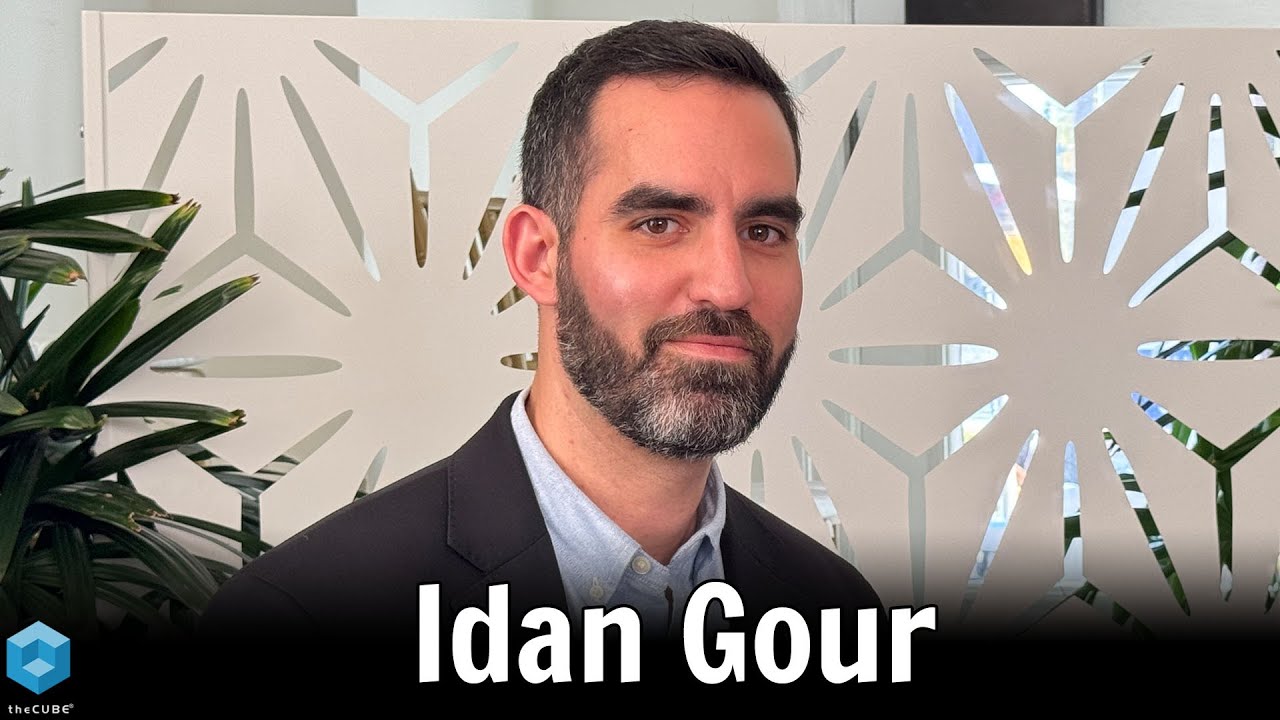
Welcome to our insightful discussion with Steven Elliot, the Chief Financial Officer of ADAMnetworks, during NYSE Wired at RSAC 2025. Our conversation centers on the advancements in cybersecurity spearheaded by ADAMnetworks, a company redefining the digital safety of critical infrastructures.
In this session, hosted by theCUBE Research's Dave Vellante, Steven Elian elucidates ADAMnetworks' innovative approach to cybersecurity. As a leader with a background in financial services, Elian provides a unique perspective on the pressing challenges in the digital world. The dialogue examines the company's pioneering efforts in secure Domain Name System filtering and zero trust network access, offering a comprehensive understanding of their default-deny-all philosophy and its applications across diverse technology landscapes.
Key takeaways from our discussion include Elian's insights into the evolving cybersecurity landscape and the strategic shift required to address escalating digital threats. Elian emphasizes the inefficiencies of traditional threat detection methods and advocates for ADAMnetworks' proactive approach that precludes threats altogether, according to analysis by Vellante. This conversation also highlights the potential of artificial intelligence in securing internet interactions and how ADAMnetworks supports its clients to redefine the parameters of network security.
Forgot Password
Almost there!
We just sent you a verification email. Please verify your account to gain access to
theCUBE + NYSE Wired @ RSAC 2025. If you don’t think you received an email check your
spam folder.
In order to sign in, enter the email address you used to registered for the event. Once completed, you will receive an email with a verification link. Open this link to automatically sign into the site.
Register For theCUBE + NYSE Wired @ RSAC 2025
Please fill out the information below. You will recieve an email with a verification link confirming your registration. Click the link to automatically sign into the site.
You’re almost there!
We just sent you a verification email. Please click the verification button in the email. Once your email address is verified, you will have full access to all event content for theCUBE + NYSE Wired @ RSAC 2025.
I want my badge and interests to be visible to all attendees.
Checking this box will display your presense on the attendees list, view your profile and allow other attendees to contact you via 1-1 chat. Read the Privacy Policy. At any time, you can choose to disable this preference.
Select your Interests!
add
Upload your photo
Uploading..
OR
Connect via Twitter
Connect via Linkedin
EDIT PASSWORD
Share
Forgot Password
Almost there!
We just sent you a verification email. Please verify your account to gain access to
theCUBE + NYSE Wired @ RSAC 2025. If you don’t think you received an email check your
spam folder.
In order to sign in, enter the email address you used to registered for the event. Once completed, you will receive an email with a verification link. Open this link to automatically sign into the site.
Sign in to gain access to theCUBE + NYSE Wired @ RSAC 2025
Please sign in with LinkedIn to continue to theCUBE + NYSE Wired @ RSAC 2025. Signing in with LinkedIn ensures a professional environment.
Are you sure you want to remove access rights for this user?
Details
Manage Access
email address
Community Invitation
Steven Elliott, ADAMnetworks
Exploring Cybersecurity Innovations at ADAMnetworks with Steven Elian at RSAC 2025
Welcome to our insightful discussion with Steven Elian, an accomplished chief financial officer of ADAMnetworks, during NYSE Wired at RSAC 2025. Our conversation centers on the advancements in cybersecurity spearheaded by ADAMnetworks, a company redefining the digital safety of critical infrastructures.
In this session, hosted by theCUBE Research's Dave Vellante, Steven Elian elucidates ADAMnetworks' innovative approach to cybersecurity. As a leader with a background in financial services, Elian provides a unique perspective on the pressing challenges in the digital world. The dialogue examines the company's pioneering efforts in secure Domain Name System filtering and zero trust network access, offering a comprehensive understanding of their default-deny-all philosophy and its applications across diverse technology landscapes.
Key takeaways from our discussion include Elian's insights into the evolving cybersecurity landscape and the strategic shift required to address escalating digital threats. Elian emphasizes the inefficiencies of traditional threat detection methods and advocates for ADAMnetworks' proactive approach that precludes threats altogether, according to analysis by Vellante. This conversation also highlights the potential of artificial intelligence in securing internet interactions and how ADAMnetworks supports its clients to redefine the parameters of network security.
Welcome to our insightful discussion with Steven Elliot, the Chief Financial Officer of ADAMnetworks, during NYSE Wired at RSAC 2025. Our conversation centers on the advancements in cybersecurity spearheaded by ADAMnetworks, a company redefining the digital safety of critical infrastructures.
In this session, hosted by theCUBE Research's Dave Vellante, Steven Elian elucidates ADAMnetworks' innovative approach to cybersecurity. As a leader with a background in financial services, Elian provides a unique perspective on the pressing challenges in the digi...Read more
exploreKeep Exploring
What is the approach of ADAMnetworks in terms of cyber security and how does it differ from other solutions?add
What was the history of the company leading up to 2024?add
What is the approach to educating potential clients to recognize the inadequacies of their existing cybersecurity tools and consider a new way of thinking about cybersecurity?add
>> Hi, everybody. This is theCUBE's evening session at RSAC Monday Night Day One. This is Dave Vellante. John Furrier is also here. And we're here with Open Policy and the NYSE Wired and Anishan. And I'm really pleased to have Steven Elliot here. He is the CFO of ADAMnetworks, a company focused on protecting critical infrastructure. Adam, good to see you.
Steven Elliott
>> Thank you for having me.
Dave Vellante
>> You bet. So tell us about ADAMnetworks. I got a little blurb from your website. You're focused on cyber security, secure DNS filtering, zero trust network access, internet policy enforcement. It sounds like a lot of mumbo jumbo, but you've cut through it. What do you guys actually do?
Steven Elliott
>> So ADAMnetworks is the first and only default-deny-all solution at scale. So imagine protecting your home. Current solutions focus on threat detection, meaning all sorts of actors can come into your home and if they're considered unknown, they're not yet a threat. We focus our computing power on finding the bad guy and kicking him out. We think that's a broken way of approaching cyber security. That's not how I protect my house. The way I protect my house is nobody comes into my house unless I have initiated the connection with a good and known source. So that's what our tool does. It's a software tool that can live anywhere between the device and the internet. It can live in the cloud, it can live on prem. It does not have to be downloaded onto the endpoint agent, which makes it ideal for protecting OT and IoT. And it focuses its computing power on what is good and necessary for that device. And the administrator gets to decide essentially what the version of the internet is for each specific advice under its administration. The implication of that is that we don't have to know about the next threat to protect against it because that threat is not part of your version of the internet. I came to the company, I'm formerly from the financial services industry, and I was running a regulated financial services firm seven years ago when we were starting to get phished. We were getting the inbound emails that looked very, very legitimate, but were not. And that was the beginning of my journey to understand that I'm one click away from opening a door to an adversary that once I find out they're in my house, so to speak, it's too late to do anything about it. And that was the beginning of my journey with ADAMnetworks.
Dave Vellante
>> Interesting. So on your website, I love this, it says "real-time detection", which everybody talks about real-time detection, "not fast enough. You've already been breached."
Steven Elliott
>> Yes.
Dave Vellante
>> And so you're flipping that philosophy of get the bad guys out of there fast and say, "Don't let them in. Just don't give them access."
Steven Elliott
>> Correct. And we're saying, look, the internet is huge in terms of the number of domains and it's growing by the day. It's too easy to spin up a malicious domain. It's too easy to circumvent DNS, which we use as the root of trust, and use direct IP connections to institute an attack. So the number science of threat detection is squarely against the industry. You cannot keep up with all the new threats that are coming about. And if you're throwing AI at it, guess what? So is the adversary. So as opposed to throwing more AI at a problem and playing whack-a-mole with the adversary, we basically say we will help our clients and we do help our clients every day win the cyber war by simply removing your assets from the battlefield. Why are we fighting the war on the same terms that the adversary is proposing to us? We say the new threats can proliferate because they will, but it's simply not part of your good and known version of the internet.
Dave Vellante
>> Okay. So the philosophy sounds really sensible.
Steven Elliott
>> Yes.
Dave Vellante
>> So two things. One is, why isn't everybody doing this? And then the second is, how do you balance the need for businesses to move fast and have access and have facile real-time access to data and at the same time protect them?
Steven Elliott
>> That's a great question. So part of the reason, at least from our understanding and my interaction with the industry over the last six years, because, again, I didn't come to this as a technologist, when I saw what the technology could do, then I was asking. I basically spent four years consulting with the company asking that same question. Is what we have really that unique? And if it is, why isn't everybody doing it? And I think there's a couple of reasons. Number one is the internet is a relatively new technology. I mean, it's hard for us because we think in terms of minutes and days, but the internet is only about 25 years old. And as the internet proliferated throughout our society, security was not first and foremost on our minds. At the point that we realize that we have connected virtually everything to include in some cases our light bulbs to the internet, we start to realize that we've also connected everything to adversaries all around the world. And it's very difficult to then do an inversion of that philosophy once you're already that connected, because the cyber security industry also grew alongside that paradigm of we'll respond to the threats as they come about. But a big piece of that is just the growth of computing power. Our solution is based on a default-deny-all philosophy, which if you talk to virtually any security professional, they're going to shrug their shoulders and say, "Well, yeah, that makes the most sense, but it's not practical." Which gets to the second part of your question. And that's what our founder, CEO David Retikoff, spent seven years making with the engineering team a practical solution. But part of this also was the computing power needed to get to a point to where I don't just go in and add a new URL to my list statically. I can't use the internet that way. And so with the advent of AI, AI is an important component if people choose to use it with ADAMnetworks. It is an important component as people constantly are forced to balance security with convenience. There is no solution that is 100% secure. The only secure way to interact with the internet is to just not connect to the internet. So if you're going to connect to the internet, you have to make that decision. I can put on the same ADAM node, I can put an IoT device on a static white list. Its version of the internet is only what I put on that white list. But also on the same ADAM node, I can infuse the decision-making engine with artificial intelligence to make that yes-no decision on the fly so that I can use my cell phone. I run all of my devices we do on ADAMnetworks. We have a very seamless experience. So it's really just about how the administrator rolls out the technology in their environment. The way that our CEO talks about it when we do a deployment is that you're doing open heart surgery without killing the patient. So people can move as fast as they want to, but we encourage them to take it piece by piece so that you start with segments of your network that are the most critical, that are most vulnerable, and you tighten the ratchet down with default-deny-all until everything works and you move on to the next. But it's really the advent of AI to make those decisions at the gateway, at the network edge, that has allowed a default-deny-all posture that was not technologically feasible a decade ago and now is.
Dave Vellante
>> So when did you guys start the company?
Steven Elliott
>> The company was founded in London, Ontario by our CEO and founder David Retikoff.
Dave Vellante
>> And when?
Steven Elliott
>> In 2013.
Dave Vellante
>> Okay. So you've been around a while.
Steven Elliott
>> Yes.
Dave Vellante
>> But you're now just funding the company or doing another escalation of the firm, right.
Steven Elliott
>> Yes.
Dave Vellante
>> It's funny, one of our good clients, UiPath was founded, I don't know, a decade ago. And then I think they actually did their first raise 10 years after they'd been around. And then they were a rocket ship. They rode the company up to $38 billion valuation. It's not quite there today, but it was a fun ride. Was that something similar here? You guys had a nice business and then decided, wow, we've built something, now we can scale it?
Steven Elliott
>> It was the first seven years of the company, which I was not a part of, was the core engineering team just building the product, which included building our own DNS caching resolver, which that didn't mean something to me when I joined the company, but now I know what that means and it's a big deal. So it was seven years in product development to get something to work that everyone told our founder you'd never get that to work. And then we started doing small commercial rollouts with small, medium-sized enterprises. So we have revenue, we have about two million devices that are presently behind an ADAMnetwork's node. And then now, in 2024, is when we began really our first proper seed raise.
Dave Vellante
>> No, no, please go ahead. Finish it up.
Steven Elliott
>> And we're about four million into a target, six million seed raise that we're presently doing. And all of that raise is go to market. Product, not that you can't continue developing, but the product is matured, it's deployed, and so now it's all GTM.
Dave Vellante
>> So about scale, these seeds must love that, product's done. But the first seven years, how were you so capital efficient?
Steven Elliott
>> That's a great question. It was 100% bootstrapped.
Dave Vellante
>> That's amazing.
Steven Elliott
>> Yes.
Dave Vellante
>> And so it was client funded, perhaps?
Steven Elliott
>> It was personal funded by the founder and engineering team. And then, as we started onboarding initial adopters, then that started to build a revenue base, but also really a testing pool. Because you have this great thing that works in the lab, it was deployed in people's homes on a select basis, but then you're working out all of the kinks that happen when you're actually deploying it live in a client environment.
Dave Vellante
>> It's nontraditional. You got to be a serious believer. Of course, you've got your founder who has patient capital.
Steven Elliott
>> Yes.
Dave Vellante
>> What's the founder's name?
Steven Elliott
>> David Retikoff.
Dave Vellante
>> David Retikoff. So it's a he. He obviously had a vision.
Steven Elliott
>> Yes.
Dave Vellante
>> And a conviction.
Steven Elliott
>> Yes.
Dave Vellante
>> Okay. So that's cool. Let me ask you this. So I was meeting with Nikesh Arora, the CEO of Palo Alto last month. Yeah, it was in March. And he declared the end of best of breed, meaning all these shiny point tools, we're the platform. Eventually, the world's going to consolidate. I'm overstating it.
Steven Elliott
>> Sure.
Dave Vellante
>> But in the fullness of time, consolidation is going to be the plan. He declared the end of best of breed. You guys are clearly best of breed. How do you think about this business? Clearly, there's a proliferation of tools. We all know that everybody talks about how it's a problem. How do you think about that in terms of the roadmap for your company going forward?
Steven Elliott
>> That's a great question. I'll answer that one of two ways, macro and micro. On a macro standpoint, we definitely see there's a tremendous amount of room for consolidation. It's a very fragmented marketplace. And we even see that whether it's talking with prospective clients or talking to investors. There's been a tremendous amount of market confusion because we're all using the same language. I use the term, that's why we tend to default to default-deny-all, because zero trust connectivity is the same as saying all natural or organic. What does that really mean? What does that actually do? And so from a macro standpoint, we would definitely see that there's very high likelihood of consolidation. From a micro standpoint, for us, we are focused on solving the next problem for the next client who wants it solved. So the challenge for us is educating people and really finding the people who have either sadly been hurt badly enough to where they recognize that their existing toolset is inadequate and they need something else, or they're open to a new way of thinking about cybersecurity. So those are our clients and prospects now. And unfortunately, the network of cyber criminals is our best marketing force because it continually shows that simply detecting the threat in the way that it's been done, regardless of how much AI is thrown at it, is not sufficient.
Dave Vellante
>> What's with the name? I thought you were going to say the founder's name was some dude named Adam.
Steven Elliott
>> No. The name, which I didn't have any part of naming, it really evokes the idea of the Garden of Eden. It's the idea where we want to spend our time and energy not focused on the bad, but we want to allow people to simply focus and track the good, which is what our platform is based on.
Dave Vellante
>> That's awesome. Well Steven, thank you very much. Congratulations on getting here and good luck with the raise.
Steven Elliott
>> Thank you so much.
Dave Vellante
>> We'd like to have you back and monitor the progress.
Steven Elliott
>> Appreciate it. Thank you.
Dave Vellante
>> All right, and thank you for watching. This is Dave Vellante for John Furrier and the whole CUBE team. theCUBE at RSAC 2025, this is Day One with Open Policy and New York Stock Exchange Wired, NYSE Wired. Right back, right after this short break.