We just sent you a verification email. Please verify your account to gain access to
theCUBE + NYSE Wired: Robotics & AI Media Week. If you don’t think you received an email check your
spam folder.
Sign in to theCUBE + NYSE Wired: Robotics & AI Media Week.
In order to sign in, enter the email address you used to registered for the event. Once completed, you will receive an email with a verification link. Open this link to automatically sign into the site.
Register For theCUBE + NYSE Wired: Robotics & AI Media Week
Please fill out the information below. You will recieve an email with a verification link confirming your registration. Click the link to automatically sign into the site.
You’re almost there!
We just sent you a verification email. Please click the verification button in the email. Once your email address is verified, you will have full access to all event content for theCUBE + NYSE Wired: Robotics & AI Media Week.
I want my badge and interests to be visible to all attendees.
Checking this box will display your presense on the attendees list, view your profile and allow other attendees to contact you via 1-1 chat. Read the Privacy Policy. At any time, you can choose to disable this preference.
Select your Interests!
add
Upload your photo
Uploading..
OR
Connect via Twitter
Connect via Linkedin
EDIT PASSWORD
Share
Forgot Password
Almost there!
We just sent you a verification email. Please verify your account to gain access to
theCUBE + NYSE Wired: Robotics & AI Media Week. If you don’t think you received an email check your
spam folder.
Sign in to theCUBE + NYSE Wired: Robotics & AI Media Week.
In order to sign in, enter the email address you used to registered for the event. Once completed, you will receive an email with a verification link. Open this link to automatically sign into the site.
Sign in to gain access to theCUBE + NYSE Wired: Robotics & AI Media Week
Please sign in with LinkedIn to continue to theCUBE + NYSE Wired: Robotics & AI Media Week. Signing in with LinkedIn ensures a professional environment.
Exploring the Future of Robotics and AI with Dexterity on theCUBE
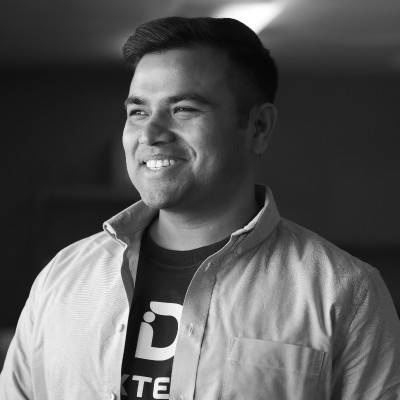
In this informative session, Samir Menon of Dexterity joins us on theCUBE as part of the NYSE Wired Robotics & AI Media Week. Hosted by John Furrier, the conversation delves into the evolving landscape of robotics and AI, exploring how these technologies reshape industries.
Samir Menon, with an extensive background in robotics and AI, provides insights on how Dexterity leads in transforming industrial and logistical operations. Focusing on physical AI and its application in re...Read more
exploreKeep Exploring
What are some of the key components involved in advancing robotics and physical AI technology for tasks in supply chains, warehouses, and factories?add
What has been the revolution in AI in the past five to 10 years and what is the real challenge for physical AI moving forward?add
What are the potential benefits of using robots in various industries, as discussed at the CUBE Robotics Show this week?add
>> Welcome back everyone. I'm John Furrier, host of theCube. We are here at the NYSE Cube Studios as part of the NYSE Wired community, an open source community of experts coming together to share their perspectives. We're here for the Robotics Week, media week, as well as AI leaders. We've got great leaders coming in, sharing their perspective around robotics and AI, and of course, they're all considered mixture of experts, as we say, pun intended. Samir Menon, CEO of Dexterity AI. Samir, thanks for coming on. You guys are doing some amazing work and robotics. Got the Stanford pedigree. You love robots. We do too. It's been big conversation. Welcome to theCube.>> Thank you so much for having me. It's a pleasure.>> It's a super exciting time. I got to say, we're seeing the robotics be the North Star for AI, and what I mean by that is to get AI to work right. The robots is the perfect use case, because everything's got to work in unison. It's got to work in real time. You got computer vision, you got all kinds of things happening. The sensors got to be good. The device has got to be state-of-the-art. The software has to be integrated in the hardware. It literally is the perfect case for innovation, and if it doesn't work, you know it doesn't work, so it has to work. It has to be safe. So it really is sets up for the highest level of tech athleticism, if you will. What's your reaction to that? Can you share your perspective and vision? Because the acceleration's happening. It's not the slow road anymore. It's a fast track.>> Thank you, John, for sharing your thoughts. I broadly agree. A little bit of a perspective from me is that we've always thought of robots as these inspirational machines that work alongside us, that they appear in science fiction movies, in novels, in cartoons. And ever since I was a kid, I've always wanted to see robots be true helpers. And when we think about AI, there's been amazing progress in digital AI. Physical AI is a completely different ball game, and as you rightly pointed out, it is an area that has zero tolerance for anything going wrong. You've got to be safe. You've got to work in the real world. You've got to play a productive role. We have a particular focus on really trying to take physical AI into industrials and logistics, and so some of my opinions are centered around that segment of the market where when we think about robotics and physical AI, there's just a massive need today to do very stressful, laborious tasks that are hidden away in our supply chains, in our warehouses, in our factories, and I think that's going to be a hotbed of innovation. It's going to be a merger of robotics. Robotics is a somewhat mature field in the hardware space. It's been ongoing for 40 years. It's going to be a merger of AI, and AI has seen an amazing amount of progress over the past five to 10 years, and it's all coming together with a vision, with thinking about the world, with a conversation, with reasoning and with a sense of touch, which is also very, very critical for robots to operate in a graceful and dexterous way.>> I mean, data input to robots, computer vision, touch, grip, sensing, all there. I have to ask you about your background, because you mentioned you love robots. Take us through some of the things you've been working on over your career and how it relates to where we are now as the flashpoint of innovation. Because you've been Stanford, I mentioned the PhDs, a lot of work in robots, compare how it all came together, because there's been a lot of work done in the past. It's not like robots came out of yesterday. It's like there's been a ton of work. There's a huge community of people, scientists, hardware engineers, mechanical engineers, you name it, use a ton of cross-functional talent. Talk about your experience there at Stanford and your journey.>> I've been working on robotics and AI for about 17 years now, but robotics is a very mature field. We've had robots in factories for almost 40 years. The work that we do builds upon generations of work done by other people, and to quickly trace a history of robotics. Earlier generation robots were pretty big industrial machines. They were bolted down typically to a factory floor, were very, very precise and more or less did the same task over and over again. The revolution that we've seen in the past five to 10 years is that AI has advanced to a point where we can pull robots out of these bolted down factories where they're doing heavy welding and drilling and things like that, and pull them into spaces that are unstructured, where they're working alongside people. In the world of robotics and physical AI, the more precision you have, the less intelligence you need because it's just rote repetition, and so taking a step away from structured factories and into the supporting areas in the factories or into logistics, into other industries, and eventually making our way towards having helpful assistants working alongside people, that's the real challenge for physical AI, and it's going to be a long march of intelligence. But I think it's already starting to be very productive, very particularly in logistics and warehousing, sorting our parcels, loading trucks, making pallets, making sure that if I order something online, it gets to my door the next day.>> Samir, you bring up a good point. I want to run this by you and get your thoughts, because you mentioned the big factories with bolted-to-the-floor robots, robotics, I mean, I worked at Hewlett Packard back in the '80s and '90s, and they had robotics, again, fixed assembly lines, and it's been around. We've seen that. Okay, check. But I think there's a world now, where the democratization of access, because robotics was only for the rich, the rich and money, you had big factories. I got the money to do it. Amazon's got robotics, only a ton of that. I'm sure Google's got that too for their cars, but now it's accessible. You're starting to see entrepreneurs saying, "Hey, I can build a Falcon X spaceship." Elon did that. They've taken that approach of saying, "I'll build some reusable chassis or systems." You start to see thinking around designing a new scalable way that opens up the market for anyone that has either an idea, some seed funding or money, so it's no longer for the rich anyway. What's your thoughts on this? Because this is a big discussion that's happening right now, coming out of certainly NVIDIA's last event, and of course here this week at our CUBE Robotics Show.>> It's inevitable would be my opinion. We've reached a point where technology has advanced to a degree that we can remove those bolts. Now, we can have robots that move around, either walking with legs or driving on wheels, but they're mobile. They're safe. They can work alongside people, they can empower people, and this has been an amazing event where we haven't yet seen the full commercial impact. We are starting to see the technology inflect, and NVIDIA has been a great leader in supporting these efforts, bringing them to market. The way I see this particularly playing out is that to get to true scale, we are going to go step by step, and we're going to look at ways in which companies can add commercial value, expand the scale. Today, we have thousands, maybe hundreds of thousands of robots being built every year across the world, that's probably going to drift towards a larger number. When we look at cars, in the very early days, there were early adopters, and as the cars evolved, they met a broader spectrum of needs and they saw a huge amount of adoption and the cost came down, which then spurs adoption even more. There's a bit of a march to go from where robots are. I think the total number of robots in the world are, including the bolted down ones or a couple million, and we have more than a billion cars on earth, but that march is probably going to take some time. And it starts right now with laborious, industrial applications that really could be dangerous for people to do, and we can deploy robots. I think they're going to have a great reception. They're going to be very, very supportive, and it's very important for us to keep the cultural impact and the social impact that robots are going to have in our minds as we ramp up production and take these robots out into the world.>> I'm going to say this. It might be controversial, but I think there's definitely a double bottom line benefit to what you're doing, so love what you do. Thank you for doing that. I know you're for-profit, but there's some good in there, so appreciate that comment. I guess my final question is talk about the business update. What's the company working on? What's your focus? Can you share where you guys are at, some momentum stats, how big funding, what you're focused on, what you're optimizing for?>> Dexterity have been very, very focused on a few market verticals. We took a deliberate bet to say that we were going to work with large enterprises, and we started off with parcel. We've publicly announced that we've been working with FedEx, with UPS in the United States. We work with Sagawa, which is one of the largest parcel carriers in Japan. And we just launched this amazing new a very, very powerful robot that we call the Mech. It's really designed to do heavy industrial tasks, and it has been in my imagination ever since I was a kid. Mechs are these amazing giant robots. You typically hop into them and fight aliens when you're a kid and you're watching cartoons, but over here, our mechs sort parcels, they load trucks, they make pallets, and they more or less fill in the gaps in our supply chain where we have hotspots of work that need to get done. Outside Parcel, we also have a presence in retail and e-commerce distribution, and we're preparing for air logistics, which we'll enter within the next few years. So, these are industries that form the backbone of a lot of our travel, our commerce, our parcel delivery, and I'm very happy to say that we're able to add a commercial value. We started Dexterity, we commenced operations early 2018. We've raised about $300 million to date, and have been backed by some amazing venture capital firms, including Kleiner Perkins and Lightspeed, and so we're well financed. We've got an amazing team, very enthusiastic and fulfilling our childhood dream of building mechs here.>> Well, look, it's good to have the nice background because the commitment from the financial markets is great. Congratulations on the momentum. Look it, we love what you're doing. The market is hungry for more robots. They want robotics. The value propositions are there. Again, the structural changes that are going to happen in our world is coming from robotics. Samir, thank you so much for taking the time to come in remotely from my hometown, Palo Alto, to my new studio in New York. I mean, next time we'll come down to the studio and do it in Palo Alto.>> We'd welcome you to come over, and it's truly been a pleasure. Thank you so much for having me.>> All right. Thanks so much. Really appreciate it. Robotics leaders, AI leaders are converging, it's Media Week in New York City. We're going to do some in Palo Alto at the Cube Studios there, again, part of the collaboration between the Cube and the NYSE Wired community together. I'm John Furrier, your host of the Cube. Thanks for watching.