We just sent you a verification email. Please verify your account to gain access to
theCUBE + NYSE Wired: Physical AI & Robotics Leaders QA2. If you don’t think you received an email check your
spam folder.
Sign in to theCUBE + NYSE Wired: Physical AI & Robotics Leaders QA2.
In order to sign in, enter the email address you used to registered for the event. Once completed, you will receive an email with a verification link. Open this link to automatically sign into the site.
Register For theCUBE + NYSE Wired: Physical AI & Robotics Leaders QA2
Please fill out the information below. You will recieve an email with a verification link confirming your registration. Click the link to automatically sign into the site.
You’re almost there!
We just sent you a verification email. Please click the verification button in the email. Once your email address is verified, you will have full access to all event content for theCUBE + NYSE Wired: Physical AI & Robotics Leaders QA2.
I want my badge and interests to be visible to all attendees.
Checking this box will display your presense on the attendees list, view your profile and allow other attendees to contact you via 1-1 chat. Read the Privacy Policy. At any time, you can choose to disable this preference.
Select your Interests!
add
Upload your photo
Uploading..
OR
Connect via Twitter
Connect via Linkedin
EDIT PASSWORD
Share
Forgot Password
Almost there!
We just sent you a verification email. Please verify your account to gain access to
theCUBE + NYSE Wired: Physical AI & Robotics Leaders QA2. If you don’t think you received an email check your
spam folder.
Sign in to theCUBE + NYSE Wired: Physical AI & Robotics Leaders QA2.
In order to sign in, enter the email address you used to registered for the event. Once completed, you will receive an email with a verification link. Open this link to automatically sign into the site.
Sign in to gain access to theCUBE + NYSE Wired: Physical AI & Robotics Leaders QA2
Please sign in with LinkedIn to continue to theCUBE + NYSE Wired: Physical AI & Robotics Leaders QA2. Signing in with LinkedIn ensures a professional environment.
play_circle_outlineImportance of networking as a new operating system in AI infrastructure.
replyShare Clip
play_circle_outlineEnhancing Computing Efficiency: The Impact of Rapid Semiconductor Innovation and the Shift to AI Inferencing in Network Architectures
replyShare Clip
play_circle_outlineScale-up vs. scale-out networking in data centers for AI and GPU requirements.
replyShare Clip
play_circle_outlineEnhancing AI Performance: The Shift Towards Domain-Specific Models and Efficient Resource Utilization in Enterprises
replyShare Clip
play_circle_outlineCohesion between public and private AI infrastructures is essential for future growth.
replyShare Clip
play_circle_outlineSecurity and privacy are major concerns driving enterprise data center decisions.
replyShare Clip
play_circle_outlineNeed for data customization and privacy in country-specific AI applications.
replyShare Clip
play_circle_outlineRole of telcos in enabling distributed edge-inferencing computing for AI services.
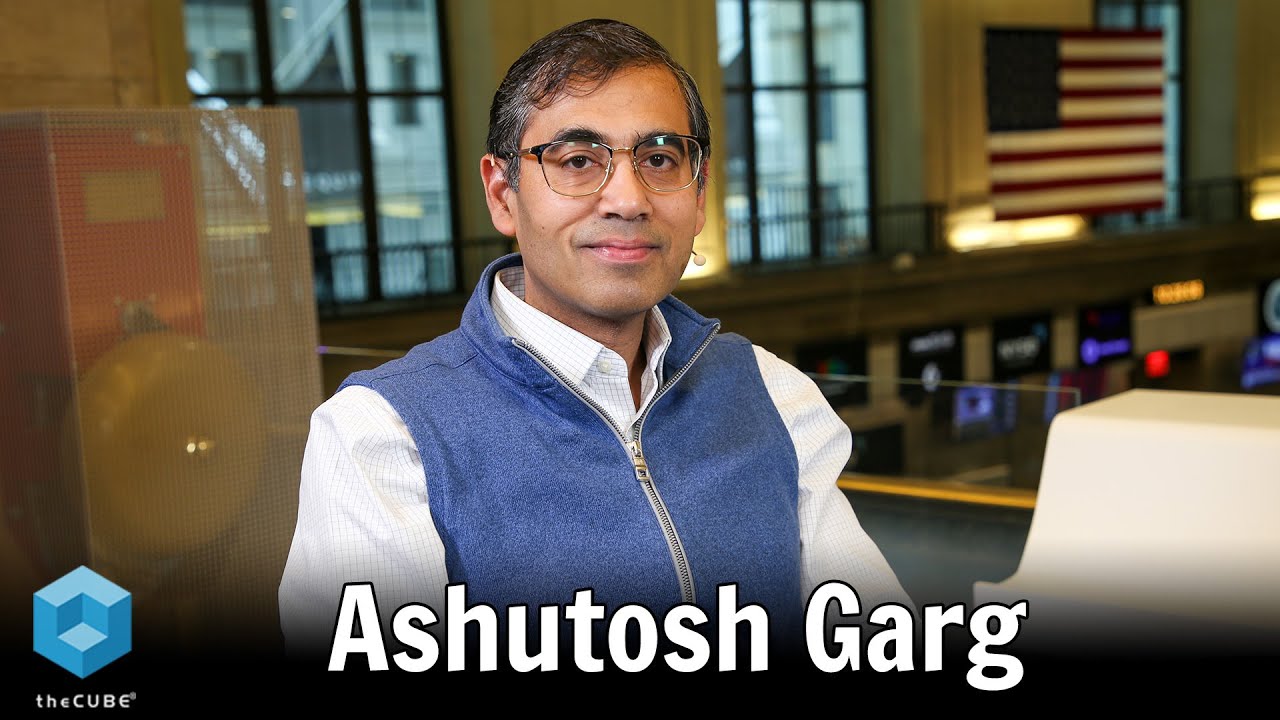
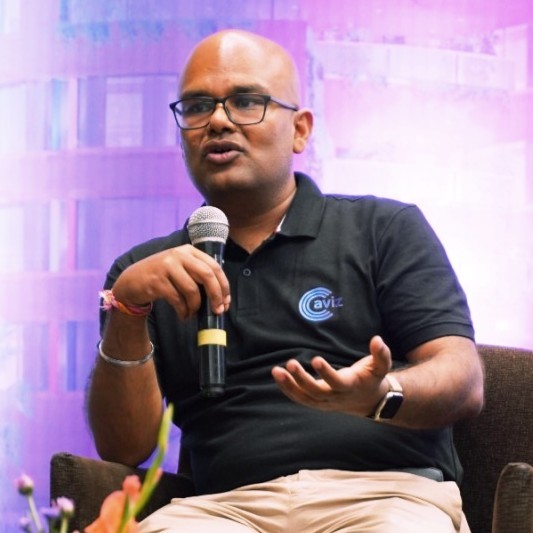
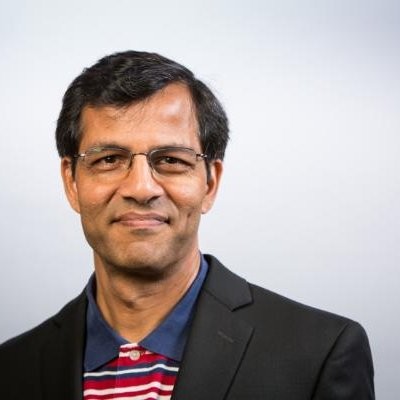
Vishal Shukla, chief executive officer at Aviz Networks Inc.; Shekar Ayyar, chief executive officer at Arrcus Inc.; and Anand Raghavan, vice president of AI products at Cisco Systems Inc., join theCUBE’s John Furrier at theCUBE + NYSE Wired: Robotics & AI Infrastructure Leaders 2025 event. The panel explores how next-gen networking underpins scalable, AI-ready data centers.
The conversation focuses on open standards, distributed compute frameworks and the need for highly flexible AI infrastructure. The panelists examine how connectivity and orch...Read more
exploreKeep Exploring
What is the significance of networking in the context of modern operating systems and distributed computing?add
What is the significance of networking in the context of AI and its impact on data centers and distributed computing?add
What are the emerging networking requirements and developments in relation to GPU training and the scaling of large language models (LLMs)?add
What trends are currently influencing conversations around data centers in the pharmaceutical industry?add
What considerations should be made for ensuring efficient and scalable systems in computing and networking?add
What are the two dimensions necessary for summarizing the requirements for supporting AI workloads in networking?add
What are the considerations for training machine learning models with country-specific data?add
What are the opportunities for telecommunications companies in relation to AI and distributed edge-inferencing computing?add
>> Welcome back, everyone, to theCUBE. We are here in our Palo Alto studios. I'm John Furrier, host of theCUBE. As part of our Robotics and AI Leaders second annual event, as AI infrastructure continues to innovate, that's going to enable a new generation of ages, new kinds of software, game changing up and down the stack. We've got a great expert panel here that's going to talk about rethinking the data center, reimagining the future as the infrastructure is setting the pace of innovation. Vishal's here, CEO of Aviz Networks, Shekar Ayyar, CEO of Arrcus, Anand, VP of AI products at Cisco. These are the brain trusts. These are a mixture of experts, pun intended here. Welcome back to theCUBE. Good to see you all.
Vishal Shukla
>> Thank you.
Shekar Ayyar
>> Good to see you, John. Thank you for having us.>> I love two conversations that happen on theCUBE. One is chips because they're in design cycles that are usually out there. I get a little taste of what's coming. Networking, data center because they're transforming. And then on the robotics side, that's an edge physical AI piece, which again plays into what we're going to talk about here, rethinking the data center connectivity. Because if you look at all the operating system conversations we're having, it's not like the old school operating, it's networking. Networking is the new operating system because you got to connect things. Things got to get closer. There's density. These are the kind of distributed computing problems we've seen before. So I want to first ask you guys, Shekar, you were around last time, we were talking about networking. This is the piece that is interesting. Because you look at NVIDIA's GTC conference, KV Cache, they call it the operating system. I said that's networking. What are you talking about? So again, why is networking so important right now? Why is this changing the landscape of the data center and the distributed computing paradigm?
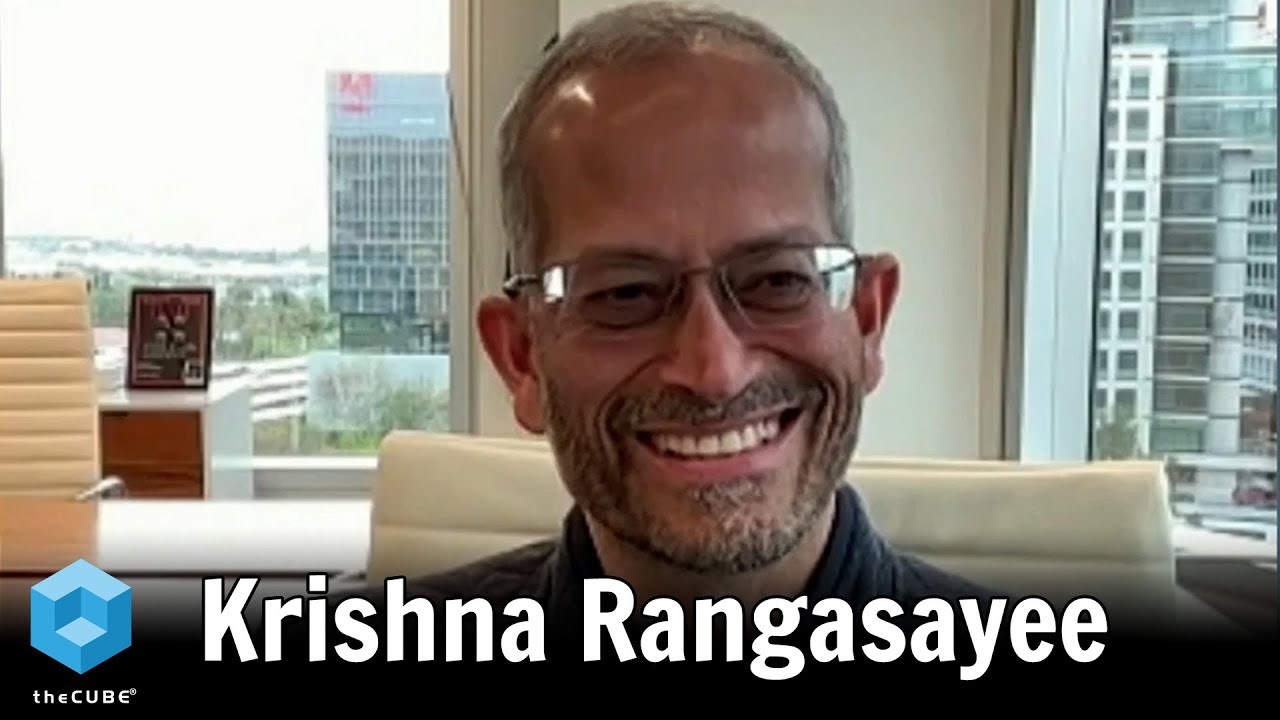
Shekar Ayyar
>> So I'd say two reasons that are very relevant to AI in particular. I mean, one is that a lot of the focus on AI has historically been on training, and typically training ends up being a bit more of a consolidated problem. You've got a lot of compute requirements, a lot of DPUs that you can throw at the problem. Big LLMs get computed. But then more and more now you are starting to look at this as an inferencing problem. It's where more of the action is. It's where more of their money is in some ways as well. And that buy-in design requires you to be distributed. So you've got to think about this as an architecture where you've now got your compute centers at different points in the, whatever, architecture, globe, et cetera. And then you've got to extend that to the endpoints, and that requires a network. And not only does it require a network, it requires a network that knows what AI is. It requires a network that knows how low latency works, et cetera. So that's one big reason why network is being brought into the forefront. The other I would say is that there are different pools of capacity that are currently existing. I mean some of it is in the telco network, some of it is in cloud, some of that is in on-prem infrastructure. And historically, these things were all disparate. You didn't really have to connect these things together. But now the capacity requirements for AI are going to suck every ounce of capacity that you have across and bring it together. So I think that would be another big reason why the network now is brought in front.>> And physics always plays a big part. Every time we have a conversation, speed of light and all that good stuff. Co-packaged optics are a big trend. Vishal and Anand, I want to get your thoughts because the trend is with cloud, scale-out. We've seen scale-out. We know how to do that. Networks know how to scale-out. Scale-up in the data center is a big discussion. Old school was the rack, but now you're talking about networking in the system. So you're scaling up, and I'm hearing words like number of hops on a scale-up conversation. This is a networking conversation. And storage has 10 hops, now they're trying to get down to one with silicon. What's the scale-up, scale-out current situation? How would you describe it? I'll say silicon and the switches are now in there. You look at all these clustered systems, they're large scale, they're token demand, there's a scale-up networking going on. What's your take on that?
Vishal Shukla
>> Well, so when basically the networks were only designed for the CPUs and the storage network, at that point of time it was all about scale-out and you have a design which is highly scalable, rack-to-rack and everything. But then you have these clusters of GPU high demand from the training requirement and it needed a different kind of a network, which essentially NVIDIA calls it NVLink, Broadcom came up with network they call it. And then basically there is a UEC and UAL consortium which is happening for this one. So essentially as the need for the training and the amount of data which will increase for holding this billions of parameters of LLMs, there will be two different parallel networks. The need will be different for that. And essentially, it'll keep on growing from... especially look at the speed at which NVIDIA is developing the GPUs. They have actually announced their roadmap till 2027, '28. And one of the things the CEO said is that I'm doing it so that the peripheral system manufacturer of companies can be ready with what we're going to do. So I don't think so that's going to stop anyways. There are three different islands which are developing a lot of good protocols and the standards for the scale-up. But for the front-end application, scale-out will be the way because the consumption of those application will always be on the front-end network, which is going to be the scale-out. So yes, it's a new phenomena. Scale-up, we don't use to talk about it a couple of years back, but it's going to be there. It's going to scale. And the traction which you see from the ASIC vendors and from the community-based consortiums focusing on that gives you the hint that it's here to stay.>> We heard from Broadcom and OCP, they're talking about this all the time. It's a big hot button. But the networking, like you said is key. Anand, the data center conversations, I've been in more data center conversations in the past year than I think in the past 10 years. There's a total renaissance, but the conversation is the data center is the computer.>> So the interesting trends we are seeing in the market is the following. So if you're a pharma company, if you're researching a new molecule, not only are you worried about your IP in the classical sense of, oh, there's a bunch of patterns that we have, but I'm building a fine-tuned model that I want my employees to use, my researchers to use. That model is my IP. I may not want to run it in a public cloud. I might want to run it in my own enterprise data center. So model, protecting your models, protecting your enterprise data that you want to use to train these models, a lot of that is what is driving the enterprise data center conversations. So if you look at some of the recent partnerships at Cisco we have done with NVIDIA, Cisco is now part of NVIDIA's Spectrum-X ether reference architecture. Both the HyperFabric and Silicon One are part of that architecture, making it easy for customers to build a Cisco-validated stack around Cisco and NVIDIA. So that's one. There's a lot of density of compute that is going into these data center products. We just announced a smart switch. We announced our UCS servers with GPU capabilities built in. So now you have AI-ready infrastructure that you can run in the data center. So the other trend we are seeing is a heterogeneous set of use cases. Shekar, to your point about going from training to more inference. So you have a lot of inference workloads that require globally distributed data centers. At the same time you might have, let's say for example, you're building a bunch of agents that can provide your sales organization up-to-date information on deals from Salesforce or any other data system that you have. You might have a warehouse where there's a bunch of robots running and you probably have to do a software upgrade on them, and a digital twin is testing that out in your data center. And at some point that needs to go and update each of the robots. There you need real-timeness to your infrastructure. So there's a lot of heterogeneity in there. So as a result, new demands are being placed in there. Just to name a few, you want segmentation of this data center. You don't want the agents that are looking at the Salesforce data to overlap in any way with the digital twin that's running your robots' operating system or with the model that's running training for the pharma company. And you want to separate these out. You want these to be secure, which is the security factory work we're doing with the NVIDIA so that your models are always protected, your model training, your model inferencing is running in a safe and secure manner. All of these are putting a lot of demands on what the architecture of the data center of the future would look like. But that's some of the reasons why we're seeing the excitement around it.>> Guys, what's your reaction to that? Because you look at the existing market, there's a lot of legacy in these enterprises. It's not going to just swap it out. At the same time with digital twins and with robotics, there's more demand for tokens. So token demand is driving the large scale systems. So the question that I'm thinking, along with what he just said, piggybacking on what he just said is that, okay, I'm going to need to have systems that are going to be scalable, but I don't want my compute and GPS to be idle. I got to move the data in there. So the network is the road. The network can't slow down. And if there's too many hops or too many paths, you have either signal problems, reliability problems, too many connectors, but then you want to feed the beast, the GPUs, you want to feed the systems.
Shekar Ayyar
>> No. You're exactly right. And I would say there's two ends to that. One is the most efficient compute you can get, the most low latency compute you can get, the best processors, and NVIDIA innovates and so do others in terms of their processors. Then there is how does the network contribute to this by extracting out the maximum efficiency from your existing architecture, whatever you put into this. So an example is we've actually taken the Arrcus OS and ported that on top of BlueField DPUs, and somewhat similar to what Anand was explaining, spectrum silicon, and equally on Broadcom silicon. So if you're building a data center, you are likely as a customer to say, "Hey, I'm a Tomahawk 5 to be on top of this rack. I want to actually maximize the compute efficiency of whatever GPUs I'm buying from NVIDIA." And one way you can do that is by saying, "Look, all these network functions are being computed on your GPU, but they don't need to be there. Use your GPUs for your LLMs, offload your IPsec off onto your DPU and make that a more efficient architecture."
So you've got now a combination of things that you can do. One is you can throw money at the problem a little bit by saying, "I want to get the maximum, the latest, greatest semiconductor." But you can also pull in efficiency using the network, and in particular, a smart network architecture that knows how to move workloads around, or for that matter, actually be intelligent at the edges. And if you combine these two, then I think you've got the best combination going.>> Vishal, he said heterogeneous.
Vishal Shukla
>> Yes.>> That's a big part of running... He said Tomahawk too. Tomahawk .
Vishal Shukla
>> Oh, yeah. That's a->> Tomahawk 6 is out now too. So a lot of new stuff happening. Open standards are a big part.
Vishal Shukla
>> That's right.>> NVIDIA's got their thing. Cisco's got a huge install base.
Vishal Shukla
>> That's a big part of what we do, essentially. Go back into the core on why we are asking these questions on that networking is moving, the workload is moving and everything. So if you really see the definition of compute itself has changed. Used to be CPUs. Now, it is the DPU. You can do edge kind of a thing. Then you have LLMs, which is GPU.
So essentially, that requires a different kind of a network. Some of the functionality sits into the chip itself, better buffering, load balancing algorithms and adaptive routing, those kind of things. And then better speeds, which is primarily driven by the amount of data is being moved across different application. So the first one is actually the definition of compute itself has changed. The second one, the data has exploded in a sense that LLMs needs that amount of data. I mean, think of an e-commerce site, used to be having a picture for an advertisement of a product. Now it has a video, and on top of that video it has a recommendation video, so all that->> It's got computer vision too, watching your face and watching your reaction.
Vishal Shukla
>> Exactly. So that all converts into the data, which basically talks about Tomahawk 5, 6, and all these kind of things.
And the third part is all different organization networking teams have been told that how do you use AI to essentially efficiently manage your network? So these are the three things which are happening in the networks, and essentially, that relates in changing into the network by the speed with which these ASIC vendors are changing the network. You see, I mean the compute is changing at a very high speed. NVIDIA is bringing new GPUs, AMD bringing new GPUs, the deep use manufacturers are bringing new DPUs. The network chip manufacturers bringing new ASICs. So what do the customers do at this point of time? It is a very fast thing.>> You should be a host of theCUBE. That's the next question.
Vishal Shukla
>> Before you can consume, there is a new technology out there. So the way what we think is essentially is easily consumable thing is actually standardize a layer which can basically, on the top side, can standardize the automation, your framework and your AI or whatever you have on the top. And on the bottom make it so robust that you can put Tomahawk 6, you can put Spectrum, you can put Silicon One, you can put Marvell, you can put Excite or anything what you want. And while you do that, do that in a way that it is open enough so that it is->> Wait, what does open enough mean to you?
Vishal Shukla
>> So open enough means that there is an ecosystem behind it, which basically... I named the ASIC vendors, they are behind it for that matter. The DPU vendors, they are behind it. And then for that matter, the APIs, there is a Linux Foundation, OCP kind of things are behind it. And when you talk about the LLMs, those are open enough to essentially any enterprise can actually take down them and train their own things. To your point, having it private as keeping the data and the training private. So essentially to consume this thing, standardize a layer, which on the north side enough open, and the south side enough open to assimilate and consume this all variability which is coming in hardware.>> He brings up a good point because the ASICs are moving so fast, that's a big part of it. You mentioned videos being played. If there wasn't such AI action going on at the ASIC level and all the great networking stuff happening, we'd probably be talking about Wi-Fi 7, which is hot. That's another networking feature. That's just the edge. Robotics is going to need some connectivity. So the edge is Wi-Fi 7 for the future of workplace. You've got robotics. So edge is huge in all this. Where does edge fit in? Because this is the question everyone's asking, "How do I deploy the network dealing with my existing network so I'm not just future-proofing, I'm futureing it now. I'm modernizing both at the same time?">> The key trends that we're going to start seeing in the market are the following. One is I want to reduce the time, the downtime for anything to the point of extracting maximum ROI that I can. If my training workload takes four weeks, can I bring that down to one week? If my inference was taking one second, can I get that down to half a second or a hundred milliseconds? So how do I make more efficient use of the infrastructure that I have? That's the first one. The second one is something goes down, how quickly can I resolve that? And one of the recent announcements we just made last week at Cisco Live was a product called AI Canvas. And what we're trying to accomplish there is typically when you try to debug something, data is cross-platform, data is cross-domain. You're to go across multiple products to get to what you're looking for. Can you orchestrate, using an agentic system, across multiple domains, across campus and branch and data center and other edge devices that you might have like a laptop that a user is walking into an office with, to be able to identify why there is a particular problem and solve for that? Using a generative UI that's created for you based on a natural language prompt that you might input into the system, pulling in the right sets of data at that time based on the question that you're asking. Can you have a family of agents that are running at the network management plane that are constantly looking for correlations and insights that can dynamically show you something saying that, "Hey, I'm observing an anomaly here. And oh, by the way, here is a recommendation that we recommend that you take action on."
We are seeing a severe shortage of talented people in the NOC, in the SOC. So can you, with the availability of open source LLMs, can you start building custom LLMs that are trained to make them do better at their jobs? We just announced a deep network model that's trained with CCI data, that's trained with 40 years of our expertise in the network. That if I am a level one analyst in the NOC, I can go ask it as many questions as I want and get expert answers without going back to the few experts that, human experts I have on staff, to get the help I need to reduce my mean time to remediation? So those are the trends that we're seeing in the market. How can AI be a co-pilot with me, if you will, work alongside me to help me do my job better to get things done faster?>> I mean potentially a new business model for Cisco, all kidding aside, but if you look at what OpenAI is doing with their research, Perplexity has Perplexity Labs, you can pay OpenAI 30 grand and get a PhD resource. I mean real research. I mean that's where it's going. So to your point, I'm kind of kidding about the business model, maybe you couldn't subscribe to that, but that's where the productivity is going. So the question is: What is an intelligent distributed computing network look like? Because what we're getting into is distributed computing with AI is intelligent. What does that look like? It's not self-healing. That's old school definition. Grid computing was kicked around in the nineties back in the day. Now, we got essentially that kind of feeling going on here. Just thoughts, guys, on what you see, what would be the requisites for an intelligent distributed computing -
Vishal Shukla
>> If you have a fabric that, I think, extends itself from edge to core, if it allows for distributed computing, as well as connects to the consolidated cores, and then takes advantage of what I would call as new technologies that are coming to the forefront. So I mean obviously we're talking 5G to 6G transition. We're talking about all of the sophistication that is being released by NVIDIA through their processor software, DPUs, as well as other companies like AMD. And so as an example, we've worked with SoftBank closely to use SRv6 as an example to take slices and deliver that using an IP programmable architecture on a 5G network. We worked with Liberty Global to demonstrate how you can take volumetric video applications, combine an Arrcus NOS with a Fujitsu RAM and core, and then drop that on top of an NVIDIA processor and use that to basically distribute that across the agentic AI landscape. So I think these are all examples where, on the one hand, there is networking technology that is actually evolving because of companies like ourselves all innovating. Meanwhile, the AI world is advancing to a point where they're saying, "We're hungry for compute. We want to reduce the cost per token." And there's that movement going on. But then as we are all talking about this thing is now going to go out to the agents, to the edges and to the end points, and therefore network innovation really needs to meet AI innovation and then give the best of that to the customer. And that's where I think this notion of a programmable fabric is very interesting.
Shekar Ayyar
>> So I'd like to just add, to your point, absolutely on spot. The way we would like to summarize is essentially two dimensions. The first one is basically making the networks for the AI workloads. So that basically is a chip heavy kind of a thing because you have to have the right protocols and the buffering mechanism and the latency and all these kind of things. And on the software level, you have to have a system which basically can embrace this comprehensive options which are available. So that's basically creating the foundation, as you would for building a home, which actually is a future-proof in a sense that it can run AI workload. Now the second context from the networking itself is having an AI which understands your network. And that is, basically, is based on two different dimension is one is the control plane of the networking, all the protocols, all the DPUs, GPUs, CPUs and the chips and everything and the protocols which make it work. But also the data which flows through the wire, which means the application of Airstack.
And when you put these things two together and put it in a LLM or an agentic AI architecture, then you will start to see the heat map of your network, and you will start to see the red areas of your network. And after that, you can actually start working on the workflows, which can do it. By the way, we are not there. I mean people talk about self-driving network and everything, but I don't think so anyone is brave enough to give their production network to a workflow which will just go and fix the heat map by itself.>> I mean the networking has evolved so much. You guys live it every day. And I'm dating myself here, but 25 years ago, I remember sitting in with Cisco's office, I think Prem Jain was running engineering at the time, and he and I were talking with a young product manager. And the product manager was banging his fist, "We have to move up the stack." This was well-known in Cisco history. It happens all the time. We're there now. This is the moment, for the next 10 years from that time, it's always been the conversation. But the networking was fine. There's a lot of stuff going on, a lot of things to improve, but now you have to have full visibility.
Vishal Shukla
>> There's two simultaneous trends happening. One is exactly what you said, that AI is at the user experience layer. If you're in the NOC, you're in the SOC, how are you making my day job easy? But to accomplish that, there's several layers of work that needs to get done. We spoke about AI and the fabric, HyperFabric Silicon One, innovations that happen in silicon as well as in the fabric. You need AI in the networking layer, in the infrastructure, that does correlation algorithms, that understands if there's an anomaly that's present in the network. You need AI in the control plane and the management plane. And only when you have all of these in place can they stack up to a 10X user experience that an agentic system can predict before something happens, can even recommend a solution that a human can intervene and then inspect and deploy. To your point, I don't think we are at a place yet where everything can be autonomous, but a lot of these pieces have to be in place. The other thing we are seeing is that we're going from one giant model that might solve for everything into domain-specific models that are good at accomplishing certain kinds of things. So I might have an agent that is a ThousandEyes agent, that is good at accomplishing a certain set of outcomes, that is trained on ThousandEyes specific data. Now this agent is registered to an MCP server, along with other tools and other APIs, and any problem that comes into that MCP server that has anything to do with the network, ThousandEyes can actually instantiate this agent, get an intelligent response from it, and provide a very highly qualified answer back to the user asking that question. So we are seeing systems like this being built together, which is a collection of MCP servers that have tools and agents registered to themselves, and there is an orchestration layer that's tying together all the responses that a user has asked for.>> That's network theory right there. I mean essentially MCP is the brightest thing that's happened this year. I think has changed the game because now you have agents with the ability to evaluate and also accommodate smaller models without foreclosing the benefit of the bigger models. This is going to bring in massive efficiency. So the question to you guys, how do you see the fusion of these models? Because there's going to be very domain specific models. We predicted that four years ago when we published the power law on theCUBE. And also, you might not have to build it, you just take your data and distill it off on main models. So this is new stuff. Talk about the importance of this metadata or new intelligence information.
Vishal Shukla
>> So this is what we are seeing in the market. The DNA of what we do is actually based on open source right from the network opening system, which is SONiC. So it essentially gives a lot of power to the customers to do whatever they have to do in that, not only how much they can look from the ASIC, but also how much they can actually stream out. And then also the open source technologies on top of the packet site, so inside seeing the packet. And then when the MCP came in, now the advanced NetOps engineers actually have the ability to build their own set of AI agents in two ways, sourcing the data from different vendors. So for an example, I saw there is a MCP agent for ThousandEyes, for ACI, Juniper announced a couple of days back. Then you have Linux Foundation MCP.
And so it has become, I would say the barrier of entry for pretty much anyone to make a set of AI agents sourcing the data, training a model, has lowered a lot. This is possible because this openness in the systems coming from right from the network operating system. And to your point, it has to be a layered architecture, has to start from something which exposes the ASIC, and not only single vendor ASIC, it's basically all the vendors' ASIC, and exposes it in a very standard way. So when a customer writes one API, it actually has the ability to go across all different APIs, all different silicons. And then after that, feed it into an MCP server and get the standard response from all the MCP servers from different vendors. And by the way, vendors doesn't have to be just networking, it could be ServiceNow ->> Any data vendor, basically.
Vishal Shukla
>> Any data vendor. And then download this LLM from Llama or whatever.>> Okay. So MCP, check. I love that contribution. I'll add another wrinkle into the conversation, and that is with AI tooling has gotten better. So what does that do to the networking industry because now you have a lot more agility, flexibility to integrate, get that ServiceNow data or whatever data source we need to make the network smarter or merge or talk to other LLMs and foundation models. Tooling, you guys see that as a big -
Shekar Ayyar
>> We do. I mean I think I would say so far we've talked really about networking for AI. I mean everything, all the innovations that we're all doing. And then there is this question of how do we use AI and basically get a leap forward with tooling. I think my view is that it will definitely improve substantially, but I think to the point you were making earlier, we're still a long ways away from total automation, right?>> Yeah, I would agree.
Shekar Ayyar
>> So automation is always a panacea and we've never really been able to get there. I do think though that AI is going to be super helpful. I mean, for example, at Arrcus we do a number of things to improve our ArcIQ agent for telemetry, for intelligence and infuse AI into that. Coding assistance for just basic network-related coding, and then doing performance evaluations and making sure that the results are where we expect them to be. So we're in a relatively early phase of this thing. I'm quite excited about what it can do for the network. I think it will actually give us a order of magnitude improvement.>> I think you're onto something there because one of the things that's come out of our robotics panels is, this is a general comment, I'm paraphrasing, but the general theme is everyone does it 80% right. They never do 100%. So there are use cases emerging and networking in these areas where if you just get a use case and knock it down 100% you can get a win.
Shekar Ayyar
>> That's right.>> So that's one area. So thoughts on that. Are there areas where you->> On the tooling front, a couple of things that would be important to get right as an industry. One is going back to domain specific models. So we need to double down on what data do you need to make these domain specific models work better than just open source models that are generic models. So that's the first one. And solution providers that are able to capitalize on that will lead in that category. The second one, when it comes to tooling is one of the things we don't talk about as much but needs to be just built in into the network is security. As I talk to customers, one of the biggest barriers for adoption of AI in the enterprise is safety and security of the models and the prompts and responses that are going in and out. So how do you make security as a tool built into the fabric of the network that any prompt that goes in, any response that comes out is automatically validated. So that tooling has to be invisible to the user, has to be very low latency, has to be easy to deploy in your on-prem data centers or in hybrid environments. So that's going to become a critical part of this as well. And there's a whole industry around AI safety and security including the AI defense that we have. That, as a market, is in a very nascent stage. And I think that's very intrinsically tied to AI-already data centers in terms of how quickly AI will get adopted in the enterprise.>> All these things have a cost trade-off and overhead. And what's the-
Vishal Shukla
>> That's actually a very good point, but we have some pockets of customers with the security concerns, and if I have to summarize the way they look at it, having the AI being integrated with their tool and taking care of the safety, and I'd like to say it as three Ps on how they're starting on this. The first one is they want the private AI. So no internet required. Okay, nothing goes out, everything stays in. That's the first P. And the second one is very pragmatic. To your point, I mean data has to be there. So the customers, they are not looking, I mean there are customers who want to boil the ocean that AI will solve all my problem, but after some talks they realize that->> get straightened out....
Vishal Shukla
>> it has to be pragmatic. So one use case at a time. So for an example, L1 support use cases for cloud service providers. Having the use cases which are mundane and very, very time-consuming for essentially checking the configurations are in compliance or not, has nothing to... I mean, that AI will not go change the configuration, just read it and compare it outside in the inferencing model. So very pragmatic, one by one, and very much aligned with the return of investment that if I'm going to put one GPU server going to cost me, let's say $50,000, am I saving more than 50 by doing that? And it has to be 5X, 6X of whatever it is. So that's the second P, pragmatic. The third one is the price. Future-proof price conscious is essentially will it grow as the number of devices which I will add, or it's going to be the AI which will not be charged to me as a per-consumption base or it is my AI. So what we are seeing, I mean essentially for being an open-source company is actually these three Ps prevails. And especially at some point of time they'll ask, "Hey, OpenAI have this research, deep research thing wherein I can actually, for a matter of it, I can use that deep research for RFI." For an example, I want to do a huge research on all the vendors in the world, and I want to ask this question, what is the best AI network looks like? Now that is something OpenAI has, to your point, $30,000 PhD candidate.>> They're also on closed, not open. But -
Vishal Shukla
>> So data has to go out and the security will be used there. So it's just a threshold on where the customer wants to start .
Shekar Ayyar
>> The first thing you said on private AI, I would debate that a bit. Only because I think clouds started that way. Everybody said no cloud, and then these days it's hard to find anybody without a cloud. So I do think that it is important to co-opt the architectures. So I think trying to go down a path where we say your AI is just going to live here, I don't think will work. I actually think it is important to essentially have a... Which is why I feel a fabric that truly connects the pools of capacity, whether it is on Amazon or Azure or Google, independent of what network operating system they use as their native OS, but you're able to tie that together. Then you provide a fabric for people in terms of their private infrastructure and then use that as the way in which they do AI, I think would fundamentally be needed at some point. Because trying to sequester this and say, "Hey, this is just going to be your environment forever," I don't think will actually scale .
Vishal Shukla
>> The key there, which you mentioned, is the private infrastructure. So they may have a VPC and AWS?
Shekar Ayyar
>> Correct. You have to throw out-
Vishal Shukla
>> So to the point there is that the security policies are already there, right?
Shekar Ayyar
>> Exactly.
Vishal Shukla
>> If they're in cloud right now, it means that some way or the other they have -
Shekar Ayyar
>> You have to be able to write once and get it implemented to the cloud.
Vishal Shukla
>> Exactly. So just write the policies which are in place, and essentially, and then it can be distributive like you mentioned, right?
Shekar Ayyar
>> Exactly.
Vishal Shukla
>> But in a private context.>> They want confidence, that's what they want.
Vishal Shukla
>> Yep. That's what it is.>> Well, gentlemen, I really appreciate you coming on. I have one final question. I know we have a hard stop, but I have to get it in there because I think it's important for networking is at Mobile World Congress this year, when we had theCUBE there, I talked to a lot of operators. You mentioned 5G, sovereign cloud sovereignty. I think we coined a new term called in-country, which is kind of like on-premise, on-country. There's real focus on sovereignty. Networking will play a huge role in sovereignty. We can come back and do another panel on this, but I'd love to get your thoughts on the role networking plays, AI for networking, networking for AI in the sovereign architecture. Because what you're talking about here is policy. This is a game you guys all know that policy is a networking concept. So now I want to keep workloads and be smart about what stays on-country, or in the network, whether it's distributed the cloud through VPCs. This is going to be a big conversation. Just random thoughts to close out the session. Sovereignty working-
Vishal Shukla
>> Well, so look from our thought process on how we have seen the customers, it's no different in analogies as to the private AI or private training or private data. Everyone wants to secure their data, they want to keep it in their premise. Those companies, they want to secure their training, they want to train the AI as per what they think. Every company has different policies, different ways of doing things. So if you just extrapolate this towards the countries and states and everything. So the term is not private, now the term has become sovereignty, which means ->> So same thing in your mind.
Vishal Shukla
>> It's the same think in the mind. It's just data center has to be now in the ->> But I might be working with another company in the country, so now AI might be-
Vishal Shukla
>> That's fine, yeah?>> It's similar. I get the concept.
Shekar Ayyar
>> The shape of the data and the workloads and the models is different. For example, just in the last few months, I've been in the Middle East in a few countries. I've been in Singapore, I've been in Japan, some countries in Europe, language customization. I want to build a model trained in Arabic, and it understands my local context. It understands what I do here. And to do that, I might be training into data that is sovereign as far as I'm concerned. And maybe for language, that's not a good example, but I have country-specific data. So let's say for example, there's a lot of investment going on into, let's pick a domain, agriculture in a particular country. And there's a lot of census data that is being used to train that model to be able to predict the weather, predict crop yields and things like that. That's something that's very country-specific that might be considered proprietary IP that they want to stay within the region. So that's one, country-specific models. Second is I want to empower organizations within my country with infrastructure that, as per my regulation, can run within my country so that they're compliant with whatever regulations I have. And they have data centers where they get all the capacity that they would get in public clouds, but that's available within the region for them to execute on. And the third one is when I offer country-specific programs. Let's say, for example, I'm offering a new education for all free access to ChatGPT in the language of their choice in India. To be able to do something like that, if I'm creating custom content, custom programs, something that's automatically transcribed into all of these different languages, automatically optimized for serving in the local regions with minimal latency as possible across Telco as well as broadband. That requires a lot of custom infrastructure within the nation. It makes sense for it to be there. So privacy is one of the concerns, but there's a lot of efficiency that comes with that as well, which we should not->> It's like a subnet. Shekar, you mentioned telcos. They got a big role in this too. They power the networks. Are they going to play ball with this or the -
Shekar Ayyar
>> I mean I look at them as having one more shot at this because I think they largely missed the cloud wave. They've been largely innovating on the mobility side. I think with AI, they have one more shot at this. They have a lot of physical data center presences across the globe. What is, I think, required is that for them to get smart that they need to take their network architecture and then use that effectively for what we're calling as distributed edge-inferencing computing. Because that is an area where they can truly make a difference. I don't see telcos making a lot of difference in training data centers, as an example. But if they can go in and take their assets and bring that to bear, so as an example from the 5G to 6G transition or from fixed wireless networks. And like I said, we are working very closely with people like SoftBank using segment routing tags and figuring out how to take policies. I mean, you talked about privacy and you talked about sovereign clouds. The idea that you can actually take the network, make it programmable all the way from switching to routing and have a robust operating environment that does all of this in a way in which the telecom operator can then use this to offer that as a service to their customers, whether that is AI as a service or networking as a service or multi-cloud networking as a service, that is an opportunity that I think is staring the operators in the face. They're not known to be super agile in terms of jumping onto the next one and becoming great marketing organizations, but I am secretly hoping that they do take advantage of .>> They should jump on that. They could really be the enabler. Gentlemen, thank you so much. Appreciate the time. I know you're super busy in your days building your companies. And Cisco, you guys just came off Cisco Live. Had a good chat with Jeetu. Had a new president over there, tell him I said hello->> Will do.... >> and congratulations and thank you for coming on. I appreciate it.
Shekar Ayyar
>> Thank you. Thank you very much.>> Okay, open source, networking, global sovereignty, being efficient, the data is the key, and the network, and everybody's moving up the stack, and GenAI is here. The network will be powering the innovation. This is theCUBE doing our best to bring you all the networks and all the data to you. Thanks for watching.