We just sent you a verification email. Please verify your account to gain access to
theCUBE + NYSE Wired: Physical AI & Robotics Leaders QA2. If you don’t think you received an email check your
spam folder.
Sign in to theCUBE + NYSE Wired: Physical AI & Robotics Leaders QA2.
In order to sign in, enter the email address you used to registered for the event. Once completed, you will receive an email with a verification link. Open this link to automatically sign into the site.
Register For theCUBE + NYSE Wired: Physical AI & Robotics Leaders QA2
Please fill out the information below. You will recieve an email with a verification link confirming your registration. Click the link to automatically sign into the site.
You’re almost there!
We just sent you a verification email. Please click the verification button in the email. Once your email address is verified, you will have full access to all event content for theCUBE + NYSE Wired: Physical AI & Robotics Leaders QA2.
I want my badge and interests to be visible to all attendees.
Checking this box will display your presense on the attendees list, view your profile and allow other attendees to contact you via 1-1 chat. Read the Privacy Policy. At any time, you can choose to disable this preference.
Select your Interests!
add
Upload your photo
Uploading..
OR
Connect via Twitter
Connect via Linkedin
EDIT PASSWORD
Share
Forgot Password
Almost there!
We just sent you a verification email. Please verify your account to gain access to
theCUBE + NYSE Wired: Physical AI & Robotics Leaders QA2. If you don’t think you received an email check your
spam folder.
Sign in to theCUBE + NYSE Wired: Physical AI & Robotics Leaders QA2.
In order to sign in, enter the email address you used to registered for the event. Once completed, you will receive an email with a verification link. Open this link to automatically sign into the site.
Sign in to gain access to theCUBE + NYSE Wired: Physical AI & Robotics Leaders QA2
Please sign in with LinkedIn to continue to theCUBE + NYSE Wired: Physical AI & Robotics Leaders QA2. Signing in with LinkedIn ensures a professional environment.
AI Powered Platforms: The Next Wave of Applications
Sheila Lirio Marcelo
Founder & CEOOhai.ai
Silvia Chen
Co-founder & CEOBilrost
Ahmed Malik
CEOScalePost
Anand Kannappan
CEOPatronus AI
Sheila Lirio Marcelo, chief executive officer at Ohai.ai Inc.; Silvia Chen, chief executive at Bilrost Inc.; Ahmed Malik, chief executive officer at ScalePost Corp.; and Anand Kannappan, co-founder and chief executive officer of Patronus AI Inc., join theCUBE’s John Furrier during theCUBE + NYSE Wired: Robotics & AI Infrastructure Leaders 2025 event to discuss the rise of agentic systems and what’s next for AI-powered platforms. The conversation tracks how modular AI, system reliability and vertical applications are driving the next wave of enterprise innovat...Read more
exploreKeep Exploring
What was the event or discussion taking place in Palo Alto, and who were the participants involved?add
What is the current status of the products and any upcoming features being developed?add
What is Bilrost and how does it function within the commercial real estate lending industry?add
What is the focus and purpose of Patronus AI, and what recent developments have they introduced in the field of AI evaluation and optimization?add
What are the recent advancements in tooling and integration for AI applications and marketplaces?add
What challenges are big companies facing when integrating AI into their organizational roadmap?add
What role do publishers play in the landscape of artificial intelligence?add
What is the role of AI agents in improving user experience and decision-making processes?add
AI Powered Platforms: The Next Wave of Applications
search
>> Welcome back, everyone to theCUBE here in Palo Alto. I'm John Furrier, your host in our studio for three days of coverage of robotics and AI leads. We've got a great panel here talking about the practicality of AI and the future of agents as it helps humans and businesses progress as we get closer to intelligence with agents. We got Sheila Lirio Marcelo, CEO of Ohai. She's former CEO of care.com, CUBE alumni. Great to see you, thanks for coming on, Sheila.
Sheila Lirio Marcelo
>> Thanks, John.>> Silvia Chen, CEO of Bilrost, thanks for coming on. Good to see you again. Anand Kannappan, CEO of Patronus AI, good first time on theCUBE. Thanks for coming on. All right, and we got Ahmed Malik, CEO of ScalePost. Good to see you, man. Good to see you.
Ahmed Malik
>> Good to see you, thank you.>> All right, first question to the panel is AI agents are all the hype and we're starting to see them out there right now, chatbots. We saw that wave. Sheila, you've been on theCUBE talking about this. You're starting to see the evolution in the past 12 months of the reasoning kicking in. What's next now in the reality of the progression? Is it humans being more resilient reliance on these agents or are we starting to see the first wave of business value, Sheila?
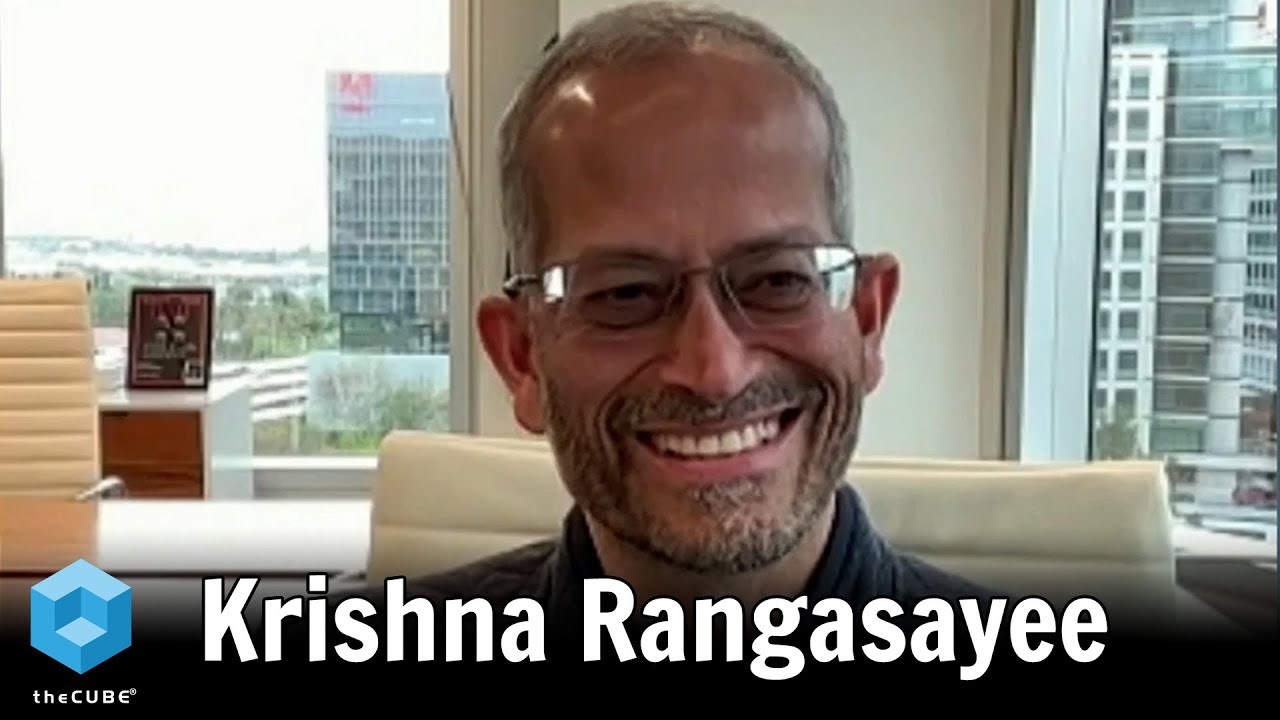
Sheila Lirio Marcelo
>> Yeah, for us, we're finding both improving the user experience. For example, we're modularizing task, so Ohai helps families complete tasks for everyday life coordination. We can build agents specifically to the calendar or build an agent specifically for, we launch a new feature called Mingle where people can plan group events. The next step is really having the agents to agent within our platform actually have the discussion and do the trades. But what we're excited about is once we build that architecture, it helps us integrate with other agents that are external that we're building into the user experience that improves it overall, but of course using tools that improve hallucinations like Patronus, which I'm super excited about, is something that will advance us even faster overall.>> And your status right now on the products, can you give an update on where you guys are at just for folks who don't know?
Sheila Lirio Marcelo
>> Yeah, no, so our app launched and it's really popular. Calendar is the hero. We've added contacts, lot of layers of different features. Document upload is probably the most popular email summarization. And so much of what we do is really integrating platforms. We don't intend to take over grocery shopping the way Instacart does it. And so our intent is to also integrate being able to order fast food for families so that we can really schedule whatever families are interested in doing so as really a builder. Again, I'm so excited with all the different solutions that are going to happen with agents because then it allows us again to integrate. And so if we get better at that agent to agent handoff, then we're doing a much better job to deliver an exceptional user experience with less errors.>> I love the impact on the human. Silvia, your venture is interesting because you have a targeted use case where there's clear line of sight on the business value. Talk about what you're working on.
Silvia Chen
>> Bilrost is an AI powered loan origination and servicing platform for commercial real estate lenders. It's very specific to that industry. We work very specific with their workflow. We work with their data points since day one.>> And the value you're seeing there is just saving time, or is it more labor abstraction?
Silvia Chen
>> Yeah, so on average it takes about 60 to 90 days for people to complete a due diligent for some loan to actually taking place. I gave you a term sheet at the beginning of the period, I have to wait for three months before I actually see the money arrive in the bank. So that period of wait introduced a lot of uncertainties. Whereas when it comes to agentic workflow, we combine actually speak on modality, we combine a number of mini agents together. Some agent is really good at reading documents, making summarization. Some document is really good at reading your internal policies, your internal data context. We bring the external context, the internal context along with the policy, the process in the middle, that's where the workflow really shines.>> Anand, this is a great example, Databricks Summit last week. It was huge demos around the value of agents. You're starting to see that now. The big conversation was are they reliable? How do you evaluate them? How do you give them authority or agency to act on behalf of users? Their apps are in market, you're trying to protect them and make them safe or make them smarter. What's the tech that makes all this work? What are you working on?
Anand Kannappan
>> Yeah, definitely. So I'm Anand, the co-founder and CEO of Patronus AI. We do everything related to automated AI evaluation optimization. We help companies be able to systematically detect different kinds of failure modes with agents and RAG applications, things like that. And we've worked with customers like Etsy, AngelList, HP, variety of mid-market enterprise companies. We have a pretty strong AI research first approach to how we solve the agentic reliability problem. And it's funny you bring up the Databricks Summit because I just gave a talk there last Monday where we specifically dove into something we launched recently called Percival, which specifically is focused on being able to catch different kinds of agent-native failures like tool calling failures and conics, misunderstanding, even planning errors that agents can make. And so to your earlier question, I think we're seeing the evolution from two years ago from LLMs to LLM systems and then now we're talking about agentic systems and then tomorrow it's multi-agent systems. The complexity is only increasing and it of course means that reliability continues to be a really, really important problem.>> And the agent's getting smart so that goes away. Ahmed, the business impacts are everywhere. So in your business, what are you working on now because you're starting to see the businesses start to change their business models and look to AI, what's your take?
Ahmed Malik
>> Absolutely. So what ScalePost does is we help companies, especially publishers and brands thrive in this whole gen AI world. And what's happening right now, if you just look at publishers, if one of our partners Time, their websites, their assets are optimized for human use. We have all these agentic needs and workflows, but the things that agents needs aren't necessarily being met right now. So what we do is open up these publishers and brands to showing up more, to monetization even. For example, we work with some of the leading AI companies, Perplexity, ElevenLabs, one of the Fortune 10 companies and help them access this content for various use cases. And that's really, to your point about adoption, there's a lot of, seems like strong demand, but from demand from agents into value, they need to communicate with the rest of the internet infrastructure in a way that agents can then thrive. We are opening up companies, publishers, brands to interact way better with AI agents.>> Yeah, one of the disruptions, Sheila, is that the way you organize businesses these days are different. You took a company public, let's say the old playbook, not too old, but I mean now you have agents that discussion about workforce, but the value extraction piece of it is real. We're starting to see real value there. How do you view the business as an entrepreneur or building a company? You got the tailwind of AI, you have a great product. What's different now than say in the previous generation of building and scaling a company?
Sheila Lirio Marcelo
>> I mean, the exciting thing is technology is really advancing so fast that really my pushback on the team constantly is, "Hey, we either need more resource to actually go do this," and my first question always is what's the newest tool out there that we could leverage internally to make things faster and better so that the end customer is actually benefiting so that we can provide the lower pricing that they can really use an assistant. Imagine, an assistant costs anywhere between $15 to $60 an hour. We're offering the app at $14.99 a month to actually complete tasks for everyday tasks for families to offload things. So talk about value creation that we're doing and the way we're able to deliver that is using technologies that we're hearing right here on this panel and integrating those companies to make it useful. How do we reduce hallucinations for us? How do we make things more efficient if we were to decide to do a commercial loan? I'm really excited about APIs where I can integrate companies and often these companies are so busy that their comment to us to integrate that content is, oh, well we don't have time to build that API, but now with services like ScalePost, well let's do it. I even said to him right in the green room, I was like, "I'll introduce you to the companies we want to integrate so that we can move faster to deliver something to the customer.">> And one of the things happening in San Francisco, I was catching a little side conversation, is that the tooling now is so fast the integration with marketplaces are happening. Anyone want to comment on that? Because I think that's a change we've seen, MCP servers, nodes are out there. APIs used to be the lingua franca of the cloud, now you've got LLMs talking to each other, you've got marketplaces building. Talk about the tooling and where the advances are in the breakthroughs. Who wants to go first? Dealers choice, go.
Anand Kannappan
>> Yeah, I can start off. I'd say that especially in the last couple of years, I would certainly think that there's been a really big shift in how people have even, not just adopted AI or thinking about how to solve some of the more core problems. I like to think about it from the perspective of is a company building a first-party AI application or are they potentially using third-party tools? And so I think that mostly enterprise we see so far have been from a third-party perspective investing in things like AI, IDEs, tools like Cursor and Windsurf, along with of course the enterprise version of ChatGPT. I think it's bringing up this concept of AI fluency like you mentioned earlier. And so it's certainly something that we're seeing happen across the enterprise. But then when it comes to a tooling perspective, I think most of the diversity is when the company is approaching strategy around building first-party applications, which is where you have to think about the core LLM API you're using, fine-tuning infrastructure, vector databases, of course evaluation tools and things like that.>> Is there table stakes now where in the ecosystem of partners that there's a requirement? Is there a certain level for folks that are now coming into the market? You have AI natives, you also have businesses are like, "How do I play in this game?" Any thoughts on that?
Ahmed Malik
>> From our perspective, we were talking about how AI agents and systems have certain needs, but most of the industry publishers brands don't necessarily operate like that. We in Silicon Valley, we love our MCP and our NLWeb, but we have taken it at least on our, a serious responsibility to help those brands and publishers bridge the gap we were just talking about right now, Sheila, where if you want to go connect, you're an agent, you want to go connect a certain publisher, the publisher's like, "Here's my content management system from 20 years ago." It's fine, but you're leapfrogging. In some sense, I always give the example of there's a remote area that has no electricity and all of a sudden, no cell phone service, nothing. You wouldn't go put landlines there, you would just go straight to the best cell phone technology. So that's what the agents have. But we are having to move up from the traditional technologies. We feel like focusing on incremental and then some radical jumps with use cases is super important. So we've been picking, for example, we go deep into publishers, news media, different types of content owners. Then we just started going pretty deep into brands and opening them up to, hey, we have infrastructure that can show you how you are showing up within all these AI agents. That's helping them, and that also helps us go and integrate and bring them literally to be agent ready. But there's a strong incentive there in terms of some benefits that they're getting.>> What's the culture at the management there? Are they leaning into it? I mean obviously they see the future. Is there a data requirement? What's the propensity to jump and make that leap?
Ahmed Malik
>> We've at least seen very strong desire to do something with this. Every company's probably impact us, but there's a level of education and kind of learning that happens. Now we feel like, even six months ago, it's multiple times more. The ability to actually move. First, there's the desire to move. Kind of there even when AI came up like, what do we do with this? Now, people are at the stage of the evaluating tools. What do we do with this? Any workflows even should we have the same approach where I always ask my team, do we need to build this particular thing or should we just wait for some big AI company to do it?
Sheila Lirio Marcelo
>> Always go, yes.
Ahmed Malik
>> We just wait. And mostly, it's been working well and anything we use, we're like, "Let's question this," and then we go out in the market. That's what we've seen even large enterprises now do and to at least try and evaluate two, three different options. We, I feel like at still the cusp of that mass adoption there.
Sheila Lirio Marcelo
>> The cultural shift, I'm also noticing we integrate big companies into Ohai, is that their challenge? There's a desire there, but they're having difficulty getting everyone aligned on the roadmap. That the AI efforts need to be the top priority because there's still a debate internally of why there's a business team that's been waiting for this feature now for an entire year, but honestly it's going to be anachronistic pretty soon, so why bother, right? And so that's a shift culturally, that just always takes time. I've been in Web1, Web2, Web3, and now AI. I mean this is a constant thing and it's not as slow as government obviously, but if you don't move fast and really open your eyes to change a roadmap, you'll be behind very, very quickly.>> And what's the consequences if they don't do that? Because I mean, obviously there could be an extinction event for the company, there could be competition.
Sheila Lirio Marcelo
>> I mean, the competitors who decide that they want to jump on this and move faster, I'm also meeting companies that are now even layering in better monetization. So not only are they thinking about changing the roadmap, they're now experimenting, well, what's going to be the new monetization of these new things that we're putting out? And so if you're behind still thinking, I'm still debating that feature, there are other people already experimenting and multivariate testing around the new monetization strategies that are coming to play.>> We were talking at dinner last night, what we don't know is what OpenAI knows that we don't know. I see the future and it brings up the question of value and how do you value projects? I know in your industry, so we were talking about how they're new to it, but they want to close deals. The technology's evolving superfast, the human impact, they're responding to the product, their lives are changing. So how do you value these? Whether you're doing a round of funding or trying to scope a project, well, you're on a subscription basis that's more human impact, but you're doing a round of funding, you're looking at funding. It's like, okay, so how do you value the AI benefit? Because productivity and human impact, hard to quantify that in some sort of NPV or discounted cashflow.
Silvia Chen
>> Yeah, so it related to the previous question. For us, it's very clear. One lender can process your due diligence in three days, another lender can process your diligence in three months. Which one would you pick given the same level of term sheet? And with that quick turnaround time, introduce the capability of introducing additional liquidity. I got my loan originated, I'm ready to sell it, I'm ready to structure it, introduce so much more possibility, open so many more doors. So it's very, in a sense that intuitively, it's very clear for the lender to decide, "Oh, do I want to go this route or not?"
But if I take a step away, the way I like to think about it is it's ROI. You think about the cost of token, how much does it cost for you to generate this memorandum versus for the AI to generate this memorandum? For a large language model, it's what? $15 per million token, and how much does it cost for a lawyer to produce the same contract? So compare the differences like okay, it's pretty clear.>> And the token costs are going down too and OpenAI-
Silvia Chen
>> Yeah.... >> for $30,000 a year, you can get a PhD within their program. I mean, that's what we're talking about here, the level of productivity. I'm sure brands and publishers want that audience. You want to get the users and the humans to get the impact. So the valuation time to value becomes a metric. How do you guys feel about that piece of it? Does that come up at all in terms of, or do you see the value rendering it at the human piece? How do publishers, I mean look at this, because publishers have seen their audiences go away and they can create custom experiences, personalization.
Ahmed Malik
>> Right. No, that's a great question. Publishers are very unique in the sense if you look at time or any big name, even. Any other business, I have to think about AI, but they're also an input to AI. So there's two sides of that. A lot of the AI companies use content from a large number of quality publishers. You've even seen some deals that are being done by AI companies says, "Hey, we'd love to get access." That 4, 5, 6, 7 big companies, now there's going to be hundreds and thousands of those companies who want the rights to get that access. So of course there's some growth we think is going to come from there. And then the other side is also one thing we lean into from our publishers actually we learned from them was that yes, my content is being used to train the models, but also I am also being used for agentic use cases. Even regular search AI like ChatGPT or Perplexity or any of these companies, I'm still showing up there, I'm being cited there. I might be getting traffic there. We immediately jumped on giving them that visibility. That can drive their decisions on the users on these platforms are pretty valuable, so it can tell them here's what matters for these people here. And then certainly there's using AI within a publisher's ecosystem to maybe give the readers a better chatbot experience. That time is a great example of that. I keep mentioning them. They launched this whole AI kind of experience for the reader. There's tons of publishers working with AI companies to give their end reader a better experience. So there's other, while yes, traffic is declining, it certainly is a very challenging time for them, but there seems to be other avenues of opportunities including, we recently got one very large publisher in Europe, a licensing deal for their dubbed video content. That was not even on the table, nobody was thinking about that. We're aggregating large forms of other types of content as well. So there's new avenues in voice, video, audio, text that these publishers have a treasure trove of. There's plenty of AI companies and agents that want to license that, we're simply opening it up.>> They have a lot of data.
Ahmed Malik
>> A lot of data.
Sheila Lirio Marcelo
>> A lot of data. You can go to really, really high volume. I think about, I've been in the marketing to consumers for 30 years and I remember the early days of simple A/B testing and then you got into the Optimizely, Optimos and multivariate testing. Now you can do thousands of permutations of content, so personalized on every social media channel down to the demo, down to the target, and it's improving. And you're getting the data inbound that says, "Wow, your conversion's even getting down to the demo."
But at the end of it, even though with high volume, you got to get to the core of humanity of the right tone, right quality, really thoughtful of the brand and the value set that you're doing because what message are you sending out to the marketplace rather than just having a bot tell you that the conversion is working in thousands of things and you can lose sight of quality fairly quickly. So as an entrepreneur that's building a mission-driven company, the values that you overlay and making sure that you're managing that is pretty critical for me.>> Yeah, values. And you mentioned speed, automation's a big theme too. So if you over-rotate on automation.
Sheila Lirio Marcelo
>> That's right.>> You miss the human piece. Automation's fundamental in the tech stack. Agents love to run in parallel and you can run a zillion tests, so you got the data, you got the automation, and you got the velocity.
Sheila Lirio Marcelo
>> That's right.>> And also, the business human side of it and the technical side. Automation is the key part of agents. What's the key thing that you guys are watching and evaluating for your businesses around the tech trends and the outcomes? I mean, on the technology side, it's seeing automation, agents need to be trusted and reliable. What's the tech angle on automation?
Anand Kannappan
>> Yeah, interestingly, I would say in a lot of ways I think about what role do humans play in the future, especially as we talk to our technology companies. I hear a lot about how some companies, 50% of their code today is being written by AI. It's pretty surprising and it's happening so, so quickly. And so actually, if we play out this trend, it means that humans will, most of the time that humans will be spending will be on this oversight layer. One of the concepts we talk about at Patronus is what we call scalable oversight, which is what actually really started, which is why we started the company. And it's really about how do humans have oversight over systems that are far more capable than they are? And what we do at Patronus is to develop equally capable, highly intelligent systems that can oversee other AI. And it's this recursive thinking or recursive intelligence, but that's how we think about how automation will play out over time and why oversight is very critical for humanity.>> Any other thoughts on automation and how that plays it to agents? Because whether it's direct to marketing to consumer or business to business.
Silvia Chen
>> Yeah.>> It's an opportunity.
Silvia Chen
>> For us, we look at it from two different type. The first type is productivity driven. So these are more generic, they lift the floor for everyone. In that case, you want more oversight, you want, okay, I produce certain output. I would like my supervisor to take a look at it and the supervisor to take a look at it. In this case, we much prefer if the system had to make certain mistake, we would prefer a false positive than a false negative. We're almost always biased toward that. And then the second type is more vertical specific, task end to end completion. In those, we heavily rely on automated eval because they are very specific set of metrics to measure the success. It's hard to tell whether ChatGPT is doing a good job, but it's much easier to tell whether this particular engine is drafting a good LOI, right? So that's how we approach it. And then the third piece we're really excited about automation is historically speaking, when we want to integrate with some company, we need to work with their API or a web scraper, versus right now with agent, we can do a proxy. We can have the agent perform as if it's a human and actually access in their website without need to integrate with their API. It help us drive a lot of proof of concept way faster.>> Sheila, how are you thinking about agents? Because I'm sure you had the experience which you could clone yourself 10 times, but now in parallel with agents, the trend is parallel coding, parallel processing is a big theme.
Sheila Lirio Marcelo
>> Oh, definitely. I mean, again, on productivity. I mean just to build on another conversation that I think Anand teed off is decisioning. That has to happen internally, so we use agents not only to improve the user experience overall, but we also use agents for our human assistance in the loop. We don't launch any feature on Ohai unless 95% of the tasks can be completed by the AI, but no matter what, you have 5% of humans in the loop. And so their systems behind the scenes. We also add other agents and AIs to do that, and there's some things that we actually cue that are tougher to make a decision on. And even that, you can start to use internal tools to first audit the AI before the human even touches it and mirrors. And we can test to see how smart is the agent relative to the human in this decisioning. And then internally, we then can release that additional feature and start to get better of that last 5% mile. But we're careful around that. We actually look at it and just make sure that we're parallel processing. And so the automated data labeling versus the human data labeling, we can then compare. So we're even using it internally for our processes, not just the overall end consumer experience.>> That's a great insight because that shows why retrieval augmentation generates hot searches and easy to understand, but you're getting at reinforced learning with human feedback.
Sheila Lirio Marcelo
>> Correct.>> Which brings us back to the theme of robotics because soon we'll have robotics and devices integrating into our lives. We all see Waymo, we love that Uber sales are down, Waymo is going up, robots will be in our life. I'm sure that's going to be on your mind, Sheila, but to make that work, they got to be good robots. I mean, there's a tech story here. What's your take on robots? Because her product's going to probably roll right into a device.
Sheila Lirio Marcelo
>> That's right.>> Taking care of me, keeping sure I'm not lonely, making sure I get all the things I need, doing tasks for me. Where are we in the tech? How close are we? We have more robots in San Francisco than humans.
Sheila Lirio Marcelo
>> Yeah.
Anand Kannappan
>> Yeah, definitely. Well, funny enough, I think I've always had this fantasy that in the same way that every, Bill Gates said every person will have a personal computer in their home, I always thought there would be maybe a personal robot in everyone's home. And so I do think that is the future, and that's where all of this is really heading. It's funny you bring up Waymo because I think Waymo once said that the simulator is more important than the car. And so I think what's holding us back from the future era of robotics is data at the end of the day. And so I think the more simulations that robotics companies will run and the more really high quality data we can really collect, the better we can train systems that of course will have a component of language, especially with LLMs today. So I'm really excited to see how that'll play a role in the future.>> It's interesting. All kidding aside, that question has been kicked around San Francisco, Sheila, around when robot population will overtake humans. You're a proxy to that because you are targeting the home.
Sheila Lirio Marcelo
>> That's right.>> And I think that will be a template for how fast that.
Sheila Lirio Marcelo
>> Well, I think my thesis, I know it was a little futuristic, right? Is that if you, at automation of robotics right now that's being used mostly in car manufacturing and that's where Figure and Apptronik and some other of these leaders are really doing their application. Just like we're seeing LLMs or what I call the open ocean and then break out to agents in modules, I think robots are going to start to specialize and you're starting to see it in the advanced stuff that's happening. Apptronik, I know they built the first one for Tesla and now they're just getting better and better of creating robotic agents if you think about it. I have this futuristic thesis that I think in the home, you're going to have robots as different agents doing other things, and that our vision is that we're building the hub and the operating system that actually communicates to the different agents within the home that completes a specialized task rather than one individual robot that I think will serve everyone because that's a lot of power and computing into one specific hardware. I think it's going to be multiple robots>> And delegating that out to the tasks become-
Sheila Lirio Marcelo
>> Totally.... >> the key. I mean, it's interesting, the reinforced learn human feedback has gotten more scientific. In fact, we representing that last week around how the math behind the agents that watched the agents, those agents that evaluate almost like an HR department or a parent. You did well today, thank you very much.
Sheila Lirio Marcelo
>> Yeah.>> I mean, evaluation is now a big criteria. Can you share how you see that because this is a big tech trend because this really sets the foundation for scaling models, what's your thoughts on that?
Anand Kannappan
>> Yeah, absolutely. I'd say evaluation, funny enough, I talk about is both a science and an art because a part of it is how you actually talk to the system or AI. And the other part is how do you do that in an optimized sort of approach, like you mentioned with A/B testing from a few decades ago. And so I think about it as something that's very critical before you even launch the first version of your system or first version of your product. And also of course over time as you figure out ways to iterate on it in a way that is very aligned with what you're ultimately trying to achieve.>> Any other thoughts on where the progress is going with robotics and AI? Because this plays right to the value proposition progression. Value's being created and the extraction piece of it's happening, but it feels like we're still not even in the game yet. It's still the early days.
Silvia Chen
>> I look forward to seeing AI disappear instead of thinking, oh, we're using AI toolings or we're AI company, it's just become, we're providing support for families. We're making due diligence superfast. It should just disappear into the vaccine. Come to the family robotic, I doubt in the future the robot looks like a Terminator sitting in the middle and doing the task. It's probably more like I walk into the home and some OS system lit up and the light turns on, the sheet opens up, and when it's time to cook or when I feel cold today, a ginger tea will be brewing. Things will be a lot more seamless. Those are the ones that I'm super excited to look at.>> Sheila, I thought about our generation when she mentioned everyone's an AI company. Remember the web, everyone was a web company. Now everyone is online. This is a cultural generational shift we're seeing right now for the folks watching and having the experience you guys have. How would you talk to this generation? Because it's a once-in-a-generation movement we're seeing, is there a story you can share or advice you could give? Because entrepreneurship's changing, our lives are changing, the human intelligence is a key part of this. The technology's evolving superfast. Any advice or story?
Sheila Lirio Marcelo
>> I advise my own kids as one is 33 and another one's 26. I'm a grandmother now, but my 26 year old, often I advise that it's very easy to just jump in and certainly learn technology. It's like to me at baseline, take the computer science classes, make sure you understand data and all of that, and know where the trends are going in tech. But I say that what differentiates the kids, and especially running companies and becoming leaders is the connection with people. And to not underestimate the power of that and to have the social skills that are necessary to scale organizations. Do I believe that there will be unicorns that are singular entrepreneurs? I really believe that that is going to happen. It could be rare that I still think leadership is not something that we can just pretend that, hey, we're just going to have AI in tech. I think leadership will still require real connection and understanding of people, and for people to invest in that level of humanity is super important.>> Yeah, I love that. Ahmed, what do you think about the future and what your advice would be?
Ahmed Malik
>> So I think definitely echo we are augmenting a certain number of humans, not even all humans at this point in time. And it's only going to grow. The human element's definitely there, but I always ask, look at the outcomes. We can all fantasize about this thing happening in AI and that, but the outcomes and what we are seeing today or upcoming in the next few months is a sign of the exponential nature of things that could happen. Right now, but where we are is a lot of development could happen faster, frankly, if there was more seamless. We just talked about not having APIs in this today's world. Probably the same thing happened 15 years ago. Nothing's changed. Some systems are completely closed.
Sheila Lirio Marcelo
>> That's right.
Ahmed Malik
>> I mean, simply opening them up accelerates this whole journey, but we also practice it ourselves. So we are a very small team. We could have been three to four times bigger if we were not consciously asking ourselves, what is the tooling that's available right now? What can we use to augment us? And that's the little story bit where we always, every now and then we have some meeting or some investor and they're like, "You're how many people?"
And we're like, "Yes, and this is the output," and that's what everybody should maybe get used to.>> Investors say, "Spend the money."
Ahmed Malik
>> Spend the money, exactly. So we're pretty lean from that perspective. And it's really, I think really some of us have also talked about this. One advice is consciously think about why am I using this tool or this thing today, and then what can I do differently? That's when even as an individual, you'll find that there's so many options. Nothing's perfect right now, but if you don't seek, you would just have your same workflow, same tools, and then you wouldn't necessarily be part of that outcome essentially.>> Yeah. And by the way, the competition too will be right there too, as mentioned earlier. Thoughts?
Silvia Chen
>> Yeah, so last year, a little anecdote. There's so many AI startups in SF. There are hundreds of events going around the town with all kind of AI infras, tooling, apps, almost anyone who's building a company like, oh, I've heard 10 different other companies doing exactly the same thing so the entrance of barrier has lowered significantly. On the other hand, I do encourage people or entrepreneurs to really think about what is a problem you're solving, to never bet against the foundation model's performance? Are you building tooling for a faster horse or for the sports car that's about to happen? It's so easy for these toolings to go obsolete, so jump ahead of time, bet on the line and build your product almost like future-proof, if that's possible.>> Think a few moves ahead.
Silvia Chen
>> If you can, try that.>> Your thoughts and advice, story? You're in the middle of it and you're under the hood. The tech is changing fast.
Anand Kannappan
>> Yeah.>> What's your story? What's your advice?
Anand Kannappan
>> Yeah, definitely. Well, I definitely agree that there's a lot of events and dinners and everything happening and very easy to get distracted if you don't, you're not careful. But yeah, I would say probably the main thing that comes to mind is I think that the only true moat that anyone has today is speed. I think that even the largest companies today have pretty much a timeframe or a timeline on what their advantages really are. And of course, everyone's talking about that in the case today with search at Google even. I think that ideas can depreciate very quickly nowadays, and so the only thing that makes a lot of sense is to be in an environment or construct an environment that is very, very fast moving and one where you can actually compound these advantages very, very quickly. I think that's probably the best way to not just stand out from the crowd of all the different kinds of companies, but at the same time make sure that you're really solving problems that matter and scale over time.
Sheila Lirio Marcelo
>> Can I build on that too? I think that I've seen through the years, there's a fear and like, "Oh, my idea is so awesome, I must stay stealth." And this has happened over the last 30 years in building companies. People have like, "Oh my God, I'll share an idea, but please don't tell anyone."
Often my advice for young entrepreneurs is build it, get out there, have the humility, get the feedback quickly. Have statistical significance, learn. Did your thesis prove out? And if not, you got to iterate fast and evolve fast and test and pivot the ideas. Because, I mean, ideas are a dime a dozen, there's so many of them.
Silvia Chen
>> Yeah.
Sheila Lirio Marcelo
>> But so much of what I think is going to differentiate is can you execute fast? Do you have the humility to learn and strategically pivot quickly? And at the end of the day, serve an end consumer, a customer that really solves a problem that I think echo what everyone's saying.>> That's great advice. I mean, execution is critical. Get the time to value, time to comfort, whatever metric you have.
Sheila Lirio Marcelo
>> That's right.>> Thank you so much. Great panel, practical AI in action. Thank you all for coming. Appreciate it.
Silvia Chen
>> Thank you.
Ahmed Malik
>> Thank you so much.
Sheila Lirio Marcelo
>> Thank you.>> Hey, we have theCUBE here with the NYSE Wired. I'm John Furrier, your host of theCUBE. Thanks for watching.