This episode explores quantum computing fundamentals, enterprise preparedness for Q‑Day, and post-quantum cryptography, PQC. John Licata of ServiceNow joins theCUBE Research hosts on NYSE Wired to explain cryptographic threats such as "harvest now decrypt later", hybrid quantum use cases and quantum-inspired approaches. Licata outlines the need for crypto agility and prioritized inventory. They urge organizations to assess cryptographic vulnerabilities now rather than wait for Q‑Day.
They emphasize security-led optimization combining quantum, quantum-inspired methods and artificial intelligence and highlight ServiceNow initiatives including CMDB enhancements, cryptographic asset compliance and integrations with Armis and Veza to help enterprises prepare for and simulate future threats. The discussion covers enterprise risk, migration planning, and practical steps for achieving quantum readiness.
Forgot Password
Almost there!
We just sent you a verification email. Please verify your account to gain access to
theCUBE + NYSE Wired: Quantum 101. If you don’t think you received an email check your
spam folder.
In order to sign in, enter the email address you used to registered for the event. Once completed, you will receive an email with a verification link. Open the link to automatically sign into the site.
Register for theCUBE + NYSE Wired: Quantum 101
Please fill out the information below. You will receive an email with a verification link confirming your registration. Click the link to automatically sign into the site.
You’re almost there!
We just sent you a verification email. Please click the verification button in the email. Once your email address is verified, you will have full access to all event content for theCUBE + NYSE Wired: Quantum 101.
I want my badge and interests to be visible to all attendees.
Checking this box will display your presense on the attendees list, view your profile and allow other attendees to contact you via 1-1 chat. Read the Privacy Policy. At any time, you can choose to disable this preference.
Select your Interests!
add
Upload your photo
Uploading..
OR
Connect via Twitter
Connect via Linkedin
EDIT PASSWORD
Share
Forgot Password
Almost there!
We just sent you a verification email. Please verify your account to gain access to
theCUBE + NYSE Wired: Quantum 101. If you don’t think you received an email check your
spam folder.
In order to sign in, enter the email address you used to registered for the event. Once completed, you will receive an email with a verification link. Open the link to automatically sign into the site.
Sign in to gain access to theCUBE + NYSE Wired: Quantum 101
Please sign in with LinkedIn to continue to theCUBE + NYSE Wired: Quantum 101. Signing in with LinkedIn ensures a professional environment.
Are you sure you want to remove access rights for this user?
Details
Manage Access
email address
Community Invitation
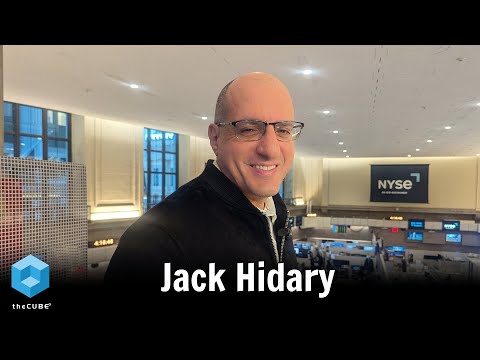
John Licata, ServiceNow
This episode explores quantum computing fundamentals, enterprise preparedness for Q‑Day, and post-quantum cryptography, PQC. John Licata of ServiceNow joins theCUBE Research hosts on NYSE Wired to explain cryptographic threats such as "harvest now decrypt later", hybrid quantum use cases and quantum-inspired approaches. Licata outlines the need for crypto agility and prioritized inventory. They urge organizations to assess cryptographic vulnerabilities now rather than wait for Q‑Day.
They emphasize security-led optimization combining quantum, quantum-inspired methods and artificial intelligence and highlight ServiceNow initiatives including CMDB enhancements, cryptographic asset compliance and integrations with Armis and Veza to help enterprises prepare for and simulate future threats. The discussion covers enterprise risk, migration planning, and practical steps for achieving quantum readiness.
ServiceNow Futures Director and Quantum LeadServiceNow
In this interview from theCUBE + NYSE Wired: Quantum 101, John Licata, futures director and quantum lead at ServiceNow, joins theCUBE + NYSE Wired's Gemma Allen to discuss why enterprises need to prepare for "Q-Day," the theoretical point when quantum computing could break today's encryption standards. Licata unpacks Shor's algorithm and the "harvest now, decrypt later" threat, where adversaries stockpile encrypted data today in anticipation of cracking it once quantum machines mature. He notes that more than half of ServiceNow's customers are now asking abou...Read more
exploreKeep Exploring
What is "Q‑Day" (the point when quantum computers could break today's encryption), when might it occur, and how should businesses prepare?add
What is "harvest now, decrypt later" and why does the advent of quantum computing (Q‑Day) pose a threat to currently stored encrypted data, business secrets, and cryptographic standards?add
How should organizations prepare for the convergence of quantum computing and AI, and what opportunities and priorities—particularly around security and optimization—arise as billions of autonomous AI agents come online?add
How is ServiceNow addressing cryptographic asset compliance and the future impact of quantum/post‑quantum technologies on its platform—including the role of the CMDB, embedded Vault solutions, and related business/optimization use cases?add
Is there a single, ready solution or industry standard to address cryptographic vulnerabilities (including post-quantum threats) and ensure crypto-agility across different regions?add
>> Welcome back to theCUBE Studio here at the New York Stock Exchange. I'm Gemma Allen, co -host of NYSE Wired, and this is Quantum 101, where we're breaking down what quantum computing is, why businesses should care, and what needs to happen before the technology is ready for primetime, or in this case, Q-Day. I'm joined by John Licata, Futures Director and Quantum Lead at ServiceNow.
John Licata
>> Welcome, John. Great to be here. Thanks, Gemma.
Gemma Allen
>> So we hear a lot in the world of services and technology readiness around AI ready, right? That has been a buzzword, of 2026 so far. You are talking about the world of quantum ready. Maybe let's just unpack that a little bit. What exactly, to those of us who are less familiar, is meant by Q-Day per se?
John Licata
>> So Q-Day is the point in time where we're still trying to figure out when that could be. But it's the point in time where encryption standards for today could get broken. And I think with Shor's algorithm, this physicist Peter Shor created an algorithm. And with RSA, where if you go on the internet, the WWW, imagine if it could get stolen. And imagine if your credit card information using any sort of device you might use on your phone or iPad or whatnot. Looking into where we can see vulnerabilities is one that becomes an issue. So Q-Day is something where it's hypothetically a point in time. When it's going to happen is anybody's best guess. But I do think, Gemma, the opportunity at hand is to prepare. It's that readiness just in case it happens in a week, a year, or two years. We don't know. But I do think a lot of businesses need to be ready from an encryption perspective and make sure that they can defend where their vulnerabilities with data could be.
Gemma Allen
>> So Shor's algorithm, let me just try and sense check this for a second. So computers and computation have been built on this binary thesis, right? Like zeros and ones.
John Licata
>> Zeros and ones.
Gemma Allen
>> Shor's idea is that even if you hide a small number inside a large number, there is a probability that a computer operating at the speed and power by which quantum computers could operate at can essentially break that algorithm down quite quickly. Right it's probabilistic but it's the power of probability. And it's a proven power i guess. In the world of quantum the internet though and technology have been built around traditional computation right. So everything we know, like you just mentioned there, your credit cards, your access to the internet, your VPN, your cloud certificates, they're all built on cryptography, right? Right. So does that mean everything is potentially at stake? help me understand this because there's so much, I think, fear. It sounds so scary, right? What is the reality, though, of that threat?
John Licata
>> I think there's, you might have heard the term, harvest now, decrypt later.
Gemma Allen
>> Yes.
John Licata
>> So I think what that really is, is the ability to store data today that you might have from a given profile, banking information, credit information, or from a business perspective, IP, key secrets, key things that are happening from a business perspective. Now imagine if that data, whenever Q-Day actually occurs, it becomes more vulnerable. It could be cracked. You're already starting to see concerns elevate because of new cryptographic standards here in the United States, also in Europe. You're starting to see a lot more readiness towards 2029. Has been a date that people have circled. But to be honest, Gemma, I think we have to start to look at, it's not just about the number of qubits. So you mentioned zeros and ones for traditional computing. Qubits is the denomination of how quantum computing is measured. But just like we saw in every other technology that has come by, technology improves and you could do more with less. So it's not just about more qubits. It's just understanding when they become powerful enough that data could be vulnerable. So yes, there is a massive scare across the gamut of data. And I think businesses would have a fiduciary responsibility to defend that data even today. So, again, it could be vulnerable today, harvest now, decrypt later. But I don't think you should get to the point of waiting for a Q-Day to actually occur. So that actually encourages a lot of people to think about what are their vulnerabilities. What are cryptographic vulnerabilities and which data set should be prioritized? Like, is it everything? Is it certain things? What are the most important things? And for businesses that are challenged with this survival of the fittest environment, I think people need to figure out what would be something that can make the business very susceptible to investor, shareholder backlash if they were not already defending. So there's a competitive advantage for companies to start now. And I know you know this well. It's not just about getting in early. It's getting it right. And I think that's where people need to understand where within the data stack are they having issues? Where are they actually seeing it? Is there an infrastructure opportunity? Is it software? That's a growing opportunity that we believe should be looked at. But I think that this fear is something that is real. It's not something that we're making up. And I think we have historical examples that I've seen time and time again. Technology gets better. And I think we're going to see the same thing now.
Gemma Allen
>> So quantum encryption, it's not a hoax. It's very real.
John Licata
>> Yes.
Gemma Allen
>> Take me inside the world of ServiceNow and your division within ServiceNow. Help me understand, you're a large enterprise. There's so much happening at once. We're hearing about the race for AI, the race, the cost, the tokenomics. Yes. The spend, the move to inference, agentic. At the same time, you're also being told, OK, there's this looming threat out there that these folks are potentially harvesting your datato decrypt it when Q-Day comes, right? Bring it to life for me. What sorts of conversations are happening? What sorts of activities and engagements are your team working on? What percentage of priority is the quantum readiness taking right now?
John Licata
>> It's an interesting question. I'll start backwards. I think maybe several years back, maybe you saw like one out of 10 customers were saying, how are you looking at this? How should we be looking at this together? I would say now more than half of the customers that I talk to are saying, what's the role of quantum plus AI? Clear distinction. It's not just quantum. This convergence that I find is becoming a bigger part of customer interest. I work for the futures team within ServiceNow, and our role is to look at how do we start to solve problems today that might be fine for AI and classical to maintain, but what if in a world of several billion agents coming online over the next several years, those problems become worse? And if they will become worse, can we start flagging where classical might struggle and those complexities might do well with a larger data set that can be looked at with quantum? So I think our role, our team, is really focused on what comes next. Now, ServiceNow has been very vocal about becoming more focused on security. We have successfully acquired Armis. We've successfully acquired Veza. And we have been leading with security. And for quantum computing, absolutely the security should be at the top of the priority list. But I do see two opportunities. It's security on one side, and I see optimization on the other. And I don't think you can do optimization without security. It has to be security-led. So our role is to try to think of not just preserving data, but how can we simulate threats that are forthcoming? Insider threats are no longer just human. In fact, the World Economic Forum actually published studies how today, today, 2026, there are greater threats from AI agents than there are from humans. So now imagine, again, several billion agents coming online. How are we thinking about evolving this hornet's nest of complexity, as Bill McDermott likes to say? How do we navigate that in a way that we can take probabilistic intelligence and deliver deterministic workflows? So how can we make sure that the agents have the right intelligence to bring more confidence into the decision making? And I think that's what everybody is looking for in the world of autonomous enterprise. I think most of the C-suite that we speak to is really looking for trust. And I think it's trying to find can quantum play a role in delivering that trust. And I say this all the time. Gemma I really think it's important. You could have 99 % of a problem solved with traditional AI 1 % quantum. So you find that thing within the problem that quantum might be able to help with. But that's hybrid so whether it's 99 to 1 or 50 50 it's still hybrid. And I think people need to explore what are the problems that are challenging them today. And that's where I think customers are struggling with is trying to think about this. Sounds interesting this sounds like a science project that couldbe potentially advantageous for us.
Gemma Allen
>> But where do we start? And that's why we talk about where we start right? I would imagine that the first place you start is with an inventory or some level of discovery of your quantum parameters, right? The threats by which you might have, you know, a Harvest Now, Decrypt Later challenge ahead, right? So in that space, we know that discovery for many enterprises has actually been a block in lots of technical progression, right? Even cloud computing, a lot of migrations for certain workloads didn't happen because discovery was in and of itself a challenge, right? Just to understand what was possible to migrate. Right. What's happening from the perspective of quantum in that space? I imagine that's a tedious space, too, to truly, truly uncover. It is. How do you understand that, for a Fortune 500 company?
John Licata
>> It is, and that's why our CMDB is the heartbeat of ServiceNow. And our ITOM team just announced at Black Hat, several weeks back, Cryptographic Asset Compliance tool. So it was the first off-the-shelf solution that we had from ServiceNow. We also went back a little bit earlier this year and we're starting to look at how does this cryptographic environment, how does it impact our platform? And so we announced through our Xanadu platform release through our ServiceNow Vault team a solution that was embedded within. So it wasn't a standalone SKU, but it's embedded. And I think the great takeaway from that is that we are looking into this. We're not just talking about this. I'm not just here saying you should be ready. We are looking into our own backyard, and there's more coming. We have more CMDB-related solutions that are coming out later this year. Our Armis team is really interested in the future of security. So how do we leverage PQC, which is traditionally classic? How do we start to look at the role of quantum in that? And I think that's an interesting part of it. But again, I think understanding where you start with the inventory is absolutely the right path forward. But don't forget in parallel to think of can it help your business, not just from a security perspective. Can you think about the optimization? That's the lane that I predominantly play in is trying to think of I don't really necessarily want to say it's this use case or that, although meeting with customers, people typically say, do you have a use case in mind? but we want to make sure that regardless of the use case, we are thinking about the future of the platform. That's always something the Futures team is here to help with.
Gemma Allen
>> How close are we to this version of PQC, like RSA 2.0 per se, right? Is there some sort of collective agreement across the industry, do you think, in terms of what this next protective mechanism and this collective agreement on what protection and a completely unhackable, even in the world of totally probabilistic algorithms could look like? Do we have a solution?
John Licata
>> So we're not there yet. And I think this is an aspiration for the industry. We just saw recently where you had Aristotle and it came out. It was able to solve a problem in six hours, which would have taken humans two years to crack. So I think that kind of gave people a little extra motivation, we can't just wait. And so I think the aspiration for an industry standard has to come from learning even from what those vulnerabilities are. So just to come up with a standard for the sake of creating a standard I don't think is the path forward. We need to figure out. What are we trying to solve for? What are we trying to safeguard and I think right now with some solutions that are out there We're also learning from what hasn't worked and how do we make things tighter and I think from those experiences, industry standards will, I think, elevate. But we have seen governance being issued from not just here in the U.S., but abroad as well. And it's not uniform. What is something how we might be able to handle the problem domestically is not how it could be solved in other parts of the country. So in other parts of the world, I should say. I think that's where you're starting to see companies become more territorial because of the sovereign data involved in that too. And I think there's not a one size fits all remedy for that. But I think what you're seeing is the agility. I would say that it's important to know you can't just be PQC ready once. You have to be crypto agile. You can't just have a mindset of just looking at this from a PQC only, you must be crypto agile. You need to figure out if one solution doesn't work in a particular geography, maybe it will kick into the right regional solution to do that. And I think that that mindset is very appealing. Obviously, we're a global company. We do business around the world. What's important to understand is how do we make sure we get this right? And those are conversations we have leading from the security side of the house with Armis and Veza, but also listening to customers and understanding what are their pain points. And believe it or not, there's a lot of different responses from customers in different industries, how they're approaching that. But I do think learning from what doesn't work today is important. morning.
Gemma Allen
>> So let's talk for a second about this perfect storm of AI, quantum and enterprise readiness, right? Because in one way, the world of agentic AI, it's highly opportunistic, it offers all sorts of efficiencies, cost, workload, we hear the gamut of what's possible, right? It also, though, creates a lot of exploits. You mentioned Mythos, I think some of those findings, whether they were marketing hype from Anthropic or not, there's all sorts of skeptics out there. But either way it's definitely heading in a kind of scary direction right? Quantum when you throw that into the mix and you throw this world of post -quantum cryptography and people who may not be ready it sounds somewhat even more terrifying. How is ai meeting that moment though? Is it an exacerbation? Do you think from an exploit and security perspective because like you said right it allows the world of agentic AI allows scale at levels we've never seen before? Or is it also in some respects working towards that fix, right? That kind of PQC world that's totally sound and, you know, bulletproof. What are your thoughts on that? do you see AI as the friend or the frenemy?
John Licata
>> So I see a major convergence happening within quantum and AI, where quantum, I think, can bring to AI a new kind of intelligence that could benefit how the recipient is actually leveraging the intelligence, whether it's agent to agent or whether it's agent to human. I think we need to find better ways to think about problems. And as I mentioned earlier, we can't just think about problems as they exist today. We need to start to think about how can we make them more future-ready. I say future-ready, not future-proof, because I believe no company can be truly future-proof. And I don't think bulletproof is a great expectation. I think we need to figure out how do we evolve and become more agile. But I do think AI can also help interpret some of the patterns that we can see coming from vast amounts of vastly different data sets that are coming from quantum. So I do see them as symbiotic. I think there's an opportunity to view them as that. And I think that as people are grappling with AI and also false hallucinations coming from certain models, where could quantum help with trying to find problems before they actually emerge? So I think looking into the world of simulation and sensing, I think is quite fascinating. I think, look, quantum won't be for everything, but if you're trying to look at next generation materials, look at the automotive world, the Rolls-Royces, the BMWs, the Volkswagens, they're really looking at next generation battery technology, looking into how we might be able to salvage crude oil and natural gas and commodities at large, finding a better way to find them, or secure communications. Stony Brook University right here in New York was just recently able to show over a small distance that they had a different way of using existing fiber optic cables to produce secure communications. Now, in a world where everything we say is being recorded and we're trying to safeguard, how are we trying to figure out where business solutions can help and so there I think there's ways where it's not just a part of the U.S. Department of Defense that is looking into this I think you're starting to see that there's a lot of companies that want to make sure that encryption standards meet the moment and I think that's really interesting so I feel like it's important for folks to understand in this 101 series it won't be for everything and there will come a time where classical computing has problems. It's those opportunities that quantum needs to be a part of. So yes, you hear a lot about hype, sci-fi and all these papers that are coming out. Some are quite fascinating, but we need to think about these different parts of quantum that are valuable today. You have quantum inspired, that's today. You have annealing, that's today. Today, we're here at the New York Stock Exchange. It wasn't that long ago I was here for D-Wave's Investor Day, and they showed examples with AT&T. You have customers really looking at this now. And I think this is the opportunity for people to explore. This is where I think teams internally need to focus. Where are we struggling? Where is AI having a hard time? Because those are the problems that I think quantum needs to try to attack. And I say try because it's not foolproof that it will. But we need to explore the different modalities along with quantum inspired and annealing. And I think that's the massive 101 takeaway is that there's different kind of quantum. And I wouldn't be doing myself justice if I didn't say and understand that's not all hardware. The role of middleware could be what makes this easier for people like us who maybe don't have the mathematics PhD background to understand quantum but just to use it. Now, we have Wi-Fi, we leverage the internet, we talk to each other, but we just know it's there. We go into a room, we flip the light switch, the electricity's on. Quantum's just going to be there when we need it, and we might not even know it, but it's going to, I think, augment the opportunities with AI going forward.
Gemma Allen
>> Wow, well, John, you've certainly given us a lot to think about. it's a fascinating time, and you're right, AI, where is AI having problems? It's another conversation. I think we have enough hype in this world of AI mania that we're living in. So thank you so much for joining us at NYSE Wired.
John Licata
>> Great to be here Gemma, thank you so much.
Gemma Allen
>> I'm Gemma Allen here at theCUBE Studio at the New York Stock Exchange. This is Quantum 101, one of our programs with NYSE Wired. Thanks for watching.