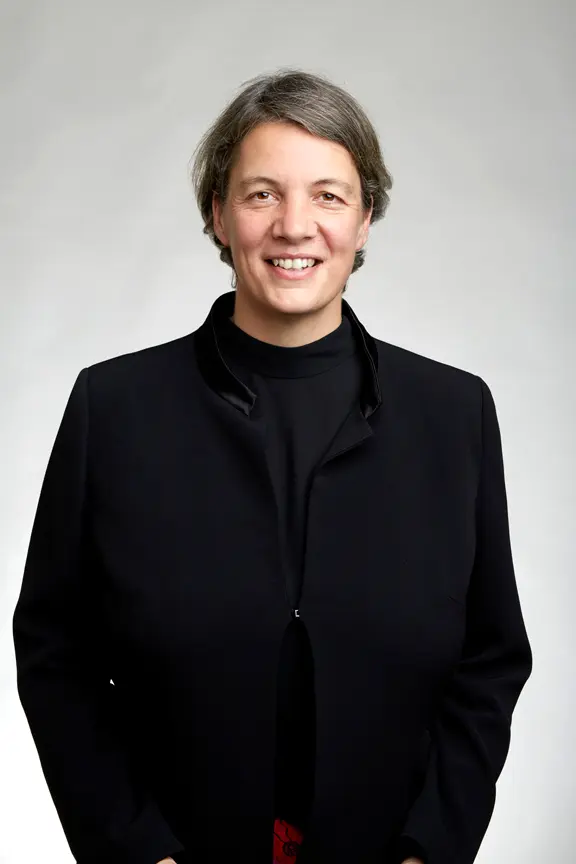
Michelle Simmons of Silicon Quantum Computing appears on theCUBE and NYSE Wired: Quantum 101 with hosts Gemma Allen, John Furrier and Dave Vellante. Simmons discusses scalable quantum manufacturing and commercial deployment, and they describe the company’s approach to building qubits from individual atoms.
The conversation covers building qubits from individual atoms, the Watermelon processor and hybrid classical-quantum systems, artificial intelligence acceleration, materials modeling, go-to-market strategy and the company's full-stack chip development approach. Topics include chip manufacturing in Australia, control software, hybrid integration and near- and long-term commercial pathways for silicon-based quantum processors.
Simmons emphasizes that atoms in silicon enable high-quality scalable qubits and that the Watermelon processor demonstrates practical benefits, reducing artificial intelligence training from weeks to days for selected workloads. They note that owning the full stack—from fabrication to control software—accelerates iteration and lowers cost. Analysts highlight the strategic importance of US defense partnerships, including DARPA, and semiconductor manufacturing capabilities for commercialization and market adoption.
Forgot Password
Almost there!
We just sent you a verification email. Please verify your account to gain access to
theCUBE + NYSE Wired: Quantum 101. If you don’t think you received an email check your
spam folder.
In order to sign in, enter the email address you used to registered for the event. Once completed, you will receive an email with a verification link. Open the link to automatically sign into the site.
Register for theCUBE + NYSE Wired: Quantum 101
Please fill out the information below. You will receive an email with a verification link confirming your registration. Click the link to automatically sign into the site.
You’re almost there!
We just sent you a verification email. Please click the verification button in the email. Once your email address is verified, you will have full access to all event content for theCUBE + NYSE Wired: Quantum 101.
I want my badge and interests to be visible to all attendees.
Checking this box will display your presense on the attendees list, view your profile and allow other attendees to contact you via 1-1 chat. Read the Privacy Policy. At any time, you can choose to disable this preference.
Select your Interests!
add
Upload your photo
Uploading..
OR
Connect via Twitter
Connect via Linkedin
EDIT PASSWORD
Share
Forgot Password
Almost there!
We just sent you a verification email. Please verify your account to gain access to
theCUBE + NYSE Wired: Quantum 101. If you don’t think you received an email check your
spam folder.
In order to sign in, enter the email address you used to registered for the event. Once completed, you will receive an email with a verification link. Open the link to automatically sign into the site.
Sign in to gain access to theCUBE + NYSE Wired: Quantum 101
Please sign in with LinkedIn to continue to theCUBE + NYSE Wired: Quantum 101. Signing in with LinkedIn ensures a professional environment.
Are you sure you want to remove access rights for this user?
Details
Manage Access
email address
Community Invitation
Michelle Simmons, Silicon Quantum Computing
Michelle Simmons of Silicon Quantum Computing appears on theCUBE and NYSE Wired: Quantum 101 with hosts Gemma Allen, John Furrier and Dave Vellante. Simmons discusses scalable quantum manufacturing and commercial deployment, and they describe the company’s approach to building qubits from individual atoms.
The conversation covers building qubits from individual atoms, the Watermelon processor and hybrid classical-quantum systems, artificial intelligence acceleration, materials modeling, go-to-market strategy and the company's full-stack chip development approach. Topics include chip manufacturing in Australia, control software, hybrid integration and near- and long-term commercial pathways for silicon-based quantum processors.
Simmons emphasizes that atoms in silicon enable high-quality scalable qubits and that the Watermelon processor demonstrates practical benefits, reducing artificial intelligence training from weeks to days for selected workloads. They note that owning the full stack—from fabrication to control software—accelerates iteration and lowers cost. Analysts highlight the strategic importance of US defense partnerships, including DARPA, and semiconductor manufacturing capabilities for commercialization and market adoption.
play_circle_outlineWatermelon unveils energy-efficient AI accelerator with silicon-qubit parallel processing and real customer demos for HFT, market, and outage prediction
replyShare Clip
play_circle_outlineRoadmap and timeline: single-atom transistor since 2012; error-corrected processors in next few years.
replyShare Clip
play_circle_outlineSupply chain: global tools and customers, but unique in-house qubit fabrication.
>> Palo Alto Studio Connection, Silicon Valley and Wall Street.
Gemma Allen
>> I'm John Furrier, co-host here with Dave Vellante, my co-host. Welcome to theCUBE Studio here at the New York Stock Exchange. I'm Gemma Allen, co-host of NYSE Wired's Quantum 101. And today we are talking about how quantum computing has been 5 years away for what seems like centuries. Michelle Simmons is here to change that, building quantum computers atom by atom in silicon, the material that already powers the computing world. The bet is simple but enormous. If quantum is ever going to scale, it has to be manufacturable. Michelle Simmons, founder and CEO of Silicon Quantum Computing, welcome to NYSE Wired.
Michelle Simmons
>> Thank you, Gemma. It's great to be here.
Gemma Allen
>> Well, I have to say, I have to bring this on camera. You mentioned off camera, I think it's the first time I've ever met a previous Australian of the Year, any country, woman or man of the year. So, Michelle, it's my honor to meet you and to learn a little bit about you.
Michelle Simmons
>> Thank you.
Gemma Allen
>> So as I mentioned there in the intro, quantum has always felt somewhat futuristic, right? Like a little bit of a lifetime away. We know from a lot of the narratives that are shifting out there that things are definitely advancing and progressing in the field. Talk to me a little bit about your company and how you are making this a scalable and commercial solution.
Michelle Simmons
>> Thanks, Gemma. So look, Silicon Quantum Computing is the home of atomic manufacturing. Unlike other quantum companies, we build processors at the atomic scale, right down to using individual atoms. It's 100 times smaller than what you get through a commercial foundry like TSMC. And the smaller you make your system, the higher the quality of the quantum states. So we've always known from the very beginning you've got to choose your material carefully. You've got to choose something that's high quality but that can scale. So atoms in silicon is the way that we're building it, and it's very unique.
Gemma Allen
>> And help me understand this, because we're not necessarily talking about the traditional or the expected world of qubits, per se, right? You're talking about elements of the quantum stack and capability basically being deployed into chips. Help, help me understand a use case
Michelle Simmons
>> for this?Yeah. So we actually— we're a company that makes the silicon processor using the atoms, but we do make qubits out of nuclear spins and we use them to process information in parallel. The use cases come across many different levels. Our first use case is in the AI space. So we've got a processor that sits inside an AI loop and it dramatically reduces the training time of deep learning models from weeks down to days. And so that's really useful for people that are building big data centers. Where they need a lot of power to run the kind of classical chips, the GPUs, they're very power hungry. If you can get a quantum processor in there, you can offload a lot of the power resource to the quantum processor, which does it much more energy efficiently.
Gemma Allen
>> And what stage are you guys at? do you have— have you deployed this technology and these chips in particular use cases? how mature is this in market?
Michelle Simmons
>> Yeah, so we've already released our first product. It's called Watermelon. It was released last October. It's been used by many different companies. One of them is actually on your floor at the moment. But essentially, the first use case we demonstrated was for a communications company, and they were looking at network outages in their communications networks. And what we found is that they had to try and predict when the network was going to go down. They get fined if the network goes down, and they were able to predict in just a couple of days something that would take them 3 weeks normally using a classical AI system.
Gemma Allen
>> Wow. So it's It's totally really the speed game that we all expected with quantum.
Michelle Simmons
>> It's a speed game in training, but we've had other people looking at high-frequency trading, trying to predict the markets ahead of time. And again, what we're seeing there is the quantum processor gives you an advantage over classical compute.
Gemma Allen
>> So from the perspective of defining the category and the opportunity to use, I guess, like something that's so precision-based and quantum-based in a chip, in a market that feels like it's already so demand-based. Yeah. Talk me through how, how has that been, 'cause you're essentially trying to also introduce the capability and a cross capability, if you will, right into this very, very fast-moving market.
Michelle Simmons
>> Yeah.
Gemma Allen
>> How do you define the category first and then what has been the kind of collective belief around how these two worlds can overlap?
Michelle Simmons
>> Yeah. So the power of quantum is it can do calculations in parallel in a way that you cannot do classically. Very quickly. In the AI world, GPUs can do some set of parallel processing, and obviously we see today how many people use it. But in the long term, there are things that GPUs just simply cannot do as quickly as quantum. And so quantum in particular comes into play when you're looking at material systems, trying to understand the way nature behaves at the very smallest length scale. And so there you're looking at different materials like catalysts or corrosion-resistant materials or drug design. And if you take a classical computer, it just can't calculate all the different possibilities that are out there. Whereas a quantum computer can do that inherently, naturally. And so quantum will take over and do calculations that classical computing can never do. But in the short term, we want to combine them. So we have hybrid systems where we can augment classical computing, bringing in quantum states such as in AI. And eventually you'll start to see quantum computers do things that simply cannot be done in a useful timeframe by classical computing.
Gemma Allen
>> Wow. So very unique use cases like biotechnology or whatever it might be. What other verticals are you seeing kind of more scalable applicability in? Like where else are you bringing this to market?
Michelle Simmons
>> Yeah, so we started out with the AI space. Obviously that's a very big market. There's a huge TAM in the AI market. But really I think the true power is in the materials world. A long time ago, Richard Feynman, a famous physicist, said you will never understand the way that nature works unless you can build it at the same length scale. And if you can build it the same length scale, you can put atoms in place to replicate systems that will take too long to calculate classically with computing. And so that's really what we've done in our company, is put atoms in place that can directly mimic different molecular structures and then understand all the interactions that can occur. And I think that is the area where quantum is going to come in, in the materials, the drug design space in the first instance. But, AI is so powerful. If you can combine them together, that's an easy on-ramp to that kind of future market.
Gemma Allen
>> We talk a lot on AI Factories, our show where we look at deep infrastructure, about bringing more and more activity onto the chip, right? Helping drive up the value by having more performance on the chip. Absolutely. This is absolutely the key. It's the epitome of that in some respects. But what does it mean from the perspective of performance, cost, reliability? What are the challenges to making this work?
Michelle Simmons
>> So at the moment, I think quantum as an emerging field, you said everyone said it's 5 years away. I've been in it from the very beginning, so I was there right when it first took off experimentally. And I think for us, we've had a roadmap, how long is it going to take to get to market? And we've really mapped that out according to the classical computing roadmap, from the first transistor, first integrated circuit, the first computer. So from 2012, our first single atom transistor to integrated circuit, we beat it by 2 years over the classical roadmap. And our first quantum processors are going to come online within the next few years in the error-corrected space. So the challenge really in the quantum world is, The qubits are small, they're fragile. It's at the edge of human technology to be able to control them. So can you do that and maintain scale and quality to be able to demonstrate algorithms? And I think what's exciting about these atoms in silicon is we've got some of the highest algorithmic performance out of all the modalities because we've chosen a material that's high quality but scalable.
Gemma Allen
>> Is it also a lot more expensive? is the build for something like this— does it cost a lot more to build, to run, to maintain, to perform? Or is it what are we talking
Michelle Simmons
>> about?It's actually the opposite. So, if you go through kind of conventional manufacturing, you go to foundries, it's a very expensive and slow process. With our manufacturing, we can build chips every week. So we've got a very tight turnaround time. It's normally about 12 to 20 weeks for a classical foundry, and the cost of the system is much less. So we've basically pioneered a new way to manufacture 100 times smaller than TSMC, but at a fraction of the cost. So we're very excited about this technology.
Gemma Allen
>> certainly sounds incredibly exciting. I'm sure your investors Shareholders are excited too, Michelle. So let's go back to Australia for a second. Yeah, your homeland. So this company is based there, you're based there. I know you were originally, you came from Cambridge, UNSW. I'm sure a great pride of the Australian commercial and economic output. But talk about the kind of global opportunity here. Are you spending more and more time in the US? Are you building businesses and go-to-market
Michelle Simmons
>> here?Yeah, absolutely. So we've been supported by US Defense since 1999, 26 years of continuous funding from US Defense. So we've got a very strong relationship with the US. We're also in this DARPA program. There's something called the QBI program that's been going for the last 2 years, and that's really kind of down-selecting which companies can build the full-scale system for a commercial application. And they want to do that as fast as possible. So once you get US Defense behind you, it kind of turbocharges you. So I'm here all the time. Our chair is based here. Our chair used to be the ex-CEO of Arm, so it's a chip design company. But also we've recently hired Karna Nisewaner from Princeton, who was the CLO of Cadence. And we've recently hired our CFO, John Hollister, who's come out of GlobalFoundries, so one of the big US foundries. So it's a very exciting team.
Gemma Allen
>> Stacking the team for sure.
Michelle Simmons
>> Yeah, it's very evenly based between the two countries and it's leveraging the markets in the US, the kind of ability to build products and companies here, but it's taking a little bit of the Australian culture and the ability to make unique products in a way that's differentiated.
Gemma Allen
>> And help me understand the supply chain. Where is the kind of core components? Where is the assembly? You could say where is all of that happening? Is it happening globally or happening here in the US, happening in Asia? Help me understand.
Michelle Simmons
>> So I think what's unique about our company is we manufacture our own qubits. We actually manufacture the chips directly in Australia.
Gemma Allen
>> Wow.
Michelle Simmons
>> And that really differentiates us. We're the only private company that manufactures their own chips. And I think what you'll see now is people recognize the significance of owning your manufacturing line. So you see a lot of companies in the quantum space trying to acquire other companies that manufacture or work with foundries. But we do get our— and having said that, we work with lots of companies globally, both as customers all across the world. So Schneider Electric is a customer we have here in Germany. We have many companies in Europe, but also we buy equipment from all over the world as well. So we get dilution fridges, different tools that we use for the manufacturing from all over the world. So we're very connected globally.
Gemma Allen
>> Wow. I wasn't expecting you to say that. I'm very impressed by that, actually. So in terms of the broader moat for this, if we take NVIDIA as an example, right, the monolithic 600-pound gorilla in the space, we know that NVIDIA is successful for a number of reasons. their chips are great, they had scale, their cost, their network. They also had a great software, right? The CUDA. Has been a huge part of their—
Michelle Simmons
>> yeah.
Gemma Allen
>> How is that going to play out in this world? talk me through the kind of performance engineering software side of this business. And again, I presume you want that to be completely captively owned, or am I wrong in assuming that?
Michelle Simmons
>> Yeah. So look, every company's got its own journey because we manufacture our own chips. We are a full-stack company. So we do not just build the actual chips themselves, but also the control systems so that means we do controllers that actually send the signals down to the chip. And then we have integrated software on top. So we realized very early, if you control your manufacturing, it's good to go basically all the way through to have the full-stack system so you can actually then service your customers. So we actually do that directly already. So we write our own software. We have the ability to address our processes through an API, through the cloud. And that really gives us direct access to our customers so we can see how they use it and work with them to understand how to optimize and use it for their use cases. As we go to bigger and bigger systems, obviously it gets more and more complicated and we will partner more. But right now we've gone full stack and we can move really fast as a consequence.
Gemma Allen
>> And we think about the world of developers and builders and breakers in 2026 as quantum encroaches into mainstream, right? Again, how much of it is kind of winning the hearts and minds of these folks early on? how do you think about that and how do you think about even GTM and socialization for this space? Broadly?
Michelle Simmons
>> Look, I think it's a great question. So for us, we realized very early on that having access to customers and getting them to use the approaches, we see how easy it is to interact with them, how much they understand, how much we have to train them, but then also how quickly they can adopt the technology. And so we realized very early on, if you go out and you talk about a quantum product, a lot of people are scared. If you go straight into their AI teams, you can interact with them by having a product that works straight away. That's really allowed them to use our approaches, understand how they benefit from it, and then ask us for more. And so our go-to-market strategy has really been early engagement with the customers, seeing how they use it, because we can turn the designs around really quickly. We can get them the next version of the chip and keep iterating with them.
Gemma Allen
>> So I'm going to pivot for a second, but it's a question that comes up a lot in Quantum 101. So I want to ask you, Michelle, you said people are scared, right? There's this fear around quantum, partly because things like quantum encryption, right? What does the world look like if bad actors break that or get there before the collective good of the tech industry does. Right. And it feels like that risk is becoming kind of ever increasingly more and more real as things play out. How do you think about that? how do you think about the race to make quantum somewhat mainstream from the perspective that it could actually pose a huge risk to society, to businesses, etc., but also maintaining the collective good of actually keeping pace with an industry that again is innovating at such scale and has such huge societal impacts?
Michelle Simmons
>> Yeah, look, so fundamentally I'm a technologist. I believe that you've always got to be leaning into the technology and pushing the technology to understand what it can and can't do. But that said, obviously I've— in our company, we've got the Australian government as an investor. We get funding from the U.S. Defense. So we're very much making sure that governments are aware of the speed and pace of the technology and how it grows and bringing them on the journey with us. So that's really for me, I'm a very responsible person. I want to make sure they're fully aware where it's at, but also to make sure they're at the forefront. U.S., Australia working together, it's a fantastic combination, very good collaboration between the two countries. And that means that we share the knowledge and I think that's vital.
Gemma Allen
>> Well, Uncle Sam and the Wallabies coming together in the world of tech. Michelle Simmons, thank you so much for joining us on NYSE
Michelle Simmons
>> Wired.It's a pleasure. Nice to meet you. I'm Gemma Allen here at theCUBE.
Gemma Allen
>> I'm Susie O at the New York Stock Exchange. This is NYSE Wired Quantum 101. Thanks for watching.
>> Palo Alto Studio Connection, Silicon Valley and Wall Street.
Gemma Allen
>> I'm John Furrier, co-host here with Dave Vellante, my co-host. Welcome to theCUBE Studio here at the New York Stock Exchange. I'm Gemma Allen, co-host of NYSE Wired's Quantum 101. And today we are talking about how quantum computing has been 5 years away for what seems like centuries. Michelle Simmons is here to change that, building quantum computers atom by atom in silicon, the material that already powers the computing world. The bet is simple but enormous. If quantum is ever going to scale, it has to be manufacturable. Michelle Simmons, founder and CEO of Silicon Quantum Computing, welcome to NYSE Wired.
Michelle Simmons
>> Thank you, Gemma. It's great to be here.
Gemma Allen
>> Well, I have to say, I have to bring this on camera. You mentioned off camera, I think it's the first time I've ever met a previous Australian of the Year, any country, woman or man of the year. So, Michelle, it's my honor to meet you and to learn a little bit about you.
Michelle Simmons
>> Thank you.
Gemma Allen
>> So as I mentioned there in the intro, quantum has always felt somewhat futuristic, right? Like a little bit of a lifetime away. We know from a lot of the narratives that are shifting out there that things are definitely advancing and progressing in the field. Talk to me a little bit about your company and how you are making this a scalable and commercial solution.
Michelle Simmons
>> Thanks, Gemma. So look, Silicon Quantum Computing is the home of atomic manufacturing. Unlike other quantum companies, we build processors at the atomic scale, right down to using individual atoms. It's 100 times smaller than what you get through a commercial foundry like TSMC. And the smaller you make your system, the higher the quality of the quantum states. So we've always known from the very beginning you've got to choose your material carefully. You've got to choose something that's high quality but that can scale. So atoms in silicon is the way that we're building it, and it's very unique.
Gemma Allen
>> And help me understand this, because we're not necessarily talking about the traditional or the expected world of qubits, per se, right? You're talking about elements of the quantum stack and capability basically being deployed into chips. Help, help me understand a use case
Michelle Simmons
>> for this?Yeah. So we actually— we're a company that makes the silicon processor using the atoms, but we do make qubits out of nuclear spins and we use them to process information in parallel. The use cases come across many different levels. Our first use case is in the AI space. So we've got a processor that sits inside an AI loop and it dramatically reduces the training time of deep learning models from weeks down to days. And so that's really useful for people that are building big data centers. Where they need a lot of power to run the kind of classical chips, the GPUs, they're very power hungry. If you can get a quantum processor in there, you can offload a lot of the power resource to the quantum processor, which does it much more energy efficiently.
Gemma Allen
>> And what stage are you guys at? do you have— have you deployed this technology and these chips in particular use cases? how mature is this in market?
Michelle Simmons
>> Yeah, so we've already released our first product. It's called Watermelon. It was released last October. It's been used by many different companies. One of them is actually on your floor at the moment. But essentially, the first use case we demonstrated was for a communications company, and they were looking at network outages in their communications networks. And what we found is that they had to try and predict when the network was going to go down. They get fined if the network goes down, and they were able to predict in just a couple of days something that would take them 3 weeks normally using a classical AI system.
Gemma Allen
>> Wow. So it's It's totally really the speed game that we all expected with quantum.
Michelle Simmons
>> It's a speed game in training, but we've had other people looking at high-frequency trading, trying to predict the markets ahead of time. And again, what we're seeing there is the quantum processor gives you an advantage over classical compute.
Gemma Allen
>> So from the perspective of defining the category and the opportunity to use, I guess, like something that's so precision-based and quantum-based in a chip, in a market that feels like it's already so demand-based. Yeah. Talk me through how, how has that been, 'cause you're essentially trying to also introduce the capability and a cross capability, if you will, right into this very, very fast-moving market.
Michelle Simmons
>> Yeah.
Gemma Allen
>> How do you define the category first and then what has been the kind of collective belief around how these two worlds can overlap?
Michelle Simmons
>> Yeah. So the power of quantum is it can do calculations in parallel in a way that you cannot do classically. Very quickly. In the AI world, GPUs can do some set of parallel processing, and obviously we see today how many people use it. But in the long term, there are things that GPUs just simply cannot do as quickly as quantum. And so quantum in particular comes into play when you're looking at material systems, trying to understand the way nature behaves at the very smallest length scale. And so there you're looking at different materials like catalysts or corrosion-resistant materials or drug design. And if you take a classical computer, it just can't calculate all the different possibilities that are out there. Whereas a quantum computer can do that inherently, naturally. And so quantum will take over and do calculations that classical computing can never do. But in the short term, we want to combine them. So we have hybrid systems where we can augment classical computing, bringing in quantum states such as in AI. And eventually you'll start to see quantum computers do things that simply cannot be done in a useful timeframe by classical computing.
Gemma Allen
>> Wow. So very unique use cases like biotechnology or whatever it might be. What other verticals are you seeing kind of more scalable applicability in? Like where else are you bringing this to market?
Michelle Simmons
>> Yeah, so we started out with the AI space. Obviously that's a very big market. There's a huge TAM in the AI market. But really I think the true power is in the materials world. A long time ago, Richard Feynman, a famous physicist, said you will never understand the way that nature works unless you can build it at the same length scale. And if you can build it the same length scale, you can put atoms in place to replicate systems that will take too long to calculate classically with computing. And so that's really what we've done in our company, is put atoms in place that can directly mimic different molecular structures and then understand all the interactions that can occur. And I think that is the area where quantum is going to come in, in the materials, the drug design space in the first instance. But, AI is so powerful. If you can combine them together, that's an easy on-ramp to that kind of future market.
Gemma Allen
>> We talk a lot on AI Factories, our show where we look at deep infrastructure, about bringing more and more activity onto the chip, right? Helping drive up the value by having more performance on the chip. Absolutely. This is absolutely the key. It's the epitome of that in some respects. But what does it mean from the perspective of performance, cost, reliability? What are the challenges to making this work?
Michelle Simmons
>> So at the moment, I think quantum as an emerging field, you said everyone said it's 5 years away. I've been in it from the very beginning, so I was there right when it first took off experimentally. And I think for us, we've had a roadmap, how long is it going to take to get to market? And we've really mapped that out according to the classical computing roadmap, from the first transistor, first integrated circuit, the first computer. So from 2012, our first single atom transistor to integrated circuit, we beat it by 2 years over the classical roadmap. And our first quantum processors are going to come online within the next few years in the error-corrected space. So the challenge really in the quantum world is, The qubits are small, they're fragile. It's at the edge of human technology to be able to control them. So can you do that and maintain scale and quality to be able to demonstrate algorithms? And I think what's exciting about these atoms in silicon is we've got some of the highest algorithmic performance out of all the modalities because we've chosen a material that's high quality but scalable.
Gemma Allen
>> Is it also a lot more expensive? is the build for something like this— does it cost a lot more to build, to run, to maintain, to perform? Or is it what are we talking
Michelle Simmons
>> about?It's actually the opposite. So, if you go through kind of conventional manufacturing, you go to foundries, it's a very expensive and slow process. With our manufacturing, we can build chips every week. So we've got a very tight turnaround time. It's normally about 12 to 20 weeks for a classical foundry, and the cost of the system is much less. So we've basically pioneered a new way to manufacture 100 times smaller than TSMC, but at a fraction of the cost. So we're very excited about this technology.
Gemma Allen
>> certainly sounds incredibly exciting. I'm sure your investors Shareholders are excited too, Michelle. So let's go back to Australia for a second. Yeah, your homeland. So this company is based there, you're based there. I know you were originally, you came from Cambridge, UNSW. I'm sure a great pride of the Australian commercial and economic output. But talk about the kind of global opportunity here. Are you spending more and more time in the US? Are you building businesses and go-to-market
Michelle Simmons
>> here?Yeah, absolutely. So we've been supported by US Defense since 1999, 26 years of continuous funding from US Defense. So we've got a very strong relationship with the US. We're also in this DARPA program. There's something called the QBI program that's been going for the last 2 years, and that's really kind of down-selecting which companies can build the full-scale system for a commercial application. And they want to do that as fast as possible. So once you get US Defense behind you, it kind of turbocharges you. So I'm here all the time. Our chair is based here. Our chair used to be the ex-CEO of Arm, so it's a chip design company. But also we've recently hired Karna Nisewaner from Princeton, who was the CLO of Cadence. And we've recently hired our CFO, John Hollister, who's come out of GlobalFoundries, so one of the big US foundries. So it's a very exciting team.
Gemma Allen
>> Stacking the team for sure.
Michelle Simmons
>> Yeah, it's very evenly based between the two countries and it's leveraging the markets in the US, the kind of ability to build products and companies here, but it's taking a little bit of the Australian culture and the ability to make unique products in a way that's differentiated.
Gemma Allen
>> And help me understand the supply chain. Where is the kind of core components? Where is the assembly? You could say where is all of that happening? Is it happening globally or happening here in the US, happening in Asia? Help me understand.
Michelle Simmons
>> So I think what's unique about our company is we manufacture our own qubits. We actually manufacture the chips directly in Australia.
Gemma Allen
>> Wow.
Michelle Simmons
>> And that really differentiates us. We're the only private company that manufactures their own chips. And I think what you'll see now is people recognize the significance of owning your manufacturing line. So you see a lot of companies in the quantum space trying to acquire other companies that manufacture or work with foundries. But we do get our— and having said that, we work with lots of companies globally, both as customers all across the world. So Schneider Electric is a customer we have here in Germany. We have many companies in Europe, but also we buy equipment from all over the world as well. So we get dilution fridges, different tools that we use for the manufacturing from all over the world. So we're very connected globally.
Gemma Allen
>> Wow. I wasn't expecting you to say that. I'm very impressed by that, actually. So in terms of the broader moat for this, if we take NVIDIA as an example, right, the monolithic 600-pound gorilla in the space, we know that NVIDIA is successful for a number of reasons. their chips are great, they had scale, their cost, their network. They also had a great software, right? The CUDA. Has been a huge part of their—
Michelle Simmons
>> yeah.
Gemma Allen
>> How is that going to play out in this world? talk me through the kind of performance engineering software side of this business. And again, I presume you want that to be completely captively owned, or am I wrong in assuming that?
Michelle Simmons
>> Yeah. So look, every company's got its own journey because we manufacture our own chips. We are a full-stack company. So we do not just build the actual chips themselves, but also the control systems so that means we do controllers that actually send the signals down to the chip. And then we have integrated software on top. So we realized very early, if you control your manufacturing, it's good to go basically all the way through to have the full-stack system so you can actually then service your customers. So we actually do that directly already. So we write our own software. We have the ability to address our processes through an API, through the cloud. And that really gives us direct access to our customers so we can see how they use it and work with them to understand how to optimize and use it for their use cases. As we go to bigger and bigger systems, obviously it gets more and more complicated and we will partner more. But right now we've gone full stack and we can move really fast as a consequence.
Gemma Allen
>> And we think about the world of developers and builders and breakers in 2026 as quantum encroaches into mainstream, right? Again, how much of it is kind of winning the hearts and minds of these folks early on? how do you think about that and how do you think about even GTM and socialization for this space? Broadly?
Michelle Simmons
>> Look, I think it's a great question. So for us, we realized very early on that having access to customers and getting them to use the approaches, we see how easy it is to interact with them, how much they understand, how much we have to train them, but then also how quickly they can adopt the technology. And so we realized very early on, if you go out and you talk about a quantum product, a lot of people are scared. If you go straight into their AI teams, you can interact with them by having a product that works straight away. That's really allowed them to use our approaches, understand how they benefit from it, and then ask us for more. And so our go-to-market strategy has really been early engagement with the customers, seeing how they use it, because we can turn the designs around really quickly. We can get them the next version of the chip and keep iterating with them.
Gemma Allen
>> So I'm going to pivot for a second, but it's a question that comes up a lot in Quantum 101. So I want to ask you, Michelle, you said people are scared, right? There's this fear around quantum, partly because things like quantum encryption, right? What does the world look like if bad actors break that or get there before the collective good of the tech industry does. Right. And it feels like that risk is becoming kind of ever increasingly more and more real as things play out. How do you think about that? how do you think about the race to make quantum somewhat mainstream from the perspective that it could actually pose a huge risk to society, to businesses, etc., but also maintaining the collective good of actually keeping pace with an industry that again is innovating at such scale and has such huge societal impacts?
Michelle Simmons
>> Yeah, look, so fundamentally I'm a technologist. I believe that you've always got to be leaning into the technology and pushing the technology to understand what it can and can't do. But that said, obviously I've— in our company, we've got the Australian government as an investor. We get funding from the U.S. Defense. So we're very much making sure that governments are aware of the speed and pace of the technology and how it grows and bringing them on the journey with us. So that's really for me, I'm a very responsible person. I want to make sure they're fully aware where it's at, but also to make sure they're at the forefront. U.S., Australia working together, it's a fantastic combination, very good collaboration between the two countries. And that means that we share the knowledge and I think that's vital.
Gemma Allen
>> Well, Uncle Sam and the Wallabies coming together in the world of tech. Michelle Simmons, thank you so much for joining us on NYSE
Michelle Simmons
>> Wired.It's a pleasure. Nice to meet you. I'm Gemma Allen here at theCUBE.
Gemma Allen
>> I'm Susie O at the New York Stock Exchange. This is NYSE Wired Quantum 101. Thanks for watching.



 Gemma Allen