This discussion on theCUBE and NYSE Wired: Powering Tomorrow examines commercializing fusion power, focusing on SPARC, ARC and pathways to commercial nuclear fusion. Bob Mumgaard of Commonwealth Fusion Systems joins the program to explain fusion fundamentals, SPARC's role as a net energy demonstration in Devens, and plans for ARC as a first generation commercial plant in Virginia. Mumgaard provides analysis on timelines, funding and regulatory pathways and on implications for major energy consumers and artificial intelligence infrastructure; they also address interest from hyperscalers and data center operators.
Key takeaways include Mumgaard stating SPARC targets demonstration of net fusion energy by 2027 and ARC targets commercial operation in the early 2030s. They emphasize fusion's safety profile compared with fission, long term low fuel operating costs and the capital intensity of early builds. theCUBE Research frames analysis on timelines, funding and regulatory pathways and addresses the role of the Nuclear Regulatory Commission and state regulators for deployment. Analysts highlight hyperscalers' interest and potential early offtakers such as Google, and they assess implications for energy supply to data centers and AI infrastructure.
Watch the full conversation on theCUBE and NYSE Wired: Powering Tomorrow for extended analysis of commercial fusion development, regulatory factors to consider and impacts on energy infrastructure.
Forgot Password
Almost there!
We just sent you a verification email. Please verify your account to gain access to
theCUBE + NYSE Wired: Powering Tomorrow. If you don’t think you received an email check your
spam folder.
Sign in to theCUBE + NYSE Wired: Powering Tomorrow.
In order to sign in, enter the email address you used to registered for the event. Once completed, you will receive an email with a verification link. Open the link to automatically sign into the site.
Register for theCUBE + NYSE Wired: Powering Tomorrow
Please fill out the information below. You will receive an email with a verification link confirming your registration. Click the link to automatically sign into the site.
You’re almost there!
We just sent you a verification email. Please click the verification button in the email. Once your email address is verified, you will have full access to all event content for theCUBE + NYSE Wired: Powering Tomorrow.
I want my badge and interests to be visible to all attendees.
Checking this box will display your presense on the attendees list, view your profile and allow other attendees to contact you via 1-1 chat. Read the Privacy Policy. At any time, you can choose to disable this preference.
Select your Interests!
add
Upload your photo
Uploading..
OR
Connect via Twitter
Connect via Linkedin
EDIT PASSWORD
Share
Forgot Password
Almost there!
We just sent you a verification email. Please verify your account to gain access to
theCUBE + NYSE Wired: Powering Tomorrow. If you don’t think you received an email check your
spam folder.
Sign in to theCUBE + NYSE Wired: Powering Tomorrow.
In order to sign in, enter the email address you used to registered for the event. Once completed, you will receive an email with a verification link. Open the link to automatically sign into the site.
Sign in to gain access to theCUBE + NYSE Wired: Powering Tomorrow
Please sign in with LinkedIn to continue to theCUBE + NYSE Wired: Powering Tomorrow. Signing in with LinkedIn ensures a professional environment.
Are you sure you want to remove access rights for this user?
Details
Manage Access
email address
Community Invitation
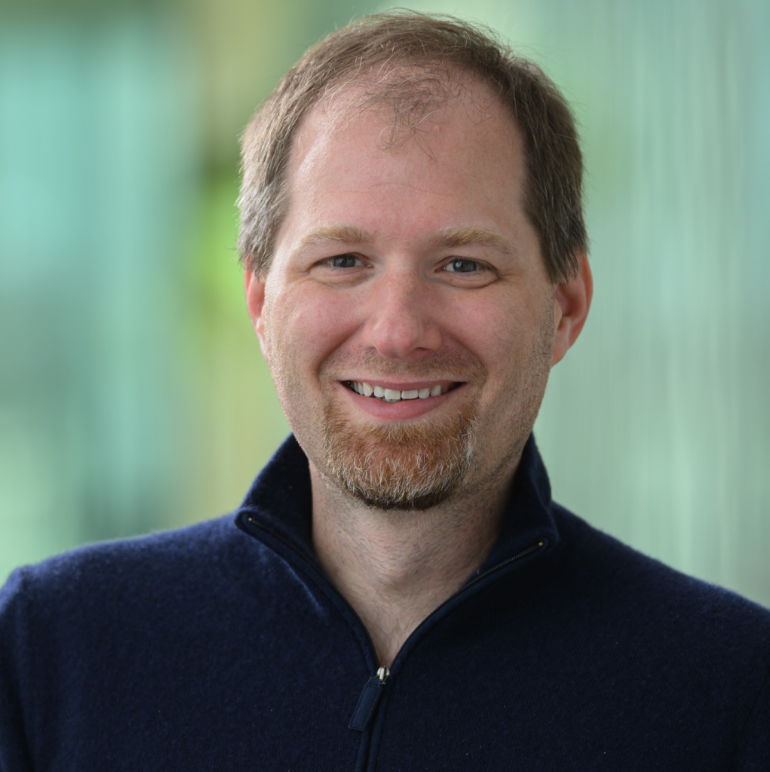
Bob Mumgaard, Commonwealth Fusion Systems
This discussion on theCUBE and NYSE Wired: Powering Tomorrow examines commercializing fusion power, focusing on SPARC, ARC and pathways to commercial nuclear fusion. Bob Mumgaard of Commonwealth Fusion Systems joins the program to explain fusion fundamentals, SPARC's role as a net energy demonstration in Devens, and plans for ARC as a first generation commercial plant in Virginia. Mumgaard provides analysis on timelines, funding and regulatory pathways and on implications for major energy consumers and artificial intelligence infrastructure; they also address interest from hyperscalers and data center operators.
Key takeaways include Mumgaard stating SPARC targets demonstration of net fusion energy by 2027 and ARC targets commercial operation in the early 2030s. They emphasize fusion's safety profile compared with fission, long term low fuel operating costs and the capital intensity of early builds. theCUBE Research frames analysis on timelines, funding and regulatory pathways and addresses the role of the Nuclear Regulatory Commission and state regulators for deployment. Analysts highlight hyperscalers' interest and potential early offtakers such as Google, and they assess implications for energy supply to data centers and AI infrastructure.
Watch the full conversation on theCUBE and NYSE Wired: Powering Tomorrow for extended analysis of commercial fusion development, regulatory factors to consider and impacts on energy infrastructure.
>> Palo Alto Studio Connection, Silicon Valley and Wall Street. I'm John Furrier, hosting theCUBE here with David Vellante, my co-host.
Gemma Allen
>> Welcome back to theCUBE studio here at the New York Stock Exchange. I'm Gemma Allen, co-host of NYSE Wired Powering Tomorrow. And today we're talking about one of the biggest bets in energy, that is whether we can finally turn nuclear fusion into a commercial source of electricity. Joining me to unpack that is Bob Mumgaard, CEO and co-founder of Commonwealth Fusion Systems, the MIT spinout working to make that happen. CFS is building SPARC, targeting net fusion energy in 2027 with its commercial ARC power plant planned for Virginia. And also joining me, a fellow Bostonian, is Dave Vellante, longtime tech industry analyst and co-host of SiliconANGLE Media's theCUBE, who's going to help us dig into what this means not just for energy, but for the massive power demands being created by the AI industry. Bob, Dave, welcome.
Dave Vellante
>> Thank you, Gemma.
Bob Mumgaard
>> Thank you.
Gemma Allen
>> So Bob, let's just kick off and help us understand CFS, what is happening in this space, and I guess, the trillion-dollar question: how close are we to really seeing nuclear fusion become mainstream?
Bob Mumgaard
>> Right, so first we should level set. What are we talking about? What is this technology? And what we're trying to do is we're trying to create the same process that's inside all the stars. Stars, they're combining atoms together. That powers the entire universe today. That's nuclear fusion. It's fusion power, fusion energy. And today we don't have that as power plants. We have the opposite. We have the splitting of atoms. And that's what our traditional nuclear power industry does. But you now have the scientific proof that we can make this process that's inside the stars work here on Earth. National Labs, universities have shown that that is possible. So it's now a race to turn that into a power plant, a product. And in doing so, with that technology, it would mean that you'd have the ability to build power plants that basically didn't consume a bunch of fuel. They wouldn't have uranium or plutonium. They wouldn't have meltdown, the ability to melt down at all. And so it's sort of seen as the holy grail of energy, this fusion energy. And what CFS is, is we're the largest of the fusion companies. So we're about 8 years old, a spin-out of MIT, about $4 billion of capital that has been invested from a wide range of investors. And we're going as fast as we can go to be able to build the first generation of these new types of power plants. And, really the last type of power plant the world will need.
Dave Vellante
>> Well, you got to give us a Fusion 101, explain how we're able to sort of replicate that energy and interaction on Earth. Explain fusion for the audience.
Bob Mumgaard
>> Yeah. So Fusion, first, it's a reaction. It is literally the combining of atoms together to make heavier ones. And in that reaction, a tiny bit of mass turns into energy. E= mc², Einstein, and that's a lot of energy. It means that for fuel, if you took seawater and reacted it this way, you could power New York City off of the water coming out of a kitchen sink. So it's a huge amount of power with not very much input. But in order to make that reaction happen, you have to get things very hot. You literally have to get it to the conditions inside a star. So millions and millions of degrees. That is hard to do on Earth. we have lots of stuff that gets in the way of making stuff that hot. And so what scientists have done over the last 60 years is they've figured out how to build machines that create the right conditions so that you can get those very, very hot temperatures. And so these machines, you know, they're sort of like things you wouldn't have ever seen before. They're not tiny, they're big. They fit on a tennis court, but they're made out of metal bent in all the right shapes. And you have engineers with backgrounds in building rockets and submarines and cars that are all working to make these machines and reach these conditions. And this has been going on for decades. And there's always a knock that's like, "Oh, because it's been going on for decades, it's never gonna happen." But actually what's happened is it's gotten faster and faster and faster, and the machines have gotten higher and higher performing. And we're just now at the stage where you can see what the final, you know, power plant will look like, and we can make the right conditions, the conditions that you need in that power plant. We can do that in the laboratory setting. So now it's taking it from that and actually putting it out into the commercial setting.
Gemma Allen
>> So you're essentially saying that in Devens, Massachusetts, there is one of these machines in the form of SPARC that runs hotter than the sun.
Bob Mumgaard
>> Yep.
Gemma Allen
>> And that excess energy is essentially used as a captured energy source that can go back into the grid.
Bob Mumgaard
>> That's the goal. And so you build a machine that creates a star in a bottle. Sounds scary. It's not that scary. It's actually very hard and it's not very much stuff. But it gets that reaction going, makes a bunch of excess energy. You turn that to electricity, you send that to the grid, just like an existing power plant. Except, you know, like a coal power plant today, you have to keep shoveling coal in to keep that reaction going. In fusion, you're not consuming very much, there's no emissions. And so it means that you could run this basically forever.
Dave Vellante
>> And what is the catalyst? What are you actually consuming? What's—
Bob Mumgaard
>> yeah, you're consuming tiny amounts of hydrogen.
Dave Vellante
>> Yeah.
Bob Mumgaard
>> And it's about 200 million times less stuff per unit of energy out than, say, burning fossil fuels. So imagine your, you know, gas pipeline that's powering something. Make that 200 million times smaller. That's basically it.
Dave Vellante
>> And the amount of radiation, I've heard some people claim it's zero, but it's not zero, but it's very minor, right? Right.
Bob Mumgaard
>> So, people when they think about nuclear Fission, you know, they think about the accidents that have happened. You think about the long-lived nuclear waste that you have to deal with for thousands of years. In fusion, it's not quite like that. Instead, it's much closer to what happens in a hospital. You have to manage the radiation the same way in cancer treatment or other areas, but it doesn't leave this multi-generational legacy.
Gemma Allen
>> When we think about how folks say AI has a messaging problem, right? You could say nuclear also has a messaging problem because people don't really think about the differentiated technology underneath the hood of nuclear. You hear nuclear and you think about other words, right? So we've seen a lot of press around Three Mile Island. It had a moment and then it kind of fell off a little bit again in terms of the relevance of the news story. But we know that a lot of hyperscalers are investing in this space or at least see it as a very strong potential for the next 10 years out. Talk a little bit about how a company like this and a center like ARC, or a nuclear facility like ARC, differentiates from Three Mile Island.
Bob Mumgaard
>> Yeah, so because the reaction that's happening inside a fusion power plant is the opposite reaction, it's combining instead of splitting the atom, that means it has a completely different, safety profile, different technology altogether. And so one of the messaging challenges is making sure that people understand that these are actually completely different technologies. You've got existing nuclear fission, which has been around for a long time. It works. People are restarting, as you mentioned, Three Mile Island, restarting that power plant. But then you have this new technology, and that's fusion. It has other trade-offs. In many ways, it doesn't have the legacy, but it's still establishing itself as a new industry. And so we're the leader of that new industry. There's about 50 private fusion companies in that industry. And this is all happening at a moment when we need a lot more power. So the hyperscalers and users of energy are looking across the landscape and saying, okay, what can I do to get the energy I'm going to need to power this next generation of compute? And they're making bets, placing down payments. And we actually have for our first power plant in Virginia, Google is one of the buyers of power from that plant, and that's, you know, buyers of power from the very first of an entire new generation of a new technology.
Dave Vellante
>> So you've raised $4 billion in capital. What's the investment thesis, Bob? AI is everything now. Is the investment thesis, hey, it's going to help power AI, or obviously it could be much broader than that. Explain why your investors are putting so much capital into this company.
Bob Mumgaard
>> So energy fundamentally equals prosperity. that has been a trend that is super robust across all geographies, across centuries, that the more energy that we have access to, the more we can do with it. And whether that's, you know, increasing people's standard of living or making AI or powering large industry or cleaning up existing industries, those all require a large amount of energy. And right now our energy system, it has a lot of trade-offs in it, right? Like we have energy that produces emissions, it has knock-on effects. We have energy that people don't want in their backyard. We have energy that takes large amounts of land, and there's all these trade-offs.
Dave Vellante
>> It's finite.
Bob Mumgaard
>> Yeah, exactly. And increasingly we are actually in an energy-constrained world. You can look at, you know, what the news coverage is right now every day about the disruption in the oil system and see how constrained the whole world of energy is. What fusion offers is it offers an ability to break that constraint. There's a completely different set of tradeoffs. It's not finite. If you powered the world with fusion, you could literally run the world at hundreds of times more energy for hundreds of times longer than the solar system will be around. It effectively is unlimited. And that's super, super exciting. It also means that you can start to think of energy less as a natural resource that you're consuming and more of a technology, a technology that you could build over and over again. You could replicate. You don't need to constantly feed it or consume something. You could build a plant and then go build the next one and the next one and the next one and get better and better and better at building those plants.
Dave Vellante
>> And why so capital intensive? Can you kind of explain what you do with all that capital and what are we looking at for a timeline?
Bob Mumgaard
>> Yeah. So, you do build these machines, just like building advanced chip fab or building rockets or airplanes, right? You need to have the facilities to actually make the physical world do what you want. We're so used to thinking of technology purely in a software sense, where the capital goes into paying salaries to write code, right? Or generate media. Capital that goes into steel and concrete, the right shapes and sizes in the right spots. And that's— that takes time and takes money. And we're sort of at the vanguard of these tough tech, hardware-centric, next-generation technologies. But once you figure out how to do it, it looks like any other manufacturing and construction project. So we're still at that stage of figuring out how to do it. And the— you mentioned SPARC. So SPARC is a pilot, it's a prototype, a demonstration facility. And it's the first in the world of its kind that is designed. And the scientists at MIT and National Labs have put out peer-reviewed publications like this is predicted to make a lot of energy from fusion reactions, more than it takes to run. That facility is in Devens, Massachusetts. It's about 80% constructed, and it's super exciting to see. It's one of the most impressive, I think, advanced energy projects that's out there. And we'll turn that on and we'll check all our math and make sure that we're on the right track. But then we'll go to the first generation of power plants. That puts this technology sort of, we think, in the early '30s as the first generation of plants.
Dave Vellante
>> First half of the '30s. Yeah. Okay.
Bob Mumgaard
>> We think that's doable. There's still stuff that has to be done. This is not something that you can just go and order in a catalog, right? This is cutting-edge science and hardware all in a vertically integrated company.
Dave Vellante
>> It's not a SKU.
Bob Mumgaard
>> Yeah.
Gemma Allen
>> Talk about the costs for a second, Bob. We've heard a lot from other startups in the nuclear space around the initial cost and how, again, it's a whole new category. So there's an entire prospectus there around what it will cost over X amount of years, right? But initially it is more expensive than the energy we know right now. What— help me kind of predict that from the perspective of this technology.
Bob Mumgaard
>> Yeah, it's actually pretty difficult to say right now. So because we're still figuring out how to build it. Now if you were to just take what we're building now and say, okay, I'm gonna use the same intensity that we're building today of making every part custom and, uh really fast. If you did that, you tried to build a sedan of a car it would be like a very, very unaffordable car. But you know that once you figure out what it is, you can then apply mass manufacturing and techniques that are really designed to get to scale, and that cost will come way down. Of course, we've seen this in solar and wind and any of those other technologies. With fusion, what we're doing is we're putting that first marker out there. We're saying, okay, we know what these plants look like. And the plants, we do know that you pay to build it, And then you don't have a lot of operating costs. So it's capital up front, but you're not paying a bill for buying gas or coal. And also you don't have the volatility of that long-term feedstock. Instead, it's like building a real estate asset in many ways. And so once it's proven and you know what you're building, you have this path to lower and lower costs. But with fusion, we're still figuring out what that path looks like. But we think it could be pretty steep because if it follows similar technologies in terms of manufacturing and the cost downs you get by building repetitively, it could get pretty low cost.
Dave Vellante
>> So— oh, good. Please.
Gemma Allen
>> Moving on to the center, the facility in Virginia, which I know you haven't broken ground on yet, but you plan to, I believe, in the next year or so, which is called ARC, correct?
Bob Mumgaard
>> Yeah.
Gemma Allen
>> Talk a little bit about the regulatory side of that. Virginia is an Agreement State. I know that from the world of energy and tech. Which means that essentially it, I guess, regulates itself. But nuclear is again, a very interesting category, right? I'd love to understand what sorts of conversations and policies are being implemented or happening in the space in a state like that.
Bob Mumgaard
>> So when we started to build SPARC in Massachusetts, the question of who would permit and license it was actually a very open question. We're like, okay, well, we're sure that by the time it's finished, we'll figure that out. And that has happened. And so in the United States, they've looked at this fusion energy and said, okay, how should that be regulated? What are the hazards? What are the first principles? What are we dealing with? And the Nuclear Regulatory Commission, the NRC, went through a multi-year process of public engagement and bringing in advocates and skeptics and actually built a structure that is how to regulate fusion. And it's separate from nuclear fission, from traditional nuclear power. And it's separate in important ways. So, one, as you mentioned, it actually gives the states the authority to regulate it. States regulate other things like I mentioned hospitals and medtech. A lot of that's done at the state level. And so, it's also not regulated in an export-controlled way. It's a much larger market. It's regulated in a way that there's not an offsite hazard. So it's more about workers than it is about neighbors, which is all important for the technology. We've now gone through that process in Massachusetts. That site has its operating permit, and we're just beginning that in Virginia. This is exciting because a lot of times we talk about regulatory reform in energy. And fusion actually has gone through that cycle already.
Dave Vellante
>> So, the United States is obviously behind in nuclear, you know, general nuclear technology. We kind of killed it in the '70s and '80s and we're kind of behind in sort of the pace of building data centers. Is fusion a way for the United States to globally kind of leapfrog, or are other countries, you know, further along? I know France and China, for example?
Bob Mumgaard
>> So fusion— the United States has had a very strong fusion lead for a long time, particularly on the innovation side. And the entrepreneurship ecosystem in fusion is really concentrated in the United States. The tools and large simulations and the data is all actually very US-led. But we're starting to see very large investments in other countries. China's investing a lot in this space, outspending the US somewhere between 3 and 5 to 1. And they are running it in a very top-down, state-directed way, as you would expect. The Europeans, particularly the Germans, the UK, they are starting to put large programs together to try to get to the first generation of fusion power plants. So you're starting to see the beginning of this race to this new energy source. And fortunately, in the US, we know what the prescription that needs to happen is to make this all go faster. And that's actively in discussion in D.C.. And there's actually bills that have been introduced and a few of them have passed in the past that set the United States on a trajectory to be able to continue to lead.
Dave Vellante
>> Well, that's a good thing that there's global investment like that. There's a global energy problem. And so, the more innovation that's happening around the world, the better, presumably, as long as the US stays at the forefront. Thanks to folks like you, Bob, we hope
Gemma Allen
>> Bob, fascinating company at a fascinating time. I'm going to quote some peer of your industry who said to me last week that, invent— or mother— what is it? Necessity is the mother of monetization. And I think when it comes to nuclear, that is certainly the moment we're at. But $4 billion raised, some big commitments from companies like Google and Eni. Great to see you guys on theCUBE here at the New York Stock Exchange as well today. We will certainly be watching closely. Thank you so much for joining us on NYSE Wired.
Dave Vellante
>> Thank you. Thank you.
Gemma Allen
>> Thank you, Dave, for joining. I'm Gemma Allen here at theCUBE Studio at the New York Stock Exchange. This is NYSE Wired's Powering Tomorrow. Thanks for watching.
>> Palo Alto Studio Connection, Silicon Valley and Wall Street. I'm John Furrier, hosting theCUBE here with David Vellante, my co-host.
Gemma Allen
>> Welcome back to theCUBE studio here at the New York Stock Exchange. I'm Gemma Allen, co-host of NYSE Wired Powering Tomorrow. And today we're talking about one of the biggest bets in energy, that is whether we can finally turn nuclear fusion into a commercial source of electricity. Joining me to unpack that is Bob Mumgaard, CEO and co-founder of Commonwealth Fusion Systems, the MIT spinout working to make that happen. CFS is building SPARC, targeting net fusion energy in 2027 with its commercial ARC power plant planned for Virginia. And also joining me, a fellow Bostonian, is Dave Vellante, longtime tech industry analyst and co-host of SiliconANGLE Media's theCUBE, who's going to help us dig into what this means not just for energy, but for the massive power demands being created by the AI industry. Bob, Dave, welcome.
Dave Vellante
>> Thank you, Gemma.
Bob Mumgaard
>> Thank you.
Gemma Allen
>> So Bob, let's just kick off and help us understand CFS, what is happening in this space, and I guess, the trillion-dollar question: how close are we to really seeing nuclear fusion become mainstream?
Bob Mumgaard
>> Right, so first we should level set. What are we talking about? What is this technology? And what we're trying to do is we're trying to create the same process that's inside all the stars. Stars, they're combining atoms together. That powers the entire universe today. That's nuclear fusion. It's fusion power, fusion energy. And today we don't have that as power plants. We have the opposite. We have the splitting of atoms. And that's what our traditional nuclear power industry does. But you now have the scientific proof that we can make this process that's inside the stars work here on Earth. National Labs, universities have shown that that is possible. So it's now a race to turn that into a power plant, a product. And in doing so, with that technology, it would mean that you'd have the ability to build power plants that basically didn't consume a bunch of fuel. They wouldn't have uranium or plutonium. They wouldn't have meltdown, the ability to melt down at all. And so it's sort of seen as the holy grail of energy, this fusion energy. And what CFS is, is we're the largest of the fusion companies. So we're about 8 years old, a spin-out of MIT, about $4 billion of capital that has been invested from a wide range of investors. And we're going as fast as we can go to be able to build the first generation of these new types of power plants. And, really the last type of power plant the world will need.
Dave Vellante
>> Well, you got to give us a Fusion 101, explain how we're able to sort of replicate that energy and interaction on Earth. Explain fusion for the audience.
Bob Mumgaard
>> Yeah. So Fusion, first, it's a reaction. It is literally the combining of atoms together to make heavier ones. And in that reaction, a tiny bit of mass turns into energy. E= mc², Einstein, and that's a lot of energy. It means that for fuel, if you took seawater and reacted it this way, you could power New York City off of the water coming out of a kitchen sink. So it's a huge amount of power with not very much input. But in order to make that reaction happen, you have to get things very hot. You literally have to get it to the conditions inside a star. So millions and millions of degrees. That is hard to do on Earth. we have lots of stuff that gets in the way of making stuff that hot. And so what scientists have done over the last 60 years is they've figured out how to build machines that create the right conditions so that you can get those very, very hot temperatures. And so these machines, you know, they're sort of like things you wouldn't have ever seen before. They're not tiny, they're big. They fit on a tennis court, but they're made out of metal bent in all the right shapes. And you have engineers with backgrounds in building rockets and submarines and cars that are all working to make these machines and reach these conditions. And this has been going on for decades. And there's always a knock that's like, "Oh, because it's been going on for decades, it's never gonna happen." But actually what's happened is it's gotten faster and faster and faster, and the machines have gotten higher and higher performing. And we're just now at the stage where you can see what the final, you know, power plant will look like, and we can make the right conditions, the conditions that you need in that power plant. We can do that in the laboratory setting. So now it's taking it from that and actually putting it out into the commercial setting.
Gemma Allen
>> So you're essentially saying that in Devens, Massachusetts, there is one of these machines in the form of SPARC that runs hotter than the sun.
Bob Mumgaard
>> Yep.
Gemma Allen
>> And that excess energy is essentially used as a captured energy source that can go back into the grid.
Bob Mumgaard
>> That's the goal. And so you build a machine that creates a star in a bottle. Sounds scary. It's not that scary. It's actually very hard and it's not very much stuff. But it gets that reaction going, makes a bunch of excess energy. You turn that to electricity, you send that to the grid, just like an existing power plant. Except, you know, like a coal power plant today, you have to keep shoveling coal in to keep that reaction going. In fusion, you're not consuming very much, there's no emissions. And so it means that you could run this basically forever.
Dave Vellante
>> And what is the catalyst? What are you actually consuming? What's—
Bob Mumgaard
>> yeah, you're consuming tiny amounts of hydrogen.
Dave Vellante
>> Yeah.
Bob Mumgaard
>> And it's about 200 million times less stuff per unit of energy out than, say, burning fossil fuels. So imagine your, you know, gas pipeline that's powering something. Make that 200 million times smaller. That's basically it.
Dave Vellante
>> And the amount of radiation, I've heard some people claim it's zero, but it's not zero, but it's very minor, right? Right.
Bob Mumgaard
>> So, people when they think about nuclear Fission, you know, they think about the accidents that have happened. You think about the long-lived nuclear waste that you have to deal with for thousands of years. In fusion, it's not quite like that. Instead, it's much closer to what happens in a hospital. You have to manage the radiation the same way in cancer treatment or other areas, but it doesn't leave this multi-generational legacy.
Gemma Allen
>> When we think about how folks say AI has a messaging problem, right? You could say nuclear also has a messaging problem because people don't really think about the differentiated technology underneath the hood of nuclear. You hear nuclear and you think about other words, right? So we've seen a lot of press around Three Mile Island. It had a moment and then it kind of fell off a little bit again in terms of the relevance of the news story. But we know that a lot of hyperscalers are investing in this space or at least see it as a very strong potential for the next 10 years out. Talk a little bit about how a company like this and a center like ARC, or a nuclear facility like ARC, differentiates from Three Mile Island.
Bob Mumgaard
>> Yeah, so because the reaction that's happening inside a fusion power plant is the opposite reaction, it's combining instead of splitting the atom, that means it has a completely different, safety profile, different technology altogether. And so one of the messaging challenges is making sure that people understand that these are actually completely different technologies. You've got existing nuclear fission, which has been around for a long time. It works. People are restarting, as you mentioned, Three Mile Island, restarting that power plant. But then you have this new technology, and that's fusion. It has other trade-offs. In many ways, it doesn't have the legacy, but it's still establishing itself as a new industry. And so we're the leader of that new industry. There's about 50 private fusion companies in that industry. And this is all happening at a moment when we need a lot more power. So the hyperscalers and users of energy are looking across the landscape and saying, okay, what can I do to get the energy I'm going to need to power this next generation of compute? And they're making bets, placing down payments. And we actually have for our first power plant in Virginia, Google is one of the buyers of power from that plant, and that's, you know, buyers of power from the very first of an entire new generation of a new technology.
Dave Vellante
>> So you've raised $4 billion in capital. What's the investment thesis, Bob? AI is everything now. Is the investment thesis, hey, it's going to help power AI, or obviously it could be much broader than that. Explain why your investors are putting so much capital into this company.
Bob Mumgaard
>> So energy fundamentally equals prosperity. that has been a trend that is super robust across all geographies, across centuries, that the more energy that we have access to, the more we can do with it. And whether that's, you know, increasing people's standard of living or making AI or powering large industry or cleaning up existing industries, those all require a large amount of energy. And right now our energy system, it has a lot of trade-offs in it, right? Like we have energy that produces emissions, it has knock-on effects. We have energy that people don't want in their backyard. We have energy that takes large amounts of land, and there's all these trade-offs.
Dave Vellante
>> It's finite.
Bob Mumgaard
>> Yeah, exactly. And increasingly we are actually in an energy-constrained world. You can look at, you know, what the news coverage is right now every day about the disruption in the oil system and see how constrained the whole world of energy is. What fusion offers is it offers an ability to break that constraint. There's a completely different set of tradeoffs. It's not finite. If you powered the world with fusion, you could literally run the world at hundreds of times more energy for hundreds of times longer than the solar system will be around. It effectively is unlimited. And that's super, super exciting. It also means that you can start to think of energy less as a natural resource that you're consuming and more of a technology, a technology that you could build over and over again. You could replicate. You don't need to constantly feed it or consume something. You could build a plant and then go build the next one and the next one and the next one and get better and better and better at building those plants.
Dave Vellante
>> And why so capital intensive? Can you kind of explain what you do with all that capital and what are we looking at for a timeline?
Bob Mumgaard
>> Yeah. So, you do build these machines, just like building advanced chip fab or building rockets or airplanes, right? You need to have the facilities to actually make the physical world do what you want. We're so used to thinking of technology purely in a software sense, where the capital goes into paying salaries to write code, right? Or generate media. Capital that goes into steel and concrete, the right shapes and sizes in the right spots. And that's— that takes time and takes money. And we're sort of at the vanguard of these tough tech, hardware-centric, next-generation technologies. But once you figure out how to do it, it looks like any other manufacturing and construction project. So we're still at that stage of figuring out how to do it. And the— you mentioned SPARC. So SPARC is a pilot, it's a prototype, a demonstration facility. And it's the first in the world of its kind that is designed. And the scientists at MIT and National Labs have put out peer-reviewed publications like this is predicted to make a lot of energy from fusion reactions, more than it takes to run. That facility is in Devens, Massachusetts. It's about 80% constructed, and it's super exciting to see. It's one of the most impressive, I think, advanced energy projects that's out there. And we'll turn that on and we'll check all our math and make sure that we're on the right track. But then we'll go to the first generation of power plants. That puts this technology sort of, we think, in the early '30s as the first generation of plants.
Dave Vellante
>> First half of the '30s. Yeah. Okay.
Bob Mumgaard
>> We think that's doable. There's still stuff that has to be done. This is not something that you can just go and order in a catalog, right? This is cutting-edge science and hardware all in a vertically integrated company.
Dave Vellante
>> It's not a SKU.
Bob Mumgaard
>> Yeah.
Gemma Allen
>> Talk about the costs for a second, Bob. We've heard a lot from other startups in the nuclear space around the initial cost and how, again, it's a whole new category. So there's an entire prospectus there around what it will cost over X amount of years, right? But initially it is more expensive than the energy we know right now. What— help me kind of predict that from the perspective of this technology.
Bob Mumgaard
>> Yeah, it's actually pretty difficult to say right now. So because we're still figuring out how to build it. Now if you were to just take what we're building now and say, okay, I'm gonna use the same intensity that we're building today of making every part custom and, uh really fast. If you did that, you tried to build a sedan of a car it would be like a very, very unaffordable car. But you know that once you figure out what it is, you can then apply mass manufacturing and techniques that are really designed to get to scale, and that cost will come way down. Of course, we've seen this in solar and wind and any of those other technologies. With fusion, what we're doing is we're putting that first marker out there. We're saying, okay, we know what these plants look like. And the plants, we do know that you pay to build it, And then you don't have a lot of operating costs. So it's capital up front, but you're not paying a bill for buying gas or coal. And also you don't have the volatility of that long-term feedstock. Instead, it's like building a real estate asset in many ways. And so once it's proven and you know what you're building, you have this path to lower and lower costs. But with fusion, we're still figuring out what that path looks like. But we think it could be pretty steep because if it follows similar technologies in terms of manufacturing and the cost downs you get by building repetitively, it could get pretty low cost.
Dave Vellante
>> So— oh, good. Please.
Gemma Allen
>> Moving on to the center, the facility in Virginia, which I know you haven't broken ground on yet, but you plan to, I believe, in the next year or so, which is called ARC, correct?
Bob Mumgaard
>> Yeah.
Gemma Allen
>> Talk a little bit about the regulatory side of that. Virginia is an Agreement State. I know that from the world of energy and tech. Which means that essentially it, I guess, regulates itself. But nuclear is again, a very interesting category, right? I'd love to understand what sorts of conversations and policies are being implemented or happening in the space in a state like that.
Bob Mumgaard
>> So when we started to build SPARC in Massachusetts, the question of who would permit and license it was actually a very open question. We're like, okay, well, we're sure that by the time it's finished, we'll figure that out. And that has happened. And so in the United States, they've looked at this fusion energy and said, okay, how should that be regulated? What are the hazards? What are the first principles? What are we dealing with? And the Nuclear Regulatory Commission, the NRC, went through a multi-year process of public engagement and bringing in advocates and skeptics and actually built a structure that is how to regulate fusion. And it's separate from nuclear fission, from traditional nuclear power. And it's separate in important ways. So, one, as you mentioned, it actually gives the states the authority to regulate it. States regulate other things like I mentioned hospitals and medtech. A lot of that's done at the state level. And so, it's also not regulated in an export-controlled way. It's a much larger market. It's regulated in a way that there's not an offsite hazard. So it's more about workers than it is about neighbors, which is all important for the technology. We've now gone through that process in Massachusetts. That site has its operating permit, and we're just beginning that in Virginia. This is exciting because a lot of times we talk about regulatory reform in energy. And fusion actually has gone through that cycle already.
Dave Vellante
>> So, the United States is obviously behind in nuclear, you know, general nuclear technology. We kind of killed it in the '70s and '80s and we're kind of behind in sort of the pace of building data centers. Is fusion a way for the United States to globally kind of leapfrog, or are other countries, you know, further along? I know France and China, for example?
Bob Mumgaard
>> So fusion— the United States has had a very strong fusion lead for a long time, particularly on the innovation side. And the entrepreneurship ecosystem in fusion is really concentrated in the United States. The tools and large simulations and the data is all actually very US-led. But we're starting to see very large investments in other countries. China's investing a lot in this space, outspending the US somewhere between 3 and 5 to 1. And they are running it in a very top-down, state-directed way, as you would expect. The Europeans, particularly the Germans, the UK, they are starting to put large programs together to try to get to the first generation of fusion power plants. So you're starting to see the beginning of this race to this new energy source. And fortunately, in the US, we know what the prescription that needs to happen is to make this all go faster. And that's actively in discussion in D.C.. And there's actually bills that have been introduced and a few of them have passed in the past that set the United States on a trajectory to be able to continue to lead.
Dave Vellante
>> Well, that's a good thing that there's global investment like that. There's a global energy problem. And so, the more innovation that's happening around the world, the better, presumably, as long as the US stays at the forefront. Thanks to folks like you, Bob, we hope
Gemma Allen
>> Bob, fascinating company at a fascinating time. I'm going to quote some peer of your industry who said to me last week that, invent— or mother— what is it? Necessity is the mother of monetization. And I think when it comes to nuclear, that is certainly the moment we're at. But $4 billion raised, some big commitments from companies like Google and Eni. Great to see you guys on theCUBE here at the New York Stock Exchange as well today. We will certainly be watching closely. Thank you so much for joining us on NYSE Wired.
Dave Vellante
>> Thank you. Thank you.
Gemma Allen
>> Thank you, Dave, for joining. I'm Gemma Allen here at theCUBE Studio at the New York Stock Exchange. This is NYSE Wired's Powering Tomorrow. Thanks for watching.






 Dave Vellante
 Gemma Allen
 Bob Mumgaard