We just sent you a verification email. Please verify your account to gain access to
theCUBE + NYSE Wired: Physical AI & Robotics Leaders. If you don’t think you received an email check your
spam folder.
Sign in to theCUBE + NYSE Wired: Physical AI & Robotics Leaders.
In order to sign in, enter the email address you used to registered for the event. Once completed, you will receive an email with a verification link. Open this link to automatically sign into the site.
Register For theCUBE + NYSE Wired: Physical AI & Robotics Leaders
Please fill out the information below. You will recieve an email with a verification link confirming your registration. Click the link to automatically sign into the site.
You’re almost there!
We just sent you a verification email. Please click the verification button in the email. Once your email address is verified, you will have full access to all event content for theCUBE + NYSE Wired: Physical AI & Robotics Leaders.
I want my badge and interests to be visible to all attendees.
Checking this box will display your presense on the attendees list, view your profile and allow other attendees to contact you via 1-1 chat. Read the Privacy Policy. At any time, you can choose to disable this preference.
Select your Interests!
add
Upload your photo
Uploading..
OR
Connect via Twitter
Connect via Linkedin
EDIT PASSWORD
Share
Forgot Password
Almost there!
We just sent you a verification email. Please verify your account to gain access to
theCUBE + NYSE Wired: Physical AI & Robotics Leaders. If you don’t think you received an email check your
spam folder.
Sign in to theCUBE + NYSE Wired: Physical AI & Robotics Leaders.
In order to sign in, enter the email address you used to registered for the event. Once completed, you will receive an email with a verification link. Open this link to automatically sign into the site.
Sign in to gain access to theCUBE + NYSE Wired: Physical AI & Robotics Leaders
Please sign in with LinkedIn to continue to theCUBE + NYSE Wired: Physical AI & Robotics Leaders. Signing in with LinkedIn ensures a professional environment.
In this video from theCUBE at the New York Stock Exchange, we explore the intersection of robotics and artificial intelligence with Akash Gupta, co-founder and CEO of GreyOrange. The video examines the crucial role AI plays in enhancing the efficiency and scalability of robotics. Insights are drawn from the NYSE Wired Robotics & AI Media Week event.
Akash Gupta discusses the rapidly evolving field of robotics and AI, emphasizing the exponential improvement in robotic capabilities. With hosts from theCUBE and insights from theCUBE Research, the conver...Read more
exploreKeep Exploring
What are the key aspects that are enabling the accelerated application of robotics today compared to 10 years ago?add
What are some of the challenges in the physical AI aspect of combining different aspects of computer science, data structures, and algorithms?add
What are the two core software platforms in the GreyOrange platform and what do they each do?add
What is the importance of collaboration between humans and robots in warehouses and stores for successful automation?add
What type of language is the core platform of WhatsApp written in and how does it handle the complexity of managing multiple types of robotic technologies and warehouses for companies like H&M and Walmart?add
What are the benefits of using synthetic data in combination with real data for predictive modeling?add
>> Hello, welcome back to theCUBE here in New York Stock Exchange. I'm John Furrier, your host of theCUBE. We're here for theCUBE and the NYSC Citi Robotics and AI Media Week. This is part of our digital twin as an event going on here at the NYSC where Citi's holding a really elite set of leaders, talking about the future of robotics. Of course, we love robotics. There's a lot of AI involved, computer vision, edge, industrial edge, commercial edge, retail, factories, and of course, digital twin technology. As AI comes in and makes our real world more efficient, its physical AI, as NVIDIA calls it, and it's a really great, big trend. Akash Gupta is here, he's the co-founder and CEO of GreyOrange. Akash, thanks for coming on to theCUBE and coming down from the Citi event to hang out with us.
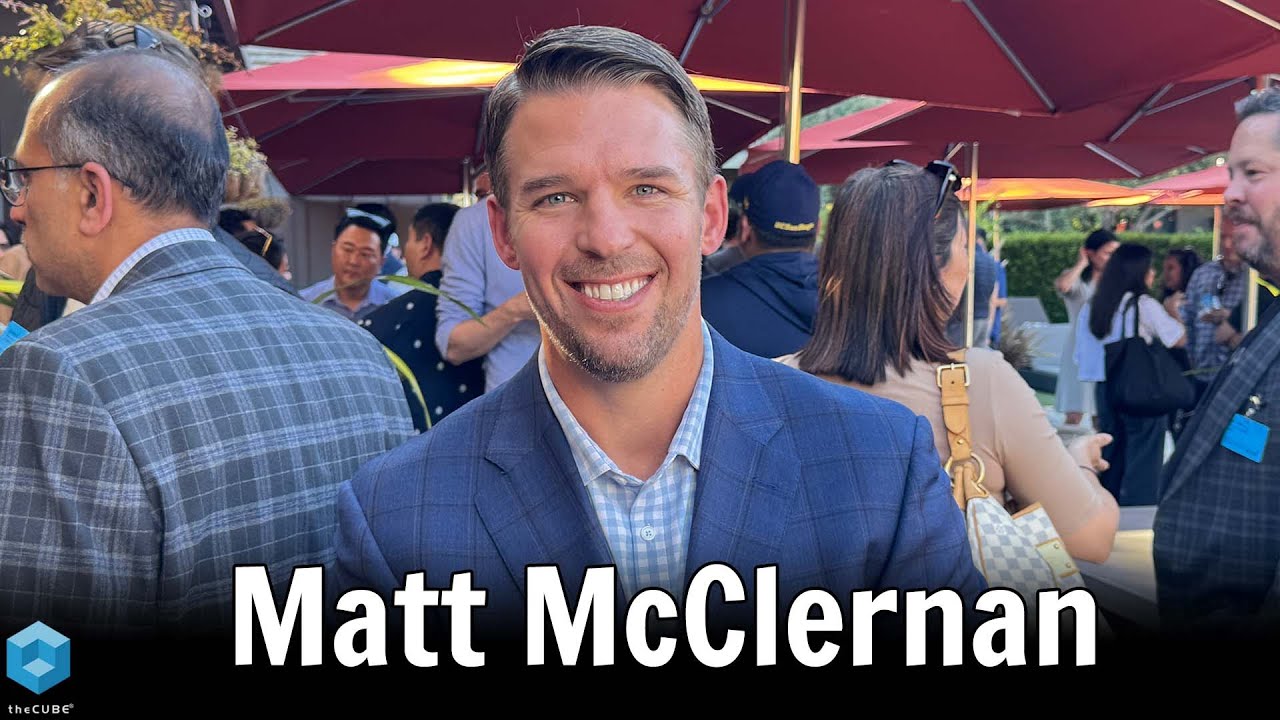
Akash Gupta
>> Absolutely, thanks for having me here.>> You heard my intro, NVIDIA GTC just happened a couple weeks ago. You're in Menlo Park, Bay Area was on fire, everybody was there. Jensen Wong, I love Jensen because he's the only CEO that actually gets out by these keynotes and says the word computer science multiple times, because there's a lot of computer science involved in the software that GPUs are enabling. GPUs is just a name that reflects the new systems being built, the AI factories. But all the work that's going on, pretty significant around what's going on with digital twins and how people are using the AI side of it to really move the needle. You guys are in the middle of it, what's your take on just in general the industry market around robotics and how AI and robotics and the data is working?
Akash Gupta
>> Yeah, absolutely. I think what we are seeing today is that the application of robotics can accelerate like 10X because of two aspects. One is just being able to sense the environment really well, being able to train the neural networks to make sure that the learning is much faster, but then also being able to orchestrate hundreds and thousands of these kind of robotic agents to collaborate with each other, to take a mission and execute something. All that is becoming possible and becoming possible much, much faster today with what we have seen 10 years back, AlphaGo came in and 10 years down the line today, similar DNN concepts are really, really becoming very powerful to make sure that you can kind of make one robotic agent very useful, but then kind of have hundreds and thousands of them working all together.>> Yeah, millions, he said millions of agents. In fact, Jensen Wong said at CES, IT will be the HR department for agents, which got everyone to laugh, but people are like, "What does that even mean? Jobs are going away." Really, everyone goes to the whole jobs going away thing, which is ridiculous in my opinion, but his point being that agents have delegation, they have authority, they have agency, they're going to start to do things. Yet, there's a whole other side of the industry says, "Oh, it's a bunch of hype, it's a bubble," but there are actual use cases. Can you explain the difference in the nuance of where people are misunderstanding that agents actually are there today and doing real work? And then certainly more agents will come on as you start harmonizing the data and getting into the workflows, there's more headroom. Explain that difference of real agents today being built and deployed and what the future looks like.
Akash Gupta
>> Yeah, I'll give an example. We do a lot of software orchestration for robotics in the warehousing space, and I would say when you do not use AI, you're pretty much solving, let's say there are 1,000 robots, they need to go from point A to point B all at the same time. And this is a hard problem to solve for any kind of mathematical solver and likes of that. Today what we are seeing is you're able to train these neural networks so that you can calculate these paths of robots all criss-crossing each other in real time, which you would take, I would say hours and days to calculate the best optimal path. Once you train a model for tens of thousands of scenarios and millions of episodes, you can pretty much get those answers in few milliseconds, and that's happening in every single warehouse and every single robotic agent that we orchestrate today.>> You mentioned hours and days. I mean, if you just go back 10 years, the high-performance computing market, I think kind of referring to that, got a smile on your face, I think you know where I'm going with this. The old way, get some time on a machine, a supercomputer, crank out, stand in line, metaphorically speaking. There's no real line-line, but there's a queue. Getting resource was huge. Scope the magnitude change since then and now in terms of not just milliseconds, but just in terms of productivity, what is unleashed from that capability?
Akash Gupta
>> Oh yeah, I think it's exponential, I would say. And the interesting thing is now it's even growing exponentially quarterly. Firstly, the kind of progress we are making in two, three years is getting made in a quarter today. I'll give you an example. Let's say we would calculate the kind of trajectories of these 1,000 bots in 700 milliseconds because these are all real-time things moving. Today that can be done in five seconds or five milliseconds, so there is a very exponential change in the amount of compute that is needed. But be careful that it doesn't mean that the total compute has decreased a lot. The amount of compute you're using in training might still be a lot. When you cumulate all of it, training and real-time inference, it might still remain the same, but you can always train offline and likes of that so that when you are looking at the physical AI aspect of it where you have these kind of thousands of robotic agents that need to respond in real time, there's no other way but to do it this way today.>> Interesting you brought up training and inference because one of the themes that's happening is everyone focuses on training, but it's like when I went to school I was trained, but I don't stay in school, I confer in the real world. Reason, get reinforced learning.
Akash Gupta
>> Absolutely.>> Sounds similar to the AI trend, it is. It is a human brain scenario.
Akash Gupta
>> Yeah, absolutely.>> So the role of inference looks easy on paper. Again, this was another point from Jensen Wong at NVIDIA and others in the industry where it's like at scale, it's a whole different ballgame. Can you talk about inference at scale, what's needed? And you saw things like DeepSeek do some clever software algorithms. There's a software opportunity, not just pure throw hardware at it. Talk about the difference there.
Akash Gupta
>> Yeah, absolutely. I think it's a pretty strong combination of different aspects of computer science and data structures and algorithms. One of the challenging part, at least in physical AI aspect of it, has been how do you generate the training data? That's been always hard. And I think where the world is moving towards, we with our GreyMatter platform are moving towards that how do we train the models with a combination of reinforcement learning and supervised learning? More you can reinforce a certain model through real-time data. For example, GreyOrange has 80 warehouses running with tens of thousands of robotic agents, which are giving the real-time data, which we are using for reinforcement learning so that we have to do limited supervised learning. I think more the world can move towards the balance of supervised learning and reinforcement learning, easier it will become for training. It's almost like let's say you and me are having this conversation. You got trained on something, but this data is almost also a training data for you. Your next interview will get impacted by how this conversation goes, and that's exactly the case of reinforcement learning where you're running live and using the same live data for reinforcement as well.>> This is a huge point. I'm glad you brought that up because I think that's something that people in the industry know, but it's also very important because again, we just met, I've been trained, this is real fresh data at the edge where you're at the edge here at the stock exchange. I'm learning from you, but am I being trained again? No, I'm being reinforced. And this is the edge, the powerful edge devices are getting new information all the time at massive velocity.
Akash Gupta
>> Yeah.>> So are you training that data? Again, this is new data, so it's not like train the data and we're all set because now new data's coming in.
Akash Gupta
>> Absolutely.>> Does it need to be trained? How do people frame that? Because people trying to figure this out at scale, "Okay, I got a platform, I did my training, but now I got this new data coming in. Do I send it back for more training and then deploy it, or can I train or infer or reinforce at the edge?"
Akash Gupta
>> Yeah, I think at the end of the day, whether you do it at the edge or central, I think that's different applications will support different kind of architecture, but the models need to continue to evolve. It will decrease the bias-ness of those models. It will also ensure that when you are inferring in a dynamic environment, I'll give you an example, let's say we are doing this in warehouse. Season changes, the scenario changes. There are only channel warehouses that run retail and e-commerce keep changing. As, let's say, a retailer is going through its retail to e-commerce transition, you will want the model to also evolve. So you basically pretty much need to use every single data point that you're getting in reality as some kind of reinforcement, positive, negative, what weight-age, all that is details, but that is something that you have to be done.>> It's interesting. Let's get into GreyOrange because what you just described, I was thinking in my head, "Every day's Black Friday for you."
Akash Gupta
>> Yeah.>> Because you have more stuff volume with volatility because it's diverse data and contextual happening all the time, so every day's like Black Friday from a volume standpoint, you got to react to it. How are you guys setting up your platform? Talk about what you guys do specifically as a platform, because you're dealing with massive tsunami of data end-to-end, you get data modeling in there, you got robots. Take us through the platform.
Akash Gupta
>> I think when you look at GreyOrange platform, we have two core software platforms there. One is GreyMatter, end-to-end orchestration. Within the four walls of the warehouse, we orchestrate robotic agents, people, conveyors, anything in automation gets orchestrated through GreyMatter. The other part of the platform is gStore, which does end-to-end orchestration within four walls of the store. Today, when you look at a lot of fashion apparel customers, every single item has an RFID tag, which means there is real-time data coming from every single item to your software. So today, we have 15,000 robotic agents, tens of millions of UPC tags and tens of thousands of sensing device all sending data to this GreyMatter and gStore as a platform. And we are using that data to kind of take decisions every minute. "Okay, this order came in, this should be processed first or the last one should be processed?" Who should be processing it? Which set of robotic agents should be executing it? We are getting data from consumer from retailers, what you are trying, what you're buying and likes of that, and all that is evolving what should happen in each of these warehouses and stores. I'll give you an example where you're looking at what people are trying and buying and according to that, moving things in the store where should be kept. Because something that you've kept in the back of the store is getting tried so many times, you want to keep it in the front of the store. And that is happening in real time without anybody looking at. That's that model, getting trained, getting inferred every single second and doing that. At the end of the day, it's all about increasing sales and getting better customer experience in stores and reducing cost and automate decision making in warehouses. But that's GreyMatter and gStore.>> And you guys, love the name GreyMatter and love the tie in. While I got you here, where did the name GreyOrange come from? Explain the origination story because we were joking before we came on camera. I'd love you to explain.
Akash Gupta
>> Yeah, absolutely. I think firstly, of course, me and Samay when we started, we were second, third year in the college, so we were just kind of thinking a little bit more creatively about that. When we are starting this 2011, 2012, we always thought that it's going to be a long journey and we are not really sure what all we are going to do, so we wanted to name the company on the culture we want to build rather than product we want to develop. And grey and orange represents grey hair, experience, intelligence and likes of that, and orange represents creativity and fun, so we wanted to build a company that assimilates both those cultures.>> And I think that plays nicely and it's a very good evergreen name because if you look at some of the best AI conversations I've had with leaders like yourself, is having understanding of the domain that you're in, warehouse retail, is very important. Because in the old IT systems or any kind of computer system, whether it's distributed computing or it's our build, there's domain things like either knobs and buttons you push. And they're also potentially brittle, manual hooks built in, so it's not always the best environment, but then it gets better. And I think when you see AI automation come in, the role of the human, the creativity is a craft.
Akash Gupta
>> Yeah.>> And so the business model transformation that robotics enables is a very much a human thing. Yeah, I can get mechanisms to do things, I can use robots and move stuff on shelves maybe, or have a great platform like yours do it, but at the end of the day it's the humans just saying, "This is how we make more money, this is how we have a better user experience." That's a big part of the orange. Now, what are you seeing there? What stories can you share where you've enabled the human in the loop, so to speak, be better?
Akash Gupta
>> Yeah, absolutely. I think today when you look at warehouses and stores, one is just the physical part of automation. This is being done by a person, done by a robot, that's one part of it. But then there's a very other important part of it, is what a person or a robot is going to do. Just physical automation doesn't give you that value. At the end of the day, the intelligence is what are you going to do? And at the end of the day today, we are making sure that human robots can collaborate a lot more extensively where the decision making is being done by the central server, but then there's a lot of collaboration happening between human and robots in warehouses, in stores and likes of that so that they can do things that are at the right time and on the right place. So all that->> Give me an example.
Akash Gupta
>> Yeah, for example, let's say you bring a load of inventory, there is a fresh load of inventory. Now, a person is basically staging that fresh load of inventory. The question is where should this inventory get stored? Now for human being, it's almost impossible to figure out what's the right place for this inventory to store. And now what we are doing is through that AI model, we are basically telling in real time, "We are expecting orders of this inventory just one hour later. Why don't you just directly send it to Crosstalk, because that's where it's going to happen?" These decisions are happening in super real time, making human and robots a lot more intelligent.>> And the supply chain impact on that is great.
Akash Gupta
>> Yeah.>> Efficiency, time savings?
Akash Gupta
>> Yeah, at the end of the day when you look at this, at the core of it, it's all about three things, reducing cost per unit, improving your on-time shipment and increasing your storage density. At the end of the day, these are always going to remain metrics and you've got to make sure that using intelligence and robotics and people, you can optimize that every single day, and that's the goal.>> Well, Kash, great to have you on and I want to just ask you about the Citi event that they're having here at the NYSE. What's got you excited about that agenda, what is that event about? Can you just take a minute to explain what's going on?
Akash Gupta
>> Yeah, absolutely. I think firstly, there are great set of companies that are there. I think for me, it's always two agendas. One is to->> Customers.
Akash Gupta
>> Yeah, one is to, I would say, more than customers, even some of the people in the same industry doing work in different industries. Meeting other founders and kind of having that time, I think that's good. And then second of course, I think meeting the right set of investors, understanding what they are looking for, explaining what we are trying to do. I think it's a pretty good combination of peers and investors.>> Always a good biz dev opportunity, but also investors. How about the investor climate right now for robotics? How would you peg that in terms of enthusiasm, confidence levels, good?
Akash Gupta
>> Yeah, I think pretty good. I would say we are, at least for robotics, physical AI aspect of it, there are very real applications that we are doing. There are real dollars that AI is saving for us, so I think that's making an impact.>> Talk about the company, you got a co-founder. Where are you guys in your journey? Talk about where your priorities are, funding levels, are you looking for funding? What's the current situation?
Akash Gupta
>> Yeah, I think for us from the priority perspective, I think we are, I would say a couple of quarters away from being cash flow positive and likes of that, so I think that is an important milestone for any company.>> Of course, yeah. Cash is good from customers.
Akash Gupta
>> Yeah, for us, absolutely. I think that is an important milestone that we are looking at, making sure that we are on the path for providing that AI-driven only channel orchestration platform. Staying on the path to that three-year vision that we have to make sure that we can orchestrate every single node in the network, I think that's another part of the focus for us.>> I like the way you think about the network effect there, too. And I think also having theCUBE and Palo Alto and Wall Street connects tech and money, right?
Akash Gupta
>> Yes.>> It's one of the things we're doing with theCUBE, is phenomenal. And with AI, there's practical business value hitting the scene, but it's also some serious deep tech going on.
Akash Gupta
>> Yeah.>> Share some of the cool things that you're working on from a tech perspective. Obviously, massive amount of data, it's kind of the Black Friday, earlier. Talk about some of the cool things that are happening, some of the challenges that you guys are working on that's going to explode the opportunity.
Akash Gupta
>> Yeah, absolutely. I think firstly, our core platform is written in a language called Erlang, WhatsApp is written in Erlang. It's kind of built for near real-time handling millions of agents together, robotic agents, people agents and automation agents and likes of that. I think that's the core platform built in. Today from the problem perspective, what we do is vendor-agnostic robotic orchestration, which means that you can use the same software for 20 different types of robotic technologies. And when you see 80 different types of warehouses, 20 different types of robotic technologies, the combination is just exploding. How do you make sure that one single native software manages all of those complexities? We work with H&Ms of the world, Wal-Marts of the world of the world and likes of that, all these variants and different types of technologies coming together, handling that complexity and making sure we are delivering the throughput every single day, every single hour is->> So throughput's huge for you guys. And the core problem you solve is what, managing those multiple technologies coming?
Akash Gupta
>> Yes.>> Are they point technologies or are they platforms?
Akash Gupta
>> These are all point technologies. You can find today, 15, 20 different types of robots, but at the end of the day, robotic uptime need to be converted into fulfillment outcome, and that's the power of GreyMatter, of converting those robotic uptime into fulfillment outcome.>> Talk about some of the things relative to the customer. What's it like when you roll in there? Because we're seeing the confluence of two worlds coming together. The data world, which has been driven mainly by analytics, dashboards and people who run databases, and then the rise of the platform engineer. Google talks about SREs large scale, so you have got the Kubernetes world, it's going on in London right now and EU, we got our whole team over there. You got platform engineering, but they're kind of data guys in their world, they're doing automation. But then you've got the data folks who have to look at the horizontal scale of data availability, edge situations. Do you see that intersecting? And if it does, are companies organized that way or who leads the conversations? Because you've got an architectural system problem opportunity. "What's our architecture? What's the system look like? I got point technologies coming together, I want to orchestrate it all." Who's involved in that? Who makes that call? Is it security team, is it the platform engineers? Is there a data team that's beyond analytics and visualization?
Akash Gupta
>> Yeah, I think for us, it's more of application driven. I think making these, I would say data lakes or these things in silos might not be the best idea. At the end of the day, you got to kind of understand what is your application architecture and how is that getting powered through all of that? And of course, there has to be a central platform engineering team who's making sure that all of that data, all of those models are getting deployed correctly and likes of that, and applications are basically pulling data from that platform engineering team and sending the data back. But at the end of the day->> So they're intersected in your mind?
Akash Gupta
>> Yeah, absolutely.>> Because if I got a data lake, I'm either looking at Snowflake or Databricks. Databricks is more programmable.
Akash Gupta
>> Yeah.>> Snowflake does more analytics, but then I got Iceberg, common table formats, all these things are happening.
Akash Gupta
>> Correct. At the end of the day, I think data has to be pretty much integrated into your platform engineering. I think because the amount of data you are consuming and your processing and likes of that, if you want to do it in near real time, it has to be all integrated.>> So you see a data engineer role in the platform team?
Akash Gupta
>> Absolutely, absolutely. I don't think, at least at GreyOrange, we don't think about data engineering as a separate stream. I think for us, it's technical platform engineering and data is just within the part of it.>> It's native.
Akash Gupta
>> Yeah.>> It's it's foundational.
Akash Gupta
>> Absolutely, absolutely.>> All right, what's the coolest thing you're working on right now?
Akash Gupta
>> Coolest thing that we are working on, I would say is this digital twin for stores and warehouses, and it is getting trained out of all the warehouses and stores that we are running. Think about these digital twins getting intelligent every single second with the reinforcement that we talked about. We are basically training these digital twins from the data that is incoming, which is->> Real data, not synthetic.
Akash Gupta
>> The real warehouse data that is coming, and also the synthetic data that we are generating. So basically, those are the digital twins. It's almost like building a Tesla model, the Tesla digital twin model where they're making the world a digital twin and there are millions of cars sending that data. And at the end of the day, that platform is getting better and better. We are doing similar work for warehouses and stores.>> Explain to the folks watching, why digital twins are so important. I mean, why are they so fundamental in the, obviously simulation, simulation helps everything, but why digital twins and then how should they think about doing it? Because people have this old school definition, it's just for manufacturing, but it's not, it's just a concept of twinning your environment.
Akash Gupta
>> Yeah, yeah. If you're going to do physical orchestration, if you're going to do physical orchestration where intelligence is at the top center in kind of digital agent orchestration, but then you are giving commands to physical orchestration where bots people are moving, for that, you need the understanding of the physical infrastructure itself. If you don't understand physical infrastructure, look at how people work. If I don't tell you that there's a door there, you are just not able to get out. And that door might be open today, a few minutes later it's closed. You need to know it's got closed. So all the aspect of physical orchestration needs real-time understanding of what the environment looks like. So you've got to model your digital twin if you want your robotic physical agents to be executing something.>> Yeah. I want to get to a quick sidebar on the synthetic data. Right now, synthetic data is very popular because there's not a lot of real data. But as more data comes in, do you see that those scales leveling out? Is there going to still be a need for synthetic data, or are you using synthetic data from simulations, is there learning around that? Talk about the role of synthetic data in all this.
Akash Gupta
>> Yeah, how we are thinking about this in GreyMatter is you would always want to be ahead of the curve. All the data is coming from real warehouses, but you're already imagining what the next generation of warehouses is going to look like. For that, you have to generate synthetic data. But the important part is that that synthetic data is going into the same model, which means that it's not that it's happening in isolation. I think just synthetic data is not going to make the model right, but 80 warehouses of real data and then two next-gen warehouse data, I think that's going to make->> I'm kind of contrary on this, but I want to get your thoughts on this, see if you agree or disagree, Akash, because one thing that I squinted through at NVIDIA's GTC was when I asked Jensen Wong on my one-on-one with him around synthetic data, he said, quote, "Yeah, we have a library of synthetic that we did. We're now offering as part of Omniverse because we know what a tree looks like." And so that brings up the idea that if you do synthetic data right, in your case, warehouses and retail, that's a competitive advantage for your platform because you can build a library of known things like what a door looks like or what an open door looks like. Do you agree?
Akash Gupta
>> Yeah, I agree. And even you can start modeling your synthetic data after extracting the characteristics of the real data, because modeling your synthetic data to as real as possible and as dynamic as possible is also pretty critical. I think it's going to be a combination of real and synthetic data.>> All right, for the remaining time we have left, put a plug in for the company. What are you guys working on, what are your key milestones? What are you optimizing for? Are you looking to hire? Obviously fundraise, you got a lot of investors here. I mean, the list of investors at Citi, I that's a beauty contest for sure and you're almost cashflow positive, so I'm sure you got a lot on your plate. Put a plug in for what you're working on and what are you looking for?
Akash Gupta
>> Yeah, yeah. I think from working on, we are making sure that we can, I would say, build this core OS layer for the retail, for warehouses, for retail stores, so that this is one native software that you can use to do all kind of sensing automation and likes of that so that you can automate much faster, you can innovate much faster, you can add physical AI aspect more seamlessly and likes of that. At the end of the day, for our customers, it's all about better customer experience, improved sales and lower cost, and that's what we are kind of moving towards.>> Well, congratulations on GreyOrange, you and your co-founders, great mission. Of course, thank you for the real-time reinforcement on my side. I've been trained but I'm learning more. Thanks for coming in. We do it all in theCUBE. We get learnings, we train, we reinforce and hopefully you enjoy this content. Again, this is open source content, NYC Wired and theCUBE. It's an open network join. The leaders for the Citi event happening here inside the building, the big room and top investors, business leaders, industry partners, other entrepreneurs, we're all here, so of course theCUBE's got you covered. I'm John Furrier, your host. Thanks for watching.