We just sent you a verification email. Please verify your account to gain access to
theCUBE + NYSE Wired: Physical AI & Robotics Leaders. If you don’t think you received an email check your
spam folder.
Sign in to theCUBE + NYSE Wired: Physical AI & Robotics Leaders.
In order to sign in, enter the email address you used to registered for the event. Once completed, you will receive an email with a verification link. Open this link to automatically sign into the site.
Register For theCUBE + NYSE Wired: Physical AI & Robotics Leaders
Please fill out the information below. You will recieve an email with a verification link confirming your registration. Click the link to automatically sign into the site.
You’re almost there!
We just sent you a verification email. Please click the verification button in the email. Once your email address is verified, you will have full access to all event content for theCUBE + NYSE Wired: Physical AI & Robotics Leaders.
I want my badge and interests to be visible to all attendees.
Checking this box will display your presense on the attendees list, view your profile and allow other attendees to contact you via 1-1 chat. Read the Privacy Policy. At any time, you can choose to disable this preference.
Select your Interests!
add
Upload your photo
Uploading..
OR
Connect via Twitter
Connect via Linkedin
EDIT PASSWORD
Share
Forgot Password
Almost there!
We just sent you a verification email. Please verify your account to gain access to
theCUBE + NYSE Wired: Physical AI & Robotics Leaders. If you don’t think you received an email check your
spam folder.
Sign in to theCUBE + NYSE Wired: Physical AI & Robotics Leaders.
In order to sign in, enter the email address you used to registered for the event. Once completed, you will receive an email with a verification link. Open this link to automatically sign into the site.
Sign in to gain access to theCUBE + NYSE Wired: Physical AI & Robotics Leaders
Please sign in with LinkedIn to continue to theCUBE + NYSE Wired: Physical AI & Robotics Leaders. Signing in with LinkedIn ensures a professional environment.
In this compelling video, Jack Morrison of Scythe Robotics joins theCUBE's John Furrier during the New York Stock Exchange (NYSE) Wired Robotics and Artificial Intelligence Media Week. The discussion takes place amidst the bustling environment of the NYSE, focusing on Scythe Robotics' innovative solutions within the broader context of Citi Robotics Week.
Morrison shares insights into the world of autonomous machines, emphasizing the adoption and impact of robotic solutions in landscaping. The video explores how theCUBE Research and video hosts, inclu...Read more
exploreKeep Exploring
What is the origin story of Scythe Robotics and what is their mission?add
How is the product M. 52 described and what features does it have?add
>> Welcome back everyone. I'm John Furrier, host of theCUBE. We are here at our NYSE CUBE
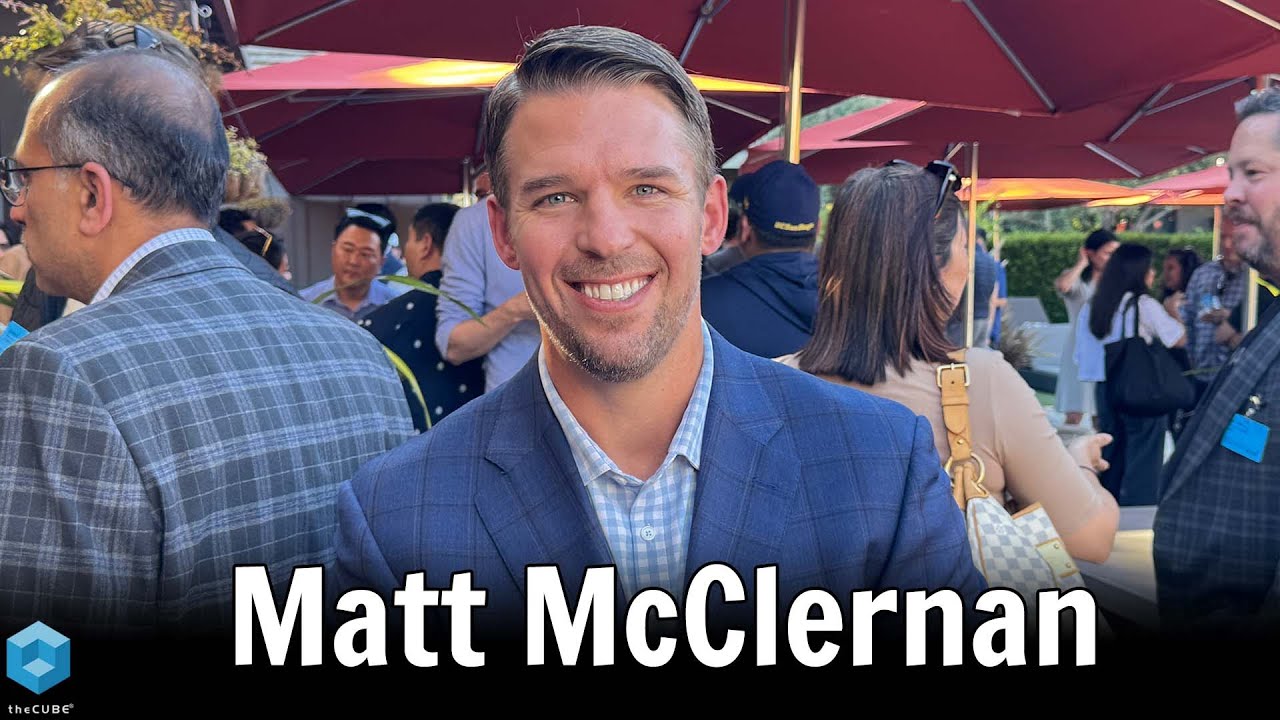
Studios in New York City on the show floor of the stock exchange. All the actions happening
here in the East Coast is our access point. Of course, we've got Silicon
Valley and Palo Alto connecting tech and Wall Street together. Jack Morrison, CEO of Scythe
Robotics is here, part of the Citi Robotics Week
we're doing with AI leaders. Jack, welcome to theCUBE.
Did I get that right?
Jack Morrison
>> Yeah.
- Robotics. Okay, good. >> Thanks. - So Citi's doing
a big event, obviously thanks >> for coming by, dropping down.
Jack Morrison
>> Trades starting to kick off. A lot of options, volatility going on in this market this week. So Citi, obviously big bank
doing all kinds of deals, seeing that you've got
investors, you've got industry cohorts here, peers. What's going on in robotics right now? I know I want get into your solution, but Citi's got this big program. What's going on in the program up there?
Jack Morrison
>> I mean, there's a lot
happening in robotics nowadays. All the humanoids, I think folks see a lot about in the news,
raise a lot of funding rounds. And then, robots like what we
build at Scythe that are more utilitarian and solving real problems for folks out in the
world, from operations and maintenance like we do in
landscaping, to construction. Lots of cool stuff happening. >> So talk about your firm.
How long has it been around? When's the origination
story? What's going on?
Jack Morrison
>> Yeah, we started Scythe
Robotics out in Longmont, Colorado about seven years ago. So we're based just outside Boulder, beautiful country out there. Mission is to help humanity
take better care of all of our outdoor spaces. We want to bring zero
emission autonomous machines to help the people who are doing the work and the businesses that
care for our green space, to do it in a cleaner, more scalable way. So our product today
is called Scythe M.52. It's an autonomous electric
commercial lawnmower mower, think a lawn Roomba, but
a thousand pounds, four and a half feet wide, 30 kilowatt battery- >> So it's cutting a lot of grass. >> Cutting a lot of grass. We can cut 15
Jack Morrison
>> to 20 acres in a single
day on a single charge. >> Wow. Got my attention on that one. I've seen little robots on golf courses, like cleaning up the
driving range or whatever, but that's a pretty big device. It's an industrial piece. What's some of the tech involved and what's the efficiencies look like? I mean, how do you build this? Well, first take us through the product. >> Sure, yeah. So M.
Jack Morrison
>> 52 is a lot more like a self-driving car, frankly than a Roomba. So it's got eight cameras, a stereo pair in each cardinal
direction, so it can see in depth in 360 degrees. It's got GPS, an accelerometer, gyroscope, and it uses all of those sensors to navigate a large property,
think a large office, campus, park, school yard, and to do all the mowing while
the landscaping contractors who are out there get to go and do all of the rest
of the work that it takes to make a space pretty. >> Yeah, not all grass is like Manhattan where you've got the grid.
Jack Morrison
>> Not so much.
- Yeah, I just love about Manhattan. >> It's hard to get lost here,
but I mean, I know the city, but take me through the landscape. I mean, obviously you mentioned
the human is in the loop still, you still got a
crew, so it's not trivial to map out landscape. You've got obstructions, you've
got some things going on.
Jack Morrison
>> Yeah, we make it as easy
as possible. So the way M. 52 gets deployed into a
landscaping operation is today they've got crews of four to six guys who go out to a property. They take a handful of
mowers, a bunch of hand tools. You can basically replace all
of the larger mowers with M. 52 and then take one or
two guys off that crew, and shift them to another job site- >> So finishing work.
- ... >> so they can have more
work done. Yeah, exactly.
Jack Morrison
>> All of the finishing, edging, trimming, leaf blowing, trash pickup. They, when they get to a
new property, drive off the trailer, put the machine
into the grass, trace out, the first time they show up,
the boundary of a mobile area and then it records that
geofence, remembers it. So it's super easy
actually to get started, but they only have to
do it the first time. After that, they just show up and hit go basically, and
the machine takes off. >> Yeah, I mean, most people
think of like the big equipment >> as like the big tractors you sit on. Everyone sees their friend on
the big multi acre property with his John Deere or
whatever equipment he has, but the size is similar. A thousand pounds, so it's big. >> Yep. 52 inches wide.
Jack Morrison
>> So that's kind of the middle class of these commercial lawnmowers. They range from 48 to 72,
like those zero turns. Ours is a stand-on platform, so you can actually drive it manually. You can mow any of the
complicated areas yourself and let the autonomy handle
all the wide open space that takes a long time. >> And it's easy to take
mobile, trailer, no problem. >> Yep, just like any other mower.
Jack Morrison
>> Looks like any other mower. If you didn't know it was
autonomous, you could hop on and just start mowing with
a few clicks, basically. >> All right, so how's it going here at the >> investor conference? How's the financing? Give us a little stats on business model, where you guys are at, funding.
Jack Morrison
>> Yeah, so we've raised
through a series B that was led by Energy Impact Partners a couple of years ago here in New York. Great partners to have, we are deploying machines now in about 15 states across the country. We actually don't sell the
machines outright, we lease them to landscaping contractors. So we do a fixed monthly lease
that includes some amount of autonomous mowing acreage. That way our incentives are
aligned with our customers. We want them to get as much
mowing done, they want to get as much labor leverage as possible. So it kind of works out all around. >> What about the business model around residential versus
business, government? Is it mostly business and government, municipal kind of things?
Jack Morrison
>> Yeah, today about 95% of our work is commercial contractors. So they're privately
held businesses who do between a million and 800
million in annual gross revenues. We've got a handful of
municipalities that we work with who are great partners, but a
little slower on the uptake. Residential is the long tail, right? There's thousands and thousands of residential
contractors out there. We'll build a smaller
mower for them eventually, but we wanted to start
with the larger businesses who care for the large spaces. >> Okay. So I moved to
California, so I don't have this problem anymore. But back east, people do have good, and certainly Colorado where you live, there's a lot of landscape there. How much is the device? Let's just say I wanted
to buy one from my house, I had a couple of acres and
I've got a green big lawn. What would it cost?
Jack Morrison
>> Yeah, so we won't sell it. The thing about selling a
robot is you really, you need to drive that price into
the ground basically, and that makes it hard to do really advanced autonomy, right? Roombas are the cheapest, vacuums are the cheapest robots you can buy and most people still think- >> Still think they're too expensive.
- ...
Jack Morrison
>> they're too expensive.
Right, they're always- >> Too expensive for the average person.
Jack Morrison
>> Yes. Yep. Only they're B2B. >> So we sell, well, we lease
them to contractors today and it's cheaper than a human. >> So your go-to-market is >> through channels, from the contractors? >> Through the contractors.
We go direct with them.
Jack Morrison
>> We work with our contractor
partners to deploy the machines. They use them on dozens of
properties any given week, charge them at their depots. >> So the unit economics work for them, >> but not for the individual.
Jack Morrison
>> Right.
- It's not in your best-
Jack Morrison
>> Because they're getting
dozens of hours of mowing >> And you're a young company,
so it's not like you need >> to sell to individuals.
Jack Morrison
>> Right.
- No volume there.
Jack Morrison
>> We're not looking. There's actually 300, >> 000 commercial mowers
sold in the US every year. The mowers only last three years, and so they cycle out
really, really quickly. And so, we're really targeting
those 300,000 mowers. >> I was going to ask the
quality question failure. >> So three years they cycle out. That must be a big part
of the reliability, you said sustainability is a big message. Obviously you've got that. Quality-wise, what's the alternative? Can you compare and contrast that?
Jack Morrison
>> Yeah, so most of these
mowers last somewhere two to four years. One of the largest landscapers
out there I know cycles all of their mowers out every two years, because the maintenance
costs go through the roof. So we've designed M.52 to last five to eight years out in the field, last much longer, because
we don't sell them. We don't profit when they
break, we profit when they mow. And so, we invested really
heavily in making sure it was a very reliable machine. >> How's business going?
- It's good. Yeah, 15 states.
Jack Morrison
>> We just signed our 15th
state on last week. We got about a hundred
contractors using M.52 nowadays. Very exciting stuff. We're ramping up to hundreds
of machines out in the field this year and we want to take
it to thousands and beyond. >> How about the tech?
You mentioned it's like a >> Tesla, talk about some of the things. Computer vision. There's
an AI angle in here, computer vision, processors, let's get into the hood, so to speak. >> Yeah. All kind of Edge AI.
Jack Morrison
>> So we've got the eight high dynamic range cameras on the machine. It's doing semantic segmentation, so understanding what's
a tree, what's a person, doing depth perception
directly from those cameras. There's no LiDAR, no radar, we
use the cameras really well. And doing a whole bunch of
really cool stuff on the device to understand where it's safe to mow, where it shouldn't mow,
what's a tree versus a person. So we stop when a person
or a dog comes nearby, but we'll just drive
right around a tree, so that the operators can get
the most amount of work done. >> And we're not going to
obstruct. A big log is in the >> middle of the grass-
Jack Morrison
>> It'll just drive around it. >> So it'll see it.
- Yep. >> Do you guys use synthetic
data on training to know
Jack Morrison
>> where the tree is, or are you guys just...
Jack Morrison
>> We've collected a couple of hundred thousand labeled
images at this point of all of the areas that we operate in. We've been deploying machines now for six years. We have
the largest collection. >> So you have your own data set?
Jack Morrison
>> We do, yep. And growing. >> We've been collecting and labeling data, because that's really our
advantage is understanding these worlds, the world off-road,
where all the people operate and how things work out there. >> You know, it's interesting.
When you see changes like AI and robotics happening, a couple of things come back in the industry. And I think what's different
now is that things change with AI and data, because you have an
ecosystem with open source. The old classic business school, conventional wisdom is
first mover advantage. But that sometimes gets into
like, okay, what's your mode? What's your sustainable
competitive advantage? You what's happening in AI
is first mover advantage is a durable move, because the
data angle, I was just talking to another company in therapeutics, their device has
hardware-software integration, so they can bring in
synthesis from other people to inject in. That would have been another product. And so, AI brings this,
like you have the space and the modeling space,
literally the space to model. But if you get the data, say the raw data, not synthetic data, real tree data, like you know what a tree is. >> We know what trees look
like in Colorado versus Ohio
Jack Morrison
>> versus Florida, and they're different. And you got to understand that- >> You know what a garden bed
looks like, you know what >> edging looks like, you
know landscape contour. I'm sure people could find that, but once you get critical
mass of the data, do you guys see it the same way? Is it a tipping point of data?
Jack Morrison
>> Yeah, absolutely. Yeah. I see it as a flywheel that we get going. As we put more robots on more properties, we get more training data that helps us make better autonomy, a better hardware product, and ultimately that helps our customers to grow their business. And that's really the flywheel,
is we help them to grow by having better autonomy. That means they grow, they buy more robots and that feeds all back into itself. >> Yeah, I mean, I just
love the idea there. So take me through the
examples of some stories. Stories drive movements. This is kind of a movement,
you're in a cool area. One, it's fun. I love autonomous anything, especially machinery. What are some stories, share some stories of a customer situation or something that you've been involved in that was either weird, fun, successful, to give people a snapshot of kind of some of the things you're doing.
Jack Morrison
>> Yeah, I mean one of the really exciting things
about deploying machines to these real businesses across
the country is helping them to scale up and to grow. And we've had customers, they're able to bid their jobs at like 10% lower cost than they would without M. 52, which in a business
that only has about 8% operating margins to start
with is a huge deal for them. So one of our private equity
sponsored companies is doubling their use of robots
year over year, looking to potentially double
through this mowing season as they grow. And that's just really encouraging. They're acquiring
businesses every few months and one of their core metrics is how quickly can we put robots into a new company that we acquired? I think that's going to be the world. We've heard a lot of talk
about AI going into service businesses of all kinds. And disembodied AI, LLMs are very cool for any business to make
use of, but physical AI and actually be able to
automate the operations, the biggest cost center and the hardest part of these businesses, I think is just a huge opportunity. So it's encouraging to see some fast- growing business owners
really lean into that. >> So do you have one?
- I bring a few home every weekend. >> The benefit of being-
- Exactly.
Jack Morrison
>> I live on 10 acres
actually out in Colorado.
Jack Morrison
>> My wife's a horse trainer and
so I get to bring a few home. I set three up at once and I can do all of the mowing
in about an hour and a half. >> The best lawn of anyone
in the neighborhood, >> because you can take care of it faster. >> Exactly.
- Most lawns go to hell in a hand basket, >> because they don't mow it.
Jack Morrison
>> Exactly. And that's kind of my impetus
Jack Morrison
>> for starting Scythe back
seven, eight years ago, was I didn't spend nearly enough time. I didn't get to mowing fast enough. My wife wasn't pleased by it and I thought there's got to
be a better way than me going and sitting out on the
tractor for hours at a time. >> Yeah, big properties.
That's kind of tedious. I got to ask you on the hardware side, is it durable in the sense of reliability? Do they have a swappable program? If I'm going to do a lot
of jobs, my fear would be disruptions to operations. >> Oh, absolutely. And
that's a huge problem
Jack Morrison
>> for the gas mowers today. They break all the time. Belts, pulleys, hydraulic
lines, fuel lines, they fall apart constantly. So one of the things
is because it's an EV, it's got about a 10th of the
moving parts of a normal gas. Same with gas cars versus EVs, way fewer moving parts means
way less stuff to break. We've also reliability tested
the hell out of the thing. So we've got a bump track
in our office in Colorado. We've tested it to 5,000
hours of mowing use with no failures on it, but
if the worst does happen and something breaks on it, because we're leasing the machines, we're really leasing the service of M. 52 and we will endeavor
to swap that machine out as quickly as possible. >> Does the customer have
to carry two as a backup >> or they usually go with one?
Jack Morrison
>> For folks who have
multiple machines on site, we'll usually leave a spare robot there. They don't have to bring it
with them on the trailer, because it almost never
breaks, but if they've got five or 10 of them, we'll
leave one at their depot- >> Try back at the other
one, get the backup >> unit.
- ...
Jack Morrison
>> sit in the corner. They
don't pay for the backup, we swap it out and that way we can go and fix it when we're ready. >> So basically try to make them as back on track if something happens. >> Exactly. We only get
paid if they're mowing,
Jack Morrison
>> and so that's everything
about the company is set up to help landscapers get more out. >> It's like cloud computing for mowing.
Jack Morrison
>> Yeah, exactly.
- Buy it with a drink. Buy it the slice. >> It's usage-based pricing.
Jack Morrison
>> We want to be not only in our mission, >> but in how we make money
aligned with our customers. >> It's good for the economy. I mean, good for the energy side of it. Moving parts, reliability,
checks all the boxes. Talk about the go-to-market. What's some of the KPIs you guys track? Obviously the go-to-market's
through the customers that have multiple jobs,
you get paid by the mowing. More mowing, more money. Do you guys look at like a
SaaS platform like, "Hey, another blade of grass growing?" I mean, I'm
not, that's over-the-top. >> Yep. Yeah, we track acres mowed,
Jack Morrison
>> autonomously acres mowed, manually. Looking at that ratio of how much our customers
are mowing manually, because it's a great manual mower as well. That's the thing, it's not just a robot. It doesn't look like a Mars rover. You can actually hop on
it and mow really quickly. But of course, we want folks
to be using the autonomy more and more, because that's
how they get leverage. Yeah. >> And human creativity
can work on the tasks that need their expertise,
not the mundane, put the headphones on and walk on a straight line kind of thing. >> Yep. The nice thing actually about M.
Jack Morrison
>> 52 is that it is so quiet,
because it's electric. You can put AirPods in and
mow listening to a podcast or music, whereas on a gas
lawnmower you need full- on ear protection. >> On the operator side, sounds
like it's a dream scenario. What's been the feedback from some of the customers? How many
customers do you have? >> Yeah, we've got about
50 customers deployed out
Jack Morrison
>> in the field today. It's been very positive. They really like both how quiet
it is, how reliable it is, our customer support. It's a brand new product and so sometimes they have to call in, and ask how to do something, and we've invested in
building a great team who can support customers. And then, the autonomy
is kind of magic to them. They see the thing, they
hit go and walk away, and can come back and
have it just be done, and have the grasp be shorter again. >> How do you guys think about
the connectivity from the device back to the
branch through the cloud?
Jack Morrison
>> Yeah, so we've got dual
LTE modems on the machine, so always has an uplink,
multiple sims, so that- >> Do you get ?
Jack Morrison
>> We get all the data. We try
and not upload all that much. >> A lot of it's really
happening on the device, but we do record a lot of video. We get training data out of that. Any interventions that have to happen, where the machine gets confused and asks for help from our
team on the remote side. We capture that imagery and upload it, so we can
get that flywheel going. >> Get that QA, get the product better.
Jack Morrison
>> Exactly.
- Great stuff. Last minute. >> Just put a plug in for
what you're working on. >> What's your focus right now?
What are you optimizing for? Obviously more customers, expansion. What are some of your goals?
Jack Morrison
>> Yeah, we're scaling M.52 production, and so we're looking to get a few hundred machines out there. Anyone who's got a commercial
landscaping contractor they work with who would like to
electrify their operations, make it much quieter,
we'd love to talk to them. >> Cool. Well, thanks for coming >> by theCUBE on the Citi event.
Jack Morrison
>> Awesome. Thanks for having me, John. >> Appreciate it. Okay. I'm
John Furrier here at theCUBE. >> We're at the NYSE, the Citi
Robotics Week coverage. Of course, the AI leaders
here. Thanks for watching.