Gautam Narang, Chief Executive Officer and Co-Founder of Gatik, participates in an insightful discussion on advancements in autonomous trucking technology. This event, recorded at the New York Stock Exchange CUBE studios in New York, is part of theCUBE’s Robotics AI Leader series, exploring cutting-edge developments in AI and robotics with industry leaders.
In the video, Narang explains Gatik's pioneering efforts in automating the regional logistics network to address significant challenges in the commercial trucking industry. Appearing alongside John Furrier, Co-Founder and Co-Chief Executive Officer of SiliconANGLE Media, the discussion examines Gatik's strategic milestones, such as their recent expansion with 50 trucks in partnership with Loblaws in Canada—a key step in the commercialization of autonomous vehicles.
Viewers gain insights into why Gatik focuses on mid-mile logistics and the benefits of addressing known routes with fewer variables. Narang highlights that scaling autonomous fleets involves strategic partnerships with technology innovators such as NVIDIA for simulation and data augmentation, as well as meeting stringent safety standards. Narang emphasizes Gatik's commitment to innovative technological solutions and partnerships with industry giants such as Microsoft and NVIDIA, positioning the company for scalable growth and operational success.
Forgot Password
Almost there!
We just sent you a verification email. Please verify your account to gain access to
theCUBE + NYSE Wired: Physical AI & Robotics Leaders. If you don’t think you received an email check your
spam folder.
Sign in to theCUBE + NYSE Wired: Physical AI & Robotics Leaders.
In order to sign in, enter the email address you used to registered for the event. Once completed, you will receive an email with a verification link. Open this link to automatically sign into the site.
Register For theCUBE + NYSE Wired: Physical AI & Robotics Leaders
Please fill out the information below. You will recieve an email with a verification link confirming your registration. Click the link to automatically sign into the site.
You’re almost there!
We just sent you a verification email. Please click the verification button in the email. Once your email address is verified, you will have full access to all event content for theCUBE + NYSE Wired: Physical AI & Robotics Leaders.
I want my badge and interests to be visible to all attendees.
Checking this box will display your presense on the attendees list, view your profile and allow other attendees to contact you via 1-1 chat. Read the Privacy Policy. At any time, you can choose to disable this preference.
Select your Interests!
add
Upload your photo
Uploading..
OR
Connect via Twitter
Connect via Linkedin
EDIT PASSWORD
Share
Forgot Password
Almost there!
We just sent you a verification email. Please verify your account to gain access to
theCUBE + NYSE Wired: Physical AI & Robotics Leaders. If you don’t think you received an email check your
spam folder.
Sign in to theCUBE + NYSE Wired: Physical AI & Robotics Leaders.
In order to sign in, enter the email address you used to registered for the event. Once completed, you will receive an email with a verification link. Open this link to automatically sign into the site.
Sign in to gain access to theCUBE + NYSE Wired: Physical AI & Robotics Leaders
Please sign in with LinkedIn to continue to theCUBE + NYSE Wired: Physical AI & Robotics Leaders. Signing in with LinkedIn ensures a professional environment.
Are you sure you want to remove access rights for this user?
Details
Manage Access
email address
Community Invitation
Gautam Narang, Gatik
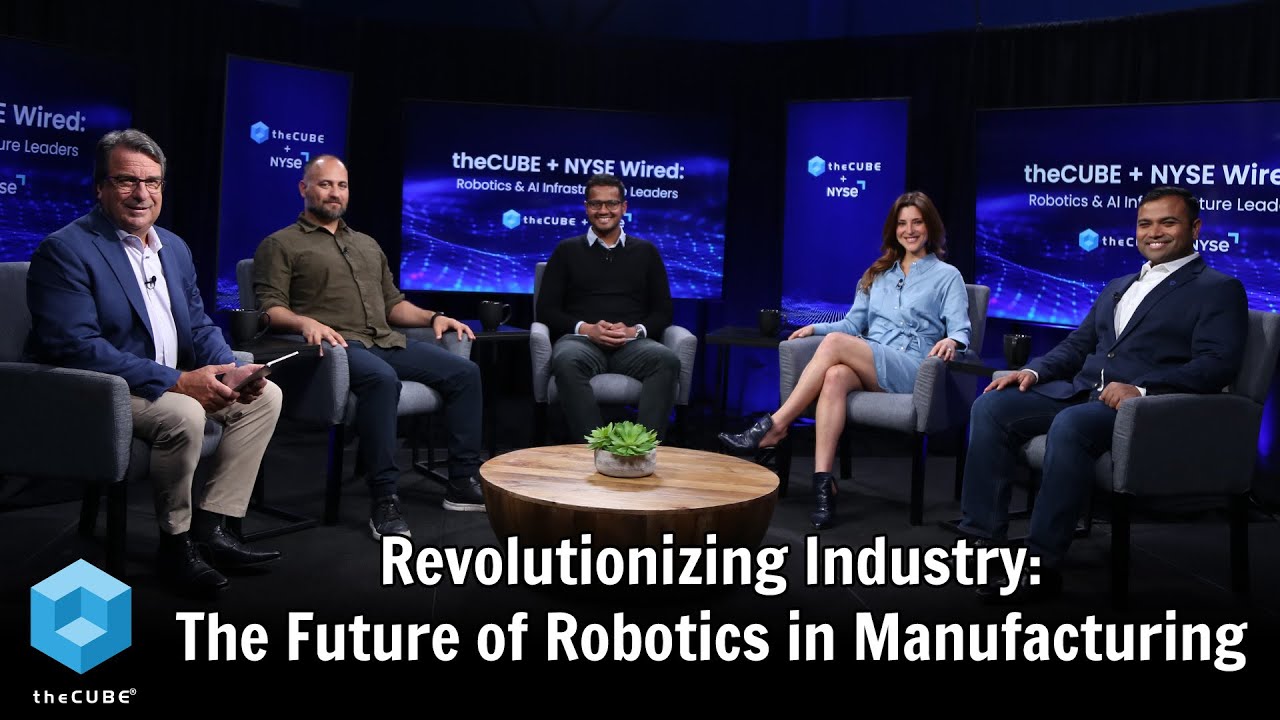
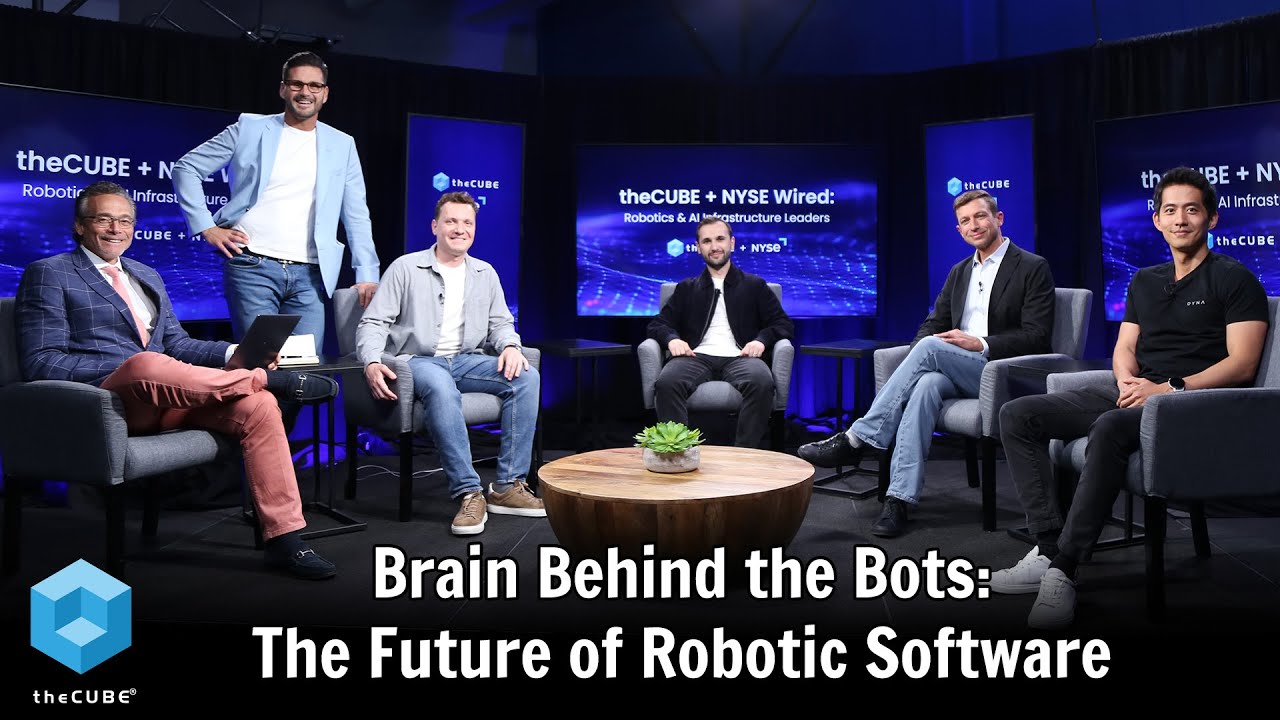
In a revealing panel discussion, industry leaders gather at theCUBE’s Palo Alto studios to explore the transformative world of robotics and AI infrastructure. This session, part of the NYSE Wired event, offers rich insights into current trends, challenges and future prospects of AI infrastructure on a global scale.
Featured experts include Shehram Jamal of NVIDIA, Kevin Cochrane of Vultr, Joseph S. Spence of NativelyAI, and Andy Hock of Cerebras Systems. John Furrier of SiliconANGLE Media moderates the discussion, which delves into the interplay between global infrastructure upgrades and the burgeoning robotics and AI sector.
Panelists explore the phased approach in deploying AI infrastructure, highlighting significant shifts and emerging trends. The dialogue covers the cultural and geographical implications as AI technologies permeate diverse markets and the role of sovereign AI strategies. As noted by the panelists, countries worldwide race to develop AI capabilities to remain competitive, focusing on integrating culture-specific innovations and expanding their talent pool.
Jamal and Hock emphasize the crucial need for substantial advancements in AI compute capabilities and collaborative innovation to fuel growth. Cochrane highlights the importance of broadening access to AI infrastructure to foster innovation globally. Spence addresses the strategic significance of AI as a public good and its potential to reshape economic landscapes. As AI technologies continue to evolve, their potential to proactively address economic, social and technological challenges cannot be overstated.
Gautam Narang, Chief Executive Officer and Co-Founder of Gatik, participates in an insightful discussion on advancements in autonomous trucking technology. This event, recorded at the New York Stock Exchange CUBE studios in New York, is part of theCUBE’s Robotics AI Leader series, exploring cutting-edge developments in AI and robotics with industry leaders.
In the video, Narang explains Gatik's pioneering efforts in automating the regional logistics network to address significant challenges in the commercial trucking industry. Appearing alongside John ...Read more
exploreKeep Exploring
What does Gatik do and what recent developments have they announced?add
What significant developments occurred between 2020 and 2023 regarding the operations involving Loblaws and Gatik?add
What is the role of simulation and data in the partnership between Gatik and NVIDIA?add
What factors contribute to the successful long-term partnership and expansion of the solution being developed for Loblaws?add
What are the priorities and commitments for scaling operations in the upcoming years?add
>> Welcome back everyone. I'm John Furrier, host of theCUBE. We are here in our NYSE CUBE studios. Of course, we have our studios in Palo Alto connecting tech and money, Silicon Valley and Wall Street. As technology goes mainstream, it's part of our Robotics AI leader series where we interview the top people who are making it happen. Of course, here in New York, it's the week of our AI Factory series kickoff. Nice tie in here. Gautam Narang is here, CEO, Co-Founder of Gatik, amazing company with news as well. Gautam, great to see you. Thanks for coming in.
Gautam Narang
>> For sure. Thanks so much for having me, John.
John Furrier
>> A little monologue there. Robotics and AI lead is one of our most popular series with the NYSE Wired programming community. We're also kicking off our AI factories this week, we're just putting that out. That's going to be another continuing hit. You hit both, and so I want to get into what you're doing because you have an amazing story. You're commercially successful with autonomous driving with trucks. Obviously a great market, it's easy to go trucking for other reasons. Explain what you guys do and talk about the news. I think this is a real illustration of the momentum, the commercialization, and the proof points people have been waiting for.
Gautam Narang
>> Sure. At Gatik, we automate regional logistics network. When we started the company, the idea was not to develop technology for technology's sake, but from day one, we really wanted to, one, commercialize. Second, really scale this technology and get to the point of driver out in a faster timeline in a much safer way. Based on that, we felt that B2B logistics or automating recent networks was the right starting point because it's a much more constrained problem, let's say compared to a robo-taxi application. And over the last eight years in our journey, Gatik has hit a lot of industry-first milestones. These are technical milestones, commercial milestones, and you're right, this morning we announced an expansion deal with one of our early commercial partners, Loblaws, which is the largest retailer in Canada. This deal builds on all the, I would say industry-first milestones that we have hit with Loblaws. We have been doing operations with them since 2020. And in 2022, Loblaws and Gatik became the first few companies to really initiate driver-out commercial operations in Ontario, Canada. And today, we are announcing that we have signed a 50 truck deal. This is five years plus, and the idea here is to automate Loblaws recent logistics network in the Greater Toronto Area, so we'll be serving over 300 retail stores across different diners within Loblaws, and this will be our trucks moving goods from two of their distribution centers and serving Loblaws end customer.
John Furrier
>> Autonomous vehicles is really all the rage. Everyone sees Waymo, which is only an L2 retrofit, L4s being built from the ground up. We're starting to see those. But trucking, it's a vehicle. It's the most lucrative now because there's a pain point.
Gautam Narang
>> Sure.
John Furrier
>> Can you explain why that's the key market for you guys? It's a supply chains involved. It's quantifiable, I imagine. Why has trucking been viewed as the first low hanging fruit? I mean, it's not low hanging, it's difficult.
Gautam Narang
>> I think I'll start with what problem we are trying to solve for our customers. Everything is driven by end consumer expectation. You and I as end consumers are very demanding, and our expectation is if I place an order, I want to be able to get that order as soon as possible, as cheap as possible, and then on top of that, I want the best experience possible. But then the reality is all the grocers, retailers, distributors, they're struggling with extreme driver shortage, right? Today, the number is over 100,000 driving roles that are needed, and that's where we come in. We believe, and our customers believe that automation is the only long-term viable solution. We are trying to basically help them move goods between their distribution centers and retail stores more frequently, but without the additional cost. It's very important to do that at a commercial scale that will move the needle for the customers, and trucking is the right starting point when it comes to that.
John Furrier
>> Yeah, you mentioned shortage of drivers.
Gautam Narang
>> Yes.
John Furrier
>> Okay, so that's an issue. Okay, got that. But also, I read a stat, I forget where it was from, I'll try to find it and put it in the blog, but it was saying that drivers, human error is a lot of cause of safety.
Gautam Narang
>> Yes.
John Furrier
>> And they were pointing out that actually, autonomous trucking is safer.
Gautam Narang
>> Yes.
John Furrier
>> Counterintuitive, and if the average person, well, the human in the loop, everyone talks about that, that dynamic because that factors in probably to the cost calculation.
Gautam Narang
>> Yeah.
John Furrier
>> I'm sure there's data on this. What's the reality?
Gautam Narang
>> Yeah, no, great question. The way we have designed the technology and what we have focused on is driver out operations without obviously compromising on safety. That's why when it comes to the sensor selection process and how we have designed the platform, how we have designed our core stack, and how we do operations has been all done with the safety in mind. I'll also say that the use case that we have chosen, which is moving goods over shorter distances, which is up to 300 miles, we have the additional benefit of optimizing for safety because a bag of potatoes won't care or won't complain if you take a slightly longer but safer and easier route to get from point A to point B. But when it comes to the technology, our platform is designed with the philosophy of not having any single point of failure. Everything from our perception suite, all the way down to the compute that we use, our drive-by-wire system. Everything has built-in redundancies. There's no single point of failure. Every component that we use is automotive-grade, has been designed in close partnership with our OEM and Tier 1 partner system.
John Furrier
>> Well, it's a great milestone. I think, like I said on my open, this highlights commercialization, which has been one of the complaints in AV, in this case, autonomous trucking because they're like, "Where's the value?" You're actually delivering it. Talk about what it takes to get there. Because when people see it, they go, "Oh wow, it's cool. There's no driver." It works, it's safe. But there's a lot that goes into it. I know NVIDIA's involved, a lot of people are involved. I'm imagining that you've got this AI factory, there's a lot of simulations. It's a tech problem so there's... So big time check here.
Gautam Narang
>> For sure. Maybe I'll start with the current operations and basically how we use data in our partnership with NVIDIA, with ISUZU that enables that commercial scale for us. Today, we are live across four major markets in the US and then in Ontario as well. And whenever we expand to a new market, which we start with the safety validation, proving our current technology has been validated for this new network and new market. That's where Gatik Arena, our simulation platform comes into play. This is the platform that we have designed in very close partnership with NVIDIA, and the whole idea here is to augment the real world testing miles with the highly accurate synthetic data with very high fidelity across all the different sensor modalities that we use. So simply said, we are able to augment thousands of miles of real world driving data to millions of miles of highly accurate synthetic data using the power of simulation and in very close partnership with NVIDIA as well.
John Furrier
>> Yeah, and that's also another example, not to get in the weeds technically, but the concept of physical AI, which is blending first party relationships between a physical thing, a truck and digital and large scale computation and software. We're seeing things like Omniverse with NVIDIA kicking ass there, but that's simulation. One of the things that we're watching, I'd love to get your thoughts on this, is that, and by the way, NVIDIA is opening up all that simulation data and synthetic data to the ecosystem, but they're also saying, we want real world information to come in. You're now getting both, you're using synthetic data to help on the simulation, but also, you're getting real telemetry in. What's your vision and reaction to that, and how are you thinking about that? Because now the real data supplements the synthetic, what's the net net on that?
Gautam Narang
>> You're right. I would say both real world data and synthetic data is needed to enable physical AI and making sure that the applications that we are focused on, which is highly safety critical. You have to have a mix of both, and you're right. Today, we are running the largest autonomous trucking fleet in North America, and with today's announcement, we're basically expanding on that fleet. We have a lot of real world data that's coming in, and yes, there is an ecosystem of strategic partners that we're working with that is helping us basically augment that data and make it useful so that frankly we can continue scaling this to newer markets and newer networks as well. But maybe one thing to highlight here is there is no proxy for real world data that is highly needed to deliver on safe level for operations.
John Furrier
>> I have to ask you about the customer, because again, I love the milestone because it's commercial success, this real dollar contract in this, it's not a POC.
Gautam Narang
>> Yes.
John Furrier
>> It's not like it's like, "Hey, let's do this test. Gatik, we'll just send 50 trucks out there and see what happens."
I imagine there's a lot of thought and process went into the procurement side, the vetting. Take us through what was that like and what was the process? What were some of the objections, how did you handle them? Take us through that whole deal because I think this is going to be an illustration for a template, if you will, for others.
Gautam Narang
>> I would say it takes a long time to build trust, especially for the kind of solution that we are building. We have been working with Loblaws since 2019, and initially we started out with the five trucks and there were certain KPIs and milestones that both the companies aligned on. And we have been successful in doing that. And based on us delivering the driver-out milestone, making sure that we enhance their existing SLAs, right? At the end of the day, our customers care about making sure that the goods are moving as expected, on-time pickup, on-time, delivery, weekly are available, and uptime is in the late 90%. Those are the kind of things that we're able to deliver against, and based on us meeting those high KPIs and delivering on those milestones, yes, we are now expanding and the plan is to rule this out across Loblaws supply chain. Loblaws is also joining us as a strategic investor in the company, so that's basically the trajectory that we have with some of our other customers as well.
John Furrier
>> Yeah, I'm just sitting here smiling because it's like imagine, and I want to ask you this question because I want to know how you felt when you see the retail store. Here comes the truck.
Gautam Narang
>> Yes.
John Furrier
>> No driver. Okay. I mean, it's a freaky cool thing.
Gautam Narang
>> Yes.
John Furrier
>> I mean, it's like whoa.
Gautam Narang
>> Yes.
John Furrier
>> I mean, it's like, "Hey, it's working, it's happening." What's it like? And what's been the reaction?
Gautam Narang
>> Well, there are a lot of head turns that we capture in our sensors, in our cameras. Folks are very intrigued and very curious. We have had people that somewhat try to capture, get their phones out, hand out of the window and try to shoot a video of the trucks without anyone behind the steering wheel, I think, but the reality is it gets normal very quickly. Folks are-
John Furrier
>> Reliable, yeah, here comes the truck.
Gautam Narang
>> Exactly.
John Furrier
>> Yeah, thank you.
Gautam Narang
>> Exactly.
John Furrier
>> The truck.
Gautam Narang
>> That's your thing-
John Furrier
>> Is there a name for the truck?
Gautam Narang
>> They do have names actually, yeah.
John Furrier
>> No, but this is the new reality, and I think this is where we're going to see AI really shine with robotics because, again, it's a physical thing. We all know what a truck is when you see truck drivers on the road, sometimes they're swerving or whatever, but that's an obvious shift moment.
Gautam Narang
>> For sure, yes.
John Furrier
>> Okay. So how do you guys want to take this going forward? What's the plan? So you can, commercial success is great.
Gautam Narang
>> Yes.
John Furrier
>> Is every client the same? Is there economies of scale and your trajectory? Can you take us through the business strategy?
Gautam Narang
>> I think for us this year, and next, it's all about scaling our fleet. Not just number of trucks deployed, but also number of driverless trucks that we have on the road. Scaling our freight-only operations in freight-only our term for driverless operation across multiple markets, multiple customers and multiple networks is what we are focused on. But it's very important to do it in a safe way. One of the commitments that Gatik made late last year is we'll only commence a driver-out operations and scale our driver-out operations once we have done a very rigorous independent safety assessment. This is the commitment that we made publicly. This is to build our trust and confidence across all the different stakeholders. I'm happy to say that we have been making really good progress against that milestone, and it sets a very nice foundation for all our scaling plans. We're trying to keep things simple, keep our heads down and get more trucks on the road and start pulling drivers out across-
John Furrier
>> Got to be pragmatic. Two things I want to highlight and I get your thoughts on because I think it's clear strategy, shorter distances was a key decision.
Gautam Narang
>> Yes.
John Furrier
>> And the backend technology, I say NOC for lack of a better, used to call network operating centers. Explain the strategy on the short distance, because that was at a technical issue? Is that more about the roads and understanding that? And then you get to the back office, what are you doing behind the scenes?
Gautam Narang
>> It's more of a thesis. The reason we decided to focus on the mid-mile segment is we wanted to constrain the problem as much as we could while unlocking real value for the customers. Our way of doing that is focusing on known pickup locations and known drop-off location. One of the examples and one of the networks that we are serving today is a total of 190 locations where we pick up products from three distribution centers and we are making deliveries to 187 retail stores. And today, we are serving about 35 trucks across that network. The benefit of this approach and this use case is it's more constrained, right? We have finite set of routes that we have to solve for and perfect autonomy across this network as opposed to, let's say a robot taxi application that is somewhat unbounded, right? You have to boil the ocean.
John Furrier
>> You got to do a lot more.
Gautam Narang
>> Exactly.
John Furrier
>> Crawling of data.
Gautam Narang
>> Yeah.
John Furrier
>> Synthesis around what roads look like.
Gautam Narang
>> At the end of the day, it's a data problem, which is our use case requires exponentially less data compared to a problem that is unbounded where you're trying to the ocean. And the way the infrastructure is built up is everything from ingesting all the real-world data that our trucks are collecting. How do we have the data ops pipeline, MLOps pipeline so that we can make that data available on our cloud, on our network, clean our AI models, optimize those models and deploy those models across different trucks that are running across different sites. That whole infrastructure has been designed and optimized in very close partnership with Microsoft. They been our cloud partner for the last many years. They're our strategic partner as well. And we have a very scalable infrastructure that allows us to train our AI models and deploy that on the cloud as well.
John Furrier
>> Talk about the, I'm going to put my investor hat since we're at Wall Street, the TAM, how you see the market, and then what you need to have happen on the tech side because we're seeing announcements every day. The models are getting better, the technology's getting better, that flywheel's kicking in. TAM, opportunity, the total addressable market for you, your approach there, and then what's going on that you need to see come in from your technology partners like the NVIDIAs of the world.
Gautam Narang
>> In terms of TAM, the middle mile segment in North America alone is over $300 billion. This is the regional transportation market, huge. It's a subset of trillion plus trucking market, but it's a giant subset. And obviously, we're happy being the only company that is going after this use case so in terms of-
John Furrier
>> Wide open basically.
Gautam Narang
>> Exactly, and there's opportunity for-
John Furrier
>> Barriers to entry are what? The work to do.
Gautam Narang
>> Well-
John Furrier
>> I mean, it's a boatload of work.
Gautam Narang
>> Yeah, exactly. But for us, we spent a lot of time with the customers, so we decided to do things differently in a way that even before the company was incorporated, we were having customer meetings, try to identify what is the right starting point. That's the validation that we have for our business. We decided not to follow the herd, in many ways go against the grain and not focus on, let's say, longer trucking or last mile or even robo-taxi. We felt that this 300 billion plus market with the right constraint, with the right regulatory approvals, we felt that was the right starting.
John Furrier
>> I mean, from a data standpoint, most of the big distribution organizations on the supply chain have hub and spoke-
Gautam Narang
>> Exactly....
John Furrier
>> architecture distribution centers, a few of them, or a handful that serve many nodes. That's a computer science problem.
Gautam Narang
>> Exactly.
John Furrier
>> Nodes, hub and spoke. Sounds like an architecture.
Gautam Narang
>> That's how we work with our customers, right? Our customers share a lot of proprietary data when it comes to network data, operational data, sales data. We ingest that, match that with our autonomy capabilities, put that into our network design and optimization platform. And that platform spits out networks and routes that are optimized for meeting the customer requirement while also optimizing for faster driver out timelines and all this with the right backdrop of inherently safe routes.
John Furrier
>> Okay. R&D's been a big topic in the AI space, robotics, R&D's going on all the time. If you look at the AI factory, the physical AI world, there's a lot of simulation like we were talking about earlier. What R&D are you guys doing, and where do the big XPU players, the GPU players, large scale systems play into it? Is it the simulation? Is it the Omniverses of the world? What are some of the breakthrough variables for you on the R&D side?
Gautam Narang
>> I would say core buckets are designing the capabilities that will enable that autonomous operations in urban and highway environments, right? That's where all the cloud infrastructure that we have, where we train new capabilities. Once we have the right level of performance, we deploy our AI models on the trucks. A lot of R&D goes towards designing these models, designing the algorithms that will enable the truck to do safe operations across urban highway environments. And then on top of that, obviously with scale in mind, the focus is on sustainable growth and sustainable scaling. You have to scale in a very cost-efficient manner. That's where the simulation platform comes in, right? Simulation allows us to not just augment real world data, but also expedite the safety validation efforts when we expand to a new network so that we can keep the driver out timelines very short, but at the same time use our simulation platform, this is Gatik Arena, to expedite those timelines.
John Furrier
>> Okay. Let's talk a final point here before we wrap is regulation.
Gautam Narang
>> Sure.
John Furrier
>> Take us through where that, is it a headwind? Is it a tailwind for you guys? Obviously, Canada different than the US.
Gautam Narang
>> Yes.
John Furrier
>> Is it just bureaucracy? What's holding it back? Or is it moving forward?
Gautam Narang
>> From a regulatory standpoint, we're good. Our focus is intrastate. Today, the autonomous vehicle framework is at the state level. There are 28 states where we can deploy our trucks, pull the driver out, and commercialize a service. And all our scaling plans for the next five years are across the states that are highly favorable when it comes to AV regulations. That said, regulation current administration is very favorable and very open towards having a federal level AV framework. And we work very closely with the current-
John Furrier
>> And you win your bet on the short distance, make it very state attractive.
Gautam Narang
>> Exactly. So we don't have to worry about crossing state boundaries.
John Furrier
>> For now.
Gautam Narang
>> For now, exactly. We have aspirations to expand to the rest of the-
John Furrier
>> Roll with the tide.
Gautam Narang
>> Exactly.
John Furrier
>> Just rising tide.
Gautam Narang
>> Exactly.
John Furrier
>> You're not constrained. You're not constrained in the US, you can go ask some states now.
Gautam Narang
>> Exactly.
John Furrier
>> I mean, you got to go growth plan, so you can't get everything out of the gate.
Gautam Narang
>> Of course, yeah. But we feel a federal level AV regulation framework would be rolled out in the current administration. We are hopeful, and we're working very closely with the administration.
John Furrier
>> If any sign from the crypto side that they want regulated and they want to get these policies in places, frameworks, so the regulators could do their job.
Gautam Narang
>> Absolutely. And that's why it's very important to inform and educate what to expect from these trucks and this-
John Furrier
>> How do you enforce?
Gautam Narang
>> Exactly.
John Furrier
>> It's just simple stuff.
Gautam Narang
>> Yeah.
John Furrier
>> What are the rules of the road?
Gautam Narang
>> Yeah.
John Furrier
>> All right, great to have you on, put a plug in for what you're working on. You guys hire, you're obviously going to go to market. Give us what you're focused on and what your goals are.
Gautam Narang
>> For sure. We are aggressively hiring. The company is in growth and expansion mode, so scaling our core engineering team, but also expanding our operations team as well. We have signed contracts across customers that have giant fleets, and the focus is on, as I mentioned, getting more trucks on the road across multiple states and multiple sites.
John Furrier
>> And real quick, just I'm curious, I know this might be interesting to folks too, what's the payback economic, just order of magnitude, can you scope that? You don't have to give specifics on customers, but just generally, what's the scope on ROI payback?
Gautam Narang
>> For sure. We provide autonomous transportation as a service where each of our customers make a five-year commitment, and ROI for them is within the first year. And for us, we are very healthy margins, very exciting margins over that five-year window. One thing to note is we're asset and operationally light. We don't own the trucks, we don't own the AV equipment. We are partners that are helping us with the leasing, servicing, and maintenance. That allows us to-
John Furrier
>> You're a software data company.
Gautam Narang
>> Exactly. Yeah.
John Furrier
>> Happy to have trucks that you lease.
Gautam Narang
>> Yeah. That's the right way to think about that, yes.
John Furrier
>> Great venture. Thanks for coming on theCUBE, appreciate it. I know you got to catch a flight. I really appreciate you coming in.
Gautam Narang
>> John, thank you so much.
John Furrier
>> Great to meet you in person. Again, the robotics AI lead has also crosses over to our AI factories program. A great example of software and AI, physical AI, great example, getting leveraged into things we all know every day, like trucks, it's going to happen more and more. It's just the beginning. Of course, theCUBE's doing its part to bring that to you. I'm John Furrier, your host. Thanks for watching.


































 John Furrier