We just sent you a verification email. Please verify your account to gain access to
theCUBE + NYSE Wired: Physical AI & Robotics Leaders. If you don’t think you received an email check your
spam folder.
Sign in to theCUBE + NYSE Wired: Physical AI & Robotics Leaders.
In order to sign in, enter the email address you used to registered for the event. Once completed, you will receive an email with a verification link. Open this link to automatically sign into the site.
Register For theCUBE + NYSE Wired: Physical AI & Robotics Leaders
Please fill out the information below. You will recieve an email with a verification link confirming your registration. Click the link to automatically sign into the site.
You’re almost there!
We just sent you a verification email. Please click the verification button in the email. Once your email address is verified, you will have full access to all event content for theCUBE + NYSE Wired: Physical AI & Robotics Leaders.
I want my badge and interests to be visible to all attendees.
Checking this box will display your presense on the attendees list, view your profile and allow other attendees to contact you via 1-1 chat. Read the Privacy Policy. At any time, you can choose to disable this preference.
Select your Interests!
add
Upload your photo
Uploading..
OR
Connect via Twitter
Connect via Linkedin
EDIT PASSWORD
Share
Forgot Password
Almost there!
We just sent you a verification email. Please verify your account to gain access to
theCUBE + NYSE Wired: Physical AI & Robotics Leaders. If you don’t think you received an email check your
spam folder.
Sign in to theCUBE + NYSE Wired: Physical AI & Robotics Leaders.
In order to sign in, enter the email address you used to registered for the event. Once completed, you will receive an email with a verification link. Open this link to automatically sign into the site.
Sign in to gain access to theCUBE + NYSE Wired: Physical AI & Robotics Leaders
Please sign in with LinkedIn to continue to theCUBE + NYSE Wired: Physical AI & Robotics Leaders. Signing in with LinkedIn ensures a professional environment.
Sean Henry, Stord | theCUBE + NYSE Wired: Physical AI & Robotics
John Furrier
Co-Founder & Co-CEOSiliconANGLE Media, Inc.
Sean Henry
Founder & CEOStord
search
John Furrier
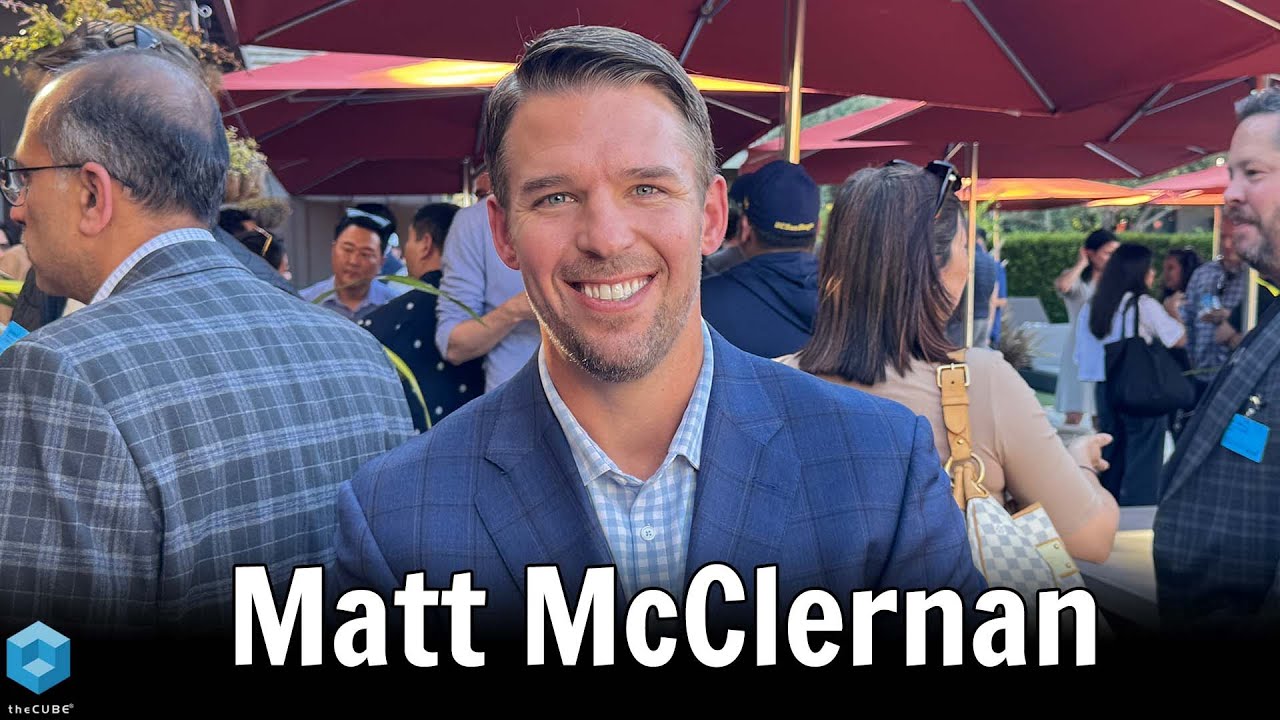
>> (INTRO)Hello, I'm John Furrier, host of theCUBE. We are here in theCUBE's NYSE Wired studio. Of course, we have our Palo Alto studio connecting Silicon Valley to Wall Street. Sean Henry's here, founder and CEO of Stord, fast-growing company with news of an acquisition. Timely interview, but also an example of the acceleration of AI technology injecting intelligence into infrastructure software and ultimately having an outcome. Sean, thanks for coming on theCUBE, appreciate it.
Sean Henry
>> John, thank you for having me.
John Furrier
>> All right, Stord, talk about the company and the M&A you just did. You're growing super fast. Set the table in the context. Talk about the deal.
Sean Henry
>> Yeah. So about a decade ago, I really looked out and realized that no one had built the infrastructure for what happens after we as consumers check out. You got great storefront software, great payments businesses, but everyone was left on their own to deliver that package to the consumer. Well, if you actually step back from that and look at why does Prime now control 36% of US e-commerce? Their product is delivery. They're delivering tomorrow for free with easy returns, and it costs them $5 or less, while your average merchant, 86+ percent, are not free deliveries. They're delivering in 5 to 6 days and it's costing them $12+. And so we built Stord to close that gap. And today, if we step back, we really view ourselves as the physical intelligence layer for commerce because we synthesize an end-to-end fulfillment network, all the physical infrastructure needed to compete with that level of delivery, with all the vertically integrated commerce software that actually goes to the cart and speaks to tens of millions of consumers a year as you're checking out online. With all the application of robotics and AI that helps drive that cost curve and that speed curve. And so today, as we keep getting larger and larger, we're doubling at scale. We support almost $20 billion of commerce a year. We deliver packages to over a fourth of U.S. households. That speed and cost comes from scale, pushing units closer to consumers. And so we've been fairly acquisitive. We're growing faster organically. But today we announced the acquisition of AMS Fulfillment, a large bicoastal fulfillment network doing over 10 million e-commerce orders a year. That'll just add more network infrastructure, more economies of scale, and more GMV of front end of commerce into our system, into our scale flywheel, and into our intelligence.
John Furrier
>> I like how you're thinking about scale. And this series that we're doing is the Physical AI and Robotics series. But if you take out robotics like humanoids, manufacturing, And I'm sure you have some robotics in there. Retail comes up because what physical AI means is robotics is the first use case, but physical world, the world we live in, we live, we shop, we interact. What you're doing is actually an example of physical experience. Okay? So that's key. How does that impact, your thinking around the market? You got Amazon out there, they've proven it. They can do that at scale. Scale is the game. And who are your customers? Who's engaging with you? Who are you serving? Take us through some of the value proposition details.
Sean Henry
>> Yeah. So Stord existed almost a decade before physical AI kind of became a term, but it's the perfect encapsulation of our business because we're transforming the physical world and what impacts all of us as consumers. Everyone we know is a customer of e-commerce and we all have that same experience of what the giants offer us versus what your average online merchant offers us. And so we're really transforming real-world operations, real-world experiences with technology. Now, if you take a step back, AI applies at all levels of our business. Physically, think of every decision that goes into that package and into that delivery. How do you plan labor? How do you plan demand? How do you place inventory? How do you do last-mile routing, returns planning, and more? All of those have gone from machine learning to AI-driven decisions. But then take a step back. How do we go all the way to the front end of the cart? And I think there's this interesting piece of agentic commerce right now where everyone's kind of looking around saying, I don't know if I'm really going to give my credit card over and let them shop and check out. But I would challenge in the next 5 years, will we as consumers go to the storefront often or will we interact with AI and say, find me the best t-shirt? And then it'll say, here's 3 options and you'll go straight to the checkout. Now, What is agentic commerce actually shopping based off? If you ask ChatGPT, Muse, other 8 to 10 of the 10 to 12 qualities are all about physical delivery, returns, promise, trust, not online listing and prices. So that's why transforming commerce, starting with the ground up of, well, e-commerce is really just the same as retail, but execution of how do you get it from online to that offline experience. That's what Stord exists to solve.
John Furrier
>> Take us through that example because we're all using ChatGPT, Claude. I'm a user of all of them. But let's take ChatGPT, for example. Hey, I want to buy a sport jacket. There's a sample sale going on. There's also retail. What's actually happening to the consumer and how do you change— take that experience and make me a customer of either the retail or just get the transaction done? Take us through that.
Sean Henry
>> Yeah. So think about that time when you get that ad from a brand and we serve some of the best brands in the world. We serve Procter & Gamble; Unilever, the Quinces, the Fanatics, the Seed Health, the True Classic T-shirts, just the fastest growing best e-commerce businesses who want that entire checkout through delivery to be the best in the world to win their customer and retain them. And so the divergence is before Stord, you see that ad, you click on it, you get all the way to the checkout, and then suddenly you see 5 to 6 days for $7 and you go, I wonder if I can find this over on Amazon. Our whole job is for you to say, no, I'm gonna buy this here directly from the merchant. It keeps the best economics for them. It gives them the customer data, but it also gives you the loyalty of now you're coming back. So they have the opportunity to upsell you, cross-sell you. So we manage that entire journey from the time you as a consumer start to see you're on the product page and it says, hey, John, order now, get it by Friday. That's Stord. You're in the checkout flow and you see those 3 shipping options, the protection, you click buy and now it says, hey, do you want to add one of these other SKUs to your box? That's all us powering that.
John Furrier
>> Youknow, I'm laughing because, you know, the hot little pejorative term is it's an AI wrapper. This is today's apps, e-commerce. If we were going to develop an app back in the day, be like, hey, let's aggregate all these stores and build a directory or an application. What we're basically doing is front-ending someone else's infrastructure. They still would have to then do everything. You're collapsing that, compressing that. Is that right?
Sean Henry
>> Exactly. So explain that. Thesis is that Amazon really started with the front end, kind of like you just said. It was this aggregation game. They believed, let's get all the SKUs in our marketplace. Well, over time, consumers went, well, there's Google, there's Shopify, I can find anything online. And the difference became the execution. And so Amazon by the 2010s moved to the back end. And so we kind of went the opposite and said, let's do the wrap around the back end. Let's transform this physical world and these operations and enable every brand to get fast, affordable, trusted deliveries and returns. And if we do that successfully, we're going to be able to go to the front end over time.
John Furrier
>> You kind of created a cloud-like experience for the merchants and brands while optimizing the experience.
Sean Henry
>> Perfectly said. We talked for a second before this about Jassy and cloud computing. And I studied his slides more than Amazon's early— dot-com's earliest days. Why? Because What software business used to have to do in the '90s and prior was manage CapEx and servers and racks and latency and scaling infrastructure. And the promise of the cloud for computing was just scale off of our optimized infrastructure with economies of scale and all these modular apps that help you consume it even better than ever. And that's what we're doing for
John Furrier
>> the—talk about the business now, because obviously a great formula. You've integrated, you've hyperconverged infrastructure with experience. And the value is great. Take us through the business. What are some of the metrics? Talk about the momentum. Obviously, acquisition gets more scale. I see that clearly. What is happening?
Sean Henry
>> Yeah. So over the last decade of building Stord, we've been growing rapidly and taking market share. Today we have over 5,000 employees across our network. We serve over 1,000, approaching 2,000 of today's leading merchants like some of the ones I mentioned, which is about $17 billion in front-end commerce. We deliver to over a fourth of US addresses every single year. Earlier this year, we announced a $250 million Series F, $3 billion valuation led by some of the best firms in the world, joined by Strike, Kleiner Perkins, Founders Fund, Lux, Baillie Gifford, Franklin Templeton, and more. And really, if we step back today, we're in this mass pursuit of scale. We'll end this year roughly $1 billion revenue, doubling every single year over the last few. As we keep looking out, what's exciting about our business, John, is we're actually growing faster at scale because it took so long to put together this value proposition of speed and cost and trust. And once you have it, it's a flywheel where the bigger you are, the better and faster and cheaper you are for the next customer.
John Furrier
>> Sean, talk about this because this is the AI era. It used to be the term was rarefied air. If you were at scale, only a few people would get in that altitude and then new things emerge. People can hit it faster. Talk about that moment when you hit that rarefied altitude. What happened? What do you see differently? What emerges as opportunity?
Sean Henry
>> Yeah, I think the main two things I see as an entrepreneur are leverage and talent. There's so much leverage in our system to deploy, whether innovation, robotics, just new businesses. We have new business units. We've launched a few new products this year alone when It took Stord as a business, let's say, the first 2 years to get to a million of revenue. We launch new products and they get to a million of revenue in 1 to 2 months. We launched a new product earlier this year that got to over 40 million of committed new contracts in its first 3 months of existence. And that's the beauty of leverage as well as talent density when we're pulling the best commerce entrepreneurs and builders in the world into our business. But really what I see is the opportunity for Stord from here. Why? Because a lot of investors are looking at Stord right now and kind of having that same reflection. There's a lot of fast growth in the market with AI, with LLMs, with training and data businesses and more. But there's this big question of quality of revenue. And if you got it so fast, could it go away so fast? And how sticky is it? And more. And I'm not here to challenge that. I think those are great businesses. But I think a lot of what we look out and say is we have this kind of very durable and compounding base that you can't really just spin up an end-to-end fulfillment network with AI tomorrow. It takes a lot.
John Furrier
>> You can't vibe-code that on the weekend.
Sean Henry
>> Exactly.
John Furrier
>> Talk about the customers because they're getting benefit from the scale too, because they're getting leverage because they don't have to invest and deal with fulfillment.
Sean Henry
>> That's right. I recently was talking to a brand that had been with us for about 5 years now. And in that 5 years, this is a great brand, but they're growing moderately. They're not gangbusters, let's say. Their cost per order with Stord over that time was down about 42%. Now, that's not a guarantee to every business,
John Furrier
>> butit's great margin.
Sean Henry
>> But it's incredible because we have higher margins and higher profits than when they started with us. Yet their costs are way lower. And that's the beauty of a system like Stord, that as we add more volume, the cost is actually going down for everyone.
John Furrier
>> Yeah, I think the system word is a very great word because when you're in this era, I think it's going to be documented when we look back. That the system game creates leverage. We all know that anyone in the platform business kind of gets that. But when you look at service business, it's linear scale. There's a crossover line with leverage. Talk about the operating leverage phenomenon that comes out of your integrated systems, data leverage Yeah, take us through that because I think this is going to be written up as one of the biggest growth drivers. We're seeing NVIDIA, they talk about systems. Everyone talks about systems architecture now, not just in nerd talk, but like in business.
Sean Henry
>> Yeah. So for me as a, as an entrepreneur, I kind of focused on this thought process with Stord of how do we take a massive but fragmented industry, kind of consolidate the value prop of like, what does the customer really want? But then build a model where as we get bigger, that value prop actually gets better. So it's self-reinforcing and that's what we're benefiting from now. There's this interesting trend going on right now of how do we transform real-world services businesses, accounting firms, logistics companies, anything you can imagine with AI. And you have this kind of myriad of different roll-ups starting to happen of applying AI to traditional businesses. What our investors have looked at and been mind-blown by is that while our organic business is actually growing faster and the beauty is inorganic actually makes our organic business grow even faster, The transformation we've had on these companies that can be 20 to 30 years old and let's say 4 to 5 times more profitable within the first few months of being on our technology and economies of scale is hard to replicate really anywhere in the market. And I think that's the beauty of technology plus a scale flywheel, plus the application of AI.
John Furrier
>> Great growth equation. Explain your growth strategy going forward. What's the plan? Organic, inorganic, continuing to balance those. What's the mix? What's the plan?
Sean Henry
>> Yeah, about 70% of our growth historically has been organic and we can look out and plan to continue that. Excuse me. As we think about the next decade ahead, we're still so far from the scale we want to be at. We'll end this year approaching 100 million packages a year. Amazon is far, far above that. And we think somewhere between that 300 to 500 million packages, we close that gap. And so I'm in the aggressive pursuit of getting there,
John Furrier
>> takesome territory. All right. Final question for you. As people are watching, one of the things we talk a lot about is, the rhetorical question that every board's making, every decision every line of business owner, not IT, but mostly business people at the C-suite are asking is, if I inject intelligence into my business, what do we need to focus on? How do we do it? What would be your answer to that question?
Sean Henry
>> Yeah, I'd say find the point of leverage and value for your customers. What does your customer care about? Because there's this idea that, well, I'm going to get rid of all my employees with AI. You won't find many companies that that's actually become true at. Yeah. But you will really find the application of can I make my quotes for my customer faster, my plans for them better, my customer service better, all these little things, or my actual full-stack value proposition. So to me, I always lead with customer obsession. And if I was going to apply AI in my business, which we are aggressively at scale, it's more about the customer than it is about us.
John Furrier
>> Yeah, and that's where the value is. Friction, take out friction. That's what you're talking about.
Sean Henry
>> There's so much value in just being easy to do business with. It's so overlooked that the more you use AI to decrease friction but also benefit the entire system. Again, all those examples of things that went from machine learning or spreadsheets in the earliest days of Stord to now dynamic AI, they're absolute benefits. But even just find those small customer value points.
John Furrier
>> Sean Henry, the founder and CEO of Stord. Again, a great example of the physical world with intelligence is about systems. It's about the efficiencies, about reducing frictions and making the system better with data. We're doing our part here on theCUBE. Thanks for watching.
Sean Henry, Stord | theCUBE + NYSE Wired: Physical AI & Robotics
search
John Furrier
>> (INTRO)Hello, I'm John Furrier, host of theCUBE. We are here in theCUBE's NYSE Wired studio. Of course, we have our Palo Alto studio connecting Silicon Valley to Wall Street. Sean Henry's here, founder and CEO of Stord, fast-growing company with news of an acquisition. Timely interview, but also an example of the acceleration of AI technology injecting intelligence into infrastructure software and ultimately having an outcome. Sean, thanks for coming on theCUBE, appreciate it.
Sean Henry
>> John, thank you for having me.
John Furrier
>> All right, Stord, talk about the company and the M&A you just did. You're growing super fast. Set the table in the context. Talk about the deal.
Sean Henry
>> Yeah. So about a decade ago, I really looked out and realized that no one had built the infrastructure for what happens after we as consumers check out. You got great storefront software, great payments businesses, but everyone was left on their own to deliver that package to the consumer. Well, if you actually step back from that and look at why does Prime now control 36% of US e-commerce? Their product is delivery. They're delivering tomorrow for free with easy returns, and it costs them $5 or less, while your average merchant, 86+ percent, are not free deliveries. They're delivering in 5 to 6 days and it's costing them $12+. And so we built Stord to close that gap. And today, if we step back, we really view ourselves as the physical intelligence layer for commerce because we synthesize an end-to-end fulfillment network, all the physical infrastructure needed to compete with that level of delivery, with all the vertically integrated commerce software that actually goes to the cart and speaks to tens of millions of consumers a year as you're checking out online. With all the application of robotics and AI that helps drive that cost curve and that speed curve. And so today, as we keep getting larger and larger, we're doubling at scale. We support almost $20 billion of commerce a year. We deliver packages to over a fourth of U.S. households. That speed and cost comes from scale, pushing units closer to consumers. And so we've been fairly acquisitive. We're growing faster organically. But today we announced the acquisition of AMS Fulfillment, a large bicoastal fulfillment network doing over 10 million e-commerce orders a year. That'll just add more network infrastructure, more economies of scale, and more GMV of front end of commerce into our system, into our scale flywheel, and into our intelligence.
John Furrier
>> I like how you're thinking about scale. And this series that we're doing is the Physical AI and Robotics series. But if you take out robotics like humanoids, manufacturing, And I'm sure you have some robotics in there. Retail comes up because what physical AI means is robotics is the first use case, but physical world, the world we live in, we live, we shop, we interact. What you're doing is actually an example of physical experience. Okay? So that's key. How does that impact, your thinking around the market? You got Amazon out there, they've proven it. They can do that at scale. Scale is the game. And who are your customers? Who's engaging with you? Who are you serving? Take us through some of the value proposition details.
Sean Henry
>> Yeah. So Stord existed almost a decade before physical AI kind of became a term, but it's the perfect encapsulation of our business because we're transforming the physical world and what impacts all of us as consumers. Everyone we know is a customer of e-commerce and we all have that same experience of what the giants offer us versus what your average online merchant offers us. And so we're really transforming real-world operations, real-world experiences with technology. Now, if you take a step back, AI applies at all levels of our business. Physically, think of every decision that goes into that package and into that delivery. How do you plan labor? How do you plan demand? How do you place inventory? How do you do last-mile routing, returns planning, and more? All of those have gone from machine learning to AI-driven decisions. But then take a step back. How do we go all the way to the front end of the cart? And I think there's this interesting piece of agentic commerce right now where everyone's kind of looking around saying, I don't know if I'm really going to give my credit card over and let them shop and check out. But I would challenge in the next 5 years, will we as consumers go to the storefront often or will we interact with AI and say, find me the best t-shirt? And then it'll say, here's 3 options and you'll go straight to the checkout. Now, What is agentic commerce actually shopping based off? If you ask ChatGPT, Muse, other 8 to 10 of the 10 to 12 qualities are all about physical delivery, returns, promise, trust, not online listing and prices. So that's why transforming commerce, starting with the ground up of, well, e-commerce is really just the same as retail, but execution of how do you get it from online to that offline experience. That's what Stord exists to solve.
John Furrier
>> Take us through that example because we're all using ChatGPT, Claude. I'm a user of all of them. But let's take ChatGPT, for example. Hey, I want to buy a sport jacket. There's a sample sale going on. There's also retail. What's actually happening to the consumer and how do you change— take that experience and make me a customer of either the retail or just get the transaction done? Take us through that.
Sean Henry
>> Yeah. So think about that time when you get that ad from a brand and we serve some of the best brands in the world. We serve Procter & Gamble; Unilever, the Quinces, the Fanatics, the Seed Health, the True Classic T-shirts, just the fastest growing best e-commerce businesses who want that entire checkout through delivery to be the best in the world to win their customer and retain them. And so the divergence is before Stord, you see that ad, you click on it, you get all the way to the checkout, and then suddenly you see 5 to 6 days for $7 and you go, I wonder if I can find this over on Amazon. Our whole job is for you to say, no, I'm gonna buy this here directly from the merchant. It keeps the best economics for them. It gives them the customer data, but it also gives you the loyalty of now you're coming back. So they have the opportunity to upsell you, cross-sell you. So we manage that entire journey from the time you as a consumer start to see you're on the product page and it says, hey, John, order now, get it by Friday. That's Stord. You're in the checkout flow and you see those 3 shipping options, the protection, you click buy and now it says, hey, do you want to add one of these other SKUs to your box? That's all us powering that.
John Furrier
>> Youknow, I'm laughing because, you know, the hot little pejorative term is it's an AI wrapper. This is today's apps, e-commerce. If we were going to develop an app back in the day, be like, hey, let's aggregate all these stores and build a directory or an application. What we're basically doing is front-ending someone else's infrastructure. They still would have to then do everything. You're collapsing that, compressing that. Is that right?
Sean Henry
>> Exactly. So explain that. Thesis is that Amazon really started with the front end, kind of like you just said. It was this aggregation game. They believed, let's get all the SKUs in our marketplace. Well, over time, consumers went, well, there's Google, there's Shopify, I can find anything online. And the difference became the execution. And so Amazon by the 2010s moved to the back end. And so we kind of went the opposite and said, let's do the wrap around the back end. Let's transform this physical world and these operations and enable every brand to get fast, affordable, trusted deliveries and returns. And if we do that successfully, we're going to be able to go to the front end over time.
John Furrier
>> You kind of created a cloud-like experience for the merchants and brands while optimizing the experience.
Sean Henry
>> Perfectly said. We talked for a second before this about Jassy and cloud computing. And I studied his slides more than Amazon's early— dot-com's earliest days. Why? Because What software business used to have to do in the '90s and prior was manage CapEx and servers and racks and latency and scaling infrastructure. And the promise of the cloud for computing was just scale off of our optimized infrastructure with economies of scale and all these modular apps that help you consume it even better than ever. And that's what we're doing for
John Furrier
>> the—talk about the business now, because obviously a great formula. You've integrated, you've hyperconverged infrastructure with experience. And the value is great. Take us through the business. What are some of the metrics? Talk about the momentum. Obviously, acquisition gets more scale. I see that clearly. What is happening?
Sean Henry
>> Yeah. So over the last decade of building Stord, we've been growing rapidly and taking market share. Today we have over 5,000 employees across our network. We serve over 1,000, approaching 2,000 of today's leading merchants like some of the ones I mentioned, which is about $17 billion in front-end commerce. We deliver to over a fourth of US addresses every single year. Earlier this year, we announced a $250 million Series F, $3 billion valuation led by some of the best firms in the world, joined by Strike, Kleiner Perkins, Founders Fund, Lux, Baillie Gifford, Franklin Templeton, and more. And really, if we step back today, we're in this mass pursuit of scale. We'll end this year roughly $1 billion revenue, doubling every single year over the last few. As we keep looking out, what's exciting about our business, John, is we're actually growing faster at scale because it took so long to put together this value proposition of speed and cost and trust. And once you have it, it's a flywheel where the bigger you are, the better and faster and cheaper you are for the next customer.
John Furrier
>> Sean, talk about this because this is the AI era. It used to be the term was rarefied air. If you were at scale, only a few people would get in that altitude and then new things emerge. People can hit it faster. Talk about that moment when you hit that rarefied altitude. What happened? What do you see differently? What emerges as opportunity?
Sean Henry
>> Yeah, I think the main two things I see as an entrepreneur are leverage and talent. There's so much leverage in our system to deploy, whether innovation, robotics, just new businesses. We have new business units. We've launched a few new products this year alone when It took Stord as a business, let's say, the first 2 years to get to a million of revenue. We launch new products and they get to a million of revenue in 1 to 2 months. We launched a new product earlier this year that got to over 40 million of committed new contracts in its first 3 months of existence. And that's the beauty of leverage as well as talent density when we're pulling the best commerce entrepreneurs and builders in the world into our business. But really what I see is the opportunity for Stord from here. Why? Because a lot of investors are looking at Stord right now and kind of having that same reflection. There's a lot of fast growth in the market with AI, with LLMs, with training and data businesses and more. But there's this big question of quality of revenue. And if you got it so fast, could it go away so fast? And how sticky is it? And more. And I'm not here to challenge that. I think those are great businesses. But I think a lot of what we look out and say is we have this kind of very durable and compounding base that you can't really just spin up an end-to-end fulfillment network with AI tomorrow. It takes a lot.
John Furrier
>> You can't vibe-code that on the weekend.
Sean Henry
>> Exactly.
John Furrier
>> Talk about the customers because they're getting benefit from the scale too, because they're getting leverage because they don't have to invest and deal with fulfillment.
Sean Henry
>> That's right. I recently was talking to a brand that had been with us for about 5 years now. And in that 5 years, this is a great brand, but they're growing moderately. They're not gangbusters, let's say. Their cost per order with Stord over that time was down about 42%. Now, that's not a guarantee to every business,
John Furrier
>> butit's great margin.
Sean Henry
>> But it's incredible because we have higher margins and higher profits than when they started with us. Yet their costs are way lower. And that's the beauty of a system like Stord, that as we add more volume, the cost is actually going down for everyone.
John Furrier
>> Yeah, I think the system word is a very great word because when you're in this era, I think it's going to be documented when we look back. That the system game creates leverage. We all know that anyone in the platform business kind of gets that. But when you look at service business, it's linear scale. There's a crossover line with leverage. Talk about the operating leverage phenomenon that comes out of your integrated systems, data leverage Yeah, take us through that because I think this is going to be written up as one of the biggest growth drivers. We're seeing NVIDIA, they talk about systems. Everyone talks about systems architecture now, not just in nerd talk, but like in business.
Sean Henry
>> Yeah. So for me as a, as an entrepreneur, I kind of focused on this thought process with Stord of how do we take a massive but fragmented industry, kind of consolidate the value prop of like, what does the customer really want? But then build a model where as we get bigger, that value prop actually gets better. So it's self-reinforcing and that's what we're benefiting from now. There's this interesting trend going on right now of how do we transform real-world services businesses, accounting firms, logistics companies, anything you can imagine with AI. And you have this kind of myriad of different roll-ups starting to happen of applying AI to traditional businesses. What our investors have looked at and been mind-blown by is that while our organic business is actually growing faster and the beauty is inorganic actually makes our organic business grow even faster, The transformation we've had on these companies that can be 20 to 30 years old and let's say 4 to 5 times more profitable within the first few months of being on our technology and economies of scale is hard to replicate really anywhere in the market. And I think that's the beauty of technology plus a scale flywheel, plus the application of AI.
John Furrier
>> Great growth equation. Explain your growth strategy going forward. What's the plan? Organic, inorganic, continuing to balance those. What's the mix? What's the plan?
Sean Henry
>> Yeah, about 70% of our growth historically has been organic and we can look out and plan to continue that. Excuse me. As we think about the next decade ahead, we're still so far from the scale we want to be at. We'll end this year approaching 100 million packages a year. Amazon is far, far above that. And we think somewhere between that 300 to 500 million packages, we close that gap. And so I'm in the aggressive pursuit of getting there,
John Furrier
>> takesome territory. All right. Final question for you. As people are watching, one of the things we talk a lot about is, the rhetorical question that every board's making, every decision every line of business owner, not IT, but mostly business people at the C-suite are asking is, if I inject intelligence into my business, what do we need to focus on? How do we do it? What would be your answer to that question?
Sean Henry
>> Yeah, I'd say find the point of leverage and value for your customers. What does your customer care about? Because there's this idea that, well, I'm going to get rid of all my employees with AI. You won't find many companies that that's actually become true at. Yeah. But you will really find the application of can I make my quotes for my customer faster, my plans for them better, my customer service better, all these little things, or my actual full-stack value proposition. So to me, I always lead with customer obsession. And if I was going to apply AI in my business, which we are aggressively at scale, it's more about the customer than it is about us.
John Furrier
>> Yeah, and that's where the value is. Friction, take out friction. That's what you're talking about.
Sean Henry
>> There's so much value in just being easy to do business with. It's so overlooked that the more you use AI to decrease friction but also benefit the entire system. Again, all those examples of things that went from machine learning or spreadsheets in the earliest days of Stord to now dynamic AI, they're absolute benefits. But even just find those small customer value points.
John Furrier
>> Sean Henry, the founder and CEO of Stord. Again, a great example of the physical world with intelligence is about systems. It's about the efficiencies, about reducing frictions and making the system better with data. We're doing our part here on theCUBE. Thanks for watching.