Metabob revolutionizes AI code analysis and optimization through innovative applications of cutting-edge technology. In this insightful session, Dave Vellante of SiliconANGLE Media hosts Axel Lönnfors, chief operating officer at Metabob, at the Rosewood for theCUBE + NYSE Wired event. Lönnfors discusses advancements in AI code analysis, providing a glimpse into Metabob's use of graph neural networks to streamline code optimization and refactor substantial legacy systems.
The Metabob platform leverages AI by integrating graph neural networks with large language models, effectively modernizing and detecting anomalies within extensive codebases. Co-hosted by theCUBE Research, the discussion explores how Metabob’s capabilities assist companies, ranging from government agencies to Fortune 500 firms, in managing their technical debt. Lönnfors details the enterprise-driven approach and the journey towards achieving product-market fit.
Key insights from the conversation include the importance of accurate anomaly detection and automated fixes for maintaining operational efficiency. Lönnfors emphasizes Metabob’s unique position, highlighting its focus on preserving code context to prevent issues such as 502 errors. They assert that customer satisfaction and value delivery remain the company's guiding principles, steering Metabob towards greater integration into AI-driven development environments.
Forgot Password
Almost there!
We just sent you a verification email. Please verify your account to gain access to
theCUBE + NYSE Wired: Physical AI & Robotics Leaders. If you don’t think you received an email check your
spam folder.
Sign in to theCUBE + NYSE Wired: Physical AI & Robotics Leaders.
In order to sign in, enter the email address you used to registered for the event. Once completed, you will receive an email with a verification link. Open this link to automatically sign into the site.
Register For theCUBE + NYSE Wired: Physical AI & Robotics Leaders
Please fill out the information below. You will recieve an email with a verification link confirming your registration. Click the link to automatically sign into the site.
You’re almost there!
We just sent you a verification email. Please click the verification button in the email. Once your email address is verified, you will have full access to all event content for theCUBE + NYSE Wired: Physical AI & Robotics Leaders.
I want my badge and interests to be visible to all attendees.
Checking this box will display your presense on the attendees list, view your profile and allow other attendees to contact you via 1-1 chat. Read the Privacy Policy. At any time, you can choose to disable this preference.
Select your Interests!
add
Upload your photo
Uploading..
OR
Connect via Twitter
Connect via Linkedin
EDIT PASSWORD
Share
Forgot Password
Almost there!
We just sent you a verification email. Please verify your account to gain access to
theCUBE + NYSE Wired: Physical AI & Robotics Leaders. If you don’t think you received an email check your
spam folder.
Sign in to theCUBE + NYSE Wired: Physical AI & Robotics Leaders.
In order to sign in, enter the email address you used to registered for the event. Once completed, you will receive an email with a verification link. Open this link to automatically sign into the site.
Sign in to gain access to theCUBE + NYSE Wired: Physical AI & Robotics Leaders
Please sign in with LinkedIn to continue to theCUBE + NYSE Wired: Physical AI & Robotics Leaders. Signing in with LinkedIn ensures a professional environment.
Are you sure you want to remove access rights for this user?
Details
Manage Access
email address
Community Invitation
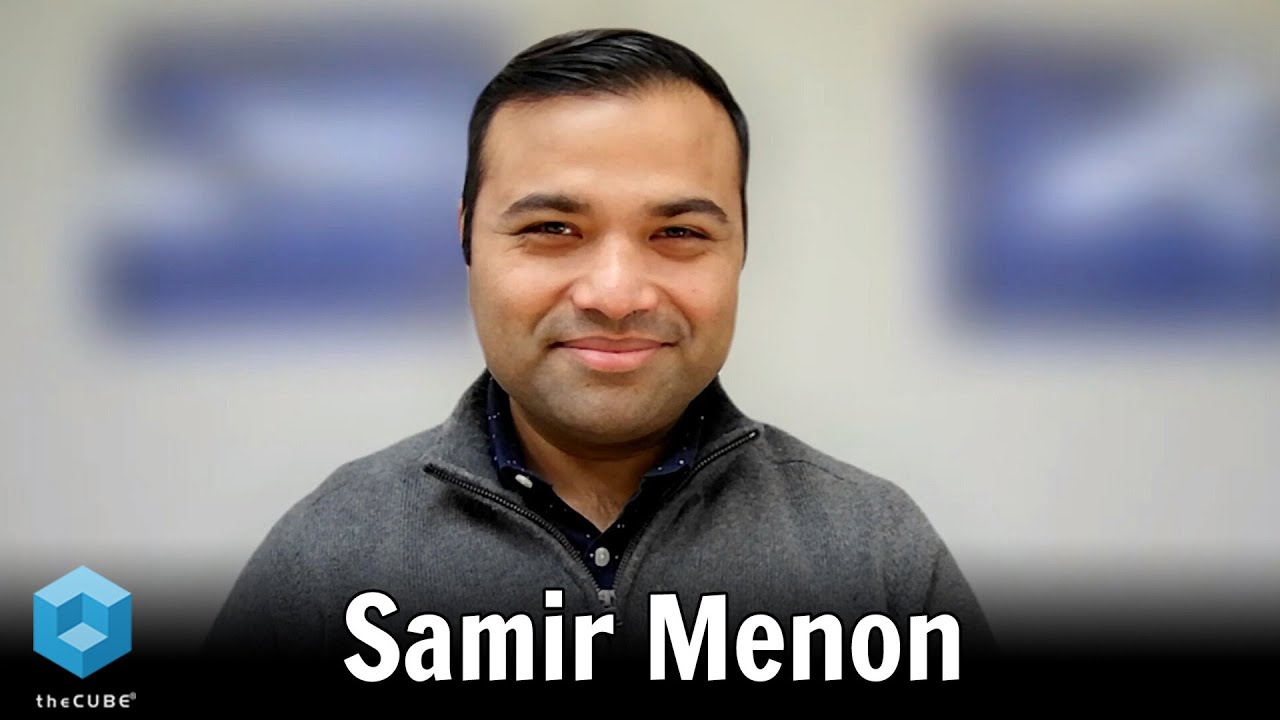
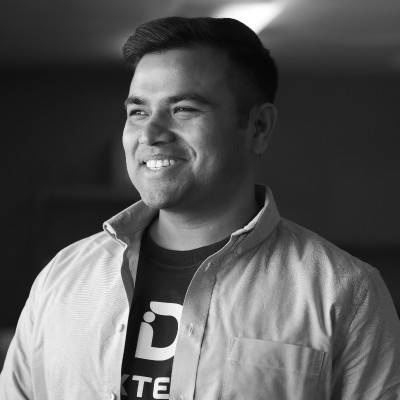
Samir Menon, Dexterity
Metabob revolutionizes AI code analysis and optimization through innovative applications of cutting-edge technology. In this insightful session, Dave Vellante of SiliconANGLE Media hosts Axel Lönnfors, chief operating officer at Metabob, at the Rosewood for theCUBE + NYSE Wired event. Lönnfors discusses advancements in AI code analysis, providing a glimpse into Metabob's use of graph neural networks to streamline code optimization and refactor substantial legacy systems.
The Metabob platform leverages AI by integrating graph neural networks with large language models, effectively modernizing and detecting anomalies within extensive codebases. Co-hosted by theCUBE Research, the discussion explores how Metabob’s capabilities assist companies, ranging from government agencies to Fortune 500 firms, in managing their technical debt. Lönnfors details the enterprise-driven approach and the journey towards achieving product-market fit.
Key insights from the conversation include the importance of accurate anomaly detection and automated fixes for maintaining operational efficiency. Lönnfors emphasizes Metabob’s unique position, highlighting its focus on preserving code context to prevent issues such as 502 errors. They assert that customer satisfaction and value delivery remain the company's guiding principles, steering Metabob towards greater integration into AI-driven development environments.
In this segment, John Furrier welcomes back Samir Menon, founder and chief executive officer of Dexterity, returning to theCUBE + NYSE Wired to discuss how physical AI and general-purpose robotics are rapidly maturing into mission-critical infrastructure. From loading trucks to lifting washing machines, Dexterity’s rugged, bimanual robots are built not to mimic humans, but to assist them – combining industrial strength with finely tuned AI coordination. Menon shares how a “world model” approach, inspired by human cognition and motion, allows Dexterity’s robot...Read more
exploreKeep Exploring
What is Dexterity's vision for the future of robotics, and what applications is it focusing on today?add
What is a "transformer" robot, how does it differ in form versus function, and what is its purpose and potential societal impact?add
How can AI and robotics achieve human-like physical skills and dexterity, and what role do foundational world models and learned skills play?add
How have recent advances in sensors, vision, touch, hardware, and AI enabled the shift from fixed, single-purpose industrial robots to general-purpose robotics, and can you give an example?add
How does Dexterity determine and prioritize which skills to train into its robots, and what role do customers play in that decision?add
>> Welcome back. I'm John Furrier with theCUBE. We are here at theCUBE's NYSE studio here in New York City. Of course, we have our Palo Alto studio connecting Wall Street and Silicon Valley Park. The NYSE Wired program at theCUBE, originally we featured the leaders in AI, AI robotics. And now defense tech is now on the table. The whole market's changed by technology. Samir Menon is here, founder and CEO of Dexterity. theCUBE alum, was on our panel last year in Palo Alto, came in to New York City as well. Samir, great to see you and congratulations on all your success in your company, third time on theCUBE. Your company is one of my favorites in terms of how you're really driving the robotics story and technology. Humanoids, which is in the news, everyone loves to talk about humanoids, but there's also the functional transformer side and so much more. Great to have you on. Thanks for coming on.
Samir Menon
>> John, thank you so much. It's a pleasure. Dexterity has been on a tear. The past two years have been fascinating seeing robots go from the lab to early stages of growth. We've got our robots loading trucks and you might have received some parcels that were packed by our robots already.
John Furrier
>> I say for people like me and you or older adults, the kid in us, an adult is just a kid who's older. And so the robotics really appeals to a lot of people. And the conversations are somewhat polarized, there's pros and cons. People talk about it, but it clearly is driving new market opportunities. And certainly we heard today at the NYSE at defense tech. We're seeing new markets where you have a platform that could scale in the right technology and software with the hardware has been key. I want to get into somewhat what's changed in your world, but first explain what you guys do for the folks who don't know Dexterity, what you guys are doing, the core premise and the value proposition.
Samir Menon
>> Absolutely. Dexterity, our vision of the future. If we fast-forward into 20 years from now, I think there's going to be thousands of different types of robots. There'll be small robots, humanoids, big, powerful transformer-like robots. And there are so many applications. There's like hundreds of thousands of applications. Dexterity set out to build a general purpose robot brain that could power any robot to perform any application. Today where we are, we're at the knife edge of being able to walk in to places where there's very stressful, laborious work. Things like loading trucks, loading aircraft, loading shipping containers, and have robots do that in a way that matches the working conditions of taking random boxes, playing this type of box Tetris game, and stack them up and get them to your house. So it's really exciting. It's advancing really fast and we can do robotics in a way that's going to have a constructive impact on society.
John Furrier
>> Yeah. And also, of course, from a sovereignty standpoint, one of the big conversations at the defense tech sessions we had here in New York City at the NYSE was you can't find the skilled labor to do things, but also automation helps that too. One of the folks said the Navy, if they had a billion dollars, wouldn't be able to hire enough welders, even if they had a billion dollars in cash laying around for that. It's just hard to find those things. You started to see functions with robotics doing things. So clearly an opportunity for a new platform, new software. Explain the impact of this and scope it if you can, because the way I see it is transformers are versatile, can do a lot of different things. Explain what is a transformer besides people who saw the movies many times that loved them like me. But what is a transformer robot and what's the purpose?
Samir Menon
>> So for us, when we look at robots, you can focus on the shape of the robot or its function. So there's form and function. With transformers, the thing that really fascinated me is they come in every type of shape. There'll be one that transforms into a helicopter, into a truck, into a car, and then it can always shift out, get its arms out and do cool things. I love that metaphor for a robot. And for us, if we think about robotics, that's going to be useful. The utility comes from function. And when we think about what are the functions that are going to be most positively accepted in society, it's the ability to do stressful, laborious tasks, lift up heavy washing machines, heavy items that would break your back, work in the sun, work in the freezing cold, and just play an assistive role in society. So for us, we worked on building an amazing AI, but we have a very special spot in our hearts for robots that have this heavy, powerful industrial form factor focused more on function. So they're very functional, they're rugged, they're powerful, they've got two arms. They kind of look like humans, but not really. You look at it and this is not here to replace you. It's here to help you.
John Furrier
>> Yeah. And so how about the tech because the tech story is interesting because I always say it's an AI factory like configuration. You need to have compute. You got to have data, you got to have the intelligence, you need computer vision. I mean, you have to fit all that package. Take me through, as you break the functional spec down or capabilities, how do you think about that? Can you share what you guys are doing there and what's involved?
Samir Menon
>> So I did my PhD at Stanford in computer science studying human motion. Our view on robotics is really inspired by me, how I move, how we've studied humans. And so I'll take a simple example that maybe will go with anybody who's ever drank water from a cup of coffee. So I've got a little cup of water here. I'm going to close my eyes. And the moment I close my eyes, there's a part of my brain that has an understanding of the world. Have an understanding of my body. We call it a body model. There's this cup here somewhere. I have an understanding of this cup. I know there's a liquid in it. I can drink the liquid and put it down. And so if we think about the AI that goes into achieving this type of human motion, a big part of it is what we would call a foundational world model. When I close my eyes, this is the knowledge and the understanding of the world. We've made significant progress in world models. We see shades of them in making videos and now we're getting to a point where we can interact with those world models in the real world. On top of that, we as humans have many skills. I'll have a skill with welding. I could have a skill with loading trucks. I could have a skill with playing golf. And so we gained skills and the way we've built out our physical AI is this world model, is this background knowledge, is this gigantic, really sophisticated AI that tells you how to reason about the world. And then we train skills one by one. So you could have hundreds, maybe thousands of different skills. As you accumulate more skills, you accumulate more dexterity and the robots can be more useful.
John Furrier
>> And the dexterity piece is interesting because now function is increased. So you can have grip, you mentioned, you got to know the cups and then you have to grip it. And then there's other things like, "I want to move this piece of heavy equipment from this piece of the yard to that piece of the yard or load a truck." That's that function. So okay, truck, item, weight, all these things kind of come into play.
Samir Menon
>> Oh, absolutely. There's sight, there's sound, but most importantly, there's the sense of touch. When we touch things, we have the ability to not squish them, to really manage them in a very human-like manner, and we are pushing the envelope. It's really interesting. A lot of attention gets focused on vision, but if I close my eyes, I can just as well do most of the things that I need to do. So what we've found is you have to simultaneously make progress in understanding the world through sight, but when the hand hits the object, metaphorically in physical AI, it's the sense of touch that really drives you to closure.
John Furrier
>> Yeah. I have to ask you, Samir, what's changed since we last talked because we have ... I just registered yesterday for NVIDIA GTC. It's going to be even more packed than last year. A lot of physical AI discussions, simulations, Omniverse, et cetera, et cetera. You have now more computing power, more ability to get feel in devices, so physical touch. There's more technology coming. What are you seeing now coming to the table for you that's going to help you achieve your mission, go fast and accelerate your value?
Samir Menon
>> So a big part of it is the general acceleration in sensors and vision and touch, like you mentioned, and in AI another part of it is our ability to create robots that are built for AI. Now, traditionally, robots that were built for factories, for applications where they were bolted down. Today, we have robots that have legs, that have wheels, they can walk around like humanoids, they can drive around like transformers. And that's unlocked an amazing ability to shift attention from what we would call fixed single purpose application to general purpose robotics. And this notion of general purpose robotics has been unlocked in a very significant and material way just in the past 12 months. Pretty impressed with one of the amazing robots that we developed with some of our partners. We call it the Mech. It's kind of like a transformer inspired by science fiction.
John Furrier
>> Yeah, of course.
Samir Menon
>> And we just are deploying it at our fifth site. It was launched just a few months ago. It went in, super successful. So it's a really exciting time. We're getting this merger of hardware, sensors, AI, software, and doing real work in the real world.
John Furrier
>> And one of the conversations we have on theCUBE all the time, certainly you're seeing on mainstream news like CNBC and other outlets is the labor shortage. And not the debate about jobs going away. I'm not a big fan of that narrative because I think it's a false narrative because I think jobs will shift as we've seen in all these waves, but it does bring up the notion of autonomy. So when you look at the narratives of, "Okay, I need to replace the human to do that role," that becomes a big concern. So how are you looking at that? Are people shifting their organizations? When you have the success, they have an aha moment, almost a ChatGPT version for robotic, "Oh my God, that's amazing." What's the impact, the consequence at that moment of consequence when it's like, "Okay, this is working." What are some of the customers doing? What happens next?
Samir Menon
>> So there's a lot coming up over the next few months. I'm not going to steal the thunder, but the way it goes is there's generally a three stage process for the adoption of any advanced technology. Customers start off, they look to evaluate the technology. They're pretty skeptical. They're like, "Does this work? Does it not work." They run their evaluations, they'll work with you for a while. At some point of time, a light goes off. It's like, "Whoa, this works." The moment this idea pops in a customer's head that this works, you shift gears from evaluating the technology to understanding how you're going to use it in your own life, in your own operations. That moves us to what we would call a second stage of adoption. A second stage of adoption is focused on operational integration. What can I do with my operations that maximally utilizes this technology? And so we've gone through the evaluations, we're coming to the tail end of the operational integrations, and then the third phase is what we would call transformation. We're like, "Okay, it works-
John Furrier
>> Money.
Samir Menon
>> ... I know how to do it. Let's make money. Let's have impact."
John Furrier
>> You build it, you operate it and you make money.
Samir Menon
>> Yeah. We're at the knife edge of that, what you would call early growth and dexterities. We're just having a ball. We're a bunch of folks. We love AI. We love transformers. We love Mechs. You get up every day in the morning, walk to work, have this giant robot getting slightly better at loading a truck. It's just fantastic.
John Furrier
>> It's fun. Coming from Silicon Valley for multiple decades and coming to New York, I noticed that theCUBE has this unique fluency of the Silicon Valley language, which is roadmaps, architecture velocity, and New York's language is risk, durability, and returns. But you're kind of hitting both because that three-phase approach is the builders. That's very entrepreneurial. Okay, you got the inspired vision you're executing, you bring it to the market, now you have operational integration and then the money capture.
Samir Menon
>> Money, yeah.
John Furrier
>> Okay. So that speaks both languages. So you're on both sides of that intersection. So I have to ask you, what are some of the conversations like on the business side for you as the investors who invest in you or future investors and then your money making, how is that going for the company? Can you take me through some of the business highlights, what's resonating with customers from a payment standpoint, how are they buying? And then what's the reaction on the capital market side?
Samir Menon
>> Yeah, the business is absolutely critical. At the end of the day, for any business to be healthy, we've got to make money, we've got to show financial return. And what people are betting on with physical AI in particular and robotics is that there's a gigantic opportunity for us to improve our lives. There's just so many things in my house that I would love to do. I just don't do it. I'd love to renovate my house. It's just going to take too much time. It's going to take too much work. So when we think about the true potential of physical AI, it gets unlocked when you have general purpose robots, general purpose AI that is safe, easy to adopt, low risk, and gets the job done. You really don't want to be watching your robot like a Hawk is like, "Is it going to do it? Is it going to crash? Is it going to break something?" For me, when it comes to the business side of it, the best robot is a robot. You turned it on, you were really excited for an hour, then you got bored and you went home and it just kept doing its thing. And so we're reaching that point. For customers, this comes down to how do they manage the risk? Well, if it's going to be autonomous and it's going to do the job with no damage, no breakage, no safety incidents, that's great. It's a low risk investment. If we have general purpose robots where you don't have to change your operation, you're doing something some way, you've got a conveyor belt and the robot's just going to walk right up to the conveyor belt, get the box off and load it in. You don't change a thing. That's great. Sure you need a power plug to charge the battery, but you kind of need that for your laptop too. And so the true vision for the customers is this idea of just getting the job done. And I think that relates very well with the vision for investors who are looking to seek a financial return because that's what unlocks this gigantic physical AI market. I mean, it could be half global GDP at some point of time.
John Furrier
>> Yeah. And so you quantify that unlock in your forecast so you have data on that. What's your vision on the unlock in terms of order of magnitude? Just like share your thoughts on like how big that unlock is and what's unlocking.
Samir Menon
>> So I think the big unlock, we're still a small company. We like to stay humble, but we have some great industry leaders. If you look at Jensen from NVIDIA or Elon from Tesla, they're taking significant bets on physical AI. And if you read the reports, at the top line, this could be like tens of trillions, maybe 30, 40 trillion dollar market. For us, we take it one day at a time. The larger dream gives us the motivation to keep going.
John Furrier
>> Well, I think the bet that Jensen is making is not a bet. It's a reality. And I think that's clear to us. NVIDIA, they made bets. His bets were made a decade ago. So I want to talk about Jensen for a minute because I just saw him on Jodi's podcast from the GSA and he said a comment I want to get your reaction to. He was talking about being a CEO and he's like, "It's not all fantasy like you read about in the papers. It's grind and your servitude to the people to be successful." But he made a comment. He said, "At the end of the day, the hard decisions have to be made and the hardest decision is what not to work on."
Not exactly, but pretty much said that. That's almost what verbatim. But what are some of the hard things that you have to say no to because you have such an aperture of an appetite for the innovation because you're innovating. Robotics is one of the most innovative spaces. What's the nos? What's the no resume look like? What do you say no to? What's the yes, no? How do you evaluate? Because you have to make some tough calls and they're going to have consequence because there's a system.
Samir Menon
>> True, true. So anytime we look at a technology like AI, AIs don't progress in a linear way. If you look at any one of the AI companies that are at the edge, they're typically experimenting with different ways to train the AIs. They've got like 30, 40 experiments ongoing. And so you have to keep an eye on each one and you're going to pick one or two and go deeper with them as you train your models, whether it's taking an application and say, "Hey, we're going to rely more on vision versus we're going to rely more on touch." There's significant trade-offs, not just on the way you do AI. The trade-offs extend all the way down to your hardware because am I going to put more cameras? Am I going to put some touch sensors and eat that data? So it's very difficult. I think what we've done is we've taken a platform approach where we say, if we build any piece of technology, we're going to try and build it in a way that it's not tied down to a specific robot or to a specific application. So it becomes a building block and you start accumulating these building blocks. When we train AI models, we train them as skills the same way humans have skills and each skill becomes a building block.
John Furrier
>> Yeah. It's like a plugin almost, the old concept.
Samir Menon
>> It's like a plugin. Yeah. So that helps us keep ourselves safe.
John Furrier
>> I always use the Matrix example when he wants to fly the helicopter. Upload, upload.
Samir Menon
>> Upload the skill. That's a perfect analogy of how AI skills are going to develop.
John Furrier
>> Take me through the prioritization because I can imagine your world is filled with skill requests. Obviously you stack rank them by priority. Is there a methodology that you guys have on skill selection? Market selection, is it market based? What are some of the thought processes on how you vet? I'm sure you must get a lot of requests. Our CUBE host is not on that list, thank God yet, but coming soon.
Samir Menon
>> So on this front is where I would say Dexterity's DNA is very different from a lot of other companies. We're a very customer obsessed company. We are really focused on working with our customers and we work with massive enterprise customers. Publicly announced a few years ago was FedEx. We've been working very closely with them. And so for us, when it comes down to the specifics of what types of skills we're going to train into our robots, it's a conversation that we have with our customers and we say, "Hey, look, in our judgment, here are five skills that we would invest our time training and here is the impact that they would have."
We give it to our customers as a menu and we allow their judgment to enter the process. And they say, "Look, you're doing really great. Just make the robot faster." Or, "Look, it's fast enough. Just make sure that when it packs this fragile box, it just puts it on the side, doesn't put another heavy box on it." So there's a lot of skills that humans have and our customers help us and going with the customer first approach, working with some of these large enterprises.
John Furrier
>> Where's your order coming from? Yeah, get the cash in. It's a good business model.
Samir Menon
>> Get the cash in, lower the risk, get the technology
John Furrier
>> And you get the cash flow, you get the financing going, and you get that investor side kicking in. You get more working capital. You can expand at your pace. Question for you on, well, I got you here since you're one of our mixture of experts. NVIDIA's GTC's coming up, I mentioned earlier. What do you expect this year? I mean, obviously I can tell just by the sellout of all the hotels and restaurants, it's going to be bigger than ever. It's become an industry show because of their leadership position. What do you expect from Jensen with physical AI this year? Obviously the data center thing's hot and they're blowing out that with the AI factories. We're expecting that too. On the physical AI side and robotics, he always has that in the keynote. He's been putting in robotics this nice touch. I'm expecting more meat on the bone, but what are you expecting to see if you had to guess?
Samir Menon
>> I would say Jensen's a visionary. He's such an inspirational leader. What he's done extraordinarily well is he's taken bets ahead of the market. And so where NVIDIA's focus is they're playing a significant role in seeding the ecosystem. They're doing a lot of the foundational work that will help companies like us two years down the line. So when I see NVIDIA's showcases, they're showcasing technology that is ahead of its time. And they're creating the momentum for companies like us to build upon that foundation that they're putting together and drive results. So whatever you see out on the showcases, that's a few years ahead. A lot of the foundational work's happening behind the scenes. And so what we see on a day-to-day basis is a steady clip of AI is just getting smarter, GPU's getting better. There's still a long way to go though.
John Furrier
>> Yeah. He does a great job. He's proud to say this. He just said this very clearly on stage. He puts his roadmap out there in advance. He likes to showcase what's going on so that everyone can work around him and NVIDIA. And the ecosystem, which is kind of new, is coming in nicely. I mean, their ecosystem is growing very rapidly. It's one of the highlights of the new NVIDIA, I call it, the ecosystem.
Samir Menon
>> It's a fantastic way to do it. Being open right now, I believe it's an excellent strategy. You want everyone on earth to come join you in a movement, and the market is so big. Physical AI is so big. Just imagine the transformation we could have in our lives. We use cars. There's a billion cars in the world, I believe, one, one and a half billion. There's going to be 10 times that many robots. For every car that you have, you'll have two or three robots. And it's just going to be a future that we cannot imagine. There'll be robots on Mars, on Pluto, whatever, folding my clothes and cleaning up the kids mess. So you can have a good life.
John Furrier
>> I wish I was 25 again. I can't go back and maybe I'll live longer. We'll see.
Samir Menon
>> You never know.
John Furrier
>> All the breakthroughs coming in from the super computer.
Samir Menon
>> They're the big super computers. You download your brain into a chip, man.
John Furrier
>> I heard the breakthroughs in biology going on right now. There's amazing stuff going on on the quantitative side of AI. So I love that too. Samir, great to have you back and good to see you. Congratulations on your success. And thanks for coming by the studio.
Samir Menon
>> It's a pleasure. Thank you so much. Excellent conversation as always.
John Furrier
>> I'm John Furrier, your host of theCUBE. We're here at part of our NYSE program called NYSE Wired. It's theCUBE original where we deep dive with the experts where capital markets and technology come together. Again, roadmaps, architecture velocity meets risk, durability, and returns. Technology is the market. We're doing our best to bring that to you. Thanks for watching.


































 John Furrier