We just sent you a verification email. Please verify your account to gain access to
theCUBE + NYSE Wired: Physical AI & Robotics Leaders. If you don’t think you received an email check your
spam folder.
Sign in to theCUBE + NYSE Wired: Physical AI & Robotics Leaders.
In order to sign in, enter the email address you used to registered for the event. Once completed, you will receive an email with a verification link. Open this link to automatically sign into the site.
Register For theCUBE + NYSE Wired: Physical AI & Robotics Leaders
Please fill out the information below. You will recieve an email with a verification link confirming your registration. Click the link to automatically sign into the site.
You’re almost there!
We just sent you a verification email. Please click the verification button in the email. Once your email address is verified, you will have full access to all event content for theCUBE + NYSE Wired: Physical AI & Robotics Leaders.
I want my badge and interests to be visible to all attendees.
Checking this box will display your presense on the attendees list, view your profile and allow other attendees to contact you via 1-1 chat. Read the Privacy Policy. At any time, you can choose to disable this preference.
Select your Interests!
add
Upload your photo
Uploading..
OR
Connect via Twitter
Connect via Linkedin
EDIT PASSWORD
Share
Forgot Password
Almost there!
We just sent you a verification email. Please verify your account to gain access to
theCUBE + NYSE Wired: Physical AI & Robotics Leaders. If you don’t think you received an email check your
spam folder.
Sign in to theCUBE + NYSE Wired: Physical AI & Robotics Leaders.
In order to sign in, enter the email address you used to registered for the event. Once completed, you will receive an email with a verification link. Open this link to automatically sign into the site.
Sign in to gain access to theCUBE + NYSE Wired: Physical AI & Robotics Leaders
Please sign in with LinkedIn to continue to theCUBE + NYSE Wired: Physical AI & Robotics Leaders. Signing in with LinkedIn ensures a professional environment.
Join us for an enlightening conversation with Michael Brown of Skyline Robotics during theCUBE’s coverage of the NYSE Wired Robotics and Artificial Intelligence Media Week. Delve into the exposure of groundbreaking innovations at the intersection of robotics and AI as industry leaders convene to explore futuristic automation and its transformative potential across various sectors.
Michael Brown, a well-versed CEO in the field of robotics, leads Skyline Robotics and brings invaluable insight into practical applications of robotics in industrial settin...Read more
exploreKeep Exploring
What challenges have been encountered in entering the window cleaning industry with a waterproof cobot robotic arm?add
What is the business opportunity for robotics in window cleaning and how does the workflow differ from the traditional methods?add
What is being done to address the aging workforce of window washers in New York and the decrease in union membership in the industry?add
What are some of the benefits and potential opportunities associated with using LiDAR technology for commercial cleaning in New York?add
>> Hello, I'm John Furrier, your host of theCUBE. We are here at the NYSC Cube Studio East. Of course, we've got the Palo Alto, Silicon Valley, connecting Silicon Valley and Wall Street, all the top stories. This is theCUBE's and the NYSC Wired Robotics and AI Week. We've got a great lineup, four days of wall-to-wall coverage, going deep on the future of robotics and all the impact it has on the tech, of course, and as well on the business. Michael Brown, CEO of Skyline Robotics, is with me. Michael, great to see you. Thanks for coming on theCUBE. Appreciate it.
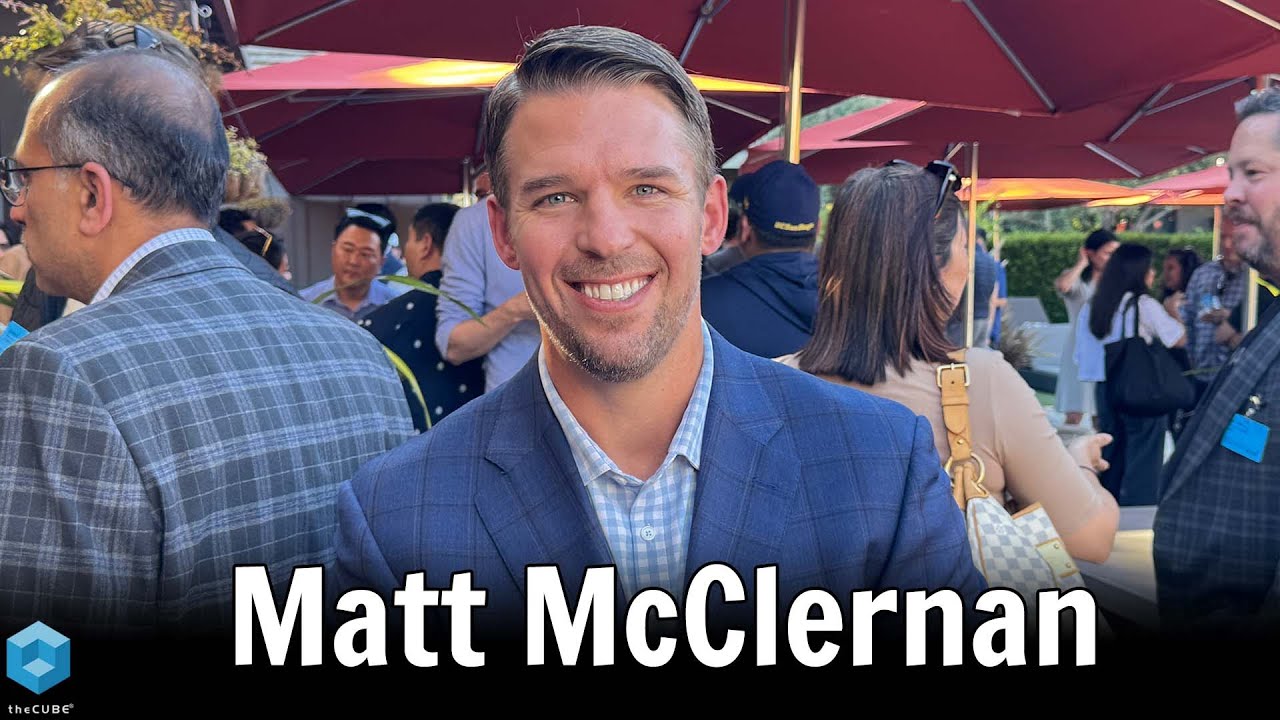
Michael Brown
>> Thanks for having me.>> Brian Baum was here, founder of NYSC Wired, with this great community coming together. This is our first foray into the robotics, kind of a deep dive. We've been covering robotics on SiliconANGLE and theCUBE, kind of as an AI crossover.
Michael Brown
>> Sure.>> I think a few years ago we were at an event that AWS and Amazon put together called re:MARS, which was the confluence of cloud meets industrial factories and how robotics, aerospace-
Michael Brown
>> IoT.>> It never really caught on because it was so many threads. But you got aerospace, you've got space, you got industrial IoT, industrial technology, so robotics got a big swath. And of course, Nvidia, with the stock price, got a little fluctuation now with the options behind us, they really are evangelizing how their AI infrastructure platform is driving a lot of robotics. Of course, robots are all part of the keynotes from the CEO, Jensen Huang. So, I think the capital markets are now awake and entrepreneurs certainly have been doing this. You've been in the middle of it. You got a unique perspective of what you guys are doing, so you're on, what I call, the mainstream commercialization side of looking at the technology saying, "Hey, how do we take something that's a disruptive enabler to use technology for making things more efficient?" So, take a minute to explain what you guys do, first. Then I want to get into some of the challenges.
Michael Brown
>> Sure. We've taken the robotic arm, which is something that has been manufactured for quite a long time. Of course, we had to find that it was waterproof and make it a cobot, but we've used that as our entry into the window cleaning industry. And while the robotic arm looks very simple, having it in an outdoor variable environment, it's not. But we have found that as, what I would call, a single purpose of just cleaning windows to be a really good niche.>> I mean, think about the work that goes into that. First of all, it's a great spot for robotics. One, safety, right?
Michael Brown
>> Sure.>> Robot falls. People think, "Who does that job?" Right? But also there's efficiency in time and frequency. Take us through the business opportunity there because what does the workflow look like? What's the before and after, old way, new way, look like? I mean, obviously, we've all been in apartment buildings or hotels where you see the window cleaners up there, they're on that thing that hangs down.
Michael Brown
>> Exactly.>> They're squeegee. Not squeegee, but like pretty much.
Michael Brown
>> Yeah. Yeah. We've taken the approach of focusing, I mean, if you look at real estate as an asset class, it's tremendous. So, we're focused just on the buildings that have these cranes on the roof. And the reason why we focus on those is because, one, most of those buildings are very high value buildings, number one. They fall under regulations, so from a safety standpoint we know that it works and we know it can access the facade. So, what we've done is we've been working with the industry. We haven't come into the industry and say, "You guys don't know what you're doing." We've come in and we've said, "Okay, how can we support you?"
Because you've got a major labor shortage going on in these window cleaning industries. In New York, you're talking about 76% of window washers are over the age of 40. And when you look at all the building that's been going on, just specifically New York, you've got more buildings, more windows and less people. 10 years ago there were 1500 people in the union. Today there's only 500. So, we're working with the industry to bring dirty, dull, dangerous jobs and augment the workforce. They're getting retrained because it's union labor, it's safer, and we're now able, instead of three people doing the job, it can go to one person and those three people can become robot specialists that get trained, earn more and clean more buildings.>> It's kind of like crane operators. I mean, if you go back to construction days, cranes came out like, "Hey, cranes are great."
Michael Brown
>> Yeah. And we're controlling the crane on the descent. So, we've automated a lot of it. The hardware is the hardware, but it's really all of the algorithms and the AI agent behind.>> So, your business model, basically, on the go-to-market is pretty specific. You can actually quantify the TAM by looking at what cranes, what systems are in place or is that already pre-existing?
Michael Brown
>> There are 68,000 cranes globally. We only have to be semi-successful to be successful. But in the existing environment, we've started in New York, we have investors like The Durst Organization that owns the World Trade Center. So, they have 27 buildings in their portfolio. So, they want to be able to crawl-walk-run the technology. So, we went and cleaned 1133 last year for the first time, and then we're going to clean another building for them. So, that business model in the existing environment is really to work on those types of systems with the service providers and then in new construction to really work with the manufacturer of the cranes.>> Michael, you bring up a couple of good points. One is the skills thing. We'll come back to that in a second before we get to the technology, which I want to dig into. But the market's there. So, the market opportunity, check. You can quantify it and you can go hit that addressable market. There's definitely efficiencies there, and that's where AI shines. But it's interesting, in all the AI conversations I have with experts and other people, the one thing that rhymes and that's almost consistent in all of them, these regulated industries actually is a gold mine. When these regulated industries used to be kind of, "Oh, stay away from that. It's a whole mess." Not really with AI, they've done the work to scope workflows.
Michael Brown
>> Yeah, it's really important because, obviously, the regulations were never taking into account what the technology was and is. So, working with the regulators and getting their buy-in and reiterating on what they have given us as suggestions, that's really been a successful path for us.>> Let's talk about the business opportunities. Can you quantify or can your customers quantify, let's take world trade for instance, you did a couple of tests there. What is the dollars that look like? When they look at the opportunity, obviously on the labor, that's the key point, because one, you need people to do it. But, what are some of the numbers? Can you share any scope, the business upside for them?
Michael Brown
>> Yeah.>> Is there any quantified value on what they see and when they scratch it together?
Michael Brown
>> New York is a high labor market, obviously. Unionized labor. What you have is, you have Class A buildings, right? So, you've got the Relateds of the world, Dursts of the world, Silverstein, and SL Green. Some of their buildings can cost a couple of million dollars to get cleaned a year. Other buildings, not so much. So, what I would say is that the Class A buildings are spending a fair amount of money every year, but not in the hundreds of thousands of dollars, let's say, to clean their building. What they're not doing, though, is they're only getting a cleaning of the building. What we're able to do besides that cleaning, is we're able to now scan the building and give you data on the outside of the building.>> Like structural data.
Michael Brown
>> Exactly right. So, on the facade, if you take the facade for instance, that's 20% of the total spend of the CapEx on that construction budget. It's under warranty. So, if you look at, let's say, a JP Morgan's building their new headquarters, it's a $500 million facade. It's under warranty for, let's say, 10 years. I would think they would want to know what's going on with their facade. So, that type of data->> What kind of things happen? Cracks, just manufacturing?
Michael Brown
>> Just cracks, water is getting behind it. The biggest thing that we're looking for are the silicone seals in the windows, for any erosion there, because that's where water and air can get through. And when you think about carbon emission and ESG, that's really where we're focused on as well, is that data does not exist and drones can't fly in cities.>> Yeah, exactly. Exactly and then the rooftops have that value. So okay, there's some dollars there to be saved.
Michael Brown
>> Huge. We've been able to, from a savings standpoint, the savings has been there, the time efficiency pickup has been there. We're working on trying to bring regulators to allow us to clean at night. Because we don't have a need for sunlight because we're using LiDAR, we believe we can move commercial cleaning in New York to nighttime, which really adds safety, which really brings the operations of that BMU back to the building to utilize during the day.>> And non-disruptive too, to anyone in the building, right?
Michael Brown
>> Exactly right.>> Like office work being completed.
Michael Brown
>> Exactly. Yeah, it's very alarming when you see someone coming down.>> You put that robe on. I mean, jokes aside, this is legit business. You got the market, you got business model opportunity. The value proposition is clean because you can, I mean, the payback's there.
Michael Brown
>> Sure.>> It's just numbers, numbers work.
Michael Brown
>> 100%.>> What's fascinating is that the AI has a lot of computer vision now. Take us through some of the things that you guys are working on. It's not trivial.
Michael Brown
>> No.>> Take us through the scope of the technical capabilities, what you guys do in terms of looking at the cycles. I mean, you got to look at roadmaps out. You make a wrong call on, say, the compute platform, maybe you're missing out. So, there's a lot of work that goes into it. Can you share the kind of complexity? Because it's a no-brainer that this is going to happen. The question is, how fast?
Michael Brown
>> It's if and when.>> Yeah, it's if and when. It's a no-brainer on that. But the tech is cool.
Michael Brown
>> Tech is cool, for sure.>> Take us through some of the things you guys have been working on.
Michael Brown
>> Company was started in 2017, and since that time it's always been utilized in a robotic arm, but you're building out, obviously, the back-end of the business. From a technology standpoint, we have a distributed robotic system. So, it's not just the robot itself, you have a water system. Okay? So, when you think of water coming down from 1,500 feet in the air, imagine jumping off of a boat, going into the water, going down 1,500; you would, literally, your head would explode. So, we have created, using solenoids and algorithms, to make sure that the water that's coming down from the rooftop to supply to the building is algorithmically, not have enough pressure to explode it. Okay?>> It's fine-tuning.
Michael Brown
>> Right. Then you look at the, in cities, because of all the metal, the communications is a huge issue, right? So, you've got rivers of different frequencies flying through all. You've got cellular, sometimes it works, sometimes it doesn't work. So, we've had to create our own coaxial cable that's bringing over power and over the, what do you call it? And with internet as well, so you can have the data. And then we're using LiDARs to scan the building. We're using ultrasonic sensors, IMU, we have forced torque sensors, and we just keep adding more and more because, once again, you're in an outdoor, variable environment. You have wind, you have sunlight that can change a lot and being able to fixate on transparent glass with LiDAR is not so easy.>> I mean, again, computer vision, processing power, you have the connectivity nailed down and that makes total sense. You want to control the connectivity layer.
Michael Brown
>> Have to.>> You've got to probably back-end cloud, is that a cloud or data center?
Michael Brown
>> Cloud.>> Cloud all the way makes total sense. Processing in the cloud. Computing on the device itself.
Michael Brown
>> Right.>> So you have, that's an edge.
Michael Brown
>> That is an edge. What we're working on now, because everything's, what I would call, layers. So, the first layer was the LiDAR being able to map the building and having that digital twin. Now, you'll scan opticals and stitch optical in there. Then you'll add hyperspectral and geothermal cameras so that you can really provide that data of instead of doing best practice, start making decisions that's driven on data.>> A lot of people when we talk to, certainly in the computer industry now, obviously finance and business, AI is the rage. They all talk about LLMs, Large Language Models. That's just text. Computer vision's the killer app.
Michael Brown
>> Killer.>> But it's seeing everything, so the data corpus is massive.
Michael Brown
>> Massive.>> The computation power. You mentioned digital twins. You're starting to see digital twins move from a manufacturing concept to basically every vertical.
Michael Brown
>> Yes.>> I mean, because why wouldn't you want to replicate the simulation? So, how do you guys think about the digital twin? What are some of the cool things you're doing with digital twins?
Michael Brown
>> The digital twins has been around for a while. I just don't think that the technology got any traction because it was too expensive for all of these companies to have it work. So, we're really approaching it more that we're doing this facade health profile. We're up there anyway. This isn't our single line of business. We want to make sure this is more of that added value, but the data that we collect can be used for many different reasons.>> This comes up also, again, you guys are hitting all the hot buttons for us, because a lot of this AI wave is, I was talking to Dun & Bradstreet, the head of AI over there, and they have the most comprehensive business data not everyone has. And I asked her, "What's the strategy?" And then she says, "Honestly, it's just figure out what we got."
Michael Brown
>> Right.>> "And then, once we know what we got, then it's going to be something that their vision is," and aligned with most everyone else, is that the derivative works that you get out of the product. So, most people just think, "I'm just going to throw AI at a problem," but they don't even know what they're throwing it at. So, this is kind of what you guys are taking that similar approach. You agree with that?
Michael Brown
>> 100%. And listen, for what we're doing in robotics, it is nothing near what everyone else is talking about on that AI side with the LML, with the language models. This is just, it's very focused.>> Yeah, I mean, it's a good use case because you can actually, well, it's easy to get to the digital twin because it's a building, it's fixed.
Michael Brown
>> 100%.>> So, you have all the coordinates. So, all you got to do is peak the LiDAR and all those subsystems to understand what you want to do.
Michael Brown
>> Right. And what we're trying to figure out is how are we going to capture that data, right? I mean, you don't want to send trillions of terabytes of data and store it unless someone's going to use it. But I think that the wave one of AI in, what I would call, traditional enterprise businesses is really going to give them, I think, a new viewpoint of what opportunities there are for low hanging fruit, whether it be marketing or just customer segmentation, or just knowing who your customer is.>> Well, basically re-architect some of those low hanging use cases. And also where there's grunt work done or toil or undifferentiated heavy lifting. And the skills gap is, in some markets it's a skill gap because it's emerging. In your case, it's declining.
Michael Brown
>> Correct.>> But the job's not going away.
Michael Brown
>> No. And this is a global situation for us. We literally, we don't do any outbound. We only get inbound and it's from all over the world.>> All right, let's talk about the customer investor equation, because obviously you're in a hot space, it's a no-brainer use case. I can see this being funded clearly. You guys are in business. What's the funding financials look like from an investment standpoint? Are the investors savvy on this? Is it hard to articulate some of the value proposition to the guys who run buildings?
Michael Brown
>> Yeah, it has->> The CFO.
Michael Brown
>> Yeah. I would tell you that fundraising has not been easy. Just when you look at the last couple of years, and if you look at, obviously, you have the war in Israel, obviously as an Israeli company that hasn't made it so easy. Our investors are strategics, a lot of people within the real estate stack, whether it be a developer, construction company, an engineering company, an architect. So, we have a lot of the people that are within the real estate stack that know that this is an opportunity and have seen the technology and said, "You guys got it. You're honing in correctly." So, we take in a lot of that data and feedback from those people. And then you have some, you have a little venture money and then you've got private high net-worth.>> It's a durable business opportunity. I remember one guy was doing an antenna or just a warning system for planes. It was like one of the most dumbest ideas someone would say, or boring. He made so much money on that. Like, what?
Michael Brown
>> In this case, when people see it, they're like, "That's a no-brainer." It's just like, "Oh, I get it." Robotic arm, back and forth.>> What's the cost structure? What's the CapEx look like?
Michael Brown
>> It's so much safer. Wow.>> All right, take me through the onboarding. Let's just say I want to do this, because I agree with you, I think it's a no-brainer. It's all about the numbers, right?
Michael Brown
>> Right.>> So, payback, cost, structure, that would be the analysis. What is the onboarding? So, if I want to do this...
Michael Brown
>> In New York, when you look at the existing built environment, we've done a deal with the largest service provider. They have the contracts already, they have the relationships, because listen, at the end of the day, the operations manager wants to make sure that their building's going to get cleaned and they're not going to get in trouble. And it is a relationship situation. So knowing that, for us to go and try to meet with regulators, meet with customers, and just have the insurance to go up on these buildings would be very difficult. So, we've really honed in on creating a RAS model where it's a monthly basis, they're leasing the equipment from us, no different than a box truck or a Hi-Lo or whatnot. And then they're going from one building to the next building to the next building. So, it can go from one to the next.>> Yeah. You built a nice product to integrate into their operations.
Michael Brown
>> Exactly right.>> So for them, it's a non-disruptive operation criteria for them.
Michael Brown
>> Exactly right. And what they're doing is they're retraining their people and then they're going to be able to add data services on top of that. So, the union labor is really, they've really kind of joined in on this because they're like, "Well, this is great. I'm getting paid more. I'm learning to become a robot technician. And it's much, much, much safer.">> Yeah. I mean, it's a perfect fit for them.
Michael Brown
>> Yeah.>> I like the make-more-money part. Okay.
Michael Brown
>> But on the existing, a new construction, where there's no line item for window cleaning, we're coming in and it's->> Spec CapEx, yep-...
Michael Brown
>> built directly into the facade.>> So, the facility gets built into the crane. The crane gets built in. The footprint you need-
Michael Brown
>> Exactly right.... >> is specked into the build out plan.
Michael Brown
>> Exactly right. So then, once it's done, you're starting your building off with no window cleaners.>> That brings a good question. What about the buildings that don't have it? The retrofits? Who does that?
Michael Brown
>> The 68,000 BMUs I was talking about out there, one of our customers has, I don't know, 15 to 20,000 of those. So, we're pretty focused on many of the markets on a global basis. London is a great market. They have more cranes than the rest of Europe combined. But Netherlands is a good market. Japan.>> Singapore?
Michael Brown
>> Singapore, Japan. I think Japan is a phenomenal opportunity. China is a phenomenal opportunity, but it's just too big. I mean, China's got, China has more buildings over 150 meters tall.>> They've definitely put up a lot of cranes lately. You go back in the past 20 years, every city has just been, straight up.
Michael Brown
>> Yeah. So, we've stayed away from China just because it's just too big.>> It's a big animal, yeah.
Michael Brown
>> And we're focused on, right now, I would say we're focused on New York and new construction globally.>> Well, Michael, great to have you on kicking off our NYSC Wired CUBE Robotics AI Week. Just final question, we've got a minute left. What are you working on right now? What are you optimizing for? Put the plug in.
Michael Brown
>> Right now, I'm looking to just close business. We have a huge pipeline of new contracts for new construction and real estate is just slow. Interest rates didn't help going up. But I would tell you that I believe that we're going to start closing. And there are iconic buildings. I mean, there are projects all over the world. So, I'm just very excited about it and it's really getting the word out for people just to be able to see that this technology exists and that it is a no-brainer.>> Awesome. Great to have you on theCUBE.
Michael Brown
>> Thanks, again.>> Thanks for coming on. All right, we're live here in New York City at the NYSC theCUBE Studios. This is our access point. Got the subnet in New York, connecting Wall Street, Silicon Valley. I'm John Furrier, host of theCUBE. Stay with us for more coverage here on the Robotics NYSC Wired CUBE collaboration, with AI leaders as well. Thanks for watching.