Metabob revolutionizes AI code analysis and optimization through innovative applications of cutting-edge technology. In this insightful session, Dave Vellante of SiliconANGLE Media hosts Axel Lönnfors, chief operating officer at Metabob, at the Rosewood for theCUBE + NYSE Wired event. Lönnfors discusses advancements in AI code analysis, providing a glimpse into Metabob's use of graph neural networks to streamline code optimization and refactor substantial legacy systems.
The Metabob platform leverages AI by integrating graph neural networks with large language models, effectively modernizing and detecting anomalies within extensive codebases. Co-hosted by theCUBE Research, the discussion explores how Metabob’s capabilities assist companies, ranging from government agencies to Fortune 500 firms, in managing their technical debt. Lönnfors details the enterprise-driven approach and the journey towards achieving product-market fit.
Key insights from the conversation include the importance of accurate anomaly detection and automated fixes for maintaining operational efficiency. Lönnfors emphasizes Metabob’s unique position, highlighting its focus on preserving code context to prevent issues such as 502 errors. They assert that customer satisfaction and value delivery remain the company's guiding principles, steering Metabob towards greater integration into AI-driven development environments.
Forgot Password
Almost there!
We just sent you a verification email. Please verify your account to gain access to
theCUBE + NYSE Wired: Physical AI & Robotics Leaders. If you don’t think you received an email check your
spam folder.
Sign in to theCUBE + NYSE Wired: Physical AI & Robotics Leaders.
In order to sign in, enter the email address you used to registered for the event. Once completed, you will receive an email with a verification link. Open this link to automatically sign into the site.
Register For theCUBE + NYSE Wired: Physical AI & Robotics Leaders
Please fill out the information below. You will recieve an email with a verification link confirming your registration. Click the link to automatically sign into the site.
You’re almost there!
We just sent you a verification email. Please click the verification button in the email. Once your email address is verified, you will have full access to all event content for theCUBE + NYSE Wired: Physical AI & Robotics Leaders.
I want my badge and interests to be visible to all attendees.
Checking this box will display your presense on the attendees list, view your profile and allow other attendees to contact you via 1-1 chat. Read the Privacy Policy. At any time, you can choose to disable this preference.
Select your Interests!
add
Upload your photo
Uploading..
OR
Connect via Twitter
Connect via Linkedin
EDIT PASSWORD
Share
Forgot Password
Almost there!
We just sent you a verification email. Please verify your account to gain access to
theCUBE + NYSE Wired: Physical AI & Robotics Leaders. If you don’t think you received an email check your
spam folder.
Sign in to theCUBE + NYSE Wired: Physical AI & Robotics Leaders.
In order to sign in, enter the email address you used to registered for the event. Once completed, you will receive an email with a verification link. Open this link to automatically sign into the site.
Sign in to gain access to theCUBE + NYSE Wired: Physical AI & Robotics Leaders
Please sign in with LinkedIn to continue to theCUBE + NYSE Wired: Physical AI & Robotics Leaders. Signing in with LinkedIn ensures a professional environment.
Are you sure you want to remove access rights for this user?
Details
Manage Access
email address
Community Invitation
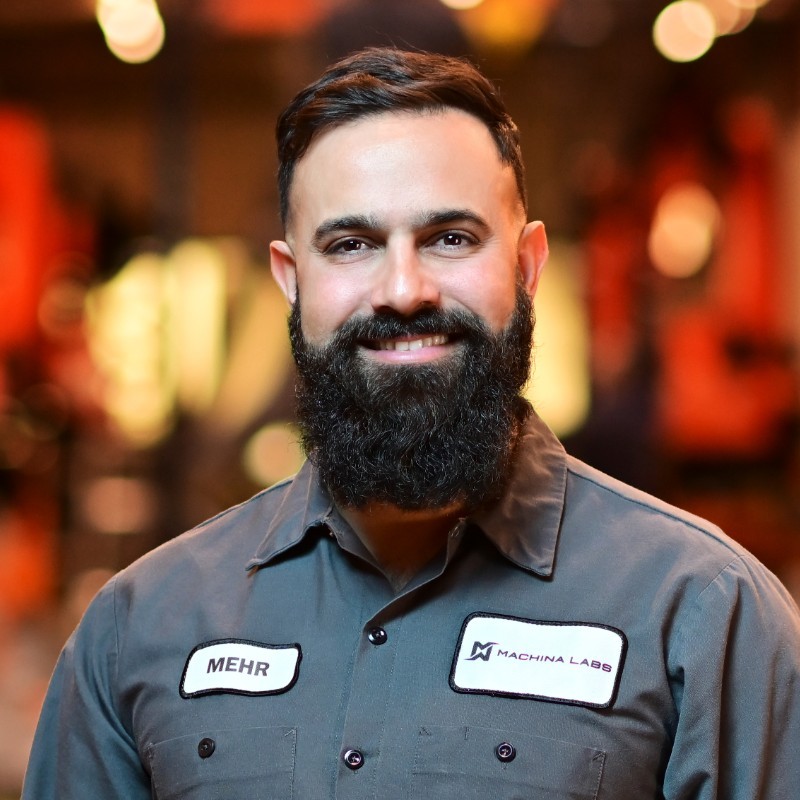
Edward Mehr, Machina Labs
Metabob revolutionizes AI code analysis and optimization through innovative applications of cutting-edge technology. In this insightful session, Dave Vellante of SiliconANGLE Media hosts Axel Lönnfors, chief operating officer at Metabob, at the Rosewood for theCUBE + NYSE Wired event. Lönnfors discusses advancements in AI code analysis, providing a glimpse into Metabob's use of graph neural networks to streamline code optimization and refactor substantial legacy systems.
The Metabob platform leverages AI by integrating graph neural networks with large language models, effectively modernizing and detecting anomalies within extensive codebases. Co-hosted by theCUBE Research, the discussion explores how Metabob’s capabilities assist companies, ranging from government agencies to Fortune 500 firms, in managing their technical debt. Lönnfors details the enterprise-driven approach and the journey towards achieving product-market fit.
Key insights from the conversation include the importance of accurate anomaly detection and automated fixes for maintaining operational efficiency. Lönnfors emphasizes Metabob’s unique position, highlighting its focus on preserving code context to prevent issues such as 502 errors. They assert that customer satisfaction and value delivery remain the company's guiding principles, steering Metabob towards greater integration into AI-driven development environments.
play_circle_outlineMachina Labs Raises $124M to Build "Robocraftsmen" Automated Factories Making Missile and Aircraft Airframes
replyShare Clip
play_circle_outlineContainerized, Software-Driven Factories: Toyota Collaboration and UAE Partnerships Deliver Rapid, Defense‑Qualified Mass Customization
replyShare Clip
play_circle_outlineLabor shortages (e.g., welders) accelerating automation adoption in manufacturing.
replyShare Clip
play_circle_outlineEdge AI and accelerated computing (NVIDIA) integral to robotics and on-site processing.
replyShare Clip
play_circle_outlineCapital strategy: diversify with VC, debt, customers, government and strategic investors.
>> Welcome back. I'm John Furrier with theCUBE. We are here at theCUBE's NYSE Studio of course. We have our Palo Alto studio connecting Silicon Valley and Wall Street. Technology is the market. This is part of our AI factories, AI robotics series where we're featuring the leaders who are making it happen. Edward Mehr is here, Co-Founder and CEO of Machina Labs back on theCUBE. It's been since April last year. Welcome back. Good to see you.
Edward Mehr
>> Good to see you as well. Thank you for having me.
John Furrier
>> Created lights. Things are happening here.
Edward Mehr
>> I love this studio. It looks beautiful.
John Furrier
>> Loud options. A lot of trades going on. So lot's happened this year. So first of all, if you want to see the video from last April, check it out on YouTube on theCUBE from Machina Labs. We went into great detail on a lot of the deep tech that you guys are doing. It's almost been like, it feels like a revolution, four years have happened in one year. So much has been on the front burner and mainstream media and the industry around robotics, specifically integration, real life. You're seeing the Robotaxis. They're all everywhere now. And you're starting to see the factories, real-world factories being rebuilt. Obviously, the AI infrastructure boom is great. On the Defense side, you're seeing a lot of military tech, public sector activity. Again, what's the update on your end? What's changed this year? And you got fresh funding too. A couple, two weeks ago.
Edward Mehr
>> Yeah, we just closed our CVC round, $124 million for our next couple of years. We have a lot of ambitious plans. We actually made the switch from being just a technology company that builds robotic system that can do all kinds of manufacturing operations autonomously, to building a factory now. So now we have two facilities in California. With this new funding we're going to open up facility three and four. Facility three is going to be our largest factory yet. It's going to be 50 other robotic systems in it, manufacturing defense products right from the scratch, all the way to the final products, starting from the metal, all the way through missile airframes, airplane airframes, fully done using robots.
John Furrier
>> So just scope the factory, explain the factories you guys are building, because again, this is the future. We even see on TV the chip wars in China. Trump's on TV. You got the American democracy focus nationalism around building chips here. That's going to create more factories. Just in general has been a front burner issue of American competitiveness here in the U.S.
Edward Mehr
>> Yeah.
John Furrier
>> This has been a revolution, again, in manufacturing. Not just chips, but all things. Scope these factories. Explain what they look like. How big are they? What robotics are in there? Just kind of paint the picture.
Edward Mehr
>> Yeah, no, absolutely. For the past four or five decades, we have been outsourcing our manufacturing, especially hard metal manufacturing, out to countries like China and Southeast Asia. And the traditional factory relies on centralized giant factories that build the same thing over and over again. The same factory, you invest a lot of money, builds the same thing. It's usually an assembly line where the material starts from one end, goes very fast through the process, and you get the products at the end. We're completely rethinking that. So in our factories, instead of having an assembly line, you get a whole array of robotic cells, we call them robocraftsmen. These are the robotic cells that we have built. Think about 50 to 200 of these robotic cells working in parallel in a kind of matrix operations. So instead of having one assembly line, you have these autonomous intelligent systems doing different types of manufacturing operations. We call them robocraftsmen because they almost work like a human. They're like workstations where the material comes into each workstation, some work gets done to it, maybe moves to another workstation. Each of these workstations can be programmed to do different things. So in our next facility, we're going to have 50 of these robotic systems. Sheet metal comes in, goes into each of these cells. It gets formed into complex structures, like for example, a missile airframe or an aircraft part. Same robot forms it, assembles it, welds it, and then the final part comes out. So, very different than a traditional factory. It's very flexible. You can make aircraft parts in the morning, missile airframes in the afternoon just through change in the software, which is not what a traditional factory looks like. A traditional factory's always custom-built for the product you're trying to build. We have a huge amount of flexibility to change designs very immediately and rapidly.
John Furrier
>> I mean, just the order of magnitude of what that means, what you just said, I think most people just can't understand how good that is and how hard it is. So, one, you're having multi-purpose capabilities. Not, set up a line, break it down, get the run going. New line comes in, whole new workflows, and different craft in the stations. You have the ability to leverage the investment of the robots using software and sensors. So this is a game-changer because this one makes the versatility of the plant, the size of the plant really optimized as a system-
Edward Mehr
>> Yes, yes.
John Furrier
>> ... with software.
Edward Mehr
>> Yeah, you're defining a factory that can do different types of product just with software. And the other benefit that it's going to have, instead of having one giant central factory that makes things for the rest of the world, which our competitor China or Southeast Asia relies on, you can have smaller factories that are easily deployed. If you look at our system, it's actually turns into a container. The whole robotic system can fold itself into a container. It can be shipped anywhere within the same day. As long as you have power on any warehouse floor, it can open itself up, self-calibrate, and start doing production. So what that means is that, I can set up a factory, a much smaller factory in matter of days, as opposed to years where it takes you build up a traditional factory. So it gives you a lot of agility in terms of deploying the factory as well.
John Furrier
>> Edward, talk about what this means in terms of the traditional old school way of doing it and now the new school way, and the real estate impact, because the older factories had constraints. They had to have certain size. Certain geographies would support factories. You have factory workers. They were limited in terms of the capabilities we talked about, but also the size. Talk about what that does for the efficiency of having footprint diversity. You could have a small factory in some nice town in the United States and a bigger one somewhere else. They all work together. I think we talked a little bit last time. Has your view changed on what that means, and if so, what does that mean? Does it mean you can just say, "Okay, this area is going to do smaller footprint because there's labor there, there's talent"?
Edward Mehr
>> Yeah.
John Furrier
>> "I might have room, but let's do something small and unique."
Edward Mehr
>> Yeah. I think the biggest challenge is if you have these giant factories, which is a traditional factory, giant factory that does one thing, what ends up happening is, the moment that product becomes obsolete, the economy around that factory collapses. And we have seen this in some towns in Midwest where they used to make certain version of a car. That car is not available anymore. It doesn't have customers anymore. That whole city falls apart. If you have smaller factories that can be deployed anywhere, and also they're flexible enough to change, then you have much more sustainable economy around it. You can switch from making product A to product B, and the economy around the facility does not die. Yeah, the people continue to stay employed and the factory continues to produce.
John Furrier
>> Have you seen traction around intellectual capital and intellectual property? You think of Silicon Valley, you think of Upstate New York, Corning, Corning glass, they make fiber optics. So you have these areas where you have competencies. You can almost co-deploy, co-locate specialism factories-
Edward Mehr
>> Absolutely. Right.
John Furrier
>> ... in these areas, and then just assemble them and send them to another factory.
Edward Mehr
>> Exactly.
John Furrier
>> Do you see that happening?
Edward Mehr
>> No, absolutely. I think not only within United States, but also one benefit of United States that we have a lot of friendly allies around the world. As opposed to you think about China, their network of allies is much smaller. We have Europe, we have Southeast Asia, we have Middle East. We actually announced, part of this round we announced partnership with UAE. UAE Strategic Development Fund is an investor in our current round, and that means that we're going to set up a factory in UAE, which is an ally country, to support production there for the type of products they need in that specific region.
John Furrier
>> I love the term robocraftsmen that you mentioned, the rapid deployment manufacturing use case. We have clips on theCUBE for that. I guess my next question is ... First of all, I love the direction. I think you're really relevant and cool in the area of what was needed, so there's market, obviously. What's changed the most this year between last year when you came on theCUBE? What are the key things that are different in the market, your business, and what are some of the key takeaways of your learnings that you have?
Edward Mehr
>> Yeah, no, I think obviously there was a lot of excitement around defense manufacturing. I think that excitement only grew. Our customers are excited to get to production. We are going through qualification of multiple products right now with our customers that are going to go to production in our new facility. So I think the excitement around defense has only increased. But one thing we're also seeing is that some of the later adopter industries, like automotive, are also stepping up to start adopting this new paradigm. We have partnered with Toyota now to enable completely new way of producing cars that can be customized. You can do mass customization at mass production prices, and this completely creates a new category of products that traditionally wasn't possible. So I think the biggest change is we see even a traditional industries who are a little bit more conservative, were not looking into robotics and AI, starting to open up because they see that there's a huge competitive advantage that they need to get their hands on.
John Furrier
>> Yeah, I was having a conversation here, actually the NYC, a couple of weeks ago. Someone from the defense industry was sharing, "Hey, we got to get more competitive on everything from ship building for our war fighters in the seas, in the Navy, to munitions. We need more missiles. If we can't fire them all, how do we replenish?" And the question, he said, "If I gave a billion dollars to somebody, I couldn't spend it on welders. Where are the welders?"
Edward Mehr
>> Yes.
John Furrier
>> And so that brings up the point of, a lot of the times that how fast can you make something, and if you had the money to make it and you could do it fast, are the skills that aren't there from our training? You're like, "Where are all the welders to build ships?" Well, you couldn't find enough welders. And then again, do you ship them to one location? This really speaks to the robotics opportunity and the software platforms behind it. What's your reaction to that? Can you expand on that if you agree?
Edward Mehr
>> No, absolutely. I think traditionally when people think about robotics and artificial intelligence, they'll be like, "Oh, what is this going to do to jobs?" The reality is that we are in shortage. There are not enough people. To your point, there's not enough welders, enough sheet shapers to be able to do these jobs. So most of these jobs have been outsourced to Southeast Asia. For the first time, we can actually get these things done. In order to get them done, we need to get robotic in place. We need to get artificial intelligence in place because we have a shortage. We want to hire more of the people than we can, and it's slow. So I think the effect is going to be net positive.
John Furrier
>> So last time we talked about this intelligent edge evolving with human robots. I want to go back there because Mobile World Congress, now called MWC, is coming up. NVIDIA's GTC is right around the corner. We expect robotics obviously to be topic at GTC, obviously, because they're doing great work. But at Mobile World Congress, the hyper-converged edge is something that we're going to talk a lot about. AI factories are coming to edge, smaller form factors. DGX boxes could be the size of a brick that could run a lot of stuff.
Edward Mehr
>> Yes.
John Furrier
>> And so robotics has basically built-in data center in the system, and they talk to the other parts of the system. So it's really an operating system. So it is a lot like an NVIDIA vibe. So you have software, hardware. Software's critical for the capabilities. How do you view that edge? Because robots, to me, are the ultimate edge device because they're doing stuff, they're working, they're physical agents.
Edward Mehr
>> No, absolutely. I think this is where for the first time we're going to see factories go from centralized location, massive, huge factories, to be closer to where the production is needed. Obviously, defense has shown a huge interest in this. Think about if tomorrow we have a conflict in Southeast Asia, in the Pacific region, logistics of manufacturing stuff in the United States and sending it to that region is actually very complex. If we can get South Korea, we can get Japan, Philippines, our allies in that region to spool up a factory in matter of months, not years, in matter of months, but deploying robots in any warehouse floor to have him self-calibrate, come up and start manufacturing, let's say USBs or drones or autonomous ships that can be deployed immediately to that region, that's a huge advantage. Almost now manufacturing becomes the new defensive weapon.
John Furrier
>> Edward, what I love about what you're doing is you're so well-positioned with a lot of optionality. Just even three years ago, I was interviewing companies as pedestrian as Saildrone. Let's go out and get weather forecasts and save the earth. Now they're really supplying the autonomous tools for the Navy. That was not on the plan.
Edward Mehr
>> Yes.
John Furrier
>> So when you're in the arena, as they say, you see things, what are you seeing right now? Because obviously the defense is super hot, the national thing on manufacturing. Are there opportunities that have emerged from the accelerated computing platform that NVIDIA and others are providing? I just wrote a post yesterday on the super cycle around memory, even AI is now the bottleneck. I mean, memory's kind of the bottleneck. So you have all these components, constraints and opportunities. What are you seeing out there that's a little bit different as you're in the arena? Is your aperture opening up or your appetite?
Edward Mehr
>> Yeah. I think what is happening, what we see is that people are going from ... There's basically diversity of design. With the AI, now there's all kinds of designs that need to become real. We have hypersonics, we have UAVs, we have USVs, autonomous surface vehicle, we have autonomous submarines. We have even on the private sector, drones that deliver drugs to different locations or important deliveries, things that needs to be, traditionally wasn't easy to deliver. So we see this huge explosion in need for design of new platform. And I think what AI did is created this explosion of ideas and creation in the virtual world. The bottleneck now is creation in the physical world. So okay, you have all these great ideas and great designs. You have the latest hypersonic design, latest cruise missile design, and we want to use them for defensive purposes, but we can't build it. So now I think the bottleneck has pushed from virtual world into the physical world. So we need to step up. We need to step up, companies like ours and others to step up to enable that creation.
John Furrier
>> And what are some of the things that's needed? Because I agree with you, by the way. That's the convergence of digital and physical. We've been covered on the crypto side, the AI side, robotics side. It's the ultimate proof while you're doing it. And there should be no debate. But what has to happen next? More entrepreneurs, more technology? What are some of the gates, blockers, enablers that need to be in place or accelerated?
Edward Mehr
>> I think the robotics or the physical AI space, I think it is basically, if I compare it to LLM space, we are maybe 2007, 2008 year of LLM. I think we're like four or five years from this massive explosion. So part of it is we need to gather data. There needs to be a lot of data gathered in the physical world. We are gathering in the factories. There ar other companies are gathering it in other environments. The data needs to be gathered so we can train these models. I think that's the bottleneck today. And if you have an application that can be deployed to the field with limited amount of data and be useful, that's the winner application.
John Furrier
>> Yeah, I think also too, to your point about the software, if you look at NVIDIA, they're the north star I think to where this is all going, not because of their stock price. But they've been on CUDA a decade and a half ago. Software is always their core competency. No one would have thought the game card, graphics card would emerge into the biggest semiconductor company on the planet. Some did. Inside of Silicon Valley, we saw it. But it really kicked over when they said, "Okay, now it's getting better." But the software was always the key.
Edward Mehr
>> Yes.
John Furrier
>> And the hardware is just the mechanism. So do you see a day where robots will have off-the-shelf vanilla hardware, where software plugins will be driving it? Or will there always be a need for custom ... NIVIDA's already showing us cars from Mercedes-Benz that has a trunk space for a rack.
Edward Mehr
>> Yes. I think if the manufacturing stays the same it is today, then hardware is always going to be just a static one thing that you need to use, and build software on top of it. I think the beauty of companies like ours and others is, now for the first time we can create that diversity in the hardware space. So you don't have to rely on one type of a human out, one type of a robot that scales. You can actually have diversity of design. But I think in the early years you will see that. You will see convergence on few platforms that you software enable, and then they do applications very well. But I think in the future we're going to have diversity of mechanical designs.
John Furrier
>> And it's a great entrepreneurial opportunity. I want to talk about your funding round. You just raised $124 million from some customers and some of your core funders. What's your view on the capital markets. As entrepreneurs out there watch this or try ... And there'll be entrepreneurial activity. Opportunities are huge. What's the barriers to entry from an entrepreneurship standpoint, and how's the funding climate? There's other industries, I won't say pharma, but pharma and bio and life science, it's like a longer horizon. It's really long, a lot of rounds before you see anything. That's happening smaller. But what's the vibe? What's the sentiment in the capital markets from an investment standpoint? Is it classic VC? Is it good climate? Is it fundable? If someone's out there, says, "Hey, I want to build a kick-ass system-"
Edward Mehr
>> Yeah, overall, I think the environment has improved. I think since last year, the interest and appetite for risk in this area has increased. But that being said, I think if you are a hardware robotic company, be ready to just diversify your capital stack. It's not just going to be VC money. You can use VC money, but it's expensive money. You can use it on technology development, but you need to be ready to deploy debt. There's a good amount of debt options available. You never want to deploy a physical hardware with equity dollars. Too expensive. So make sure you have the right debt partners. You need to work with your customers. That's what we did in this round. We are enabling our customers to do something that they couldn't do before. Bring them involved. Get them invested, because some of these projects are longer term. It takes four or five years. Having them invest in you allows them to stay at the table for longer and invest in you and see this fruition to happen in longer term. And most importantly, I think as part of this round, we also went to foreign governments, not only US government that has interest to support these type of new technologies and hardware technologies. We went to UAE. We partnered with Strategic Development Fund in UAE because you need a slightly more diversified capital stack. This is something that I wasn't aware when I started the company. I thought, okay, this is going to be a traditional VC-based company, but now we see debt, government funding, customers getting involved. All of those is part of this play.
John Furrier
>> I think we're living in an era now, Jensen talked about this on stage, multiple GTCs in a row, extreme co-design is the word he used. And he's talking to the supplier side, now the ecosystem that he has, he's got that two sides, and he partners. Shares the roadmap. And we're seeing what you just said on diversifying your capital stack, I love that term, is there are interested parties that are interested in the same outcome. There's a shared mission and shared vision.
Edward Mehr
>> Absolutely.
John Furrier
>> So why not? That was not something that was a standard practice. There's always strategic investors that come in later. They call it dumb money. Not anymore. It's not dumb money to get a strategic in.
Edward Mehr
>> No, not at all.
John Furrier
>> It's co-design, primary partner.
Edward Mehr
>> Especially if you have multiple strategic investors. We have strategic investors from automotive industry. We have strategic investors from defense. Even Jensen and NVIDIA is a strategic investor in us. Because in order for us to go deploy these things in the edge and manufacturing hardware in the edge, we need NVIDIA chips. So there's a lot. We need NVIDIA simulation capabilities. So a lot of co-development that we can do together. Especially if you have a diversified group of strategic investors, I think the risk that traditionally was associated with the strategic investors is much less.
John Furrier
>> I think in these massively generational shifts that we're seeing, certainly this is the biggest in my lifetime that I've ever seen in terms of accelerated value creation, accelerated technology change, accelerated workflow changes, form factor. Co-design has to be in it because there's shared incentives for everyone.
Edward Mehr
>> Yes.
John Furrier
>> It's not like there's a mature market waiting for the product market fit.
Edward Mehr
>> Yes.
John Furrier
>> The product market fit is evolving, so the co-design is a feature, not a bug.
Edward Mehr
>> Absolutely. And I think the markets that these things open up, these new technologies, think about manufacturing is a multi-trillion dollar market. So there's not going to be a single person winner. I think there's going to be a lot of people working together to deliver a product that's multidisciplinary and requires that collaboration or co-design, as you put it.
John Furrier
>> Edward, thanks for coming back on theCUBE again. Congratulations on the funding. And again, thanks for the insights. Love the capital stack. I think what you're doing is a sign of how collaboration, not just on the technology build side and deployment, but the funding too. And of course, robotics is just scratching the surface. It's going to get better. We didn't even get into the software and some of the precision handling, which is booming. Next time.
Edward Mehr
>> Yes, absolutely.
John Furrier
>> We'll see you in theCUBE. Thanks for coming on.
Edward Mehr
>> Thanks for having me here-
John Furrier
>> All right. I'm John Furrier. This is the AI Robotics Series. Again, we're focusing on the leaders who are making it happen. The co-design, the development, the accelerated change is happening and it's going to be better for the whole world. And of course, it's changing how we do our jobs and also live our lives. So we're doing our part in theCUBE to bring that to you. I'm John Furrier, the host, thanks for watching.
>> Welcome back. I'm John Furrier with theCUBE. We are here at theCUBE's NYSE Studio of course. We have our Palo Alto studio connecting Silicon Valley and Wall Street. Technology is the market. This is part of our AI factories, AI robotics series where we're featuring the leaders who are making it happen. Edward Mehr is here, Co-Founder and CEO of Machina Labs back on theCUBE. It's been since April last year. Welcome back. Good to see you.
Edward Mehr
>> Good to see you as well. Thank you for having me.
John Furrier
>> Created lights. Things are happening here.
Edward Mehr
>> I love this studio. It looks beautiful.
John Furrier
>> Loud options. A lot of trades going on. So lot's happened this year. So first of all, if you want to see the video from last April, check it out on YouTube on theCUBE from Machina Labs. We went into great detail on a lot of the deep tech that you guys are doing. It's almost been like, it feels like a revolution, four years have happened in one year. So much has been on the front burner and mainstream media and the industry around robotics, specifically integration, real life. You're seeing the Robotaxis. They're all everywhere now. And you're starting to see the factories, real-world factories being rebuilt. Obviously, the AI infrastructure boom is great. On the Defense side, you're seeing a lot of military tech, public sector activity. Again, what's the update on your end? What's changed this year? And you got fresh funding too. A couple, two weeks ago.
Edward Mehr
>> Yeah, we just closed our CVC round, $124 million for our next couple of years. We have a lot of ambitious plans. We actually made the switch from being just a technology company that builds robotic system that can do all kinds of manufacturing operations autonomously, to building a factory now. So now we have two facilities in California. With this new funding we're going to open up facility three and four. Facility three is going to be our largest factory yet. It's going to be 50 other robotic systems in it, manufacturing defense products right from the scratch, all the way to the final products, starting from the metal, all the way through missile airframes, airplane airframes, fully done using robots.
John Furrier
>> So just scope the factory, explain the factories you guys are building, because again, this is the future. We even see on TV the chip wars in China. Trump's on TV. You got the American democracy focus nationalism around building chips here. That's going to create more factories. Just in general has been a front burner issue of American competitiveness here in the U.S.
Edward Mehr
>> Yeah.
John Furrier
>> This has been a revolution, again, in manufacturing. Not just chips, but all things. Scope these factories. Explain what they look like. How big are they? What robotics are in there? Just kind of paint the picture.
Edward Mehr
>> Yeah, no, absolutely. For the past four or five decades, we have been outsourcing our manufacturing, especially hard metal manufacturing, out to countries like China and Southeast Asia. And the traditional factory relies on centralized giant factories that build the same thing over and over again. The same factory, you invest a lot of money, builds the same thing. It's usually an assembly line where the material starts from one end, goes very fast through the process, and you get the products at the end. We're completely rethinking that. So in our factories, instead of having an assembly line, you get a whole array of robotic cells, we call them robocraftsmen. These are the robotic cells that we have built. Think about 50 to 200 of these robotic cells working in parallel in a kind of matrix operations. So instead of having one assembly line, you have these autonomous intelligent systems doing different types of manufacturing operations. We call them robocraftsmen because they almost work like a human. They're like workstations where the material comes into each workstation, some work gets done to it, maybe moves to another workstation. Each of these workstations can be programmed to do different things. So in our next facility, we're going to have 50 of these robotic systems. Sheet metal comes in, goes into each of these cells. It gets formed into complex structures, like for example, a missile airframe or an aircraft part. Same robot forms it, assembles it, welds it, and then the final part comes out. So, very different than a traditional factory. It's very flexible. You can make aircraft parts in the morning, missile airframes in the afternoon just through change in the software, which is not what a traditional factory looks like. A traditional factory's always custom-built for the product you're trying to build. We have a huge amount of flexibility to change designs very immediately and rapidly.
John Furrier
>> I mean, just the order of magnitude of what that means, what you just said, I think most people just can't understand how good that is and how hard it is. So, one, you're having multi-purpose capabilities. Not, set up a line, break it down, get the run going. New line comes in, whole new workflows, and different craft in the stations. You have the ability to leverage the investment of the robots using software and sensors. So this is a game-changer because this one makes the versatility of the plant, the size of the plant really optimized as a system-
Edward Mehr
>> Yes, yes.
John Furrier
>> ... with software.
Edward Mehr
>> Yeah, you're defining a factory that can do different types of product just with software. And the other benefit that it's going to have, instead of having one giant central factory that makes things for the rest of the world, which our competitor China or Southeast Asia relies on, you can have smaller factories that are easily deployed. If you look at our system, it's actually turns into a container. The whole robotic system can fold itself into a container. It can be shipped anywhere within the same day. As long as you have power on any warehouse floor, it can open itself up, self-calibrate, and start doing production. So what that means is that, I can set up a factory, a much smaller factory in matter of days, as opposed to years where it takes you build up a traditional factory. So it gives you a lot of agility in terms of deploying the factory as well.
John Furrier
>> Edward, talk about what this means in terms of the traditional old school way of doing it and now the new school way, and the real estate impact, because the older factories had constraints. They had to have certain size. Certain geographies would support factories. You have factory workers. They were limited in terms of the capabilities we talked about, but also the size. Talk about what that does for the efficiency of having footprint diversity. You could have a small factory in some nice town in the United States and a bigger one somewhere else. They all work together. I think we talked a little bit last time. Has your view changed on what that means, and if so, what does that mean? Does it mean you can just say, "Okay, this area is going to do smaller footprint because there's labor there, there's talent"?
Edward Mehr
>> Yeah.
John Furrier
>> "I might have room, but let's do something small and unique."
Edward Mehr
>> Yeah. I think the biggest challenge is if you have these giant factories, which is a traditional factory, giant factory that does one thing, what ends up happening is, the moment that product becomes obsolete, the economy around that factory collapses. And we have seen this in some towns in Midwest where they used to make certain version of a car. That car is not available anymore. It doesn't have customers anymore. That whole city falls apart. If you have smaller factories that can be deployed anywhere, and also they're flexible enough to change, then you have much more sustainable economy around it. You can switch from making product A to product B, and the economy around the facility does not die. Yeah, the people continue to stay employed and the factory continues to produce.
John Furrier
>> Have you seen traction around intellectual capital and intellectual property? You think of Silicon Valley, you think of Upstate New York, Corning, Corning glass, they make fiber optics. So you have these areas where you have competencies. You can almost co-deploy, co-locate specialism factories-
Edward Mehr
>> Absolutely. Right.
John Furrier
>> ... in these areas, and then just assemble them and send them to another factory.
Edward Mehr
>> Exactly.
John Furrier
>> Do you see that happening?
Edward Mehr
>> No, absolutely. I think not only within United States, but also one benefit of United States that we have a lot of friendly allies around the world. As opposed to you think about China, their network of allies is much smaller. We have Europe, we have Southeast Asia, we have Middle East. We actually announced, part of this round we announced partnership with UAE. UAE Strategic Development Fund is an investor in our current round, and that means that we're going to set up a factory in UAE, which is an ally country, to support production there for the type of products they need in that specific region.
John Furrier
>> I love the term robocraftsmen that you mentioned, the rapid deployment manufacturing use case. We have clips on theCUBE for that. I guess my next question is ... First of all, I love the direction. I think you're really relevant and cool in the area of what was needed, so there's market, obviously. What's changed the most this year between last year when you came on theCUBE? What are the key things that are different in the market, your business, and what are some of the key takeaways of your learnings that you have?
Edward Mehr
>> Yeah, no, I think obviously there was a lot of excitement around defense manufacturing. I think that excitement only grew. Our customers are excited to get to production. We are going through qualification of multiple products right now with our customers that are going to go to production in our new facility. So I think the excitement around defense has only increased. But one thing we're also seeing is that some of the later adopter industries, like automotive, are also stepping up to start adopting this new paradigm. We have partnered with Toyota now to enable completely new way of producing cars that can be customized. You can do mass customization at mass production prices, and this completely creates a new category of products that traditionally wasn't possible. So I think the biggest change is we see even a traditional industries who are a little bit more conservative, were not looking into robotics and AI, starting to open up because they see that there's a huge competitive advantage that they need to get their hands on.
John Furrier
>> Yeah, I was having a conversation here, actually the NYC, a couple of weeks ago. Someone from the defense industry was sharing, "Hey, we got to get more competitive on everything from ship building for our war fighters in the seas, in the Navy, to munitions. We need more missiles. If we can't fire them all, how do we replenish?" And the question, he said, "If I gave a billion dollars to somebody, I couldn't spend it on welders. Where are the welders?"
Edward Mehr
>> Yes.
John Furrier
>> And so that brings up the point of, a lot of the times that how fast can you make something, and if you had the money to make it and you could do it fast, are the skills that aren't there from our training? You're like, "Where are all the welders to build ships?" Well, you couldn't find enough welders. And then again, do you ship them to one location? This really speaks to the robotics opportunity and the software platforms behind it. What's your reaction to that? Can you expand on that if you agree?
Edward Mehr
>> No, absolutely. I think traditionally when people think about robotics and artificial intelligence, they'll be like, "Oh, what is this going to do to jobs?" The reality is that we are in shortage. There are not enough people. To your point, there's not enough welders, enough sheet shapers to be able to do these jobs. So most of these jobs have been outsourced to Southeast Asia. For the first time, we can actually get these things done. In order to get them done, we need to get robotic in place. We need to get artificial intelligence in place because we have a shortage. We want to hire more of the people than we can, and it's slow. So I think the effect is going to be net positive.
John Furrier
>> So last time we talked about this intelligent edge evolving with human robots. I want to go back there because Mobile World Congress, now called MWC, is coming up. NVIDIA's GTC is right around the corner. We expect robotics obviously to be topic at GTC, obviously, because they're doing great work. But at Mobile World Congress, the hyper-converged edge is something that we're going to talk a lot about. AI factories are coming to edge, smaller form factors. DGX boxes could be the size of a brick that could run a lot of stuff.
Edward Mehr
>> Yes.
John Furrier
>> And so robotics has basically built-in data center in the system, and they talk to the other parts of the system. So it's really an operating system. So it is a lot like an NVIDIA vibe. So you have software, hardware. Software's critical for the capabilities. How do you view that edge? Because robots, to me, are the ultimate edge device because they're doing stuff, they're working, they're physical agents.
Edward Mehr
>> No, absolutely. I think this is where for the first time we're going to see factories go from centralized location, massive, huge factories, to be closer to where the production is needed. Obviously, defense has shown a huge interest in this. Think about if tomorrow we have a conflict in Southeast Asia, in the Pacific region, logistics of manufacturing stuff in the United States and sending it to that region is actually very complex. If we can get South Korea, we can get Japan, Philippines, our allies in that region to spool up a factory in matter of months, not years, in matter of months, but deploying robots in any warehouse floor to have him self-calibrate, come up and start manufacturing, let's say USBs or drones or autonomous ships that can be deployed immediately to that region, that's a huge advantage. Almost now manufacturing becomes the new defensive weapon.
John Furrier
>> Edward, what I love about what you're doing is you're so well-positioned with a lot of optionality. Just even three years ago, I was interviewing companies as pedestrian as Saildrone. Let's go out and get weather forecasts and save the earth. Now they're really supplying the autonomous tools for the Navy. That was not on the plan.
Edward Mehr
>> Yes.
John Furrier
>> So when you're in the arena, as they say, you see things, what are you seeing right now? Because obviously the defense is super hot, the national thing on manufacturing. Are there opportunities that have emerged from the accelerated computing platform that NVIDIA and others are providing? I just wrote a post yesterday on the super cycle around memory, even AI is now the bottleneck. I mean, memory's kind of the bottleneck. So you have all these components, constraints and opportunities. What are you seeing out there that's a little bit different as you're in the arena? Is your aperture opening up or your appetite?
Edward Mehr
>> Yeah. I think what is happening, what we see is that people are going from ... There's basically diversity of design. With the AI, now there's all kinds of designs that need to become real. We have hypersonics, we have UAVs, we have USVs, autonomous surface vehicle, we have autonomous submarines. We have even on the private sector, drones that deliver drugs to different locations or important deliveries, things that needs to be, traditionally wasn't easy to deliver. So we see this huge explosion in need for design of new platform. And I think what AI did is created this explosion of ideas and creation in the virtual world. The bottleneck now is creation in the physical world. So okay, you have all these great ideas and great designs. You have the latest hypersonic design, latest cruise missile design, and we want to use them for defensive purposes, but we can't build it. So now I think the bottleneck has pushed from virtual world into the physical world. So we need to step up. We need to step up, companies like ours and others to step up to enable that creation.
John Furrier
>> And what are some of the things that's needed? Because I agree with you, by the way. That's the convergence of digital and physical. We've been covered on the crypto side, the AI side, robotics side. It's the ultimate proof while you're doing it. And there should be no debate. But what has to happen next? More entrepreneurs, more technology? What are some of the gates, blockers, enablers that need to be in place or accelerated?
Edward Mehr
>> I think the robotics or the physical AI space, I think it is basically, if I compare it to LLM space, we are maybe 2007, 2008 year of LLM. I think we're like four or five years from this massive explosion. So part of it is we need to gather data. There needs to be a lot of data gathered in the physical world. We are gathering in the factories. There ar other companies are gathering it in other environments. The data needs to be gathered so we can train these models. I think that's the bottleneck today. And if you have an application that can be deployed to the field with limited amount of data and be useful, that's the winner application.
John Furrier
>> Yeah, I think also too, to your point about the software, if you look at NVIDIA, they're the north star I think to where this is all going, not because of their stock price. But they've been on CUDA a decade and a half ago. Software is always their core competency. No one would have thought the game card, graphics card would emerge into the biggest semiconductor company on the planet. Some did. Inside of Silicon Valley, we saw it. But it really kicked over when they said, "Okay, now it's getting better." But the software was always the key.
Edward Mehr
>> Yes.
John Furrier
>> And the hardware is just the mechanism. So do you see a day where robots will have off-the-shelf vanilla hardware, where software plugins will be driving it? Or will there always be a need for custom ... NIVIDA's already showing us cars from Mercedes-Benz that has a trunk space for a rack.
Edward Mehr
>> Yes. I think if the manufacturing stays the same it is today, then hardware is always going to be just a static one thing that you need to use, and build software on top of it. I think the beauty of companies like ours and others is, now for the first time we can create that diversity in the hardware space. So you don't have to rely on one type of a human out, one type of a robot that scales. You can actually have diversity of design. But I think in the early years you will see that. You will see convergence on few platforms that you software enable, and then they do applications very well. But I think in the future we're going to have diversity of mechanical designs.
John Furrier
>> And it's a great entrepreneurial opportunity. I want to talk about your funding round. You just raised $124 million from some customers and some of your core funders. What's your view on the capital markets. As entrepreneurs out there watch this or try ... And there'll be entrepreneurial activity. Opportunities are huge. What's the barriers to entry from an entrepreneurship standpoint, and how's the funding climate? There's other industries, I won't say pharma, but pharma and bio and life science, it's like a longer horizon. It's really long, a lot of rounds before you see anything. That's happening smaller. But what's the vibe? What's the sentiment in the capital markets from an investment standpoint? Is it classic VC? Is it good climate? Is it fundable? If someone's out there, says, "Hey, I want to build a kick-ass system-"
Edward Mehr
>> Yeah, overall, I think the environment has improved. I think since last year, the interest and appetite for risk in this area has increased. But that being said, I think if you are a hardware robotic company, be ready to just diversify your capital stack. It's not just going to be VC money. You can use VC money, but it's expensive money. You can use it on technology development, but you need to be ready to deploy debt. There's a good amount of debt options available. You never want to deploy a physical hardware with equity dollars. Too expensive. So make sure you have the right debt partners. You need to work with your customers. That's what we did in this round. We are enabling our customers to do something that they couldn't do before. Bring them involved. Get them invested, because some of these projects are longer term. It takes four or five years. Having them invest in you allows them to stay at the table for longer and invest in you and see this fruition to happen in longer term. And most importantly, I think as part of this round, we also went to foreign governments, not only US government that has interest to support these type of new technologies and hardware technologies. We went to UAE. We partnered with Strategic Development Fund in UAE because you need a slightly more diversified capital stack. This is something that I wasn't aware when I started the company. I thought, okay, this is going to be a traditional VC-based company, but now we see debt, government funding, customers getting involved. All of those is part of this play.
John Furrier
>> I think we're living in an era now, Jensen talked about this on stage, multiple GTCs in a row, extreme co-design is the word he used. And he's talking to the supplier side, now the ecosystem that he has, he's got that two sides, and he partners. Shares the roadmap. And we're seeing what you just said on diversifying your capital stack, I love that term, is there are interested parties that are interested in the same outcome. There's a shared mission and shared vision.
Edward Mehr
>> Absolutely.
John Furrier
>> So why not? That was not something that was a standard practice. There's always strategic investors that come in later. They call it dumb money. Not anymore. It's not dumb money to get a strategic in.
Edward Mehr
>> No, not at all.
John Furrier
>> It's co-design, primary partner.
Edward Mehr
>> Especially if you have multiple strategic investors. We have strategic investors from automotive industry. We have strategic investors from defense. Even Jensen and NVIDIA is a strategic investor in us. Because in order for us to go deploy these things in the edge and manufacturing hardware in the edge, we need NVIDIA chips. So there's a lot. We need NVIDIA simulation capabilities. So a lot of co-development that we can do together. Especially if you have a diversified group of strategic investors, I think the risk that traditionally was associated with the strategic investors is much less.
John Furrier
>> I think in these massively generational shifts that we're seeing, certainly this is the biggest in my lifetime that I've ever seen in terms of accelerated value creation, accelerated technology change, accelerated workflow changes, form factor. Co-design has to be in it because there's shared incentives for everyone.
Edward Mehr
>> Yes.
John Furrier
>> It's not like there's a mature market waiting for the product market fit.
Edward Mehr
>> Yes.
John Furrier
>> The product market fit is evolving, so the co-design is a feature, not a bug.
Edward Mehr
>> Absolutely. And I think the markets that these things open up, these new technologies, think about manufacturing is a multi-trillion dollar market. So there's not going to be a single person winner. I think there's going to be a lot of people working together to deliver a product that's multidisciplinary and requires that collaboration or co-design, as you put it.
John Furrier
>> Edward, thanks for coming back on theCUBE again. Congratulations on the funding. And again, thanks for the insights. Love the capital stack. I think what you're doing is a sign of how collaboration, not just on the technology build side and deployment, but the funding too. And of course, robotics is just scratching the surface. It's going to get better. We didn't even get into the software and some of the precision handling, which is booming. Next time.
Edward Mehr
>> Yes, absolutely.
John Furrier
>> We'll see you in theCUBE. Thanks for coming on.
Edward Mehr
>> Thanks for having me here-
John Furrier
>> All right. I'm John Furrier. This is the AI Robotics Series. Again, we're focusing on the leaders who are making it happen. The co-design, the development, the accelerated change is happening and it's going to be better for the whole world. And of course, it's changing how we do our jobs and also live our lives. So we're doing our part in theCUBE to bring that to you. I'm John Furrier, the host, thanks for watching.

































 John Furrier