We just sent you a verification email. Please verify your account to gain access to
theCUBE + NYSE Wired: Physical AI & Robotics Leaders. If you don’t think you received an email check your
spam folder.
Sign in to theCUBE + NYSE Wired: Physical AI & Robotics Leaders.
In order to sign in, enter the email address you used to registered for the event. Once completed, you will receive an email with a verification link. Open this link to automatically sign into the site.
Register For theCUBE + NYSE Wired: Physical AI & Robotics Leaders
Please fill out the information below. You will recieve an email with a verification link confirming your registration. Click the link to automatically sign into the site.
You’re almost there!
We just sent you a verification email. Please click the verification button in the email. Once your email address is verified, you will have full access to all event content for theCUBE + NYSE Wired: Physical AI & Robotics Leaders.
I want my badge and interests to be visible to all attendees.
Checking this box will display your presense on the attendees list, view your profile and allow other attendees to contact you via 1-1 chat. Read the Privacy Policy. At any time, you can choose to disable this preference.
Select your Interests!
add
Upload your photo
Uploading..
OR
Connect via Twitter
Connect via Linkedin
EDIT PASSWORD
Share
Forgot Password
Almost there!
We just sent you a verification email. Please verify your account to gain access to
theCUBE + NYSE Wired: Physical AI & Robotics Leaders. If you don’t think you received an email check your
spam folder.
Sign in to theCUBE + NYSE Wired: Physical AI & Robotics Leaders.
In order to sign in, enter the email address you used to registered for the event. Once completed, you will receive an email with a verification link. Open this link to automatically sign into the site.
Sign in to gain access to theCUBE + NYSE Wired: Physical AI & Robotics Leaders
Please sign in with LinkedIn to continue to theCUBE + NYSE Wired: Physical AI & Robotics Leaders. Signing in with LinkedIn ensures a professional environment.
Exploring the Future of Autonomous Haulage with Pronto AI at NYSE Wired Robotics and AI Media Week
In this insightful video, theCUBE presents an engaging discussion with Christian Kurasek, chief financial officer of Pronto AI. Recorded during the NYSE Wired Robotics and AI Media Week, Kurasek discusses the transformative potential of autonomous technology within the mining and quarrying sectors, highlighting Pronto AI's strategies to become the world's first profitable autonomous vehicle company.
Kurasek, with extensive experience in autonom...Read more
exploreKeep Exploring
What industry did the team identify as the best market to focus on for commercializing autonomy today?add
What are the potential benefits of using sensors to replace humans in dangerous situations such as mining operations?add
What is the company's current focus in terms of deploying their technology, and what are their long-term goals for automation in various industries?add
What are the current strategies and goals of the company in terms of scaling up and exploring potential partnerships in the market?add
>> Welcome back, everyone. I'm John Furrier, host of theCUBE. We are here live at our NYSE CUBE Studios on the East Coast. We got Palo Alto and Silicon Valley connecting to Wall Street here at the NYSE's part of theCUBE and the NYSE wire community, an open community of leaders breaking down all the action. We're here for Citi and Robotics Media Week, as well as our AI leaders going on. We have Christian Kurasek, CFO of Pronto AI doing autonomous trucks, but a lot more, founding team from Waymo and originally Uber and Wells, all the autonomous action technology. Christian, thanks for coming on theCUBE. Appreciate it.
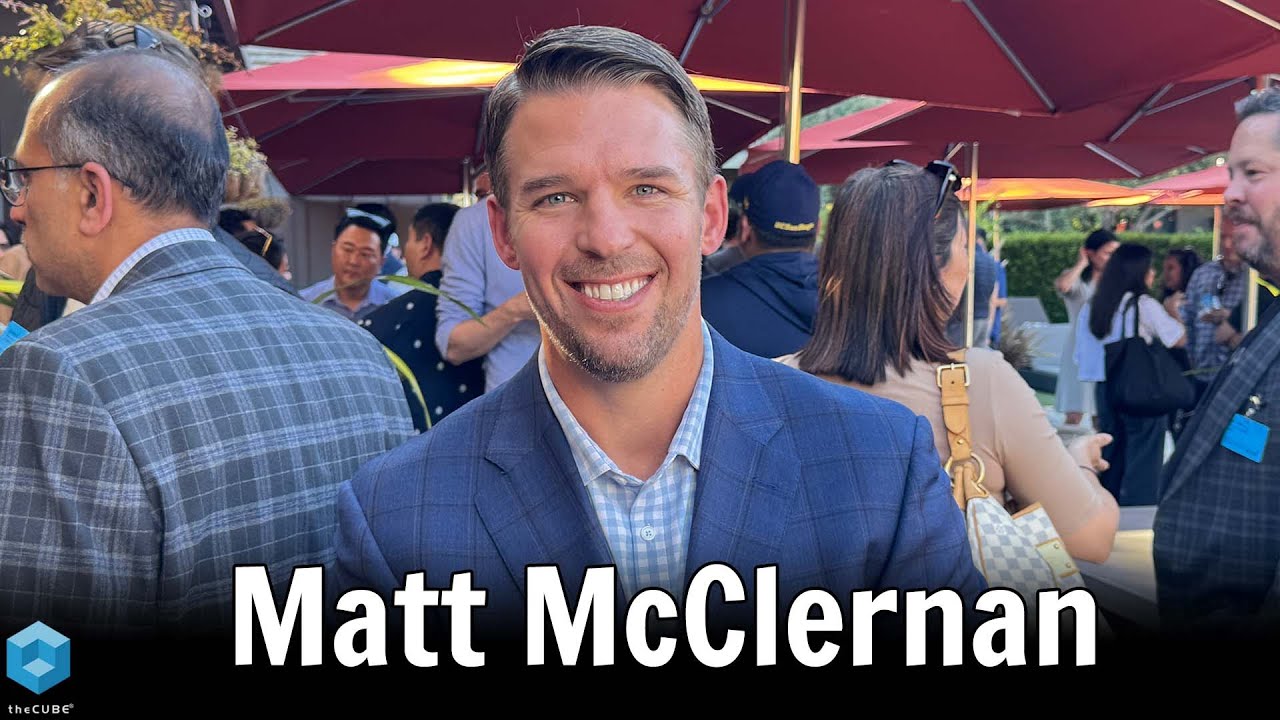
Christian Kurasek
>> Thanks. Thanks for having me.>> We were talking before we came on camera, the challenges in autonomous, anything fully autonomous is challenging and you guys are doing that technology and your market starting in a very controlled area, which is a great way to make money right away.
Christian Kurasek
>> Exactly.>> It's a good way to get started and not run out of cash, but you got big ambitions. So layout, Pronto AI. What are you guys doing? What's the vision?
Christian Kurasek
>> Sure. Our team has been focused on how do we commercialize autonomy today, not five years in the future, which it has been for the last 15 years. It's only five years away, some say only one year away. And so when we looked at the market, we looked at the state of the technology, we identified the biggest addressable market where we could commercialize it today, where customers had a pressing need was the mining and quarrying industries. Very controlled environments, very labor constraints, huge safety considerations. It's a trillion dollar part of the global economy. Always has been, always will be. There's a saying, "If it's not grown, it's mined," and it's very true if you think about it. And so our vision, let's start with where we can create a profitable business today. We are on track, we think to be the world's first profitable autonomous vehicle company. And let's go from there as the technology evolves and start expanding our sphere of product suite. So right now we're doing mining trucks, the big yellow you see driving around mining sites, quarry sites. We'll expand to other pieces of equipment. Eventually, our vision is to automate everything with wheels.>> I mean it's a smart move as CFO because, why not make money on the entry strategy as you guys build out the software? And you mentioned it's a pretty big market. Talk about that because I think, I see the big trucks. They're monster trucks, huge CapEx. I mean, you mentioned there's a huge labor issue shortage. How do you find people? Safety concerns always in autonomy. Almost a risk management move and profit move. Was that intentional?
Christian Kurasek
>> Absolutely. Very intentional. We can make money doing it. There's big dollars involved. So as you noted, some of these mining trucks can cost 5, 6, $7 million. If you are running an operation where you're pulling a global commodity out of the ground like gold, you want to run 24/7 and be as productive as possible. You lose 20% of your productivity of those machines off the top just by having a human in the seat. So that's shift changes, pre-shift inspections, brakes, absenteeism. You need something like four and a half drivers per truck to keep it going 24/7. So the costs add up very quickly. And if you actually do an analysis and look at, should I be spending five, $6 million on a 400-ton truck or should I have 10 times as many 40-ton trucks? Without the humans in the seats, the math actually says the smaller 40-ton trucks. So it's very clear to us the future of off-road haulage is autonomous. And with those kinds of economics, it's just a no-brainer. And so to your point, making money in a business is kind of a novel strategy in this space. So it's very intentionally, we->> The fastest way to stay in business is not to run out of cash, as I say.
Christian Kurasek
>> Exactly. Exactly.>> Well, it's interesting because you think architecturally, whether you're talking about system architecture on a big IT project or what you're laying out, the monolithic truck broken down into smaller trucks makes sense because you're now essentially automating almost a factory of trucks that's now autonomous. You can make them predictable. What kind of software's involved? What's the tech behind the scenes? What's some of the secret sauce? I mean, obviously the model works because now it's a throughput game, right?
Christian Kurasek
>> Mm-hmm.>> No humans there.
Christian Kurasek
>> Mm-hmm.>> So you don't need to worry about the truck size.
Christian Kurasek
>> Yeah.>> That makes sense. What does some of the successes look like? What's the secret sauce behind all this?
Christian Kurasek
>> So we use camera only. We're not doing any other sensors. And we use IMUs and GPS, things like that. But, so we very intentionally kept the tech stack light. It needs to be affordable. If you look at some of the incumbent competitors, we're competing against the big OEMs. Their systems cost 10 times what ours do. So there's a very small market in terms of number of machines that make sense. So we're keeping it easy to use, easy to install, fast to deploy, make the economics work at all scales, not just the biggest trucks, the biggest mines.>> Complexity's reduced. You don't have to worry about LIDAR or anything like that, right?
Christian Kurasek
>> Correct. So it makes the sensor fusion simpler, less things breaking, you have to worry about. 100%. And then being nimble and being responsive to what the customers are asking for, which kind of entry-level stuff, but it's easier to do as a small->> So one of the trends we're seeing in the AI, Robotics Week we're having here with leaders is that there's kind of two approaches. One is build something from scratch, like build a new big hauler device or retrofit an existing. Are you guys looking at that from that perspective? Obviously you have pre-existing CapEx on equipment. Is that the hybrid for you guys? Are you doing any of your own trucks? Or are you guys looking at retrofitting?
Christian Kurasek
>> We do not want to be an OEM. We don't want to build big trucks. There are something like 75,000 haul trucks out there in the world that should be retrofit to be autonomous. Those trucks can live for 10 to 20 years, depending on the operator and how well you maintain them. So it's not realistic that everybody's just going to flip their fleet tomorrow.>> Yeah, so if you're retrofitting, do you retrofit or do they have to do it?
Christian Kurasek
>> We're doing it right now. We're partnering with dealers and OEMs and training our customers on how to do it themselves. We're also talking to OEMs about integrating further up in the supply chain for new trucks. That's a little bit of a different story, but we're doing both.>> That's a timeline.
Christian Kurasek
>> Correct.>> I mean they're, got procure there. Supply chain constraint. There's lag there. It's like building anything, right?
Christian Kurasek
>> Correct. Yeah.>> All right. So you're in the mode of that channel's your primary, you're not building anything yourself, you're just supplying hardware for new stuff, retrofitting existing through those channels.
Christian Kurasek
>> Correct.>> All right. What about safety? That comes up a lot. We were kind of talking about the human side of it. Strollers aren't on job site, so you don't worry about a mom with her baby walking across the street. What are some of the safety there? Obviously bigger trucks, big stuff happens, good and bad. So what's the ROI? What's the safety look like, picture, for you guys?
Christian Kurasek
>> At a very simple level, we're taking humans out of danger. If you look at, the Mining Safety Health Administration publishes fatality injury data basically in real time. You can log onto their website and see what's happened this year. The vast majority of injuries that happen are power haulage. So it's somebody in a truck that flips over, it's a truck driving over another vehicle because it's too small and outside the field of view of the driver. So by using sensors to avoid things like that, by taking humans out of the cab, we are completely changing the game by eliminating those risks. Robots don't get tired. Robots don't show up to work drunk.>> They don't need a pee break.
Christian Kurasek
>> Exactly. Exactly. So it's significant. And that's also a huge motivator for our customers because they take it very seriously as they should and it's also very expensive when anything happens. You have to shut it down, shut the plant down, do an investigation. So it makes sense kind of on every level.>> And the workflows are predictable. Makes sense, right? I mean you have somewhat a controlled environment relative to what the operation is. It changes obviously when conditions change, but it's not real time. Nothing real time is happening other than the trucks moving.
Christian Kurasek
>> You're essentially driving in a big circle. That's how I like to put it.>> It's like a factory of trucks.
Christian Kurasek
>> It's exactly, right.>> Yeah. That's cool. Talk about the origination story. We were talking a little earlier before we came on again. How'd you guys get here? Talk us through the origination, where you guys started from, what year, and give some numbers of what you guys are doing.
Christian Kurasek
>> Yeah, for sure. So our founding team, as we talked about, traces their roots all the way back to the 2004 DARPA Grand Challenge, ended up being a co-founder of Waymo, started Uber's autonomy platform that's now Uber Freight. And then in 2018, Pronto was started to do on-road Class-Eight ADAS. Turns out that's a very difficult business model to make work. The technology is there, but to get somebody to add costs to a very low-margin business is a difficult sell. So as I was alluding to earlier, when we looked at where could we commercialize this today, what's the biggest market, where's the tech-ready mining and courting jumped out. So we've been at this, we did that pivot about four years ago, three and a half years ago. We have been, I like to say, trading up the paperclip, right? These are huge companies, very high-throughput, high-revenue-producing sites. You cannot just show up and expect someone to sign off on a new technology without some proof. We like to say nobody ever got fired for buying IBM. Very much applies here. So we've been proving ourselves at larger and larger sites. We're now dealing with, I think, 18 of the world's top quarrying companies. We have deployments. We're in conversations with a handful of the world's top 10 mining companies, which is huge. We've recently put out some exciting news. We just signed a global partnership agreement with Heidelberg Materials to deploy over a hundred trucks worldwide over the next three years. They're the world's largest construction aggregates producer. We've got some other customers we're working with of similar scale we have not disclosed yet, but we'll have some exciting announcements.>> You're knocking down some wins.
Christian Kurasek
>> We are. We are.>> And you got a track record. You got some leverage there. As you look as the CFO, we've got the financial strategy meets the business strategy. What's the operating leverage that you guys get? Is it experience with the big companies? I mean, think about how to close a deal. It's like you got to get the reps in. Is it that? Is it the business side that's got the advantage? Is there some other leverage you're getting with data? Take us through some of the sustainable durable features here.
Christian Kurasek
>> Table stakes is having a product that works, works safely.>> Yeah, definitely. Like you said, the go big or go home. A lot of people going home on this one.
Christian Kurasek
>> Yeah, look, you have one big incident in this industry and you're done. It's a small industry. People talk. They're not going to put their operations at risk. So we've been very studious and careful and cautious about that. I would say the biggest operating leverage we have now is once you get one of these large operators convinced that you have a product that works, there's an ROI and is safe, that takes time, that takes some investment. We like to say nobody wants to be first, everybody wants to be tenth.>> Exactly.
Christian Kurasek
>> I think it's turning out everybody wants to be third because now that people are seeing we're deploying at real scale, they're kind of piling in. So that would be, I would say the biggest operational leverage.>> We always say when one penguin jumps in the water, they all jump in.
Christian Kurasek
>> Exactly.>> I mean, let's talk about some of the data you're getting on the proof points. So what are some of the metrics you're seeing that get people, "Wow, this is working"? Because I can imagine the followers would go, "Wow, my competitor has an advantage."
Christian Kurasek
>> Correct.>> Or "I'm losing, I could make more money." Whatever angle, greed, profit, the operation efficiency or just kind of the cool factor, it's not just being cool, it's relevant and money talks.
Christian Kurasek
>> Yeah.>> BS walks, in this case, right?
Christian Kurasek
>> Yeah.>> Because these people aren't in for the shiny new toy.
Christian Kurasek
>> Correct.>> They're running mining operations.
Christian Kurasek
>> Correct.>> It's like...
Christian Kurasek
>> Very brass tacks, bottom line.>> What are you going to save me? So share with me some of the data on what you guys are proving out.
Christian Kurasek
>> Sure. So that 20% of increased productivity on the trucks you pick up just by replacing the human, huge. These are companies that will spend massive amounts of money to gain one 2% improvements in productivity. So that's massive. You solve what is a huge and growing labor challenge. It's, I would say, about one in four driver's seats worldwide, no matter who we're talking to are unfilled today. Nobody wants to do these jobs. They're in remote locations, they're very rote. The workforce is aging out. So that's solving a huge pain point there. And if you start looking at some of the efficiency numbers, we have empirical data, the industry has empirical data from other deployments, you see things like 40% reduction in things like brakes and wire, or I'm sorry, tire wear. You get something like 15% reduction overall maintenance costs on a truck. You can reduce your operator costs by 75%. And if you really start to look at the big picture and you start designing mines for smaller autonomous trucks, you're looking at life of mine, NPV increases of 40 or 50%. And that number sounds insane.>> Yeah, it sounds huge.
Christian Kurasek
>> We did a big study with a consulting firm called Whittle. We were like, "These numbers can't be real." But now we have two different big international mining companies who've replicated that analysis internally and they confirm they're coming at it .>> So you've got more customers, you got more data to work with, those are huge numbers. I mean, it is a no-brainer. I can see the advantages. What's next? What are you guys going to do next? Stay here? Is there adjacency strategy or what's the playbook for growth?
Christian Kurasek
>> Yeah. Look, the tech has a lot of applications. Our near-term focus is deploy as fast as possible to as many sites as possible, now that we have that market validation and the product market fit and the safety record and all that stuff. So haulage is kind of a low-hanging fruit. We're going to be very laser-focused on that. There are adjacencies on other pieces of equipment at a mine; loaders, excavators, dozers. Technically more difficult, but very, very lucrative to start automating the ecosystem, collecting all that data, being able to optimize the site through robots versus humans. But eventually our vision is to automate everything with wheels starting with the off-road market.>> Got it.
Christian Kurasek
>> Ports should be automated. It's a political issue much more than a technical issue. They're very easy technically to do. So there's a lot of things like that where we want to build a->> And you guys are buying some time, making some money.
Christian Kurasek
>> Correct.>> Moving the system out, getting data.
Christian Kurasek
>> Correct.>> Use cases.
Christian Kurasek
>> I mean that's been the Achilles heel of all these autonomous vehicle companies that have gone out of business is, how do you sustain it until you get to a point where you've got product market fit?>> It's economic value proposition. I mean technical hurdles, yes. But you can address that complexity. But you've got somewhat simple execution, relatively speaking, in autonomous, but it's an economic value proposition with those numbers.
Christian Kurasek
>> Yeah.>> And so I can imagine midterm. So what's your goals at Citi? What's your goals for the conference here and meeting folks? You see industry peers here, obviously investors. You guys looking raise money. What's the current situation?
Christian Kurasek
>> We're not actively raising. We are scaling up and looking at alternatives for how to do that most efficiently. So we're here to just take the temperature of the market.>> Just dev opportunities, potentially partnerships?
Christian Kurasek
>> Absolutely. See what's going on with our compatriots and->> Test the waters, see how competitive the advantage is.
Christian Kurasek
>> Yeah.>> Awesome.
Christian Kurasek
>> I mean actually I just wanted to come here and be able to see the trading floor at NYSE.>> Get you a tour.
Christian Kurasek
>> Yeah.>> Well, Christian, thanks for coming on. I appreciate it.
Christian Kurasek
>> Thank you so much.>> Thank you so much.
All right. We're bringing it down here. Autonomy's here. Obviously the use case is smart strategy. Get the low-hanging fruit. It's pragmatic, but get the beachhead and just inch by inch and then when you move the ball down the field, take those opportunities. Again, they're doing it here, Pronto AI. Of course, theCUBE's moving the ball down the field with the content coverage here at the NYSE. I'm John Furrier, your host of theCUBE. Thanks for watching.