We just sent you a verification email. Please verify your account to gain access to
theCUBE + NYSE Wired: Physical AI & Robotics Leaders. If you don’t think you received an email check your
spam folder.
Sign in to theCUBE + NYSE Wired: Physical AI & Robotics Leaders.
In order to sign in, enter the email address you used to registered for the event. Once completed, you will receive an email with a verification link. Open this link to automatically sign into the site.
Register For theCUBE + NYSE Wired: Physical AI & Robotics Leaders
Please fill out the information below. You will recieve an email with a verification link confirming your registration. Click the link to automatically sign into the site.
You’re almost there!
We just sent you a verification email. Please click the verification button in the email. Once your email address is verified, you will have full access to all event content for theCUBE + NYSE Wired: Physical AI & Robotics Leaders.
I want my badge and interests to be visible to all attendees.
Checking this box will display your presense on the attendees list, view your profile and allow other attendees to contact you via 1-1 chat. Read the Privacy Policy. At any time, you can choose to disable this preference.
Select your Interests!
add
Upload your photo
Uploading..
OR
Connect via Twitter
Connect via Linkedin
EDIT PASSWORD
Share
Forgot Password
Almost there!
We just sent you a verification email. Please verify your account to gain access to
theCUBE + NYSE Wired: Physical AI & Robotics Leaders. If you don’t think you received an email check your
spam folder.
Sign in to theCUBE + NYSE Wired: Physical AI & Robotics Leaders.
In order to sign in, enter the email address you used to registered for the event. Once completed, you will receive an email with a verification link. Open this link to automatically sign into the site.
Sign in to gain access to theCUBE + NYSE Wired: Physical AI & Robotics Leaders
Please sign in with LinkedIn to continue to theCUBE + NYSE Wired: Physical AI & Robotics Leaders. Signing in with LinkedIn ensures a professional environment.
play_circle_outlineOvercoming Challenges in Robotics: Strategies for Versatile Systems Through Technological Breakthroughs and Hardware-Software Integration
replyShare Clip
play_circle_outlineRobotics in manufacturing addresses labor shortages and enhances operational flexibility.
replyShare Clip
play_circle_outlineFuture potential for robotics to evolve into diverse applications, including home and casual use.
replyShare Clip
play_circle_outlineExploration of safety considerations in robotics and how to enhance physical human safety.
replyShare Clip
play_circle_outlineMisconception that robots will take jobs, emphasizing their role in augmenting human workers.
replyShare Clip
play_circle_outlineEmbracing User-Friendly Robotics: Enhancing Productivity and Quality of Life While Reflecting on Societal Impact
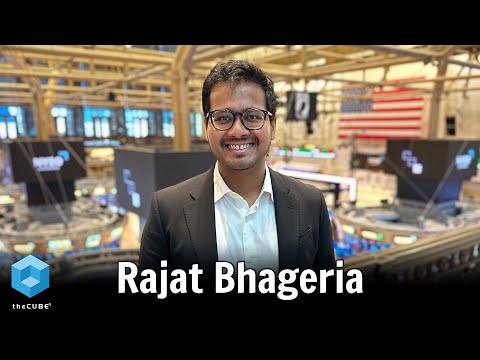
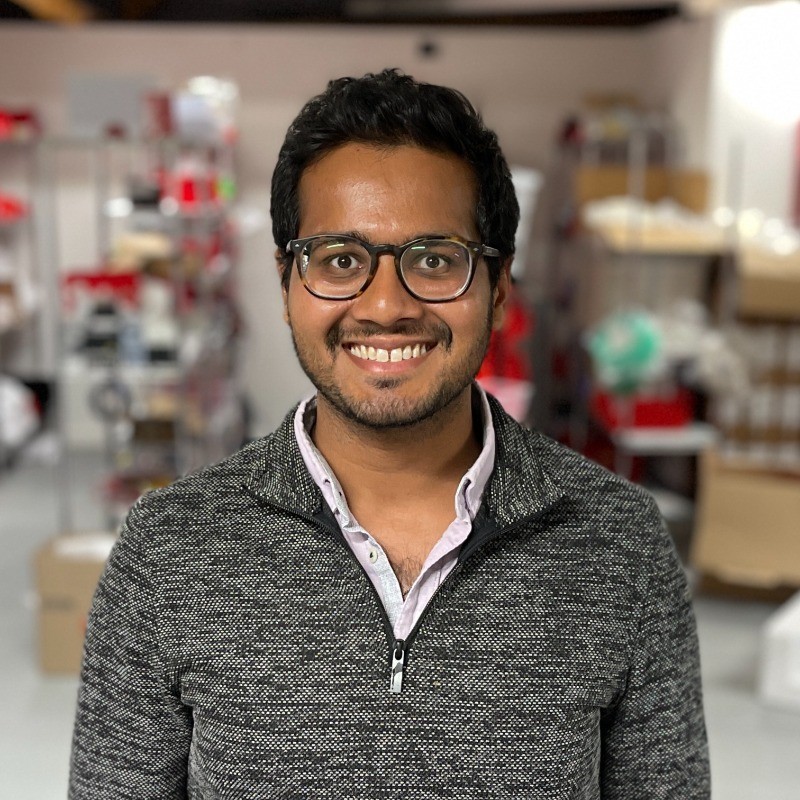
Rajat Bhageria, Chef Robotics & Samir Menon, Dexterity AI & Caitlin Allen, Simbe Robotics & Saman Farid, Formic
Rajat Bhageria
Founder & CEOChef Robotics
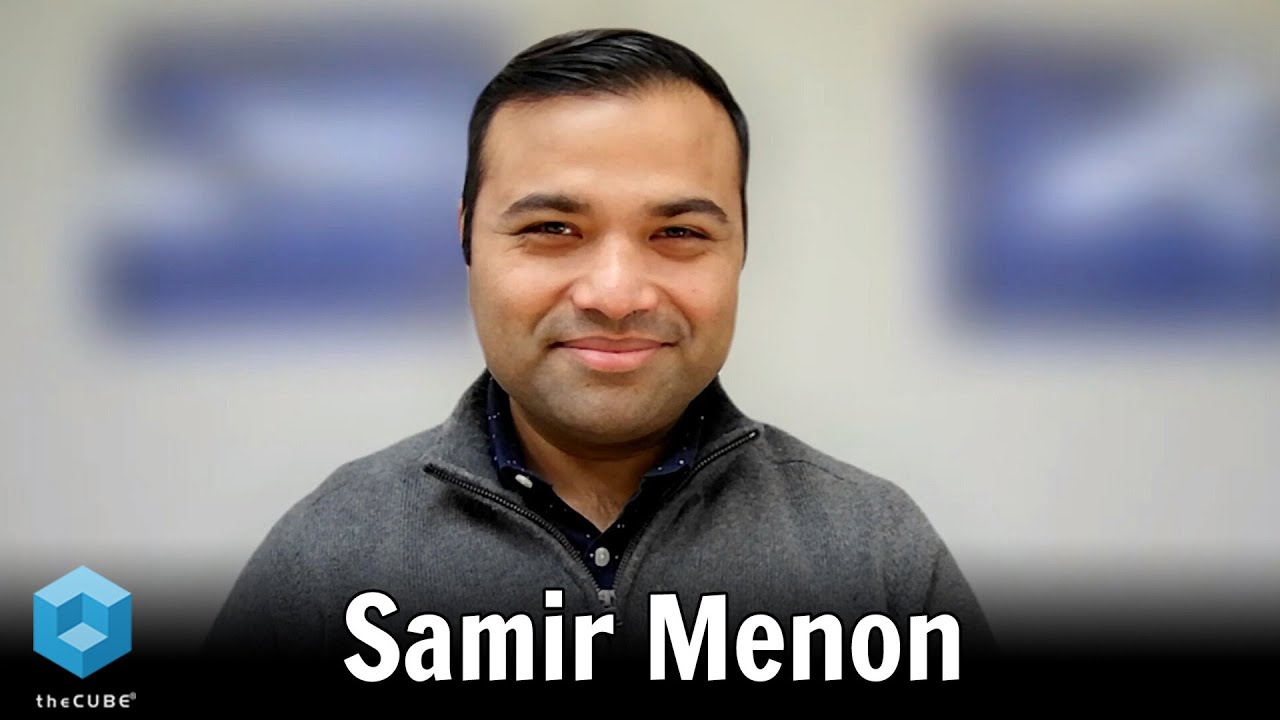
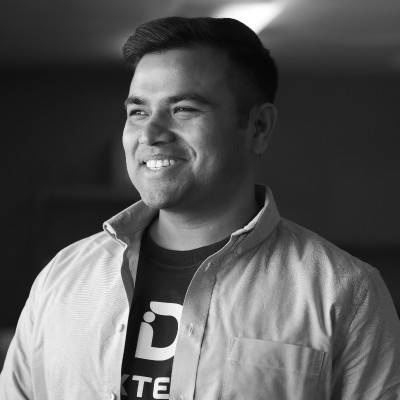
Samir Menon
Founder & CEODexterity
Caitlin Allen
SVP of MarketSimbe Robotics
Saman Farid
CEOFormic
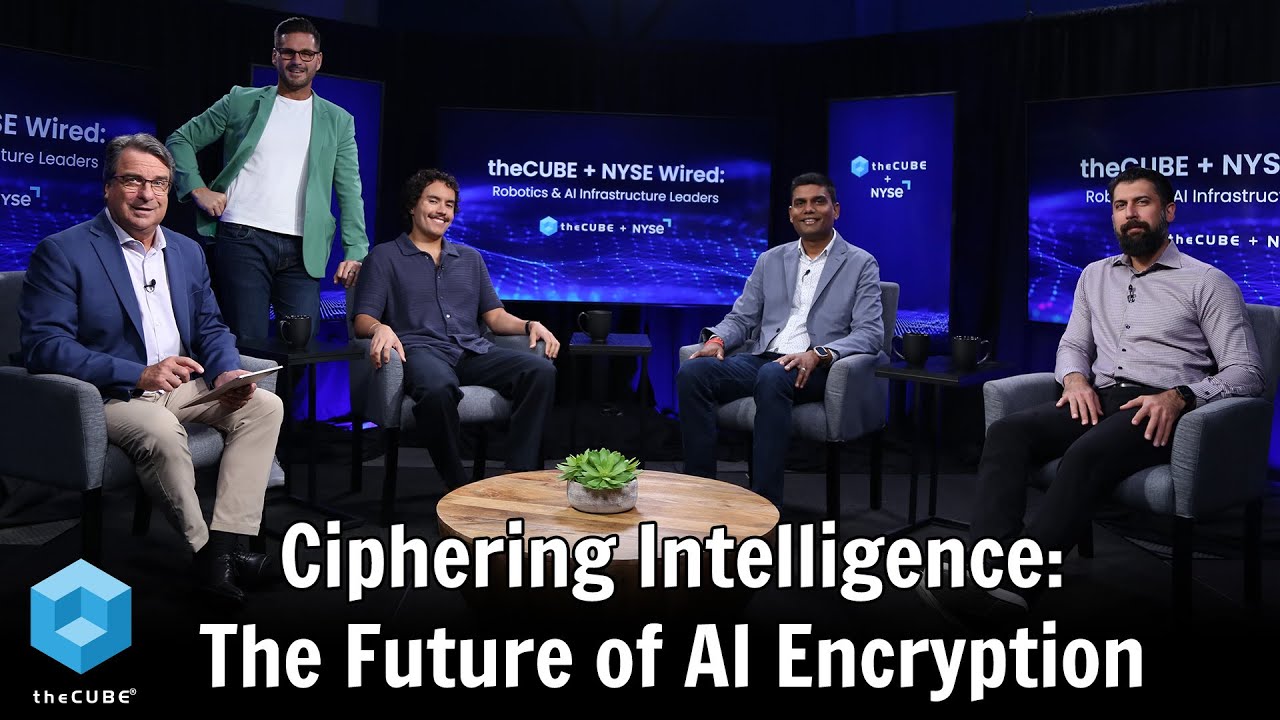
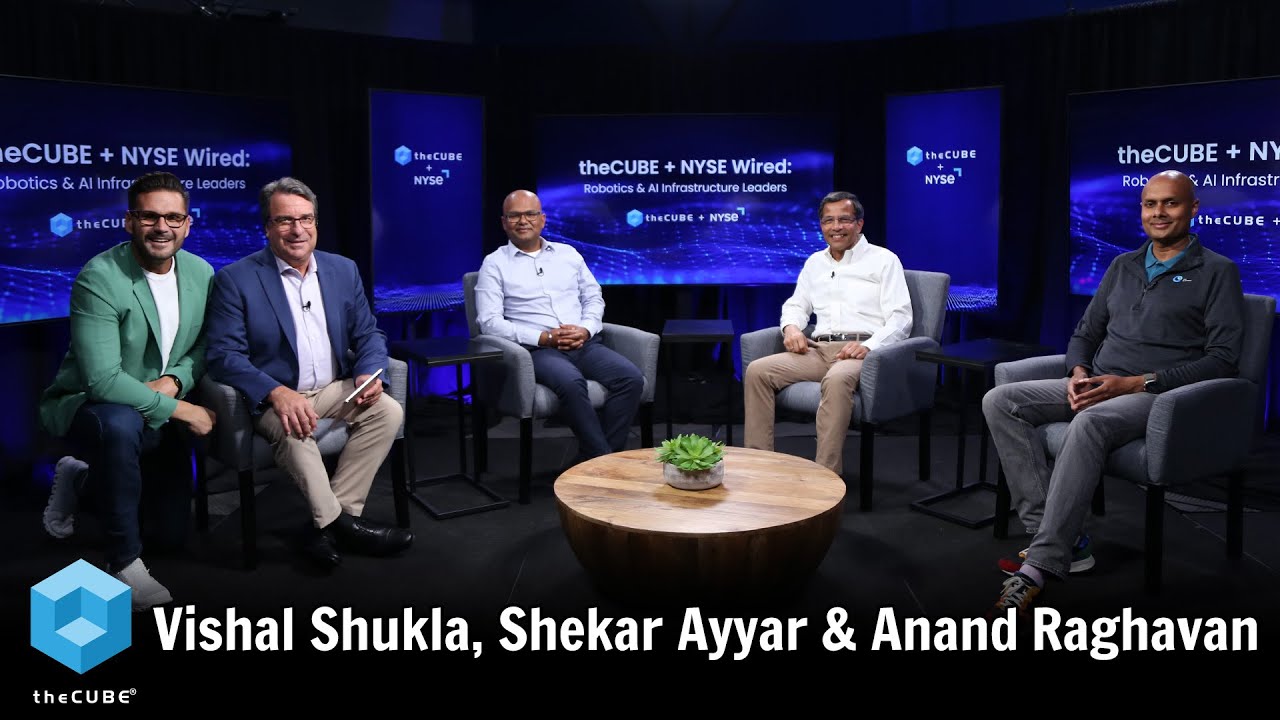
Rajat Bhageria, founder at Chef Robotics Inc.; Samir Menon, founder and chief executive at Dexterity Inc.; Caitlin Allen, senior vice president of market at Simbe Robotics Inc.; and Saman Farid, chief executive officer of Formic Technologies Inc., join theCUBE’s John Furrier during theCUBE + NYSE Wired: Robotics & AI Infrastructure Leaders 2025 event to examine how robotics is transforming labor, logistics and legacy industries. The conversation explores where AI and automation intersect with real-world execution.
Bhageria and Menon explore robotics ...Read more
exploreKeep Exploring
What is the main breakthrough in robotics, and how do software, hardware, and physical AI integration contribute to it?add
What is the innovation being introduced to address the labor shortage in the food industry?add
What challenges do robotics companies face when integrating robots into home environments compared to dedicated manufacturing settings?add
What should people know about the impact of robots on employment and the job market?add
What are some common misconceptions about the role of robots in society and how they affect human jobs?add
What are the perspectives of those building physical AI and robotics regarding their societal impact?add
Rajat Bhageria, Chef Robotics & Samir Menon, Dexterity AI & Caitlin Allen, Simbe Robotics & Saman Farid, Formic
search
>> Welcome back everyone to theCUBE Studios here in Palo Alto. I'm John Furrier, host of theCUBE. This is our studios where we're bringing all the leaders in from robotics and the AI field to talk about what's happening in the industry, the innovations, the breakthroughs, and what that means for people, society, and everyone else. We've got a great panel here, Caitlin, SVP of the market at Simbe Robotics; Rajat, founder of Chef Robotics; Samir, founder of Dexterity AI; and Saman, CEO of Formic. All leaders in robotics. Gentlemen, great to see you. Welcome back to theCube. Good to see you guys again.
Saman Farid
>> Thank you for having us.
Caitlin Allen
>> Thank you for having us.
Samir Menon
>> Thank you.>> Caitlin, your first time here. Thanks for coming on. Okay, so first question. The title of robotics is leading everything, robotics and AI leaders. This is first panel we've had with robotics. Everyone loves physical AI, but robotics to me represents two things, the physical AI story as well as the edge of the network. These are the two hottest areas that we cover. And I just love how robotics is just accelerating into mainstream. Waymo in San Francisco, everyone's talking about that because Uber sales are down, Waymo sales are up. You're starting to see the beginning of it. So the first question is, when will the population in San Francisco and robots overtake humans?
Saman Farid
>> I think it depends how you define a robot, right? I mean, if a dishwasher is a robot, we're probably already pretty much there. You've got vacuum cleaners and dishwashers and a whole bunch of different kinds of things. So I think that the definition of robot has changed many times. Every time a robot gets really good at solving a problem, it's no longer called a robot. It's just called an appliance. And I think that's a good thing. I think we want to see robots everywhere and ubiquitous. Most of them will be in the background. We won't think about them. We won't see them. But they will do all of our work for us magically. So that's what I'm looking forward to.
Caitlin Allen
>> It's not very different than the fact that when cars first came out, people walked in front of them and waved flags because no one thought that folks would be able to get out of the way. Or we used to have bellmen that helped us go down the elevators. I think we sometimes refer to things as robots, when to your point, they're already near and dear to our hearts in many ways cleaning our carpets, washing our dishes, et cetera.>> The thing about our last event at NYSC that really jumped out at me was the definition of robot, robotics. There's been science and work done for a long time in manufacturing in some of these areas where robotics has been state of the art. But people think of the humanoid. They think of like, I'm in the house, I'm doing tasks, cleaning, doing these things. They see the taxis, the robotaxis. But when you look at the physical AI hardware, software integration, that's kind of the tech angle, where does that action meet? Is it open source? What do you guys see the robotics' main breakthrough? Is it the software? Because we hear from Nvidia, "Oh, CUDA is really the IP." Is it the software? Is it the hardware? What's that relationship? Anyone want to jump in on that piece?
Samir Menon
>> Yeah, happy to. If we look at robots, just to go back to your original comment over there, I would broadly bucket them into two categories. One would be mobile robots. The purpose of mobile robots is to move things around and move people around. A lot of your drones, autonomous driving cars would fall in that bucket. And then I would put as a second category dexterous robots or robots whose job it is to do things, not just move around. Within these, there's been a gigantic amount of progress, I would say, across the spectrum of technology, whether it be the hardware itself, the sensing. When we have robots, they have to perceive the world. They have to see, but also sometimes touch. Thinking about how to interact with the world in autonomous driving, they have amazing models of how people are going to walk across the street and the car narrowly makes sure that it doesn't bump into objects. For dexterous robots, there's similar world models. And finally, being able to move. And so we've seen a progress across the spectrum in sensors and hardware in the AI models. But most importantly, I would say I'm a big believer in driving backwards from customers and markets in the perception in the minds of customers that the technology is ready and that it's time to scale it, which then becomes the driving force for adoption.>> You're saying they're not there? Or they're getting there?
Samir Menon
>> They're there.>> Okay. So when was the tipping point? Because just in the past 18 months, just look at OpenAI and what's happened with their innovation from a nice chatbot to the stuff they're doing now. And we don't even know what they know. So as you look at it, when was the marker that you can point to? Was it a year ago? Was it two years ago? Was there a moment in time where the robotics went from the industry category to now a major force in life?
Saman Farid
>> I think COVID was a very pivotal moment for a lot of businesses, because suddenly all the inputs to their businesses changed. They had to figure out how to operate when they don't have enough humans. They had to figure out how to operate at a much larger scale. And then their entire business had to become much more flexible in a lot of ways. And so I think that was a wake-up call for a lot of people, that number one, our businesses themselves have to be resilient. And number two, our supply chain overall needs to become resilient. So all these manufacturing businesses, all these grocery stores, everybody is dependent on many other parties to be able to provide their services or goods. I think that also triggered this kind of massive reshoring effort where people are trying to figure out, "How do I bring more of that production and supply chain to be closer to the end user or to the end buyers?" And that triggered this question, which is like, "If I really want to bring hundreds of thousands of factories back to America, how are we going to do it when there's already a 2 million person labor gap in manufacturing?">> So five years ago? That's five years ago. That seems like it's been... What's happened since? What's been the markers?
Rajat Bhageria
>> I completely agree with that the macroeconomics is actually one of the most important. On the technical side, I will say that I think transformers have allowed innovation in, for example, imitation learning and learning from demonstration. For context, the normal way or the usual way of doing robotics was this kind of see, think, act model, which is you'll sense the world, you'll make a decision, and you'll actuate essentially. But there's a lot of rules. So if you want to change lanes, you have to see if there's a car next to you and then you can change lanes. And then it kind of becomes this whole spaghetti of rules that you have to have. It's very brittle and it's very hard to maintain as you scale. There's this new kind of technique which is kind learning from demonstration, which is, "Hey, let me demonstrate 40 or 50 times how to pick up this cup." And if I can do that 40 or 50 times, instead of having to write code against that act, that task, I can just learn it. And hopefully in terms of getting robots to do a lot more day-to-day tasks, that's a really big innovation. That, I think, that idea of diffusion policy is much more recent, a couple of years old.
Caitlin Allen
>> I would add as well that we're just at the point in the S-curve where we now have lighthouse customers that accelerate a tipping point where the early adopters are not early adopters anymore, and all of a sudden there are major brands using robotics, major companies that provide that confidence level to those that are waiting to follow. Where the competitive edge, the window is shutting, is closing. And I think those proof points make people want to act before time is too short.
Rajat Bhageria
>> This is a good point, by the way, and I think it's worth highlighting, which is in LLMs there's this technology revolution. That was the key thing that unlocked it. I think in robotics, the technology is obviously super critical, but there's also so many other things, like the macroeconomics Saman was saying and the customer adoption and having good case studies and lighthouse customers. I think being able to learn from past robotic companies, what didn't work? What did work? I think there's so many, like, how do you generate really good ROI? I think it's like a lot of business. How do you get debt to finance the robots as opposed to equity? There's so many learnings that the industry I think has had that I think is generally outside of technology that it's allowing companies like ours to really thrive now.>> The market's hot for robotics, basically. Early adopters are turning into pioneers. Digital twins are super important. You're seeing that demo at every GTC. Companies have been using digital twins. What's going on now at the business level? Market's hot. What are you guys building? Can you take a minute to explain each of your opportunities, specifically the business, what you guys work on product-wise, and the breakthrough?
Saman Farid
>> Sure. So what we've figured out is robotics adoption has a bunch of complexity associated with it. And so for a lot of factories, we focus on factories in particular. We went and solved all those problems for them and made robots a lot easier for people to use. We now are deployed in about 100 factories across America. Our robots are making everything from dog food to chocolate chip cookies to automotive parts to aircraft parts to plastic parts for lawnmowers and golf carts. And that wide spectrum of different kinds of use cases all requires huge amounts of technology innovation, product innovation, and different kinds of robots to do a variety of different tasks. So yeah, we built a lot of software. We built a nationwide maintenance team.>> What's the big breakthrough? What's the big breakthrough for you guys?
Saman Farid
>> The big breakthrough is removing the friction around adoption. So historically, when you deploy robots, 60% of the work is in custom engineering, customizing every single component and every hardware and the code for the robot. As I was saying, you have to program the robot and kind of joint by joint position by position. We kind of removed all that complexity and we make it so that we can show up same day with a robot. We show up in the morning, by noon the robot is up and running, and we can leave and that factory can produce significantly more than they could before.>> So a lot of agility.
Saman Farid
>> Yes, absolutely.>> Customization.
Saman Farid
>> Yeah, absolutely. So I mean, it's every piece. I mean, to go into more detail, everything around site evaluation, you have to evaluate the facility and the space and the footprint and the job that the robot needs to do. You need to evaluate the products. That historically would've taken months. We do that in a couple of hours. Then you deploy the robot. There's the programming of the robot. There's the hardware configuration. There's the hardware validation. There's the testing of all the sensors and components, kind of remove all the complexity related to that. And then there's the post-deployment monitoring and management and maintenance and spare parts and remove all the complexity related there.>> All right, scope the benefits, and from my old school brain. Because in my mind I'm thinking, "I got to get the real estate, dig a hole, put the foundation in, build a big factory. Years, months. And then you got to order all the gear, lay it all out, assembly line," in my mind. What's the time it takes to get up and running with robotics now, versus, say... And what's the footprint requirements look like?
Saman Farid
>> Great question. I think the point to note is that the typical American factory only runs for one third of the available hours in the year. For two thirds of the time, the whole facility sits idle. So all that investment that you make in concrete and facilities and air conditioning and trucks ends up sitting idle. So we've developed our robots to be in such a way that they're very easy to retrofit onto existing production lines. So literally, I wasn't joking when I said we show up in the morning and by noon the robot is up and running.>> So you're standing up the factory basically?
Saman Farid
>> No. The factory is pre-existing.>> And you come in.
Saman Farid
>> And we do some of the tasks. We help them automate some of the tasks.>> What are you working on? What's your business do? What's the breakthrough?
Rajat Bhageria
>> The big issue in the food industry of course is labor shortage. It's the second biggest labor industry in the US and first biggest labor shortage in the US. Basically what's happening is that all of these customers of ours aren't able to meet production volumes. That's the pain point I'm trying to solve. We're starting actually with food manufacturing as opposed to, let's say, day-to-day restaurants and fast casuals. And so today we might be making prepared meals or prepared sandwiches, salads, parfaits, things like that that you might find in Walmart or Costco or Kroger. The way the production lines that the customers work today is you have these long assembly lines where you have 20 people on either side. They're scooping food for eight hours a day in a two or three shift operation in a 34 degree Fahrenheit room. So you can imagine why it's so hard to hire for this role. And so we basically make these robots that kind of slide onto these lines. They don't require any retrofitting. Literally, like a little robot module the same size as a human, slide it onto the line, and now you can flexibly automate it. Flexibly as in it can do really any ingredient, any portion size, tray, et cetera. So I think the breakthrough is really how do we make these robots flexible? I think food is dynamic. It's organic by nature, so there's millions of ingredients and you can cut it a little bit differently, cook it a little bit differently, it's different. Different portion sizes, different trays, different layers. All of this matters. And how do you do that without making custom stuff? You can of course make custom engineering for all this, but how do you have AI models that can be trained to be able to quickly onboard, go from diced chicken to diced turkey.>> So you're the path of my home cook in the future.
Rajat Bhageria
>> Exactly. There's actually a lot of robotics->> Train a lot of repetition....
Rajat Bhageria
>> there's a lot of robotics companies that actually try to do things in the home. The issue with the home I think very simply is any given task you're only doing for 10 minutes, 20 minutes, 30 minutes. So to be able to get eight hours of, let's say, utilization, you have to do dozens of tasks, which is really hard because again, back to this problem of training a robot on how to do new tasks. We're starting in manufacturing where there's a dedicated team that just does assembly all day long and there's a dedicated team that does cooking all day long. And so now if we can do assembly really well, it's not just assembling one ingredient, but thousands and thousands of ingredients, well now we can have 16 hours of utilization. And the thinking is that by deploying these robots, we get production training data, which now so long as we know how to pick up a blueberry without crushing it or pick up some grapes without crushing it, or what have you, we can now take that same training data to lower and lower volume operations.>> And that's fine, touching and getting more feel for things is getting stronger.
Rajat Bhageria
>> Correct. Exactly. In robotics, very simple tasks are extremely hard. It's kind of like you watch your baby learn how to do new tasks. It's extremely... Either try stuff and it's very hard.>> They fall a lot. They fall a lot.
Rajat Bhageria
>> They fall a lot, and I think that's the same way to think about robots. These physical tasks are really hard. And so things as simple as picking up some leafy greens without bruising it is really hard. And so the more of these cycles we get in a manufacturing setting, we can take that training data to more smaller volume operations like, let's say, airline catering, fast casuals, ghost kitchens, and ultimately the home. We do think that kind of cycle from high volume to low volume is kind of the way that the industry is going to go.>> A home robot could be multi-tenant. It could be a cybersecurity analyst while it's not cooking. Caitlin, what's up with your business? Talk about what you guys do, break through what your approach is, what do you guys optimize for? Share a little bit.
Caitlin Allen
>> Sure. Retailers are the crucial connection point between people and the products that they want to buy, and yet to date they have really struggled to have ground truth to answer super simple questions like, "What's in my store? Is it available for sale? And is it at the correct price?" And so Simbe digitizes the shelf. We sell robots and other hardware sensor types that basically read the store and help answer those critical questions. Why does this matter? Why is this big now? The shoppers, we're all very familiar with how frustrating it is to show up and want that one brand of peanut butter or to make an order online where 50% of your items are substituted or not found. The reason for that is because of legacy systems in retail stores where retail teams walk up and down the aisles today and they manually have to check the hundreds of thousands of items to make sure that the price is correct and they're in the right spot, which is why on average our customers find that two-thirds of the items that they think aren't available for sale actually are. With our platform, that process gets taken off of retail workers' plates, which we spoke earlier about labor shortage. That very much is a reason that retail workers quit. It's one of the top reasons that they quit. And so with our solutions, retailers are able to ensure an omni-channel experience today for their shoppers and a better experience for their teams. And then looking ahead as the physical experience and the digital experience converge, they're going to be as intelligent and speak the same language.>> Yeah, and of course everything's already electronic. Supply chain, they know what's coming in. Just the shelving, the end point, the last mile to the user. Samir, what are you working on? What's your breakthrough? I know you've been on theCUBE before. A little bit repetition, but what's up?
Samir Menon
>> At Dexterity, we've been working to build what you could arguably call a platform for robotics that allows us to program robots for a multiple set of applications with advanced AI capabilities. To take a particular focus on the market, right now we operate in three markets. There's parcel where our robots can do things like loading and unloading trucks, sorting parcel. There's retail, e-commerce distribution where oftentimes we can help with making pallets that then get prepared and shipped to stores. We're in the very early stages of getting into airports where very soon our robots could be potentially loading and unloading your bags off a plane once you land. I think for us, we have an application suite of course, and some of the conversation here was focused on the key challenges of robotics and AI, which is you want AI to be broadly capable of performing many, many tasks. And so when we look at what works, Dexterity took a technical approach where we've been working at the on what could be considered a bit of an iPhone-type approach for robotics. So we've launched this very interesting, very industrial, and very, very powerful robot that can move around. We call it the Mech. It's kind of inspired by Transformers, so it's kind of a big beast. In the movies it fights aliens; in reality it loads trucks. We work on a variety of advanced AI models, including some of the latest and greatest, and more traditional approaches. A huge thrust on AI safety when we head into production at large enterprises, you would really want to make sure that robots are very safe. And at the application layer today, we're developing our own applications, but in the future we want to make sure that our platform can be the platform that powers AI for other people who develop their applications too.>> Yeah, you guys got all that great stuff in market. You brought up safety. I was going to bring that up as the next question. There's a scene in The Matrix that I love. He's in the helicopter and he says, "Upload how to fly helicopter." And next thing you know, he's the master pilot and there's some other examples. Software makes robotics multi-purpose. It's a big theme from our last event, safety and kind of multi-function robotics, for lack of a better word. With software, with reasoning, there are multiple tasks that can be done. Literally could be cooking one day and be an analyst the next. What's the key for making that happen on the software side? Remember, software can be hacked too. I'm expecting robots to be hacked at some point because it's software. Safety's important. You've got safety and software. What's those two axes of innovation?

Samir Menon
>> Very interesting connection, and this might be one of the critical points that I believe is not very well understood by a lot of people. When we look at AI, AI that's operating in the physical world, physical AI, is actually quite different from digital AI. These days, when we have digital AIs, they're these giant, giant neural networks that are trained on an internet worth of data. And despite that, if I open up my little ChatGPT app or any other app, there's a slight warning over there. "Please validate your results," because the results can be erroneous. And there's a huge amount of effort to cure this. Great, we've got an internet worth of data and we're not quite there with digital AI. With physical AI, there is not an internet worth of data. And so safety takes on a bit of a very, very severe consequence where if you aren't safe, you can cause a lot of damage. So in our opinion, you have to do two things to guarantee safety. One is your AI needs to be hardware agnostic. What does that mean? If I have a strong dependence between the AI model and the hardware, it might over-learn some of the quirks of the hardware. You make a small change, and boom, it might malfunction. You want to accumulate data. The more data you have, the better guarantees you can afford on the AI models. So that's a pretty critical part of it.>> That's kind of counterintuitive. You'd think that you'd be safer if you had a tighter coupling between the software and the hardware.
Samir Menon
>> One just has to accept the fact that hardware will continue to evolve. It's not a static point. I think being agnostic to it helps a lot. When we train in simulation as well, you train with lots of variations of different types of robots. In reality, it's better if you are hardware agnostic. Even for same robots, if we take some of our colleagues here, when you deploy them in the field, you might have the same arm but different hands. Like maybe you have a type of a hand for scooping rice or a different type of hand for loading boxes. So just maintaining that agnostic nature is critical. The other one I would say is very counter-intuitively, you also want your AI to be application agnostic. And so this is very controversial. A lot of people are going to disagree with me. But if you fine-tune your AIs to particular applications, again, you limit the breadth of data that you are exposing them to, which inevitably has safety consequences. These are our somewhat unique perspective.>> Keeping the cards close to the vest. What do you guys think about what he said?
Caitlin Allen
>> With robotics in particular, I think there are multiple definitions of safety. There's perceived safety because robots often share physical space with humans. Then there's physical safety, which I think you were speaking about. And then there's also identity safety. Like, if cameras are involved, are we protecting people's identities? And so from a perception of safety, that's where human-centered design comes in, design that intentionally where hardware is concerned shows up in a way that is made to be neutral in a human environment such that humans react positively or maybe don't react at all. Then there's the physical piece of safety of does the robot sense when humans are around? Do they know how to make sure that situations don't arise where a human is put in danger? And then from the sense of identity theft or just identity in general, if cameras are involved as they so often are in robots, then how are you making sure that there's facial blurring technology or some other way of obscuring and keeping identity safe?
Rajat Bhageria
>> What I'll just add, which is slightly different than some of the other folks here, is our thing of safety is kind of decouple the AI layer and the hardware layer in terms of safety a little bit, which is to say assume the AI models are going to go berserk, if you will, and kind of just prevent the hardware from being able to physically hurt you. Here's an example. Collaborative robots I think are a big innovation here, which really allow for this idea of if you touch the robot, it'll protect a stop, essentially. It'll prevent you from being physically hurt. So even if your system does some weird thing, you're kind of an okay place. There's many other layers to this. For example, you can set up virtual walls that are kind of at the very lowest levels of the safety control, physical hardware safety controller. So it's physically not allowed to go beyond this, for example, this virtual wall. Or in terms of the end effectors, kind of doing a lot of measurements around, "Hey, can these end effectors hurt you?" And then getting third-party safety validation. So I think our kind of safety team's actually more in the hardware team. It's like, "Okay, yes, there's how do we make the model safe?" But from a physical safety, assume they will go berserk, and then hardware just prevents it from physically hurting anybody.
Saman Farid
>> I think you raise a really good point, which is I think it actually comes down to design constraints. For example, if you think of a dishwasher as a robot versus a humanoid as a robot, they're two very different things. If you stick your head inside the dishwasher while it's on, it's probably not safe. But it's designed in such a way where that's also not likely to happen. At the same time, a dishwasher is a much more efficient way of washing dishes than a humanoid. You don't want a humanoid standing fumbling around hitting the dishes and trying to wash your plates. So you kind of got to design the form factor for the task. And I think this is why I'm not such a big believer in general purpose robots. Because what we want is not human level capabilities; what we want is superhuman capabilities, right? Why should we design a robot that has two arms when we can have six arms? Why should it have one head instead of four heads? Or why should it go two miles an hour instead of 50 miles an hour? We have the ability to go far beyond human ability, but we have to design the robot for the task. It doesn't mean that the robot can't do multiple tasks, but at the end of the day, if you're picking up heavy boxes, you want something that's designed to pick up heavy boxes. And if you're washing dishes, you want something that's designed to wash dishes. And naturally the safety implications come out of that design. If you design a robot a certain way, then you have to design the corresponding safety constraints, whether that's software, whether that's hardware, whether that's additional sensors, whether that's kind of a hard guarding. It could be all of the above.>> Safety first is definitely loud and clear. I guess the controversial question I would say is, who ranks higher, a hardware engineer or a software engineer? You don't have to answer that question.
Caitlin Allen
>> Yes.
Saman Farid
>> In this day and age, you have to be both.>> Yeah, talk about the dynamic. All kidding aside, in some companies, hardware engineers rule. But the separation is a good point. The innovation is on both. If you talk to Nvidia, anyone in hardware, software is hardware. So this is where it blurs. It's old school definitions. Talk about the importance of this, and how does that change over time?
Rajat Bhageria
>> I can give a good example of this. So some of our customers, to assemble salads, which sounds simple, but they have these inserts. These are clear inserts where you might put the meat or the nuts. You don't want them to touch.>> You see them on the top with all the-
Rajat Bhageria
>> You see them on the top.... >> the bacon bits in there are my favorite.
Rajat Bhageria
>> Correct. Correct. Now in these salads, these inserts are usually floating on the bed of leafy greens. They're not constrained. They're floating around. So they're different poses basically. They can be weird orientations. So imagine, okay, now you have to build some detector and tracker to be able to detect these. Okay, great. Well, that's a bunch of software. But then guess what? To be able to do that, maybe your camera resolution has to get better. Maybe you need a different sensor, so now that affects hardware. Or the camera itself. But to use that camera, you need a much better GPU or CPU to be able to process that. So now you need to affect the GPU and CPU. But guess what? Now the CPU is much bigger, so now you need better Ethernet and networking. And then by the way, you also need a much better electric enclosure, which now it changes the mechanical envelope. And then now you need better power and then you need better cooling. So this little thing of being able to detect and track the insert leads to cascading effects to software and hardware. So I think this idea, like Silicon Valley->> It sounds very hard. It's like, "Why would I want to start that kind?" No, I'm only kidding. No, but I mean, you're building an operating system....
Rajat Bhageria
>> correct.>> You're basically building a self-contained system.
Rajat Bhageria
>> Yes. And I think this Silicon Valley is very kind of attracted this idea of, "Hey, just buy a bunch of off the shelf hardware. We're going to take some software and that's it, sell software." But the reality of the situation is that these systems are so deeply integrated. It's the Alan Kay quote. "Those who are serious about software make their own hardware." The reason Apple is such a good company and makes such good products is the software and hardware is so deeply integrated and affect each other. And that's also why, by the way, that affects business model. This idea of, "Okay, let's decouple the software and hardware. You just buy the hardware and sell software." That's fine, but now we get a new software update, and by the way, now your old hardware doesn't work. So I think that actually affects the business model too, because now if you provide this robotics as a service idea, you can actually constantly be upgrading software and hardware so the customer always has the most state-of-the-art line in robots.>> Yeah, that's an interesting theme that's coming up in some of these kind of cross discipline events we're doing, because what you're just talking about goes against all thinking of venture capital investing. If Uber was building the software, the VC would've tell them, "Sell to taxi companies."
Saman Farid
>> I would argue all of us are venture funded, so there are venture investors out there.>> I'll say old school venture capitals where heterogeneous systems was the norm. Because you're kind of getting at homogeneous applications, but this blurs the line between definitions. You can have standards and you can architect the solution that needs to be vertically integrated or systematically designed. So I think there's a lot of kind of conversations. I'm getting into literally around the dogma of the approach. Is there a balance between the two?
Rajat Bhageria
>> I think it's not too dissimilar from vertical SaaS versus platform SaaS. Salesforce is applicable for everybody, but Samsara is for a specific use case, for example. There's so many use cases where it's like, "Hey, we're going to go after this kind of vertical." I think the thing about any of our industries is that they're so big. The food industry is so big. Where Samir and Saman are working, it's so big. Again, because labor is 55% of GDP. It's like, anything you pick is gigantic. So I think of it it's kind of like vertical SaaS.>> I'll rephrase the question then. First principles for robotics and AI design look like what? Tell me what those first principles are. Because you got to do both. You have to nail the solution, nail the system. You got to use heterogeneous open standards that are available to craft it. And then you have strategies around decoupling the systems. What's the first principles of state-of-the-art robotics, AI infrastructure systems?
Samir Menon
>> Maybe I'll take a stab at that. I would say the first principle of robotics is solve a real-world customer problem. And this is probably the biggest mistake that a lot of startups make. If I look back 20 years, there've been many, many robotics, physical AI startups. And the ones that solved actual problems no matter how hard, how hairy, how tedious, and how much attention to detail you have to do, as long as you're solving a real problem that a customer wants you to solve and is willing to pay for, you have a business. Now, you might have a big business if you solve a big problem. You could have a small business if you solve a small problem. If you build a platform, you could scale faster. In the words of Jensen from NVIDIA, I'm paraphrasing, he says, "If you want every incremental iteration of something to be cheaper, build a platform." And so that at least for us was a common thread. But if you don't solve actual problems, you're toast. It's not about the technology, it's about solving problems and bringing the technology to bear.
Saman Farid
>> If I can add one thing, because I couldn't agree more. I think the place where a lot of robotics companies go wrong is they don't solve 100% of the problem. They solve some piece of the problem. They say, "Oh, I'm just going to make a software API and then you figure out how to use it." Or, "Oh, I'll just build the hardware robot and then you figure out how to use it." Or, "Oh, I'll solve one part of the problem." And I think that the reality is most end customers are not capable of adopting just a small piece of the puzzle. There are some, right? There's some very advanced end users out there. But the vast majority, if we want robot adoption at scale, most people need you to show up with something that can get installed and just start working and they don't have to think about it, they don't have to worry about it, they don't have to hire a bunch of engineers to make it work. That just requires a lot more energy. We all have some degree of white hair at this point because we've had to do that. We've had to solve a lot of those.>> The world does spin into your direction here because robotics attracts certain kinds of people. They're technical, they have mission. It's a lot of fun tech. I mean, let's face it, robotics isn't boring. But now it's going mainstream. To your point about solving the real problem, I guess my final question to everyone here is what would be the two things, one being the most misunderstood thing about robotics that people tend to jump to? And then two, what should they know about that they don't know about robotics today? So two points to the question, the misunderstanding, most misunderstood thing, and then what they should know that they might not know that doesn't get over-reported or amplified.
Rajat Bhageria
>> I can take a stab with the second one maybe to start. I think one thing that's interesting is, again, especially in Silicon Valley, there's this lean startup approach that I think a lot of companies take. A lot of robotics are software folks. A lot of people who are doing intelligent robotics have software backgrounds. And so this idea of, "Hey, we're going to build a SaaS app, we're going to get some prototypes over done over the weekend, get feedback, iterate until we get product market fit," I think that approach doesn't really work for robotics simply because the iteration cycles are slower. It's not like a weekend to build an app. It's three months, six months, potentially a year for some systems. So I think to Samir's point about solving a problem that's actually notable, I think you can't iterate towards that. I think you just got to almost start with that. So I think one thing we did, which I'm really proud of in hindsight, is selling the product before building it, getting real world contracts from real customers across a few different sectors and then synthesizing those into a PRD. So we kind of start with product market fit. Because VCs are willing to fund the technical innovation; what they're not willing to fund is like, "Hey, is there a market at all?" So I think you have to take a slightly different lens. It can't just be like a SaaS or consumer software lens. It has to be like, "This is going to take a little bit longer to iterate, so I got to just start with product fit.">> Or how to get a robot viral.
Rajat Bhageria
>> Yeah.
Saman Farid
>> To answer your first question around what should people know about robots, I think that the main thing is there's this myth around robots taking jobs and I think it's important for us to address it head on. It's just not true. There's a lot of scientific data to back it up, but just the most basic facts. Number one, there's more than a million unfilled manufacturing jobs in America today. Everybody talks about how do we get more high skilled labor? How do we improve the workforce? But who's going to do the low skilled labor? All these factories in America are sitting idle because they don't have humans available or willing to work in these jobs. So I think number one, there's a lot of data that shows when a factory deploys robots, they end up becoming more profitable and then they're able to actually pay their workers better. Worker happiness goes up. To your point, worker retention goes up.>> Productivity, economic.
Saman Farid
>> And worker pay goes up pretty significantly as well. And so I think the message I would send to the audience is don't be scared of robots. When the Terminator comes, we're all going to be on his side. We're all going to be friends. And I think they're going to be there to help us build a much more abundant civilization. And that's really what we're all after at the end of the day.>> Yeah, boundaries, right? Those virtual boundaries. Caitlin, what's your take on this? Things people misunderstand and/or things they should know more about?
Caitlin Allen
>> Yeah, I would piggyback onto that. I think that robots make humans more important is what's most misunderstood. We've referred already to the fact that retail work has turnover almost nearly 100%, and manual repetitive tasks are the top reason that workers quit. And so if you take that pain point away and allow the retail worker to focus on the thing that they love most, which statistically always is serving the shopper and providing a level of service that only a human can provide, that just makes more way for humanity, more way for people to people connection. And I think the a-ha's that we see at least from our sector of the robotics world is that stores actually sell more, shoppers stay in store longer and stores sell more when the robots are out because kids love them, everyone wants to see them, and then they're in the aisle for five more minutes and they get that one more thing. And so it actually helps revenue and margin for the retail store at the same time.>> Efficiency, productivity, and better economics. Samir, wrap us up here. What's your take on this? I know you've got an opinion.
Samir Menon
>> Plus one to everything everyone said here. I'll just add maybe my personal take. To folks out there, please understand that people who are building physical AI, who are building robots, we care a lot about how they're perceived in society. I, for one, I'm a great believer that robotics needs to have a constructive impact, and we're going to try and steer ourselves towards a technical direction that it does have a constructive impact. It starts with one buying right into this whole idea that robots are meant to empower and supercharge people. We expect many different types of robots. There's going to be giant Transformer-like robots, there's going to be tiny little toy robots running around, and everything in the middle. And you'll enjoy them. We're going to try and build them in a way that you'll enjoy them and your lives will be better because of them. That's my message to everyone. Just be a part of the journey and enjoy the experience. For a counterintuitive couple of points which I've heard talking to people in the field, now I've been to... We go to a lot of warehouses, factories. I've been to more than 100 across the US, different parts of the world. I always make it a point to talk to people on the ground. We show them, "Hey, look, here's this cool little Transformer-type like Mech robot. What do you think about it? Would do you want it in your life? Would you want to be doing it?" And now, again, highly anecdotal, but what I heard was, "Look, here are the things I care about." Number one, is it safe? Which we need to spend a lot of time on. And I'd emphasize we have a huge initiative to make sure these things are safe. Two, we'll have a sense of control. Ever since I was a kid, I always wanted my robot that I could pilot around and do cool stuff. So I was like, "Sure, make sure there's a joystick on it." And three, will it just make my life better? Will it make me more productive? If I have to go load a truck in California, it gets really hot. It's like 120 F in the truck and you've got these giant boxes and you're just lifting tons and tons of stuff every day. And I'm like, "Hey, can a Mech do it for you?" And they say, "Wow, that's great."
And so again, I'll end with, we take a lot of pain to make sure that robotics, physical AI will have a positive impact.>> Look at the open AI and look at what's going on on the software side. You're already seeing the advancements. And it's great to see the founder getting out there. It's like that show Undercover Founder on the assembly lines out there doing focus group research.
Rajat Bhageria
>> Yeah, they're doing that.
Samir Menon
>> It's great.
Saman Farid
>> If you peel back the robot, you'll see Samir inside.
Samir Menon
>> I really wanted to do that.>> You can do a show on that on theCUBE.
Saman Farid
>> There you go.>> I'm really grateful for what you guys do. I love the industry. I think it's going to go through some major transformation changes for society. And again, humans will be augmented in a big way. I'm pro robotics, so thanks for coming on theCUBE.
Caitlin Allen
>> Thank you.
Rajat Bhageria
>> Thank you.
Saman Farid
>> Thanks for having us.
Samir Menon
>> Thanks so much.>> I'm John Furrier, theCUBE host here with the NYSE Wired in Palo Alto. Thanks for watching.