We just sent you a verification email. Please verify your account to gain access to
theCUBE + NYSE Wired: Physical AI & Robotics Leaders. If you don’t think you received an email check your
spam folder.
Sign in to theCUBE + NYSE Wired: Physical AI & Robotics Leaders.
In order to sign in, enter the email address you used to registered for the event. Once completed, you will receive an email with a verification link. Open this link to automatically sign into the site.
Register For theCUBE + NYSE Wired: Physical AI & Robotics Leaders
Please fill out the information below. You will recieve an email with a verification link confirming your registration. Click the link to automatically sign into the site.
You’re almost there!
We just sent you a verification email. Please click the verification button in the email. Once your email address is verified, you will have full access to all event content for theCUBE + NYSE Wired: Physical AI & Robotics Leaders.
I want my badge and interests to be visible to all attendees.
Checking this box will display your presense on the attendees list, view your profile and allow other attendees to contact you via 1-1 chat. Read the Privacy Policy. At any time, you can choose to disable this preference.
Select your Interests!
add
Upload your photo
Uploading..
OR
Connect via Twitter
Connect via Linkedin
EDIT PASSWORD
Share
Forgot Password
Almost there!
We just sent you a verification email. Please verify your account to gain access to
theCUBE + NYSE Wired: Physical AI & Robotics Leaders. If you don’t think you received an email check your
spam folder.
Sign in to theCUBE + NYSE Wired: Physical AI & Robotics Leaders.
In order to sign in, enter the email address you used to registered for the event. Once completed, you will receive an email with a verification link. Open this link to automatically sign into the site.
Sign in to gain access to theCUBE + NYSE Wired: Physical AI & Robotics Leaders
Please sign in with LinkedIn to continue to theCUBE + NYSE Wired: Physical AI & Robotics Leaders. Signing in with LinkedIn ensures a professional environment.
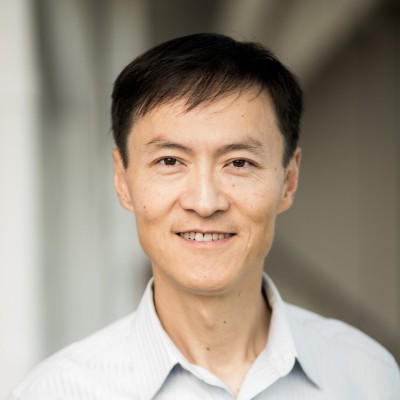
David Liu, the chief executive officer of Plus, joins theCUBE at the New York Stock Exchange during Wired Robotics and artificial intelligence Media Week. This series showcases the synergy between Wall Street and technological innovations from Silicon Valley, with Plus focusing on autonomous vehicle technology specifically driverless trucks.
In this episode, David Liu delves into the ambitious journey of Plus, emphasizing the transformative impact of AI technology on transportation. Liu's extensive experience, stemming from an engineering background, b...Read more
exploreKeep Exploring
What is the background of your company and its focus on utilizing AI technology in the transportation industry?add
What are the challenges and complexities involved in navigating regulations and safety concerns for driverless autonomous truck pilots on public roads?add
What is the technology and process behind the virtual driver product mentioned in the text?add
What is the approach taken by the company to construct and build out their AI software system, including partnerships with hardware providers like Nvidia and sensor providers?add
What is the meaning of "autonomy's been around for 30 years" in the context of large language models, vision language models, and verifiable large models?add
What is the potential future vision for the transportation network in terms of automation and integration?add
>> Hello everyone. I'm John Furrier, host of theCUBE. We are live here at the NYSC. This is our Wall Street headquarters for NYSC and of course, we got all the action in Silicon Valley between Silicon Valley and Wall Street, all making it happen. Our next guest is David Liu. He's the CEO of Plus.ai building the driverless trucks part of the Citi and the CUBE and NYSC Wired Robotics and AI series. David, thank you for coming on, theCUBE. Appreciate you coming on. Thanks.
David Liu
>> It's great to be here. Thank you.>> So before we came on camera, we talked that we both had a little stint at Hewlett Packard back in the day, kind of an OG techie in Silicon Valley. So great to see you in New York doing the rounds and getting the investor interest. I'm sure you're going to be very popular in the Citi event with investors. You're working on one of the hardest problems, autonomous driving with trucks. Take a minute to explain what you guys do and then I want to jump into it.
David Liu
>> Yeah. So we founded the company back in 2016, nine years ago, working on utilizing AI technology to transform the transportation industry. I mean, nowadays people talk about physical AI. We've been working on for nine years already. What we observed back then is the trend that the AI technology has matured over the years and then computing power has gained tremendously over the last 30 years or so to a point where we think that the AI will be able to bring these driving technology or these vehicles to be fully automated and to be driven with a software rather than a human driver.>> Well, first of all, congratulations for taking that leap years ago because right now it's the perfect opportunity because the accelerations of product cycles on one chips is significant. Just two weeks ago we were there immersed in Nvidia GTC and they have to lay out their architecture now over multiple years because it's generational kind of a flywheel's kicking in. Reminds me of the PC era when you started to see the performance continue to increase. At the same time the supply chain, they got to get that locked in. And then the other side, they got an ecosystem and they're featuring robotics on stage. So robotics to me is like the north star of the AI world because if you get there, you've made it, but it rhymes together. Efficiency, scale, productivity, that's the AI story. But now on robotics and just the same thing, minimize complexity, efficiency. So where are you guys seeing the best AI bang for the buck right now? The best value in AI in your autonomous vehicles?
David Liu
>> Yeah, so in the broader AI area, the last few years, mostly focusing on AI application in the virtual world, large language models, people utilizing to handle a lot of virtual task. But we're starting to see that AI is actually making a big entrance into the physical world. How do we utilize these intelligent system to help us drive the physical world to be more efficient? It is actually a problem people have been focused on working on for the last 50 years. Autonomous driving is really not that new back in the 70s, that's when we first have some of these autonomous driving system, the first generation of it. But what's different between now and then is just the algorithm side. On the computing side, just think about it on the computing power side we're about a million times faster compared to 1970s. So those tremendous advancements made it possible for us to start utilizing these technology to control the physical world.>> And everyone, consumers can see ChatGPT on one side, but on the self-driving autonomous side, you see Tesla, you see Waymo, robotaxis are here already happening. Trucks natural. Tell us about your products. What's shipping> where are you in the status of the product? Because you are autonomous trucks, not like the driver-assisted, you're fully autonomous, right?
David Liu
>> Yeah.>> All right, so where are you in the progress? Can you share some data?
David Liu
>> Yeah, so we work with some of the largest truck manufacturers in the world together on enabling these driverless trucks. So one of our partner, for instance, is Volkswagen Traton Group, which covers three of the largest brands in the world, including Scania in Sweden, M-A-N in Germany, and then Navistar International in the US. What we're doing with them is start to do these commercial pilots here in the US in Texas, and then in Europe, in Sweden. We're doing these driverless autonomous pilots starting with these OEMs to start holding goods on public roads.>> So take me through the challenges. Obviously, this already complexity going through my mind around just to make the system work. So we got the trucks like a car, a lot going on technically, computer vision, algorithms, compute power, it's a supercomputer on wheels basically, but regulations, safety must be a huge concern. Can you share and scope the kind of complexity around what you have to navigate through to get the regulations approved, and the safety, feeling good, and the tech?
David Liu
>> Right. So it is a safety-first industry the transportation because we're on public roads and with all kinds of vehicles and other objects and pedestrians in some cases around us. So safety is always the top thing and top concern and then we're working with regulators on how do we regulate these trucks with no drivers in them. We have lots of regulation around how a driver's supposed to drive a vehicle and on these virtual drivers right there needs to be rules in place and there needs to be planning in place. What if your vehicle get into some kind of a trouble? How do you deal with that? So there are regulatory rules around these virtual drivers. Now, what's been very encouraging is majority of the United States like 48 out of the 50 states already have regulation in place to regulate these driverless trucks. So in terms of regulatory support, we're able to operate driverless trucks on most of the roads and similar situation in Europe, majority of especially the Western European countries, you can operate a driverless truck today. So it's really about how do we work with the regulators together to start this industry.>> And where are you now? Where are you operating now in your test beds, your pilots?
David Liu
>> So our pilots in the states is in Texas. It's really starting with the San Antonio, Dallas and Houston triangle. So a lot of our testing on pilots are going on there and then in Europe, we're doing that in Sweden.>> Yeah, flat roads, wide, not Boston.
David Liu
>> Yeah. So if you look at the heavy trucking industry, majority of the traffic is exactly on highway, divided highways. So from an operating design domain point of view, operating domain point of view, it is sort of a more heavily regulated testing environment.>> And well known too, a little bit more data clarity. I think about drivers. I've driven my car, so I'll use my car-driving experience. The drivers in Boston are crazy. The drivers in California can be crazy. New York, I mean New York taxis. So you get that humans are the problem, right? So yeah, they're a different kind of crazy. I use that in quotes because there's sometimes unexpected things happen. Boston, you can tell that it's cultural kind of behavior. I'm sure in overseas I've heard of other stories of other areas. So there's norms and people adjust to being loose with the law. How does AI factor into all that? Is that synthetic data? You guys do digital twins? How do you factor in for those unknown kind of random things? I mean synthetic data is popular in factories. Are you guys taking a similar approach?
David Liu
>> Yeah. So we take both real-world data and then we also take simulation data, synthetic data. So the thing about AI is it's data-driven. It learns from the real-world experience and then it can infer from that, right? So not only can repeat what they observe in the real world but it can also cover unexpected situations. The more data you get, the more intelligent the system becomes.>> I got to ask you, what are you most excited about right now? Because this is one of those times where you guys are working hard to get the prototypes, engineering's off the charts, you got to do a lot of in industrial, there's also the software, hardware. Hardware and software seem to be the magic combination right now. And I mean that in the most hardware enabling dynamic software, upgrades, new integrations, whether it's AI, other AI. What's it like right now for you? What are you most excited about?
David Liu
>> Yeah, I think the most excited thing about what we work on is just the sheer impact of what we will be able to create. So 70% all goods consumed and used by us are transferred by large heavy trucks. And so there are a couple million of these heavy trucks in the United States. It's a $2 trillion market worldwide and we also have a huge driver shortage. A lot of containers and goods that we need to move today are now basically getting delayed or the shipping cost is high. So we're solving a big problem for our economy. So that's on the impact side. On the solution side, first time in many decades we're able to finally solve this problem and this will be the biggest invention since the diesel engine that's created in the transportation industry.>> I mean, I just think about the safety, human error probably accounts for a lot more accidents and safety issues than what an autonomous vehicle or truck could have. Do you guys look at studies like that? Is there data around because everyone's going, "Oh no driver, something could happen." Well, what's happening with drivers? So I'm wondering if you have any perspective on with a human in the driver's seat and without.
David Liu
>> Yeah, so truck driving happened to be one of the top five most dangerous job in the US. So accidents is one of the... Road accident it's very, very dangerous for people, especially for the drivers. So we're solving a really acute problem here. Machines, the AI drivers, they're 24 by seven, they observe the road on the millisecond basis. So they always take in the latest information. They never get tired, they never get distracted. So we have data to show that our system is safer than an average human driver.>> It's literally like driver's training. It's like when you have the instructor next to it's like, "Watch the road." I mean they're watching the road. What's about the tech? Let's talk about the technology. What's going on in the vehicle? Can you share under the hood so to speak? What's going on? What's the core technology? What's going on?
David Liu
>> Yeah, so our technology, our product is this thing called the virtual driver. It's an AI system that sits on a high-power compute system. It's local edge compute on the truck. So we have sensors installed around the truck with cameras, radars, and lighters. They're taking data in real-time and they feed that data to the compute and into our AI, core AI engine. So our AI will do the inference and make decisions on the spot in the trucks. They make a decision at 20 hertz, so every second they make 20 decisions. So at that frequency, we make decisions about what's the safest driving command at the moment given the surrounding situation, given the goal you are trying to achieve. Now that AI driver so that virtual driver is trained in the cloud. So we take in the data that's being observed through our entire fleet and then we use that data to train our AI, the core driver on the regular basis, and then we deploy those virtual driver to the trucks.>> I mean just the notion of real time has been overused, but sometimes misconstrued. Near real-time isn't real-time. You can't be driving a car and be near real-time. You need really, really fast response. How was that solution put together on the hardware and software side? Are you putting this system together yourself? Is it engineered, purpose-built by your engineers or is it a little bit of Nvidia? Is it a combination of a clustered system? I mean it's basically a supercomputer to get that kind of response.
David Liu
>> Yeah. So we focus on providing a software solution. We construct all the AI software on top of the hardware platform, and then we work with the entire ecosystem to build out the system. So for instance, our hardware platform is Nvidia based. So we're a close partner with Nvidia. In fact, recently we announced a couple of big collaboration partnership with Nvidia. We're one of the earliest user of their Thor platform and we're one of the first user of their Cosmo platform. So on the sensor side, we also work with the leading sensor providers and lighters and cameras, and radars. We use best of these that the entire industry can provide. And then on the truck side, that's also a key because you can make all the decisions you need, but you need a truck, a safe and redundant trucking platform to actually execute on your commands. And on that, we work with three of the largest global OEMs to deliver these redundant and reliable trucking platform. So again, it includes->> They're engineered trucks?
David Liu
>> Yeah. These are->> From scratch....
David Liu
>> purpose-built trucks engineered from scratch for the driverless trucking solution.>> On the Nvidia piece, obviously, I mentioned Jensen giving that roadmap, and obviously, you must have loved his keynote because all he talked about was physical AI. I mean this is as physical AI as you're going to get. How deep with Nvidia, talk about the Nvidia relationship because they're doing some pretty amazing work, what they're doing with digital twins. Obviously, they have a perspective, Jensen Huang, he's the only CEO I'd cover all the top events and CEOs. He's the only CEO that I've heard say the word computer science three times on the stage and he emphasizes intentionally, this is computer science, but it's also kind of industrial too. You got its hardware and software, but the way he looks at it's software. This physical AI world you are the use case right now in production. How is that relation with Nvidia? Because it's almost mind-boggling that you don't make any hardware.
David Liu
>> Yeah. So Nvidia made a major bet in the automotive world for many, many years. We are one of their earliest partners. Back in 2018 when Jensen did his JTC keynote speech, he announced our partnership together. So they've been pushing along trying to provide more compute, edge compute to utilize to put the solution like ours onto the vehicles. Only with that kind of enabling technology, we're able to execute on our AI software.>> Yeah. And the chips he's showing and the systems that they have Spectrum-X on ethernet, they got the InfiniBand obviously, interconnects... What's around the chips matter too. So I'm sure you pay a lot of attention to that piece of it too. You watch their roadmap pretty carefully?
David Liu
>> Yes, we do. So our roadmap is really walk-in step-by-step along with theirs as well. So they focus more on the hardware development side and we focus more on the software development side.>> It's interesting, I can't help, but think... First of all, I know automotive financial services are two hot areas for them. Obviously healthcare, pharma, this is where the big systems can deliver the real great value. You're in one of them. When I think about what you were just talking about, the first thing that jumps in my head was not to go in a rabbit hole here, but where do you store all the data on the car? So the storage vendors are selling more storage because there's more data, more synthetic data. So you mentioned the cloud. So talk about the relationship between the truck and the cloud because you got to have some storage, primary storage on the truck. What's the storage look like? And again, I love their MV cache. I love what they're doing at Dynamo that's going to make things better. I'm going to see that translated into the car. But where's that primary storage tiers? Is it SSDs as capacity tier? How do you think about storage?
David Liu
>> So on the edge side, on each truck, the data is of big volume, but not huge. Those are basically stored as on SSD disks and we pick... We don't store all data. We store interesting data locally on those trucks, and then we have a fleet of these vehicles and then they all upload the interesting data to the cloud. And there the data volume is counted in petabytes. So order of magnitude greater than ->> You're not talking petabytes or exabytes, you're talking about smaller sizes. So your upload constraint's not a problem.
David Liu
>> Yeah, upload constraint on the truck side is really on the terabyte basis, but once it gets->> One SSD....
David Liu
>> on the cloud, then you have petabytes, exabyte and all that.>> I always thought that Tesla would have... There'd be uploading stations just like there's charging stations because you think the computer vision is massive data that's coming in from the cameras. So you're selectively masking out that data acquisition from a storage standpoint with software?
David Liu
>> Yeah. So, that's done selecting or the filtering of data is crucial because if you collect all of that data and try to upload all of that to the cloud, then you are going to crash your data center pretty quickly. So it is a piece of our core technology to figure out what is the interesting data that you need to store and then we can utilize that interesting data to train our AI engine to make this smarter.>> So, David, I have to ask you, on the automotive industry, how would you peg the progress of other companies, other automotive, commercial, or truck manufacturers? Where are people in the progression of their journey and how do you relate to their progress?
David Liu
>> Yeah, so the interesting thing about autonomous driving is that this industry has been in existence for not 10 years, not 20 years, for almost 50 years. So that's one first interesting factor->> That's new information to me.
David Liu
>> The second interesting factor is that this industry tend to reinvent itself every five years. So five years ago, if you look at it, none of this large language model thing exists. Even exists. People don't talk about generative AI. When people talk about AI, it's more like convolutional neural networks. Those are small models. But since three years ago or four years ago, people start... These model tend to grow larger and larger and larger. Now with ChatGPT, now famous ChatGPT, everybody understand that when model size grow to certain size or over a certain size, it accumulates this intelligent behavior, emergent behavior that people weren't expecting. So that basically, if you look at the current trend or the trend we're on this another wave of technological innovation is it didn't exist five years ago.>> And the reasoning and the reinforced learning is coming, what's going to be the core technology in the truck and what's the core technology in the cloud that's coming next?
David Liu
>> Yeah, so I think this is what Jensen talks about, about physical AI. It's a combination of large language model, vision language model, larger models, and then a key thing there is verifiable large models. You have to be able to explain why your large model is making certain decisions.>> It's like a compiler for the compiler because we want the data to be good. All right, so I want to ask about what you just said about autonomy's been around for 30 years. In what form or was the science around for 30 years? Was there actual deployments? I mean, I haven't seen any driverless cars or trucks. What do you mean by it's been around for a while? The theory? The-
David Liu
>> The theory and the practice. So the first autonomous-driven vehicle was created by DARPA back in 1970s and it's actually a neural net-driven technology. So talk about, and then that moved down to sort of the late '90s and early 2000s. Now people go into more of a robotics approach so->> But no production work loads?
David Liu
>> No production. Yeah.>> But definitely the capability. It's like AI. When in the '80s, when I got my CS degree, we talk on AI and neural networks, but no one could find compute, right? So that was a problem. Where are you going to find the computing power and all the high-performance computing was like time sharing. It was horrible.
David Liu
>> So if you look at where we are today compared to 50 years ago on the algorithm side, these neural networks went from baby networks now to these gigantic, large networks, right? On the compute side, again, it's almost a million times more powerful compute system compared to 1970s. On your cell phone you have more compute than the entire Apollo program. So that's why we're able to get to where we are today.>> Talk about the fleet intelligence. Obviously, you're going to have fleets of trucks. The vision there around how you're going to use this kind of singularity brain, because the trend is you're uploading the cloud's going to be distributed computing, you got the optimized purpose-built trucks, you got the brain inside the truck. It's doing its job, it's driving. The data is going to be very valuable. How do you think about the data in the collective sense because you're going to get primary data now, not just synthetic data. So at some point, you start bringing in this by the truckload, pun intended more data. So how do you think about the collective data from the fleet?
David Liu
>> Yeah, we like to think about the entire transportation network as one gigantic virtual factory, right? Nowadays, if you walk into a modern factory, you don't see many people walk around factory floor. These are all automated with robots and this and that. Now, the transportation network we have today, nationwide, you can think of this as one gigantic factory. If you take a slightly longer view, think about 30 or 50 years later, you can envision a system that's fully automated with all the individual transportation vehicle being just a member of this entire fleet network.>> I mean, you think about where we live in California, we're in the Bay Area. When someone says, "Hey, let's drive to LA." Everyone's like, "Whoa, that's the West it's a long drive. It's dangerous." If anyone's been on the five going to LA trucks are going a zillion miles an hour. People are zigging and zagging. At some points, we've been speculating that with robot tech it's safer. Imagine jumping into an autonomous vehicle and just getting to LA.
David Liu
>> Yeah, especially I drive the I-5 a lot of times. If you look at the right lane, it's basically a conveyor belt with lines of trucks just driving on that all day long. Wouldn't it be great if we can automate that? It'll make the world so much safer.>> Stay in your lane. With take a new expression is stay in your lane.
David Liu
>> Yeah, stay in lane.>> David, it's been great. So let's talk about as CEO. First of all, I loved the conversation. I'd love to go another hour. I know you're very busy with the event tonight with the city and all the investors and whatnot. I'm sure you've got tons of action going on there. Talk about the business. Headcount. What's the status of the company relative to your milestones? What are some data you can share on KPIs? What are you focusing on? What are you optimizing for? What's on your agenda?
David Liu
>> Yeah, so we're tech-centric, we're R&D-centric, majority of our development people are Silicon Valley-based. We're not far from Nvidia and Intel and all those companies. We have a small office in Munich, in Germany to serve our European clients->> And a lot of card makers out there close to the supply chain.
David Liu
>> So we work on the AI technology, the data engine. So we like to think ourselves as all data engineers. We manipulate data, we make models, and then we produce software.>> Well take a minute to put a plug in for who you're hiring, I'm sure as challenging and how big and cool the opportunity you have. I'm sure there's a great appetite for engineers who want to always complain, "I want to work for a company that's solving hard problems." Well, I think you're doing that. Who are you looking for? What kind of talent are you hiring? Take a minute to explain some of the things you're looking for.
David Liu
>> If you want to build the most awesome next-generation robot that can drive a vehicle better than a human, you should work for us.>> Great to have you on. Thanks for coming on. As they say, keep on trucking.
David Liu
>> Thank you.>> I'm John Furrier here at the NYSC, bringing on all the robotics and AI integration and the innovation around this next-generation environment we're going to be moving into, again, efficiencies, ease of use, productivity, and all this is kind of rhyming together with AI and robotics all coming together. Of course, we keep bringing all the live streaming here from Wall Street. I'm John Furrier, thanks for watching.