Linda Goodman of Fauna Bio, co-founder and chief technology officer, discusses how their background in human medical genetics and comparative genomics informs Fauna Bio's approach to drug discovery. This conversation occurs at theCUBE + NYSE Wired: artificial intelligence, abbreviated AI, in bio and highlights hibernation biology as a source of translational targets.
Goodman explains Fauna Bio's platform, which combines a proprietary knowledge graph and a graph neural network, abbreviated GNN, to surface novel gene disease connections. Goodman details a lead program, FAUN1083, that targets heart failure and is expected to enter the clinic next year. They emphasize partnership successes in obesity, potential applications in neurodegeneration and muscle preservation, and a Series A fundraising effort amid improving early stage biotech investment.
Forgot Password
Almost there!
We just sent you a verification email. Please verify your account to gain access to
theCUBE + NYSE Wired: NYSE Rx. If you don’t think you received an email check your
spam folder.
In order to sign in, enter the email address you used to registered for the event. Once completed, you will receive an email with a verification link. Open the link to automatically sign into the site.
Register for theCUBE + NYSE Wired: NYSE Rx
Please fill out the information below. You will receive an email with a verification link confirming your registration. Click the link to automatically sign into the site.
You’re almost there!
We just sent you a verification email. Please click the verification button in the email. Once your email address is verified, you will have full access to all event content for theCUBE + NYSE Wired: NYSE Rx.
I want my badge and interests to be visible to all attendees.
Checking this box will display your presense on the attendees list, view your profile and allow other attendees to contact you via 1-1 chat. Read the Privacy Policy. At any time, you can choose to disable this preference.
Select your Interests!
add
Upload your photo
Uploading..
OR
Connect via Twitter
Connect via Linkedin
EDIT PASSWORD
Share
Forgot Password
Almost there!
We just sent you a verification email. Please verify your account to gain access to
theCUBE + NYSE Wired: NYSE Rx. If you don’t think you received an email check your
spam folder.
In order to sign in, enter the email address you used to registered for the event. Once completed, you will receive an email with a verification link. Open the link to automatically sign into the site.
Sign in to gain access to theCUBE + NYSE Wired: NYSE Rx
Please sign in with LinkedIn to continue to theCUBE + NYSE Wired: NYSE Rx. Signing in with LinkedIn ensures a professional environment.
Are you sure you want to remove access rights for this user?
Details
Manage Access
email address
Community Invitation
Linda Goodman, Fauna Bio
Linda Goodman of Fauna Bio, co-founder and chief technology officer, discusses how their background in human medical genetics and comparative genomics informs Fauna Bio's approach to drug discovery. This conversation occurs at theCUBE + NYSE Wired: artificial intelligence, abbreviated AI, in bio and highlights hibernation biology as a source of translational targets.
Goodman explains Fauna Bio's platform, which combines a proprietary knowledge graph and a graph neural network, abbreviated GNN, to surface novel gene disease connections. Goodman details a lead program, FAUN1083, that targets heart failure and is expected to enter the clinic next year. They emphasize partnership successes in obesity, potential applications in neurodegeneration and muscle preservation, and a Series A fundraising effort amid improving early stage biotech investment.
In this interview from theCUBE + NYSE Wired: AI in Bio 2026, Linda Goodman, co-founder and chief technology officer of Fauna Bio Inc., joins theCUBE + NYSE Wired's Gemma Allen to discuss how studying disease-resistant animals is reshaping drug discovery. Goodman explains how Fauna Bio compares data from hibernating mammals capable of repairing cardiac damage and regrowing tissue to human patient data, pinpointing drug targets nature has already solved for. She traces the company's origins to comparative genomics research at the Broad Institute and her co-foun...Read more
exploreKeep Exploring
What is Fauna's core approach to identifying drug targets—particularly for heart repair—by studying animals and combining that data with human patient data?add
How did this company come to be and how was it founded? Describe the origin story, including the founders’ backgrounds and how comparative genomics and hibernation biology led to the company’s focus on drug targets.add
What internal programs and partnerships are you pursuing, and how does studying hibernators inform development of therapies for conditions like obesity, muscle atrophy, and heart failure (e.g., your FAUN1083 program)?add
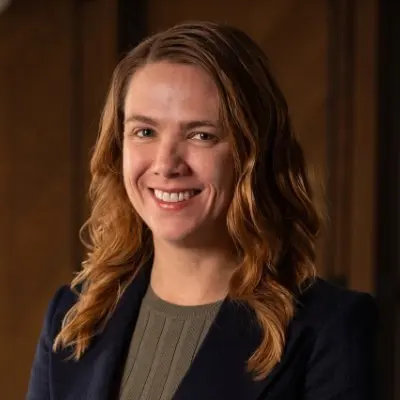
>> Welcome back to theCUBE Studio here at the New York Stock Exchange. I'm Gemma Allen with NYSE Wired and today we are talking all things AI in biotech. Joining me now for a conversation on a very unusual form of species and the value that the science of those species bring to this market is Linda Goodman, CTO and co -founder of Fauna Bio. Welcome, Linda.
Gemma Allen
>> Thank you. It's a pleasure to be here.
Gemma Allen
>> We've had a really mixed bag of conversations today. We've talked about folks in oncology, digital twins for tumors, all sorts of fascinating things, I'm actually loving the conversation. But this is really interesting, what you guys are doing because this is essentially studying hibernating species or if I'm correct things that don't kill animals but could kill humans and how can we make one offset the other. Fill me in maybe that's too short a synopsis there but give me the story here of Fauna Bio.
Linda Goodman
>> Yeah that's essentially it so what Fauna does at its core is we study animals that are resistant to human diseases or can even reverse pathologies. For example, get a little bit of cardiac damage and then be able to reverse it. And then we use that data and combine it with human patient data to be able to identify the best possible drug targets. Really what we're working with is we know that nature has naturally solved many of the medical problems that people have. If you look at different species, different mammals that are actually quite closely related to us. They're just as closely related as a mouse or a rat that people use in research all the time. But I think that in a large way, people are not paying close enough attention to the animals that actually have solved a lot of these problems. Because essentially what you can do is you take data from animals while they're, say, regrowing parts of their heart and repairing it. And you can compare that directly to human patient data right after they have had either a myocardial infarction or they're in heart disease. And you can combine these two types of data to really land in this sweet spot of, okay, these are the exact drug targets that we think are going to be responsible for heart repair.
Gemma Allen
>> Give me some examples. I think about a hibernating species, and I think about starvation, That seems to be the most obvious one to me. But there are, I'm sure, many other ways in which they defy human science in terms of what they're capable of sustaining. Talk me through some examples we might not know of.
Linda Goodman
>> Yeah, exactly. So, yes, I will definitely get to the starvation one in just a second. The one that we work most prominently with is the fact that these animals, small mammal hibernators, will go in and out of hibernation 25 times throughout the winter. And this means that they get these massive ischemia-reperfusion events, which is like a heart attack or a stroke. So they're essentially getting 25 heart attacks throughout the winter. And they start to get a little bit of damage, and then they can repair it. And that's the type of data that we use. But as you mentioned, also starvation. They are under the ground in these hypoxic burrows for six to nine months out of the year. They're not drinking anything. They're not eating anything. And they can survive because they're in this extreme hypometabolic state.
Linda Goodman
>> Wow.
Linda Goodman
>> So these are small animals. Their heart rate is standardly 300 beats per minute when they're running around. And then in the depths of hibernation, they can go down to three to five beats per minute.
Gemma Allen
>> Wow. Wow.
Linda Goodman
>> And so this is extreme metabolic suppression.
Gemma Allen
>> That's crazy. OK, so I want to get into the tech and the science because it's fascinating. But first, how did you wake up one day and think, you know what, I want to study hibernating species. I want to understand what I can learn from these little folks, like ground squirrels. How did this come to be and how was this company? And give me the kind of origin story behind this.
Linda Goodman
>> Absolutely. So my background at least for my PhD at Harvard Medical School was entirely human medical genetics. And I thought, this is how we're going to find the best drug targets. And I think to a large extent, that's true. You really do need human data to be able to figure out these are the genes that when they're broken are contributing to a disease that's really helpful. But around the time I was finishing my PhD down the street at the Broad Institute, they had just started this massive sequencing experiment where they were going to sequence hundreds of mammals and line them all up and figure out where in the genome is everybody identical? Now, this is a key point because you know that if all these 200 mammals have the identical base pair, then it's really important because if you ever had a mutation there, you were probably a dead mammal. So that's how we can figure out the spots in the human genome that are really important. And from there, I took a lot of this research to Stanford where I met my co-founders, Ashley Zehnder who is a clinically trained veterinarian and Katie Grabek who is a hibernation biologist. And we realized that if we put all of this know-how together, we had the recipe for an amazing company that could not only find amazing drug targets based off of hibernation biology, comparative genomics, but then also have that translatability back to humans. Because what we really focus on are gene targets that are very closely related in both our hibernating species and in humans.
Gemma Allen
>> Wow. So is the goal here, Linda, to bring a drug to market?
Linda Goodman
>> Absolutely.
Gemma Allen
>> And is the goal also to, I guess, license this technology or to create some sort of technical capability that's new for the broad industry that also has commercial viability? Or is it both?
Linda Goodman
>> It's both. Yes. So we have our own internal program. So we have a therapy for heart failure with preserved ejection fraction called Faun1083 that will be in the clinic next year. and we're currently raising our series A to get it to the clinic. But not only that, we also do a lot of partnerships because the data that we have is valuable for a wide variety of diseases. We've had two partnerships in the obesity space. The current one that's still ongoing, we've tested two targets and they've both been really successful in terms of weight loss. and one of the special things about hibernators is not only do they go through this time where they're obese and then lean and you can figure out what genes are responsible for that but they also lie motionless for six to nine months out of the year they start to lose a little bit of muscle mass in the beginning of hibernation and then they can regrow it before they emerge from hibernation And this is essential because they're small mammals. They run. Everything wants to eat a ground squirrel. So they have to be able to run when they wake up. But if you or I were sitting in the ICU for 10 days, we wouldn't be able to walk after that.
Gemma Allen
>> That is fascinating. So let's talk about the drug to market plan here. You mentioned GLP-1s. Sorry, you mentioned weight loss. And we all immediately connect that with GLP-1s, even though it's a different drug. I know you said that off camera. But we do immediately think, wow, GLP-1s have taken the market by storm, Right. It's like a 50 billion dollar industry.
Linda Goodman
>> Absolutely.
Gemma Allen
>> So the commercial opportunity here is huge. You also know, though, that a lot of drugs don't always make it the whole way through the FDA. It's a lot of trial and error in this space.
Gemma Allen
>> Yeah.
Gemma Allen
>> Talk about, what's changing and what's shifting for you and for your co-founders. As you think about Fauna Bio and taking a drug to market, how is AI fundamentally maybe simplifying or helping the scalability of this process? What's new that you didn't maybe have five years ago?
Linda Goodman
>> Yeah, that's a great question. First speaking to your GLP -1 question, I think a lot of what people are working on right now is this muscle preservation part of it, Is the fact that GLP-1s, you do experience some muscle loss. So that's something we're certainly looking to address with these animals that can regrow muscle. on the AI side, I think it's completely overhauled everything that we do in the past few years. So we spent around four years building a gigantic knowledge graph. And this combines any data that we thought would be useful essentially in drug target discovery. So not only our own proprietary data from animals that are resistant to human diseases and can repair tissues, but also lots of human patient data, human genomics, pathway data. So we built a gigantic knowledge graph. And then we have trained a graph neural network that evaluates these data for connections between genes and diseases that are otherwise unknown. And that's how we select our drug targets.
Gemma Allen
>> And talk about the partnership side of this business then, because that science and that technology and that capability has mass application across the industry broadly, How are you thinking about that? What sort of partnerships or case studies have you worked on to date? And it seems as though the opportunity is pretty endless there.
Linda Goodman
>> Absolutely. So we've done two partnerships in the obesity space. We're currently pursuing a partnership in the cardiovascular space. But there are lots of other ones that we could do. Another exciting application that I didn't mention is in the neuro space. So these hibernators, as they're entering hibernation, their neurons actually retract a little bit and they get hyperphosphorylated tau, very similar to an Alzheimer's patient. But then as they're leaving hibernation, they can dephosphorylate the tau and regrow the neurons. And so if we figured out how they are doing that, that would be great headway into making the next blockbuster Alzheimer's drug.
Gemma Allen
>> Wow. So you're raising a series A. A lot of folks here in the building today talking about this industry. I think there's a lot of ambition, enthusiasm, hope. We're also the center of capital markets, We know that money makes things happen.
Gemma Allen
>> Absolutely.
Gemma Allen
>> Talk about what's happening in the space from an investment perspective. Is there a lot of money flowing in right now? Is it easy come, easy go? Fill us in, Linda. What is it like out there raising, especially for something that's so fundamental to human health broadly and to society?
Linda Goodman
>> Absolutely. I would say the last couple of years, we've certainly noticed a bit of pullback in terms of the capital that's flowing into early stage biotech. But I think in the last six months, I've really seen it open up a lot, which is certainly making raising our Series A a lot easier right now.
Gemma Allen
>> Okay. What's on the roadmap? What does the next six to 12 months look like for you and the team at Fauna Bio? What are the big ambitions between now and next summer, next AI in Bio event?
Linda Goodman
>> Oh yeah, then I can fill you in, see all the things that we did. So certainly next year, we want to see our drug in the clinic, phase one, testing safety, but also not only that, getting some key biomarkers out that'll really give us a window into how this will work in heart failure patients. So that's our number one goal right now. We're laser focused on that. But in addition, we're also very excited to pursue partnerships with large pharma. We know that the platform we've built is not just good for this one heart disease drug that we have. It applies to a wide variety of diseases. So we're pursuing partnerships around heart failure, potentially neurodegeneration, potentially kidney disease. So there are a lot of options for us. So we have a great model.
Gemma Allen
>> I love it. we've heard a lot of folks today talk about almost incidental opportunities that are coming about in this space, Because when you marry technology and science, you open up a whole world of possibilities that perhaps you didn't even anticipate. So Linda, this is a fascinating company. Wish you all the best in Series A. Hope to have you back on theCUBE again next year
Gemma Allen
>> absolutely thank you so much
Gemma Allen
>> i'm Gemma Allen here at theCUBE studio at the New York Stock Exchange this is NYSE Wired and today we are covering AI in Bio we have some phenomenal leaders here in the building talking about their companies their journeys and the next phase in science and tech don't go anywhere








 Gemma Allen