Brandon Cooper of Aphid appears on theCUBE at the NYSE Wired Mixture of Experts session on agentic artificial intelligence and digital clones. Cooper discusses Aphid's platform for creating personalized AI agents that ingest a user's skills and personality to automate tasks and augment productivity, and they outline the platform's user-first design, decentralized storage, Gamburian model integration and the company's goal to simplify agent-driven workflows for mainstream users.
Hosted by John Furrier of theCUBE at the NYSE studio and informed by theCUBE Research, the conversation covers Cooper's background at Apple, Aphid's approach to autonomous clones and the control panel for human oversight and measurable productivity gains from continual training. They state that regular training can raise agent accuracy toward 80 to 90 percent for repetitive tasks, and they explain that the Gamburian model on the InterPlanetary File System, IPFS, enables decentralized data ownership and greater user control. The discussion reframes productivity and public policy debates around universal basic income and future work models.
Forgot Password
Almost there!
We just sent you a verification email. Please verify your account to gain access to
theCUBE + NYSE Wired: Mixture of Experts Series. If you don’t think you received an email check your
spam folder.
Sign in to theCUBE + NYSE Wired: Mixture of Experts Series.
In order to sign in, enter the email address you used to registered for the event. Once completed, you will receive an email with a verification link. Open this link to automatically sign into the site.
Register For theCUBE + NYSE Wired: Mixture of Experts Series
Please fill out the information below. You will recieve an email with a verification link confirming your registration. Click the link to automatically sign into the site.
You’re almost there!
We just sent you a verification email. Please click the verification button in the email. Once your email address is verified, you will have full access to all event content for theCUBE + NYSE Wired: Mixture of Experts Series.
I want my badge and interests to be visible to all attendees.
Checking this box will display your presense on the attendees list, view your profile and allow other attendees to contact you via 1-1 chat. Read the Privacy Policy. At any time, you can choose to disable this preference.
Select your Interests!
add
Upload your photo
Uploading..
OR
Connect via Twitter
Connect via Linkedin
EDIT PASSWORD
Share
Forgot Password
Almost there!
We just sent you a verification email. Please verify your account to gain access to
theCUBE + NYSE Wired: Mixture of Experts Series. If you don’t think you received an email check your
spam folder.
Sign in to theCUBE + NYSE Wired: Mixture of Experts Series.
In order to sign in, enter the email address you used to registered for the event. Once completed, you will receive an email with a verification link. Open this link to automatically sign into the site.
Sign in to gain access to theCUBE + NYSE Wired: Mixture of Experts Series
Please sign in with LinkedIn to continue to theCUBE + NYSE Wired: Mixture of Experts Series. Signing in with LinkedIn ensures a professional environment.
Are you sure you want to remove access rights for this user?
Details
Manage Access
email address
Community Invitation
Kirthiga Reddy, OptimizeGEO.ai & Aku Srikanth, WomenOfGenAI
Brandon Cooper of Aphid appears on theCUBE at the NYSE Wired Mixture of Experts session on agentic artificial intelligence and digital clones. Cooper discusses Aphid's platform for creating personalized AI agents that ingest a user's skills and personality to automate tasks and augment productivity, and they outline the platform's user-first design, decentralized storage, Gamburian model integration and the company's goal to simplify agent-driven workflows for mainstream users.
Hosted by John Furrier of theCUBE at the NYSE studio and informed by theCUBE Research, the conversation covers Cooper's background at Apple, Aphid's approach to autonomous clones and the control panel for human oversight and measurable productivity gains from continual training. They state that regular training can raise agent accuracy toward 80 to 90 percent for repetitive tasks, and they explain that the Gamburian model on the InterPlanetary File System, IPFS, enables decentralized data ownership and greater user control. The discussion reframes productivity and public policy debates around universal basic income and future work models.
Kirthiga Reddy, OptimizeGEO.ai & Aku Srikanth, WomenOfGenAI
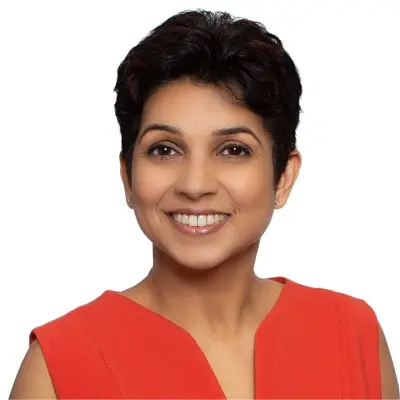
Kirthiga Reddy
CEO & Co-founderOptimizeGEO.ai
Aartika Aku Srikanth
Head of AI Strategy1Password
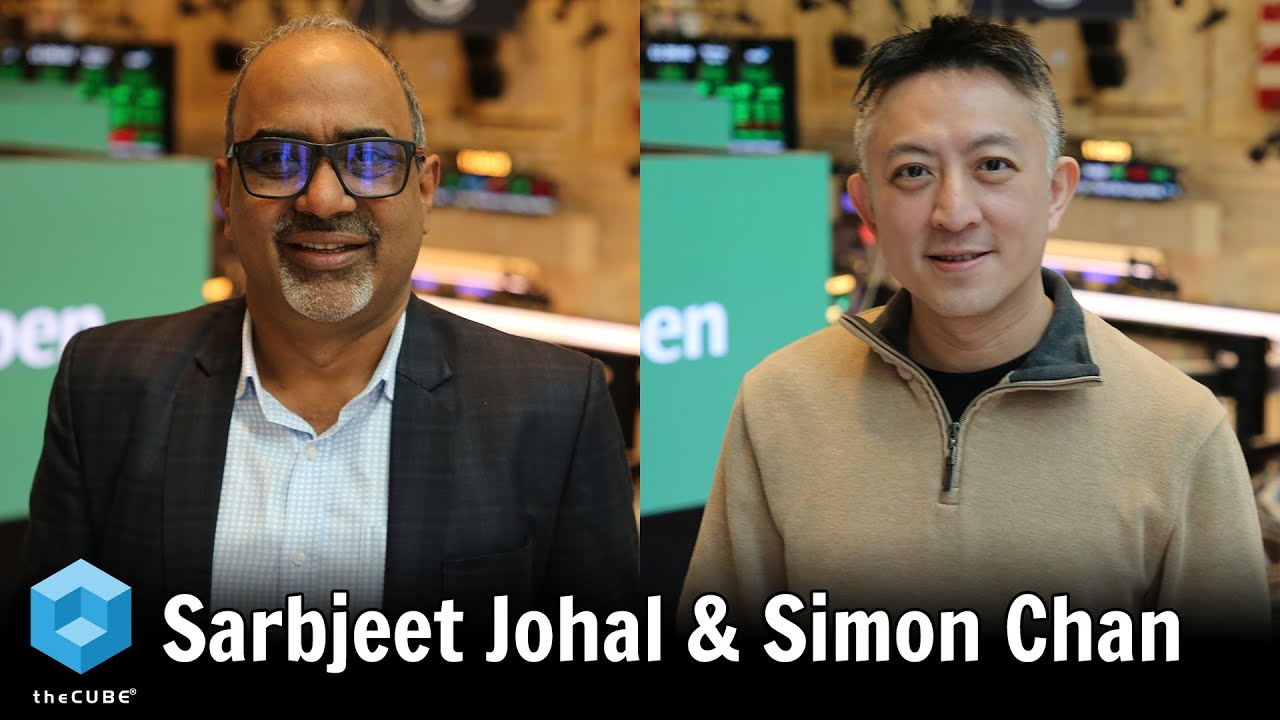
In this interview from the Mixture of Experts series, Kirthiga Reddy, chief executive officer of OptimizeGEO.ai, joins Aartika Aku Srikanth, founder of WomenofGenAI, to talk with theCUBE's John Furrier about how AI is dismantling traditional barriers to entrepreneurship and accelerating the push for gender equity in tech. Reddy, the first female investment partner at SoftBank's Vision Fund and Facebook's first employee in India, draws on her experience navigating major consumer shifts to explain why LLM visibility has become the new battleground for brands. S...Read more
exploreKeep Exploring
What is your vision and perspective on women's participation, leadership, and opportunities in engineering, technology, and entrepreneurship?add
What updates or developments have occurred since we last spoke?add
How has the AI startup landscape evolved over the past few years—from responsible AI to generative AI to agentic AI—and what examples (incubated startups, funding, and founders) illustrate these shifts?add
How is AI changing the startup landscape—who can found startups and get funding (particularly for female founders and women-funded VCs), and what role do sovereign cloud/sovereign AI and global democratization play?add
What is the AI Kirin initiative and what are its goals for promoting inclusive AI and empowering women and other groups in India?add
Kirthiga Reddy, OptimizeGEO.ai & Aku Srikanth, WomenOfGenAI
search
John Furrier
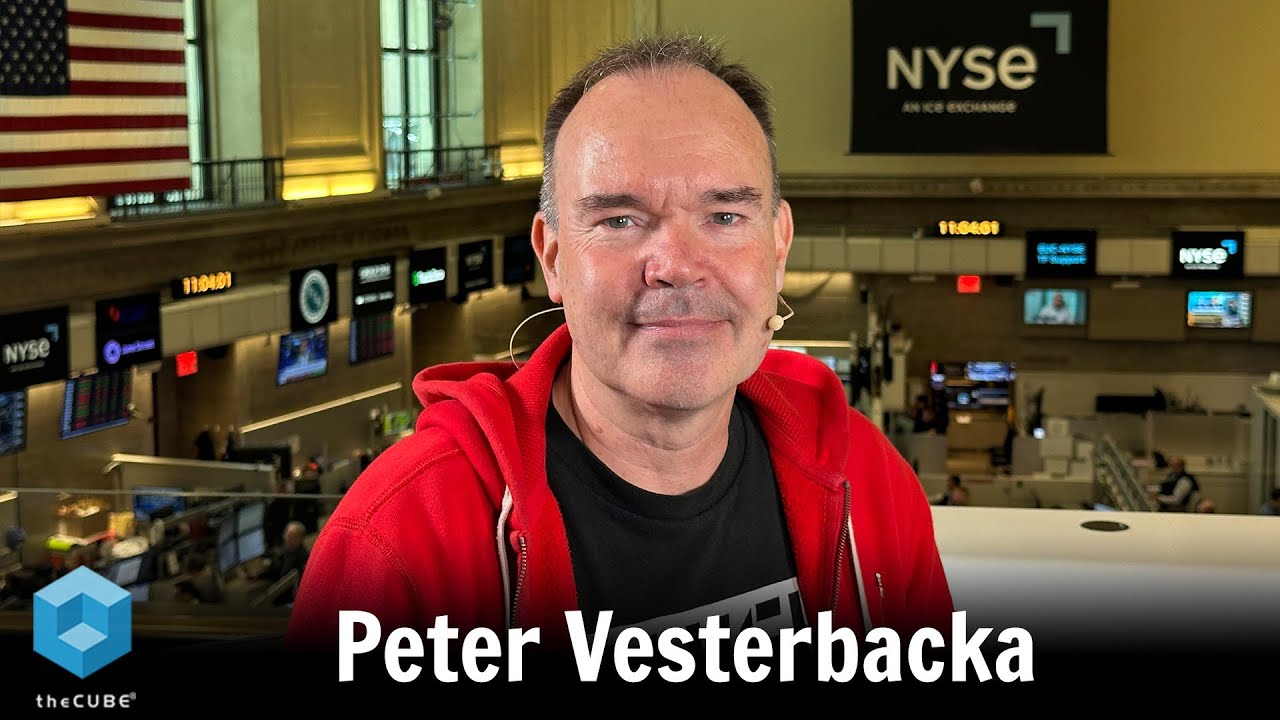
>> Hello, I'm John Furrier with theCUBE here at theCUBE's NYSE Studios. Of course, we have our Palo Alto studio connecting Silicon Valley and Wall Street. This is our Mixture of Experts Series. We've got two great amazing women here on the last day of Women History Month. We have Kirthiga, she's the CEO of OptimizeGEO.ai and also the first female investment partner at SoftBank's $100 billion Vision Fund, Facebook's India first employee and trekked to base camp in Everest. You've done a lot. Thanks for coming on. Good to see you.
Kirthiga Reddy
>> Excited to be here. Always great to be back.
John Furrier
>> And Aku is back. She's a CUBE alumni. She's the founder of WomenofGenAI, the hottest trend on the planet. Thanks for coming back. Good to see you.
Aartika Aku Srikanth
>> Thank you.
John Furrier
>> So first of all, Kirthiga, I'm interested in the whole Everest thing now that I just threw that out there. Your DNA is you're a pioneer. You like to explore. First female partner at SoftBank's Vision Fund. Facebook in India, which, massive operation there now. It's Women History Month. It's the last day. What's your thoughts on this current market right now, because one, the AI has opened up the aperture of skills. You don't need to be a computer science engineer from the top schools. You can just have intellect and code away. That's changing the game on women in tech. That's changing the game on who's a developer. Business outcomes are now actually attainable. What's your vision? What's your thoughts?
Kirthiga Reddy
>> John, it's a very meaningful question because it's meaningful in two different ways. One, absolutely, you don't have to be an engineer. I know of doctors who are now entrepreneurs and are building their own businesses. I know of a founder back in India, Arpana, Gabit, she's building the next Oura ring for the world and she doesn't have an engineering background. So you see that. But also, if you look at the number of women founders, the percentage of women founders, the percentage of funding going to women, that still needs a long way to go. And to what Aku was building with GenAI, we still have ... Even in the biggest companies, like the Google, you only have 10%, 15% of women engineers. So that needs to change, and I'm excited to be leading from the front and ride that wave.
John Furrier
>> Yeah, we just did a series in December with the women of the GSA, which is the Semiconductor Association. There's still some hardcore engineering going on too, so there's a lot of participation. Again, the numbers are a little bit lower. Aku, you're in the heart of it. I just wrote a post on LinkedIn. It was a New York Times article about how AI is changing, as I wrote a post around how my 25 years in Silicon Valley and now here in New York connecting them to, there's almost a parallel build out going on. New York's become very tech-centric.
Aartika Aku Srikanth
>> Yeah.
John Furrier
>> But the Sil's got the distribution and the money and the trades. Silicon Valley's got the innovation. But they're both innovating in parallel at the same time and it's connected, but AI is also changing. The models are different.
Aartika Aku Srikanth
>> Yeah.
John Furrier
>> There's so much innovation and new thinking.
Aartika Aku Srikanth
>> Totally.
John Furrier
>> What are you seeing? What's the update on your end since we last talked? San Francisco's booming, New York's booming. I mean, all the major meccas of talent is leaning in.
Aartika Aku Srikanth
>> I love what's going on. I've been part of this wave and also the last wave with IBM Watson. Was part of their founding team. We grew it to like a $13 billion in revenue, which contributed more than 50% of IBM's revenue at that time. And then again with Workday, where I was part of the founding DABL Upper and AI team. And from 2022 to 2023, we went from a revenue of $3 billion-plus to $7 billion and that was ... Or $4 billion-plus to $7 billion-plus astronomical growth just within that one year. And fast-forward to today where there's so many interesting companies, like the OpenAIs and the Anthropics of the world that are really changing innovation, and you have LLMs. Today, our life is so much easier because we have our own AI personal assistant in an LLM. I literally am amazed at how good LLMs are at psychology. I sometimes go out there when I have ... Because I have decision fatigue often, I just go and ask the LLM, "What do I do in this scenario? How should I respond?"
John Furrier
>> It's a double-edged sword. As it gets to know you, it makes you better.
Aartika Aku Srikanth
>> I know.
John Furrier
>> But also it could be blind spots. It only can work on what it can see.
Aartika Aku Srikanth
>> Totally.
John Furrier
>> I mean, this is a big dilemma. I mean, Kirthiga, your business does this. And again, I've just wrote a post on this. Again, the upside is it's so much faster to get things done. It takes a raw idea, notes, turns it into something cogent. But also, I don't feed the AI a lot of things. My instincts. So the cognition, the cognitive behavior of humans and AI are kind of in this power dynamic. What are your thoughts? You do this for a living. You help companies be seen-
Kirthiga Reddy
>> I do, yes. Yes. So you know I'm ...
John Furrier
>> ... by AI. So you got to feed the beast.
Kirthiga Reddy
>> In very interesting ways. So having helped brands with the last shift to social and mobile as the first employee for Facebook in India and their managing director India, South Asia, where we saw the country go digital and mobile. And then my role here at Meta headquarters working with the largest global brands. I'm thrilled to be doing it again now with this new consumer shift where people are going for everything from news to what enterprise software to buy, to the skincare that they choose. They go to LLMs. And if you're not visible there, you're essentially forgotten by the modern consumer. So our platform actually has a diagnostic tool where it helps you understand what is it that users are asking for for your particular industry, driven by user personas to a recommendations platform about what you need to do about it. And we find that even for the biggest brands, John, about 40% of the questions that they identify as being important, they're just not visible there. And so then it's about what is it that you do in content? What is it that you do in media? And for sure, they should be on theCUBE to make sure that they appear in those LLM answers.
John Furrier
>> It's interesting, Aku, I want to tie this together with you and riff on this a little bit, because if you look at the SEO game, search engine optimization, which was a Web 1.0, and then a Web 2.0, dynamic with mobile and cloud, it was really about the webpage. A lot of net discovery was there. Of course, you can find what you're looking for with Google. You can click on a link, you go to a landing page. And people would optimize for the placement in the search engines. It became, I won't say underbelly in it, but it grew very fast. It became a very lucrative because Google's revenue model was obviously a monopoly, billions and billions and billions of dollars. But that was based on a click. So you had contextual behavior. How does AI change? Because it seems like the AEO, or the AI engine optimization, is less about search results than it is about intelligence and the system. So what's different about AI that's ... Because I think it's a bigger category, even though SEO is pretty massive, but it was always AdTech. It wasn't like society changed. It was help people do e-commerce and get found. You paid for that. But AI's got a whole different thing to it. It's an infrastructure. It's a system, a system of intelligence. Your thoughts on what's different.
Kirthiga Reddy
>> No, totally. Because AI is not just going to your website, your website is a fraction of it, it is looking at the intelligence across the web about your product, brand and service. And the whole purchase funnel and the purchase decision is compressing. You might go to LLMs to say, "Give me a seven-day nutrition plan, and you end up with figuring out what you're shopping for." And the stats say it all. Today, over 58% of Google searches do not result in a click. And that number just a few years ago was in the 20-plus percent. So majority of searches today are not resulting in a click, and so it is even more essential for the right news article, the right brand, the right company to appear.
John Furrier
>> So you're saying it's hyper-converging the functionality of the whole outcome, which is, it does the work.
Kirthiga Reddy
>> It does the work for you, and you don't even have ... You start with one question and LLMs say, "Do I tell you more? Do you want more?" You're not even asking the next question and that whole purchase funnel is compressing. And we spoke about Google being the monopoly in the old world. Today, by the way, you don't just have one LLM, right? Your results might be different on a chat. Not might be, they are different on a chat-
John Furrier
>> I had this debate with an entrepreneur. Not a debate, but an agreement, basically. We both agreed because we both riffed to the same point is that, "Will OpenAI have ads?" Now they have ads. And it wasn't really a debate. The comment was they have billions of users. They have the eyeballs. The eyeballs is an old term, but now they have the voices. The fingers can move from typing a search to just prompting it with voice or just a prompt. This is changing, one, the application space, putting all the doom and gloom and SaaSpocalypse aside, the AI native software is different at CUBE. This is going to change how ventures are built, because now everything's collapsing into multifunctional things. What are you seeing with entrepreneurs out there? What are women doing in the GenAI space from a startup standpoint? What are some of the trends that you're seeing that speak to the systems game?
Aartika Aku Srikanth
>> Yeah, that's a great question, and from my own personal journey of incubating Credo AI back in the days responsible AI startup, raised our first $5.5 million from John Sakoda of Decibel and Anne Dwane of Village Global. And it was interesting, back in 2020, and that was the trend of responsible AI because all those laws in the EU, European Union, that were shaping. And that was so timely at that time because of that, because we had that whole Black Lives Matter movement. And auditability was important to make sure that the AI models are fair and not biased, and that was important at that time. And fast-forward to two years ago when I incubated another startup, female-founded, which was focused on AI sales agents and raised another $40 million there. So that was heavily the trend back then, which was Generative AI. And fast-forward to today, which is Agentic AI, where you have such cool female-founded startups in the space that are evolving, including Kirthiga's. And it's really amazing to see all the Agentic AI and those trends, how could AI be your agent and help you do better?
John Furrier
>> That's a great point, Kirthiga, about the female-funded startups. One of the side effects, benefits, of AI is acceleration, speed. So there's really no barriers to the proof. So that changes the game on who can do a startup, how they do startups. The old rules kind of don't apply. If you can create value, it's undeniable. Now, there's competitive forces, so that's just intelligence beat the competition. So it's not the old guard of, "Hey, talk to my friend. We went to school together. He runs a VC for all the Ivy Leaguers."
And then now you got women-funded VCs too, so you have this democratization layer, not just in America, all over the world. Because sovereignty is now a big deal, because you got sovereign cloud that moved to sovereign AI, which isn't about data anymore, about GDPR and all those things that people talked about during the cloud. It's, how does a nation create a better society?
Aartika Aku Srikanth
>> Yeah.
John Furrier
>> And all things factor in. Women-led companies, diversity, all those things-
Aartika Aku Srikanth
>> Yeah, totally.
John Furrier
>> ... that people care about actually is doable.
Aartika Aku Srikanth
>> Yeah.
John Furrier
>> What's your thoughts on this?
Kirthiga Reddy
>> Yeah. John, I think we have to be intentional about it, because if we are not intentional, we are still going to have, just like we have the digital divide, we're going to have the AI divide. And I keep talking about today at this moment, the World Economic Forum says we are standing at 130 years to close the gender equity gap. And if we don't do everything we can now, we are going to see the same divide happen. So let's do everything we can right now to provide access, provide information. And so I'm personally thrilled about championing an initiative that we call AI Kirin. Kirin in India is rays of light. So it's with the government of India, where the goal is to enable a million women, youth, differently-abled senior citizen. The mantra is inclusive AI and-
John Furrier
>> And their goal is a million female entrepreneurs?
Kirthiga Reddy
>> It's a million women across different categories-
John Furrier
>> Okay.
Kirthiga Reddy
>> ... whether it's all the way from builders to people in academia, to social good, to actually a category that we feel very proud of, which we call the builders. These are people doing the data gathering, the labeling, and often the unsung heroes in the whole AI moment. So it's very holistic and it's across these different segments.
John Furrier
>> Yeah, I've always found ... So 17 years doing theCUBE, we've interviewed a lot of women leaders. And they're just leaders, just happen to be women, as I always say.
Kirthiga Reddy
>> Yeah.
John Furrier
>> That's interesting because the population, you look at the demographics, software's for everyone now. So you have AI has basically been built now where it's the personalization angle is the value. It's built for everyone. So the question is, the people who are writing the software or designing the software or prompting the software or curating the software, it's going to end up happening because there's demand. If only 18% of the builders are women, that's not 51%. Just say it's 50/50 just for this illustration, that population is not building for the population that the users are.
Kirthiga Reddy
>> Yeah.
John Furrier
>> So it's personal now. So it's clearly the demand, it will happen. The question is how?
Kirthiga Reddy
>> Yeah. And John, it was one of the stats that I kept looking at when I was looking ... I was at SoftBank Vision Fund as their first female investment partner. I was seeing stats that single digit percentage of founders in the deep tech space are women, and that stat kept bothering me. And in addition to the passion for the mission of what I'm doing, it was one of those, "If not me, when? If not now, who?" And jumped back into building with OptimizeGEO.ai.
John Furrier
>> Yeah, well, you guys have both been around the industry. Aku, you've seen it in the big companies, Kirthiga, you've seen it through your life, the debates have ranged. I've had many conversations. "Oh yeah, get them early in elementary school when girls want to be girls, boys want to be boys." But the computer science was a mechanism. You had to write code that became also a thing. Gaming saw this too, and now it's kind of changing there too. But now outcomes are the definition, not so much you have to code. I mentioned that earlier. So I think that the coding assistants that are going, I'd say being commoditized, and in a good way, has shifted the value to intellect.
Aartika Aku Srikanth
>> Totally. I totally agree. And I did computer science myself, was one of the few women in that class back in India back in the days, and I was a math and science nerd growing up. My uncle worked at Microsoft in the early days and he would mentor me and inspire me. And my godfather as well, who was down here in the United States. And I always had this goal of what I wanted to do when I grow up. Remember having those conversations with my dad as a five-year-old kid, and it's just amazing. But I also look at other countries where ... And I feel so bad about this. My Instagram is filled with these reels and my heart goes out to the people in Afghanistan, the women in Afghanistan and Iran and all those countries. Like Afghanistan, women can't even be in school anymore post a certain age. They can't go to high school or ... It's really sad. They can't show their face. And my heart goes out to them.
John Furrier
>> Yeah.
Aartika Aku Srikanth
>> Now it's the education is so important. And there are no female doctors there anymore and women can't even be seen by a male doctor. So it's-
John Furrier
>> Yeah, well, the world's changing. We'll see how that goes, because I mean, again, this force is too powerful because the value, again, there's a double-edged sword how this rolls. I think the guardrails is a good strategy. But it's going to be an undeniable force because the tools are easier to use. My theory is, is that even though it's going to be easier not to code, that's going to create more curiosity about how everything works. I think we're actually going to come back to a systems revolution, but it's not like you have to go to school for it.
Kirthiga Reddy
>> Yeah.
John Furrier
>> I think that'll also change the participation, because there are a lot of female nerds that just don't go into the nerd classes. As you know, the numbers are askew the other way. I think there's going to be a much more higher curiosity of how everything works under the covers.
Kirthiga Reddy
>> Yeah, I see a future where just like today, anyone goes and orders an Uber, that tomorrow they just build their own system for solving whatever problem that they have. I'm a huge believer in technology for good, and I do see how we can solve things like medical access through personalization and that last mile delivery of whether it's medicine, whether it is medical advice, whether it's education, and a whole range of other services that are just not possible today.
John Furrier
>> It's the Magic Quadrant, which I always make fun of, but I still like the quadrants, it's ability to execute, completeness of vision are two main axes that I like. Now you have a world where you can actually have a vision, have an idea, and execute it quickly. So to me, I think it's a great time to actually affect the change that everyone's been kind of working on. So that brings me to the questions about you guys. What are you guys working on now? Share what's on your plate, what are you focused on. Aku, what's going on for you? What's some of the cool things you're working on?
Aartika Aku Srikanth
>> Yeah, I've been heavily focused on Agentic AI as a space. I work with some amazing, cool female investors like Jelek and Rashida Hodge. I worked for Rashida back in the days at IBM Watson. And fast-forward today, she just invested in something new that I'm doing. So that's been great. She's now at Microsoft.
John Furrier
>> Nice.
Aartika Aku Srikanth
>> And it's been great to see what AI could do in the world with agents. And I'm also very, very focused on enabling other women with WomenofGenAI, enabling female founders. That's been my mantra. A lot of the companies I've backed have been female founders. And to see incredible people, like even I know Nancy Wang, who was recently on your show, now the CT at 1Password-
John Furrier
>> Yeah, she's awesome.
Aartika Aku Srikanth
>> ... is just amazing.
John Furrier
>> Yep, she's great. What's your advice to young upwardly-rising women and women who are reskilling? Because remember, this era is not for just the young. It's a lot of people who grew up in these systems-thinking worlds now can be retrained. There's a lot of people coming off the sidelines. People like my friends, like, "Yeah, I've retired. I'm coming back in the game. I don't need to know how to code. I don't need to synth. I could just code," because they know how to code back in the day. There's a lot of people coming in, young and old. It's an interesting time. It's almost like the collision between two cultures. What's your advice to people trying to get back in the game and get funding?
Aartika Aku Srikanth
>> That's a great question. When you think of the last generation and now you think of the newer generation, I think both of them bring in different value and perspectives. The last generation brings in that great experience, that OG experience, and that track record, and the new generation brings in the creative outside thinking and the innovative ideas. So I feel like the fusion of both of those is significant.
John Furrier
>> Kirthiga, what are you working on? What's exciting? You also get the startup, get things in the GenAI side-
Kirthiga Reddy
>> No, it's very exciting.
John Furrier
>> ... at AEO.
Kirthiga Reddy
>> Yeah. So one, we see the whole GEO.ai as an entry point to serve brands and helping them be visible, trusted, chosen. And I was at FinTech meetup yesterday where someone said, "Oh, is this going to be about infrastructure or intelligence?" I'm like, "All of that is converging very quickly." It is infrastructure, it is intelligence, but one step further towards the Agentic AI conversation, it's about actually doing the execution, being extension of lean teams. Working with partners across the ecosystem to work together to deliver results for brands and businesses. And our big focus, John, is making sure that it's not just about being visible, but the be trusted and chosen. And so we are delivering results like working with Business Intelligence Group, where they drove 3X growth in visibility, 151% increase in traffic from ChatGPT and other sources, and 2X growth in revenue. What was mind-boggling was when the CEO said that 58% of that new revenue came from customers they had never seen before.
John Furrier
>> Yeah. Yeah, yeah.
Kirthiga Reddy
>> So, very focused on that whole end-to-end platform at a global scale.
John Furrier
>> And you're bringing the AI and the data together?
Kirthiga Reddy
>> Yes.
John Furrier
>> It reminds me of the cloud world days, this Agentic infrastructure layer and the AI-native applications. It's almost a repeat of the cloud native movie. DevSecOps, an infrastructure layer, cloud native applications on the cloud. Now you have this Agentic layer sitting on top of cloud native powering all these AI apps, but it's happening so much faster.
Aartika Aku Srikanth
>> Totally.
John Furrier
>> Way fast.
Aartika Aku Srikanth
>> Yeah, totally. I think it's such an amazing advance. I have some really cool entrepreneurs. Back to your last question about the newer thinking, I don't know if you know Lucy Guo with her new startup Passes, who's the former co-founder of Scale AI. So that energy is infectious to newer.
John Furrier
>> Yeah. It's a great time to be working on companies and changing the world. Thanks for coming on our Mixture of Experts, breaking it down, and the last day of Women History Month. Pioneers here. Thanks for coming on. I appreciate it.
Aartika Aku Srikanth
>> Thank you. Always-
John Furrier
>> I'm John Furrier, host of theCUBE here at the NYC CUBE Studios. This is the NYC Wired, the new CUBE program, CUBE Original. Thanks for watching.


















































 John Furrier