Saket Saurabh, co-founder and Chief Executive Officer of Nexla, joins John Furrier, co-founder and co-CEO of SiliconANGLE Media, in a thought-provoking discussion at the New York Stock Exchange studio. This engaging segment is part of theCUBE's Wired Mixture of Experts series, focusing on the evolving role of data in the context of generative AI and infrastructure.
In this insightful video, Saurabh shares extensive expertise in data infrastructure and engineering. They delve into how generative AI reshapes business landscapes by redefining technology stacks and system architectures. John Furrier and experts from theCUBE Research emphasize the importance of data context and engineering, making it clear that companies must innovate to unlock the true potential of AI. The discussion also explores the progression of AI models and strategies for enterprises to remain adaptable and competitive in this rapidly advancing field.
Key takeaways from the conversation highlight the significance of data products and context engineering as crucial elements for enterprise success, according to Saurabh. The dialogue underscores Jensen Huang's concept of AI factories, emphasizing the transformative impact of AI on enterprise systems. Additionally, Saurabh elaborates on the importance of fine-tuning models to address specific enterprise challenges and the role of automation and AI in enhancing data scalability and accessibility.
Forgot Password
Almost there!
We just sent you a verification email. Please verify your account to gain access to
theCUBE + NYSE Wired: Mixture of Experts Series. If you don’t think you received an email check your
spam folder.
Sign in to theCUBE + NYSE Wired: Mixture of Experts Series.
In order to sign in, enter the email address you used to registered for the event. Once completed, you will receive an email with a verification link. Open this link to automatically sign into the site.
Register For theCUBE + NYSE Wired: Mixture of Experts Series
Please fill out the information below. You will recieve an email with a verification link confirming your registration. Click the link to automatically sign into the site.
You’re almost there!
We just sent you a verification email. Please click the verification button in the email. Once your email address is verified, you will have full access to all event content for theCUBE + NYSE Wired: Mixture of Experts Series.
I want my badge and interests to be visible to all attendees.
Checking this box will display your presense on the attendees list, view your profile and allow other attendees to contact you via 1-1 chat. Read the Privacy Policy. At any time, you can choose to disable this preference.
Select your Interests!
add
Upload your photo
Uploading..
OR
Connect via Twitter
Connect via Linkedin
EDIT PASSWORD
Share
Forgot Password
Almost there!
We just sent you a verification email. Please verify your account to gain access to
theCUBE + NYSE Wired: Mixture of Experts Series. If you don’t think you received an email check your
spam folder.
Sign in to theCUBE + NYSE Wired: Mixture of Experts Series.
In order to sign in, enter the email address you used to registered for the event. Once completed, you will receive an email with a verification link. Open this link to automatically sign into the site.
Sign in to gain access to theCUBE + NYSE Wired: Mixture of Experts Series
Please sign in with LinkedIn to continue to theCUBE + NYSE Wired: Mixture of Experts Series. Signing in with LinkedIn ensures a professional environment.
Are you sure you want to remove access rights for this user?
Details
Manage Access
email address
Community Invitation
Kate Mason, Author
Join us for an insightful episode featuring Raj Verma, CEO of SingleStore, as he shares his expertise in the rapidly-evolving landscape of data infrastructure and Artificial Intelligence. Hosted by theCUBE's John Furrier, this conversation takes place at the prestigious New York Stock Exchange, spotlighting SingleStore's strategic position and the innovative partnerships shaping the future of AI infrastructure. Verma's insights reveal the dynamic intersection of Wall Street and Silicon Valley.
In this episode, Verma discusses the transformative role of databases in AI development and the critical importance of modernizing data estates to capitalize on new AI capabilities. According to Verma, integrating data effectively can significantly enhance AI's operational efficiency, emphasizing the need for organizations to harness their own data. theCUBE analysts explore the future of enterprise technology, echoing Verma's predictions for AI-driven disruption across various industries. Don't miss out on the key takeaways from this engaging discussion. Learn more about SingleStore here: [SingleStore](https://singlestore.com). #AI #Cybersecurity #DataInfrastructure #SingleStore #NYSE
Stay connected with the latest in tech innovation by following the full series with theCUBE at NYSE Wired.
00:00 - Intro
00:06 - Launching into New Ventures: A Market and Partnership Overview
04:31 - AI Evolution: Infrastructure Trends and Applications Across Markets
08:57 - Modernizing Data Estates for the Future of AI and Agents
11:58 - Challenges with AI Hallucinations and Data Reliability
16:11 - Advancements in Data Technologies and Enterprise AI Integration
19:32 - Shifts in Enterprise Data Usage for AI
23:30 - The Future of System Software and Applications
31:24 - Disruption in Professional Services and SaaS Models
35:15 - Navigating the Future: AI, Innovation, and Strategic Roadmaps
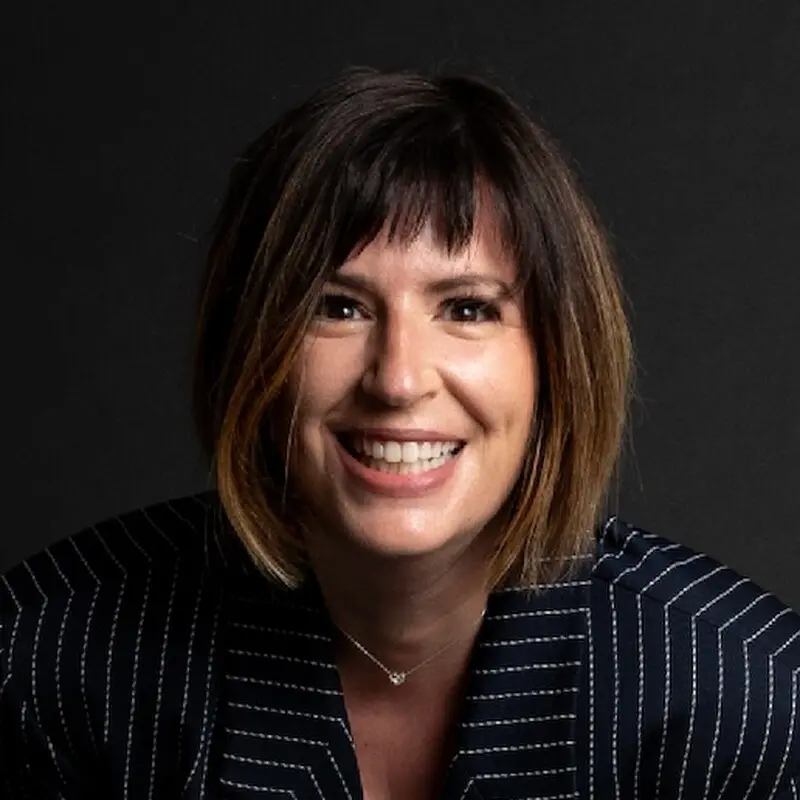
In this interview from theCUBE’s studio at the New York Stock Exchange, Kate Mason, PhD, author of "Powerfully Likable," joins host John Furrier to discuss the evolving dynamics of leadership communication and the persistent challenges for women in the technology sector. Mason addresses the slow progress in industry representation, highlighting that while democratization is occurring, the numbers remain skewed with only 2% of VC funding going to female founders. She details the philosophy behind her new book, which moves away from a remedial approach to one o...Read more
exploreKeep Exploring
What is the focus of the series being covered in theCUBE's East coast studio at the New York Stock Exchange?add
What has been the progress regarding women in tech over the past 15 years, and how has the rise of AI influenced this situation?add
What are some characteristics and behaviors of successful individuals in high-pressure career paths, and how can colleagues support each other in a workplace environment?add
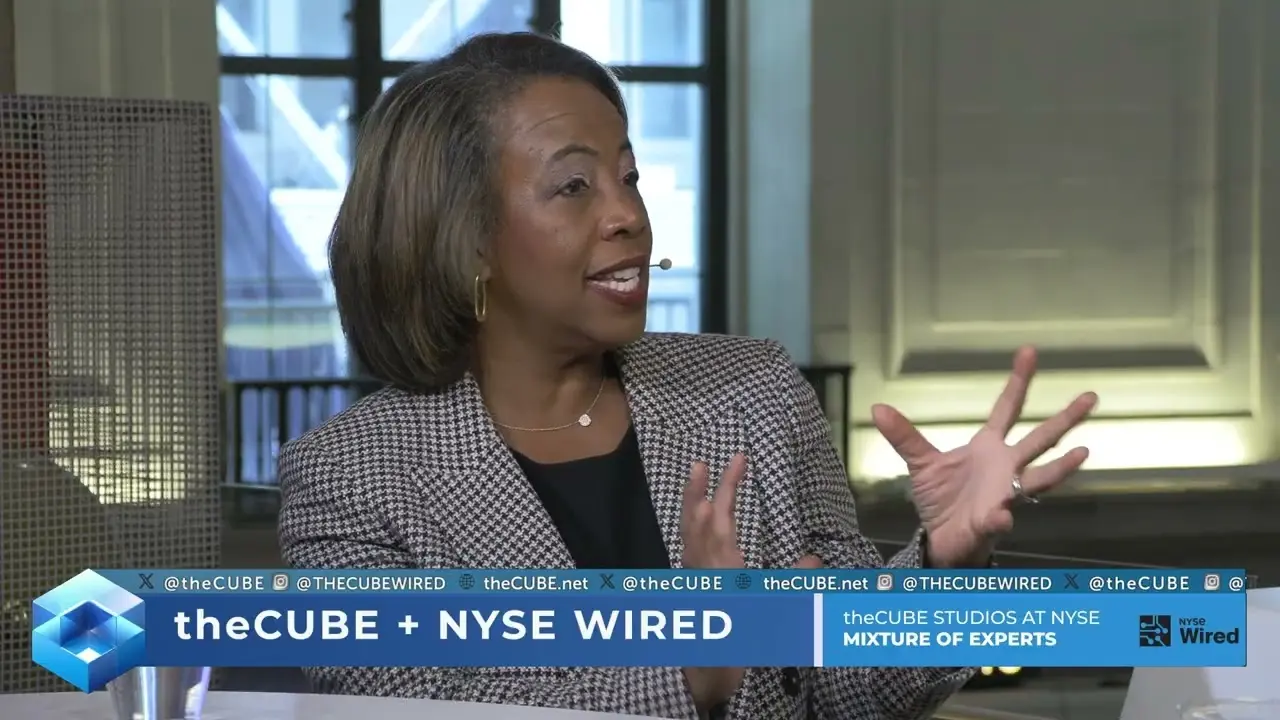
>> If you like.>> Hello everyone. Welcome to theCUBE here at the New York Stock Exchange. I'm John Furrier, your host of theCUBE. This is our East coast studio at the NYSC, the NYC Wired program you've been following. Of course, we've got our Palo Alto studio and we cover the tech events. Got a great guest here, an author of a book, powerfully likable Dr. Kate Mason's here, career in tech, now author. Very compelling book. Thanks for coming on.
Kate Mason, PhD
>> Thanks for having me, John.>> So we've been looking at the tech trends and as women in tech has been one of our most popular series, interviewing women who are doing great things in tech, the numbers still are skewed, and it's almost been 15 years we've been documented. Has there been progress and is that a tech thing? And then you're seeing a lot more surge with AI to be democratized. So has the game changed at all in your opinion?
Kate Mason, PhD
>> The game is changing all the time. I think the progress we've made has been phenomenal, but one of the reasons that I see or in my coaching practice with women is that there is still a ways to go into terms of feeling that and actually seeing that represented in the numbers.>> You've had great experience in tech. What was the motivation for writing the book? I want to get into the book because there's some cool things in there that we talk about all the time, but what was the motivation? What was the moment in time? What was the origination spark?
Kate Mason, PhD
>> I think for women, communication always involves this double bind. Am I too nice? Am I too assertive? What feedback am I getting? And certainly I had experienced it in my career and I'd seen it in the women that I coach, as well. So I started to realize these patterns weren't unique and I wanted to bring them together and work out what was the way to move forward or some tools that you could use in your toolkit.>> It's interesting, as I get older, I have two daughters and all my friends have kids, and you look at this younger generation and you mentioned the coach. I want to get into the generational connections because one of the things that with AI I'm seeing right now in the tech market is that it's infusing in all aspects of society. So you start to see generational connections, not the Gen Z's or replacing the X's and the boomers. It's certainly happening as people age out of the workforce and settle into the end of their lives. But with AI and some of the tech, it's interesting, it's old guard, new guard coming together here in finance. We cover a lot of the blockchain stuff with cloud and AI. You're starting to see the fusing of the younger generation and that's interesting. I'd love to get your perspective on that because when I talk to young women, they're moving fast. They're almost like, "Hey, what's the issue?" So it's like, well it's not, in tech has never been equal. What is that connection? Have you seen the younger and old in your coaching? Is there a pattern there? Is there any kind of new data?
Kate Mason, PhD
>> One of the things I think it's important to remember is that it hasn't been that long since women were actually in the workforce. So if we think about the first women who were actually working, it was not hundreds and hundreds of years we're talking about. And so I think the changes are happening and I think that the democratization that you're speaking of is definitely changing, but I think the numbers are still playing out that it's not at a point where we'd be really happy. We know that, for example, only 2% of VC funding goes to women. So we've got a ways to go certainly, but I'm confident it's moving in the right direction.>> It's nice to see, too, women firms that are dedicated to financing women. I have to ask you on the book, what was the key thing that you really wanted to get across? Was it the communications? Was it the mindset? What were some of the key keys?
Kate Mason, PhD
>> So I think a lot of books especially, or even popular culture is very much looking at women as remedial. You're broken, here's how to fix it. And what I wanted to do in the book is actually you're not broken at all. There's so many good things that you're already doing. How do we optimize to have you lean into more of that in your communication? And then what are some tools we can give to remedy or help the deficits you're feeling?>> I like the title and you mentioned things seem to be broken, fix it. It's a feature, not a bug as they say in tech. So a lot of times people are like, "Okay, that's problem. Let's fix it." You're saying, "You are where you are." What is the key message for someone who's like, "Hey, how should I behave? You mentioned that. Do I go harder and be more assertive?" I was talking with Gemma earlier about the satin and telegap, like the Grace Hopper event years ago when he said, "Women should fight harder," and then that blew up in his face, but he's actually been great at Microsoft to things. It's different for different people, but what's the strategy for someone to do that to be likable or less likable?
Kate Mason, PhD
>> Part of it is so much of our, where do we stand? Am I being confident? Am I being likable? Comes down to being performative. And oftentimes I think that's unsustainable because it's asking us to be something that we're not. And really, the book is much more about actually, who are you right now and how do we turn the volume up on that? How do we make that the most powerful and get you the most cut through?>> Tell a story from that motivated the book or a scenario. You don't have to name names, but some use cases or scenarios and how that played out as an illustration.
Kate Mason, PhD
>> So most of the people I coach are extremely high achieving, very, very credentialed, quite brilliant people. And so it's always interesting to me when they come and say the same sorts of things as younger people or older people. I worry about this, I'm not confident about this. One of the great ones was a woman called Gina. I'll call her Gina for this, and she used to open every conversation with her CEO is, "It's just Gina," and even just the minimization of herself at the outset, "It's Gina, it's okay." She'd done a whole lot of very minimizing behaviors and we took stock of them, did a bit of an audit and realize there's actually a ton of things she can do to be turning up and maybe not give away power at the outset sometimes even before she had started talking.>> What were some of the tools that she implemented with? What was her?
Kate Mason, PhD
>> We did a language audit. So things like, "it'll just take a sec," "no worries if not," "just I'm not an expert, but," we often caveat and diminish by accident. And the intention is quite good. The intention is like, I don't want to take up your time, but actually what ends up minimizing herself and the work.>> Words matter.
Kate Mason, PhD
>> They really do and we don't give enough time to them maybe to study their impact.>> On the authentic leadership piece. That's come up a lot. One of the things we're seeing in a lot of the, as we live this era of date as everything's available, everything's being recorded, originality, authenticity and trust tend to be the key things that we're seeing on people that are successful and products and just in general, content or whatever.
Kate Mason, PhD
>> Right.>> So being authentic can be cliche, actually. Hey, be authentic. Be your authentic self. Okay, what does that mean? Take us through some of the things that matter. What does that mean? What does it mean to be authentic? Being an original sometimes can backfire.
Kate Mason, PhD
>> Right.>> Like, oh my god. People always feel like they're walking on eggshells. I do as a guy, too, where I'm like, okay, what's the right words to say? How do you be original and authentic?
Kate Mason, PhD
>> Yeah, it's such a good question. I think the word that I want to pick up on that you used is trust. If everyone's in service of trying to build trust at work, we want people to rely on us and know that we'll be able to deliver. And communication is how you get to trust. So being clear, being transparent, making the work visible. All of these things are in service of, we're going to get closer and actually understand each other better, which is really what we're all trying to do.>> Another thing that comes up, too, is another thing that I've seen a lot of people talk about, it's very transactional versus relationship. I mentioned trust. How does that play out in your coaching and your research and in the book, because transactions happen, but if you earn trust first, it's okay to do transactional things, but if you just transactional, how do you see that? How do people communicate, "Hey, I'm being transactional, but I really want to have relationship," or is that too forward? It gets weird.
Kate Mason, PhD
>> Yeah, it does get weird.>> At least for me it does because it's like, okay, I'd like to get to know someone first and then do transition, but also want to go faster.
Kate Mason, PhD
>> Yes. One of the things I think about is can you do a communication side quest with someone? So I could say to you something like, John, I'm really interested in what we're working on today. I'm going to be super abrupt and transactional in my feedback because I want us to get to a great place quickly, so forgive me if that comes off as a bit intense or whatever the word might be. It gives me, I give myself permission to actually do what I wanted to do and you then understand my intentions are good.>> Yeah. I love how you take a communications approach on the book because it's not like a self-help book in one end, but it is.
Kate Mason, PhD
>> Right.>> Take me through some strategies people can employ for being more communicative. I love that one, you said just being contextual. "Hey, I'm super busy today," "I got a lot on my mind." Be direct. Or "Hey, I got some time to talk." So that you're saying the pretext to that is a good way, that's one strategy. Any other strategies people can take?
Kate Mason, PhD
>> Another one I talk about is to kill your confidence, which is maybe not what you would expect in a communications book, but really when we start thinking, I've got to be confident, we become very self-conscious and it's almost like we're standing outside of ourselves looking in, and what I'm trying to do is say, stop thinking about I need to be confident or have executive presence, which can be very paralyzing, and actually think about how can I connect better? How can I be of service in this interaction such that I'm shifting from the thinking about it to the doing of it, which actually will make you look confident because you're in your own zone of excellence.>> You're saying, let your guard down, basically.
Kate Mason, PhD
>> Maybe just get out of your own head.>> It's more overthinking it.
Kate Mason, PhD
>> Right.>> Let me ask another weird question before you, because a lot of guys want to learn, too, how to be better communicators and women are obviously doing the same thing as this book is targeted at women, but men want to know what strategies they could take.
Kate Mason, PhD
>> Yes.>> Any signs or any things they could look for or what they could do to be better recipients and communicate back? It's a handshake, communication's a two-way.
Kate Mason, PhD
>> Absolutely. And I coach a lot of men, too, so the book is more for women, but yes, absolutely. So I think one of the things is just to be a great listener, never hurts anybody. To really be in the conversation and be present, not thinking about what you're going to say next, but actually being present and listening. Sometimes a great work of allyship is just to be able to call out, "Hey, you weren't finished," or, "I'd love to go back to what you were saying on Monday," actually shining a light on someone who you thought had a good idea. These are smaller things that we can do that are really very well received.>> Kate, I have to ask you about your coaching and you mentioned some of the people, the people are very successful. There's entrepreneurs who we all know it's not a good life for some because it's hard grind and then there's executives. Is there a pattern around the type of successes and styles, whether they're trying to balance the family, work, men and women who have the same challenge where you're not balanced?
Kate Mason, PhD
>> Yes.>> Is there a pattern in that career path, stress or things that people can do better or you've identified or is it the same?
Kate Mason, PhD
>> I think they're always going to be very busy and struggling with that balance. I unfortunately don't have the answer to that part of things, but what I really admire in them is that they're very self-aware and they're very curious to learn. So these are people who are, I've become an SVP, I've now got to speak to this town hall of a 100, 200, 300 people. How do I level up to do that? So that's my favorite person to work with is the person who's curious and excited to jump up.>> You also have a part about men as allies. Talk about that piece.
Kate Mason, PhD
>> So I think part of, we all exist, it's not just women at work. So we're all in meetings together. So one of the things that's really important is that we're allies to each other, that we call out achievements, we give credit where credit's due, we don't take over ideas or speak over each other. These are really key things that help you show up as the best you can, as well.>> One of my youngest daughters, she actually went to college during the COVID days, so when she graduated, she didn't really have the etiquette knowledge of outside of Zoom meetings.
Kate Mason, PhD
>> Right.>> And obviously now there's a back to work thing, which I like. I think that's cool. Face-to-face is always great, but still a majority of the work is virtual, mixed, hybrid and both young and old Zoom and virtual face-to-face is not the same as physical face-to-face.
Kate Mason, PhD
>> Yes.>> Has that changed some of the folks of pre-COVID, and then maybe the younger generation who are coming into the workforce? Has that changed some of the dynamics and changed the communication styles?
Kate Mason, PhD
>> It for sure has. I think on the one hand it's been great because Zoom is very democratizing. You all have the equal size box and you can be heard and you can even do the little emojis to raise your hand. That can be better sometimes than a very long table that you can't get cut through in. Obviously the flip side is that you're not seeing people in person. You don't have that rapport developed. So for sure it can be more challenging.>> I do love the hand raising feature.
Kate Mason, PhD
>> Right.>> By the way. Can you imagine in a conference room just someone raising their hand. Got to call on you.
Kate Mason, PhD
>> But it works super effectively in a big meeting on Zoom, right?>> It is, yeah. I'll just wait for someone to talk. What is the biggest feedback you've gotten from the book so far? What was been some of the?
Kate Mason, PhD
>> The most joyous one for me is that when I see people's shoulders come down with relief, like a finally, this is something I've been thinking about for a long time, or this is something I've grappled with and I've not really known the way out of it.>> So what is the status now? The book was published, take us through some of the timelines, some of the data.
Kate Mason, PhD
>> So the book was only published last week, so it's only been out in the world for a week, but we're getting really, really good feedback from folks and I'm getting tons of messages about how can I do more of this? And when's your second book coming out? Which was not what I expected week one in to launch.>> You've already got the second book?
Kate Mason, PhD
>> I'll be back to tell you about it.>> Get your on that immediately. Being likable is, I remember I read a book when I was in school, How to Make Friends and Influence People. That was a famous book. Getting to Yes, were two books that I read. And likability was really much key. And if you're in sales, the expression is people buy for people that they like, not so much the product. Likability's huge, but is there a playbook for that? Is it more of a, each person has to find their own way? How would you look at that?
Kate Mason, PhD
>> So I think I look at it specifically through a female lens, because our books are like, Nice Girls Don't get the Corner Office, or Lean In. And both of these 20 years ago, 10 years ago, don't really speak exactly, I think, to women today. And so I wanted to pull together something that said likability is not a bad thing. I think sometimes it feels like a backhanded compliment, like they're so likable. Likability definitionally means you like being in that person's orbit. And as you say, you buy from them, you promote them, you advocate for them.>> It's funny, I've seen situations, I've probably been in them myself, where you think you're giving someone a compliment and it's not.
Kate Mason, PhD
>> Right.>> What are some of those things? Has there been a cultural shift? Obviously women in the workforce. Like I said, democratization is going to change everything. I think AI is going to make tech become invisible. I think that's going to open up a lot of diverse software development. Vibe coding alone is amazing.
Kate Mason, PhD
>> I hope so.>> So you're going to start to see that change. Is there a new generation of communication styles and things to say and not say?
Kate Mason, PhD
>> I would love to see it. I think there's a place to say, one of the things I think about in the book is, can you bring together really diverse or dissonant ideas. Powerful and likable don't feel like they should sit together, but I think they're a really amazing combination. So how do we get to more innovative generative versions of communicative leadership?>> Final question for you is, if you could change the meta-magic wand and kind of make things be different in tech, what would be the big things you'd want to see happen?
Kate Mason, PhD
>> Oh my gosh. Well, I think that diversity, actual diversity would be amazing. We all know that not only do diverse teams do better work together, but diverse companies are more profitable. So even if you have question marks over whether that's a good idea, you can't ignore the bottom line. All of the research points that way. So true racial and gender equity would be really exciting to see.>> The book Powerfully Likable. I love the word powers' in there. Power and likability not always go hand in hand.
Kate Mason, PhD
>> No, that's right.>> Well congratulations. Thanks for coming on, theCUBE. Appreciate it.
Kate Mason, PhD
>> Thanks so much for having me.>> I'm John Furrier here at theCUBE at the NYSE, New York Stock Exchange. This is the financial side of theCUBE. We are on the East coast, of course, Palo Alto in Silicon Valley, connecting Silicon Valley and Wall Street. Thanks for watching.