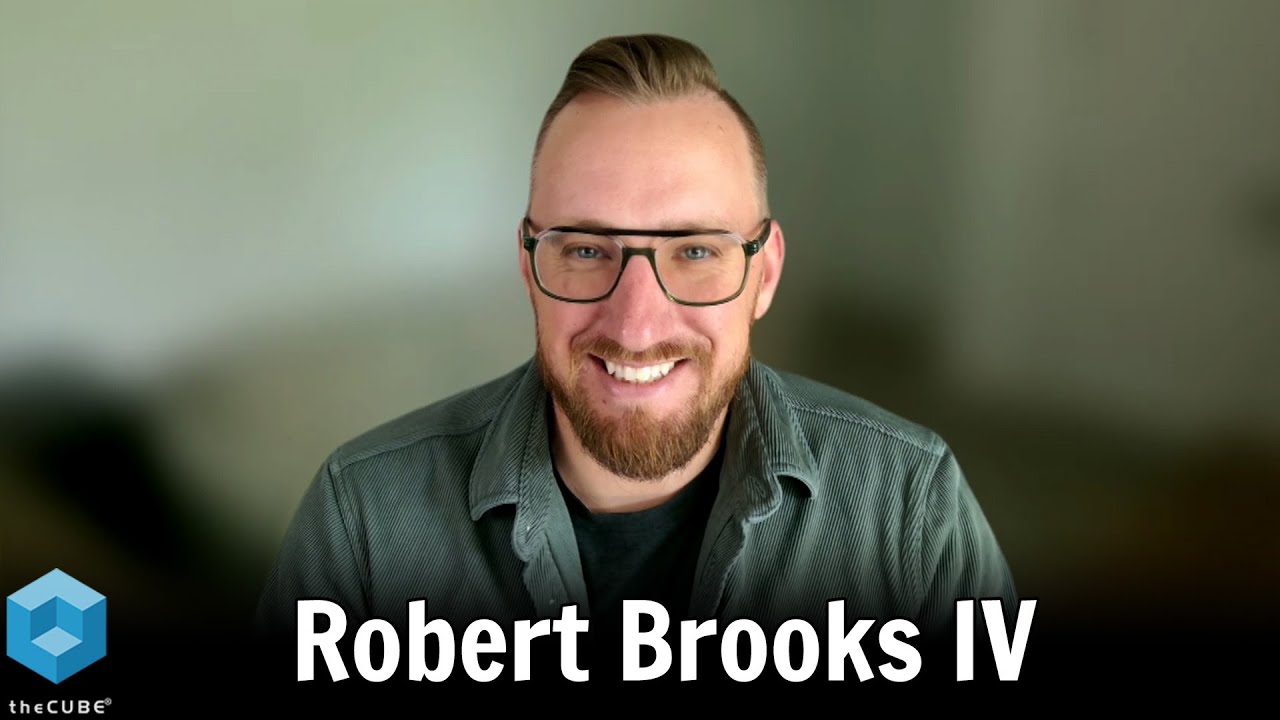
In this theCUBE + NYSE Wired: Mixture of Experts interview, Robert Brooks IV, founding team member at Lambda, joins theCUBE’s John Furrier to unpack the realities of scaling AI infrastructure as enterprise demand surges. Brooks details Lambda’s $480M Series D equity round (taking total funding to “over $800M”), participation from investors including NVIDIA and why capital intensity, power density and liquid cooling (50–150 kW per rack) are redefining data center strategy. He shares how Lambda abstracts DevOps for math-first ML teams with a plug-and-play stack, one-click clusters that spin up hundreds of GPUs on NVIDIA InfiniBand, and an inference API with no rate limiting – enabling POCs that seamlessly graduate to production. The conversation ties tech execution to financial outcomes: from securing megawatts and supply chain to early access on Blackwell (a B200 test cluster planned around GTC) so customers can move faster with predictable economics.
The discussion also explores market-shaping enterprise strategies at the intersection of tech and finance: DeepSeek’s “test-time compute” moment, open-source momentum (and why transparency and controllability matter) and the shifting cost curve – billions to 10x training vs. ~13 cents more per token for reasoning at inference. Brooks explains how Lambda’s “platform engineering for ML” meets teams where they build – managed Kubernetes/Slurm, full lifecycle from training to inference and developer-controlled scale across thousands of GPUs. Real-world signals include material-science ML wins, enterprises hosting open-source models on Lambda’s inference API and hands-on R&D from a video model leaderboard to a humanoid robot. He closes on focus as strategy – saying “no” to non-AI workloads to move faster for one customer profile – and the five-minute, credit-card path to get started.
Forgot Password
Almost there!
We just sent you a verification email. Please verify your account to gain access to
theCUBE + NYSE Wired: Mixture of Experts Series. If you don’t think you received an email check your
spam folder.
Sign in to theCUBE + NYSE Wired: Mixture of Experts Series.
In order to sign in, enter the email address you used to registered for the event. Once completed, you will receive an email with a verification link. Open this link to automatically sign into the site.
Register For theCUBE + NYSE Wired: Mixture of Experts Series
Please fill out the information below. You will recieve an email with a verification link confirming your registration. Click the link to automatically sign into the site.
You’re almost there!
We just sent you a verification email. Please click the verification button in the email. Once your email address is verified, you will have full access to all event content for theCUBE + NYSE Wired: Mixture of Experts Series.
I want my badge and interests to be visible to all attendees.
Checking this box will display your presense on the attendees list, view your profile and allow other attendees to contact you via 1-1 chat. Read the Privacy Policy. At any time, you can choose to disable this preference.
Select your Interests!
add
Upload your photo
Uploading..
OR
Connect via Twitter
Connect via Linkedin
EDIT PASSWORD
Share
Forgot Password
Almost there!
We just sent you a verification email. Please verify your account to gain access to
theCUBE + NYSE Wired: Mixture of Experts Series. If you don’t think you received an email check your
spam folder.
Sign in to theCUBE + NYSE Wired: Mixture of Experts Series.
In order to sign in, enter the email address you used to registered for the event. Once completed, you will receive an email with a verification link. Open this link to automatically sign into the site.
Sign in to gain access to theCUBE + NYSE Wired: Mixture of Experts Series
Please sign in with LinkedIn to continue to theCUBE + NYSE Wired: Mixture of Experts Series. Signing in with LinkedIn ensures a professional environment.
Are you sure you want to remove access rights for this user?
Details
Manage Access
email address
Community Invitation
Deborah Conrad, Mixtape Partners
In this theCUBE + NYSE Wired: Mixture of Experts interview, Robert Brooks IV, founding team member at Lambda, joins theCUBE’s John Furrier to unpack the realities of scaling AI infrastructure as enterprise demand surges. Brooks details Lambda’s $480M Series D equity round (taking total funding to “over $800M”), participation from investors including NVIDIA and why capital intensity, power density and liquid cooling (50–150 kW per rack) are redefining data center strategy. He shares how Lambda abstracts DevOps for math-first ML teams with a plug-and-play stack, one-click clusters that spin up hundreds of GPUs on NVIDIA InfiniBand, and an inference API with no rate limiting – enabling POCs that seamlessly graduate to production. The conversation ties tech execution to financial outcomes: from securing megawatts and supply chain to early access on Blackwell (a B200 test cluster planned around GTC) so customers can move faster with predictable economics.
The discussion also explores market-shaping enterprise strategies at the intersection of tech and finance: DeepSeek’s “test-time compute” moment, open-source momentum (and why transparency and controllability matter) and the shifting cost curve – billions to 10x training vs. ~13 cents more per token for reasoning at inference. Brooks explains how Lambda’s “platform engineering for ML” meets teams where they build – managed Kubernetes/Slurm, full lifecycle from training to inference and developer-controlled scale across thousands of GPUs. Real-world signals include material-science ML wins, enterprises hosting open-source models on Lambda’s inference API and hands-on R&D from a video model leaderboard to a humanoid robot. He closes on focus as strategy – saying “no” to non-AI workloads to move faster for one customer profile – and the five-minute, credit-card path to get started.
play_circle_outlineFrom Calculating Machines to Thinking Partners: How AI Infrastructure is Mainstreaming Semiconductor Evolution and Revolutionizing Technology
replyShare Clip
play_circle_outlineShift from technology-focused to culture-centric discussions around AI impact.
replyShare Clip
play_circle_outlineAdapting Business Strategies for the AI Era: The Crucial Role of Leadership and People in Successful Technology Integration
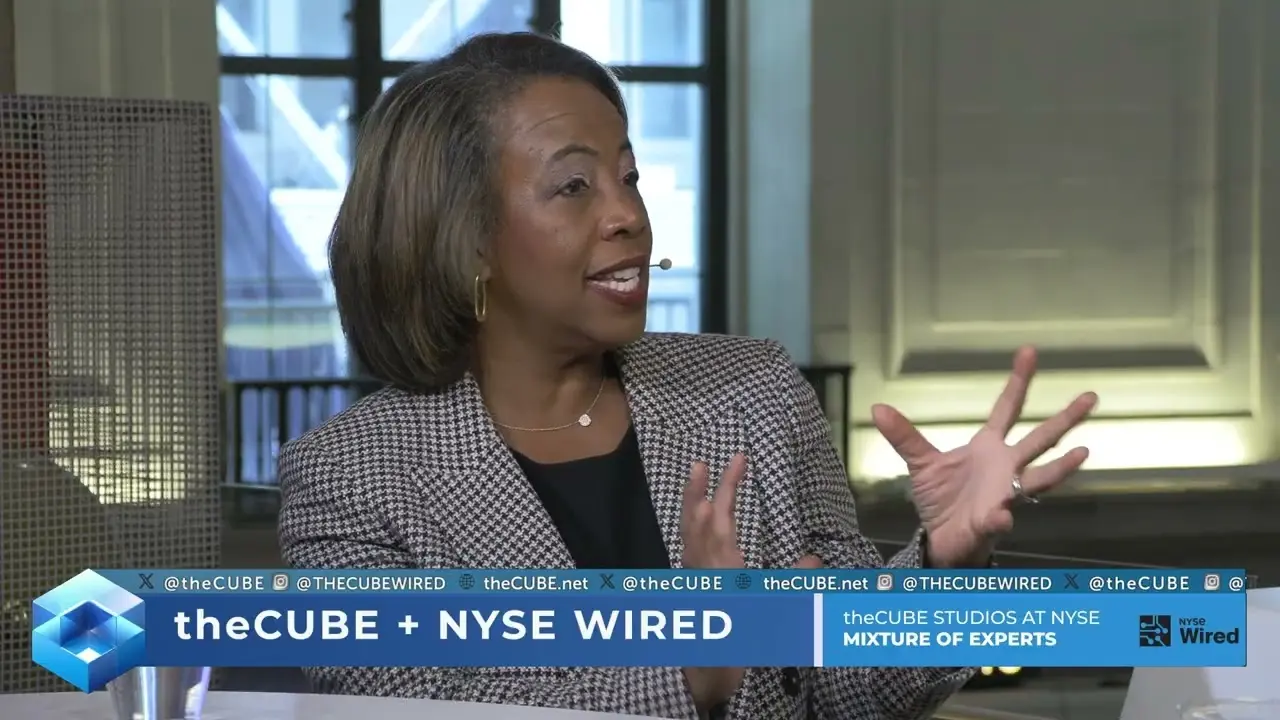
>> Hello, I'm John Furrier, host of theCUBE. We are here at our NYSE CUBE Studios on the East Coast. Of course, we have our Palo Alto Studios connecting the West Coast and the East Coast, Silicon Valley, and Wall Street tech and money. Of course, theCUBE goes to all the industry events and gets all the data. This is our mixture of Expert Series, part of the NYSE Wired community. Deborah Conrad is here, founding partner of MIXTAPE Partners. Deborah, great to have you back on.
Deborah Conrad
>> Right.
John Furrier
>> 28 year Intel veteran, last six years as CMO. I would say that you're quite the expert in many things, but thanks for coming on.
Deborah Conrad
>> Yeah, I'm glad to be here.
John Furrier
>> So one of the things we've been talking about obviously is the semiconductor industry, the hottest sector. You worked at Intel, the cadence of Moore Law. It's a very legendary execution company. Anne Bryan has been on before, friend of yours. There's a whole cultural shift happening in technology. In your new firm, you're bringing some of your expertise out. I want to get into some of the results you found, but I want to first get your take on this mainstreaming of semiconductors. I'm behind me in Wall Street. I can hear the option calls Nvidia this, Intel that, AMD this. This is like, this was kind of a small cottage. I don't want to say cottage industry. It was like a big business, but it was really nerdy. You're building wafers. Now it's all the rage. What's your take on the whole AI infrastructure movement?
Deborah Conrad
>> I think, I guess maybe I've been around for a while. So I've seen a few of these transitions. And this one is similar and different, and that's where I think the whole chip craze is playing out. When we went from mainframes to mini computers to desktop computers, that was a chip-driven revolution. We then saw the advent of internet and web and all things digital. We went mobile. We then saw data centers and cloud and the rise of all that. And I think in that first wave of semiconductor activity, it was really around calculations and being calculating machines. And now what we're seeing with AI is the role of the semiconductor and the chip becoming a thinking partner and a thinking tool, which is really quite different, but it is another turn of the tech crank. It's just, it's faster, it's bigger. It's in some cases incredibly more powerful. And I also think that in the last certainly 10 to 15 years, maybe even 20 if you go back far enough, the creation of making chips and semiconductors has changed dramatically. So it isn't just Intel and maybe one or two other companies in a foundry here and there. Now you can be a startup and create a silicon architecture and then have somebody build it for you and manufacture it for you. And then you've got all of these chip companies that can emerge because the ecosystem is supporting independent manufacturers beyond the big guys. Now the big guys still have to work hard and play hard. They have to keep up with the smaller, more nimble, and in some cases, more innovative approaches. So it's a really interesting time to watch this all play out.
John Furrier
>> Deborah, one of the things that's come out of the last waves were productivity gains, transformation, obviously transitions. But now with the AI wave, it seems to be, I won't say more complex, it's a lot more moving parts, a lot faster acceleration. You and your team have formed MIXTAPE Partners to try to help people understand the AI value, value proposition, the value creation, value extraction. Can you share your project you're working on now at MIXTAPE Partners and what you guys are doing?
Deborah Conrad
>> Yeah, sure. So we are four partners that came together. We've worked together in various configurations over the last 15 to 20 years. And several of us have deep tech backgrounds, but that's not just the only thing we do. But we're really a management consultancy for marketers with an emphasis on brand and marketing and business strategy. And you can't go into any client discussion these days and not have AI be the top strategy question. And in fact, we started joking and then it became quite serious that people would say, "What should our AI strategy be?"
And so we decided to embark on what we thought was going to be a little bit of a research project. It turned into something much bigger than a little project to understand the impact of AI right now with a variety of different industries, functions, workflows. And we really talked to, I think, across 14 different industries, really talked to a variety of different kinds of leaders. And one of the key themes that came out loud and clear was this really isn't about technology. It really is about people and leadership and smart integration of technology. That was a bit of a surprise to me and certainly to my partners, that we thought we were going to go down a technology path. Instead, it became something that really is profoundly about culture and how people work. And it's not just agents replacing workforces. It's not that clean and simple. It's nothing like that in fact. It's how do we use AI to really help people become better at what they're doing? How do we help them enhance their roles and how do we help... Or how can AI be a tool with a great purpose, not just a way to cut costs. And so we really thought that our big core finding is really around AI not as a strategy unto itself, but how can you create a business strategy for the AI era? And that .
John Furrier
>> I love your tagline. It says, "The uncomfortable truth."
Deborah Conrad
>> Yeah.
John Furrier
>> Not about AI strategies, it's about the business behind it, the AI. And business outcomes is kind of, not to say cliche, but everyone wants an outcome. Work backwards from the outcome Amazon, perfected that kind of methodology. You're starting to see more of that thinking, the craft behind business strategy and technology formulation, deployment. Explain what you're finding in the AI era. What's the best practice? What's the current thinking?
Deborah Conrad
>> So kind of the key finding is that it's not about technology. It's about leadership and people and integration with leadership. How can leaders extinguish fear and create clarity? And how can people become less fearful and remove the anxiety that often surrounds the discussions about AI replacing people? And how can we really think about integration as a way to perfect workflows and really look at the way that people work and AI as a part of that? And what we found is the uncomfortable truth is that it's really, this isn't about having an AI strategy. In fact, it's about how do you have a business strategy for the AI era?
John Furrier
>> Jensen Wong was on stage a couple of weeks ago at GTC. He says, "It's not just the tool, it's about the work and discussing agents, the role of agents." And there's been a lot of controversy. Agents will put people out of business. Our feeling is it's the work that nobody wants to do. Robotics, same thing. Talk about your thinking around that because that's coming out in some policies. I've seen some CEOs say, "Look, everyone should be vibe coding. Get your hands, learn the tools." Is that a good strategy? And what's your view on this whole, "It's not just a tool, it's the work that gets done that matters"?
Deborah Conrad
>> Yeah. On the first part, I do think people do need to have these new skills. And it's no different than when we were learning how to do digital and how we were learning when we all got smartphones and how we were using the internet and web-based applications. So this is a bit of a learning curve in that regard. And where new people coming into the workforce are going to have AI-related skills just like 10 years ago, it was digital skills. So that's important for people coming into the workforce. It's also important for those of us who've been around for a while to make sure that we're on top of it. And I think it really is, just to go back to Jensen's comment, it's about the tool for sure. But how does the tool help the person? How does the tool help the human? And that's our view about the strategy, is use AI to take care of mundane tasks because then you can use the person that was doing the mundane tasks to do much higher value.
John Furrier
>> When I was my first internship in the mid '80s, I was the young guy. I'm not going to tip my age, but I'll tell a story and I want to get your reaction to it. I could code nine languages. I jumped into a big corporation in New York. And all the hotshot MBAs had slide rules. And the spreadsheet, Lotus 1-2-3, was out. That was the beginning of the PC revolution. And I would go to meetings and I would have to do all the coding on the spreadsheets and write the software on the mini computer. And what you had is a workforce of young coming in with the superpower, not everyone could do nine languages, but just spreadsheets and just using that benefit of office productivity. And then there was the have-nots that were trained the old way. So I'm seeing a similarity now where the whoever can embrace it faster will run much faster than the previous generation of the way they do things. What's your reaction to that?
Deborah Conrad
>> Yeah, I completely agree. And I'm of an age where I can remember those the times as well. I do think that there is the new generation coming in that has new skills, but I also think it goes all the way up to the CEO and the executives of the companies where they have to really understand these tools. These tools are incredibly powerful and really revolutionary in what they can do to help a company change in a very tangible way, be faster, be more nimble. And for a senior executive, not just middle managers or MBAs that have been in their jobs for a little while, but for the most senior people, to really understand the cultural implications and the organization implications of something as powerful as what we're seeing with AI-enabled work and how AI is really transforming work. So I don't think it's something that you can just say, "Well, the younger people will figure it out." I think everybody in the organization has to take a hard look at what it means and what it can be in the best possible scenario.
John Furrier
>> Yeah, it's an immersion strategy. Talk about what your guys' vision is, what you guys are doing now. Put a plug in for MIXTAPE. What kind of engagements are you looking to get involved in? And I guess what I'd say is what engagements don't you want to do?
Deborah Conrad
>> Yeah. Yeah. Well, I'll do the easy one first. The engagements that we really love are where we can have the most impact. And I don't say that lightly. A lot of consultants will come in and establish themselves and then just walk the halls up and down looking for projects because they're on a retainer. We're not that. We are four very senior and seasoned people that chances are, if you've got a problem or an opportunity, we've seen it before and we can get in and work with you on it and get out, and if we do good work, you'll bring us back. But we're really about strategy. And more specifically, not just, "Here's the new strategy in the manifesto video." It's, how do you make strategy stick? How do you really make strategy, how you design it for adoption? We've seen so many strategies fail just because they get put up on a shelf. So we really focus on strategies that are actionable. I'll quote my former boss, Andy Grove, "Strategy isn't what you say you're going to do. It's what you actually do." Strategy is in the tactics. It's really about the actions that you take
John Furrier
>> Deborah, let's close on the Andy Grove quote. I'd love his other quote, "Let chaos reign, and reign in the chaos."
Deborah Conrad
>> Yes, that's right.
John Furrier
>> I feel like that's what we're ready with. Thank you so much for your time and participating. Thanks.
Deborah Conrad
>> Thank you so much.
John Furrier
>> I'm John Furrier, the of experts here at the NYSC Studio of theCUBE. Thanks for watching.
>> Hello, I'm John Furrier, host of theCUBE. We are here at our NYSE CUBE Studios on the East Coast. Of course, we have our Palo Alto Studios connecting the West Coast and the East Coast, Silicon Valley, and Wall Street tech and money. Of course, theCUBE goes to all the industry events and gets all the data. This is our mixture of Expert Series, part of the NYSE Wired community. Deborah Conrad is here, founding partner of MIXTAPE Partners. Deborah, great to have you back on.
Deborah Conrad
>> Right.
John Furrier
>> 28 year Intel veteran, last six years as CMO. I would say that you're quite the expert in many things, but thanks for coming on.
Deborah Conrad
>> Yeah, I'm glad to be here.
John Furrier
>> So one of the things we've been talking about obviously is the semiconductor industry, the hottest sector. You worked at Intel, the cadence of Moore Law. It's a very legendary execution company. Anne Bryan has been on before, friend of yours. There's a whole cultural shift happening in technology. In your new firm, you're bringing some of your expertise out. I want to get into some of the results you found, but I want to first get your take on this mainstreaming of semiconductors. I'm behind me in Wall Street. I can hear the option calls Nvidia this, Intel that, AMD this. This is like, this was kind of a small cottage. I don't want to say cottage industry. It was like a big business, but it was really nerdy. You're building wafers. Now it's all the rage. What's your take on the whole AI infrastructure movement?
Deborah Conrad
>> I think, I guess maybe I've been around for a while. So I've seen a few of these transitions. And this one is similar and different, and that's where I think the whole chip craze is playing out. When we went from mainframes to mini computers to desktop computers, that was a chip-driven revolution. We then saw the advent of internet and web and all things digital. We went mobile. We then saw data centers and cloud and the rise of all that. And I think in that first wave of semiconductor activity, it was really around calculations and being calculating machines. And now what we're seeing with AI is the role of the semiconductor and the chip becoming a thinking partner and a thinking tool, which is really quite different, but it is another turn of the tech crank. It's just, it's faster, it's bigger. It's in some cases incredibly more powerful. And I also think that in the last certainly 10 to 15 years, maybe even 20 if you go back far enough, the creation of making chips and semiconductors has changed dramatically. So it isn't just Intel and maybe one or two other companies in a foundry here and there. Now you can be a startup and create a silicon architecture and then have somebody build it for you and manufacture it for you. And then you've got all of these chip companies that can emerge because the ecosystem is supporting independent manufacturers beyond the big guys. Now the big guys still have to work hard and play hard. They have to keep up with the smaller, more nimble, and in some cases, more innovative approaches. So it's a really interesting time to watch this all play out.
John Furrier
>> Deborah, one of the things that's come out of the last waves were productivity gains, transformation, obviously transitions. But now with the AI wave, it seems to be, I won't say more complex, it's a lot more moving parts, a lot faster acceleration. You and your team have formed MIXTAPE Partners to try to help people understand the AI value, value proposition, the value creation, value extraction. Can you share your project you're working on now at MIXTAPE Partners and what you guys are doing?
Deborah Conrad
>> Yeah, sure. So we are four partners that came together. We've worked together in various configurations over the last 15 to 20 years. And several of us have deep tech backgrounds, but that's not just the only thing we do. But we're really a management consultancy for marketers with an emphasis on brand and marketing and business strategy. And you can't go into any client discussion these days and not have AI be the top strategy question. And in fact, we started joking and then it became quite serious that people would say, "What should our AI strategy be?"
And so we decided to embark on what we thought was going to be a little bit of a research project. It turned into something much bigger than a little project to understand the impact of AI right now with a variety of different industries, functions, workflows. And we really talked to, I think, across 14 different industries, really talked to a variety of different kinds of leaders. And one of the key themes that came out loud and clear was this really isn't about technology. It really is about people and leadership and smart integration of technology. That was a bit of a surprise to me and certainly to my partners, that we thought we were going to go down a technology path. Instead, it became something that really is profoundly about culture and how people work. And it's not just agents replacing workforces. It's not that clean and simple. It's nothing like that in fact. It's how do we use AI to really help people become better at what they're doing? How do we help them enhance their roles and how do we help... Or how can AI be a tool with a great purpose, not just a way to cut costs. And so we really thought that our big core finding is really around AI not as a strategy unto itself, but how can you create a business strategy for the AI era? And that .
John Furrier
>> I love your tagline. It says, "The uncomfortable truth."
Deborah Conrad
>> Yeah.
John Furrier
>> Not about AI strategies, it's about the business behind it, the AI. And business outcomes is kind of, not to say cliche, but everyone wants an outcome. Work backwards from the outcome Amazon, perfected that kind of methodology. You're starting to see more of that thinking, the craft behind business strategy and technology formulation, deployment. Explain what you're finding in the AI era. What's the best practice? What's the current thinking?
Deborah Conrad
>> So kind of the key finding is that it's not about technology. It's about leadership and people and integration with leadership. How can leaders extinguish fear and create clarity? And how can people become less fearful and remove the anxiety that often surrounds the discussions about AI replacing people? And how can we really think about integration as a way to perfect workflows and really look at the way that people work and AI as a part of that? And what we found is the uncomfortable truth is that it's really, this isn't about having an AI strategy. In fact, it's about how do you have a business strategy for the AI era?
John Furrier
>> Jensen Wong was on stage a couple of weeks ago at GTC. He says, "It's not just the tool, it's about the work and discussing agents, the role of agents." And there's been a lot of controversy. Agents will put people out of business. Our feeling is it's the work that nobody wants to do. Robotics, same thing. Talk about your thinking around that because that's coming out in some policies. I've seen some CEOs say, "Look, everyone should be vibe coding. Get your hands, learn the tools." Is that a good strategy? And what's your view on this whole, "It's not just a tool, it's the work that gets done that matters"?
Deborah Conrad
>> Yeah. On the first part, I do think people do need to have these new skills. And it's no different than when we were learning how to do digital and how we were learning when we all got smartphones and how we were using the internet and web-based applications. So this is a bit of a learning curve in that regard. And where new people coming into the workforce are going to have AI-related skills just like 10 years ago, it was digital skills. So that's important for people coming into the workforce. It's also important for those of us who've been around for a while to make sure that we're on top of it. And I think it really is, just to go back to Jensen's comment, it's about the tool for sure. But how does the tool help the person? How does the tool help the human? And that's our view about the strategy, is use AI to take care of mundane tasks because then you can use the person that was doing the mundane tasks to do much higher value.
John Furrier
>> When I was my first internship in the mid '80s, I was the young guy. I'm not going to tip my age, but I'll tell a story and I want to get your reaction to it. I could code nine languages. I jumped into a big corporation in New York. And all the hotshot MBAs had slide rules. And the spreadsheet, Lotus 1-2-3, was out. That was the beginning of the PC revolution. And I would go to meetings and I would have to do all the coding on the spreadsheets and write the software on the mini computer. And what you had is a workforce of young coming in with the superpower, not everyone could do nine languages, but just spreadsheets and just using that benefit of office productivity. And then there was the have-nots that were trained the old way. So I'm seeing a similarity now where the whoever can embrace it faster will run much faster than the previous generation of the way they do things. What's your reaction to that?
Deborah Conrad
>> Yeah, I completely agree. And I'm of an age where I can remember those the times as well. I do think that there is the new generation coming in that has new skills, but I also think it goes all the way up to the CEO and the executives of the companies where they have to really understand these tools. These tools are incredibly powerful and really revolutionary in what they can do to help a company change in a very tangible way, be faster, be more nimble. And for a senior executive, not just middle managers or MBAs that have been in their jobs for a little while, but for the most senior people, to really understand the cultural implications and the organization implications of something as powerful as what we're seeing with AI-enabled work and how AI is really transforming work. So I don't think it's something that you can just say, "Well, the younger people will figure it out." I think everybody in the organization has to take a hard look at what it means and what it can be in the best possible scenario.
John Furrier
>> Yeah, it's an immersion strategy. Talk about what your guys' vision is, what you guys are doing now. Put a plug in for MIXTAPE. What kind of engagements are you looking to get involved in? And I guess what I'd say is what engagements don't you want to do?
Deborah Conrad
>> Yeah. Yeah. Well, I'll do the easy one first. The engagements that we really love are where we can have the most impact. And I don't say that lightly. A lot of consultants will come in and establish themselves and then just walk the halls up and down looking for projects because they're on a retainer. We're not that. We are four very senior and seasoned people that chances are, if you've got a problem or an opportunity, we've seen it before and we can get in and work with you on it and get out, and if we do good work, you'll bring us back. But we're really about strategy. And more specifically, not just, "Here's the new strategy in the manifesto video." It's, how do you make strategy stick? How do you really make strategy, how you design it for adoption? We've seen so many strategies fail just because they get put up on a shelf. So we really focus on strategies that are actionable. I'll quote my former boss, Andy Grove, "Strategy isn't what you say you're going to do. It's what you actually do." Strategy is in the tactics. It's really about the actions that you take
John Furrier
>> Deborah, let's close on the Andy Grove quote. I'd love his other quote, "Let chaos reign, and reign in the chaos."
Deborah Conrad
>> Yes, that's right.
John Furrier
>> I feel like that's what we're ready with. Thank you so much for your time and participating. Thanks.
Deborah Conrad
>> Thank you so much.
John Furrier
>> I'm John Furrier, the of experts here at the NYSC Studio of theCUBE. Thanks for watching.















































 John Furrier