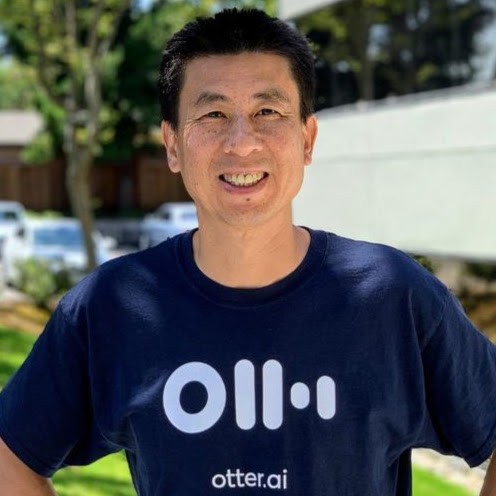
What happens when every conversation becomes data – and every meeting becomes a source of competitive advantage? In this Mixture of Expert series interview from the New York Stock Exchange, Otter.ai founder and CEO Sam Liang joins Gemma Allen for a sharp examination of how conversational intelligence is fast becoming a strategic enterprise asset. Liang reflects on Otter’s decade-long evolution, from building speech recognition before AI was fashionable to architecting a meeting-centric knowledge platform designed for the generative era. He makes a compelling case that voice is the largest untapped data source in modern business. With proprietary transcription models, advanced speaker recognition and a portfolio of patents, Otter is capturing nuance – accents, cross-talk, shifting topics – and converting it into structured institutional knowledge.
Liang details how Otter blends proprietary technology with foundation models from OpenAI, Anthropic and open source ecosystems to extract insight from the messy dynamics of real-world meetings. The ambition is bold: AI agents that not only summarize discussions but join them, mediate disagreements, draft emails and generate product documents in real time. With integrations spanning Gmail, Slack, Salesforce and HubSpot, Otter aims to transform meetings from time sinks into measurable, optimizable workflows. Liang also addresses competitive pressure from tech giants, arguing that startups retain the advantage in focus and speed. The result is a vision of enterprise intelligence built not on static documents, but on living conversation – analyzed at scale and activated across the business.
Forgot Password
Almost there!
We just sent you a verification email. Please verify your account to gain access to
theCUBE + NYSE Wired: Mixture of Experts Series. If you don’t think you received an email check your
spam folder.
Sign in to theCUBE + NYSE Wired: Mixture of Experts Series.
In order to sign in, enter the email address you used to registered for the event. Once completed, you will receive an email with a verification link. Open this link to automatically sign into the site.
Register For theCUBE + NYSE Wired: Mixture of Experts Series
Please fill out the information below. You will recieve an email with a verification link confirming your registration. Click the link to automatically sign into the site.
You’re almost there!
We just sent you a verification email. Please click the verification button in the email. Once your email address is verified, you will have full access to all event content for theCUBE + NYSE Wired: Mixture of Experts Series.
I want my badge and interests to be visible to all attendees.
Checking this box will display your presense on the attendees list, view your profile and allow other attendees to contact you via 1-1 chat. Read the Privacy Policy. At any time, you can choose to disable this preference.
Select your Interests!
add
Upload your photo
Uploading..
OR
Connect via Twitter
Connect via Linkedin
EDIT PASSWORD
Share
Forgot Password
Almost there!
We just sent you a verification email. Please verify your account to gain access to
theCUBE + NYSE Wired: Mixture of Experts Series. If you don’t think you received an email check your
spam folder.
Sign in to theCUBE + NYSE Wired: Mixture of Experts Series.
In order to sign in, enter the email address you used to registered for the event. Once completed, you will receive an email with a verification link. Open this link to automatically sign into the site.
Sign in to gain access to theCUBE + NYSE Wired: Mixture of Experts Series
Please sign in with LinkedIn to continue to theCUBE + NYSE Wired: Mixture of Experts Series. Signing in with LinkedIn ensures a professional environment.
Are you sure you want to remove access rights for this user?
Details
Manage Access
email address
Community Invitation
Sam Liang, Otter.ai Marco
In this theCUBE + NYSE Wired: Mixture of Experts segment from the New York Stock Exchange, theCUBE’s John Furrier sits down with Raj Verma, CEO of SingleStore, to unpack how the intersection of technology and finance is shaping enterprise strategy. Verma shares why SingleStore is “on course” for the public markets, reflects on brand-building through the company’s partnership with golf Hall of Famer Padraig Harrington and connects that ethos to how SingleStore helps organizations fix struggling data “swings.” The discussion zeroes in on what’s next as Wall Street watches the AI infrastructure buildout: after chips and systems, the software and data layers set the pace for value creation.
Verma outlines why enterprises must modernize “brown” data estates into “green” ones to safely bring corporate context, governance and compliance into LLM workflows via RAG – and why commoditized data-at-rest puts the advantage at the query layer that unifies data in motion with data at rest. He predicts agentic AI will gain reasoning capabilities in roughly 18 months, cites industry indicators like Google reporting ~25% of its software now built by AI and argues that high switching costs will give way to disruption as buyers reassess legacy vendors. The conversation closes with concrete momentum: ~33% YoY growth, ARR in the ~$135M range, gross dollar retention ~98%, cloud NDR ~130, ~50% of business now in the cloud, landing ~3 new customers per day, a path to cash-flow breakeven in the next two quarters and a teaser for AI-related announcements in the next two months. Listeners will find notable stats, real-world use cases and forward-looking views on how databases power reliable AI at enterprise scale.
What happens when every conversation becomes data – and every meeting becomes a source of competitive advantage? In this Mixture of Expert series interview from the New York Stock Exchange, Otter.ai founder and CEO Sam Liang joins Gemma Allen for a sharp examination of how conversational intelligence is fast becoming a strategic enterprise asset. Liang reflects on Otter’s decade-long evolution, from building speech recognition before AI was fashionable to architecting a meeting-centric knowledge platform designed for the generative era. He makes a compelling ...Read more
exploreKeep Exploring
What motivated the creation of Otter, and how has its focus evolved over the past ten years?add
How do you envision using foundation models and agents to understand, extract insights from, and eventually participate in multi‑speaker meetings (for example, Otter joining meetings and acting as a mediator)?add
How can voice-based meeting intelligence (for example Otter) help enterprises measure meeting activity and productivity and provide cross-meeting insights to guide company initiatives?add
How do customers—particularly enterprise customers—use Otter to manage client meetings and share meeting information internally?add
How does Otter use historical meeting context and integrations (Gmail, Google Docs, Notion, Jira, Salesforce/HubSpot) to generate real-time outputs beyond just transcripts?add
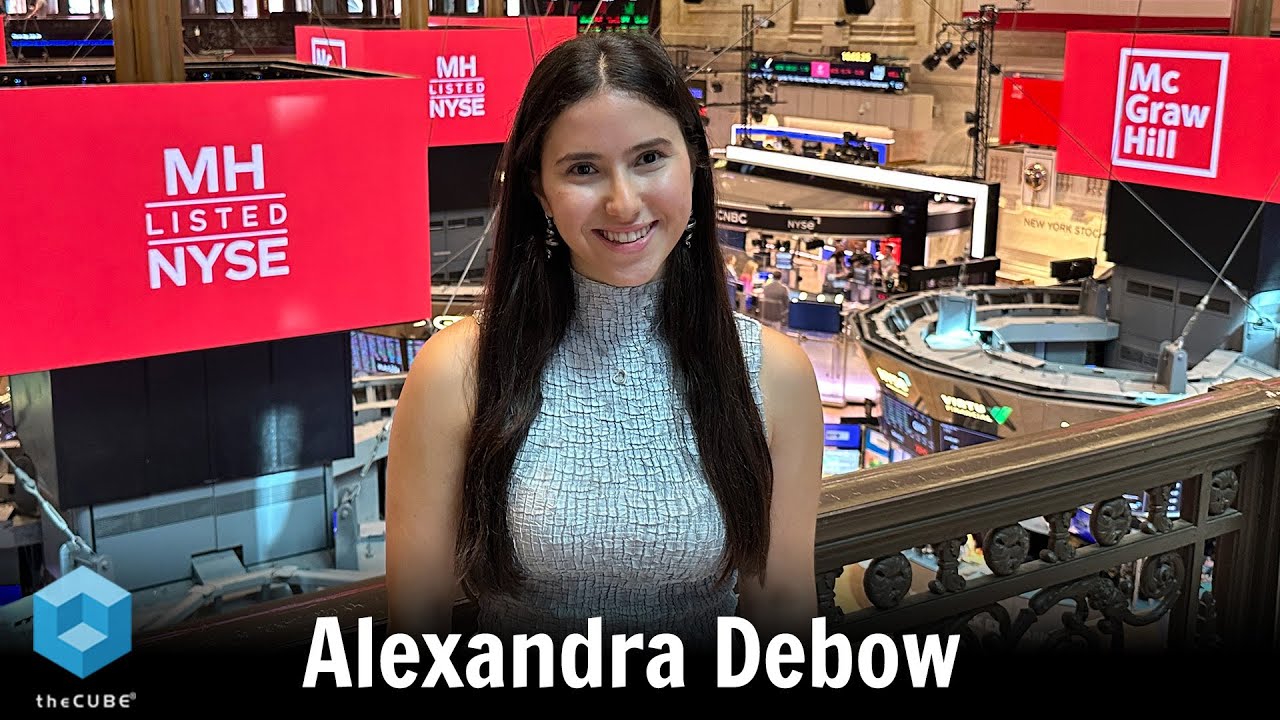
>> Welcome to theCUBE Studio here at the New York Stock Exchange. I'm Gemma Allen, and this is our Mixture of Expert Series in collaboration with NYSE Wired. Joining me today is a man who has been leading the charge in the future of conversational intelligence. Welcome Sam Liang.
Sam Liang
>> Thank you for having me here.
Gemma Allen
>> So Sam Otter.ai, what an interesting company, but also what a fascinating time to create a company that really was designed around speech recognition and is now reshaping just what it means, what conversational intelligence can mean. Talk to me a little bit about the journey you and your team have been on, what I guess has changed in the last couple of years and where you really see this product going.
Sam Liang
>> It's been a journey for 10 years now. We actually started Otter before AI became a household buzzword. When we started, the motivation was very simple. Human beings have been talking to each other for hundreds of thousands of years. Voice has been the dominant primary communication system, right? Written language was only invented 5,000 years ago. Before that, human beings had been talking. However, all this voice knowledge and voice intelligence has been lost. So initially we thought, "Hey, let's build the best speech recognition system so that we can transcribe everything, all the conversation in the world to capture that knowledge." Later, we found that people have a bigger pain, specifically in corporate meetings that's exacerbated by the Zoom fatigue. After COVID happened, everyone is suddenly having a lot more meetings because it's so easy to schedule a Zoom meeting these days. So everyone is suffering from Zoom fatigue. But most of the knowledge we discuss in meetings has been lost. Or even if you use a meeting note taker like Otter to take some meeting notes, that meeting notes is usually fragmented or siloed. It's not shared with the team. So now we are actually transforming Otter from just the meeting note taker to a enterprise knowledge base.
Gemma Allen
>> Well, I have certainly had jobs and worked for organizations that have had meetings about meetings. I think we've all been there. We've all sat there thinking, "When will this end and why are we here again?" But what's really interesting to me is the point you made there around setting this company up before LLMs became the absolute phenomenon they are today. So tell me a little bit about how the mass adoption of generative AI in our day-to-day lives and the fact that AI now is pretty much running the stock market, how that has shifted for you? How has that changed the product and the direction that you are taking this company? Is it a proprietary model? Are you now working ... Are you building on top of foundational models? How has it changed the kind of product roadmap?
Sam Liang
>> Yeah, we built the proprietary models to transcribe conversations because we can have the end-to-end technologies to optimize every single step. You mentioned accents earlier before the show started. That's a big problem. I have accent, we have a lot of immigrants in America who came from everywhere in the world, right? Everyone speak with different accents. People are inventing new words every day, company names, acronyms, jargons. So without controlling the end-to-end system, it's really hard to have accurate transcription. In addition, we built a proprietary technology to do speaker recognition. This is a very special technology almost nobody has. Actually, if you look at the transcription on Zoom or Microsoft on Google, if you have multiple people in one room, none of those can separate them in that one conference room. They all group that into one speaker. So we are able to separate multiple speakers in one room. Not only that, we can identify the name of each speaker. That's a very unique technology we have, and we have more than a dozen patents on both speech recognition, speaker recognition, and the meeting note system. On foundation models, we are using a combination of OpenAI, Anthropic and open source foundation models. For meeting specifically, we found that the default foundation model is actually insufficient because most of their training data is written documents. Very little of their training data is voice or conversation data. That make their system bias toward written document and cannot effectively extract insights from conversations. Conversations is very different than written document in several aspects. One is that written document are usually much better structured and it's logical. It's grammatically correct. Verbal communication is usually very dynamic, very fluid, and people change topic all the time. The second very big difference is that the verbal communication involve multiple speakers. Right now we have two speakers, but when you are in a corporate meeting, there could be 10, 20 people speaking. You need special training, a special model to handle that kind of dynamics, to understand the thinking model of each speaker. What do they care about and how do they interact with the 10 other people? Who agree with whom? Who disagree with whom? And even the emotional aspect that's embedded in people's conversation. So those require special training.
Gemma Allen
>> When we think about these foundation models and your company, it's also highly integrated, right? I use it all the time with Gmail. It has some very great seamless integrations. How do you think about defensibility from the perspective of building on these models and I guess partnering with this ecosystem? Is that something that you think is becoming increasingly opportunistic or increasingly risky?
Sam Liang
>> We're not going to reinvent the wheel regarding the existing foundation model, but we see there's a lot more to build on top of the existing foundation model to better understand the human conversations, extract insights, understand the dynamics of the multi-speaker human conversations, and eventually we want to train a model that can participate in multi-speaker meetings.
Gemma Allen
>> Wow.
Sam Liang
>> Eventually we see that Otter can join your meeting and speak just as another teammate. It could help you brainstorm, it help you facilitate the meeting. If two people are arguing against each other emotionally, maybe the Otter can say, "Hey, let's calm down."
Gemma Allen
>> Mediator.
Sam Liang
>> Yeah, become a good mediator.
Gemma Allen
>> I love that.
Sam Liang
>> It can say, "Hey, Gem, you are right on this, and Sam, you are right on this, but hey, I see you have different opinion on this topic, but let's look at it objectively rather than emotionally."
Gemma Allen
>> I love that. I mean, I think there's plenty of use cases for that and the work on in the home, right? It would've been interesting or funny, a great marketing opportunity had the Moltbook agents used Otter to track their conversations a few weeks ago. In terms of the agentic side of this, agents using this technology to actually track conversations. Where do you see that going?
Sam Liang
>> We see that's a huge opportunity. We see that voice is becoming the dominant or the primary enterprise intelligence. If you think about in enterprises, for most people, they're actually spending more than 50% of their work time in meetings. So for most enterprises, half of their payroll is actually spent on meetings. Most people haven't realized that. More than half of the payroll is spent on meetings.
Gemma Allen
>> Crazy.
Sam Liang
>> So how productive are those meetings? How many meetings even happening? If you ask the CEO of Salesforce or Microsoft, how many meetings are happening in your company? Almost nobody can answer that question. And in those meetings who speak about what? What's the talking time of each person? Otter can give you that statistics and give you that insight. And in addition, we see that Otter is not just giving you the individual meeting notes. The power of Otter is actually to connect all these dots, extract insights across hundreds or thousands of meetings and tell you, hey, for all your top initiative in the company, for the CEO, we can give the CEO the insight like how many meetings are happening for each initiative. Which one are going well, which one are not going well? What are the bottlenecks. And why are things delayed? Where you should pay attention to?
Gemma Allen
>> And in your conversations that you have, especially at an enterprise level, do you notice that there is efficiency being driven through these conversation insights? What sorts of, I guess, outputs are you seeing in way of folks using this data to drive productivity changes?
Sam Liang
>> Yeah, two aspects. We use Otter at Otter. All our meetings in the last nine years are in Otter. That help us operate very efficiently. We have a small company, but we're generating over a hundred million dollars in revenue now. Otter plays a big role to make that happen. For myself, I like to operate in founder mode, but obviously I only have this many hours. I can work 60 hours a week, sometimes even more, but my time is still limited. As a founder, I like to know details. Brian Chesky of Airbnb talk about that. However, your revenue is always limited, so I rely on Otter to give me the insight from the important meetings I couldn't attend.
Gemma Allen
>> And it's interesting too, because you have so much data in terms of what you're ... And how you compound that is a really interesting opportunity. I presume these models are ... We talked about accents earlier, and I have a very strong Irish accent, and Otter.ai sometimes makes a lot of mistakes around some of those words. Are these models constantly training themselves? And tell me about the kind of product roadmap here. What's ahead in terms of additional features, additional integrations? How are you going to drive that experience into different facets?
Sam Liang
>> Yeah, high level, as I mentioned, we're building this meeting-centric knowledge base with agentic workflow built on top of that. The reason I said meeting-centric knowledge base is that knowledge base itself is not a new concept. People have been talking about that for 30, 40 years, but the current knowledge base is only based on written document, Google document, Microsoft Words, Notion, or maybe Slack message or email system. Most people totally overlook the voice knowledge for several reasons. In the past, most of the voice data is not even captured. After some of that is captured, it's fragmented and siloed. It's not really connected. There's no central repository or central system to manage that. We are building that. And now with LLM, the AI is able to analyze thousands or hundreds of thousands of meetings and give you a aggregate summary or extract insights out of it. So the pain is there.
Gemma Allen
>> And help me contextualize the buyer persona in that futuristic model. Who would be the decision maker? In what setting do you see this?
Sam Liang
>> We actually ... After this, I'm heading to a customer dinner tonight. We have several enterprise customer joining us, sharing their experience using Otter. One of them is a financial institution. They're an investment banker. They use Otter to manage their client meetings. For every client, they actually create an Otter channel. It's similar to a Slack channel. So there could be dozens or hundreds of meetings for each client. It's organized in that one channel, and then the channel has a membership. They put all the people who work with that client in that channel. So everyone have access to all the client meetings for that client.
Gemma Allen
>> Wow. The breadth of insight.
Sam Liang
>> So it give them the visibility, even if not everyone can join every meeting with that client, but everyone can use Otter to get access to that information, so that make it much more productive for them to work with that client.
Gemma Allen
>> It's like a CRM on steroids, really, in terms of what it can do from even a sales pipeline perspective.
Sam Liang
>> Absolutely. It's 10 times better than the existing CRM.
Gemma Allen
>> Yeah. Wow.
Sam Liang
>> So that's how the investment banker use Otter. There's another company, it's a document automation system. They use for both external client facing meetings and also internal meetings. For internal meetings, it's similar to how we use Otter for our internal meetings. They use for sales meetings and share the customer meetings with their internal product team. So their product team know what the customers need. They can hear from the customers firsthand. They can share that with their customer success team. When they close the deal, the customer success team need to take over that client and help that customer to adopt their product.
Gemma Allen
>> And Sam, tell me, we've seen, I guess historically cases whereby productivity tools and efficiency tools, especially in the communications and conversation space, have again met challenges. If you think about the challenge between Teams, if you're a Microsoft customer and Slack, which you just mentioned. How do you envision the competitive dynamics of this playing out? How do you plan to stay competitive over the next couple of years, as we see mass consolidation? Whether or not that happens or not is to be determined, but it's expected.
Sam Liang
>> Competition is as expected. There're always competition. But a large company like Microsoft or even Google, I think they suffer from innovator dilemma. In the sense that they talk about innovation, but if you look at the history, most innovation happened in startups. Startups don't have any constraint, don't have existing things to lose. So they can innovate, they can be more courageous, they can take risks. They create new concepts. The other aspect is that for us, if we create a product that generate $500 million revenue, it's significant for us, but for Microsoft, it's nothing compared to their hundreds of billions of dollars of business. So what I'm trying to say, they're not focused, they're not motivated to innovate because they have existing business to protect.
Gemma Allen
>> The .
Sam Liang
>> Because when you innovate, you may disrupt their existing business. And they're not going to disrupt their own business.
Gemma Allen
>> Yeah, I hear you. Well, we love startups here at theCUBE and you in terms of how you've also built and run this company, it's very lean, right? 35 million global users, but less than 200 staff here in the US.
Sam Liang
>> Yeah, just slightly over 200 people now.
Gemma Allen
>> Over 200?
Sam Liang
>> Yeah.
Gemma Allen
>> So tell me, close us out, what's ahead for you and the team at Otter.ai over the next 12 months?
Sam Liang
>> Just as I said, we see that voice is becoming the primary enterprise intelligence. So we're building this meeting-centric knowledge base with agentic workflow. The agentic workflow is also interesting because once you have all this knowledge base, and Otter hears everything firsthand in meetings, if you say, "Oh, I need to send that email to Gem tonight," Otter hears that and Otter just go ahead and drop the email for you even before you open the email system. So either you can tell Otter to send that email right away where you say, "Hey, let me take a look and maybe I change a few words." Then you manually hit the send button or you say, after the product design brainstorm, you say, "Hey, I need to create a product requirement document about this." Otter go ahead and because it already hears what everybody said, it draft the Google document or Notion document for you. It's already there.
Gemma Allen
>> Wow.
Sam Liang
>> So the idea is that because Otter knows exactly what you need, not just from one single meeting, because Otter knows all the historical meeting as well, it knows the context. We're also incorporated Gmail, Google document, Notion into Otter as well. So Otter is getting intelligence from both meetings and other system. Then in real time, it can generate all that output for you, whether it's document or email or Slack message or create a Jira bug into the Jira system or update the CRM, Salesforce or HubSpot. We have integration with those system as well. So Otter is not only just generating the transcript or summary, it actually will produce work for you.
Gemma Allen
>> Well, I got to tell you, Sam, I'm a woman in my forties with two young kids and three separate jobs. So if I can have a technology that can stop me having to listen in on very unnecessary meetings and make my life easier, I am definitely here for it. So happy user right here. Thanks so much for coming on theCUBE.
Sam Liang
>> Thank you. Thank you. Thank you for having me.
Gemma Allen
>> I'm Gemma Allen, coming to you here from our studio at the New York Stock Exchange. This is our Mixture of Expert Series, theCUBE and NYSE Wired. Thanks so much for watching.











































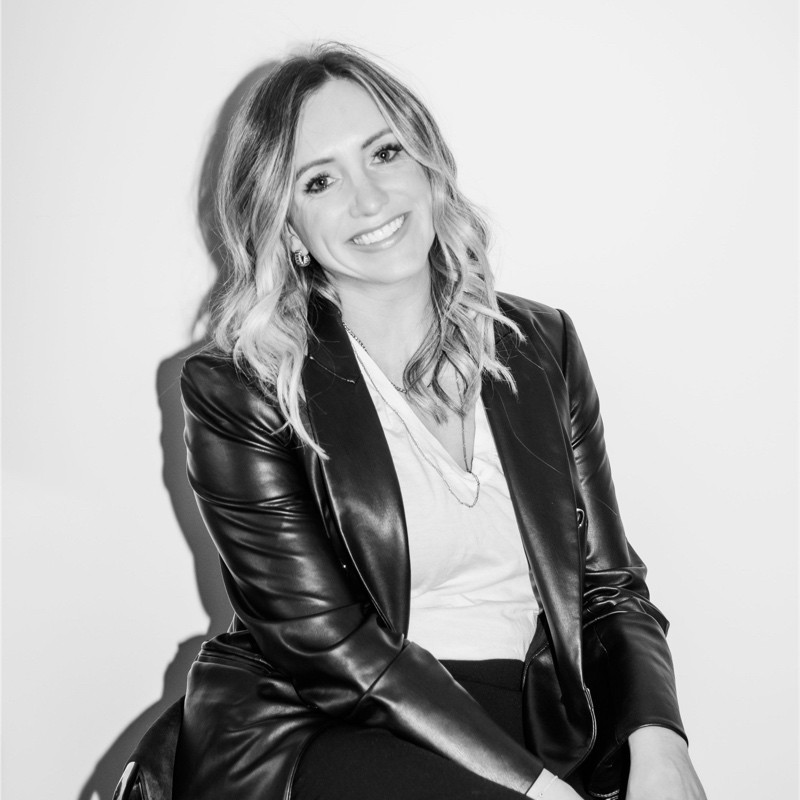 Gemma Allen