In this MedTech Unplugged segment, Kurt Haggstrom, Chief Commercial Officer at Synchron, joins theCUBE’s Dave Vellante to unpack how the company is redefining access and autonomy for patients with severe motor impairments. Haggstrom details how Synchron’s brain-computer interface [BCI], delivered via the bloodstream rather than invasive neurosurgery, is creating a minimally disruptive pathway to restore digital control for people with paralysis, ALS and other motor disorders.
He shares exclusive insights into the Synchron BCI, including the Stentrode implant, its Bluetooth-enabled transceiver, and the user experience that allows patients to control smart devices with their thoughts. The conversation explores the product's readiness for clinical trials, its safety data and Synchron’s roadmap toward FDA approval and market access within the next few years.
Haggstrom also discusses the role of AI in decoding neural signals, the company's upcoming collaboration with Apple’s iOS ecosystem, and how they’re building a go-to-market model that spans surgical support, clinician outreach and in-home activation. With NVIDIA as a partner, Synchron is also investigating new ways to integrate audio, visual and neural signals to power adaptive, AI-driven applications.
From regulatory clarity to patient equity and digital inclusion, this interview highlights why Synchron’s approach could fundamentally shift how brain-computer interfaces scale in real-world care.
Forgot Password
Almost there!
We just sent you a verification email. Please verify your account to gain access to
theCUBE + NYSE Wired: MedTech Unplugged, the Future of AI in Healthcare & Life Sciences. If you don’t think you received an email check your
spam folder.
Sign in to theCUBE + NYSE Wired: MedTech Unplugged, the Future of AI in Healthcare & Life Sciences.
In order to sign in, enter the email address you used to registered for the event. Once completed, you will receive an email with a verification link. Open this link to automatically sign into the site.
Register For theCUBE + NYSE Wired: MedTech Unplugged, the Future of AI in Healthcare & Life Sciences
Please fill out the information below. You will recieve an email with a verification link confirming your registration. Click the link to automatically sign into the site.
You’re almost there!
We just sent you a verification email. Please click the verification button in the email. Once your email address is verified, you will have full access to all event content for theCUBE + NYSE Wired: MedTech Unplugged, the Future of AI in Healthcare & Life Sciences.
Thanks for confirming your account. Now you can access theCUBE + NYSE Wired: MedTech Unplugged, the Future of AI in Healthcare & Life Sciences with this email address.
I want my badge and interests to be visible to all attendees.
Checking this box will display your presense on the attendees list, view your profile and allow other attendees to contact you via 1-1 chat. Read the Privacy Policy. At any time, you can choose to disable this preference.
Select your Interests!
add
Upload your photo
Uploading..
OR
Connect via Twitter
Connect via Linkedin
EDIT PASSWORD
Share
Forgot Password
Almost there!
We just sent you a verification email. Please verify your account to gain access to
theCUBE + NYSE Wired: MedTech Unplugged, the Future of AI in Healthcare & Life Sciences. If you don’t think you received an email check your
spam folder.
Sign in to theCUBE + NYSE Wired: MedTech Unplugged, the Future of AI in Healthcare & Life Sciences.
In order to sign in, enter the email address you used to registered for the event. Once completed, you will receive an email with a verification link. Open this link to automatically sign into the site.
Sign in to gain access to theCUBE + NYSE Wired: MedTech Unplugged, the Future of AI in Healthcare & Life Sciences
Please sign in with LinkedIn to continue to theCUBE + NYSE Wired: MedTech Unplugged, the Future of AI in Healthcare & Life Sciences. Signing in with LinkedIn ensures a professional environment.
Are you sure you want to remove access rights for this user?
Details
Manage Access
email address
Community Invitation
Kurt Haggstrom, Synchron
Kurt Haggstrom, the Chief Commercial Officer of Synchron, explores the company's innovative advancements in medical technology. As part of theCUBE + NYSE Wired Med Tech Unplugged series, the discussion addresses aging populations, AI innovations, and their intersection with personalized healthcare.
In this video, Haggstrom provides insights into Synchron's pioneering development of an implantable brain-computer interface. With years of clinical trials in Australia and the United States, Synchron aims to restore autonomy to individuals who have lost motor function due to conditions such as stroke or Amyotrophic Lateral Sclerosis. Hosts from theCUBE Research guide this exploration into the intricacies of Synchron's technological impact.
Haggstrom explains that Synchron’s minimally invasive approach uses existing surgical methods to bypass traditional open-brain surgeries, promising scalability and accessibility. The discussion emphasizes the extensive safety trials and the potential roles of AI in enhancing device functionality and understanding neurological patterns.
In this MedTech Unplugged segment, Kurt Haggstrom, Chief Commercial Officer at Synchron, joins theCUBE’s Dave Vellante to unpack how the company is redefining access and autonomy for patients with severe motor impairments. Haggstrom details how Synchron’s brain-computer interface [BCI], delivered via the bloodstream rather than invasive neurosurgery, is creating a minimally disruptive pathway to restore digital control for people with paralysis, ALS and other motor disorders.
He shares exclusive insights into the Synchron BCI, including the Stentrode i...Read more
exploreKeep Exploring
What is Synchron and what are they developing?add
What is the Stentrode and how does it work within the Synchron BCI system?add
What are the advantages and methods of the technology developed by Synchron for interfacing with the brain compared to traditional brain-computer interfaces?add
What are the potential benefits of creating a novel data set for understanding disease progression in conditions like ALS?add
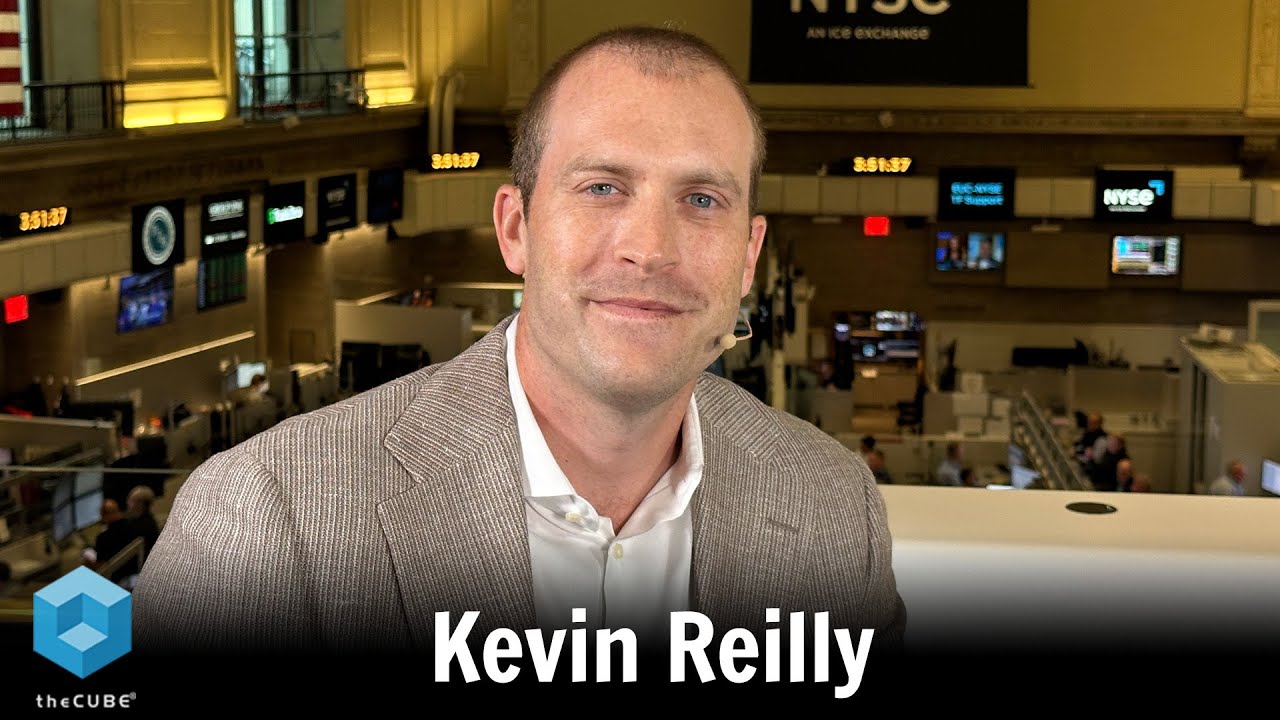
>> Welcome back to MedTech Unplugged. My name is Dave Vellante and you're watching theCUBE + NYSE Wired's ongoing series focused on medical technology. We're looking at aging population, the intersection of that with AI innovations, value-based and personalized care, and the consumerization of healthcare. Kurt Haggstrom is here, he's the chief commercial officer at a company called Synchron. Very interesting case here, Kurt. Welcome.
Kurt Haggstrom
>> Yeah. Synchron is a company we've been around for about 12 to 13 years. We are developing what will be the world's first commercial brain-computer interface that's implantable. We're taking a little bit different route, and that is through the blood vessels to get to the brain and understand how that works. But the big need out there is that there's millions of people that have lost the ability to use their hands and to connect to the digital world. So by having this implant, it establishes that connection, and restoring independence and autonomy for these individuals.
Dave Vellante
>> So these individuals, their brain is functioning just fine, but their motor skills are not, and they're super frustrated. They can't communicate with their families. And so, you're addressing that problem.
Kurt Haggstrom
>> Absolutely. Yeah. And if you think about it, everybody almost has somebody that knows somebody that has been burdened by a stroke, a spinal cord, degenerative diseases like ALS that are just devastating. All these lead to that lack of independence or that loss of motor function. And it's at this point, really tough to restore that actual physical motor function, but can we restore function in a different way? And nowadays, everybody's carrying around a personal device, a super computer in their pocket, but not everybody can use it. So we want to allow them to have that function back, reestablishing that connection to the smart world.
Dave Vellante
>> And to have a quality of life where they can interact with their surroundings.
Kurt Haggstrom
>> Absolutely. Isolation and personal isolation is really big for these individuals, and unfortunately because of that burden of disease, that's occurring now. And so, like all of us, being able to get that social community feeling back for individuals or even talking to their loved ones, is essential.
Dave Vellante
>> So this is a brain computer interface that with an implantable device. You have-
Kurt Haggstrom
>> That's right. Yeah.
Dave Vellante
>> ... picture of it. Let's take a look.
Kurt Haggstrom
>> Yeah. We're very excited about it. This is our latest version. Just about to get back in trials here. So this is what you call the Stentrode. So the full system's called the Synchron BCI, Brain Computer Interface. This portion of it right here looks like a stent or the mesh. That's the Stentrode. This is very, very unique, and this allows you to go through a blood vessel, through a little tiny tube, go up into the brain. You place this device in a minimally invasive fashion. This device embeds just like a normal stent does in the blood vessel, but what it does is, allow you to listen to the brain actually without touching the brain. So the person can think of moving, think of different actions, and that gives you the control of your smart device.
Dave Vellante
>> So that mesh is inserted via a catheter into the blood vessel?
Kurt Haggstrom
>> That's correct, yes.
Dave Vellante
>> Through the neck? Is that right?
Kurt Haggstrom
>> Absolutely. Yes. You go right up through one of the main veins in your neck here. And this is a procedure that's done in thousands of cath labs today. And so that's the novelty and the scalability of the approach that we're taking, is that all these interventionalists that are treating stroke today in every hospital that's in every big city or in every small city, they can do this procedure tomorrow. And so once-
Dave Vellante
>> Proven.
Kurt Haggstrom
>> No once approved. Once approved, they can do this procedure tomorrow.
Dave Vellante
>> But it's a proven technique that's been used many, many thousands of times.
Kurt Haggstrom
>> Yeah. The skills needed for this are standard. The catheter tools are off the shelf in every hospital. So there's nothing new special about using and implanting this technology.
Dave Vellante
>> And it avoids open brain surgery, no drilling of the skull.
Kurt Haggstrom
>> That's big. If you think about in the history of BCI in general, it has always required you to remove the skull, drilling through the skull, and actually putting probes inside the brain itself. That's been done for the last 20 years. Our approach has said, "Well, ultimately the brain doesn't like things in it and the skull doesn't like to be removed. And so, is there a different way to get to those brain signals?" And that's what Synchron's been able to do.
Dave Vellante
>> And this, if you could zoom in again, Todd and John. So this right here, what is this piece of it and where does that go? Is it-
Kurt Haggstrom
>> Yeah. Great question. So the Stentrode portion goes up inside the blood vessel. It then, the signal carries down through a lead through your blood vessel. And then under the skin is where this transceiver stays. So this is what collects the signal and then sends the signal up Bluetooth now to the, say, Apple operating system, to be able to control an iPad or an iPhone. So this is what, again, Bluetooth out your raw signal. And you can't see it. It's all invisible. It's under the skin, you can't see anything. And then it recharges just like your iPhone. So there's a paddle that rests over while you're just sitting or sleeping. And all of a sudden you wake up, you're charged and you're ready to send out signal.
Dave Vellante
>> It's almost like wireless charging when you put your phone on.
Kurt Haggstrom
>> 100%. It's that simple.
Dave Vellante
>> People are of course familiar with Neuralink. How was this similar? How was it different?
Kurt Haggstrom
>> Yeah. So I think similar in that we're trying to collect the neural signals, and then take those and control smart devices and the smart technologies for people that have lost function. Our approach is very, very different though. Because we're going through the blood vessels, it allows a minimally invasive approach, and we never have the rejection from the brain tissue itself or having to open the skull. All those require a very specialized neurosurgeon or robotics. Ours can be done by these interventionalists at every hospital that's out there in the country. So the scalability of our approach is, I think, one of the key aspects of our technology. And the durability over time, because we know stents last decades in people, so we're capitalizing on that same healing process that occurs in the cardiology world that we are using for our technology.
Dave Vellante
>> I mean, I would suspect that neural patterns are much different in the reaction to different injuries or disease, much different across patients. How do you adapt to those differences and personalize the experience?
Kurt Haggstrom
>> Yeah. Good question. I think the start is that to be able to implant these technologies and know that the person has that cognitive function, there's a consent in making sure that the person has the cognitive abilities to do cognitive tests, and consent that they want the technology, certainly. Especially if they don't have speech anymore. When it comes to individuals and their neural patterns, this is the beauty of AI, to a point, is that, believe it or not, although some neural patterns are different, our interpretations of things are different, when you look at the motor function and how I'm moving my left hand, you moving your left hand is in the same portion of the brain. It not may look exactly the same, but similar enough that you can make these generic models to be able to have that generic control over that smart device. So if you want to move a cursor, our way of moving the cursor would probably be pretty similar from a neural pattern.
Dave Vellante
>> Interesting. So what happens to all the data? I mean, you're screening a lot of information. Where does that go? How do you protect privacy? What is the state of that in your business?
Kurt Haggstrom
>> Yeah. So obviously data privacy is foremost, very, very important from a cybersecurity standpoint. FDA has very strict guidelines on medical devices, patient information. Just like our smartphones, if you think about the data that that's collecting and the protection around it. So the beauty is that we're not entering the market 10 years ago. We're entering the market in the coming years. And so, when you think about the state-of-the-art data privacy, cybersecurity, making sure that we protect the data with the most stringent standards and regulations that are out there today and the FDA requires, I think we're lucky because we're entering that time when that capability is there. So making sure that we put all the barriers of data privacy and protection into the system it's possible.
Dave Vellante
>> And so the regulatory frameworks that you are subject to are in place already? It's not like crypto where they-
Kurt Haggstrom
>> No, no, no, no.
Dave Vellante
>> There's a lot of confusion or is this clarity?
Kurt Haggstrom
>> Yeah. So to be clear, this is a class three medical device, so much like a pacemaker or a deep brain stimulator. All these are... The template for regulatory environments is there today. So that's again, the beauty of launching an innovative technology like this. It's not necessarily innovative on the regulatory side of it. They have these understandings of what does safety look like, what do we need to see for efficacy, how long is a study, how many patients? So all these regulatory fundamentals are already built into our system through the FDA.
Dave Vellante
>> What about reimbursement? I mean, how do you get paid? Can you quantify the value to payers? Do you have enough data yet?
Kurt Haggstrom
>> Yeah. Big question. And I think ultimately that will have to be proven out over time, is the value of. Now, reestablishing independence and autonomy for those that have lost it, what is the value to that? I think quality of life, there's no question we're going to see quality of life improvements, but how does our health improve over this? So this is a journey that we're going to go through with the payers such as CMS. And so, we're starting these conversations today, and have been over the last couple of years in saying, "What evidence do you need to see in order to, say, have this device covered when it gets to the commercial environment?" Because for us, we don't want just a select few to be able to afford this. We want it to be able to scale to everyone that needs it, not just that can afford it.
Dave Vellante
>> What about the ecosystem that you're developing? When I hear iOS, I think App Store, I think developers, do you have an ecosystem of developers? Is there a developer affinity? What are you doing with third-party applications?
Kurt Haggstrom
>> Yeah. So at first we're opening up on the Apple operating system. So we're working with them to make sure we have a seamless connection into that operating system, and we have some exciting news that we're going to be talking about here in the coming months.
Dave Vellante
>> Oh, great. Okay.
Kurt Haggstrom
>> So that should be really exciting for us. But once it gets there, I think when you look at app development and people now understanding that there's a different way to control and act within the Apple environment, I think that's going to open the door for developers. So we're going to certainly help develop products for our patients or our users, but ultimately I think that's going to create a new way to interact with a computer that's going to be exciting for the developer community.
Dave Vellante
>> Where are you in the maturity of your go-to-market? Are you just starting? I mean, it's interesting to me, you have a technical background, you hold patents, and you are the go-to-market lead at this company.
Kurt Haggstrom
>> Yeah, exactly.
Dave Vellante
>> Which is somewhat rare. It's not completely rare in tech, and certainly not in your field, but it's an interesting dynamic. I wonder if you could explain where you are in that maturity cycle.
Kurt Haggstrom
>> Yeah. And I think sometimes to sculpt the commercial strategy on something so innovative and such high-tech, is that having a technical background has really helped me over the years. So for us though, the big things where we think we're actually ahead in this space is that we've done two clinical trials to date. So we did a first in-human trial in Australia with the first four patients. We've then did six patients in an IDE early feasible trial here in the United States. We got 12 month feedback on that for safety. So we've established a really good foundation of safety profile for our approach. And that's really important when you think about these long-term implantables. So our next phase is really getting into that pivotal trial that's going to get us to market. So the Pivotal trial gives you that FDA clearance to be able to go to market. And so that's really our next big endeavor from a clinical standpoint, is to get to that trial, basically in the next 12 months. We really want to get there, in order to get to market to help start to scale for people they need it.
Dave Vellante
>> So how do you see that playing out? I mean, you as a person who understands deeply the technology, and as I say, holds patents, it's almost like you're a deep consultant in the early phases, phase zero if you will, phase one. As you get through those trials and you start to scale, what type of go-to-market folks are you looking for? Is it a similar profile or is it sort of more generalist?
Kurt Haggstrom
>> Yeah. It's a great question because I think there's multiple stakeholders along this journey, and that we have to kind of make sure we build an infrastructure to do that. So if you think about the interventionalist, so we need to have sales folks and/or clinically minded folks that can go and say, "Let me help you with the surgery." Even though it's a standard techniques, we need somebody there, a Synchron representative, to be in the hospital, making sure that this is inserted in the right way. Then you look at and say, "Well, where are the users? Where are the patients in the community? Do they go to clinics? Do they go to rehab? And who's that managing physician that we need to call on to introduce the technology?" So we're going to have to have a field team out there in the community to introduce this technology to those managing physicians, whether it's physiatrist, neurologist, those that are dealing with these diseases and/or rehabilitating from a trauma. So it's making sure that we're out there in the community. Lastly is, we need people to go help train on how to use the device. So field clinical engineers that are in the user's homes that are there and they say, "Hey, let's get you up and running. Let's get you activated. Let's get you using the system." And believe it or not, most people think, "Well, how many months is that?" It's not months, it's like hours. So that's the name of the game, is have it really out of the box training, so they can see it's very intuitive training. So it's like, "I can start using my iPhone day one," and that's really important. So we'll also have a field team that goes to the home to be able to manage any of the technical and activate with the patients. And eventually that may go to occupational therapist or a speech language pathologist, that may be a trainer that gets down to therapists that are already there in the homes. But ultimately we want to make sure that we're delivering the right therapy and that it's a win for the entire community and not just the patient itself.
Dave Vellante
>> So Synchron's been around for, what, 13 years roughly?
Kurt Haggstrom
>> Yeah.
Dave Vellante
>> And so, you've got some patient capital obviously. And do you generate revenue at this point or no?
Kurt Haggstrom
>> Yeah, not yet. No revenue. Yeah. We're not selling the devices, the data or anything like that. It's important that before revenue, that we get the product right. And every patient that we've worked with to date, all 10 of them, have just been fundamental in understanding how this innovative technology works. How do we develop the algorithms and the models to have that generic out of the box feel in that connection? That's all done with working with individuals that use the system and saying, "What's that training look like? How does that work?" And how do the algorithms now apply to that to give you that type of control over the digital environment. So yeah, no revenue yet. I'm excited when that day comes. But I'm not in a rush. I want to do it right.
Dave Vellante
>> Yeah. You're not scaling your go-to-market yet, because you're still figuring out-
Kurt Haggstrom
>> That's correct.
Dave Vellante
>> ... getting the product right. Are we talking years before we start to see these patient outcomes, this decade?
Kurt Haggstrom
>> Yeah. Well, the good thing, I think, we have data today to show that from a safety standpoint that we're on the right direction. That going this minimally evasive route is stable and that there's a great safety profile around our approach. When you think about when we'll see this to market, when people say, "Hey, I'm going to go talk to my doctor about this and see if I'm a candidate." That will happen in our trial coming up here in the pivotal. So that's one thing. And people can go to synchronbci.com to learn more about that. So that's important. And then when you think about the commercial environment, most people think, "Oh, is this 20 years out where we see these brain computer interfaces on the market?" No, it's much shorter than that. So I think within under five years, probably under really three years, we'll start to see these on market where people can say, "Let me talk to my doctor about this and see if it's right for me."
Dave Vellante
>> Do you think AI in any way accelerates that, I mean AI being the AI heard around the world, generative AI?
Kurt Haggstrom
>> Yeah. Well, it's certainly not only a buzzword, I think it's impacting every one of us right now.
Dave Vellante
>> For sure.
Kurt Haggstrom
>> And there's no question that AI plays a massive role in brain computer interface. And I think in several areas that to understand neural patterns and create novel features and control over that digital environment, I think that's where AI can come in looking at large data sets. I think you also you think about just how we're utilizing AI today through efficiency. So if you think about the output that you're providing through your neural signal and say, "How can you amplify that output with AI?" And so, thinking about different features and efficiencies through controlling your digital device and understanding that the digital device, understanding what you want to do, that agentic AI to be able to get more out of your computer, your smart device, and can you more easily talk to that AI using your neural signal, is something that we're looking at. We've partnered with NVIDIA to bring in more environmental context, both visual and audio and neural signals together, to create better visual data sets for AI. So yes, AI's a big play for what we're doing.
Dave Vellante
>> Amazing. And the business model, obviously you'll get paid for the device.
Kurt Haggstrom
>> Yeah.
Dave Vellante
>> Is there a data play as well? Anonymized, of course.
Kurt Haggstrom
>> Yeah. I think so in the long run. And I think we're exploring and developing that opportunity, it's getting good feedback for those that have that data element to it. But I think there is a play. Because if you think about even some of our patients have had ALS. And so think about for the first time ever that we have a novel data set digitizing the disease of ALS, and it's a progressive disease. So is there a value eventually in this disease progression of understanding how the cells connect and talk to each other for a disease like ALS? And is the biotech companies interested in that? My guess is probably. And so, I think there's interesting ways that, of course, we're developing a neuro prosthetic to help people connect to a device, but is there value also in the data set adjunctively to other things to understand disease and help cure diseases? I think the answer is probably yes. But we're not focused on that right now. But I think it's an exciting future for us.
Dave Vellante
>> Yeah. I mean, when you scale-
Kurt Haggstrom
>> Yeah, absolutely.
Dave Vellante
>> ... you're going to have some really massive amounts of data that are going to be quite useful-
Kurt Haggstrom
>> I think so, yes.
Dave Vellante
>> ... to a lot of organizations. Kurt, thanks so much for coming in. And good luck.
Kurt Haggstrom
>> Appreciate it, David.
Dave Vellante
>> It's really important work that you guys are doing.
Kurt Haggstrom
>> Thank you so much.
Dave Vellante
>> Thank you.
Kurt Haggstrom
>> Appreciate it.
Dave Vellante
>> All right. Okay. Keep it right there. You're watching MedTech Unplugged from theCUBE and NYSE Wired. Here at our studio at the Buttonwood podium overlooking the options exchange. I'm Dave Vellante for John Furrier. Keep it right there. We'll be right back right after this short break.














 Dave Vellante