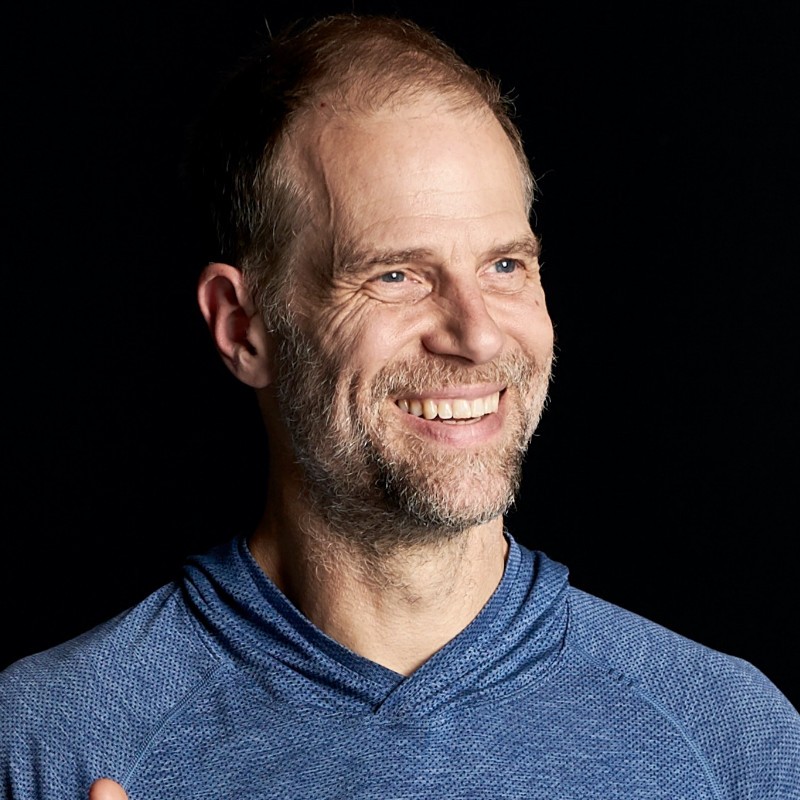
In this video, Joe Betts-LaCroix, Chief Executive Officer of Retro Biosciences, engages in a comprehensive discussion on the company's ambitious mission to extend healthy human lifespan by a decade. With support from notable figures such as Sam Altman, Retro Biosciences leads efforts to convert advances in academic aging biology into practical therapeutics, addressing significant healthcare challenges.
Betts-LaCroix shares valuable insights into personalized medicine's transformative potential, powered by artificial intelligence (AI). They discuss the importance of large-scale systems and computational models in expediting discoveries within biological sciences. This discussion, hosted by John Furrier on theCUBE, also covers observations on medtech innovations and the critical role of AI in the field.
Key insights include the transition from academic research to commercial applications and the promising potential of AI-driven therapeutic developments. The conversation also delves into the significant mindset shift practitioners encounter in the rapidly evolving medtech landscape, underscoring the necessity for agile learning to match technological advances.
Forgot Password
Almost there!
We just sent you a verification email. Please verify your account to gain access to
theCUBE + NYSE Wired: MedTech Unplugged, the Future of AI in Healthcare & Life Sciences. If you don’t think you received an email check your
spam folder.
Sign in to theCUBE + NYSE Wired: MedTech Unplugged, the Future of AI in Healthcare & Life Sciences.
In order to sign in, enter the email address you used to registered for the event. Once completed, you will receive an email with a verification link. Open this link to automatically sign into the site.
Register For theCUBE + NYSE Wired: MedTech Unplugged, the Future of AI in Healthcare & Life Sciences
Please fill out the information below. You will recieve an email with a verification link confirming your registration. Click the link to automatically sign into the site.
You’re almost there!
We just sent you a verification email. Please click the verification button in the email. Once your email address is verified, you will have full access to all event content for theCUBE + NYSE Wired: MedTech Unplugged, the Future of AI in Healthcare & Life Sciences.
Thanks for confirming your account. Now you can access theCUBE + NYSE Wired: MedTech Unplugged, the Future of AI in Healthcare & Life Sciences with this email address.
I want my badge and interests to be visible to all attendees.
Checking this box will display your presense on the attendees list, view your profile and allow other attendees to contact you via 1-1 chat. Read the Privacy Policy. At any time, you can choose to disable this preference.
Select your Interests!
add
Upload your photo
Uploading..
OR
Connect via Twitter
Connect via Linkedin
EDIT PASSWORD
Share
Forgot Password
Almost there!
We just sent you a verification email. Please verify your account to gain access to
theCUBE + NYSE Wired: MedTech Unplugged, the Future of AI in Healthcare & Life Sciences. If you don’t think you received an email check your
spam folder.
Sign in to theCUBE + NYSE Wired: MedTech Unplugged, the Future of AI in Healthcare & Life Sciences.
In order to sign in, enter the email address you used to registered for the event. Once completed, you will receive an email with a verification link. Open this link to automatically sign into the site.
Sign in to gain access to theCUBE + NYSE Wired: MedTech Unplugged, the Future of AI in Healthcare & Life Sciences
Please sign in with LinkedIn to continue to theCUBE + NYSE Wired: MedTech Unplugged, the Future of AI in Healthcare & Life Sciences. Signing in with LinkedIn ensures a professional environment.
>> Hello, I'm John Furrier with theCUBE here at theCUBE's New York Stock Exchange Studio, part of theCUBE's East Coast Access Hub. Of course, we've got our Palo Alto Studios connecting. Silicon Valley and Wall Street, tech and money, but really it's all about the large scale systems, the AI factories, it's the sciences, the advancement in accelerated computing is changing the game. And, of course, that includes med tech and a lot of the breakthroughs that were once ungettable now are on the table. Had a great guest, Joe Betts-LaCroix here, CEO of Retro Biosciences recently freshly funded, started in 2021. Joe, great to have you on. Perfect timing to bring together the applications of what people are thinking about on these big breakthroughs. Thanks for taking the time.
Joe Betts-LaCroix
>> Great. Thanks for having me.>> So I just want to get it out there. Sam Altman is backing you guys. You guys got a focus. Sam is there. You got to raise some good cash. What is the venture? Set the table for us. What are you working on?
Joe Betts-LaCroix
>> So our mission is to extend the healthy human lifespan by 10 years.>> Certainly. I think that's everyone wants to sign up for that. Take us through some of the mechanics of the science that you're looking at. What's the prescription? Is it software? Is it humans involved? Take us through what you're thinking in terms of the opportunity.
Joe Betts-LaCroix
>> Sure. So it's based on the idea that we can approach understanding where age-related diseases come from through understanding aging itself. So there's an academic field of aging biology that has been maturing since the '90s and a bunch before that as well, but especially since the '90s when Cynthia Kenyon discovered that you can modify one gene and double the lifespan of an experimental animal. People realized, "Oh, you can mess with aging."
And then fast-forward to it being time for me to start another company back in 2021, and it felt like there were enough things ready from academia that we could start translating from that field of aging biology into making actual therapeutics for everyday people that can unwind some the aspects of aging in their bodies in order to delay age-related diseases, which turn out to be about 80 plus percent of all of the diseases that are treated in hospitals today. And about more than three quarters of everything we spend in healthcare, which is about $3 trillion a year are age-related diseases. So that's what we're going after.>> I love the science behind personalized medicine. Obviously AI is about personalization. We see that every day in today's use cases. And the idea that you can actually understand things down at that specific level requires a lot of data. To commercialize it, you need to get access to data. How does that move from the academic to commercial? Is there a progression? Are there mechanisms that you guys are looking at in terms of the right data? What are some of the things you look at? What does it take to get to some of these breakthroughs? I mean, we've all seen the old snake oil get fit and all that get well, but there's actually science here. What is the data behind it all?
Joe Betts-LaCroix
>> Yeah, so I guess you could break it down into two kinds of data. One is I think there's already a lot of discoveries that have been made in the aging biology academic space that are just sitting there just not yet translated into medicines. So that can be a form of data in the sense of it being know-how. Then another kind of data is, I would say, the data that you use to train computational models such as AI models. And there's certainly a fair bit of that available as well. And the reason I think that's important, and this is a thesis I've had for a long time, is that the cell, just even one cell is incredibly complex and I think it's going to be a long time before humans really fully understand stand how to model and intervene in even one cell, because the human brain can only hold so many things at once. And so like I said, it's been a thesis for a long time that we're going to have to model it computationally to really crack a bunch of this in terms of future programs. So the opportunity for us then was beginning of last year to build a truly large model that's bio-native that can start predicting some things about biological molecules that might have certain behaviors that we need. So we gathered together a huge amount of data that was already available from pretty much academic sources and consortia into a training set that we then used in partnership with OpenAI to build a new bottle that can essentially, in a way, understand what the structure and sequence of proteins should be for them to be biologically functional.>> So when you work with OpenAI, for instance, on the research, I've actually done some videos on some areas like arthritis. Some groups have been cracking that code because it had some data sets. How much of the acceleration are you seeing? In other words, we're seeing some progress. How accelerated is this? Can you scope the order of magnitude of what might come from this and where it's going to come from? Are there areas that are kind of flowering out early? Do you see this as being a computation, throw more horsepower at it? Or is the combination of the models? How do you get through that? Is that where most of the research is? This is the kinds of questions that people will have. What's going to come down first, curing blindness, cancer? What are some of the things that you see? Could you share your views on this?
Joe Betts-LaCroix
>> Well, I think I am walking on thin ice if I try to predict the future. But one observation that I made a while ago, a few years ago, walking around and looking at all the scientists. We have lots of labs full of scientists and lab equipment doing research work. But then if I watch people what the actual work they're doing is a bunch of it is them thinking really hard. And these are brilliant people we've hired from the best universities and so on and labs around the world. Are they continuously typing on their laptop, or continuously pipetting, or running the experiment? No, there's huge stretches of time where they're thinking about what the next step should be and then having an insight, writing it down, structuring, planning. That's like most of the time. So most of the time that we spend doing this work is actually thinking, and that's what these AI models that are getting 10 times better every year by some measures are really good at. It's like designing experiments, drawing inferences from 50 different experiments that have already been done on this particular mechanism. Listing 15 different possible approaches that you could use that might take you weeks of research to otherwise write down. So in that respect, it's very broad spectrum. It's accelerating people's ability to do target discovery. It's accelerating people's ability to design interventions for the targets that are being discovered. It's being able to predict the response of animals or humans in various ways to these interventions. So it's kind of all happening at once, everything everywhere as it were.>> It's awesome. I remember going back about 10, 15 years ago when big data was in that called the Hadoop phase. It was like, "Oh my god, we could sequence the genome." It felt like really amazing. Now, we're moved into stem cell. You got protein analysis, cell construction, a ton of kind of gettable data, a lot of research and ideas. I mean, how real is this? I mean, people who aren't inside the ropes, you guys are doing the work. What are some of the realities? Can you just share? I mean, I'm not asking for prediction like the AGI thing, but I mean, we're moving fast and this is a real thing. Can you just share your notes and observations around how real it is and how real it's going to be getting?
Joe Betts-LaCroix
>> I mean for us, it's extremely real. The results from the first AI model that we built are now already in submissions that we're making to the US FDA for going through the regulatory process for bringing out one of our therapeutics. So it's like a very direct loop. Another one is about to be, and that we designed a protein, actually a receptor that will be ... That's like an artificial sequence receptor that will be used in another one of our programs. It's left the sort of theoretical. "Oh, isn't that cool?" Academia zone and entered into the very real workaday, how do we solve the problems that are normally faced kind of realm. And one of the things that's given us is this sense that I think before and traditionally over decades, there's been this sense that like, "Oh, designing new proteins is a very, very difficult realm." And the way we move forward largely is by discovering proteins that already exist in some other domain, say bacteria, and then figuring out how to make a tool based on that. Like PCR, which is the backbone of a huge amount of biology, was somebody having the insight that's like, "Oh, we can go to these extreme files and find polymerases that operate at different temperatures."
They couldn't just de novo say like, "Oh, we're going to modify polymerase, bend it to our will." You just can't do that. And similarly, CRISPR, it's another revolution in medicine, an incredible tool, so much stuff is based on, and even some therapeutics now are heading that way, and that was looking to a bacterium that had already designed a protein like this. So now, it's kind of like I'm learning some learned helplessness that we've had for a long time. So the company we're like, "Well, oh wait, we could just design our own protein to do this thing that we want to do." It's kind of almost like kind of pinching ourselves like wake up really.>> It's paradise for you guys.
Joe Betts-LaCroix
>> You can actually do now.>> Yeah, yeah. The mindset shift is so amazing. Thanks for sharing that by the way, because you bring up a great point. First of all, the end benefit of all this is accelerating. So that's a whole nother hour. You could go there, but you're hit on something is a mindset shift. So now, you have to undo things. So can you share your observations on how practitioners who have been in the field are rethinking through? And for young folks watching or wanting to look at biology as a career, how they could look to flex. I mean, you just don't have to look a year to see that if you had a CS degree a few years ago, you are king. Now, you're like, "Well, I got coding assistants, they can get jobs." So people are flexing and they don't mind, they're smart. They'll go into where the action is. So this is where the actions accelerate and there's a pre and post new era. What is the practitioner impact? One, the existing unlearning that needs to be unlearned to relearn and then the young folks coming in who have skills.
Joe Betts-LaCroix
>> Yeah. What do you person wanting to train yourself? I think somebody's frozen here.>> Hello? Can you hear me?
Joe Betts-LaCroix
>> Yep, you're back.>> We're back. Okay. We can edit that out. Okay. You just take a quick pause. Unlearning for the practitioners in the field and then for the young guns coming in, this is a great field.
Joe Betts-LaCroix
>> Yeah. So I think for the people that are training themselves are getting trained right now for the ... They're going to be the next generation of doers and thinkers. What do you do if AI is replacing all the jobs? I think one of the shifts I think is that people are going to go more meta. So before, I think you would learn a particular domain of knowledge and then in your career you apply that domain. Now, I think you more learn to be a learner because everything is changing so fast. The world is completely different from what it was three years ago. And two years from now, it'll be completely different and then one year after that. So everything's accelerating. So what you need in a time of accelerating change is a lot of fluid intelligence and cognitive flexibility. So I think that's more what people should be training themselves on than picking up a specific domain of knowledge.>> That's awesome. Great preach there. Totally relevant. I want to ask you on your mission that you're on now. What are some of the things you're optimizing for in terms of hitting some of their goals? What are some of your goals? Can you share kind of status, progress, some of the things you're doing, you have your eye on? And obviously, key things you want to accomplish through the next year.
Joe Betts-LaCroix
>> So we divide up the work we're doing into two rough categories. One is working on rewinding aging damage in existing cells in the body, which is very complex and difficult, because the cell is super complicated. If we wanted to try to simulate a single cell in a computer, like full in silico modeling, I just recently calculated for a talk I gave a few days ago that it would require computing resources far, far beyond anything we have today on the entire globe. And in fact, even if you chart out a relatively generous Moore's Law of continuing exponential growth of computing resources, it would be about 50 to 70 years before we could even do that for one cell. So yeah, the cells are super complicated. It's hard to model them. I think that AI will get better and better at various approximations of a model for cells. But nonetheless, as I was mentioning, there are some academic discoveries that we can start to translate. And one of our programs is working on a mechanism called autophagy that's been fairly well elucidated over the last few decades. And we have basically a classic pharma drug that can restart that process, which can at least does in our mouse models and cells, human cells and so on, can reverse characteristics of Alzheimer's disease. So that's one program that we're working on.
The other large pillar or sort of other side of the divide that we're working on is what if some cell types ... It's just too complicated based on existing technology to even figure out how to rejuvenate them. The simplest thing is just to replace the cells entirely with the young ones. So if you have 95-year-old blood stem cells, just replace them with one-year-old blood stem cells, which we can make in the lab, and voila, you have 89 years younger blood. So cell replacement is one of the exciting modalities that we're working on. And so we have two different clinical programs that we're working on for cell replacement.>> That replaces the old, get the young blood and transfusions and-
Joe Betts-LaCroix
>> Yeah. I'm not so sanguine on the transfusion thing, if you pardon my French, because the supply chain is a little dicey for it in terms of where do you get the young blood. But being able to make young blood stem cells based on your own DNA that you put back in your bone marrow so you can generate your own young blood, into that.>> Yeah, yeah, I am too. Great work. So now, I have to ask you to kind of wrap up. Your thoughts on computing. Obviously Sam's involved in your venture. We all know what's going on with OpenAI, the success and the compute. How do you think about the computing platform? Because if you go look at some of the old unlearning, it's driven by the high-performance computing game, which has been slow. Now, you have accelerated computing, potentially unlimited compute for working these things. Are you configuring large-scale systems? Are you spinning up digital twins? How are you leveraging some of the cool large-scale action?
Joe Betts-LaCroix
>> Yeah, so I think that where we are today is that we don't have unlimited computing. In fact, the whole industry is compute limited. And so people are racking their brains trying to figure out how to bring on more gigawatts of power, more chips, designing their own chips, building data centers as fast as they can because we're behind on that. So far, we've benefited from the kindness of others on access to compute infrastructure. So in our cloud with OpenAI, they're massive, massive GPU cluster access was pivotal for us in training that new model. But now, we're talking to partners about getting the infrastructure in place for us to build our next-gen model, which is going to be much bigger.>> Yeah, you're pushing the envelope. You need more.
Joe Betts-LaCroix
>> Have to.>> Yeah. Well, Joe, congratulations. Love what you're doing and thanks for what you do. Again, putting fresh cells in, all for that. And again, just the science and the discovery, just great work. Thanks for taking the time to share with us. Really appreciate it.
Joe Betts-LaCroix
>> Thanks so much for having me and Retro on your show.>> All right, great. Retro Biosciences, thanks for coming on.
Joe Betts-LaCroix
>> Thank you. Yeah.>> I'm John Furrier with theCUBE. We are here at the NYSE connecting Silicon Valley and Wall Street as the commercialization of new discoveries, more headroom is coming with more applications. Again, you heard it here. We're doing our part to rejuvenate the conversation. Thanks for watching.
>> Hello, I'm John Furrier with theCUBE here at theCUBE's New York Stock Exchange Studio, part of theCUBE's East Coast Access Hub. Of course, we've got our Palo Alto Studios connecting. Silicon Valley and Wall Street, tech and money, but really it's all about the large scale systems, the AI factories, it's the sciences, the advancement in accelerated computing is changing the game. And, of course, that includes med tech and a lot of the breakthroughs that were once ungettable now are on the table. Had a great guest, Joe Betts-LaCroix here, CEO of Retro Biosciences recently freshly funded, started in 2021. Joe, great to have you on. Perfect timing to bring together the applications of what people are thinking about on these big breakthroughs. Thanks for taking the time.
Joe Betts-LaCroix
>> Great. Thanks for having me.>> So I just want to get it out there. Sam Altman is backing you guys. You guys got a focus. Sam is there. You got to raise some good cash. What is the venture? Set the table for us. What are you working on?
Joe Betts-LaCroix
>> So our mission is to extend the healthy human lifespan by 10 years.>> Certainly. I think that's everyone wants to sign up for that. Take us through some of the mechanics of the science that you're looking at. What's the prescription? Is it software? Is it humans involved? Take us through what you're thinking in terms of the opportunity.
Joe Betts-LaCroix
>> Sure. So it's based on the idea that we can approach understanding where age-related diseases come from through understanding aging itself. So there's an academic field of aging biology that has been maturing since the '90s and a bunch before that as well, but especially since the '90s when Cynthia Kenyon discovered that you can modify one gene and double the lifespan of an experimental animal. People realized, "Oh, you can mess with aging."
And then fast-forward to it being time for me to start another company back in 2021, and it felt like there were enough things ready from academia that we could start translating from that field of aging biology into making actual therapeutics for everyday people that can unwind some the aspects of aging in their bodies in order to delay age-related diseases, which turn out to be about 80 plus percent of all of the diseases that are treated in hospitals today. And about more than three quarters of everything we spend in healthcare, which is about $3 trillion a year are age-related diseases. So that's what we're going after.>> I love the science behind personalized medicine. Obviously AI is about personalization. We see that every day in today's use cases. And the idea that you can actually understand things down at that specific level requires a lot of data. To commercialize it, you need to get access to data. How does that move from the academic to commercial? Is there a progression? Are there mechanisms that you guys are looking at in terms of the right data? What are some of the things you look at? What does it take to get to some of these breakthroughs? I mean, we've all seen the old snake oil get fit and all that get well, but there's actually science here. What is the data behind it all?
Joe Betts-LaCroix
>> Yeah, so I guess you could break it down into two kinds of data. One is I think there's already a lot of discoveries that have been made in the aging biology academic space that are just sitting there just not yet translated into medicines. So that can be a form of data in the sense of it being know-how. Then another kind of data is, I would say, the data that you use to train computational models such as AI models. And there's certainly a fair bit of that available as well. And the reason I think that's important, and this is a thesis I've had for a long time, is that the cell, just even one cell is incredibly complex and I think it's going to be a long time before humans really fully understand stand how to model and intervene in even one cell, because the human brain can only hold so many things at once. And so like I said, it's been a thesis for a long time that we're going to have to model it computationally to really crack a bunch of this in terms of future programs. So the opportunity for us then was beginning of last year to build a truly large model that's bio-native that can start predicting some things about biological molecules that might have certain behaviors that we need. So we gathered together a huge amount of data that was already available from pretty much academic sources and consortia into a training set that we then used in partnership with OpenAI to build a new bottle that can essentially, in a way, understand what the structure and sequence of proteins should be for them to be biologically functional.>> So when you work with OpenAI, for instance, on the research, I've actually done some videos on some areas like arthritis. Some groups have been cracking that code because it had some data sets. How much of the acceleration are you seeing? In other words, we're seeing some progress. How accelerated is this? Can you scope the order of magnitude of what might come from this and where it's going to come from? Are there areas that are kind of flowering out early? Do you see this as being a computation, throw more horsepower at it? Or is the combination of the models? How do you get through that? Is that where most of the research is? This is the kinds of questions that people will have. What's going to come down first, curing blindness, cancer? What are some of the things that you see? Could you share your views on this?
Joe Betts-LaCroix
>> Well, I think I am walking on thin ice if I try to predict the future. But one observation that I made a while ago, a few years ago, walking around and looking at all the scientists. We have lots of labs full of scientists and lab equipment doing research work. But then if I watch people what the actual work they're doing is a bunch of it is them thinking really hard. And these are brilliant people we've hired from the best universities and so on and labs around the world. Are they continuously typing on their laptop, or continuously pipetting, or running the experiment? No, there's huge stretches of time where they're thinking about what the next step should be and then having an insight, writing it down, structuring, planning. That's like most of the time. So most of the time that we spend doing this work is actually thinking, and that's what these AI models that are getting 10 times better every year by some measures are really good at. It's like designing experiments, drawing inferences from 50 different experiments that have already been done on this particular mechanism. Listing 15 different possible approaches that you could use that might take you weeks of research to otherwise write down. So in that respect, it's very broad spectrum. It's accelerating people's ability to do target discovery. It's accelerating people's ability to design interventions for the targets that are being discovered. It's being able to predict the response of animals or humans in various ways to these interventions. So it's kind of all happening at once, everything everywhere as it were.>> It's awesome. I remember going back about 10, 15 years ago when big data was in that called the Hadoop phase. It was like, "Oh my god, we could sequence the genome." It felt like really amazing. Now, we're moved into stem cell. You got protein analysis, cell construction, a ton of kind of gettable data, a lot of research and ideas. I mean, how real is this? I mean, people who aren't inside the ropes, you guys are doing the work. What are some of the realities? Can you just share? I mean, I'm not asking for prediction like the AGI thing, but I mean, we're moving fast and this is a real thing. Can you just share your notes and observations around how real it is and how real it's going to be getting?
Joe Betts-LaCroix
>> I mean for us, it's extremely real. The results from the first AI model that we built are now already in submissions that we're making to the US FDA for going through the regulatory process for bringing out one of our therapeutics. So it's like a very direct loop. Another one is about to be, and that we designed a protein, actually a receptor that will be ... That's like an artificial sequence receptor that will be used in another one of our programs. It's left the sort of theoretical. "Oh, isn't that cool?" Academia zone and entered into the very real workaday, how do we solve the problems that are normally faced kind of realm. And one of the things that's given us is this sense that I think before and traditionally over decades, there's been this sense that like, "Oh, designing new proteins is a very, very difficult realm." And the way we move forward largely is by discovering proteins that already exist in some other domain, say bacteria, and then figuring out how to make a tool based on that. Like PCR, which is the backbone of a huge amount of biology, was somebody having the insight that's like, "Oh, we can go to these extreme files and find polymerases that operate at different temperatures."
They couldn't just de novo say like, "Oh, we're going to modify polymerase, bend it to our will." You just can't do that. And similarly, CRISPR, it's another revolution in medicine, an incredible tool, so much stuff is based on, and even some therapeutics now are heading that way, and that was looking to a bacterium that had already designed a protein like this. So now, it's kind of like I'm learning some learned helplessness that we've had for a long time. So the company we're like, "Well, oh wait, we could just design our own protein to do this thing that we want to do." It's kind of almost like kind of pinching ourselves like wake up really.>> It's paradise for you guys.
Joe Betts-LaCroix
>> You can actually do now.>> Yeah, yeah. The mindset shift is so amazing. Thanks for sharing that by the way, because you bring up a great point. First of all, the end benefit of all this is accelerating. So that's a whole nother hour. You could go there, but you're hit on something is a mindset shift. So now, you have to undo things. So can you share your observations on how practitioners who have been in the field are rethinking through? And for young folks watching or wanting to look at biology as a career, how they could look to flex. I mean, you just don't have to look a year to see that if you had a CS degree a few years ago, you are king. Now, you're like, "Well, I got coding assistants, they can get jobs." So people are flexing and they don't mind, they're smart. They'll go into where the action is. So this is where the actions accelerate and there's a pre and post new era. What is the practitioner impact? One, the existing unlearning that needs to be unlearned to relearn and then the young folks coming in who have skills.
Joe Betts-LaCroix
>> Yeah. What do you person wanting to train yourself? I think somebody's frozen here.>> Hello? Can you hear me?
Joe Betts-LaCroix
>> Yep, you're back.>> We're back. Okay. We can edit that out. Okay. You just take a quick pause. Unlearning for the practitioners in the field and then for the young guns coming in, this is a great field.
Joe Betts-LaCroix
>> Yeah. So I think for the people that are training themselves are getting trained right now for the ... They're going to be the next generation of doers and thinkers. What do you do if AI is replacing all the jobs? I think one of the shifts I think is that people are going to go more meta. So before, I think you would learn a particular domain of knowledge and then in your career you apply that domain. Now, I think you more learn to be a learner because everything is changing so fast. The world is completely different from what it was three years ago. And two years from now, it'll be completely different and then one year after that. So everything's accelerating. So what you need in a time of accelerating change is a lot of fluid intelligence and cognitive flexibility. So I think that's more what people should be training themselves on than picking up a specific domain of knowledge.>> That's awesome. Great preach there. Totally relevant. I want to ask you on your mission that you're on now. What are some of the things you're optimizing for in terms of hitting some of their goals? What are some of your goals? Can you share kind of status, progress, some of the things you're doing, you have your eye on? And obviously, key things you want to accomplish through the next year.
Joe Betts-LaCroix
>> So we divide up the work we're doing into two rough categories. One is working on rewinding aging damage in existing cells in the body, which is very complex and difficult, because the cell is super complicated. If we wanted to try to simulate a single cell in a computer, like full in silico modeling, I just recently calculated for a talk I gave a few days ago that it would require computing resources far, far beyond anything we have today on the entire globe. And in fact, even if you chart out a relatively generous Moore's Law of continuing exponential growth of computing resources, it would be about 50 to 70 years before we could even do that for one cell. So yeah, the cells are super complicated. It's hard to model them. I think that AI will get better and better at various approximations of a model for cells. But nonetheless, as I was mentioning, there are some academic discoveries that we can start to translate. And one of our programs is working on a mechanism called autophagy that's been fairly well elucidated over the last few decades. And we have basically a classic pharma drug that can restart that process, which can at least does in our mouse models and cells, human cells and so on, can reverse characteristics of Alzheimer's disease. So that's one program that we're working on.
The other large pillar or sort of other side of the divide that we're working on is what if some cell types ... It's just too complicated based on existing technology to even figure out how to rejuvenate them. The simplest thing is just to replace the cells entirely with the young ones. So if you have 95-year-old blood stem cells, just replace them with one-year-old blood stem cells, which we can make in the lab, and voila, you have 89 years younger blood. So cell replacement is one of the exciting modalities that we're working on. And so we have two different clinical programs that we're working on for cell replacement.>> That replaces the old, get the young blood and transfusions and-
Joe Betts-LaCroix
>> Yeah. I'm not so sanguine on the transfusion thing, if you pardon my French, because the supply chain is a little dicey for it in terms of where do you get the young blood. But being able to make young blood stem cells based on your own DNA that you put back in your bone marrow so you can generate your own young blood, into that.>> Yeah, yeah, I am too. Great work. So now, I have to ask you to kind of wrap up. Your thoughts on computing. Obviously Sam's involved in your venture. We all know what's going on with OpenAI, the success and the compute. How do you think about the computing platform? Because if you go look at some of the old unlearning, it's driven by the high-performance computing game, which has been slow. Now, you have accelerated computing, potentially unlimited compute for working these things. Are you configuring large-scale systems? Are you spinning up digital twins? How are you leveraging some of the cool large-scale action?
Joe Betts-LaCroix
>> Yeah, so I think that where we are today is that we don't have unlimited computing. In fact, the whole industry is compute limited. And so people are racking their brains trying to figure out how to bring on more gigawatts of power, more chips, designing their own chips, building data centers as fast as they can because we're behind on that. So far, we've benefited from the kindness of others on access to compute infrastructure. So in our cloud with OpenAI, they're massive, massive GPU cluster access was pivotal for us in training that new model. But now, we're talking to partners about getting the infrastructure in place for us to build our next-gen model, which is going to be much bigger.>> Yeah, you're pushing the envelope. You need more.
Joe Betts-LaCroix
>> Have to.>> Yeah. Well, Joe, congratulations. Love what you're doing and thanks for what you do. Again, putting fresh cells in, all for that. And again, just the science and the discovery, just great work. Thanks for taking the time to share with us. Really appreciate it.
Joe Betts-LaCroix
>> Thanks so much for having me and Retro on your show.>> All right, great. Retro Biosciences, thanks for coming on.
Joe Betts-LaCroix
>> Thank you. Yeah.>> I'm John Furrier with theCUBE. We are here at the NYSE connecting Silicon Valley and Wall Street as the commercialization of new discoveries, more headroom is coming with more applications. Again, you heard it here. We're doing our part to rejuvenate the conversation. Thanks for watching.