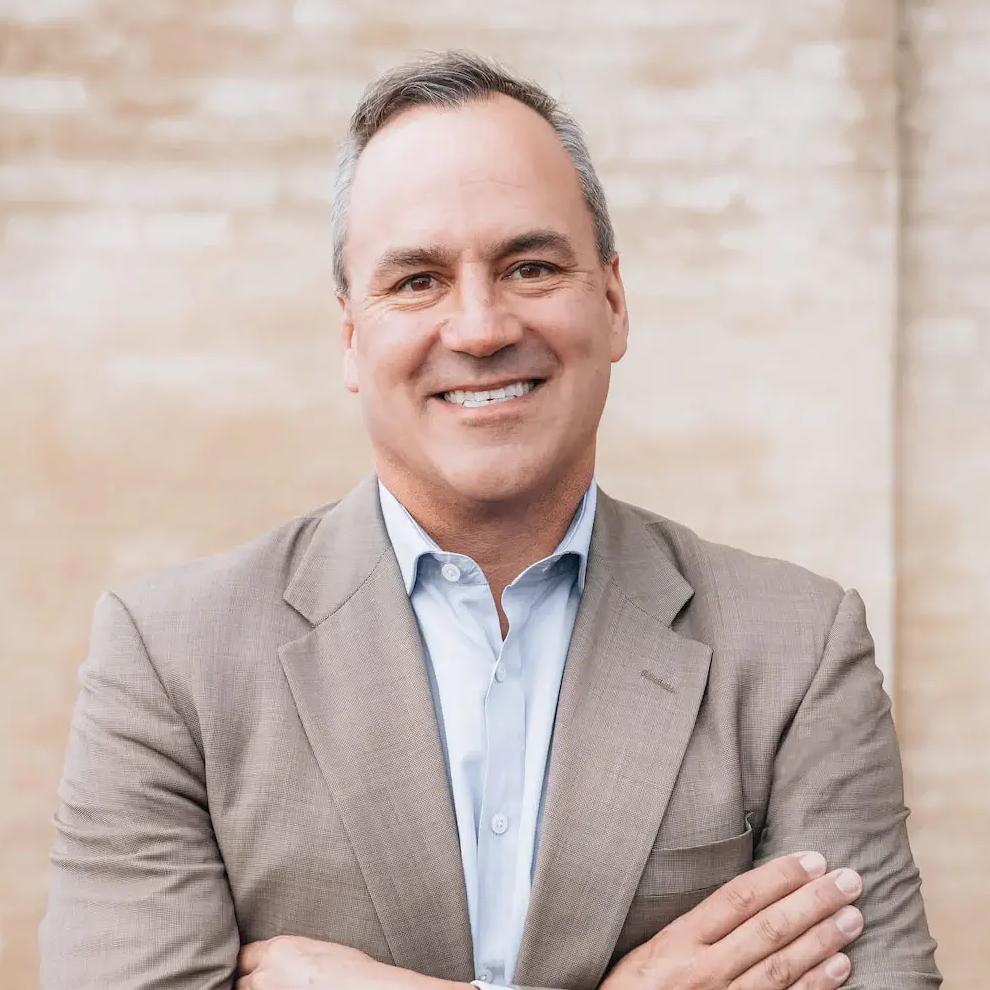
In this MedTech Unplugged interview from the NYSE studio, theCUBE’s John Furrier sits down with Louis Villalba, CEO of TMRW Life Sciences, to explore how the company is modernizing IVF specimen storage through digital transformation. Villalba explains how TMRW’s FDA-cleared and CE-marked platform establishes a secure, fully integrated digital chain of custody for eggs, embryos, sperm and other specimens. By combining RFID-enabled labware, barcodes and EMR integration, TMRW eliminates manual double-entry errors, improves traceability and raises the standard of care across IVF clinics and networks.
The conversation unpacks the company’s rapid growth — 66,000 patients onboarded in under four years versus competitors’ decades-long totals — and the market opportunity in an underserved field where demand far outpaces provider capacity. Villalba outlines how TMRW’s mix of robotic, manual and offsite solutions meets clinics where they are, enabling scalability, risk reduction and higher quality outcomes. The discussion also touches on broader trends in women’s health, the rising adoption of egg freezing and the role of digital platforms in addressing fertility access and safety.
Forgot Password
Almost there!
We just sent you a verification email. Please verify your account to gain access to
theCUBE + NYSE Wired: MedTech Unplugged, the Future of AI in Healthcare & Life Sciences. If you don’t think you received an email check your
spam folder.
Sign in to theCUBE + NYSE Wired: MedTech Unplugged, the Future of AI in Healthcare & Life Sciences.
In order to sign in, enter the email address you used to registered for the event. Once completed, you will receive an email with a verification link. Open this link to automatically sign into the site.
Register For theCUBE + NYSE Wired: MedTech Unplugged, the Future of AI in Healthcare & Life Sciences
Please fill out the information below. You will recieve an email with a verification link confirming your registration. Click the link to automatically sign into the site.
You’re almost there!
We just sent you a verification email. Please click the verification button in the email. Once your email address is verified, you will have full access to all event content for theCUBE + NYSE Wired: MedTech Unplugged, the Future of AI in Healthcare & Life Sciences.
Thanks for confirming your account. Now you can access theCUBE + NYSE Wired: MedTech Unplugged, the Future of AI in Healthcare & Life Sciences with this email address.
I want my badge and interests to be visible to all attendees.
Checking this box will display your presense on the attendees list, view your profile and allow other attendees to contact you via 1-1 chat. Read the Privacy Policy. At any time, you can choose to disable this preference.
Select your Interests!
add
Upload your photo
Uploading..
OR
Connect via Twitter
Connect via Linkedin
EDIT PASSWORD
Share
Forgot Password
Almost there!
We just sent you a verification email. Please verify your account to gain access to
theCUBE + NYSE Wired: MedTech Unplugged, the Future of AI in Healthcare & Life Sciences. If you don’t think you received an email check your
spam folder.
Sign in to theCUBE + NYSE Wired: MedTech Unplugged, the Future of AI in Healthcare & Life Sciences.
In order to sign in, enter the email address you used to registered for the event. Once completed, you will receive an email with a verification link. Open this link to automatically sign into the site.
Sign in to gain access to theCUBE + NYSE Wired: MedTech Unplugged, the Future of AI in Healthcare & Life Sciences
Please sign in with LinkedIn to continue to theCUBE + NYSE Wired: MedTech Unplugged, the Future of AI in Healthcare & Life Sciences. Signing in with LinkedIn ensures a professional environment.
Are you sure you want to remove access rights for this user?
Details
Manage Access
email address
Community Invitation
Louis Villalba, TMRW Life Sciences
In this MedTech Unplugged interview from the NYSE studio, theCUBE’s John Furrier sits down with Louis Villalba, CEO of TMRW Life Sciences, to explore how the company is modernizing IVF specimen storage through digital transformation. Villalba explains how TMRW’s FDA-cleared and CE-marked platform establishes a secure, fully integrated digital chain of custody for eggs, embryos, sperm and other specimens. By combining RFID-enabled labware, barcodes and EMR integration, TMRW eliminates manual double-entry errors, improves traceability and raises the standard of care across IVF clinics and networks.
The conversation unpacks the company’s rapid growth — 66,000 patients onboarded in under four years versus competitors’ decades-long totals — and the market opportunity in an underserved field where demand far outpaces provider capacity. Villalba outlines how TMRW’s mix of robotic, manual and offsite solutions meets clinics where they are, enabling scalability, risk reduction and higher quality outcomes. The discussion also touches on broader trends in women’s health, the rising adoption of egg freezing and the role of digital platforms in addressing fertility access and safety.
play_circle_outlineDiscussion on the surge in egg freezing and fertility preservation services in the market.
replyShare Clip
play_circle_outlineTransforming Infertility Solutions: TMRW Life Sciences and the Innovative Beacon Device Revolutionizing Assisted Reproductive Technology
replyShare Clip
play_circle_outlineStatistics on IVF success rates and how TMRW aims to improve patient outcomes.
replyShare Clip
play_circle_outlineTransforming Specimen Management: The Future of Digital Integration and Robotics in Enhancing IVF Capabilities and Accessibility
replyShare Clip
play_circle_outlineThe role of private equity in consolidating IVF clinics and investing in TMRW technologies.
In this MedTech Unplugged interview from the NYSE studio, theCUBE’s John Furrier sits down with Louis Villalba, CEO of TMRW Life Sciences, to explore how the company is modernizing IVF specimen storage through digital transformation. Villalba explains how TMRW’s FDA-cleared and CE-marked platform establishes a secure, fully integrated digital chain of custody for eggs, embryos, sperm and other specimens. By combining RFID-enabled labware, barcodes and EMR integration, TMRW eliminates manual double-entry errors, improves traceability and raises the standard of...Read more
exploreKeep Exploring
What does TMRW Life Sciences do in the field of assisted reproductive technology (ART) and how is it addressing the challenges in the IVF process?add
What is TMRW Life Sciences and how does it relate to assisted reproductive technology (ART) and IVF?add
What is the purpose and functionality of the Beacon device in the TMRW Labware?add
What were the differences in the storage management process before and after the implementation of TMRW Life Sciences?add
What is the current state of the IVF clinic market in the US, including information about clinic consolidation and the role of private equity groups?add
>> Welcome back, everyone, to theCUBE. I'm John Furrier, your host. We're here at our New York Stock Exchange studio, theCUBE on the East Coast, of course, in the heart of Wall Street. Of course, we have our Palo Alto Studio connecting Silicon Valley and Wall Street, all the tech innovation. MedTech Unplugged. This is our series. Looking at the innovation in digital health, medical health, transformation is happening. Obviously, there's a lot of data involved. Lou Villalba is here, CEO of TMRW Life Sciences. TMRW, as you guys shortened it down. Lou, great to have you on theCUBE. Thanks for coming on. Appreciate you being part of our inaugural MedTech Unplugged.>> Great. Well, thank you for having me. It's a pleasure for us to be here.>> You guys are a fast-growing company in the area, in the life science area that people can relate to. IVF, freezing your eggs for women, a lot of women health going on, big wave of activity. This is a huge part of people's families. It's an area that's been old-school, antiquated, outdated process. And technology's coming in. You guys are harnessing this. We've got a little prop here. This is a fast-growing market, underserved. Explain what you guys do.>> Sure. Thank you. Thank you very much for the opportunity. So, to understand TMRW Life Sciences is to understand ART, assisted reproductive technology, IVF as it's also recognized. And the IVF process is actually something that a lot of people, I think, they know someone in their life that's been touched by IVF, but it continues to increase because it's important to recognize that one in every six people suffer from some level of infertility, male, female. And so it's a huge problem, and it's a huge problem across the globe. And if you look at the US in particular, and you say that we average roughly four million births a year, 2% of those births happen from IVF right now. All right? Now, we believe that number should be a lot greater. There's an access to care topic that we will talk a little bit more, I think, further in this discussion. But what TMRW does is TMRW is a tech-enabled solution to basically establish a digital chain of custody around the specimens that are used in IVF, so whether that be eggs, oocytes, embryos, sperm. And this sets up basically a track and trace mechanism for patients to utilize as they go through the IVF journey.>> So, we all can relate. We all have someone in our lives that has been touched by this. It impacts relationships. But now, you guys have a solution. Talk about the problem statement that you guys solve, because to me, I think it's an interesting area where it's like, where's the modernization? And two, is it an underserved market? Take us through the state of the art of how this works today and why you guys are focusing in on this as a business.>> Yeah, that's a great question. Thank you. So, our founders took a look at the IVF journey, as we like to refer to it, and looked at the storage part of the situation, meaning what you do with your eggs and embryos, and said, "This is actually in need of a solution." As much as things have advanced, I think it's important to keep in perspective that the oldest IVF babies in the world are just over 50 years old, so it's a young specialty in many, many ways. But more importantly, as things has continued to advance within IVF, what hasn't advanced is the track and trace storage part of the specialty. And so when they looked at this and they thought about solutions for inventory management, that's where tech actually became front and center. But I think what's more important as people go through this journey and they continue to see when you go through IVF, it generally takes three attempts to achieve success. So, what does that mean? That means actually you're going to access specimens that you generate, your biological specimens, generally about on three attempts for each successful pregnancy. So, we created a solution that basically has a tech-enabled background to it. We call it the Beacon. It's our TMRW Labware. And this is a very simple device and design. It has an RFID chip in the bottom. And then on the side, you'll see a numeric code and you'll see a barcode. And these are redundancy in terms of the way that you track the specimens. That integrates with an electronic medical record system.>> The little hook here looks like some sort of robotic arm. Picks that up?>> Yeah. That's very robotic.>> . You can be part of our robotic series too.>> Yes. No, we'd love to. So, TMRW, actually it was invented as a complete end-to-end solution that had a robotic platform associated to it. And as we integrated and launched this technology, we learned a few things about customer preferences. And like all solutions, there is not one solution that fits all sizes, so we needed to actually develop several different applications to be able to meet our customers' needs. And to look at that and evaluate how we do it, we take a look at actually one metric in particular. And so TMRW has really been in commercial business for roughly about four years, and in that four-year time period, we've ingested 66,000 patients across our robotic platform. And that includes both on-site robots and tanks in clinics and offsite repositories that we own, operate, and manage on our own. And all managed through this one integrated system because this is what interfaces with everyone's electronic medical record.>> I was talking to my daughter, she works for Amazon, which I bought one medical, we were talking about women's health, how that's on a rise. From a product standpoint, women's health is huge category growth, so macro check, but on the cultural side, we're always reading stories around women are freezing their eggs younger. There's always the classic pregnancy challenge->> Challenge, yes.>> ... that you guys are addressing head-on. So, two growths. You got a growth market and two categories which have upward trajectory. But to me, I can't get around the whole trauma of mistakes in this area. And there was a show on YouTube, on Hulu, Switched at Birth, that highlights how some of these manual processes caused the problem where couples have a baby, it's not theirs because it was just bad logistics. It's a supply chain problem->> Yes, very much.>> ... in manufacturing terms.>> Yeah, very much.>> Data custody. These are terms we hear about in data. Lineage, it's more of a tech thing. But now in your world, that's the core problem.>> Correct.>> To me, that is huge.>> Yes, very much.>> Did I get that right?>> Yeah, you got it right. So, this is, again, it goes back to why was TMRW Life Sciences created, and it was created for several reasons, primarily to safeguard life's most precious cells. And the way that you safeguard them is you make sure that they are in a digitally controlled platform, something that establishes what the digital chain of custody interfaces with electronic medical record, offering the most secure protection for any individual patient's specimens. And these examples are, as sad as they are and as unfortunate as they are across every aspect you can think about in a human way, they do happen and they do occur. And the reason why these things unfortunately are happening, when storage was first established within reproductive health, you look back at the early 2000s, freeze rates were around 10% to 20%. So, for every 10 patients that walked through an IVF treatment process, maybe two of them froze something. What changed was around 2015 when the vitrification technologies improved, people started freezing at 100% freeze rate. So, 10 out of 10 people in that equation are freezing something. What didn't change was the infrastructure around that. Basically, the doers that were invented in 1950, these metal tanks, they still exist today, and they still exist across a lot of IVF labs. And you look at the US, there are 450 IVF centers across the United States of America, and across the world, there are 5,000 IVF centers. All right? And so if you think in terms of how specimens are stored across all of these types of points of care, you have varying degrees of quality. We have been in the market for four years, so our mission is obviously to try and increase the standard of care, do that by actually establishing, we're the only FDA-cleared technology today in the United States and we're the only CE mark technology that takes this and basically establishes a different level of care around tissue storage.>> You're going through all the process.>> Yes, very much.>> You want to get that right in the front end. You guys are doing the hard work.>> Correct.>> Where are you on that progress bar?>> Yeah, on that progress, so I will tell you that when you're establishing a new level of care, it's a lonely position to be in, but it's an important one because for all the right reasons, we think it's important to establish a new standard of care. And how do you do that? You do that actually by building something that's universal and can work with people in many different ways. And so we offer fully integrated solutions from a robotic platform. We offer manual solutions that address people's on-site needs and their metal tanks. And we offer offsite solutions to manage things. All in digital specimen management, everything that integrates with electronic medical records so you can meet people where they are versus forcing them to meet you where you are. And our ability to do this and track our progress, I think we focus on a few metrics, and one of those metrics are what are the total patients in the platform? I referenced we were able to basically ingest 66,000 patients in four years. All right? So, how does that compare to the total opportunity? On an annual basis, IVF does around 450,000 procedures in the United States every year. When we look at some of the other companies that are in this space that do this in a very service-based model, and what we consider the old standard, so one of the other companies that's leading in this space has gotten to 70,000 patients in over 30 years. So, if you think we do this in under four years, we get to 66,000, it's clear that digital specimen management is going to lead the way in->> It's a fractured, fragmented market from a provider standpoint.>> Very much.>> And really two players, you and someone else rising up in terms of the numbers.>> Correct.>> You guys get a little bit more scale in four years because you have the digital transformation nailed.>> That's correct.>> Is that the core problem you guys solve, is the supply chain and the quality piece with this device here? How does that compare to the old way?>> Yeah, so it's a very important question. So, if you look at the way storage was managed prior to TMRW Life Sciences coming in, so you would basically place things in glass vials, you have a handwritten label that gets established the patient's name and the freeze date, and then that would be manually placed in a tank. It would be tracked in an analog system, spreadsheet most likely, and managed by an individual that had cryo-responsibilities in the lab. So, if you think about trying to scale something like that to thousands of patients, you unfortunately had the situation that you referenced earlier, mistakes get made. And so our->> And statistically there will be mistakes. You can't guarantee 100% with a manual process.>> That's very true, unfortunately. Now, what we've done with a lot of our existing clients now, we have close to 70 clinics in the United States of America that we've brought on in the less than four years, we can go back and look at all of the old inventories, we reference these as legacy inventories, and we basically pull each one of these specimens out of a tank. We create a digital record by implementing that into our operating system, assigning it a unique ID, then basically placing it into the Beacon and establishing it back into a tank. And at that point, you basically have secured that patient, that specimen in our operating system.>> You have RFID and barcode, so two levels of identity, if you will.>> Correct. And there are other applications that are used in the space to establish chains of custody. There are point-to-point solutions, versus we have an end-to-end solution, and we ingest those point-to-point solutions to offer even another level of security. We use basically military-grade cybersecurity protective software, and our operating system cloud-based integrates with the electronic medical records that are used in IVF today. And so, one of the most important things we do is we eliminate double entry. There's another point of human error that happens in this process.>> What is that?>> So, in terms of when you're going to ingest a patient, you input the name one time, you input it into our operating system, that automatically pushes to the electronic medical record. So, at that point, you've secured that along with the RFID encryption, and so you've secured that patient's chain of custody.>> And double entry means what?>> So, double entry means an embryologist in a lab having to input the patient's name twice, the freeze date twice, and all other personal information.>> More administrative tasks, but still keeps more complexity.>> Correct.>> Another record to track.>> Yes, correct. Now, when we look at... Very much. When we look in terms of the trends and where is the market headed, it's clear that if you're going to ingest 66,000 patients in less than four years, digital is the application that will win the war, if you will, in the long term. But what's most important is actually creating a good user experience. And over the last five years, what we've done in terms of broadening a fully integrated robotic platform, which, let's say, services 20% of the market, having a manual tank system that, let's say, services 50% to 60% of the market, and then having an offsite solution that services the rest of the market. And so you can see medical offices aren't designed to be repositories. They only have so much space and there's only so much tissue that they can store, and so generally what you see is while someone is in active treatment, they're going to keep their eggs and embryos and sperm on site. Once they get to a success rate, they'll want to move them to an offsite location. And if they're utilizing the TMRW platform, they have a fully integrated operating system. If they need to recall a specimen, it's like ordering something on Amazon. You may actually create an import ticket and the specimen arrives back at your location.>> Deliver the package, as they say. Question for you on the growth strategy, so do you sell to independent operators? Do you want to go company-owned? What's the growth plan?>> Yeah, it's a very important question. So, as I mentioned earlier, there are 450 IVF clinics in the US. There are 10 IVF networks that control roughly 60% of the total market. That consolidation has occurred in the last five to seven years significantly. You have groups like KKR, Webster, these private equity groups have rolled up several independent clinics and created these networks that now service a lot of these patients. A lot of our customer base today are the networks that actually .>> They leverage your service?>> Very much.>> So, they're providing the point of care.>> Correct.>> The ingestion, as you say.>> Correct.>> And you cover the backend fulfillment delivery piece.>> That's very true. And the reason why, if you look at actually why would such large networks want to make such an investment, they've spent billions of dollars investing in these types of opportunities. So, risk becomes a very, very important thing to manage. And where's their risk? There's risk where you have human-based processes. Where you have digital applications, you bring down the human risk factor, and so these groups have noticed very carefully that cryo-storage actually has a level of risk with it. If we bring in digital-based solutions like digital specimen management, we can reduce the risk and secure that side of our business. They have made significant investments into products like TMRW to manage that risk.>> So, you guys nailed the technology, the digital workflow, you got the app. What's the competition like? What's the moat for you? What's the competitive strategy? More network, customers scaling the process? What's the differentiation?>> Yeah, so I think we have a universal application right now in our LabWare. Making sure that the LabWare can integrate in whatever workstream people have chosen to follow, that is our user experience that we'll continue to innovate and evolve around. We have scratched the surface in terms of what we can do to improve the standard of care. As I mentioned earlier, there's roughly 450,000 IVF cycles a year, plus there are millions of specimens sitting in these Stewart tanks across labs, not only in the United States but throughout the world. So, our job is to continue to figure out how to obviously meet these people and their current workflows and integrate that into digital specimen management. I think we'll continue->> an operating system, too. You have software.>> That's->> That sounds like a key differentiator.>> Yeah, very important point. You're absolutely right. That application in itself, integrating on the EMR side is a critical piece to the overall success. And we feel that at a certain point, we acquire and accumulate so much data, we're going to continue to have a mine of data to look at and see what applications can come from that.>> It's interesting, a lot of successful companies in this modern era have the same thing. I'm looking at the trading board right here on the floor. On the option side, NVIDIA, it's trading higher. NVIDIA is a software company. Most people think of it as hardware GPUs. They have CUDA, which is their thing. That's the trend we're seeing is that it's the software-hardware combinations and the core competency shifts to the value creation side, which is the hardware tied to the software. In this case, you have that double entry, so that's an easy one, but there's other tracking, I guess the RFID and the hardware device.>> Correct.>> Everything else is just efficiencies, right?>> Right. It's taken a workstream and obviously standardizing in a way that no matter what lab you're at, you have a work experience and a user experience. So, as I mentioned earlier, there are 1,800 reproductive endocrinologists in the United States. We do not have enough doctors to treat the problem. That is the bottom line. How do you fix that? Technology. And so what does the future look like in reproductive health? I think robotic applications are going to drive the process going forward. There is a world where I can clearly see that people will send oocytes, eggs, and sperm to remote locations. Robotic platforms will create embryos. They'll send those back to points of care where transfers and retrievals will occur. And if you do that, then you're at a point where you can probably start to address the real demand.>> So, it's underserved. There's a lot of demand. Not enough supply basically->> Correct.>> ... in the market.>> Yeah, if you look at any G7 country right now and you ask them, "Are you birthing enough healthy, happy babies to support what you're losing on a year to year basis?" Nobody is. Japan is a country, just in comparison, it's doing close to a million IVF procedures a year. They have actually a huge demographic problem that they're sorting through. They have made reproductive health one of their strategic initiatives, so they're supporting that coverage for all of their general population. In the US, in comparison, we have two states that have a full mandate right now. One is the state of Massachusetts, the other is the state of Illinois. If you look at IVF treatment rates in those two states, they are 10 times comparable states across the country.>> So, they're really focused on it?>> They're really focused on it. California's starting initiative next January, they're going to cover reproductive health.>> It makes total sense. Why not? This is super critical. And the consequences are, you can quantify them, you can understand the trauma behind the potential dangers of switching and bad failures.>> Yeah, no, it's massive. And you look at companies that are starting to concentrate on fertility benefits, you have Maven, you have Progyny, you have Carrot, they're going out and they're interacting with employers and their employee bases to offer services to help them. And one of those things is fertility preservation. Egg freezing, where that is today, it grew 400 times since its inception into the market. All right? That is going to be a whole separate segment of business that continues.>> You also have some enablement with that kind of market dynamic. There's entrepreneurial opportunities, also partnerships. What's your partnership strategy? And for folks watching, what's the opportunity to build with you and grow with you? What are some of your biz dev partnerships? And also, what are you enabling for people to do to have a business around this?>> Yeah, it's a great question. So, from a partnership strategy, if we look at the customer, what I'll call the private equity side of the equation, we want to be able to provide them obviously the safest method that standardized across all of their sites. On the physician side of the basis, we collect a lot of data. That data can actually help them see where their success rates are, and we want to continue to provide that to them so they can analyze their day-to-day practices. What can we do with that data? I think there's a big question mark around that. That's going to be a valuable commodity for this business going forward.>> Well, Lou, congratulations. I know you guys are only a couple of years in. You've got some good numbers, hitting the milestones, nipping at the leader in terms of the numbers, but overall the category looks like a lot of growth. Congratulations. And thanks for coming on theCUBE in our NYSE studio, the NYSE Wired being a part of our inaugural MedTech Unplugged. Thanks for coming on. Appreciate it.>> Appreciate it.>> All right.>> Thank you. Thanks for having us.>> All right, it's the chief executive officer of TMRW Life Sciences. And again, this is the example of digital and transformation where there's the modernization and transformation happening at the same exact time, a category opportunity in med tech. I'm John Furrier, your host of theCUBE. Thanks for watching.>> Thanks, John.