In this interview from the theCUBE + NYSE Wired: MedTech Unplugged event, theCUBE’s John Furrier sits down with Latesh Nair, global head of product for security and data at Healthfirst, to examine why cyber resilience has become a frontline healthcare mandate. Nair describes how Healthfirst is shifting from reactive defense to a proactive resilience roadmap – starting with critical application visibility, earlier threat detection and tighter control over sensitive data that can’t afford downtime.
The conversation zeroes in on the execution details: identity and access management as a first principle, PHI/PII tagging and classification to enforce least-privilege access and continuous monitoring that stands up to compliance scrutiny. Nair also outlines how Healthfirst thinks about rollback and recovery, including immutable backups and measurable time-to-recovery goals, while weighing “nice-to-have” innovation – such as agentic AI and emerging approaches like MCP – against the realities of regulation, auditability and trust.
Forgot Password
Almost there!
We just sent you a verification email. Please verify your account to gain access to
theCUBE + NYSE Wired: MedTech Unplugged, the Future of AI in Healthcare & Life Sciences. If you don’t think you received an email check your
spam folder.
Sign in to theCUBE + NYSE Wired: MedTech Unplugged, the Future of AI in Healthcare & Life Sciences.
In order to sign in, enter the email address you used to registered for the event. Once completed, you will receive an email with a verification link. Open this link to automatically sign into the site.
Register For theCUBE + NYSE Wired: MedTech Unplugged, the Future of AI in Healthcare & Life Sciences
Please fill out the information below. You will recieve an email with a verification link confirming your registration. Click the link to automatically sign into the site.
You’re almost there!
We just sent you a verification email. Please click the verification button in the email. Once your email address is verified, you will have full access to all event content for theCUBE + NYSE Wired: MedTech Unplugged, the Future of AI in Healthcare & Life Sciences.
Thanks for confirming your account. Now you can access theCUBE + NYSE Wired: MedTech Unplugged, the Future of AI in Healthcare & Life Sciences with this email address.
I want my badge and interests to be visible to all attendees.
Checking this box will display your presense on the attendees list, view your profile and allow other attendees to contact you via 1-1 chat. Read the Privacy Policy. At any time, you can choose to disable this preference.
Select your Interests!
add
Upload your photo
Uploading..
OR
Connect via Twitter
Connect via Linkedin
EDIT PASSWORD
Share
Forgot Password
Almost there!
We just sent you a verification email. Please verify your account to gain access to
theCUBE + NYSE Wired: MedTech Unplugged, the Future of AI in Healthcare & Life Sciences. If you don’t think you received an email check your
spam folder.
Sign in to theCUBE + NYSE Wired: MedTech Unplugged, the Future of AI in Healthcare & Life Sciences.
In order to sign in, enter the email address you used to registered for the event. Once completed, you will receive an email with a verification link. Open this link to automatically sign into the site.
Sign in to gain access to theCUBE + NYSE Wired: MedTech Unplugged, the Future of AI in Healthcare & Life Sciences
Please sign in with LinkedIn to continue to theCUBE + NYSE Wired: MedTech Unplugged, the Future of AI in Healthcare & Life Sciences. Signing in with LinkedIn ensures a professional environment.
In this interview from the theCUBE + NYSE Wired: MedTech Unplugged event, theCUBE’s John Furrier sits down with Latesh Nair, global head of product for security and data at Healthfirst, to examine why cyber resilience has become a frontline healthcare mandate. Nair describes how Healthfirst is shifting from reactive defense to a proactive resilience roadmap – starting with critical application visibility, earlier threat detection and tighter control over sensitive data that can’t afford downtime.
The conversation zeroes in on the execution details: ide...Read more
exploreKeep Exploring
What is the purpose of the event being held at the NYSE studio that involves John Furrier and Latesh Nair?add
What is the current state of cyber resilience in the healthcare sector, particularly in light of new technologies and rising cyber threats?add
What is Healthfirst and what business environment is it operating in?add
What approaches are taken to enhance resilience in healthcare cybersecurity practices, particularly in response to real-time outages?add
>> Hello, I'm John Furrier with theCUBE. We are here at our NYSE studio bringing down all the action. Of course, we have our Palo Alto Studio in California connecting Wall Street and Silicon Valley tech and innovation and capital as we look at the leaders in technology, AI, security. We've got a variety of leaders making things happen in this world. As the world changes, new things are upon us. And of course, we're going to unpack them here on theCUBE with Latesh Nair, global product, head of security and data at Healthfirst. This is part of our healthcare series, med tech, life science, all coming together where technology's coming in. Thanks for coming on. Appreciate your time.
Latesh Nair
>> Thank you.
John Furrier
>> So security is a category that's obviously never slowing down. Cyber resilience is kind of a new category. I'm going to say maybe past eight years you saw that. Let's just move on. This has been a hot area. We've seen more attacks with ransomware. We've seen more attack on systems. IT systems are brittle to begin with, but as more technology gets modernized, there's more challenges, right? So this is an area you're spending a lot of time in. What's your take on the current state of cyber resilience?
Latesh Nair
>> In today's world, especially in the healthcare, what we have seen is with a lot of new technologies, there are a lot of new type of hacking kind of thing that is happening in the real world, right? So what we are doing is we are creating a team of cyber resiliency just to understand what is exactly needs to be done, more like a proactive versus reactive, and then trying to build a whole roadmap around that. So the first thing is identifying the current state, what exactly we should be focusing on, and then look at some of the market threats that is happening and bring those things as part of the framework. So that's something that we are working on.
John Furrier
>> Yeah, I really want to unpack that. Let's get some context. Explain Healthfirst, which you guys are involved in, the business, that you're in the environment. Lay it out, then we can dig in.
Latesh Nair
>> Sure. I mean, we are about 3 million members right now. Focus heavy in New York, part of five boroughs, and we are actually growing almost like 20% the last few years. And our main focus is to support Medicaid, Medicare, and a commercial line of business. With Medicare, what we are trying to do is we want to make sure whenever the user comes in, they have the right level of controlled access, the right level of user experience and the right level of support they need to build the entire solution. So that's what we are trying to build. So that's something that we are putting together today.
John Furrier
>> And I think with all the threats out there, critical care is huge. I mean, you're seeing examples where the consequences can be quantified.
Latesh Nair
>> Yes.
John Furrier
>> I mean, it's life or death in some situations. Other ones major disruption to operations, disruptions the service levels. I mean, a lot of things happen, and so you got to protect against that. So you have a tough job.
Latesh Nair
>> Right.
John Furrier
>> In one way it's tough, and another way it could be fun, too, at the same time it's challenging. So lay out your thinking around resilience, because resilience is a word that's used in a lot of environments. How do you recover? Some people look at it a little bit differently. Cyber resilience specifically is around threats. Take us through your thinking about in today's modern era, what you're looking at, because you have a lot going on. Again, a lot of systems under the covers.
Latesh Nair
>> Yeah. I mean, one of the main focus, what we are looking at is understanding the critical applications, what we have today, and how we can monitor and how we can protect those data applications with a lot of sensitive data, what we have today. So that's one main focus area. Second is trying to put thoughts around the tagging of the sensitive of the data, which is if you have PHI, PII, how do you classify the data, how do you tag the data and who's using the data? So we need to define some of the right level of access controls and also define some of the classification of the data in terms of who's using it, what level of access do they have, what level of grain they can access, and have a continuous control monitoring process. So that's what we are doing today.
John Furrier
>> So identity systems, tagging, obviously tagging.
Latesh Nair
>> Yes, tagging and classification.
John Furrier
>> You got to have that identity when you talk to your stakeholders, it's a technical conversation and a risk conversation. You got to balance both those worlds. What's that like? Share your thoughts on how you do that effectively. What have you learned? What mechanisms do you deploy? Because you've got to build it in from day one, but there's a lot of pre-existing stuff.
Latesh Nair
>> Right. I mean, usually we have a team of cyber COE excellent services, we have a different division, and we also work with the CISO very closely to understand what are the different benchmarks and the KPIs that we need to look into. And if there is a real time outage that is happening in the other healthcare practice, how do we bring those, some of the use cases into healthcare in our company? So that's something that we are looking at. Secondly, we also work with some of the market leaders, understanding their pain points and how they're solving that.
John Furrier
>> Yeah.
Latesh Nair
>> Sp we try to bring all those things together and see how we can make it more resilient and also try to see how we can bring in the best practices.
John Furrier
>> Head of product is a big title. Global
Latesh Nair
>> Yeah, we are a big company. We are growing right now.
John Furrier
>> Yeah.
Latesh Nair
>> So especially in the healthcare, it's more highly regulated and it needs more high level of controls and security posture to support all different data.
John Furrier
>> Take us through a day in the life of your role. If you had to kind of put the pie chart together in terms of time spent, how would you categorize time, where you prioritize? What would be the breakdown? How would the distribution look like?
Latesh Nair
>> I mean, the few things what I work with the team is understand some of the new initiatives within the healthcare space. For example, we are right now big into the AI MCP type of solution. So looking at what needs to be done outside and bring some of the new solution internally within Healthfirst. I work on that space. Then I work with the security team to understand what we should be focusing on bringing the new leading edge technologies and also work with the data team to bring their pain points. So it's a revolving door.
John Furrier
>> It's a multi-stakeholder world.
Latesh Nair
>> Yeah. So it's a revolving door, working with new initiatives, working with the existing technology security leaders, working with the data leaders and so forth.
John Furrier
>> Yeah, this question comes up a lot in this context. Certainly cyber resilience, but also other areas where when you want to bring in innovation like agentic, you mentioned MCP, these are opportunities, and you got to balance the innovation with the risk management. Do you have a technique or a formula or is it gut instinct? I mean, I shouldn't say that because you can't say that. Of course you have mechanisms, but you have to make these calls between, okay, when do you go fast, when do you pull back. What's your mode of operation? How do you think about that?
Latesh Nair
>> So I mean MCP is, I would say it's nice to have right now. I mean, it's not like critical element, right? At the same time, you also need to look at what is the existing technology or the applications, which is critical at this point, at this juncture. So what we do is we look at, if it's a highly visible, highly critical application, that becomes the highest priority, right? So focus on that and make sure everything is done the right way in terms of building the solution, all the way to deploying into production. That's something that we look at and there are good things that we want to bring in more around leading edge, nice to have, but it's good to be in the cutting edge. We don't want to be on the losing side. So we want to be, make sure we are-
John Furrier
>> So you guys think through sandboxing, making sure everything's going through chain.
Latesh Nair
>> Right. Exactly. So what we do is we have a team that we currently work closely from the infrastructure, from the security aspect, and try to bring those guys together and then see what we should be focusing on in terms of priorities.
John Furrier
>> One of the things that's come up a lot in the cyber resilience is the rollback, or I don't know what the right word is, recovery.
Latesh Nair
>> Rollback and recovery. Yeah.
John Furrier
>> Rollback and recovery, okay, that has become table stakes to lock that in as a must have. How do you think about that? Because the ransomware is highly targeted, highly coordinated. There's more surface area as more AI comes in. So it's something to think about. What's your thoughts on how you think about the resilience side of it? Because this can be quantified. I mean, disruption will have direct, in your business, direct impact to services.
Latesh Nair
>> Yes. I mean, the way we do is we need to define threat detection earlier. That's the first step that we do that. Secondly, we also have a strong security backup recovery team, and we also make sure we have the right technology. Like Rubrik is the right technology that we are using today to support immutable backups, main time to recovery, cyber resiliency around the data classification. So the tool and the technology needs to be there to support that part of the KPIs, and that is the main thing. And also you would need to define some of the PHI sensitive data. How, let's say if there is a threat that happens to the PHI, how quickly we can recover. There is no damage or attack happened after the backup is done. So those kind of things. So I would say immutable backups, right, that's a very key thing that we need to do.
John Furrier
>> Do you prioritize? You must prioritize, okay, that's tier one sequence of events.
Latesh Nair
>> Yes.
John Furrier
>> It's like starting back up again. How do you look at that from your business. PI, obviously, identity probably is up there.
Latesh Nair
>> Yeah.
John Furrier
>> What's the ... stack rank the priorities that you have on ...
Latesh Nair
>> Yeah. I mean, the first thing we do is identity and access management, which is who has access to what type of data sets, right, and that we call as access management layer. The next one would be more in terms of the data access layer, which is who has access to the sensitive data, PHI, PII. And once we define and tag and classify that information, that's where we bring in new technologies or new type of solution to support that business enablers. Then the third step would be all these things should tie to the compliance and the regulations, which is does it have the right retention policy? Does it have the right backup policies? Can you have the log management, can we do the audit process? I mean all those things.
John Furrier
>> Yeah.
Latesh Nair
>> So it has to tie to the compliance and the operations piece of it.
John Furrier
>> Like I said earlier, I know you have a very tough job because there's a lot of action going on on the inbound side, on the threats, but also the innovation is an opportunity and it's fun. It's a fun environment right now.
Latesh Nair
>> Yes.
John Furrier
>> A lot of cool things happening. How do you view agents in your future? Because as you tag the data, again, healthcare, med tech, life sciences, they have regulatory things. They've been tagging data for all the right, wrong reasons, I don't know how to say that, but now they're in a perfect position. So you must have on one half, like, "Okay, there's so much opportunity. And then we got to maintain our risk management and our security posture." Okay. So you got to balance that. So talk about the exciting side of it with agents. What's your vision? How do you see that helping?
Latesh Nair
>> I think that that's a good point we brought up, right? So we have to work with the privacy and the risk team, and I work closely with my CISO to understand what are the different security controls that we have to put together. So the whole exercise is around understanding the type of data, what you have, getting the approval and the compliance guidelines principle to support that, and the third thing is making sure we have the right tools to support an existing platform, that type of activities. And that's a continuous monitoring and audit process that goes along with that.
John Furrier
>> How are you feeling about the market right now? Because where we are today, again, there's opportunities given what's happened, say, in the past six years, been obviously sustained attacks. How are you feeling right now and what are some of the conversations with your peers going like? What are other people doing? I know you guys are very involved with other peers in the industry. You guys are talking all the time.
Latesh Nair
>> I mean, one of the main, not threat, I would say there's a lot of deepfake AI, agentic AI based type of solutions that is being deployed in the market. So that's something that we have to keep an eye on that. And at the same time, you also need to see what are the other healthcare companies looking at some of the new leading edge type of solution that they bringing into the platform. So you work together on both fronts.
John Furrier
>> You don't have to name names, but share some anecdotal best practice you've heard from some of your peers around cyber resilience. What's some of the commentary? You don't reveal any confidential information.
Latesh Nair
>> I mean, the main focus is define the best road map and the guidelines around what you're looking to build around the cyber resilience. Second is define some of the threat detection role models around how do we bring all those pieces together?. And the third one would be more understanding the threat hunting model and also defining some of the unified data backup protection model for in terms of SLAs, if something goes bad, how soon and quickly you can bring the data and restore the whole platform back. So you need to define the SLAs around that.
John Furrier
>> So constant refining of the plumbing, basically.
Latesh Nair
>> Yes. Yes.
John Furrier
>> And the
Latesh Nair
>> Plumbing and monitoring, yeah. Yeah.
John Furrier
>> Plumbing and monitoring, of course. Okay. So final question for you. What are you excited about for next year? What are you working on now? What's your focus?
Latesh Nair
>> I mean, one of the main focus for this year, I mean we just getting started, but there's a lot of things being lined up in the pipeline. One is doing lot of the data ingestion platform, which is getting all the data from different unstructured data and providing the right level of backup and recovery. So that's a big thing that I'm currently working with a lot of stakeholders. And the second thing is also providing the right level of access management platform through a different browser channel to get all of different access and endpoints.
John Furrier
>> And you guys have 3 million members in New York?
Latesh Nair
>> Yeah, close to 3 million, 2.83.
John Furrier
>> You're regional in New York only, right?
Latesh Nair
>> Yeah, regional focus. Yeah.
John Furrier
>> Okay, great. And customer base growing more every day. When people get old, they get medicated.
Latesh Nair
>> Medicated, you need-
John Furrier
>> Almost there.
Latesh Nair
>> Yeah. I mean, we are growing over the period of close to, I would say 10, 15% roughly over year, over year, which is a good sign. And I think the company has been doing extremely good, and I'm happy to be part of the company.
John Furrier
>> Thanks for coming on. I really appreciate you sharing your expertise. It's kind of a mixture of experts series here, a little AI pun there, but thanks for coming on.
Latesh Nair
>> Thank you.
John Furrier
>> Appreciate what you do. I'm John Furrier, host of theCUBE. Healthcare, med tech, life sciences, all evolving very quickly. Cyber resilience is the number one thing that's on the table. Attacks are coming, the systems are being modernized. It's an opportunity to get the table set for this next era of innovation. Thanks for watching.










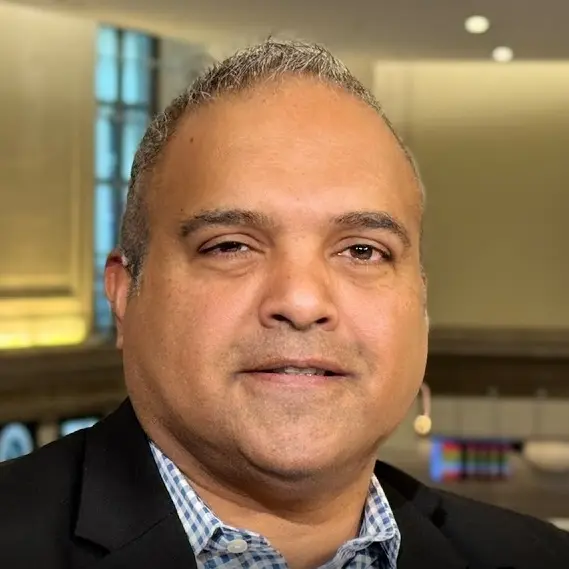

 John Furrier