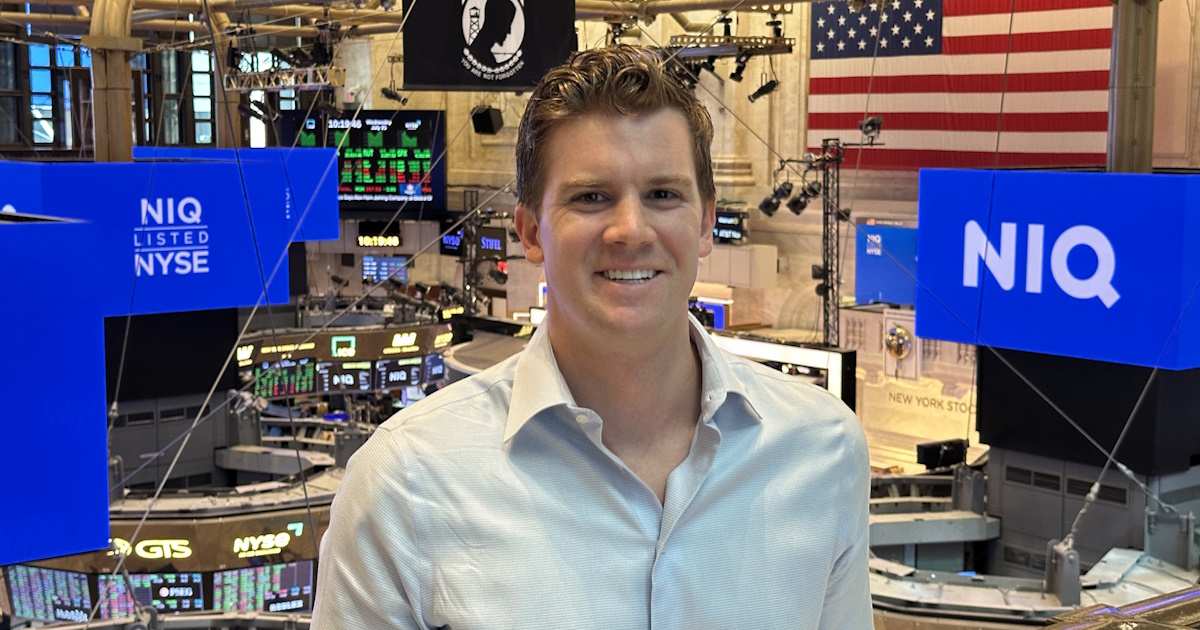
In this interview from the MedTech Unplugged series at the New York Stock Exchange, Kevin Reilly, managing director and head of med tech at Ally Bridge Group, joins theCUBE’s John Furrier to offer a private equity perspective on the fast-evolving MedTech landscape. Reilly shares how Ally Bridge is deploying over $1.5 billion in capital across life sciences and MedTech, targeting best-in-class and first-in-class technologies across cardiovascular, neurovascular, robotics and diagnostics.
The conversation dives into how AI-enabled devices like wearable defibrillators and seizure-monitoring headsets are transforming patient care and lowering costs by catching disease earlier. Reilly explains why Ally Bridge invests in FDA-cleared companies and helps them scale by navigating complex regulatory, physician adoption and reimbursement pathways. He also weighs in on the thawing IPO market after a multi-year freeze, highlighting recent exits like Kestra and Cervella and predicting a strong pipeline of high-growth MedTech firms entering public markets.
With AI, supercomputing and structural shifts in healthcare delivery reshaping the MedTech landscape, Reilly underscores the importance of clinical data, patient-centric outcomes and strategic capital deployment in driving the next wave of innovation.
Forgot Password
Almost there!
We just sent you a verification email. Please verify your account to gain access to
theCUBE + NYSE Wired: MedTech Unplugged, the Future of AI in Healthcare & Life Sciences. If you don’t think you received an email check your
spam folder.
Sign in to theCUBE + NYSE Wired: MedTech Unplugged, the Future of AI in Healthcare & Life Sciences.
In order to sign in, enter the email address you used to registered for the event. Once completed, you will receive an email with a verification link. Open this link to automatically sign into the site.
Register For theCUBE + NYSE Wired: MedTech Unplugged, the Future of AI in Healthcare & Life Sciences
Please fill out the information below. You will recieve an email with a verification link confirming your registration. Click the link to automatically sign into the site.
You’re almost there!
We just sent you a verification email. Please click the verification button in the email. Once your email address is verified, you will have full access to all event content for theCUBE + NYSE Wired: MedTech Unplugged, the Future of AI in Healthcare & Life Sciences.
Thanks for confirming your account. Now you can access theCUBE + NYSE Wired: MedTech Unplugged, the Future of AI in Healthcare & Life Sciences with this email address.
I want my badge and interests to be visible to all attendees.
Checking this box will display your presense on the attendees list, view your profile and allow other attendees to contact you via 1-1 chat. Read the Privacy Policy. At any time, you can choose to disable this preference.
Select your Interests!
add
Upload your photo
Uploading..
OR
Connect via Twitter
Connect via Linkedin
EDIT PASSWORD
Share
Forgot Password
Almost there!
We just sent you a verification email. Please verify your account to gain access to
theCUBE + NYSE Wired: MedTech Unplugged, the Future of AI in Healthcare & Life Sciences. If you don’t think you received an email check your
spam folder.
Sign in to theCUBE + NYSE Wired: MedTech Unplugged, the Future of AI in Healthcare & Life Sciences.
In order to sign in, enter the email address you used to registered for the event. Once completed, you will receive an email with a verification link. Open this link to automatically sign into the site.
Sign in to gain access to theCUBE + NYSE Wired: MedTech Unplugged, the Future of AI in Healthcare & Life Sciences
Please sign in with LinkedIn to continue to theCUBE + NYSE Wired: MedTech Unplugged, the Future of AI in Healthcare & Life Sciences. Signing in with LinkedIn ensures a professional environment.
Are you sure you want to remove access rights for this user?
Details
Manage Access
email address
Community Invitation
Kevin Reilly, Ally Bridge Group
Exploring the MedTech Landscape: Kevin Reilly Discusses Innovations and Trends
Kevin Reilly, managing director and head of medtech at Ally Bridge Group, joins the inaugural MedTech Unplugged Series hosted by theCUBE and NYSE Wired. This series initiates discussions around the integration of artificial intelligence and other emerging technologies in healthcare, examining the expansive potential for growth and innovation in the medical technology sector.
In this episode, Reilly provides insights into Ally Bridge Group's dedicated focus on healthcare investments, managing a capital range of $1.5 billion to $2 billion. Specializing in life sciences, the group invests in biotechnology, medical technology, and digital health. Hosted by theCUBE's John Furrier and featuring insights from theCUBE Research analysts, the discussion explores integrated technologies such as AI and robotics and the challenges of scaling innovative medical devices in a highly regulated industry.
Viewers will gain an understanding of how medical technology companies such as Ally Bridge harness cutting-edge technology to enhance patient monitoring, improve disease detection, and provide better outcomes for patients. Reilly explains that despite the stringent regulatory landscape, the medical technology sector experiences positive momentum with a resurgence in initial public offering activities, highlighting the growing interest in high-growth market opportunities driven by innovations in robotics and AI.
Managing Director, Head of MedtechAlly Bridge Group
In this interview from the MedTech Unplugged series at the New York Stock Exchange, Kevin Reilly, managing director and head of med tech at Ally Bridge Group, joins theCUBE’s John Furrier to offer a private equity perspective on the fast-evolving MedTech landscape. Reilly shares how Ally Bridge is deploying over $1.5 billion in capital across life sciences and MedTech, targeting best-in-class and first-in-class technologies across cardiovascular, neurovascular, robotics and diagnostics.
The conversation dives into how AI-enabled devices like wearable d...Read more
exploreKeep Exploring
What is the purpose and context of the inaugural series of Med Tech Innovation being held at the Palo Alto studio?add
What is the focus and scope of the med tech category as defined by the healthcare investment fund?add
What are the key positive trends in the medical technology sector?add
What impact have recent market conditions had on investment opportunities in the med tech industry, particularly regarding IPOs and M&A activity?add
What is the impact of the entrance of major tech companies into the healthcare industry on investment strategies?add
>> Welcome back to theCUBE. We're here at our NYSC CUBE studio on the East Coast, obviously on the show floor of the NYSC, also part of the NYSC Wired community. Of course, we have our Palo Alto studio at theCUBE, connecting Silicon Valley and Wall Street with all the action we're covering. This is our inaugural series of Med Tech Innovation. We're going to have the ongoing series of digital events and leader interviews to unpack how technology, specifically AI and other emerging data-driven technology is going to be impacting some of these classic markets that have a huge growth potential. Kevin Reilly is the Managing Director, head of med tech at Ally Bridge Group. Kevin, thanks for coming on our inaugural series. It's always good to be on the inaugural one because you never know, there might not be another one. We're definitely going to do more.
Kevin Reilly
>> Try to make it interesting enough so we're going to do more of these.>> We'll do more. I mean, there's so much, there's so many leaders out there in the field in med tech, and it's ripe for innovation because it's been kind of gone through the Sarbanes-Oxley wave. A lot of data labeling, a lot of data work has been done kind of for the wrong reasons, but perfectly teed up for AI. We've been reporting that's kind of a key theme, and you've got super-computing capabilities from NVIDIA, always trading high on the options here and stock prices, verticals in the past three years. AI factory, so life sciences and medical and digital health are booming. We think bio will kick up, too. That might hit an escape velocity kind of in reset mode now. So it's a super exciting time and there's real implications with real growth signals. So let's get your perspective on it, but first, introduce what you guys do. Your team, obviously Ally Bridge Group, what do you guys do? How do you guys invest, how is it structured?
Kevin Reilly
>> Yeah, we're a dedicated healthcare investment fund. We manage $1.5 billion to $2 billion in capital. We're investing out of our fifth fund now. We focus on life sciences companies, so we're doing mainly biotech and med tech out of the same fund. We do a little digital health, life science tools and diagnostics as well. I lead the med tech vertical for us. In med tech, we cover a ton of different therapeutic areas from robotics to ENT to orthodontics, neurovascular. We touch a little bit of everything, but we're always trying to look for best-in-class or first-in-class technologies.>> Define med tech as a category, just for folks to get their arms around to frame that category. What's in there?
Kevin Reilly
>> For us, we bucket a lot into what med tech is. Traditionally, our most active area is proper devices. So it's new, innovative, either implantable or external technologies that are completely redefining a particular category for patients. It can be a tool. We have one stroke company, a tool for better removal of clots. It can be a robotic instrument to drive ablation volumes in interventional oncology. So it's devices, and these can be implants, they can be external, it can be devices for patient monitoring, but it is device in and of itself. And we get involved most typically kind of when companies are through the FDA, which can be a long journey. And our specialty is helping companies scale these technologies, which is always a challenge because we're in a very regulated industry. You need to have buy-in from physicians, payers, hospital systems and of course, the patient being the forefront of that. What is the technology really adding for the patient, whether it's better efficacy, safety, in and out of the hospital faster?>> And it's not your classic product market fit. So you can have a product market fit, but then you got to go through and say, "Does it actually fit?" Go through the approvals, trials, all that hard work.
Kevin Reilly
>> Oh yeah, it's a lot of work. I mean, when you think about a completely new novel technology, it can take a couple of years to train physicians on how to use it, for example. There's a learning curve, 10, 15, 20 cases and you kind of go through your phases of early adopters to early majority, and along the way you're developing more and more clinical data to help support your use case to get docs to use it and get that out there for the patient community as well.>> You mentioned robotics, we did a whole series on robotics and AI, mostly manufacturing, some humanoids. But robotics have been in medical, med tech for a long time. You mentioned some, but also the software side of it is growing. Is that something that you see evolving very quickly? Is that something that's on your radar? Is that too not contained for the kind of approvals? Because software, hardware now, we're seeing that with robotics, huge advantage on other verticals.
Kevin Reilly
>> Yeah. I think for us, when we think about the intersection with more tech and more buzzwords that the common person watching the stock market would think about, AI, robotics, software, those types of things, that is incorporated into a lot of our companies. We have done less pure play investing in a pure healthcare software company or pure AI company. But our companies are AI enabled, so we have patient monitoring companies where we have one that diagnose for cardiac arrhythmias, strapped to your chest. You wear it for 14 days or a month, it's collecting every single heartbeat going to the cloud, download it to a physician. He can look at every single heartbeat and determine, "Hey, did you have an arrhythmia at 11:33 PM on Tuesday night? What happened, what type of AFib was it and what do we do from there?" Does that mean you need to go get an ablation? Does that mean you need to triage your medications? In that case, we're trying to catch disease earlier on to avoid worse outcomes, but AI machine learning gets incorporated into some of our devices.>> Have you seen more of a democratization? Because you're talking about wearables at this point. Less intrusive, less potentially hurdles. Is there a segmentation developing there? Because you're seeing a lot of people wearing the Garmin watch, it's got all kinds of bells and whistles on it. The dream scenario is help me predict-
Kevin Reilly
>> I got one on right here.>> Exactly, yeah. I mean, this is kind of where we're starting to see some of these new trends. How does that fit into your wheel? Does that qualify as med tech or is that more-
Kevin Reilly
>> Yeah, absolutely. We don't do stuff that's sold directly to the consumer. Our channel is always going through the physician or the hospital system first, but we have one to diagnose for arrhythmias, we have one that's a wearable cardiac vest that will shock you back into life if you have acute heart failure. We have a headset that diagnoses for seizures for patients in the ICU. So it's all about catching disease earlier on. Because if you catch it early on, obviously better for the patient, but it's also better for the physicians in the hospital system and you're avoiding this acute case where a patient's going to be taking up a bed in the hospital for seven days or 14 days.>> What are you watching right now? What are the key areas that you see that are really positive trend lines in med tech? Are there anything that's jumping off the page?
Kevin Reilly
>> Yeah, I think the highest growth markets in med tech are coupled with chronic diseases in an aging population. The cardiovascular market is probably the highest growth segment, and it's things like ablations for AFib. Robotics have been a hot area. There's one incredibly successful company called Intuitive Surgical that has just been a stock up and to the right, and is now the most valuable pure play med tech company in the world with just the robotic story.>> You were saying some of those trends. What else do you see coming? Obviously, that heart side's huge, those are the big problems. Any emerging trends that people may not see that you're watching as you read the tea leaves?
Kevin Reilly
>> Yeah, I think we've been very successful in patient monitoring, catching disease earlier. Because with an aging population, unfortunately a pretty sick population in the US, chronic diseases are obviously brutal for the patient to be living with, but it's a huge cost on our healthcare system. And obviously, that's in the news every single day, how much our government is spending on managing patients and the Medicare costs attached to it. So if we can catch disease earlier to avoid some of these chronic conditions, that's cost savings for the healthcare system and better outcomes for the patient. And we see patient monitoring technologies across a bunch of different segments, whether it's cardiovascular or other areas.>> And more proactive stuff can happen.
Kevin Reilly
>> Exactly.>> What's the capital markets like? Obviously, we're here, just closing out the market here today, capital markets and investing here on more of the private equity side, which, you're making probably bigger bets. In all categories, there's always roll-ups, we're hearing a lot of things where people get out early, take the scar tissue, just not going to make it. But with this, as new things come on, is there consolidation? Is there certain areas that have headwinds, some have tailwinds? How would you scope that market opportunity?
Kevin Reilly
>> In my world of med tech, more med devices, there was a freeze on IPOs for three years. From Q4 of 2021 to Q4 of 2024, 0 IPOs. And I think that was what I like to call the post-COVID era hangover, where too many companies went public, didn't really perform. During that period, a lot of strategics were reshuffling their portfolios, doing carve-outs, trying to focus on what they do well and spin out things that are kind of non-core. So there was this couple year period where M&A volume was low, there were no IPOs, and we're seeing kind of a resuscitation in the market now. I think in times of uncertainty like in the first half of this year when the markets were crazy, med tech's kind of a flight to safety. If your heart is failing, you need an intervention, you're going to get the intervention despite the economy. So it's kind of a recession resilient industry. We've seen a couple IPOs. We had two out of our portfolio over the last nine months or so, and there's probably three or four that are not publicly filed in med tech. So we're seeing the IPO market open up and you always want a kind of healthy tension between IPO and M&A, right? So I think as the IPO market rebounds in med tech, strategics will become more and more active because if they don't buy part of an IPO, they've kind of missed their shot for several years.>> Take us through some of the conversations you have at the firm or the other partners and what you got going on. Because life sciences right now, we predict is going to be a massive boom because of what we're seeing with the super-computing. Back in the day, just go back five years ago and even further, you had to have large scale HPC, high performance computing systems to work on some of the discovery side. So as you have discovery, more data, you have now democratized super-computing-like capabilities with Google Cloud, Amazon, Oracle and Microsoft, and of course, NVIDIA on-premise. So you're having all this new, wow, it feels like Santa Claus just came and delivered the compute and the GPUs. You now have scientists really in life sciences from biology to wet labs and robotics is hot, so you start to see the confluence of massive compute capabilities, robotics and just this new opportunities. That feeds into this ripe market of med tech because there's real demand, right?
Kevin Reilly
>> Well, yeah, I think it'll be interesting.>> How do you guys frame that in the firm? Do you guys have debates, discussions? How does that affect your investment thesis?
Kevin Reilly
>> Yeah, I think healthcare is a very, very regulated industry. So when we think about things like wearable techs, the entrance of Amazon into the healthcare world, Google, Microsoft, NVIDIA, clearly it's a massive and growing market, it's not going away. So these tech companies want to get more and more involved in getting closer to a patient. It's hard for them to do that overnight because it is such a regulated industry, so we're seeing more activity out of those type of corporates investing in healthcare companies or partnering. There's AI companies that take a scan of your heart and they can diagnose for how much plaque you have in your arteries. That synthesizes with a lot of the large tech guys as well. So you're kind of seeing->> So there's structural change happening in the market.
Kevin Reilly
>> Yeah, I think so.>> Because Amazon, they have pharmacy now, they have One Medical that they acquired. That's a channel from the consumerization. You guys don't invest in the consumer side, but you're feeding into those new channels. That's a structural change. Is that positive, do you think?
Kevin Reilly
>> We'll see how quickly it goes. I mean, Google stood up its entire Verily division focused on healthcare. Apple is clearly focused on it as they're working on the Apple watch and moving into things like sleep and cardiovascular, so we're watching it. I would love to have more buyers in our space versus, we only have six to eight sort of big conglomerates focused in med tech. The more groups interested in healthcare is good for me as we're funding companies and there's more exit out to.>> Who are your favorites? You mentioned a few of them going to go public. Can you name a few names, can you share?
Kevin Reilly
>> In my portfolio? I'm going to get in trouble with some of my CEOs if I'm picking favorites, but we had two->> Well, the ones that have got momentum, have upward trajectory, escape velocity.
Kevin Reilly
>> Yeah, we had two great IPOs over the last couple months. One called Cervella, which is an EEG headset to monitor for seizures in the ICU. Another one called Kestra, which is a wearable cardiac defibrillation device for patients post-acute heart failure. And we have a few kind of companies that are doing quite well in assessing when to enter the public markets. We have a neurovascular business focused on stroke, pulmonary embolism and has a robotic technology to enable access to get treated for stroke earlier. We have an orthodontics company that's using AI to customize a braces solution for each individual patient.>> They're going AI native to enable their product to be better.
Kevin Reilly
>> For sure. I think we have a pretty late stage portfolio. We probably have five or six that are 12 to 18 months away from an IPO. So without picking favorites, I like all my companies.>> When you look at a company that comes on your radar, obviously later stage, you're looking for certain criteria. What's the requirements for you to kind of pick in your view, a good bet? What's a good bet look like?
Kevin Reilly
>> It starts with the technology itself and how much clinical data they have to really prove out the outcomes that it's good for the patient, physician and hospital system in pairs. It's got to be good for each of these constituents. But we also look at the market opportunity. Is it a large and growing market? And we look at the fundamentals of the business. We kind of come in when it's commercial stage, so can they not only grow revenues, but can they do it in a scalable way? What's the gross margin profile? Healthcare companies by nature, are perpetually cash-burning entities, but in my world of med tech, you need to see that line of sight to one day you need to be profitable. This needs to be a real business at some point.>> I feel the IPO windows, certainly on other categories, you can feel the vibe. Figma's going to go public here, it's going to be a big one very shortly. You can feel the IPO window opening up in not only tech we cover, but tech has now infiltrated all the verticals. I mean, we cover retail and in the sense because the AI piece, now med tech and life sciences getting that boom. 16 years ago when we started doing theCUBE and SiliconANGLE, big data was hot during the Hadoop days. You remember those days never really panned out. Now we have Databricks and Snowflake and data lakes now, but the promise was data's going to solve all the problems. You mentioned clinical data. How much is data strategy in some of the companies that they have? Obviously, you want to have great data, but is it infused into their operation culture?
Kevin Reilly
>> Well, yeah.>> I think it seems that that's probably going to be a big deal.
Kevin Reilly
>> My lingo is clinical data. You run a randomized clinical trial of new and improved technology we're investing in versus whatever standard of care is. You do it in several hundred patients and you determine you have better clinical outcomes with your solution. That is fundamentally core of what we do, clinical data. But then the big data side, a lot of our companies do have that touch point as well, like some of the companies I mentioned on the patient monitoring side, or even the orthodontic company I mentioned on braces. You're treating 100,000 patients on an annual basis, you're collecting a lot of information about patients' mouths. So how do you monetize that data? How do some tech companies determine, "Wow, this is a good sector for me to come into?" Because touching 100,000 patients annually. That's a lot.>> I know on the provider side, on the doctor side, we hear transcription notes, making that efficient. That just saves money on misfilings.
Kevin Reilly
>> Yeah.>> I was talking to someone in San Francisco around some of the clinical trials going on there and cutting edge devices like you were talking about, but all the processes are antiquated analog.
Kevin Reilly
>> Oh, yeah.>> And we heard some stories here around how some of the infrastructure channels are all antiquated in analog. So how much is that going to factor in? Because that seems like a ripe opportunity for an entrepreneur to come in and be like, "Hey, I can change clinical trials." How would you look at how clinical trials could get an agent technology or is it-
Kevin Reilly
>> Yeah, we've invested in some businesses to centralize clinical trial businesses where you can manage the patient by not going to a site, for example. But you're right, it's a very bureaucratic process to go through an FDA regulatory process. And we're beholden to what sometimes can be seen as a slower moving team. They only have so many heads and obviously, there's been more and more disruption with the FDA and NIH on cuts. So there are concerns from a macro level that the more cuts that happen, the less efficient that will be and that will hold up drug approvals of all clinical trials. We'll see. Right now our portfolio companies have been able to navigate through that and overall, timelines are working pretty well. But you're right, that area is ripe for->> That's a great opportunity for entrepreneurs. Final question. How would you talk about the temperature of the market in terms of IPO readiness? You mentioned obviously, with the nuclear winter or the thaw, you call it, with no IPOs for a string of years. Now you got some coming out, got some nice ones coming in the pipeline. Would you say it's a medium to high vibe going on here, you're feeling like it's good? I mean, people we talk to say med tech seems to be really going good.
Kevin Reilly
>> Yeah, I think after a couple years where, dating back to 2021, the last wave of IPOs just didn't perform and that kind of puts a thaw on the market, as you noted. What resuscitates a market is companies that do perform. We've seen a couple go out and if these companies execute and return value to shareholders, I think that continues to open up the market. I think there's pent-up demand for high growth med tech companies. There's not that many Smith Cap companies out there that are growing at 30%, 40%, 50%. So as we look at successful tech companies that are high growth, I think we're seeing kind of a rotation in shareholders looking at med tech and saying, "This is an area ripe for disruption. There's a lot of good innovation, there's a lot of good high quality growth stories coming to market." And if we think it's a company that can go from $100 million today to become a $500 million to $1 billion company, that's a good investment, obviously.>> Yeah, you mentioned some of the things I think are great secular trends. I mean, robotics, hot. Getting smaller, faster, cheaper in terms of capabilities.
Kevin Reilly
>> Yep.>> Data, that's a great area.
Kevin Reilly
>> Minimally invasive technologies.>> Breakthroughs are coming.
Kevin Reilly
>> Yeah, absolutely.>> It's very interest to see. Well, thanks for coming on. I really appreciate you being part of our inaugural Med Tech Unplugged, sharing the investor perspective. And again, the IPO window hopefully will be a good validation for some of these new breakthroughs. Thanks for coming on.
Kevin Reilly
>> Awesome, thank you very much.>> All right, John Furrier here for our inaugural Med Tech with Dave Vellante here all week at the NYSC for our media week. Thanks for watching.