We just sent you a verification email. Please verify your account to gain access to
Media Week NYC theCUBE + NYSE Wired. If you don’t think you received an email check your
spam folder.
In order to sign in, enter the email address you used to registered for the event. Once completed, you will receive an email with a verification link. Open this link to automatically sign into the site.
Register For Media Week NYC theCUBE + NYSE Wired
Please fill out the information below. You will recieve an email with a verification link confirming your registration. Click the link to automatically sign into the site.
You’re almost there!
We just sent you a verification email. Please click the verification button in the email. Once your email address is verified, you will have full access to all event content for Media Week NYC theCUBE + NYSE Wired.
I want my badge and interests to be visible to all attendees.
Checking this box will display your presense on the attendees list, view your profile and allow other attendees to contact you via 1-1 chat. Read the Privacy Policy. At any time, you can choose to disable this preference.
Select your Interests!
add
Upload your photo
Uploading..
OR
Connect via Twitter
Connect via Linkedin
EDIT PASSWORD
Share
Forgot Password
Almost there!
We just sent you a verification email. Please verify your account to gain access to
Media Week NYC theCUBE + NYSE Wired. If you don’t think you received an email check your
spam folder.
In order to sign in, enter the email address you used to registered for the event. Once completed, you will receive an email with a verification link. Open this link to automatically sign into the site.
Sign in to gain access to Media Week NYC theCUBE + NYSE Wired
Please sign in with LinkedIn to continue to Media Week NYC theCUBE + NYSE Wired. Signing in with LinkedIn ensures a professional environment.
TheCUBE's coverage at the New York Stock Exchange is in collaboration with the NYSC Wired community, focusing on IBM's advancements in AI and data analytics. Ayush Kumar from IBM's Chief Analytics Office discusses the integration of generative AI into IBM's platforms. The shift towards unstructured data requires data engineering and data curation processes to feed large language models. The future of data practitioners involves integrating AI strategy with data strategy, focusing on AI governance and prompt injection. Computer vision and multimodal data proce...Read more
exploreKeep Exploring
What is the role of the Chief Analytics Office at IBM and how are they infusing AI into business critical workflows?add
What is changing in terms of insights for business users and the capabilities of generative AI within IBM and for external customers?add
What are some considerations that companies are facing when it comes to integrating AI into their existing infrastructure?add
What considerations need to be taken into account when developing an AI strategy with a focus on generative AI technology, particularly in relation to data processing and data engineering tasks?add
What benefits have come from analytics in the data analytics area?add
What do you think the future will look like in terms of information processing and consumption?add
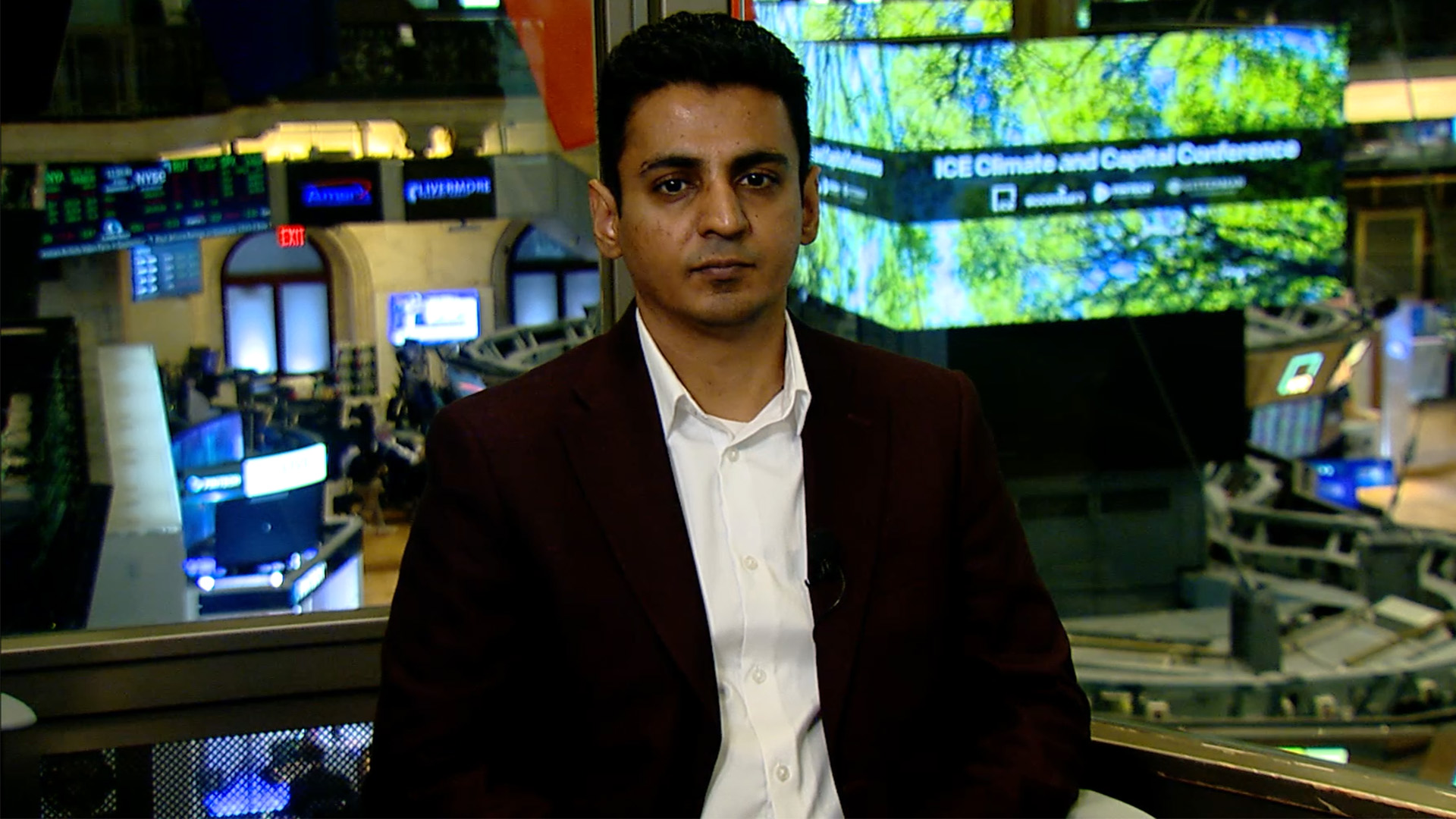
>> Welcome back everyone to theCUBE's coverage here in New York Stock Exchange. I'm John Furrier, host of theCUBE. This is part of our East Coast studio here in Manhattan on the floor in partnership with the NYSC Wired community, theCUBE community and the Wired community connecting together. This is part of theCUBE's Silicon Valley, New York City NYSC collaboration. We're going to share the network, share the content, and keep the content flowing that's open and free. Ayush Kumar here, IBM associate principal, data scientist at the Chief Analytics Office at IBM. A huge thanks for coming on theCUBE. Appreciate it.
Ayush Kumar
>> Very nice to be here.>> Yeah. So we love IBM. Obviously a big part of our coverage. The 15 years of theCUBE, I think we've been to a lot of IBM events, almost every year. Now they've got Think, but they're all doing a lot of things. I'll be in New York for more IBM coverage.
Ayush Kumar
>> Awesome.>> Really love the Watsonx story.
Ayush Kumar
>> Yes.>> I love the unification across platforms. IBM now is horizontally interfacing with a lot of different hyperscalers, multi-cloud, and supercloud. Again, data's been a big part of the business for years. What's new over there at IBM?
Ayush Kumar
>> Yeah. So I'm part of the Chief Analytics Office. A lot of my role is infusing AI in the business critical workflows within IBM and transforming IBM as an enterprise with AI and unlocking a lot of productivity to it. And what we see is Watsonx and the platform itself is becoming more and more relevant. The way we ingest a lot of insights for our business users has changed a lot. There is a lot of change in terms of generative AI, the capabilities that are within IBM, and also apply to our external customers as well. So we are seeing a shift in terms of the insights that are driven, in terms of the abilities of these agents, these systems itself, and we see a huge change in the infrastructure and platform as well.>> Yeah. IBMs always have good traction. Let's get into some of the work you're doing as a practitioner because you are a practitioner at the same time as you're looking at low data. As the young generation looks at this generative AI, it's basically an application. It's categorically new. I agree with Jensen Huang at Nvidia when he said generative AI is a new category. I do think it's a new category because it's generating data. It's not the same time every time. It's not like a database query or a programmed web experience. It's generating stuff, so the data has to be there. So this is really changing the data landscape. So if you're an entrepreneur or you're an executive and you're in transformation mode, you got to look at this opportunity and say, wow, this is huge. I get the user experience. I see the back end changes. We're seeing front end and back end innovation happening at the same time. That's never happened in my career. I've seen many ways of innovation. Both of those theaters require disruptive enablement, process change, tech stack adoption. This is not just an IT problem. This is process too. So okay, enter the data science world. Analytics has been around for a long time. Well, cloud's changing too. Platform engineering DevSecOps is intersecting with that data analytics, and you're seeing a lot more new personas emerging, like data engineering.
Ayush Kumar
>> Yes.>> And then you got the models over the top being the developers. So you got to like this new environment. What's your... That's all... Sounds like a fiction story. That's actually happening.
Ayush Kumar
>> Yeah. This is really exciting times to be in AI, for sure. You see a lot of development in different places, as you mentioned, right? The data side where we are looking at more data curation to feed into these models and LLMs as well, we have, as an industry, thought a lot about structured data. We have kind of figured out how data lakes work, data warehouses work, how do we enable enterprises with structured data. But when it comes to unstructured data, we are still trying to figure that out, nailing it down. Now, we have more infrastructure, scalability issues as well, right? Getting into this, we have vector databases. We also know these models are trained on large corpuses, which means that we need these corpuses to be available. And some of the industry is way ahead in curation of this data that can be available to these models, but a lot of them are still figuring out that. And that would be the advantage that we have. Because with IBM we have multi-cloud and multi-model, but we also have a data curation process and tooling around it to help with the journey of these clients.>> So as companies have to realize they have legacy infrastructure, you're seeing two scenarios, either platform incompatibility with the GenAI or platform opportunity to put abstractions around data. I interviewed IBM at the Salesforce Dreamforce event, and clearly that Salesforce has opportunities to go unify all their fragmented siloed acquisitions and products under one thing, and they can extend out to the ecosystem, to say IBM, Watsonx-
Ayush Kumar
>> Yes.... >> to do some stuff, because not everyone will run just Salesforce for everything. They'll have Salesforce and a zillion other things. So you see companies like Salesforce do that. So every company's thinking about AI and saying, how do I leverage the foundation models, multi-modal, language, and computer vision to my advantage? And by the way, language is only one step of the coin. Vision is a killer app of generative AI.
Ayush Kumar
>> Yes.>> There's more visual data than there is text data. So take me through your thoughts on that.
Ayush Kumar
>> Definitely. So Salesforce is a huge partner of IBM. We use it on our sales cloud platform. We also use it for our CRM platform. And the way things are evolving is our platforms will get more and more intelligent, and agentic behaviors will be included in the platforms itself. So if you talk about agentic behavior, one of the things that functionality is we need from an agent is actually to invoke a platform or a tool itself. Now, companies are struggling with trying to build these connections, first of all. And if the platforms really come out with these agentic plugins to integrate with Watsonx and the other platforms within a company, now you have an enterprise which is well-rounded for enabling agentic behaviors as well. Because you don't want to be sitting there and looking at Salesforce and saying, "Hey, I need something that can give me all the opportunity information and I can create an opportunity that is a function that I need to define."
It should be something that comes out of the platform within it. And something like Watsonx can have and does have plugins to actually integrate with that. So you have an ecosystem now that builds on IBM platform, but also seamlessly connects with a lot of other external platforms that we are seeing in the market.>> What do you see a use for customers that are going through transformation like this within GenAI? Obviously, analytics was pioneering the role of data, and again, IBM's had a good role in that, but that's well understood and certainly getting better. But this data engineering position's emerging. I call it that position because they're engineering data sets. Okay. So analytics always had prep, wrangling, all that pipelining data, but you're seeing at scale, more scalable data because now new things are on the table, horizontally scalable data, which means low latency data, highly available, and high availability to either edge devices or other mechanisms to get data.
Ayush Kumar
>> Yes.>> And then what's fresh, and then you got privilege, privileges. Is the data unstructured, semi-structured, structured? Is it have identity credentials around it? Privileges which makes it more complicated. So there's a whole under the covers opportunity that-
Ayush Kumar
>> So I think the effect that we have looking at generative AI, we need to think about an AI strategy with a data strategy as well. And the AI strategy, we have figured it out with traditional AI, but more so with generative AI as well. The data is where we'll see a difference between how companies compete with each other. And as you said, data engineering is a huge part of it. Because now, feeding, for example, LLMs is a lot of unstructured data that has to be massaged and augmented to provide to the LLM to get specific information and usage out of it. We are seeing a lot of data generated from the LLMs itself. We are seeing prompt data has to be stored and curated. We see, within the process itself of generative AI, that we need to tool our models with these prompts itself. And guardrails are becoming more and more important. The input to these models have to be curated and protected, and the output from the models as well has to be curated and protected as well. So engineering is becoming more and more relevant in the data landscape here.>> So what's your big vision from a personal perspective? Take your IBM hat off, put your personal expertise hat on. How do you see the future unfolding for data practitioners? Because I don't want to say there's tension, but there's definitely more opportunities coming down the pike on how data's being managed. You see what happened with data warehouses. Then you got now data lakes. Data lake is going to be intelligent. I'm sure AI will swim through those lakes and put vector in embeds and understand all the graph data, and understand all the relationships around that data and do large scale computation on that data. So there's going to be more things coming beyond the data lake. Clearly you can see connect the dots. I see more intelligent reasoning, reinforced learning, causal AIs around the corner, which we're doing a big research note on right now. Right now, it's just in probability GenAI.
Ayush Kumar
>> Yes. Yes.>> Now, I guess reasoning is... Yeah, reasoning some probability, it's not really doing the causation and-
Ayush Kumar
>> Right now, it's not. We've seen how it reacts to reasoning and planning as well, which is an important pillar within->> Share your opinion.
Ayush Kumar
>> Yeah, so I think we will see a lot more of a data mesh on top of these platforms that we use. And the ability to actually integrate and talk to these agents and these platforms would be critical in terms of how we envision this. And coming back to the overall conversation around like, hey, we enabled our sales teams through more data and an augmented experience for them through agents. And this data is not just sales data that they're coming from. We are looking at like, hey, do we have excellent client innovation that we can use with this opportunity? Can we have more of visibility in what they're looking for? And that is augmented within these channels. So we are really looking at a more tightly integration, but I wouldn't say integration of platforms. It's more of an integration at the data mesh layer that actually contributes to the excellence of generative AI capabilities.>> Great to see you, and thanks for coming in. I know we got this lunch to go to.
Ayush Kumar
>> Yes.>> You're going to be attending the lunch here.
Ayush Kumar
>> Yes. I'm pretty excited for it. It's around AI governance, which is becoming more and more important in the generative AI space. Prompt injection, we all know the side effects of it, and we have to be >> Don't forget context poisoning either.
Ayush Kumar
>> Yes. Yes.>> That's a big part on the training side.
Ayush Kumar
>> Yes. Yes. Yes. Context and learning is something which used to be an advantage, but it can also be detrimental to >> Someone said, what's context poisoning? It's like getting to the kids early and infiltrating some bad malware and bad malicious behavior. Training and inference, obviously the relationship training is super important, but inference is even more important because it's like school. I don't go back to school again, but I can maybe take some classes and reinforce my learning, and reason and infer off that education. This is the same paradigm. Do you agree with that?
Ayush Kumar
>> It is. It is. I think it's like taking an extra curricular class now that I've been through school, and that's the way we've been training these LLM models as well in terms of in-context learning or retrieval-augmented generation. And really, training or fine-tuning of these models is becoming more and more expensive. But we will see, I think in the future, the cost of training actually reduce. We've seen effective techniques like pruning, quantization that brings the size of these models really to an extent where we can train these models, these models are effective, but still we get most out of them.>> Yeah. Ayush, data analytics area has been dominated by dashboards. We've seen all the benefits that's come from analytics. Again, you've been in part of that IBM freelance history there, but now the world's categorically change as the new category emerges. The role of computer vision is an opportunity to get more analytics on. Traditionally, not a big area for dashboarding other than viewing something, but visual data is becoming a huge part of the new inbound telemetry and/or data sourcing that could actually get analytical information out of it. So this is a big part of what's your view on this? And how do you see this shaping?
Ayush Kumar
>> I think we are progressing to a future which is much more multimodal than where we are today. We'll see more information coming out as computer vision OCRs that we do on our own enterprise data. We've seen that internally with reports being generated from our transactions, our contracts as well, going through the system to actually get more information out of it. And on the business intelligence side, I think there's an important change and shift on how insights are consumed. So traditionally, as you said, we have more reports, which are more visual. But at the same time, we'll have more agents and more pointed information and in-depth analysis that we'll get out of these systems as well. So multimodal is going to be surely the future.>> So definitely more insights coming out of that.
Ayush Kumar
>> Yes. Yes. And you could have deeper insights now coming in. Looking at a dashboard, if you have a question about certain things, certain numbers, you have to talk to somebody, build something else. Now, you have the capability to ask an agent a more detailed question around it and get that information much more>> Ayush, thank you for coming in. I appreciate you.
Ayush Kumar
>> John, fantastic.>> And we'll keep in touch. Great to have you in the network on theCUBE. I'm John Furrier. You're watching theCUBE from our New York City NYSE, new CUBE east access Point. We're going to access all the local network action here. New York's tech scene is booming. All on the East Coast, a lot of surges. So Silicon Valley, New York City now connected with theCUBE. I'm John Furrier, theCUBE. Thanks for watching.