We just sent you a verification email. Please verify your account to gain access to
theCUBE + NYSE Wired: Marketing Leaders. If you don’t think you received an email check your
spam folder.
Sign in to theCUBE + NYSE Wired: Marketing Leaders.
In order to sign in, enter the email address you used to registered for the event. Once completed, you will receive an email with a verification link. Open this link to automatically sign into the site.
Register For theCUBE + NYSE Wired: Marketing Leaders
Please fill out the information below. You will recieve an email with a verification link confirming your registration. Click the link to automatically sign into the site.
You’re almost there!
We just sent you a verification email. Please click the verification button in the email. Once your email address is verified, you will have full access to all event content for theCUBE + NYSE Wired: Marketing Leaders.
I want my badge and interests to be visible to all attendees.
Checking this box will display your presense on the attendees list, view your profile and allow other attendees to contact you via 1-1 chat. Read the Privacy Policy. At any time, you can choose to disable this preference.
Select your Interests!
add
Upload your photo
Uploading..
OR
Connect via Twitter
Connect via Linkedin
EDIT PASSWORD
Share
Forgot Password
Almost there!
We just sent you a verification email. Please verify your account to gain access to
theCUBE + NYSE Wired: Marketing Leaders. If you don’t think you received an email check your
spam folder.
Sign in to theCUBE + NYSE Wired: Marketing Leaders.
In order to sign in, enter the email address you used to registered for the event. Once completed, you will receive an email with a verification link. Open this link to automatically sign into the site.
Sign in to gain access to theCUBE + NYSE Wired: Marketing Leaders
Please sign in with LinkedIn to continue to theCUBE + NYSE Wired: Marketing Leaders. Signing in with LinkedIn ensures a professional environment.
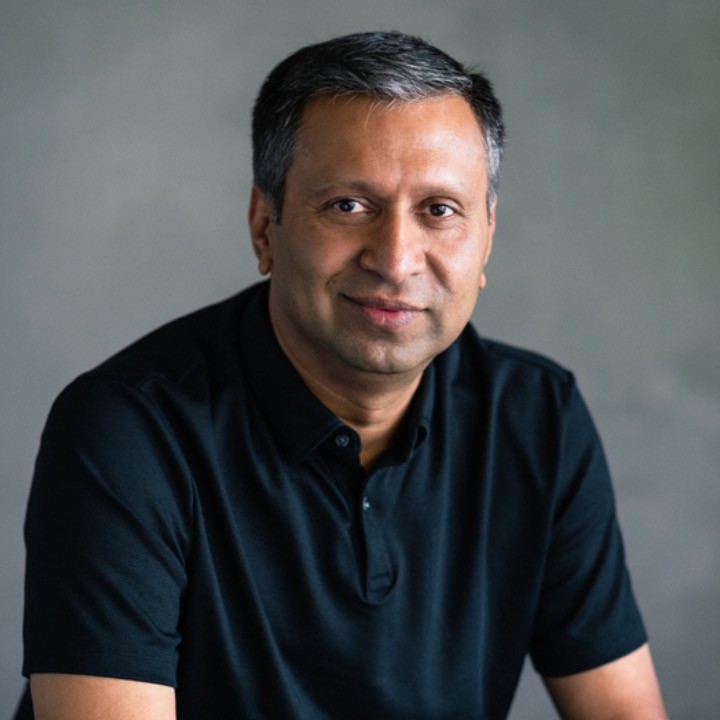
Abhay Parasnis, founder and CEO of Typeface, explores the transformative impact of Artificial Intelligence on marketing strategies in this insightful session. Engaged by John Furrier from theCUBE, Parasnis discusses the dichotomy of back-end innovation and user experience evolution in AI, emphasizing its potential to revolutionize brand storytelling. As an industry veteran, he brings valuable insights into leveraging AI not only for enhancing productivity but also for crafting deeply personalized customer experiences.
Key takeaways from the discussion ...Read more
exploreKeep Exploring
What is one of the major challenges faced by CMOs in regards to personalization in marketing content, and what is the potential solution they are seeking?add
What can AI do for productivity and efficiency gains, and how can CMOs view their role going forward with AI adoption?add
What is one of the most under-appreciated aspects of AI in terms of change management for companies and CMOs?add
What role will AI play in changing the responsibilities of CMOs in the future?add
What are some important considerations for CMOs when implementing AI within their organizations?add
What are the priorities for the company at this juncture?add
>> Hello, welcome back to the Palo Alto Studio. I'm John Furrier, host of theCUBE. We are here for day two of the CMO Leaders Summit. We're here with NYSE Wired, Brian Bauman, and theCUBE, Abhay Parasnis is here, founder and CEO of Typeface, industry veteran. Great to see you. Thanks for joining us on the CMO Leaders here.
Abhay Parasnis
>> Great to be here, John.>> First of all, congratulations, SiliconANGLE has been covering your venture, hundreds of millions of dollars raised, congratulations. But you're in an area that's really hot right now, is as the world goes to AI, the rapid speed seems to be the consistent theme, whether you're talking about semiconductors, all the way to the top of the stack, where the application tsunami is coming, where using data in storytelling is now not just creative, you're seeing all the people saying, "Storytelling's hot," this is changing the game. Give us your take on how you see that market developing and where you guys fit in.

Abhay Parasnis
>> Yeah. First of all, great to be here, and congrats on all your success, great to be here at this event. I think to your point, there are really two fundamental vectors in my mind that are going on. One, this rapid, incredible piece of innovation of these large models and platforms, and every day, as you know, there's a new breakthrough that's driving state function change. But in some ways, I actually think that's only half of the story, because as they acquire all this global knowledge and these models become incredibly smarter, the next chapter is, how do companies actually bring that global knowledge, but then marry it with their own unique brand, in your own voice, and actually go deep and narrow? I always like to talk about the first wave of these AI platforms was about broad horizontal platforms, and now can you go deep and narrow with personalization, with storytelling, marrying with data? And if you can craft that extremely tailored voice using AI, that gives you incredible speed advantage, but then, actually, gives you a personalization advantage. And those are the two themes I think will dominate in the coming years.>> And what's interesting too is you have this back-end innovation, which we're seeing obviously explode with data, semiconductor, AI infrastructure. A lot of companies talk about that, that's impacting every vertical, whether it's marketing, every single company has transformation. They're infusing AI, as they say. And then, you've got the user experience. So when ChatGPT came out, and DeepSeek recently, you see two spectrums. ChatGPT was the moment where everyone went crazy, and you had two schools of thought there, it's the web moment, it feels like the web, that's an infrastructure piece, web pages, all that stuff, and then on the iPhone side, you had an iPhone moment, people went, "Oh, it's like the iPhone," because it's a user experience. So you've got the back-end and front-end innovation happening very, very fast, and this has taken a lot of people back, because depending on where you look at it, it's different. So if I'm the AI person, I'm like infrastructure, cloud-native, I can clean up all that stuff with automation. On the front-end, where CMOs are landing, they're like, "How do I use this? But I have all this MarTech stuff, I've got all this stuff, I built all these mechanisms." So the user experience is changing. Tell us your vision on this, because I think this is where CMOs maybe cross over or don't, if you don't get that right...
Abhay Parasnis
>> You nailed it. It's interesting, this may in fact be, exactly as you said, two inflection points happening at the same time, where over the last decade, a lot of CMOs, when I talk to them, they say, "We have invested in these massive amounts of data infrastructure, CDPs, customer understanding, data lakes," all the infrastructure we were talking about earlier, and they have all these amazing insight about their customers and their brand, but then they don't know how to actually use that to tell better stories and actually engage at the experience layer. And so, I think what AI and these models are for the first time doing is there's an architecture shift on the back-end with large models, but there's a fundamental experience shift that you can deliver. And so, one of the interesting things I hear from CMOs is this is the start, in some ways, why Typeface exists, which is today , most companies, if you look across the globe, they spend 100 billion-plus in their marketing content spend, yet less than a third of CMOs actually say they are actually happy with the level of personalization they can deliver. And so, the holy grail has always been this notion of hyper personalization across channels, and to me, right now, it's exactly as you said, the infrastructure has been laid down. Now, for most CMOs, can you deliver a workflow, whether it's how you run your email marketing, how you run your social campaigns, how you run your e-commerce, if you can create these contextual AI workflows, and that's going to be the next holy grail, is application level change. Not just these powerful models and not just a ChatGPT UI or a chain of thought reasoning that DeepSeek enables, which is a fundamental breakthrough, but bring it to me in my business, that's the context.>> Yeah. The human-in-the-loop has always been that, it's now become... I won't say almost cliche, because it's still relevant, but you're starting to see that you've got to drive the AI, and I think marketers are in that camp of we're only as good as what we do with things. And the other thing that's coming out of this trend, I want to get into why the origination story happened with you guys, because I think this is such a perfect opportunity for this, is that you got, okay, SaaS disrupted the perpetual license software model, shrink wrap, whatever you want to call it. Now, we're in an era where you got cloud scale and AI, so during the early days of cloud, you were born in the cloud, companies like Dropbox, Airbnb, they're now winning. Now, you've got a born in the AI situation, where if you're born in AI, you have all this advantage. And so, the pricing there seems to be usage, so you've got service as a software. So I think CMOs are going to be in this world of, well, we built all this lead gen email marketing stuff, when actually, real-time engagements happen in these organic, call it, the internet. So I think you start to see people go, "Okay, now, how do I do that?" What's your perspective on this? Because I think this is a key point that's coming out of the conversation here is we can actually get things done that we never could have done before.
Abhay Parasnis
>> Yeah. I think that's exactly the point, where it's not just about better automation or... Yes, cloud, in some ways, move to the cloud was around efficiency and productivity by moving workflows, consolidation, which by the way was important. But now, it's exactly about what are the core value drivers, how do I drive better engagement with my customers? And just having a better email system that can just pump 20 million emails, but if they're not personalized and if they're not on message, am I really actually engaging my customer base? Or if it's on social, I have all these proliferation of platforms, but it's not just about dumping the same creative and the same message, because then the line between what's spam versus what's highly tailored delivered moment of engagement... We have all experienced, you and I, we all have... When Spotify or Netflix recommends something extremely relevant, the line between what's considered a bad ad and spam to what's a highly relevant piece of content can become a moment of engagement. So for CMOs, what we are seeing is two primary vectors emerge with AI. One, can you, for the first time, establish a new brand memory and a brand system of record, where everything to do with my brand, can I ingest into this AI powered database, if you will, and it learns and it becomes a living, breathing system of record for my brand? By the way, they have never had that. You have had data lakes, you have had systems like Snowflake, Databricks, amazing technologies, but now you can do the same on the content side. One thing we believe at Typeface, every company, within the next five years, is going to want a system of record for their brand, like today, they have system of record for their data and data lakes. So marketers should really be thinking about what is going to be this constantly evolving learning brand system, that's number one. And number two is, can I, like you said, reimagine my workflows for email, for social, for web, where it's not just a dumped pipe of automation, but actually an AI-powered system?>> You've been around big companies, you've been in the industry for a while, one of the things I want to get your thoughts on is the value. The value proposition of marketing is you get the message out there, you deliver it to the customer, and they engage and something happens, a transaction, whether it's a lead or a prospect you're nurturing, whatever's happening, they have all that down. With AI, one of the things that's coming out of our conversations is that you're either producing AI or consuming AI, and marketers seem to be a good consumer of AI, but one of the things that people are talking about is, what's the IP? And what's coming out of some of the most successful use cases that we're seeing is if you have workflows and data, that is intellectual property. And so, what's happened is CMOs are actually sitting on IP, not so much the mechanism, I bought a service, I've got this MarTech, I keep on hammering the MarTech stack like a pinata, but not that that's bad, you can abstract that away. So AI can actually learn that, you start to see things that are hard to do be abstracted away. What's your thoughts on this? Because IP is the workflows and the data.
Abhay Parasnis
>> I think that's going to be the holy grail, especially for your audience here. Will AI drive some productivity and efficiency gains? Absolutely, it will, and that's great, and I think that's almost a low-hanging fruit of first level of AI adoption. But to your point, the way we see it, CMOs should really be viewing their role going forward with AI. There is some genuine fear around, hey, what jobs will it replace and stuff, and I think with every inflection point with technology, there is always fear, and I think we'll work through that. What's exciting with AI is, to your point, they can actually transform their role into much more strategic players at the business level, because now I can unlock the IP and data that's embedded in my brand. And you said earlier, what's the role of MarTech? Historically, it has been very transactional, just send more emails, send more webpages. Now, actually, it will become better storytellers. And I think every CMO I talk to, nobody wants to be known as the email machine delivery, they want to actually be better ideation, better creativity, better campaigns. And so, the thing we are seeing with AI is ideation and creative campaign development will become one of the better unlocks for marketers, rather than just programmatic dump.>> Yeah, it's interesting. One of the things I always say is leads are easy, lead gen marketing, and email marketing is easy to point at, because one, users aren't really using lead emails much. You're seeing Slack and other touch points. So you have this lagging factor. Where are the leads? How good are they? It's usually six months after, so there's no real-time. Dashboards which are popular in marketing are also a rear-view mirror too, so, okay, that's good if you don't have a time constraint. How are we doing in sales in this region? Okay, I get that, dashboards are great. Real-time is huge. You're in the area where you're enabling marketers to do things differently to be faster. Talk about the real-time aspect and how that data-driven philosophy extends.
Abhay Parasnis
>> Yeah, I'll give you a couple of examples, in some ways. One of the largest Fortune 100 grocers is working with us, and one of their challenges was they have 20-plus million subscribers, and today, they send pretty much the same email, even though they have an incredible amount of data, to your point, of the exact purchase history, what customers buy in their stores. And so, what they decided to do with Typeface is, can I deeply personalize in real-time, that when I'm sending an email at Thanksgiving, if John is actually a vegetarian and Abhay actually only eats seafood, then why am I sending emails with Turkey images and blasting them? And so, can I personalize in real-time at scale? Because what they realized is the click-through and open rates on emails can directly actually attribute to top line growth. And so, this is an example where real-time personalizing of their campaigns, using the data they already had, so this is not like we are enabling new data, it's their data. But that's an example. Or one of the things we are seeing, one of the largest telecom companies, what they're doing with us is culturalizing the offers they make with different income demographics, different markets, where if I can tailor the offers I send, then I can drive a lot more conversion.>> One of the things that we always riff on theCUBE is we always compare things we know, like SRE is a term that Google use, site reliable engineering. But basically, what that was was, as you know, basically one person manages a fleet of servers, when it used to be a bunch of people managing smaller sets of servers, that created huge efficiencies. Marketing operators are now, you're starting to see, to your point about the roles changing, they don't go away, they just shift. So I want to get your vision on how you see marketers, are they going to become operators, managing buttons, pulling levers? Because even for the past decade, more customer channels are out there, omni-channel has been a big thing, but now it's multiple channels, multiple interfaces, a lot more surface area where people can touch the same thing multiple times. So yeah, the back-end has to flex on that, but then the front-end can be tailored. This is where AI, I think, could shine. What's your perspective on that?
Abhay Parasnis
>> I think this is probably, John, one of the most under-appreciated stories of AI, which is the change management that companies and CMOs have to focus on. We are a technology provider, but I always like to say it's not actually all about technology. In many ways, it's actually more about being thoughtful about the roles and evolution and the change management you're going to have to go through. I would say two things we are seeing. One, on your question around operators, I actually think AI, and especially AI agents, will take on more and more of the programmatic automation aspects of managing across every channel, every touch point, every region, what used to be very mundane, as you were saying. And no marketer I have met actually says, "I love sitting there and hitting send on a bunch of email campaigns." They don't want to do that. Their role is actually going to evolve to be much more of a better ideators, better creatives, around can I come up with a better cool campaign? We are just coming on this discussion right on the back of Super Bowl, and if all of us have this, can every brand aspire to create a Apple Think Different campaign, and why not? Because now, every creator and every marketer can do more of those ideation jobs rather than more operator jobs.>> It's interesting, we've all gotten emails that said, "Dear first name, last name," you can tell it was an insertion email system, so we know the flaws. The one thing that I want to get your thoughts on is because now you're starting to see this campaign strategy shift to being end-to-end and more holistic. For example, marketing tends to be metric-driven. How many people opened? How many people clicked? Now, you're seeing you can spend something to get something, have some impact, but then you can create a trajectory where it's light touches, but you can serve user experience, nurture that over, and it might not be obvious, but in the totality, in the aggregate, it's better. What do you see? Are CMOs thinking like this? Are people thinking, okay, how do I engage once I inject the campaign... You could actually run an agent on that maybe and say-
Abhay Parasnis
>> And that's exactly... We are seeing two things. And by the way, CMOs, the thought-leading CMOs are absolutely starting to think like that. We are seeing two trends. One, what we call going beyond the prompt. The first year of ChatGPT, everyone was excited, but very quickly, most marketers realized they don't want to become prompt engineers. Nobody wakes up and says, "Let me write better prompts." So what we are seeing, and actually, we have a product called Arc which does this, which is let marketers describe their goals at a business level, what are you trying to achieve, your campaign? And the AI and agents will just assist you in doing a multi-step choreography, as you said. So that's one change we see in the coming year is move away from prompts to these multi-step choreographies for marketing. But the second is what you said, is closed-loop optimization. Can I bring the data? They have ton of data, how their analytics campaigns are performing, how their emails are performing, can you bring that and tailor the campaign creation using AI? And so, I think that closed-loop is going to be a very big deal.>> One thing we're seeing, I want to get your reaction to this, is that we're seeing a lot of firsts in this AI wave, which is marketers are not used to seeing success often in terms of in their face, so one thing we're seeing is inorganic engagement, where the new platforms are getting users that are targeted. It's like a watering hole, people are hanging around their peer groups or whatever, their communities. When engagement happens, they don't know what to do next. It's like, it's happened, oh my god, how do I roll up those into... And then understand, is it actually a lead or is that more of a discovery? So there's all kinds of multiple dimensions of success once content's deployed. And content marketing tends to be categorically and then they look the other way, just happening, it's not really cool or relevant. But when impact happens, how do you see that rolling up? How do you see AI solving that problem? Because now, you have what you want happened, but you can continue.
Abhay Parasnis
>> Yeah. How do you actually programmatically act on it? I think there are two changes I see with this, and you guys actually are a great example, you do this, which is the speed with which you can respond when that engagement moment happens. Whether it happens on a video going viral on YouTube or something for your brand, or you have a blog post that's starting to pay a lot of attention, or this event, you guys are getting amazing engagement, but when that happens on digital canvas, how do you capitalize on that moment? One of the challenges CMOs had before is even when they know such a moment has happened, the amount of time it takes to then mobilize, because you have a lot of manual agency workflows, manual content creation, and it was very prohibitive on cost. AI is actually going to let CMOs react in the moment when something happens, I can quickly mobilize these multiple multi-channel agents and apply a strategy. So I would say speed is one thing you're going to see, every CMO is now going to have the ability to react in the moment, that real-time that you were talking about. But the other is use data to actually feed a flywheel, where can I create better content based on what's working?>> I love the flywheel example. In fact, what pops in my head when you say that is that if you look at the history of digital, whether it's search or whatever, contextual and behavioral are the two things that go on.
Abhay Parasnis
>> Drive flywheel, yeah.>> Context is everything. So once you get that context, did it work, what are they reacting to, who am I talking to, that's complicated.
Abhay Parasnis
>> And by the way, if you look at it, all of us have experienced this as consumers, what Google nailed, or what Facebook, these big consumer platforms had that context and that flywheel, but just within their app. Now, imagine as a CMO, every company on the planet, every brand, if they could create that flywheel within their own content and their own audience data, that's going to be incredibly powerful.>> CMOs are watching, people are leaning in, you're starting to see structural change in organizations, and that's always when you affect change, you've got to incubate it and then roll it out. CMOs fall into two camps. Ones that are more mechanism-oriented, demand gen, lead gen, they tend to be more programmatic. And then, you're seeing a lot more leaning into more, hey, this is the customer. So the role of endorsing either the CEO involvement, CFO, and depending on what area you're in, it could be the CISO, but that coalition structurally in the organization is going through change. What's your view on that? Because as people try to figure out how to organize, whether all comms, AR and IR are under one bucket, or whatever, you've got to figure out how to configure your resource to be AI-ready. How would you answer that question?
Abhay Parasnis
>> I do think this is one of the things that's exciting right now, just a couple of years in since the ChatGPT moment. The early CMO interactions we were seeing was, "Hey, yeah, this AI thing is cool, let's do some pilot, let's try something out." Within the last nine months or so, John, what I've seen is, at least for our business, some of the biggest enterprises, these are Fortune 100 brands, they are now saying, CMOs are saying, "No, this is a mission-critical capability," and like you said, they are starting to say, "It's not enough to apply AI just for programmatic part of my business. I need to really think of AI as a differentiator in better ideation, better campaign development, better creative process."
I actually think CMOs that view AI as a strategic enabler rather than just a cost efficiency driver, which it will be, actually, no doubt, they are going to become more strategic thought partners for their CEOs and their CFOs. So in fact, the role of CMO is going to dramatically change with AI to be more upstream storyteller for the brand and company, than just run a bunch of demand gen campaigns for my business.>> You can get drive cost down for certain, that's easy, content, copy, mundane stuff. But the profit side, which is the top line, is, okay, how do I get customer sales?
Abhay Parasnis
>> That's what we are seeing, CMOs who are focusing on that with AI suddenly have an elevated seat at the table.>> Yeah. You guys have got a great opportunity. I want to talk about the origination story, how did this all come together? You guys are doing extremely well, CMOs love your product, you guys are doing extremely well in the market. What was the origination? You were sitting around, you were at Adobe, "Hey, maybe this could happen." Take me through how this all came together, and how do you feel right now?
Abhay Parasnis
>> Yeah. First of all, as you can tell, you can't right now complain about the moment we all find ourselves in, there's so much exciting stuff happening. It feels like a once in a decade, if not once in a career. And I've been fortunate, as you said, I was at Adobe, amazing company, really went through the cloud transformation, they were beneficiaries and really sees that. It certainly feels like at least as big, if not bigger, another shift like that with AI. So first, I think we are at an incredible time as an industry, and I think Typeface is certainly benefiting from, in some ways, right place, right time. We have a product that seems to resonate with customers, so we are excited, lots to do, but we are at an exciting time. I think the origination story, John, was very simple. I was talking to a lot of CMOs and CTOs at some of the biggest companies, and they were basically saying kind of the same thing, which is, "Hey, with the shift to the cloud, with shift to data, I have this amazing data lake, I have lots of data about my customers and brand, and that's all great, but I still can't actually tell better stories. I can't engage in a meaningful way at the speed that I want." You and I were talking about your own business, and that's a story we were hearing. And so, the origination was very simple, can we fundamentally help companies rethink their entire content lifecycle, from ideation, to personalization, to delivery, to measurement? And if we can, this will be the exciting next chapter.>> Yeah. Speed wins, but you've got to be relevant and on target.
Abhay Parasnis
>> And it's personalization.>> Hyper personalization is clearly obvious to everybody, but the question is, how do we get there? So I have to ask you, I'm sold, I love what you guys do, how do I engage if I'm a customer? How are you engaging with customers? Why are you winning? What are some of the things that moves the needle on getting business? How do I consume the product? How do I integrate Typeface into my organization?
Abhay Parasnis
>> I would say whether it's Typeface or any other solution, to CMOs, one of the things I always say is focus on two things. First, we have something we call GenAI maturity model, where chart out a multistep story, which is where are you going to start with some targeted ROI use cases? By the way, it's very easy, and you and I have both seen this with mobile, with cloud, it's very easy to get carried away, let's just put an app out there on App Store, and before you know it, nothing comes out of it. So you can be very quickly disappointed, even with AI. So one, having very targeted use case, ROI view, so having a multi-stage view of how AI is going to deploy. And so, we have a maturity model, we engage with some of the biggest brands, identify here and now, within 90 days or 180 days, you get some real ROI with AI, and then you can build on those wins within your organization. But the second, I would say, is don't underestimate the challenges of change management. I think the change management within your organizations, what we often find is CEOs, CMOs, board, are all excited about AI, but the practitioners are really nervous. They're either like, "Hey, is this going to replace my job? If I deploy this tool in the company in a year, is the AI just going to do everything I do?" And so, helping your practitioners in marketing, say, "No. In fact, you are actually going to be free to do a better job. You are actually going to become more of a strategic ideator or creator rather than just running campaigns." And so, those two, CMOs should not underestimate the change management and a multi-stage journey.>> And I consume you via cloud?
Abhay Parasnis
>> Yeah, we are a cloud SaaS application. You actually engage with us like any other. You start, it's a consumption value-based said pricing models will change. I do think one thing AI is going to do is shift away from even the classic SaaS per seat. Some businesses will stay like that. I actually think most businesses, at least in the business we are in, will get to value-based consumptive pricing, which is, if you are going to help me deliver this much ROI in my business, then I'm actually happy to pay for that outcome.>> What are some of the examples that can you share with customers that are going down this road? Give some examples.
Abhay Parasnis
>> Yeah. I think there are quite a few. I think, as you can imagine, we serve some of the biggest enterprise clients, so there's obviously sensitivities. They actually, by the way, correctly view this as a strategic differentiation and advantage if they get it right. But we are working with, for example, some of the biggest CPG and retail companies, where a lot of use cases we are seeing around email personalization, where email has gone down in its effectiveness, as you said, we all get those standard replace the name and email for buying the product that we've already bought two years ago, why are you sending me that email? So we are seeing email personalization as one of the early winners of AI, number one. Number two, really personalizing your web content, whether it's e-commerce landing pages, and then culturalization and localization across different markets, different product categories, is emerging with some of the biggest telecom B2B companies are using us for that.>> Great, awesome. I'm super psyched that you came on. For the last minute we have left, give a plug for the company. What have you guys got on the agenda for the year? What's your plan? Folks watching, give the pitch.
Abhay Parasnis
>> Yeah. First of all, I think for us, as I said, we are super excited to be at this incredible juncture. For us, there are two priorities right now. One, some of the biggest customers who have bet on us and continue to bet on us is really staying laser-focused on letting them extract, deliver value out of AI, because John, I think you have seen this movie before, AI will go through its inevitable hype and bust cycle, we want to make sure we are delivering real value for customers. So one, for us, scaling our go-to-market, scaling our customer success, and really staying laser-focused is one priority. But the other one is with agents and some of the incredible technical breakthroughs that are coming, we have some cool stuff actually lined up in the next couple of months, where we are going to do a step function change with our product. And so, I think you will see every company, including Typeface, push the limits of innovation in this space.>> Yeah. If you have the workflows, you've got the data, that's the IP, the breakthroughs are gettable. Abhay, thanks for coming on and sharing your vision, of course, you're in the right spot right now with the AI, you're on the AI wave. Congratulations.
Abhay Parasnis
>> Thanks, John. Great to be here.>> All right. I'm John Furrier here at theCUBE. We're at Palo Alto for the CMO Leaders Summit, theCUBE and NYC Wired, bringing all the action here. Thanks for watching.