We just sent you a verification email. Please verify your account to gain access to
theCUBE + NYSE Wired: Marketing Leaders. If you don’t think you received an email check your
spam folder.
Sign in to theCUBE + NYSE Wired: Marketing Leaders.
In order to sign in, enter the email address you used to registered for the event. Once completed, you will receive an email with a verification link. Open this link to automatically sign into the site.
Register For theCUBE + NYSE Wired: Marketing Leaders
Please fill out the information below. You will recieve an email with a verification link confirming your registration. Click the link to automatically sign into the site.
You’re almost there!
We just sent you a verification email. Please click the verification button in the email. Once your email address is verified, you will have full access to all event content for theCUBE + NYSE Wired: Marketing Leaders.
I want my badge and interests to be visible to all attendees.
Checking this box will display your presense on the attendees list, view your profile and allow other attendees to contact you via 1-1 chat. Read the Privacy Policy. At any time, you can choose to disable this preference.
Select your Interests!
add
Upload your photo
Uploading..
OR
Connect via Twitter
Connect via Linkedin
EDIT PASSWORD
Share
Forgot Password
Almost there!
We just sent you a verification email. Please verify your account to gain access to
theCUBE + NYSE Wired: Marketing Leaders. If you don’t think you received an email check your
spam folder.
Sign in to theCUBE + NYSE Wired: Marketing Leaders.
In order to sign in, enter the email address you used to registered for the event. Once completed, you will receive an email with a verification link. Open this link to automatically sign into the site.
Sign in to gain access to theCUBE + NYSE Wired: Marketing Leaders
Please sign in with LinkedIn to continue to theCUBE + NYSE Wired: Marketing Leaders. Signing in with LinkedIn ensures a professional environment.
Exploring AI's Impact on Marketing at the CMO Leaders Summit
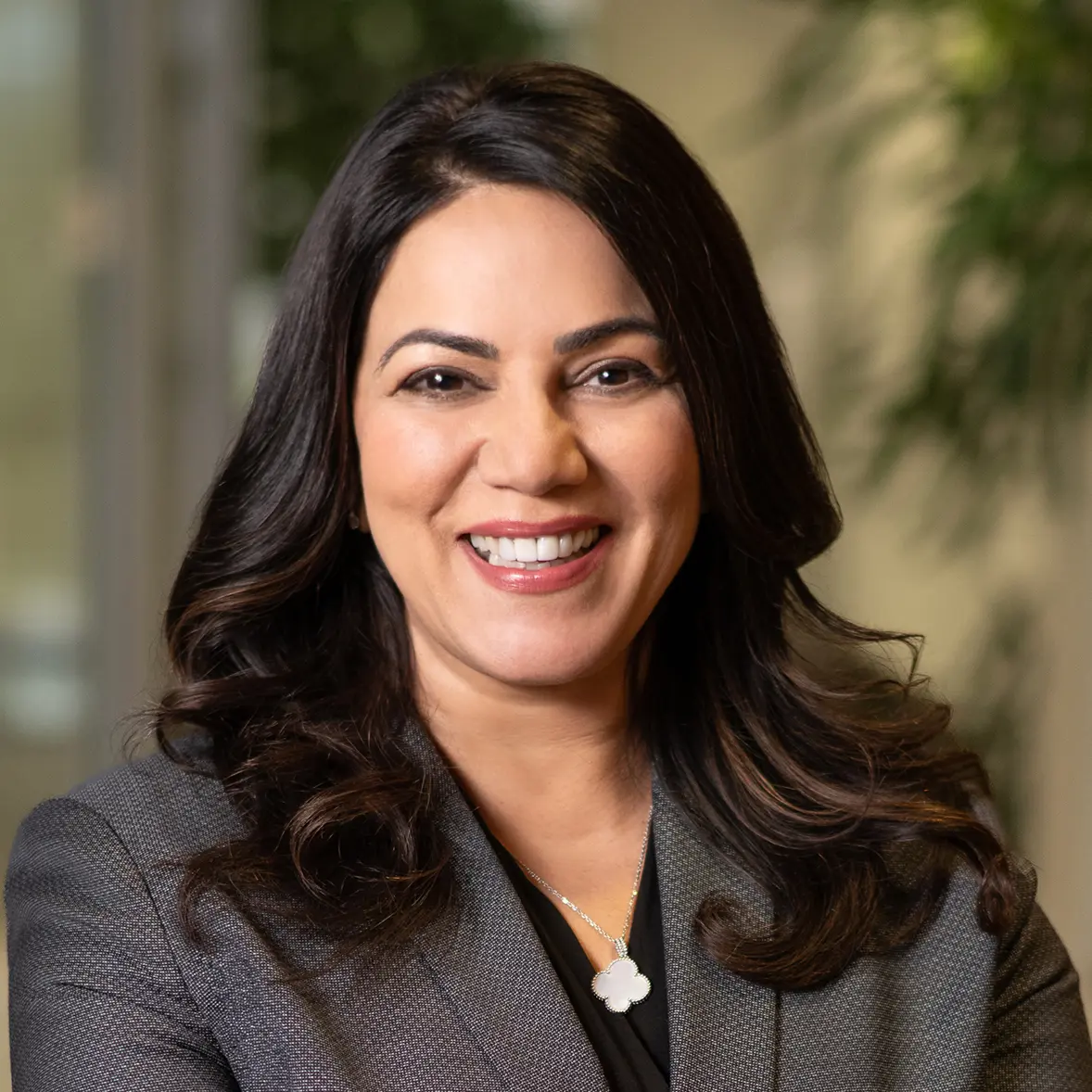
Mandy Dhaliwal, Chief Marketing Officer of Nutanix, joins theCUBE and NYSE Wired for an insightful discussion at the CMO Leaders Summit. During this engaging event, Dhaliwal shares their perspectives on the evolving role of artificial intelligence in marketing and strategic initiatives at Nutanix.
In this episode, Mandy Dhaliwal, CMO of Nutanix and a seasoned expert in marketing innovation, discusses the significant role AI plays in transforming marketing strategies and operations. Joi...Read more
exploreKeep Exploring
What are some key considerations for marketers when it comes to harnessing the power of AI in their strategies?add
What is the strategy for driving alignment internally within a company?add
What is an example of a groundbreaking use of real-time inferencing in conversational AI technology in the B2C space?add
What are the key factors to consider in implementing responsible AI and data strategy in business?add
>> Welcome back everyone to theCUBE. I'm John Furrier, host of theCUBE. We're in our Palo Alto Studios for the CMO Leaders Event Series Summit. theCUBE and the NYC Wired community, the new open community, bringing together all the top people across all the top disciplines in tech industry to talk about the future here. We're talking about AI, how it affects marketing. Mandy Dhaliwal here, the CMO of Nutanix, friend of theCUBE, CUBE alumni. I think you've been on so many times, I can't even count, but great to see you again. Thanks for coming on.
Mandy Dhaliwal
>> Thank you, John. It's always wonderful to sit down and have a chat with you.>> Mandy, you're doing your job. People know who Nutanix is. They know what you guys do. You guys are doing extremely well. We've had many conversations around marketing. I got to say, you have been very innovative for the first time I met you, I think maybe eight years ago. Maybe a 10. I can't remember, but it was your first startup in East Coast.
Mandy Dhaliwal
>> Yes.>> You've always had an eye for innovating, but you bring it in properly in change management. So I want to give you props for that.
Mandy Dhaliwal
>> Thank you.>> I'm super glad you're here.
Mandy Dhaliwal
>> Me too. This is fun. I love doing this.>> So the CMO role is about the customer.
Mandy Dhaliwal
>> Absolutely.>> Awareness. If sales process works, your job is to help make that work.
Mandy Dhaliwal
>> Yes.>> Now that sounds, I didn't say email marketing, I didn't say MarTech stack, I didn't say performance marketing, but all those things that are in place are mechanisms to drive the goal.
Mandy Dhaliwal
>> Right.>> So, okay. It's just another mechanism AI. So how do you view AI as a CMO? Because it's new, you've got superpowers with it, makes the human more performant that we're hearing that.
Mandy Dhaliwal
>> Right.>> But how do you operationalize it? Take us through your vision of how you see that happening today and then going forward.
Mandy Dhaliwal
>> Yeah, I think first things first, the fundamentals of marketing still apply. The fundamentals of business still apply. We're in a very exciting time yet again in our lifetimes and in our careers. So AI is definitely a growth lever for us when harnessed correctly, right? There's lots of room. We've seen the horror stories, hallucinations, all the bad stuff. So don't run fast with scissors, right? Be strategic and be thoughtful. Experiment, fail fast, move forward. Some of the age-old lessons of Silicon Valley still apply to this AI boom. We're early innings as CMOs, if you haven't started, you're behind already is the first tidbit. Second, you got to bring your teams along and give them the knowledge and the skills to be actually able to go out and harness the power of it. So there's a lot of learning and training and up-skilling happening right now. So there's a lot of different things that are happening, but at the end of the day, the fundamentals around marketing, we're brand ambassadors. We're in the reputation business, we're in the memory business, right? And so you have to think about how AI can accelerate your vision and your mission as an organization.>> You and I have had many conversations. I know you see the future, at least from our perspective of earned media, paid media, owned media. The old digital philosophy was owned media was like your website. You pay for your brand. And the brand promise, you want to do the right thing and should match everything. Paid media is performance marketing. You pay for content here and there. And then earned media was the classic "get the word of mouth going, get mentioned in the news." But now you got this whole organic interaction that's beyond media for independent publishers or TV. People are going direct. And you mentioned reputation, you got to earn it. You can't buy a reputation.
Mandy Dhaliwal
>> Absolutely.>> So you know this firsthand. So that being said, the old omni-channel was a big conversation a few years ago. Now it's even bigger. There's more channels, more platforms. People are touching the brand. How do you earn the reputation in this modern era? Because do you use data-driven approach? Is real time more important? Is brand a better lever? Could brand marketing performance? So give us your take on this because I think this is the big... And I know every company's different.
Mandy Dhaliwal
>> Right.>> But is there any patterns that you're seeing? Is there one that tips the scales categorically?
Mandy Dhaliwal
>> Yeah. I think to give you a little glimpse back in terms of the highlight reel of what I've been doing in some of the companies I've been involved with, generally the call comes and it's like, "We need a CMO because nobody knows who we are and what we do," right? "Mandy, come here and fix this. And oh by the way, can you get pipe turned onto at full blast?"
And so you kind of have to decouple both of those things. You got to do the brand investments that's long tail, long horizon, performance obviously 90 days sales cycles, right? Or 90 day revenue reporting cycles. So you have to be able to work in a multifaceted way. So make your investments in brand, but before you do that, have a foundation for who you are and what you stand for. Align the organization. So if you look at what we did at Nutanix, we started with a foundation building positioning exercise where we got the most curmudgeance, for lack of a better word, most of the non-believers in the room with us alongside the marketing teams to go build a story that would resonate because they are your ambassadors as well. So how do you drive alignment internally? You bring the tech teams together with the go-to-market teams and you figure out who you are, what you do, what you stand for, what your differentiation is. You get that done, you get the head nods, you activate the entire organization. Our pockets are not that deep when it relates to marketing. So you need to be able to unleash that story amongst your internal brand ambassadors. So I turned on 7,000 brand ambassadors that all went to market with a very similar message. So check, right? We launch that->> Foundation.
Mandy Dhaliwal
>> Foundation. And then you activate in very strategic ways based on what your customers are doing and the segments of your customers, right? So we have a very clear segmentation pyramid that we go after. And so within each of those tiers, we activate. And so based on where they are, it's all very modular. I'm a very systematic person when it comes to launching these things. So you have to be data-driven in your approach. You have to be able to quantify the impact. But you also have to measure how you're driving that. So within each account, there's buying teams these days. There's different personas, different lenses through which people are observing us as a hybrid cloud platform. So what we have to do is make sure that the appropriate people know us when they need to know us and have the relevancy, so the personalization. There's a lot in it. It sounds easier than it is, but there's a whole team of folks->> But that's training the army. You got to get the troops carrying the message all geared up with the right same things.
Mandy Dhaliwal
>> Right. And that's the journey, right? And there's this day one list, right? You got to show up on that day one list. I can do all the performance marketing in the world, but if nobody knows me, I'm not getting invited to participate in an RFP, right? And so you've got to think of things very practically, but also deeply understand your markets.>> If you don't get recognized on who you are, all those sales costs go to nil.
Mandy Dhaliwal
>> Exactly.>> Because you're already out before even decision's made.
Mandy Dhaliwal
>> Right. And the conversations I have with my team, with the marketers at Nutanix, "Hey, our job is to increase and improve sales productivity. That's why we exist.">> Yeah, there's an old expression in the military, "You don't go out in the open field without cover fire." So you get the foundation, you got the troops out there. Now the cover on top is marketing, right? Now you got to create some activation.
Mandy Dhaliwal
>> Right. Right.>> So now you've got the air cover. What does that look like for you?
Mandy Dhaliwal
>> Yeah, it's taking a codified message to market, one platform to run apps and data anywhere. So it's a very freeing message. How do you speak in plain English? I'm not talking speeds and feeds, right? But underneath it, there's again, deeper messaging as people get into a conversation. So there's all of that rigor and discipline has to come first. So again, it's compartmentalized.>> Okay. So now you go back a few years, maybe even a decade, and you say, "Okay, branding exercise, got to get a firm, get a quote, cost some money." I can go to ChatGPT now and say, "Here's my value proposition. Type some notes in. Give me a positioning statement." Now it won't be as good because it's the first draft, but some heavy lifting could get done from that, right? So this is an aided awareness opportunity.
Mandy Dhaliwal
>> So I'll take it a step further. You can get ChatGPT to go give you that, then you can spin up some synthetic research and actually validate against your personas and your segments.>> Give an example.
Mandy Dhaliwal
>> So Evidenza is a tech tool, an AI tool. So I can say, "I want to go reach CIOs in financial services." And I think with AI deployments, we're AI ready infrastructure, I think they care about speed. And so I'm going to test to say, "Okay, Ms. CIO, do you care about speed in terms of deployment of AI applications?" Maybe, right? Results come back, "Actually, they care more about security and safety." And so had I sent a speed message out to those CIOs, it would've fallen on deaf ears. But now that I'm speaking to them about security, there's a ->> So you've got risk management on the front end of this execution.
Mandy Dhaliwal
>> Right.>> All right. Great stuff. So next question I got to ask you, is that you've been in a lot of meetings, you're seasoned executive, there's always budgets. Doing more with less is a cliche. It's been around decades. And that's always the case. Whether you're a startup or a big company, there's so many priorities. You got to know where you're putting your dollars. So there's budget, there's alignment with the teams. Are you seeing structural change with organizations as business transformation and marketing moves above the line with security because now security teams, chief security officers or CISOs and CMOs are in the board level because it's impacting revenue? End of the day, sales is what drives everything, right?
Mandy Dhaliwal
>> Absolutely.>> So take me through that process of what's changed structurally. Is it more a coalition with the CFO, CEO? Is it situational? What are some of the alignments around... I mean, it's the mandate. We got to infuse AI into everything. That's a statement that might be made by someone, but you got to execute.
Mandy Dhaliwal
>> Right. Absolutely. And I think it starts with the CIO, right? We've got now a committee that reports into our CIO that has the various business units involved. We're bringing in technology, we're bringing in something to help us articulate better, right? And so how do you bring in a cross-company solution versus a point solution for each department? I could go buy one off the shelf tomorrow, but do you think HR and legal would like that? Probably not. So we put our CIO in the middle of it saying, "You're the arbiter. Let's figure out, get our arms around this." Obviously we need efficiency. We need training of our teams as well. We owe that to our teams from a skills perspective. So how do we go do this in a way that it's a win-win for the entire organization versus a one department GPT, for example? Which are there as well.>> So they're the guardrail establishment. Governance gets built in safety, all those things?
Mandy Dhaliwal
>> Right. Well, data, right? We can't have our private data out in the world. There's all sorts of pitfalls that could...>> So I have to ask you about something that's really cutting edge. I know it's evolving, so there's no real answer yet, but it's more of a mindset. Marketing's always been data-driven and there's multiple data sets. There's the MarTech stack, which I've been using as a piñata lately because it's easy to kind of hit the piñata with the bat. But the MarTech stack's got data in it. It might be old. Email marketing's old. You got performance marketing, you got brand marketing. As you look at some of these data sets, and also you got dashboards, what happened this quarter? So sometimes it's okay to say, "Hey, how are sales this quarter?" Dashboarding has been part of the data-driven, but now real-time is now part of it. So I want to get your thoughts. You got all this pre-existing either infrastructure and data and dashboards, which are still important, but now you've got real-time. How do you view real-time with AI? Because now you can be so much more like a tactical machine with your knowledge. How do you replicate yourself and your team to be in the real-time flow executing faster?
Mandy Dhaliwal
>> The most exciting thing that's happening right now is this whole agentic move, right? So the real-time inferencing on the agent side is incredibly powerful. I sit on the board of a conversational AI company that is breaking ground in the B2C space around this. So Mandy goes on a retail website and is looking for her order. And at the same time, I'm getting upsold on something or getting a new hotel->> With a chatbot, by the way.
Mandy Dhaliwal
>> With a chatbot. Not human.>> Not a BDR.
Mandy Dhaliwal
>> Exactly. And so there's this agent that is all of a sudden processing my data in real-time, has me, has a live one on the line, and all of a sudden is like, "Oh, would you like to upsell and buy your sister a pair of earrings to match the bracelet you got her last year for her birthday because her birthday's coming up?" Check, right?>> Done. Oh, what great idea.
Mandy Dhaliwal
>> Solves my problem. Drives revenue for them in a very efficient way. That's the future. It's here.>> If it's a bigger ticket sale, you can go right to a salesperson with the data.
Mandy Dhaliwal
>> Exactly.>> Not an out of band, "Well, we called the call center."
Mandy Dhaliwal
>> Right. Right.>> So it's real time.
Mandy Dhaliwal
>> It's real time. And even more importantly, what I talk to my team about is, in our website has it exists? Not necessary anymore, because you can do a search and just pull up the data. Why do I need to take people through a journey on our website? Think about that and how are we crafting our content to be more ready for that real-time interaction.>> We had Jyothi, who was the CMO of DDN, on earlier, and he said the new term he likes is GSO, GPT optimization. No, GPO. So instead of SEO, GPT optimization, meaning Perplexity, Cerebus has got a new engine, Le Chat is out. I just saw Julie Choi, that's been top of the charts as of this week.
Mandy Dhaliwal
>> Right.>> Claude. Gemini. All these search engine models are taking real-time feeds. So people are using that.
Mandy Dhaliwal
>> Exactly.>> Performance marketing is changing. Email, Slack, Instant Message. So how you touch the customer, I mean, everyone thinks I'm against lead gen because I'm not. Lead gen is a categorical concept. Email marketing, we don't do a lot of because we're free content, but that's just email. There's other ways to get the customer. You're still getting a lead-
Mandy Dhaliwal
>> Absolutely.... >> if it's a chatbot. So how do you look at that? Because now the touch points are changing. As a marketer, is it too much? Is agents going to help you there?
Mandy Dhaliwal
>> I think it's all in the experiment phase right now. And you think of net new customer versus install base, and you have to look at where these customers are in their buying cycle and their state of maturity and your relationship with them. So everything is dependent upon those criteria as well. An existing customer may want to know more about an adjacent product, right? A new customer really just wants to learn a few key things. So again, to have the ability to sense the propensity, the intent, using that data as inputs and being able to intelligently predict where to take this based on content that they're looking at, it's one-to-one marketing. The Peppers and Rogers from decades ago, it's now manifesting in milliseconds.>> The hyper-personalization is phenomenal. I'll get to change management in a second, but I want to ask you about staffing, team. Are you seeing interdisciplinary skill sets a requirement? Or what's the makeup of a successful person in a modern marketing organization as you look at things holistically? Not so much to say digital is all one thing.
Mandy Dhaliwal
>> Right.>> Say everything's in one thing. What is the makeup of that person on the team you look for, as one part. And the second part is how much has your stakeholder integration included other people? You mentioned you get people in a room. But as you go day to day and with AI, you now have more potential to bring internal data into the equation because you serve the business, which is sales, but getting the brand out there, you're doing a good job. Is it skill set for the modern person on the team, and does your department have more linkages?
Mandy Dhaliwal
>> Yes and yes. Linkages, I'll take that one first. My background being at Boomi, right? integration company. So I view everything as a massive linkage. So how do you get that data, the APIs connected and be able to get information that's very robust? I think from a talent standpoint, for me, marketers are no longer just the folks that are, "I'm the product marketer or I'm the digital marketer." We're growth architects. And so the mindset that I'm instilling into our team is, "How do we run fast with the business to be able to go drive the revenue, but how do we do it in a very strategic way from a growth lens? So get out of the functional box and let's figure out how we can build squads." That term is in vogue now. Tiger teams used to be a thing.>> Yeah, squads.
Mandy Dhaliwal
>> Squads now is the Taylor Swift->> You're in the Taylor Swift squad.
Mandy Dhaliwal
>> Right? The Taylor Swift effect. I don't know what it is. But really it becomes, so how do you bring your skills to bear and how do we cross-train our teams so they're skilled up and are able to drive outcomes for the business versus being one cog in the machine?>> Yeah, siloed or stovepipe.
Mandy Dhaliwal
>> Exactly. So now it's really breaking that open and giving people the confidence and the ability to go have conversations with their peers. Very similar to the conversations I have with my peers.>> I think being mindful of how if you're in a campaign and something's happening, it could be a light touch post event in a digital campaign that's nurturing or informing or entertaining to have the savvy to recognize that that could connect to support or having the craft or the cognition to say, "Hey, we should build in some mechanisms for understanding that end-to-end journey." Because once you have a customer, you got them.
Mandy Dhaliwal
>> You got them.>> You can program to them.
Mandy Dhaliwal
>> Exactly. Exactly.>> And their touch points. You got to know who they are. You got to have a way to do that. What's your take on that and how do you do that? I mean, I would love to learn how that happens.
Mandy Dhaliwal
>> Microsegmentation. Right? It becomes deeply understanding your customer, putting them in buckets. None of us want them be bucketed.>> Yeah, yeah, of course, but we do.
Mandy Dhaliwal
>> But at the end of the day, birds of a feather. Some of these age-old theories and strategies still apply. So how do you start to microsegment people by region, by vertical, whatever it might be, to be able to solve problems that they genuinely have and create content that will resonate with them? So that's the philosophical kind of underpinning of it. And then being able to drive not only the digital, but ad physical, right? We're back, right? This is post-COVID era. Everything is turned. You notice the events are back.>> Banks are bigger than ever in it before.
Mandy Dhaliwal
>> Right. We're investing more and more. We're surrounding now with even more out of home from an advertising awareness standpoint. So it's deeply integrated, but it's like, what are those touch points? My head of growth calls it, "What are the recipes that drive these mini cohorts to a buying action, if you will, or an event attendance?" Depending on what your outcome is, how do you start to bucket people and how do you run automation at scale? Machine learning's underpinned with this as well, right? There's journeys on how you progress pipe once you've brought pipe in.>> Yeah, I mean love... I'm a huge fan of network effect, and I think as the word of mouth gets digitized, you mentioned post-COVID, I think we are in an era now looking a student of the game is COVID helped Gen Xers and Boomers realize how to use online. Even though I know how to use online. I'm Gen X, but that's okay. Gen Z's coming in. Millennials are moving up into decision-making roles, so they already know how to use the internet. And so you now have a digital culture. Face-to-face events are still primary relationship-getting, so making digital a first-party citizen, not a department, the social team, they're off doing stuff, "Well, that's what the social team does or that's the website team." What's your vision on this? I mean, obviously I feel strongly that it's one. And as digital becomes one, you're starting to see... We love the term digital twins because if you can replicate physical experience digitally, but then recycle it into then a face-to-face event, you can create a flywheel. This is a dynamic we're seeing. What's your thoughts on that and how do you operationalize that? How do you change the culture to realize that, "Hey, a digital presence is just as good as the physical face-to-face" when that's the norm?
Mandy Dhaliwal
>> And the magic, to take it a step further, totally agree. It's when you integrate it. So you could be on a trade show floor and all of a sudden you're participating in a digital event while you are in a physical space. You think about the world and the possibilities we have now with the capabilities of AI and being able to geotarget and all the things. It's everything everywhere all at once. And that to me is just so exciting.>> Yeah. And it's an opportunity if you have the craft for the data. This is back to the data. Okay. So back to the data to kind of bring full circle. How do you think about the data strategy for trying to nail that use case? Because that's the holy grail right there. You have the opportunity to hit people where they are right at the moment of interest, get signaling back. What's the strategy? How do you think through that?
Mandy Dhaliwal
>> Well, I think responsible AI, right? It has to be permission-based. There has to be both willing parties to be able to go run this. And also the integrity of the data and the preservation of it. Data's being generated at the edge. It's going to continue to be generated at the edge. So from a vendor standpoint, how do you keep that safe and secure? That's really, really important as well. But really that's the underpinning of all of this. If you don't have your data strategy right, you're really not going to be able to maximize the potential of what this can really do for your business.>> Mandy, it's great to have you on your world-class market. It's great to know you. Thanks for being part of our community. Really appreciate you coming onto our program. Final minute, what are you excited about? And give the quick update on Nutanix. Put the plug in.
Mandy Dhaliwal
>> Thank you, John. It's always wonderful to be here. I'm really excited about this age of AI. I think the opportunities are endless. I think we're incredibly early, right? There's a lot of experiments. I think my guidance to folks, as I said before, was jump in, get started, make mistakes, learn, bring your people along. Find your early adopters in your organizations that are going to lead from the front on this. You'll learn something from them as well. I think from a Nutanix standpoint, the business is going well. We've been on a journey and we're really hitting the market hard, and we have a role to play. Infrastructure companies are yet again in vogue. And we have a unique value prop in the hybrid multi-cloud offering that we deliver. We're the smallest player in this distributed hybrid infrastructure world that we live in. And we're on a tear. We're taking the legacy from VMware and VM-based applications and now being able to deliver container-based application management on our platform. So we're really pushing the bounds. We're innovating, we're investing, and we're really excited about what we can do.>> You're taking advantage of the market shift and the infrastructure too. It's great stuff.
Mandy Dhaliwal
>> It's just, you know? .>> And congrats on the brand awareness too. You guys are getting the name out there. You told me you wanted Nutanix to be everywhere all at once.
Mandy Dhaliwal
>> Yeah. Yes. Yeah, people know us now. They know how to pronounce our name, which is always a good thing.>> Mandy, thanks for coming up. Appreciate you.
Mandy Dhaliwal
>> Thank you, John.>> Okay. I'm John Furrier here at theCUBE for the CMO leaders with the NYSE Wire Community and theCUBE working together to create an open community of leaders to share knowledge and interact and be open and bring people along. So thanks for watching.