We just sent you a verification email. Please verify your account to gain access to
theCUBE + NYSE Wired: Marketing Leaders. If you don’t think you received an email check your
spam folder.
Sign in to theCUBE + NYSE Wired: Marketing Leaders.
In order to sign in, enter the email address you used to registered for the event. Once completed, you will receive an email with a verification link. Open this link to automatically sign into the site.
Register For theCUBE + NYSE Wired: Marketing Leaders
Please fill out the information below. You will recieve an email with a verification link confirming your registration. Click the link to automatically sign into the site.
You’re almost there!
We just sent you a verification email. Please click the verification button in the email. Once your email address is verified, you will have full access to all event content for theCUBE + NYSE Wired: Marketing Leaders.
I want my badge and interests to be visible to all attendees.
Checking this box will display your presense on the attendees list, view your profile and allow other attendees to contact you via 1-1 chat. Read the Privacy Policy. At any time, you can choose to disable this preference.
Select your Interests!
add
Upload your photo
Uploading..
OR
Connect via Twitter
Connect via Linkedin
EDIT PASSWORD
Share
Forgot Password
Almost there!
We just sent you a verification email. Please verify your account to gain access to
theCUBE + NYSE Wired: Marketing Leaders. If you don’t think you received an email check your
spam folder.
Sign in to theCUBE + NYSE Wired: Marketing Leaders.
In order to sign in, enter the email address you used to registered for the event. Once completed, you will receive an email with a verification link. Open this link to automatically sign into the site.
Sign in to gain access to theCUBE + NYSE Wired: Marketing Leaders
Please sign in with LinkedIn to continue to theCUBE + NYSE Wired: Marketing Leaders. Signing in with LinkedIn ensures a professional environment.
Sanjay Kumar, a leader in modern networking solutions at Arrcus, shares valuable insights in this discussion as part of theCUBE Research's CMO Leaders Series Summit. Host John Furrier and the analysts from theCUBE engage Kumar, highlighting the strategic role AI plays in revolutionizing marketing and networking infrastructures. Kumar elaborates on Arrcus's technology that bridges the gap between various network segments, becoming a linchpin for AI workloads and agile connectivity.
Key takeaways from the conversation revolve around leveraging Artificial...Read more
exploreKeep Exploring
What is a key use case that the software-driven architecture enables, specifically for AI workloads, that is in high demand among customers?add
What are some potential benefits of integrating AI into sales workflows?add
What are some ways that AI tools can help with content generation in marketing for startups?add
What are the benefits of using AI in product management, product marketing, and lead generation?add
What are some of the challenges and considerations in navigating the landscape of AI tools for startups?add
What type of infrastructure does Arrcus provide and what are some of the exciting things they are doing in the area of enabling gen AI applications?add
>> Hello everyone. Welcome back to theCUBE here in our Palo Alto Studios. I'm John Furrier, host of theCUBE. We are here as part of our CMO Leaders Series Summit in open environment, where all the top executives and leaders from startups to large enterprises talking about the role of the CMO, obviously with theCUBE and the NYSE Wired Community coming together in a community way to bring out the best advice, but also best practice, also perspectives on AI. Sanjay Kumar from Arrcus is here with me. Sanjay, great to see you. Good to chat with you last night at the reception. And thanks for coming on theCUBE for the CMO Leaders Series. Great to have you.
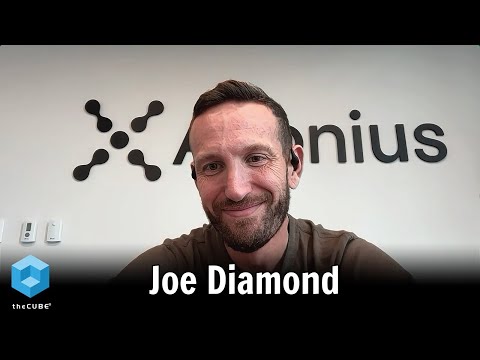
Sanjay Kumar
>> Thanks so much, John. Pleasure to be here and look forward to chatting with you.>> Well, Shekar and I had a chat on theCUBE, at the NYSE actually, in our new studio there.
Sanjay Kumar
>> That's great.>> We got that video up on our YouTube channel. Folks interested in Arrcus, check out that video. Your role there on the go-to-market side is an important part of where you guys are at. CMOs, from startups to enterprise, all looking at AI as an opportunity. And it is also a double-edged sword, right? You can cut both ways, so you can get productivity, cost efficiencies. But if you get over your skis, maybe it could not deliver. These are part of the conversations. Love to get your take as someone in the industry who's powering this next-generation infrastructure. You're on the front lines as a startup, but also you're a marketer. Talk about how you see AI as an opportunity because as you build the future for us and marketers at the platform level, I mean not directly from market, but indirectly you're enabling more faster capabilities. What is the challenges that you see?
Sanjay Kumar
>> Yeah, great question, John. So just at the outset, and to give your viewers a perspective of what we do at Arrcus, we essentially deliver networking infrastructure that's switching and routing that helps connect different parts of the network. It could be connecting the edge to the data center, the data center to the cloud, and providing you with a seamless way to move your data and all your traffic back and forth. One of the key use cases that we enable is in fact networking for AI workloads. And that's where we are seeing a lot more demand and the need for a programmatic software-driven architecture rather than your traditional hardware-driven architecture. And in doing so, we provide customers with a lot more agility, a lot more flexibility, and the ability to get up and running, be able to deploy the network really quickly and deploy new services, drive revenue much quicker than they would ever be able to. At the same time having the independence of open networking. So that's really where we come from. And so the AI tsunami, so to speak, is really at the front and center of what we are doing from a solution standpoint. Now as far as the challenges from a marketing perspective are concerned, being a startup with a very, very small team of people trying to constantly punch above our weight, trying to drive awareness for our solutions, trying to of course generate leads like every CMO would tell you, getting leads and then having meaningful discussions with customers, converting those leads over to opportunities, those are areas where one typically relies on automation and tools to help us. I think with AI coming in, there is an enormous opportunity over here for some of those workflows to get more automated, to get more intelligent, to help us with the qualification at the top of the funnel, be able to convert those to marketing qualified leads and to sales qualified leads and to opportunities and so on. And so I think just going beyond whether it's integrated into the current tools that we use or others, I think there's a massive opportunity to help us really speed up that entire sales cycle and be able to engage with potential customers better and then convert those over to opportunities. So I think that's one area where we feel this can help us from a scale perspective. Other areas which where we think that this could possibly help us is on the ideation phase. The ideation requires a good bit of research, a good bit of understanding of the use cases, customer requirements and so on and so forth. And I think AI can play a really important role in helping us truly focus on what matters and be able to do our research more quickly. And then from there, as any marketer will tell you, storytelling is a big part of our job. And then over there I think AI can definitely help... All the AI tools that you have can definitely help you in being able to hone that messaging, create tight and compelling value propositions, and really be able to bounce around a bunch of ideas and then come up with the one that really drives home the message in a compelling fashion. From there, when you get to execution, I think the other area that these AI tools can really help is in content generation. So using gen AI to create more compelling content much more effectively, cost-effectively of course, which is something really important for any startup, and at the same time, do it much quicker. So it's amazing the kind of tools that you have out there that allow you to create videos in a very, very quick fashion. Things that would've taken us weeks to ideate, create scripts and actually get to execution can be done in a matter of minutes. So those are some areas where I think we see AI helping us from a marketing standpoint.>> Sounds like great input there. Great insight. I love the line about your startup. The theme doing more with less is... It's been cliche, but it's the reality still. I mean, whether you're a startup or a big company, you always hear that phrase. I hear a lot of big companies, "Oh, we got to do more with less." Now they're less is like rich compared to what startups have.
Sanjay Kumar
>> Yeah, exactly.>> So like, big budgets. But sometimes they have inertia. Startups like yours are really focused on the value proposition. And what you guys are doing at Arrcus really is the work that's needed right now. But as you progress through with Arrcus and make those networking solutions scalable, that's AI infrastructure. That's going to unleash more value for developers, more data. Marketers are waiting for that , but they've got low hanging fruit right now. You mentioned a few of them. I want to get your thoughts on the startup side because I think this is where doing more with less is very acute. You have a product focus. And I heard some other marketers during the past couple of days share with me both on camera and off camera that a lot of people get wrapped around losing their focus on the north star. In other words, it's easy to look at content generation, "I'm going to write a hundred blog posts a month," and they end up not actually doing the right curation of it, meaning they just think, "Oh, we're saving money by using AI."
So agents and automation will help, but marketing, you got to keep your eye on the prize. Product, value, landing on the entry of the market you're going after and going after and capturing it. That's the purpose in getting sales, right?
Sanjay Kumar
>> Absolutely.>> So as a leader, you have to put that team together, maybe a small team, handful of people, but you want to maximize the agents or automation under the covers and be focused. That requires some marketing. Talk about that important human-in-a-loop aspect because the jobs aren't... I mean technically they are going away if AI can take care of some of those heavy lifting, but the human value also is a premium. Talk about that piece.
Sanjay Kumar
>> That's a very, very great question. I think it's an extremely timely question as well. Yeah, I know you said doing more with less, and that's sort of the guiding principle for any business, more so for startups. Totally agree with that. I think what we are also excited about is sure thing, the ability to scale and I think the ability to supplement what we currently do help us do it better, help us do it faster. I think that's where we think that we see opportunities for AI. And not just a question of driving, trying to do more with fewer people, for example. So we are not really seeing it today in the context of less people, but more about how can it help us deliver richer content, how can it help us deliver the solutions to the market quickly, our engagement much more effectively, and then be able to capture and have those conversations and cut down the selling cycle and the marketing cycle so that we can get to deal closure much quicker. I think that's where I think we are really excited about those kind of opportunities. While of course we are driving much more productivity and the cost angle is definitely important, but the ability to supplement what we do, I think that's where we are seeing this as a solid partner in our journey and being able to supplement our current capabilities, or capabilities that we would've had to otherwise go outside for. I think we are able to bring a lot of those in-house pretty much at the click of a button. So that's where we really see some value. And outside of marketing, just want you to know, I also wear another hat, which is product management. And we've been able to use AI very effectively to help us with delivering better user interface for customers, for example. So developing on top of ChatGPT to get a more intuitive user interface for customers, to use things like ChatGPT to do knowledge sharing as well as be able to help our customers with searching our knowledge base much more effectively. Those are some of the areas where we are using it in our engagement with customers from a product perspective. And at the same time, from an engineering perspective, we are also using a bunch of these tools to help us from a development perspective, from a coding perspective, and very importantly from a test automation perspective as well. So we're able to take a look across the board in all our different functions and be able to start integrating AI. I think the other thing that's really exciting and different about this particular technology is that there are so many open source tools available out there that you can experiment. You can try them out at very low risk and then keep fine-tuning them, essentially training the model to do a better job with each iteration, things that you would've otherwise had to hire consultants for, for example, or spend a lot of time trying to figure out what the right tool is. Here you can jump in, fail fast, break things, and then yet be able to iterate really quickly. So that's very exciting for us.>> We had a guest on earlier today, he says it's like being a movie director because he had a movie background. He's like, "You're the director and you don't always get it on the first take." So that also talks about iteration. And you mentioned product management. I think that is a huge point. I'd like to just double click on that because in talking to some of the innovative markers that had a lot of experience, I asked them, "Assume AI comes in, you have all this kind of aided capabilities, augmentation to your job, undifferentiated heavy lifting, the ability to hit some maybe breakthroughs," they say, "Great, I love it. You can help out on the undifferentiated heavy lifting." But it's the breakthroughs they focus on, what can they do that's breakthrough for the company. And I asked, "How do you do that?" And one of them said, "It's like the triangle. Product marketing, brand and demand generation. Demand generation and lead generation are the same thing. Those three things are the key aspects in the triangle, in each point."
And interesting because product marketing or product management has that product value in it. And I asked why and they said, "Well, brand is brand because if people don't know who you are, then sales tends to fail." So okay, check, brand. You can do more in your brand marketing. Product marketing is with a human in the loop can lay in some expertise. So that group weighs in. And then demand generation is just how do we get demand, whether it's direct sales, indirect, meetings, all the things that go on in that demand creation processes. And it's not just emails and demand generation campaigns, it's more demand gen, lunch and learns, roundtables, councils. So those are the areas that the markets are focusing on.
And I find it interesting because product marketing is so obvious. Product marketing, product management, some companies starts to have it all in one. You do that basically. That's the product value proposition. It becomes the key tuning fork, if you will, into the music of the flywheel because you got to make the music, right? So product marketing becomes critical. Of course, brand, no one's going to debate brand. That's table stakes. You got to have the brand narrative. Of course you can do more with your brand marketing and of course demand. You got to have the sales prospects. Do you agree? What's your reaction to that? And is that the high yield areas that would be involved in architecting a new modern approach to marketing?
Sanjay Kumar
>> Yeah, that's actually very, very interesting stuff that you just mentioned over there. So if I just take that analogy itself and take it a little further, what I'd say is product managers are writing the score. And then you've got product marketing that comes in from a storytelling perspective and they create the entire orchestra. And then you've got demand generation that comes in, figures out how to amplify this and get this out, where do you perform and what are the different venues you perform and so on so forth. And each one of these areas, so from an AI perspective, I think on the product management side where these things help us is we would've spent a lot of time earlier in trying to understand the competitive landscape, what are the capabilities that exist in the marketplace today. Doing a whole bunch of research on that front because that's really important to understand where are you going to be able to drive differentiation, helping understand doing research around the use cases and stuff like that. Those are areas where, again, I can go to a tool and get that information and then keep iterating on top of that to fine tune the query and be able to hone in on what I think is going to be a differentiator. So from a product manager's perspective, it's cutting down a lot of time that would've been spent grinding through these kinds of details, right? And then like I talked earlier, from a product marketing perspective, the act of storytelling, that's where AI, I think, helps you wordsmith very nicely, to be completely honest. It also keeps you sort of honest and it keeps you honest in terms of making sure that you're not plagiarizing things, not doing things that others have done. You might have a great idea and you think you're the first person to think about it, but then a quick search shows you that somebody else has already talked about that. So it helps you sort of guide you and navigate you through that process as well. And then from a lead generation or a marketing perspective, whether it is brand awareness that you're building or lead generation, which actually brand awareness drives lead generation, that's the ultimate goal. And that's where AI bridges that really nicely with the tools that are there and help you scale. I don't know if I've addressed what you were asking, but->> No, it's a good riff on that because I love the score, because you got to write the score, right? You got to write the music.
Sanjay Kumar
>> Right.>> It's like an orchestra, right? Or a band, right? Whether you have one player, a violinist or multiple actors in the orchestra, you got to practice, right?
Sanjay Kumar
>> Right.>> You got to get going. And this is where most challenges are because just think, "We just stopped the new software. Everyone go." It's really the iteration of phasing it in, right?
Sanjay Kumar
>> Right.>> And whether you're a startup or a big company, it could be easier. Our startups are a lot easier. It's only a few people, but compared to a big company, the change management and getting the muscle is key. But not without direction, right?
Sanjay Kumar
>> Correct.>> The key is there. So we're kind of agreeing. I mean we will talk it to ourselves here, but in a way that's what's coming out. Now, applying that to startups, because we've had a lot of big companies on in the B2B area, startups in particular, the road is very thin. There's next round of funding, product success, product market fit, market product fit. These things, the risks are there of course with the reward, the upside. So you guys are doing well. As you look at decision-making, who's on the team, which tools do I use, how do you keep up with the pace? How do you think about it as you try to do your job and assess the time it's going to take to either get the tools and implement them? What muscles do you build? It's like going in the gym, right? What do you think about?
Sanjay Kumar
>> Yeah, so I think it is the Wild West, right? And it's not as though anyone has quite figured out how to do it. There is an opportunity in AI to help startups completely come up with a go-to-market plan. By the way, you can do that with Notebook LLM today. It'll actually spit out for you an entire marketing plan based on what input you give it, but that's not going to be sufficient. So I think some of the things that keep me up are probably in the area of scouting for the right tool, trying to make sense of everything that is out there because there's a new tool a day or actually several tools a day claiming to do the same thing. So sifting through all of that, finding the ones that will actually help us. Those are some of the challenges I think that surround this entire journey. Talking to people definitely helps. Understanding from other peers in the industry in similar situations in startups as to what they're using and sharing that kind of information, I think that's invaluable in helping navigate that entire area and being able to find the one that really works for you. But of course, like I said earlier, the good news is you don't have to worry too much. And these are not very expensive experiments, which is great news for our CFO, for our CEO, which I'm not going to spend too much money in experimenting with all of these tools.>> Just keep your eye on the scoreboard. That's the sale.
Sanjay Kumar
>> Correct.>> That's the goal. Taking that value proposition. Competing on value, having a good product, offering it to the customer, having them pay you for the product, and then you keep the customers in there. The game is so simple, right? It's like a sport. Just score. Score some goals. It sounds so -
Sanjay Kumar
>> Yeah, it sounds so simple.>> It's not that easy to score soccer. "The goal's really big. Just kick it in there. Yeah, get out there."
No, but this is the thing. You've had such a great career. You've spanned a lot of big companies. You had a lot of growth, companies from startup to success. Now back at the startup, you've seen the organizations. What advice would you give CMOs today, young CMOs or experienced CMOs, young CMOs rising up through the ranks, or existing CMOs in a big company as they look at the big picture, realize they have to run into the activity lean in? What advice would you give them to, one, engage? What approach should they take? I know it depends by industry, but what would be your advice generally?
Sanjay Kumar
>> Yeah, I mean, advice is a strong word, but happy to share my perspective, which is, essentially never lose sight of, as you said, what the north star or the key objective is. Make sure that that is clearly laid out depending on what stage your company is in and what stage you are in the marketplace, whether it's a product market fit that you're trying to address, or whether it's a scaling the aspect or it's taking market share. Depending on where you are in that life cycle, you will have a different objective. And figure out what the short-term, mid-term, and long-term objectives are. Come up with a roadmap and then make sure that you have buy-in from all the stakeholders on that particular plan. And then once you have that, then it just cascades into a bunch of different work streams that you and your team will sort of get around. And then the other thing I expect is make sure you are measuring on a regular basis. So metrics are extremely important, to agree on the metrics, to have those metrics in place, to constantly take a look at those metrics, look back and then try and figure out how that needs to be fine-tuned as you move forward. So get bruised, pick yourself up, and keep running. Pass the ball around, to use your analogy, and get to the goal.>> Well, Sanjay, it's great to have you on. I love your expertise. Thanks for sharing those great insights. For the final minute we have left, put a plug-in for what you're working on, the company, momentum, updates, the cool things you're working on. Take a minute to put the plug-in.
Sanjay Kumar
>> I appreciate that, John. Thank you so much for the opportunity. So at Arrcus, as I mentioned, we provide networking infrastructure that's modern, that's flexible, that is programmable and can reside on any kind of hardware as a result of which we address use cases around networking for the edge in the data center, across data centers, and connectivity in the cloud as well. Excuse me. I think some of the exciting stuff that we are doing is in the area of enabling gen AI applications at the edge, for example, connectivity for AI workloads within the data center, as well as wherever they might be distributed. We've got the Mobile World Congress coming up. Put a plug for our participation at MWC in Barcelona in March, early March, where we'll have very many exciting demonstrations, showcases, as well as announcements coming up at that point of time.>> We'll have to have you guys come by theCUBE and say hello to the team there. Of course, we'll be there with a big stage. I'll put a plug in for theCUBE. I want to say thank you for your insights and then great chat with you last night. Got to know you at the table with Elliot Donnelly and the crew at the NYC Wired, theCUBE and the NYC Wired open community coming together, sharing insights. We're going to do more of these CMO leader events. Again, sharing the knowledge beginning... It's early days, and so appreciate your experience and expertise sharing with the community.
Sanjay Kumar
>> Thanks so much, John. Really enjoyed meeting you in person and enjoyed this session as well. Thanks so much for what you guys do.>> Thank you. We appreciate you too. Okay. As theCUBE, we bring you all the action. This is the CMO Leaders. This is where the action is happening. Every single vertical in every industry, every persona in every enterprise, if they have workflows, if they have data, if they have domain expertise, they can have intellectual property that could be commercialized and operationalized by AI to help everyone keep an eye on the north star, which is more sales, increased business performance, happier people, of course, AI will bring that to them. And the CMO's jobs will be hopefully much different. And in the future, of course, we'll be tracking it all on theCUBE in siliconangleE.com. I'm John Furrier, host of theCUBE. Thanks for watching.