We just sent you a verification email. Please verify your account to gain access to
theCUBE + NYSE Wired: Marketing Leaders. If you don’t think you received an email check your
spam folder.
Sign in to theCUBE + NYSE Wired: Marketing Leaders.
In order to sign in, enter the email address you used to registered for the event. Once completed, you will receive an email with a verification link. Open this link to automatically sign into the site.
Register For theCUBE + NYSE Wired: Marketing Leaders
Please fill out the information below. You will recieve an email with a verification link confirming your registration. Click the link to automatically sign into the site.
You’re almost there!
We just sent you a verification email. Please click the verification button in the email. Once your email address is verified, you will have full access to all event content for theCUBE + NYSE Wired: Marketing Leaders.
I want my badge and interests to be visible to all attendees.
Checking this box will display your presense on the attendees list, view your profile and allow other attendees to contact you via 1-1 chat. Read the Privacy Policy. At any time, you can choose to disable this preference.
Select your Interests!
add
Upload your photo
Uploading..
OR
Connect via Twitter
Connect via Linkedin
EDIT PASSWORD
Share
Forgot Password
Almost there!
We just sent you a verification email. Please verify your account to gain access to
theCUBE + NYSE Wired: Marketing Leaders. If you don’t think you received an email check your
spam folder.
Sign in to theCUBE + NYSE Wired: Marketing Leaders.
In order to sign in, enter the email address you used to registered for the event. Once completed, you will receive an email with a verification link. Open this link to automatically sign into the site.
Sign in to gain access to theCUBE + NYSE Wired: Marketing Leaders
Please sign in with LinkedIn to continue to theCUBE + NYSE Wired: Marketing Leaders. Signing in with LinkedIn ensures a professional environment.
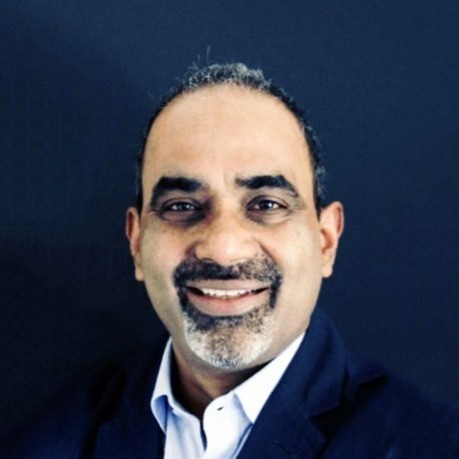
Sarbjeet Johal, analyst at Stackpane and Cube Collective, joins John Furrier on theCUBE Research to discuss the evolving role of Chief Marketing Officers (CMOs) in the age of Artificial Intelligence. Johal, known for his detailed insights and experience, shares perspectives on how AI is influencing not only marketing strategies but also the fundamental duties of CMOs across all industry layers—from startups to established enterprises. Analysts from theCUBE also offer their expert insights on AI's transformative effect on productivity and data utilization. ...Read more
exploreKeep Exploring
What is Sarbjeet Johal's perspective on the changing role of the CMO in relation to the infusion of AI in sales and marketing?add
What are some key characteristics of visionary CMOs in relation to understanding technology and the importance of maintaining originality in messaging and branding?add
What are some important considerations for creating compelling content in marketing?add
What are some common objections that people have to always being on and utilizing social media as a CMO?add
What events are you looking at attending and what's on your event radar in the upcoming months?add
>> Hey, welcome back to theCube here in our Palo Alto Studios. I'm John Furrier, host of theCube. We are here as part of our CMO Leaders Program Series Summit. All week we're broadcasting with the top leaders in the CMO area, and in technology to show the impact of how AI is changing the role of the CMO. And of course, the change in the role of sales and marketing as organic content. As AI comes in, productivity gains, cost efficiencies. But more importantly, the development of the workflows and the data are changing. Sarbjeet Johal here. He's with Stackpane, also Cube Collective, distinguished member of theCube, always out with his analyst notebook, getting data for the team and share with the world. Sarbjeet, great to see you.
John Furrier
>> Thanks, John.
John Furrier
>> Thanks. Thanks for joining me on this analyst section. You've been a CMO. We've all been CMOs, at least in some part of our life, in some small scale, but never like in the big company. But I want to get your thoughts as an analyst, because you and I are both looking at all layers of the stack from the AI infrastructure all the way up to the top of the stack, huge infusion of AI. And now you're starting to see whether you're in a young startup, founding startup. Born in AI, by the way, like born in the cloud years ago. They're born in AI. Fast-growing series A, series C companies, pre-public CMO role. And then you got the big enterprise CMOs, which is marketing departments in all aspects. The common thread is there is that they can do more with less. They all have different kinds of data. But the role of the CMO is certainly changing. What's your perspective? You look at, if you step back from our day-to-day, covering the balls and strikes of the tech enterprise industry, what's your perspective on the CMOs, these CMO leaders? What are they facing? What do you see as the opportunities, the challenges? What can they overcome? Because certainly there is going to be massive upside for CMOs.
John Furrier
>> Yeah, actually, there are some CMOs, I believe that they're very transactional in nature. They do what the CMOs are taught in the universities marketing programs. And they do that. But there's some CMOs who are very visionary. So they understand the domain they are in. In this case, they understand the tech deep down. And they have sat with the coders and architects. They understand all the lingua franca. I think they do a much better job and talking about what's changing with AI, with gen AI, yes, their teams will be more productive, but their leadership has to adapt to the new world. Actually, my fear is that there can be vanilla content coming out of these generic gen AI prompts. And then that can hurt a brand, hurt the messaging. So the originality has to be kept, I think. And then for that, I think you have to feed the style of your communication, the culture of the company to these. I'll call it small language models. You need to have marketing models, I believe.
John Furrier
>> Yeah. The thing that came out of this couple of conversations I'll get your thoughts on is the triangle of your product or service value. Brand and demand generation seem to be the core areas that are becoming very focused in terms of the power that they contribute. Of course, there's money behind lead gen and demand gen, lead gen I put in the one corner. That's one area. The other area you brought up around vanilla content, what's come out of some of the fractional CMOs that came on who do work with a lot of startups is that the mindset of an entrepreneur or an executive is, "Oh yeah, I can just get rid of those people and throw AI against it." And they can write the white papers, write the briefs, do all the marketing, write 10 blog posts a day, juice the SEO, do performance-based marketing. And they're not wrong, you can replace people with that. But their mindset is it's done. And what happens is they're optimized for just flooding the zone with bad content. The other CMO said, "If you can do that and hit the north star of serving the customer." Because the game is still the same, your marketing is something to a prospect or customer, they see value in it, and they engage and pay you for that service or product. And then you keep them. And you ready to get more. And then build more products. So that whole loop of the closed loop nature of where it moves up to the C-suite is becoming interesting. So the ones that were struggling were the ones that said, "Hey, I'm so focused on the mechanisms of what I do. Lead gen, email marketing, performance, get the metrics, juice the numbers. Look at it, Boss, we got more leads." What they miss is why marketing exists.
John Furrier
>> Exactly.>> And you can go from below the line, which is a term we've heard and use in the industry where you're below the C-suite, you're below the line, you're executing day to day. And security has moved above the line clearly in the past decade, past five years specifically. So all security is C-level and driven down to the day-to-day. CMOs now are coming above the line. To your point around that opportunity, the ones that are in the weeds looking at the bark of the tree, nevermind the tree in the forest, the ones that are winning can see the forest. And then they're at the C-suite. So this is AI is not just to get rid of people. And by the way, those people are moving to high creative, high yield jobs. What's your reaction to all that? Do you agree?
John Furrier
>> That's a lot actually. No, actually.>> Yes.>> Now I need a large language model right here to analyze what you just said and to summarize it. Yeah, actually, I think you're right. Company size matters, right? The domain matters, the expertise from the domain matters. I think in technology, the best CMOs are the ones who have some technical jobs. So it's that simple. Having said that, if you take another aspect of the CMO, one is being, again, as I said, technical jargon, knowing that, being strategic versus being tactical. Those are high-level branches, if you will. I think if a CMO can be both, that goes a long way.
John Furrier
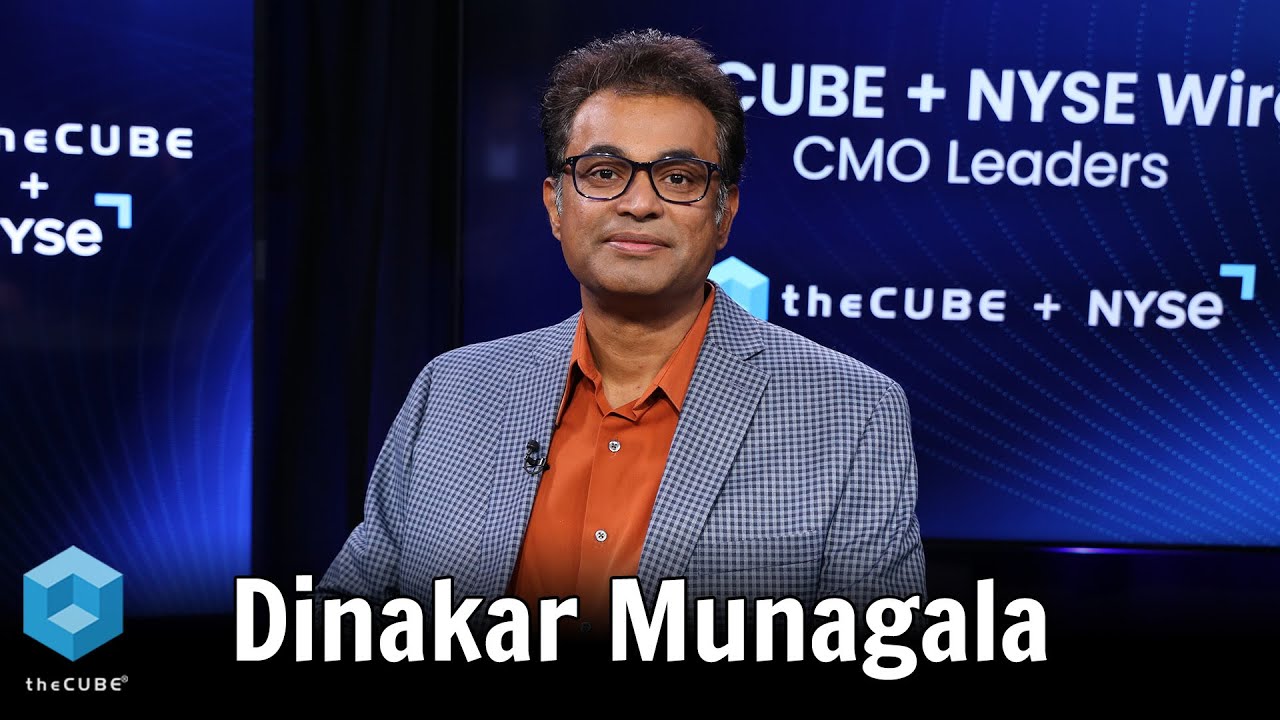
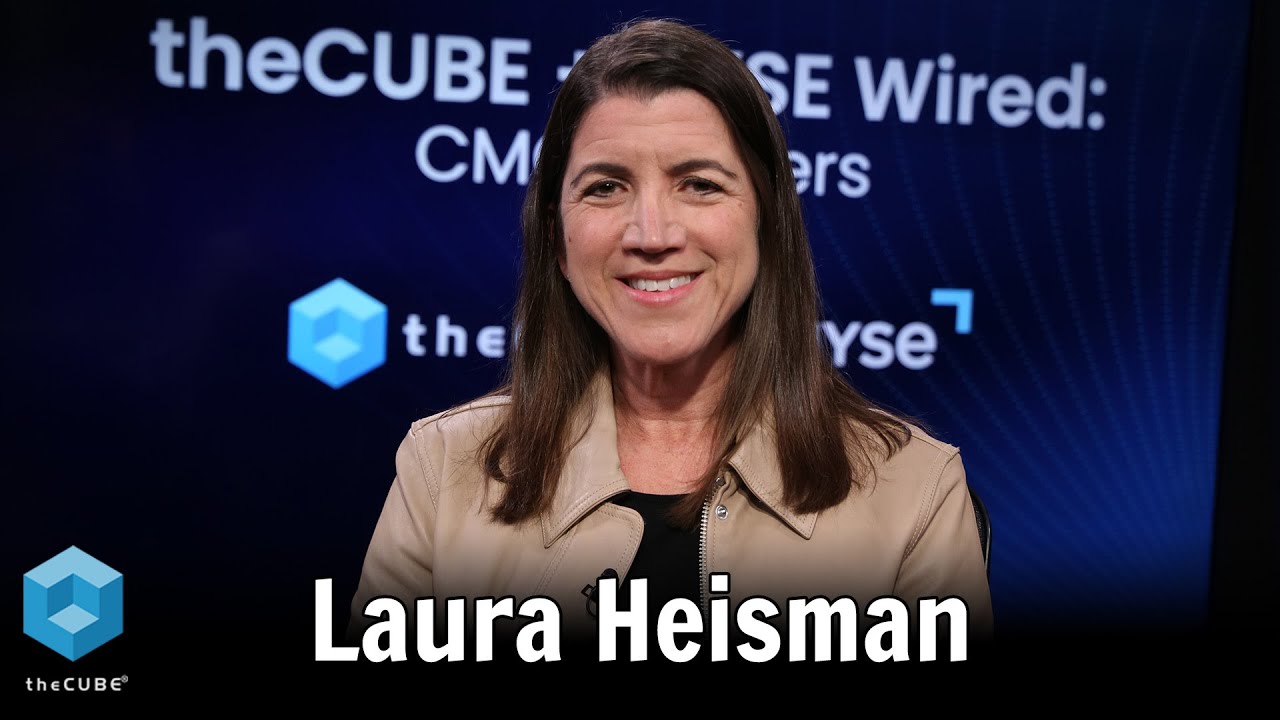
>> So I want to get your thoughts on the guest list we had here. Because we had a mix. And that's why I brought up the diversity of the different guests. We had founders on. We had Rajan Sheth who's working with Together AI. He's also a general partner in HyperGrowth. They're like a investment firm. He is going to have his own fund soon. He's a great guy. He's going to have a great VC opportunity, sees a lot of deals. He's got tons of startups. Shelly Strand, early advisor, fractional CMO, basically. Eric Herzog, Eric, he's more of the B2B gears, what's going on in storage. Bruce Cleveland was an early Siebel employee. He then went with Thomas Siebel, did Siebel, and then rode that wave. He's now written a book. He races cars, he's semi-retired, does a lot of investments. The author of Traction Gap, great book, huge perspective he brought in. I love what he was talking about. Ami, CMO of Arm. Jyoti from Harness, Sanjay from Traceable. They did a merger. We had Treasure Data. Kazuki came in, co-founder and CEO. He was the CTO. He's been on theCUBE. He comes back to the old big data days. So that was day one. Day two was great lineup. Abhay came in, founder, CEO of Typeface, former Adobe. Love what he's doing. Founded by Madrone and other tier ones. Shlomo Kramer, CEO and co-founder of Cato Networks. Multi-success exit entrepreneur, unicorns, took Checkpoint public. Martina Trucco, Carolyn Crandall, Jyothi Swaroop, CMO of DDN, Janine Gianfredi, CMO of Transcarent, work in healthcare, former Obama. Julie Choi with Cerebras. Dinakar, CEO of Blaize. Laura Heisman, CMO of Dynatrace. Mandy Dhaliwal, CMO of Nutanix.
John Furrier
>> Nutanix.
John Furrier
>> Yeah, I can go on and on.
John Furrier
>> Yeah, actually-
John Furrier
>> And I'll take it down, I want to burn the minutes here, but Rachel Thornton, CMO of AWN or former AWS. So mix of big season leaders, emerging leaders, future stars, all said unequivocally that the role of data, and what the old technology of MarTech stacks will survive to some degree, but will be retrofitted. So I want to get your thoughts on this. Because you and I look at the data layer. We look at transformational things happening at the stack level. But if you're a marketing executive at a big company, you've got inherent, pre-existing legacy. MarTech stack, email marketing. So what's your take on the tech side? Because all these seasoned pros are all saying the same thing, we're going to be faster, we're going to be more cost-effective. But the new stacks of stuff and the apps coming out will be the key.
John Furrier
>> Yeah, actually pre-existing legacy is equivalent to pre-existing condition in medical terms. So they have something.
John Furrier
>> Got rejected. We don't cover that. No, but that might be the case. We don't cover that MarTech stack. We don't like that. Or throw it away or go see someone else.
John Furrier
>> Yeah, no pre-existing condition needs to be taken care of to survive. Actually, I was listening to CNBC earlier today. It's like a healthy person has thousands of dreams, but a sick person has one dream. It'd be well. So if your marketing has been ill in the past because of any reasons, now you have some more medicine in your cabinet to fix that and AI will help us.
John Furrier
>> What changes do you see in the stack? Chandra at Neo4j basically said, "I am eliminating any optimization around MQLs, lead gen because I know what people convert on and that is when I get for them, it's freemium." And so he just lets things be behavioral and just lets things fly. But he focuses all of his effort on that one bullseye.
John Furrier
>> You can collect all the data these days. You can say, "Okay, if we do AB testing in go-to market strategy for newer products, you can do that these days." So you can say, "Okay, I'm going to launch this product in this market..." Especially if you're B2C or B two B2C kind of company that you can say, "Okay, if I do this kind of promotion, this kind of geography, these are the results. And will this work or not?" And you can do smaller launches, if you will. And you can gather that data. And then having the data from the social, the sentiment analysis coming from the social channels, what people are saying about our product or our brand, who is talking about us and how they're talking about us, and the macro conditions can be tapped into that. Every day now we have a new president, we are on our toes all the time, what he's going to say, and then the policy changes and then all of a sudden the buyer behavior can be impacted. So I was listening.
John Furrier
>> Real time is huge.
John Furrier
>> Yeah, real time is huge. Actually, Ami Badani from Arm, CMO. She was spot on when she said today's CMO has to be thinking on their feet. Their team actually. They have to adapt very quickly to the changing condition.
John Furrier
>> Tactical warfare, almost. Like Jedi .
John Furrier
>> Like a war room. These days you need a CMO war room. We used to have these war rooms for engineers, right? My God, we launched a product .
John Furrier
>> We had ship it with the bugs, squash, everything, QA. Move on the..
John Furrier
>> Exactly. So we will have a sleeping bag there. And it's always staffed, if you will. So I think, yeah, we need to-
John Furrier
>> Well, she also said you can slice a salami, that was my word, but she didn't say that, but she said, you can also direct the content so it's not vanilla. You can actually look at more touch points and actually give much more compelling content. Now, who does that content? You get hired to help companies out and we help companies do that. But at the end of the day, but knowing what the right piece of content when and where in real time is now the new challenge.
John Furrier
>> Yeah, persona awareness is huge in marketing, I believe. When you're talking, you got to understand the persona and then what lingua franca they use and what their problems are, what their objections are to your technology stack, to your messaging. That's huge. So that won't come to you unless you prepare your teams or embed your marketing team with the sales, with the product at deeper level.
John Furrier
>> Brian Bauman, the founder of NYSE Wired Community, which we are collaborating with, is powering that community, said it best on his LinkedIn and NYSE, Wired and the Cube are giving a voice to the marketing leaders defining the company's strategies. And that's why I compare the CMO persona to the CSO or CISO. Security was below the line. It was reported to the CIO, we all know when it broke up, breaches could be an extinction event for companies, whether you're talking to SolarWinds, whatever example you want to show. But now they're above the line, and that's all data-driven. So I think the security vertical looks a lot like what you're getting at with the CMO. There's always stuff going on. You're not being attacked, but you are attacking the market with good content. But it's very active. It's very agile, very targeted, very intentional, and there's mechanisms, but craft. You got to know what's going on and comprehend the context. So you're seeing that CMO above the line. So that's a huge point. And if this happens, you can't be one of those CMOs that's going home nine to five.
John Furrier
>> The context switching, actually Ami talked about that too. So you have to be able to switch context very quickly and give value to the listener about your brand, about your competitive advantage. Just table stakes these days. And Garry, we actually said that long ago. People usually will object. People who have this old-time thinking, if you will. Let's say like, "Oh, we don't want to do this. We don't want to do social, we don't want to be always on. We don't want the CMO war room per se." People say, "What's the ROI on this? Why will I spend money on this?" And GaryVee said, "What's the ROI of your mom?" He said that. He's a famous video clipper all over the internet. "What's the ROI of your mom?" What he was trying to say was that there are certain things you don't see the ROI directly. But it's the whole kit and kaboodle for you. It's the stuff which builds you. So sometimes you have to let go of the ROI metrics, but you focus on the more authentic, more educative marketing or strategic marketing I would say.
John Furrier
>> All right, so let's get into some of the things that you're covering on the analyst side. Obviously the news is all over the whole chip things. White House is getting involved now with the Chips Act. So I'm sure Trump's going to have his fingerprints on that. A lot of sovereignty issues. Nvidia had some news, they're taking down their Arm position. Speaking of Ami's interview you mentioned from Arm. So they're reducing their ownership percent by 43%. Arm's are going to build their own chip. Dave and I talked about that in the podcast today
John Furrier
>> That was interesting.
John Furrier
>> But GTC is coming up. That to me is Nvidia's show. That's the Super Bowl for the world that's in the market for AI. Supercomputing and GTC have become, to me... And Open Compute. Open Compute, Supercomputing and GTC to me are the key shows in AI infrastructure. Of course you've got AWS re:Invent, but that's more of the cloud show. But in terms of the raw nerd factor, Open Compute, SC and GTC. Up and down the stack, big shows. What do you expect to see from GTC this year?
John Furrier
>> GTC, I am expecting them to announce the next gen of their GPUs. So after Blackwell, they said they will be on an annual cadence, so that means they will announce something. So I'm waiting for that. And I'm also waiting for their numbers. Of course, their earnings are next Thursday I think. Or Wednesday next week. So that will tell us a lot. But what we will listen to during the GTC. And Jensen is top-notch marketer, if you will. We're talking about marketing. So I think every time he presents, he brings a new aspects out. So now he came out with these three scaling laws now. Why you need more GPUs. So yeah, the reasoning models are talk of the town and I think we will listen a lot more about that. GenTech AI will be also front center. And then I bet they will have some customers on stage, hopefully.
John Furrier
>> So some reports from Bloomberg today on xAI, they're looking to raise 10 billion at a 75 billion valuation. Elon just continues to pocket a lot of cash. But more importantly, Dell is nearing a 5 billion deal to provide the servers NVIDIA GB 200 chips for xAI super computers.
John Furrier
>> That was today's news. .
John Furrier
>> That was today's news. So that means Dell, HPE are battling it out. I'm a huge fan of the AI factory concept, whether it's used by NVIDIA or Dell. But more generically, I think that's a winning kind of idea, and Dell's smart to jump on that bandwagon. They beat HPE to the punch on that. But NVIDIA also launched it last year. They called it the AI Factory. And Michael Dell jumped on it all. He's not an idiot. He's just like, "Boom, that's the winning hand." But they are factories now.
John Furrier
>> And Europe announced that they are going to put 200 billion euros into AI factories and super factories. We know Europe, what they say and what they do. There's a lot of difference there. They are-
John Furrier
>> It's a industrial revolution at a whole nother level. They're actually calling it the word factories.
John Furrier
>> Actually another-
John Furrier
>> Refineries, factories, showrooms, workflow, networks. It's a great time.
John Furrier
>> It is a great time. The one important event which happened in last three, four days was the AI Action Summit in Europe. So all these world leaders were there. India's prime minister was there, and then our folks were there. JD Vance was there. And if you listen to JD Vance's speech there, it's must listen folks. Take a listen to that one. And it was total opposite of what Europeans and Asian folks were saying there, all other regions of the world versus USA. You have to push forward without worrying too much about controlling the AI or putting too many guardrails on it. And it was very interesting conversation there, between leaders there.
John Furrier
>> Well Sarbjeet, I want to get your take on some of the hot events you're going to. I'm going to be in New York next week for Big Partner Day for the NYSE. They have all the big media platforms coming in and event groups. I just got invited to ring the open and closing bell on the podium with all those leaders. And then MWC's coming up. And then you got Ethereum Week here in the Bay Area. You got HumanX, a conference that I'm going to be doing three panels at. You have Dell Tech world. And then May, by the way, is going to be crazy. So what are you looking at for events? What's on your radar? Obviously you're on social and major influencer. What's on your event radar?
John Furrier
>> Events, the next one is Mobile World Congress, then GTC, then Google Cloud Next is there. And then RSAC is happening locally here. So these are the four, five I'm going to the next. Actually now I'm just added today. You told me that I'm going to Vegas.
John Furrier
>> HumanX.
John Furrier
>> Yeah.
John Furrier
>> You definitely got to do a fly-by on that.
John Furrier
>> Yeah, I'll go there for a day or two. So yeah, I'll add a few more on the fly as and when my time permits.
John Furrier
>> What's your thesis this year? What are you looking to extract out of the market? What are you going in with? I know you always have a great puzzle you're putting together, you've got great research and perspective. What are you looking for? What are you connecting for dots? What's the puzzle pieces you're trying to extract out and what's your thesis?>> My main thesis is this, that the value lies on the application. Infrastructure is there to support the application. Even the middle tier, which is the platforms, they are there to give us applications which meet the real world like application. We use-
John Furrier
>> Real world stuff.
John Furrier
>> Yeah, that's how we'll use this technology. So we can't eat GPUs. We can't. We can't take that as a medicine. So we have to have these applications in healthcare, in auto, and our CRMs need to be better. So application is where the rubber meets the road. And then how we cook up those applications. That's where my focus is. The developers, how they will adapt to writing applications using gen AI. Actually, I'm coming up to this conclusion, actually I'm still working on this, that there are two types of outcomes when we use these digital systems. One are deterministic outcomes, where we need the pure numbers, the certainty of the outcome. The other side is indeterministic or undeterministic. I'm weak in English. So that's where the gen AI comes into the picture, the large language models. But on the deterministic outcomes, our old databases, our old systems still will play a huge role there. So our applications will be composite applications or hybrid, you can say that, but composite is a better word, for long time to come. We will be using agents to use AI on one side and then bring in actual data. So we'll be using drag and or any other mechanisms to mash these two worlds up. We cannot rely on gen AI alone to build these systems. It can help us in coding, but not in programming.
John Furrier
>> All right, well we're going to keep track. Thanks for coming in and weighing in on the analyst perspective for the CMO Leaders Summit. I really appreciate your time.
John Furrier
>> Thank you.
John Furrier
>> Thanks for coming by the studio. All right, I am John Furrier here inside the studio, the host of theCUBE with our team here. And the NYSE Wired Community that Brian Bauman founded, now becoming a bigger founding, founding teams of people collective working together with open source content to bring together. Just great people, have a trusted connection and building great content to share. And from that, a marketplace of ideas and activity happens. So Sarbjeet, I always want to thank you for being part of our CUBE collective, our trusted network peers in the community now part of the Wired network. Of course, we'll see you in New York. Hopefully soon.>> Yep.