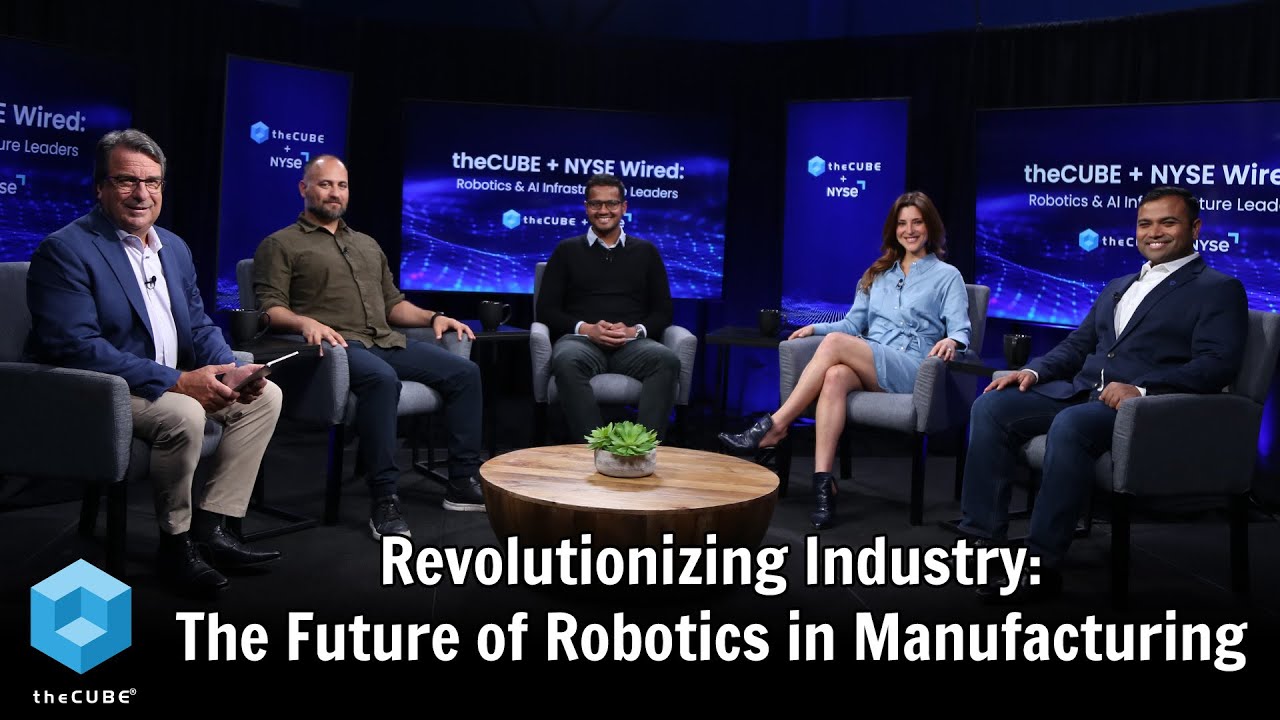
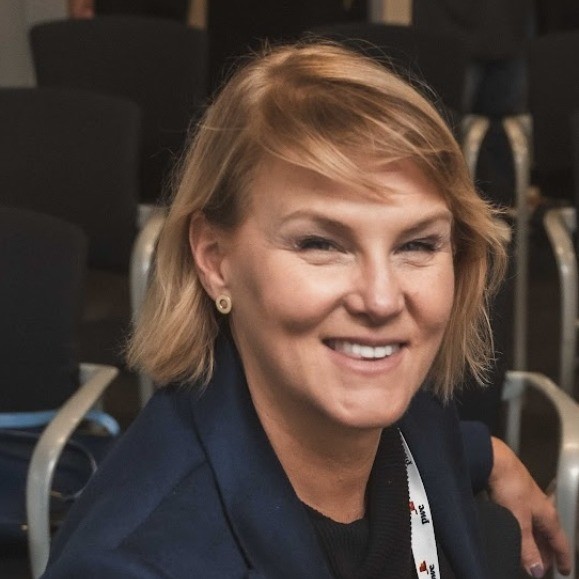
Shelli Strand, a distinguished leader at Early Growth Advisory with significant experience in cybersecurity and marketing, joins us on theCUBE for an insightful discussion on the evolving role of the Chief Marketing Officer (CMO) in the context of Artificial Intelligence (AI). With a rich background, including her work with Microsoft, Strand shares her perspectives on how AI is reshaping marketing strategies and organizational dynamics. This conversation, led by theCUBE's analysts, delves into the integration of AI into marketing processes and its impact on customer engagement and corporate transformation.
In this video, Strand highlights the necessity for CMOs to adapt to new challenges by focusing on strategic market engagement rather than traditional metrics-driven approaches. According to Strand, AI introduces a shift towards precision in marketing functions and offers fresh opportunities for startups to emerge within an AI-driven landscape. The discourse addresses the importance of having a strong market leader capable of navigating these changes and restructuring marketing tactics for efficiency and effectiveness. By aligning marketing with customer-centric narratives and leveraging AI to optimize operations, companies can enhance their strategic positioning in a rapidly evolving marketplace. #EarlyGrowthAdvisory #CMO #AI #theCUBE #Cybersecurity #BusinessTransformation #CMOLeadersSummit
00:00 - Intro
00:06 - Navigating the AI Landscape: The Evolving Role of CMOs in Modern Marketing
03:10 - Leveraging AI and Strategic Marketing for Startup Success
05:47 - Strategic Alignment: Marketing, Growth, and AI Efficiency
09:42 - Strategic Integration and Security in Modern Enterprises
14:20 - Post-COVID Digital Integration: Strategies for Blending Digital and In-Person Marketing
16:49 - Strategic Storytelling: Integrating Communications and Media in Modern Marketing
22:24 - Visionary Strategies: Navigating the Intersection of Data, Storytelling, and Business Evolution
Forgot Password
Almost there!
We just sent you a verification email. Please verify your account to gain access to
theCUBE + NYSE Wired: Marketing Leaders. If you don’t think you received an email check your
spam folder.
Sign in to theCUBE + NYSE Wired: Marketing Leaders.
In order to sign in, enter the email address you used to registered for the event. Once completed, you will receive an email with a verification link. Open this link to automatically sign into the site.
Register For theCUBE + NYSE Wired: Marketing Leaders
Please fill out the information below. You will recieve an email with a verification link confirming your registration. Click the link to automatically sign into the site.
You’re almost there!
We just sent you a verification email. Please click the verification button in the email. Once your email address is verified, you will have full access to all event content for theCUBE + NYSE Wired: Marketing Leaders.
I want my badge and interests to be visible to all attendees.
Checking this box will display your presense on the attendees list, view your profile and allow other attendees to contact you via 1-1 chat. Read the Privacy Policy. At any time, you can choose to disable this preference.
Select your Interests!
add
Upload your photo
Uploading..
OR
Connect via Twitter
Connect via Linkedin
EDIT PASSWORD
Share
Forgot Password
Almost there!
We just sent you a verification email. Please verify your account to gain access to
theCUBE + NYSE Wired: Marketing Leaders. If you don’t think you received an email check your
spam folder.
Sign in to theCUBE + NYSE Wired: Marketing Leaders.
In order to sign in, enter the email address you used to registered for the event. Once completed, you will receive an email with a verification link. Open this link to automatically sign into the site.
Sign in to gain access to theCUBE + NYSE Wired: Marketing Leaders
Please sign in with LinkedIn to continue to theCUBE + NYSE Wired: Marketing Leaders. Signing in with LinkedIn ensures a professional environment.
Are you sure you want to remove access rights for this user?
Details
Manage Access
email address
Community Invitation
Shelli Strand, Early Growth Advisory
Shelli Strand, a distinguished leader at Early Growth Advisory with significant experience in cybersecurity and marketing, joins us on theCUBE for an insightful discussion on the evolving role of the Chief Marketing Officer (CMO) in the context of Artificial Intelligence (AI). With a rich background, including her work with Microsoft, Strand shares her perspectives on how AI is reshaping marketing strategies and organizational dynamics. This conversation, led by theCUBE's analysts, delves into the integration of AI into marketing processes and its impact on customer engagement and corporate transformation.
In this video, Strand highlights the necessity for CMOs to adapt to new challenges by focusing on strategic market engagement rather than traditional metrics-driven approaches. According to Strand, AI introduces a shift towards precision in marketing functions and offers fresh opportunities for startups to emerge within an AI-driven landscape. The discourse addresses the importance of having a strong market leader capable of navigating these changes and restructuring marketing tactics for efficiency and effectiveness. By aligning marketing with customer-centric narratives and leveraging AI to optimize operations, companies can enhance their strategic positioning in a rapidly evolving marketplace. #EarlyGrowthAdvisory #CMO #AI #theCUBE #Cybersecurity #BusinessTransformation #CMOLeadersSummit
00:00 - Intro
00:06 - Navigating the AI Landscape: The Evolving Role of CMOs in Modern Marketing
03:10 - Leveraging AI and Strategic Marketing for Startup Success
05:47 - Strategic Alignment: Marketing, Growth, and AI Efficiency
09:42 - Strategic Integration and Security in Modern Enterprises
14:20 - Post-COVID Digital Integration: Strategies for Blending Digital and In-Person Marketing
16:49 - Strategic Storytelling: Integrating Communications and Media in Modern Marketing
22:24 - Visionary Strategies: Navigating the Intersection of Data, Storytelling, and Business Evolution
Brand, Thought Leadership and Narrative Lead, Security MarketingHigh Growth B2B SaaS Advisor
search
>> Welcome back everyone. I'm John Furrier, host of theCUBE here in our Palo Alto Studios for the CMO Leaders Summit. This is theCUBE in the NYSE Wired community. It's our open source content format community that's building as a trust network. Every interview, we try to get the data and share that with you. Shelly Strand is here, she's with Early Growth Advisory. That's what she does. She's been in the cyber and marketing area, a lot of AI experience formerly with Microsoft. Shelly, great to have you come theCube. Thanks for coming on, appreciate it.>> Thanks for having me, John. I'm really happy to be here.>> We were talking before we came on camera around the role of the CMO. This is the topic and we've been covering this area where obviously AI infrastructure is what we do a lot of. But in the application side, every vertical is being disrupted in a good way.>> Yes.>> Domain expertise is there. You've got workflows, you've got pre-existing platforms, but AI can get into these processes and make a lot of change.>> Sure.>> So you have this dynamic where it's like, well, we did things before and now we have new opportunities. And one of the things that's coming up is business transformation is the big topic, but the role of the people in the organizations have to change to make that happen because the customers are changing. The consumers, their customers are learning differently, they're engaging differently. So you have a front end change with the experiences that could be really changed quickly. And in the back end, you have data and scale AI systems that can now change the workflows of marketing.>> Sure.>> This is a big area. So the question is, what is the role of the CMO today from your perspective? Because whether you're born in the AI cloud, like the cloud days or taking an AI enterprise view, which have all this data, so you have two kind of threads. What's your view of the role of the CMO given that they're looking at that?>> Yes, absolutely. Thanks for the question. It's a good one. And if you think about the role of the marketing lead being a C-suite role, we've only been around for about 30 years and we haven't done a really good job as a group. My brethren would probably agree with me in making that a really rich, fully at the table role. It's a role that is usually short-lived, very specific and has a lot of miscommunication around it. So there's that kind of going into the AI revolution. And then you have this constant push and pull of how strategic is marketing, how strategic is understanding the market, understanding the customer, and how much of it's just speeds and feeds? How many leads can we get in and how do we grow this business as quickly as we can? And unfortunately, we've been caught in this sort of false premise cycle of needing to do both things at once when one is more important than the other. So in early stage, I think AI has really shone a light on the precision of what you need to be thinking about when you're recruiting and working with a chief market officer in the C-suite.>> Yeah, and Shelly, one of the things that I've been looking at, you mentioned early stage startups. We've been riffing on theCUBE for about six months now on this topic that's going to come full circle here. Back in mid-two thousands, late two thousands, Amazon Web Services came on board. And if you were a startup then you were a nobody. Okay. Now they're Dropbox, Airbnb. So they are born in the cloud. is 15 years old. We have no IT department. I run everything. I'm like the admin on the cloud account, Gmail. So born in the cloud, created new brands and they did things completely different because they had to. Now DeepSeek was a great indicator this past week of saying, "Hey, if the constraints are, I don't want to provision all this stuff or I don't have access to things." So startups now have an opportunity to be born in the AI wave, and that might look differently like the cloud did for those brands that emerged, so in every new cycle that's this big new brands will emerge. So I'm expecting startups to come out of the woodwork and be like, "Wow, their rocket ships escape velocity hits much faster." So I think there's going to be a born in the AI model like cloud, which produced tons of deca-corns and unicorns. What's your view on this? Because the startups really are coming up now. You're starting to see more open source, more collaboration. What's your reaction to that?>> And I think being born in the AI world->> turned forward yet.>> I completely agree with you.>> It's on premise too, so it's not like just cloud.>> Yes, exactly. But I think we have an opportunity now to think about what we ask for from the chief marketing officer a little bit differently. Or better said, what we ask for from the marketing function a little bit differently. If you look at which I had three early stage startup CMO spots and one really rich starting up a new security business at Microsoft role that was pretty similar. And in each of those roles, you're not just asked about marketing, especially if you take the early growth startups. You're asked for things like, "Hey, how do we talk to our community so that we can recruit better salespeople so that they know that we actually have a good story and a good brand? How do we help our board talk to their investors so that they're not on their back foot when they say where they've put the money of the people that trust them? How do we improve our morale?" Kind of all of these crazy things as well as how do we make a name for ourselves in the world and how do we actually increase the velocity of business? And so we've gotten this huge hodgepodge of different things that we're doing, and I assert that we have an opportunity now to think about hiring marketing in a different way. Let's say you're at a B stage and you're looking for a CMO, I think you're a little bit off target, honestly. I think what you need is somebody who is either a really, really strong advisor that sets up your story, that sets up your brand, that sets up your handshake between sales and marketing, and then a really strong internal director that you can be grooming for that position further on and come in for that amount of time that it takes to set up those things and let that person go run with it. And that can be done in a really good board advisory or it could be done in a really just solid consulting agreement.>> If I hear you correctly, you're saying the focus of the CMO and the early stage playbook is changing on this more aperture to the what has to get done?>> Yes. It's more finite. I think it's taken what has always existed, a really specific sort of burning need per stage and made it even more laser focused. Because with AI, you have the opportunity now to make things more efficient on the operational side where you don't need this really expensive CMO hanging around the whole time, who is probably not going to be really, really efficient at the next stage. For example, I am a B stage marketer. That's when I knew I craft stories, I do brands. I set up the handshake between sales and marketing. But I don't have experience, nor would I be really efficient at C stage exit curation for example.>> Or scale.>> Or scaling or operationalize the rinse and repeat.>> That's a really great point because the product market fits happening.>> Yes.>> The stories evolving. And so I've heard in the past, again, I'm dating myself, let me go back a decade. A friend was the CMO and I said, "Let's work together." "No, I'm busy this year. My top priority is to roll out the MarTech stack." And I go, "So how long is that going to take?" "About a year." And so the playbook was, okay, you get the big B round. We got to stand up infrastructure for marketing, which was basically leads. Oh, we got to do some demand, Jen. That's essentially like provisioning a data center in my mind. Use the cloud native example. Born in the cloud, I don't want to do a data center, I just want to get in the cloud and iterate and get moving. Here, that is not needed at the early stage because you can always get that scale and efficiency.>> Sure.>> Is that kind of what you're getting at? Am I on the right track?>> Yeah, it is what I'm getting at. And it's interesting that your friend went with the data stack first. I wouldn't have, and I didn't for the three that I've done and for the advice that I'm doing now with my clients is the first thing you need to do is get your story out there and your brand out there, otherwise, you're going to get over and over again, salespeople coming up and saying "'Shelley, nobody knows who we are out there." I'm walking into meetings and I've got blank stares and that's the worst thing ever.>> To get the word out, it's really more important than the mechanics.>> Get the story out, yes. And that is sort of the drop of ink that you put in the water that needs to have integrity as it expands and that's the most important thing that you could do at B stage, I think.>> I like this little analogy because it helps me frame out the born in the cloud and this AI because what born in the cloud gave you was, you just cut to the chase, cut to the chase. I launch it, is it working? Are people downloading the app? Can I get product market fit? And then seeing the results and then going forward, once you hit that escape velocity. Now come to AI, you have that. So I love that conversation. But a lot of the AI in these startups have to sell into the companies that have AI like enterprises. So the AI enterprise is the hot area right now because that's where the money is on that side. So how do you see startups intersecting into the enterprise? Because now the enterprise, they're like, "Well, we'll sandbox it, we'll do a proof of concept," but there's kind of like POC purgatory going on right now.>> Sure.>> And you've been successful launching in the big enterprises. What's the dynamic for a CMO or a startup that says, "Hey, I want a vector into the enterprise," but they're running all these legacy stuff.>> And the key to figuring out how to get into an enterprise and either in partnership or in some M&A desire, if you will, is to find out how you're making what they're doing better. So it kind of goes against the grain of a lot of entrepreneurs, but you really want to be making the best feature. In the world of cloud, to your point, cloud gave us the ability to A-B test and get response and get a signal really easily. But now what we're doing is we're trying to make what the bigger motions are doing better and more finite for whatever the innovation is that we're chasing, if you will.>> Shelley, one of the things that comes up in any kind of AI conversation is structural change in the roles.>> Yes.>> I've heard people say in one hand, "Hey, CMO is becoming less relevant because they don't have either the skills or ability to hit the targets and do the things we need to do." On the other hand, I've heard, "Wow, they're perfectly positioned to be the change agent and force multiplier for value propositions that can be extracted from doing business." What's your view on this? Because you sit at the of cybersecurity and marketing.>> Yes.>> Now, if anyone's been paying attention to cybersecurity, it's been the most robust market.>> Yes.>> One, dealing with vendors, dealing with the end game, the outcome of protecting from the bad guys. So you're seeing a lot of the similarities between a chief security officer because they've become critical for the business. You've been on both sides of that. So now take the CMO side saying, how important is this role? And if you had to advise structural organizational behavior change for a CMO, how do they become relevant and what do they do?>> It's massively relevant to have a strong market leader. So if you think about CMO as a noun instead of a verb, marketing is a verb, and it's one of the very few C-suites that actually is a verb. You don't hear chief executing officer->> Security .>> Right. So it's really important, again, that ink in the water, it's important for that ink to have integrity and to be true. And what is that ink? It's your product market fit. It's the understanding of your customer and it's the understanding and the ability to deliver your narrative and your story. Those are so much more important now. And they take a human skill. There's lots of jokes made about Saturday Night Live a couple weeks ago had that great thing about the AI guys trying to do a podcast. And it just isn't right. It's not right. It's very important now to have a very, very strong leader, whether that be an advisor or a consultant or eventually a CMO that makes sure that that ink is always true and that's always the right thing. But you did bring up another thing that is a hugely passionate thing for me, and that is I feel so much in common with my chief security officer, brethren. CMOs and CISOs, there's so many parallels. We're both dealing with data, we're both dealing with testing, we're both dealing with alarms are. Oh my God, this is down. This is up. Is that red light what I should be looking at now? We both have a gazillion early stage startup technologies coming at us in our email boxes daily. There's a lot to be said about the partnership.>> And by the way, the CMO, I would agree that I love this conversation because the CMOs are becoming data-driven, not as a dashboard, but as a tactical command and control edge in the front lines with the customer.>> Absolutely. Absolutely.>> Like security is dealing with front line. You got blue team and red teams. Will there be blue team, red teams and CMO? I think yes, probably.>> Yes. And we come together with customer privacy. We come together with customer data security, and we also come together in the fact that we're both below the line. We're both seen as a expense, and it's really hard to prove what we do is working. And that's another thing that we have in common with out .>> Every year at RSA and the events we cover, it's becoming less of below the line. You're hearing, "It's a board conversation." Cliche, have you heard that? It's a board.>> Of course.>> Of course it is because you could be out of business if there's a security breach and some companies are going to CSO because information's only one aspect of it. That's the physical side of it.>> And that's super smart.>> And so this again, brings back to the confluence of digital meets physical. As a marketer, events, face-to-face or back, so post COVID. The role of digital in the customer relationship is huge. And you've seen this on co-pilot, certainly in the work you've done.>> Sure.>> As digital becomes a first party relationship, which seems to be accelerating, first of all, do you think that's happening or happening or happened? Or it used to be digital was a separate department. Hey, they run the website, they run social.>> You're bringing up all my favorite pet peeves, John. I hated the whole structure of having digital separate from demand gen or content marketing. I always felt like that was really strange to sort of pull out of the marketing ecosystem, a separate deal desk for digital in a way where you're just kind of doing that. It is absolutely part of the core of the marketing team. In fact, the first time somebody contacted me, one of our lovely friends in the recruiting world said, "Oh, this company wants you to interview for VP of digital marketing." And I'm like->> What is that?>> Is there a VP of demand gen? Because I don't get how you even do that. And so yeah->> We got a podcast.>> You're onto something really good. No, it should not be separate.>> Well, I think the security thing is interesting. I'm really glad you came because I've been saying that you think about how drones are developed, right?>> Yeah.>> You got to understand the territory, then acquire the targets and understand the surveillance.>> Oh, I love that.>> And we had a previous guest on that's talked about research being critical. And of course we have a research department and we have a media. But every company has to be a media company and communicate directly. We're seeing that trend for multiple years now. But the digital piece, when you have these events, and this is what Brian Baumann at NYC Wired and I partnered on was why is it that the event have to end? Now, that's a huge investment of provisioning, narratives, content programs, actual stuff. Partners are all there. Everyone's activated. And then it just breaks down and everyone goes on and the digital teams take over. How are the leads? So why can't you just make that always on?>> And that is a great idea. And we can take a cue from our entertainment buddies. I've always been B2B. But gosh, I'm really impressed at what the music industry is doing. I took my daughter to see Billie Eilish a couple months ago. It didn't start at the show and it didn't end at the show. I was getting emails from Billie all the way up to the show telling me what I need to buy from my daughter so that she has the right thing to wear and->> Little rebel .>> And then, oh, you get to hear the song before everybody else does. And also actually really great storytelling around how she makes all of her concerts eco-friendly and vegan food, all these really wonderful things about her story and her narrative. So I felt like I was part of a whole thing, not just a show. And then afterwards, lots of follow-up. Again, more music that I only got first.>> The relationship->> That's exactly right.>> So they use the event as gravity to connect people. And then again, this is why I think this digital piece is important, because I think that's a force multiplier because you're already doing the work to do all this. So it's less of a lead, but it's more of an ROI conversation. And I know that a lot of people tend not to look at it that way. At the end of the day, sales matter, right?>> Yeah.>> Are people using the service or buying the product? Are they happy?>> And yes, sales matter. There's also, I love the conversation that pops up and comes back every now and then about VOI, value on investment. Because there are things, traditionally advertising and PR and narration and all that kind of stuff is considered a above-the-line thing because it's more of a value talk rather than how many sales do we get from this thing? And when you're doing something like what you described where you have a center of gravity and an event and your pre-feeding content and community, and then your post-feeding content and community, what you've done is made a value that you can then extract ROI from your tactics.>> Well, I think you nailed it on this whole example with the music and B2B, by having a constant drum beat of a relationship touch. It could be heavy, light depending upon where you are in that kind of flow. So the question is how does that change the makeup of a CMO and their staff? Because what I've been seeing, and I'd love to get your reaction to this, is that the people that are poking at all these right answers or right directions, in my opinion, have interdisciplinary skills than marketing people. They're like, "I've been in the industry marketing team. I've done this." So you're seeing a lot of more cross-discipline knowledge that go, "Hey, I get the value of what's happening." Why are we spending money three months after the event or three months before when we could be doing ... It may not look like an important piece at any given time, but the thread in the aggregate is important.>> It's so true. And it's going to be painful for a little while while we change, but the CMO post is changing yet again. If we do it right, we will lean into exactly what you're saying because if you look at the way we've been doing it for 30 years, a lot of CMOs will say, "As soon as I started doing something well, it would go to the product officer or it would go to the CRO." So the more we lean into those very highly strategic skills cross-functionally in the company, the stronger our role will be. And I will put a plug in. There's a growing movement among us that we call ourselves chief market officers because that's really what we are. We're the understanding and the voice of the customer. We know when to pivot. We know where the adjacencies are. We know where the product market fit should move if it's not where it is now.>> That's a really great example. We're going to have Bruce Cleveland in later today.>> Great.>> He wrote the book Traction Gap, which is about market engineering.>> Yes.>> And so I want ask you->> I love that. I haven't read it.>> If you understand the market, how important is the role of comms? Because in the old days, you had PR, public relations or communications, analyst relations, by research, hire people to tell me what to do, and then you had three investor relations if you were going to go public, whether you were private or public. Those were the standard departments. What's the role of communications in this new normal you've just pointed out? Because to me, it seems like a super important one, but traditionally they don't have the biggest budgets. They just, how do I get on the New York Times?>> The role is as important as it's always been. For comms itself, the perception needs to change that it's the cheap freeway of getting your word out. It needs to be highly budgeted. Comms works better than advertising in almost every case. And at the very least, a very good job with comms will grease the wheels for all of the other stuff that you do later. Now, it being separate from marketing is a terrible thing. Just like we were talking about digital. But it being separate than IR, investor relations and analyst relations, that makes sense. They're such transactional communications and they have to be so careful, especially when you're in a big company like Microsoft, any public->> Confidential information, NDA's.>> Yeah, all that stuff. In an early growth startup, of course, you wouldn't have three different departments for that. You'd have one. But PR is, I think the beating, beating heart of marketing today. It's the storytelling.>> I love the analyst relations area, but I think it's going to get disrupted because what I've noticed is is that they have all the access to the talent. I always said to my PR friends, you don't need to tell me what to say when The Beatles are in the studio. So you already have the winners. Those are the execs. They're all messaged up. But you mentioned the freeway to your brand message. Earned media has changed. What is the definition of earned media? Because if you think about what you said earlier, you're always earning, but you don't need to pitch to earn. You can actually go out and earn it. So how do you see that? Because I love your focus. Early growth advisory. Product-led growth is about earning it.>> Yes.>> So you said well staff, I would agree with that. What does that mean to earn it?>> And actually correct you. I don't think early stage you need to be well-staffed in comms, but you need to know that it's not free.>> You pay somewhere.>> It's not free in anyway.>> We know that.>> The role of comms is to tell the story of the company because that's what people buy. And I don't care if you're buying Billie Eilish tickets or if you're buying cybersecurity identity management software. It doesn't matter. People want a story because stories are what stays with them and keeps them engaged, and that's what will get you passed along in conversation both digitally and analog for the growth of your business.>> Well, it's great to have you on. This conversation could go for another hour. I love your view of how the modern era's here. What are you working on now? Take a minute to explain some of the things that you're excited about. Obviously, you had great experience, obviously with the whole Microsoft experience you had there, and just in your career. You are on the front end of another business transformation->> Yes.>> In marketing, which is the totality of the things that work together. What are you most excited about? What are you working on now?>> It's scary and disruptive, but I'm feeling as good now as I did when I first started my career. I won't say when. Back in the day. Because I think that the thing that I love to do most is story tell and product market fit, and that's exactly what I'm working on. I've got a couple of people who are working on some really great MarTech things that are in stealth right now that is exciting to me. But mostly John, I'm just trying to hang on like the rest of us and figure out where the ship is going at the speed that it is.>> Well, the good news is you have that security mindset and background because that's a data business.>> All data.>> All data. Now marketing, it's not like the data and it says, "Be data-driven." No, it's data all day long every day.>> Yes. It's all data all day.>> Yeah.>> Yes.>> All right, great to have you on. We're looking forward to continuing the conversation, Shelly. Thanks for coming on, theCUBE.>> Thank you so much, John. It's been great to be here.>> I'm John Furrier here with theCUBE. You're watching the NYSEC-CMO Leader Series. Thanks for watching.
>> Welcome back everyone. I'm John Furrier, host of theCUBE here in our Palo Alto Studios for the CMO Leaders Summit. This is theCUBE in the NYSE Wired community. It's our open source content format community that's building as a trust network. Every interview, we try to get the data and share that with you. Shelly Strand is here, she's with Early Growth Advisory. That's what she does. She's been in the cyber and marketing area, a lot of AI experience formerly with Microsoft. Shelly, great to have you come theCube. Thanks for coming on, appreciate it.>> Thanks for having me, John. I'm really happy to be here.>> We were talking before we came on camera around the role of the CMO. This is the topic and we've been covering this area where obviously AI infrastructure is what we do a lot of. But in the application side, every vertical is being disrupted in a good way.>> Yes.>> Domain expertise is there. You've got workflows, you've got pre-existing platforms, but AI can get into these processes and make a lot of change.>> Sure.>> So you have this dynamic where it's like, well, we did things before and now we have new opportunities. And one of the things that's coming up is business transformation is the big topic, but the role of the people in the organizations have to change to make that happen because the customers are changing. The consumers, their customers are learning differently, they're engaging differently. So you have a front end change with the experiences that could be really changed quickly. And in the back end, you have data and scale AI systems that can now change the workflows of marketing.>> Sure.>> This is a big area. So the question is, what is the role of the CMO today from your perspective? Because whether you're born in the AI cloud, like the cloud days or taking an AI enterprise view, which have all this data, so you have two kind of threads. What's your view of the role of the CMO given that they're looking at that?>> Yes, absolutely. Thanks for the question. It's a good one. And if you think about the role of the marketing lead being a C-suite role, we've only been around for about 30 years and we haven't done a really good job as a group. My brethren would probably agree with me in making that a really rich, fully at the table role. It's a role that is usually short-lived, very specific and has a lot of miscommunication around it. So there's that kind of going into the AI revolution. And then you have this constant push and pull of how strategic is marketing, how strategic is understanding the market, understanding the customer, and how much of it's just speeds and feeds? How many leads can we get in and how do we grow this business as quickly as we can? And unfortunately, we've been caught in this sort of false premise cycle of needing to do both things at once when one is more important than the other. So in early stage, I think AI has really shone a light on the precision of what you need to be thinking about when you're recruiting and working with a chief market officer in the C-suite.>> Yeah, and Shelly, one of the things that I've been looking at, you mentioned early stage startups. We've been riffing on theCUBE for about six months now on this topic that's going to come full circle here. Back in mid-two thousands, late two thousands, Amazon Web Services came on board. And if you were a startup then you were a nobody. Okay. Now they're Dropbox, Airbnb. So they are born in the cloud. is 15 years old. We have no IT department. I run everything. I'm like the admin on the cloud account, Gmail. So born in the cloud, created new brands and they did things completely different because they had to. Now DeepSeek was a great indicator this past week of saying, "Hey, if the constraints are, I don't want to provision all this stuff or I don't have access to things." So startups now have an opportunity to be born in the AI wave, and that might look differently like the cloud did for those brands that emerged, so in every new cycle that's this big new brands will emerge. So I'm expecting startups to come out of the woodwork and be like, "Wow, their rocket ships escape velocity hits much faster." So I think there's going to be a born in the AI model like cloud, which produced tons of deca-corns and unicorns. What's your view on this? Because the startups really are coming up now. You're starting to see more open source, more collaboration. What's your reaction to that?>> And I think being born in the AI world->> turned forward yet.>> I completely agree with you.>> It's on premise too, so it's not like just cloud.>> Yes, exactly. But I think we have an opportunity now to think about what we ask for from the chief marketing officer a little bit differently. Or better said, what we ask for from the marketing function a little bit differently. If you look at which I had three early stage startup CMO spots and one really rich starting up a new security business at Microsoft role that was pretty similar. And in each of those roles, you're not just asked about marketing, especially if you take the early growth startups. You're asked for things like, "Hey, how do we talk to our community so that we can recruit better salespeople so that they know that we actually have a good story and a good brand? How do we help our board talk to their investors so that they're not on their back foot when they say where they've put the money of the people that trust them? How do we improve our morale?" Kind of all of these crazy things as well as how do we make a name for ourselves in the world and how do we actually increase the velocity of business? And so we've gotten this huge hodgepodge of different things that we're doing, and I assert that we have an opportunity now to think about hiring marketing in a different way. Let's say you're at a B stage and you're looking for a CMO, I think you're a little bit off target, honestly. I think what you need is somebody who is either a really, really strong advisor that sets up your story, that sets up your brand, that sets up your handshake between sales and marketing, and then a really strong internal director that you can be grooming for that position further on and come in for that amount of time that it takes to set up those things and let that person go run with it. And that can be done in a really good board advisory or it could be done in a really just solid consulting agreement.>> If I hear you correctly, you're saying the focus of the CMO and the early stage playbook is changing on this more aperture to the what has to get done?>> Yes. It's more finite. I think it's taken what has always existed, a really specific sort of burning need per stage and made it even more laser focused. Because with AI, you have the opportunity now to make things more efficient on the operational side where you don't need this really expensive CMO hanging around the whole time, who is probably not going to be really, really efficient at the next stage. For example, I am a B stage marketer. That's when I knew I craft stories, I do brands. I set up the handshake between sales and marketing. But I don't have experience, nor would I be really efficient at C stage exit curation for example.>> Or scale.>> Or scaling or operationalize the rinse and repeat.>> That's a really great point because the product market fits happening.>> Yes.>> The stories evolving. And so I've heard in the past, again, I'm dating myself, let me go back a decade. A friend was the CMO and I said, "Let's work together." "No, I'm busy this year. My top priority is to roll out the MarTech stack." And I go, "So how long is that going to take?" "About a year." And so the playbook was, okay, you get the big B round. We got to stand up infrastructure for marketing, which was basically leads. Oh, we got to do some demand, Jen. That's essentially like provisioning a data center in my mind. Use the cloud native example. Born in the cloud, I don't want to do a data center, I just want to get in the cloud and iterate and get moving. Here, that is not needed at the early stage because you can always get that scale and efficiency.>> Sure.>> Is that kind of what you're getting at? Am I on the right track?>> Yeah, it is what I'm getting at. And it's interesting that your friend went with the data stack first. I wouldn't have, and I didn't for the three that I've done and for the advice that I'm doing now with my clients is the first thing you need to do is get your story out there and your brand out there, otherwise, you're going to get over and over again, salespeople coming up and saying "'Shelley, nobody knows who we are out there." I'm walking into meetings and I've got blank stares and that's the worst thing ever.>> To get the word out, it's really more important than the mechanics.>> Get the story out, yes. And that is sort of the drop of ink that you put in the water that needs to have integrity as it expands and that's the most important thing that you could do at B stage, I think.>> I like this little analogy because it helps me frame out the born in the cloud and this AI because what born in the cloud gave you was, you just cut to the chase, cut to the chase. I launch it, is it working? Are people downloading the app? Can I get product market fit? And then seeing the results and then going forward, once you hit that escape velocity. Now come to AI, you have that. So I love that conversation. But a lot of the AI in these startups have to sell into the companies that have AI like enterprises. So the AI enterprise is the hot area right now because that's where the money is on that side. So how do you see startups intersecting into the enterprise? Because now the enterprise, they're like, "Well, we'll sandbox it, we'll do a proof of concept," but there's kind of like POC purgatory going on right now.>> Sure.>> And you've been successful launching in the big enterprises. What's the dynamic for a CMO or a startup that says, "Hey, I want a vector into the enterprise," but they're running all these legacy stuff.>> And the key to figuring out how to get into an enterprise and either in partnership or in some M&A desire, if you will, is to find out how you're making what they're doing better. So it kind of goes against the grain of a lot of entrepreneurs, but you really want to be making the best feature. In the world of cloud, to your point, cloud gave us the ability to A-B test and get response and get a signal really easily. But now what we're doing is we're trying to make what the bigger motions are doing better and more finite for whatever the innovation is that we're chasing, if you will.>> Shelley, one of the things that comes up in any kind of AI conversation is structural change in the roles.>> Yes.>> I've heard people say in one hand, "Hey, CMO is becoming less relevant because they don't have either the skills or ability to hit the targets and do the things we need to do." On the other hand, I've heard, "Wow, they're perfectly positioned to be the change agent and force multiplier for value propositions that can be extracted from doing business." What's your view on this? Because you sit at the of cybersecurity and marketing.>> Yes.>> Now, if anyone's been paying attention to cybersecurity, it's been the most robust market.>> Yes.>> One, dealing with vendors, dealing with the end game, the outcome of protecting from the bad guys. So you're seeing a lot of the similarities between a chief security officer because they've become critical for the business. You've been on both sides of that. So now take the CMO side saying, how important is this role? And if you had to advise structural organizational behavior change for a CMO, how do they become relevant and what do they do?>> It's massively relevant to have a strong market leader. So if you think about CMO as a noun instead of a verb, marketing is a verb, and it's one of the very few C-suites that actually is a verb. You don't hear chief executing officer->> Security .>> Right. So it's really important, again, that ink in the water, it's important for that ink to have integrity and to be true. And what is that ink? It's your product market fit. It's the understanding of your customer and it's the understanding and the ability to deliver your narrative and your story. Those are so much more important now. And they take a human skill. There's lots of jokes made about Saturday Night Live a couple weeks ago had that great thing about the AI guys trying to do a podcast. And it just isn't right. It's not right. It's very important now to have a very, very strong leader, whether that be an advisor or a consultant or eventually a CMO that makes sure that that ink is always true and that's always the right thing. But you did bring up another thing that is a hugely passionate thing for me, and that is I feel so much in common with my chief security officer, brethren. CMOs and CISOs, there's so many parallels. We're both dealing with data, we're both dealing with testing, we're both dealing with alarms are. Oh my God, this is down. This is up. Is that red light what I should be looking at now? We both have a gazillion early stage startup technologies coming at us in our email boxes daily. There's a lot to be said about the partnership.>> And by the way, the CMO, I would agree that I love this conversation because the CMOs are becoming data-driven, not as a dashboard, but as a tactical command and control edge in the front lines with the customer.>> Absolutely. Absolutely.>> Like security is dealing with front line. You got blue team and red teams. Will there be blue team, red teams and CMO? I think yes, probably.>> Yes. And we come together with customer privacy. We come together with customer data security, and we also come together in the fact that we're both below the line. We're both seen as a expense, and it's really hard to prove what we do is working. And that's another thing that we have in common with out .>> Every year at RSA and the events we cover, it's becoming less of below the line. You're hearing, "It's a board conversation." Cliche, have you heard that? It's a board.>> Of course.>> Of course it is because you could be out of business if there's a security breach and some companies are going to CSO because information's only one aspect of it. That's the physical side of it.>> And that's super smart.>> And so this again, brings back to the confluence of digital meets physical. As a marketer, events, face-to-face or back, so post COVID. The role of digital in the customer relationship is huge. And you've seen this on co-pilot, certainly in the work you've done.>> Sure.>> As digital becomes a first party relationship, which seems to be accelerating, first of all, do you think that's happening or happening or happened? Or it used to be digital was a separate department. Hey, they run the website, they run social.>> You're bringing up all my favorite pet peeves, John. I hated the whole structure of having digital separate from demand gen or content marketing. I always felt like that was really strange to sort of pull out of the marketing ecosystem, a separate deal desk for digital in a way where you're just kind of doing that. It is absolutely part of the core of the marketing team. In fact, the first time somebody contacted me, one of our lovely friends in the recruiting world said, "Oh, this company wants you to interview for VP of digital marketing." And I'm like->> What is that?>> Is there a VP of demand gen? Because I don't get how you even do that. And so yeah->> We got a podcast.>> You're onto something really good. No, it should not be separate.>> Well, I think the security thing is interesting. I'm really glad you came because I've been saying that you think about how drones are developed, right?>> Yeah.>> You got to understand the territory, then acquire the targets and understand the surveillance.>> Oh, I love that.>> And we had a previous guest on that's talked about research being critical. And of course we have a research department and we have a media. But every company has to be a media company and communicate directly. We're seeing that trend for multiple years now. But the digital piece, when you have these events, and this is what Brian Baumann at NYC Wired and I partnered on was why is it that the event have to end? Now, that's a huge investment of provisioning, narratives, content programs, actual stuff. Partners are all there. Everyone's activated. And then it just breaks down and everyone goes on and the digital teams take over. How are the leads? So why can't you just make that always on?>> And that is a great idea. And we can take a cue from our entertainment buddies. I've always been B2B. But gosh, I'm really impressed at what the music industry is doing. I took my daughter to see Billie Eilish a couple months ago. It didn't start at the show and it didn't end at the show. I was getting emails from Billie all the way up to the show telling me what I need to buy from my daughter so that she has the right thing to wear and->> Little rebel .>> And then, oh, you get to hear the song before everybody else does. And also actually really great storytelling around how she makes all of her concerts eco-friendly and vegan food, all these really wonderful things about her story and her narrative. So I felt like I was part of a whole thing, not just a show. And then afterwards, lots of follow-up. Again, more music that I only got first.>> The relationship->> That's exactly right.>> So they use the event as gravity to connect people. And then again, this is why I think this digital piece is important, because I think that's a force multiplier because you're already doing the work to do all this. So it's less of a lead, but it's more of an ROI conversation. And I know that a lot of people tend not to look at it that way. At the end of the day, sales matter, right?>> Yeah.>> Are people using the service or buying the product? Are they happy?>> And yes, sales matter. There's also, I love the conversation that pops up and comes back every now and then about VOI, value on investment. Because there are things, traditionally advertising and PR and narration and all that kind of stuff is considered a above-the-line thing because it's more of a value talk rather than how many sales do we get from this thing? And when you're doing something like what you described where you have a center of gravity and an event and your pre-feeding content and community, and then your post-feeding content and community, what you've done is made a value that you can then extract ROI from your tactics.>> Well, I think you nailed it on this whole example with the music and B2B, by having a constant drum beat of a relationship touch. It could be heavy, light depending upon where you are in that kind of flow. So the question is how does that change the makeup of a CMO and their staff? Because what I've been seeing, and I'd love to get your reaction to this, is that the people that are poking at all these right answers or right directions, in my opinion, have interdisciplinary skills than marketing people. They're like, "I've been in the industry marketing team. I've done this." So you're seeing a lot of more cross-discipline knowledge that go, "Hey, I get the value of what's happening." Why are we spending money three months after the event or three months before when we could be doing ... It may not look like an important piece at any given time, but the thread in the aggregate is important.>> It's so true. And it's going to be painful for a little while while we change, but the CMO post is changing yet again. If we do it right, we will lean into exactly what you're saying because if you look at the way we've been doing it for 30 years, a lot of CMOs will say, "As soon as I started doing something well, it would go to the product officer or it would go to the CRO." So the more we lean into those very highly strategic skills cross-functionally in the company, the stronger our role will be. And I will put a plug in. There's a growing movement among us that we call ourselves chief market officers because that's really what we are. We're the understanding and the voice of the customer. We know when to pivot. We know where the adjacencies are. We know where the product market fit should move if it's not where it is now.>> That's a really great example. We're going to have Bruce Cleveland in later today.>> Great.>> He wrote the book Traction Gap, which is about market engineering.>> Yes.>> And so I want ask you->> I love that. I haven't read it.>> If you understand the market, how important is the role of comms? Because in the old days, you had PR, public relations or communications, analyst relations, by research, hire people to tell me what to do, and then you had three investor relations if you were going to go public, whether you were private or public. Those were the standard departments. What's the role of communications in this new normal you've just pointed out? Because to me, it seems like a super important one, but traditionally they don't have the biggest budgets. They just, how do I get on the New York Times?>> The role is as important as it's always been. For comms itself, the perception needs to change that it's the cheap freeway of getting your word out. It needs to be highly budgeted. Comms works better than advertising in almost every case. And at the very least, a very good job with comms will grease the wheels for all of the other stuff that you do later. Now, it being separate from marketing is a terrible thing. Just like we were talking about digital. But it being separate than IR, investor relations and analyst relations, that makes sense. They're such transactional communications and they have to be so careful, especially when you're in a big company like Microsoft, any public->> Confidential information, NDA's.>> Yeah, all that stuff. In an early growth startup, of course, you wouldn't have three different departments for that. You'd have one. But PR is, I think the beating, beating heart of marketing today. It's the storytelling.>> I love the analyst relations area, but I think it's going to get disrupted because what I've noticed is is that they have all the access to the talent. I always said to my PR friends, you don't need to tell me what to say when The Beatles are in the studio. So you already have the winners. Those are the execs. They're all messaged up. But you mentioned the freeway to your brand message. Earned media has changed. What is the definition of earned media? Because if you think about what you said earlier, you're always earning, but you don't need to pitch to earn. You can actually go out and earn it. So how do you see that? Because I love your focus. Early growth advisory. Product-led growth is about earning it.>> Yes.>> So you said well staff, I would agree with that. What does that mean to earn it?>> And actually correct you. I don't think early stage you need to be well-staffed in comms, but you need to know that it's not free.>> You pay somewhere.>> It's not free in anyway.>> We know that.>> The role of comms is to tell the story of the company because that's what people buy. And I don't care if you're buying Billie Eilish tickets or if you're buying cybersecurity identity management software. It doesn't matter. People want a story because stories are what stays with them and keeps them engaged, and that's what will get you passed along in conversation both digitally and analog for the growth of your business.>> Well, it's great to have you on. This conversation could go for another hour. I love your view of how the modern era's here. What are you working on now? Take a minute to explain some of the things that you're excited about. Obviously, you had great experience, obviously with the whole Microsoft experience you had there, and just in your career. You are on the front end of another business transformation->> Yes.>> In marketing, which is the totality of the things that work together. What are you most excited about? What are you working on now?>> It's scary and disruptive, but I'm feeling as good now as I did when I first started my career. I won't say when. Back in the day. Because I think that the thing that I love to do most is story tell and product market fit, and that's exactly what I'm working on. I've got a couple of people who are working on some really great MarTech things that are in stealth right now that is exciting to me. But mostly John, I'm just trying to hang on like the rest of us and figure out where the ship is going at the speed that it is.>> Well, the good news is you have that security mindset and background because that's a data business.>> All data.>> All data. Now marketing, it's not like the data and it says, "Be data-driven." No, it's data all day long every day.>> Yes. It's all data all day.>> Yeah.>> Yes.>> All right, great to have you on. We're looking forward to continuing the conversation, Shelly. Thanks for coming on, theCUBE.>> Thank you so much, John. It's been great to be here.>> I'm John Furrier here with theCUBE. You're watching the NYSEC-CMO Leader Series. Thanks for watching.