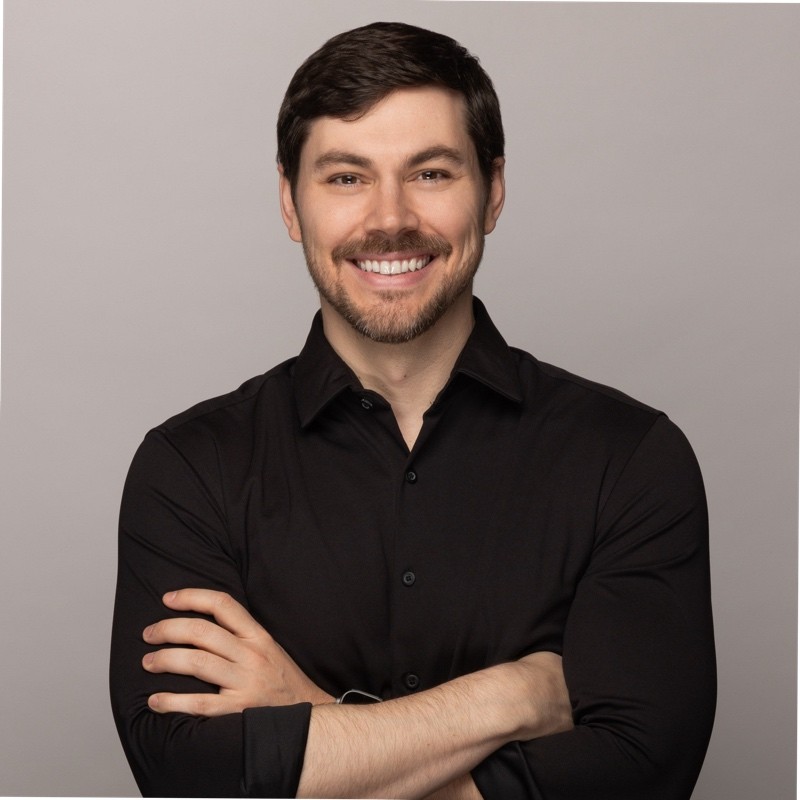
In this insightful episode of the Crypto Trailblazers series hosted by theCUBE, Mike Cagney of Figure Markets sits down with analysts from theCUBE Research to discuss groundbreaking advancements in blockchain technology and their implications for the finance sector. This video is part of the NYSE Wired digital event, aimed at bridging the gap between Silicon Valley and Wall Street by integrating technology and finance.
Cagney, an eminent figure in fintech, shares expertise on the transformative role of blockchain in financial markets during this interview. Conducted by seasoned analysts at theCUBE, the discussion delves into Figure’s innovative contributions, including their blockchain-native loan origination and securitization process. He outlines how Figure leverages blockchain to achieve cost reductions, enhanced security and improved liquidity in financial transactions.
Key takeaways from the interview highlight insights on the evolution of the Web3 ecosystem, such as the emergence of stablecoins as pivotal to transaction processes and the rise of decentralized finance (DeFi). Oltsik states these developments signify a shift towards democratizing finance, wherein truth and transparency are foundational. The conversation concludes with a look at Figure’s pioneering efforts in creating a new financial marketplace utilizing blockchain technology.
#CryptoTrailblazers #FigureMarkets #BlockchainInnovation #Web3 #NYEWired #BlockchainFinance #DecentralizedFinance #Fintech #Stablecoins
Find more SiliconANGLE news and analysis https://siliconangle.com/.
Follow theCUBE's wall-to-wall event coverage https://siliconangle.com/events/
Learn about the latest theCUBE events https://www.thecube.net/
00:00 - Intro
00:05 - Emerging Innovations in Financial Technology and Market Dynamics
02:45 - Key Elements in Financial Ecosystem Dynamics
06:20 - Blockchain: Truth and Transformation
09:39 - Shaping the Future: Innovations in Financial Markets and Stablecoin Integration
13:15 - Enabling the Future: Navigating Disruptions in Banking and Lending
16:51 - Exploring Opportunities and Building Confidence in the Blockchain Ecosystem
Forgot Password
Almost there!
We just sent you a verification email. Please verify your account to gain access to
theCUBE + NYSE Wired: Crypto Trailblazers. If you don’t think you received an email check your
spam folder.
Sign in to theCUBE + NYSE Wired: Crypto Trailblazers.
In order to sign in, enter the email address you used to registered for the event. Once completed, you will receive an email with a verification link. Open this link to automatically sign into the site.
Register For theCUBE + NYSE Wired: Crypto Trailblazers
Please fill out the information below. You will recieve an email with a verification link confirming your registration. Click the link to automatically sign into the site.
You’re almost there!
We just sent you a verification email. Please click the verification button in the email. Once your email address is verified, you will have full access to all event content for theCUBE + NYSE Wired: Crypto Trailblazers.
I want my badge and interests to be visible to all attendees.
Checking this box will display your presense on the attendees list, view your profile and allow other attendees to contact you via 1-1 chat. Read the Privacy Policy. At any time, you can choose to disable this preference.
Select your Interests!
add
Upload your photo
Uploading..
OR
Connect via Twitter
Connect via Linkedin
EDIT PASSWORD
Share
Forgot Password
Almost there!
We just sent you a verification email. Please verify your account to gain access to
theCUBE + NYSE Wired: Crypto Trailblazers. If you don’t think you received an email check your
spam folder.
Sign in to theCUBE + NYSE Wired: Crypto Trailblazers.
In order to sign in, enter the email address you used to registered for the event. Once completed, you will receive an email with a verification link. Open this link to automatically sign into the site.
Sign in to gain access to theCUBE + NYSE Wired: Crypto Trailblazers
Please sign in with LinkedIn to continue to theCUBE + NYSE Wired: Crypto Trailblazers. Signing in with LinkedIn ensures a professional environment.
Are you sure you want to remove access rights for this user?
Details
Manage Access
email address
Community Invitation
Diogo Monica, Anchorage
In this insightful episode of the Crypto Trailblazers series hosted by theCUBE, Mike Cagney of Figure Markets sits down with analysts from theCUBE Research to discuss groundbreaking advancements in blockchain technology and their implications for the finance sector. This video is part of the NYSE Wired digital event, aimed at bridging the gap between Silicon Valley and Wall Street by integrating technology and finance.
Cagney, an eminent figure in fintech, shares expertise on the transformative role of blockchain in financial markets during this interview. Conducted by seasoned analysts at theCUBE, the discussion delves into Figure’s innovative contributions, including their blockchain-native loan origination and securitization process. He outlines how Figure leverages blockchain to achieve cost reductions, enhanced security and improved liquidity in financial transactions.
Key takeaways from the interview highlight insights on the evolution of the Web3 ecosystem, such as the emergence of stablecoins as pivotal to transaction processes and the rise of decentralized finance (DeFi). Oltsik states these developments signify a shift towards democratizing finance, wherein truth and transparency are foundational. The conversation concludes with a look at Figure’s pioneering efforts in creating a new financial marketplace utilizing blockchain technology.
#CryptoTrailblazers #FigureMarkets #BlockchainInnovation #Web3 #NYEWired #BlockchainFinance #DecentralizedFinance #Fintech #Stablecoins
Find more SiliconANGLE news and analysis https://siliconangle.com/.
Follow theCUBE's wall-to-wall event coverage https://siliconangle.com/events/
Learn about the latest theCUBE events https://www.thecube.net/
00:00 - Intro
00:05 - Emerging Innovations in Financial Technology and Market Dynamics
02:45 - Key Elements in Financial Ecosystem Dynamics
06:20 - Blockchain: Truth and Transformation
09:39 - Shaping the Future: Innovations in Financial Markets and Stablecoin Integration
13:15 - Enabling the Future: Navigating Disruptions in Banking and Lending
16:51 - Exploring Opportunities and Building Confidence in the Blockchain Ecosystem
>> Welcome back everyone to theCUBE here for our Crypto Trailblazers series ongoing. It's like our fourth event, NYSC Wired and theCUBE working together to feature the leaders making it happen. And one of the big stories, obviously, is the crypto going mainstream. But still a lot of innovation, headroom remaining so much innovation, entrepreneurship coming together. It feels like early days of blockchain, where the best technology engineers and entrepreneurs are coming back to the table and the fruit is coming off the tree from crypto, I'd say gen one. But again, the market's open here at the NYSC today, and IPON. Diogo Monica is here. Co-founder, executive chairman of Anchorage, also general partner of Haun Ventures. Entrepreneur and investor, rare breed to have on theCUBE and NYSC Wired. Welcome back, good to see you. Thanks for coming on.
Diogo Mónica
>> Of course. Thanks you for having me again.>> You're unique in your persona because you've been there, done that, and are doing it. And you invest solely in crypto.
Diogo Mónica
>> That's right.>> Set the table. Explain what you do and what you got going on, Anchorage, what they do, your role there and the ventures and the focus.
Diogo Mónica
>> Yeah, absolutely. So three main hats. One of them is I co-founded a company with Nathan McCauley. Him and I actually joined Square 15 years ago, the same week. And so we've been working together ever since. This company is called Anchorage Digital, still the only federal chartered bank in the United States. Just over $3 billion of last private valuation, doing extremely well. And I, a year and a half ago, promoted myself to executive chairman and so now I have that role. My second role, I'm actually the chairman of the NEAR Foundation, which is a top 15 blockchain. And then finally I'm the general partner at Haun Ventures, which is where I spend the majority of my time. Haun Ventures is a crypto fund, as you mentioned, $500 million early stage funds, billion dollar gross stage fund. We invest in category defining founders in digital assets.>> You're primary of your life, you got a lot of energy, you got the operations executive chairman, so you're in key decisions, but you're not grinding every day. There is hard, but you've got the dual role which is playing in the fund part, which is also investing. It's not easy, but you're doing that too. So first I got to ask you, on the investment side you're seeing the IPOs. I would not have predicted bullish going popping so big, but they did start low in the thirties. So I can see that pop. One of the records Brian Baumel was telling us, but still the market's open.
Diogo Mónica
>> That's right.>> It's a great environment right now on the capital market side. Entrepreneurial wise, it's booming because there's real visibility into, the arena's clean, the...
Diogo Mónica
>> Regulatory clarity,>> Regulatory is clarity there. The Genius Act has been a great lift. So props to that. Perfect environment. And what's your take on that? What's your reaction?
Diogo Mónica
>> It really is. So there's many things in there, but one of them is regulatory clarity, product market fit of stablecoins, really a set of boom for incredible founders that before would be building something called FinTech but now are building in crypto. Because it turns out every single FinTech company will be a crypto company. These are just better rails. So we're seeing that. We're also seeing companies like Circle as you mentioned, also a little bit of a pop, let's say very successful IPO, very big pop. And I think the story on the private markets is that the reality has been that venture investors of the private markets have severely underestimated the public market appetite for the Stablecoin narrative and just the crypto narrative in general.>> It's almost as if the pent-up demand is just bursting onto the scene, given the numbers on these IPOs. But also talk about the entrepreneurial side because I kind of mentioned on the intro, if you go back to 2015 timeframe, all the best tech minds were working on blockchain.
Diogo Mónica
>> That's right.>> It's intoxicating in the sense of the challenge. Decentralized future people were on that early side, got that right away. So that's just a ripe environment. And then there was a winter there, we saw that, and now we're back. AI's also a boom because the AI people who are mining crypto are actually have the data centers. So you have like the coin on both sides has been favoring those people.
Diogo Mónica
>> That's right. Bitcoin...>> They made good bets.
Diogo Mónica
>> Pun very much intended.>> So now that's going to come together. There's been talk of AI in there, so it's a really huge headroom. I said headroom. Do you agree with that? There's a lot of headroom in terms of the innovation. What's your view on that? Obviously you're looking at the landscape and making bets. What's the headroom in crypto?
Diogo Mónica
>> I think there's a lot of headroom. I think you've indicated, of course there's been up and downs. Crypto is known for having bear and bull cycles two to three years apart. And we also know that, in bear cycles there's a lot of people that were just tourists that end up going away. But the reality is that we've had consistently an increase in the quality of founders in crypto and we see that in the founders of our portfolio.>> When I said flee the jurisdiction early on a podcast, I meant the U.S. as a jurisdiction of that sovereignty during that last administration, those headwinds. It didn't stop, it was international.
Diogo Mónica
>> Yeah.>> Talk about that impact, because the numbers of people have been doing business. So now you have the back to the in-migration to the U.S. Now the clarity here, describe that dynamic. Was it good? I mean it was just all just continue to plow forward. Was that a blowback? I mean was...
Diogo Mónica
>> The expo?>> Explain that whole scenario. Because I think that's a dynamic that's going to be documented pretty heavily.
Diogo Mónica
>> And we were in a special place. So Anchorage, as you know as I mentioned, first federal chartered bank. That means that we were the only ones in are still the only company that can actually say we're a CC charter that does all of the crypto custody staking, et cetera. And we had a first-row seat to how aggressive the Biden administration was in terms of being anti-crypto. And candidly being an American entrepreneur trying to do something by the rule book that had been written. Literally doing the hardest thing, which is getting a bank charter to bring crypto onto the light and onto the mainstream and getting punched in the face on a daily basis by the regulators was not something that was very fun. And so that was extremely disappointing. And then the pendulum has definitely swung to the other extreme where right now the regulators are extremely pro. But we were building regardless and the real entrepreneurs were building regardless.>> Yeah, it's interesting and real entrepreneurs will take the bloody nose and move on, but now you break through that, get some scar tissue, but you're back up and running. What's it like for you right now? Describe what's on your plate right now. What are some of the things you're working on?
Diogo Mónica
>> It's a breath of fresh air, because finally all the things that we've been pining for and saying to the world that we wanted, which is crypto wants regulatory clarity. Crypto doesn't want to be hidden away. We want to be part of TradFi, we want to be part of, I mean we're here at the IC, right? We want to be part of this. And so the way to be part of this is for there to be clear rules of the road which we're finally getting through Genius and hopefully through clarity. And so for us it was really a breath of fresh air. Finally, we can actually breathe and think about new businesses, new opportunities, when in fact in the past we're just concentrating on making sure that we're keeping the core business.>> Decode for the mainstream audience out there that's not inside the ropes on crypto. The importance of the work that was done by David Sachs and the teams and the smart people that are working on this. I mean nothing's ever perfect but it's damn good. I mean the work that they've done has been phenomenal. stablecoins of course comes on the scene, and you get the tech explosion, everything from agents and AI coming back into the fold, just that leak in as value, bring as value. Describe the level of work that was done. Share the, it isn't just a hand wave, it's not just a hand wave.
Diogo Mónica
>> No.>> Talk about the level of work that was done to make this happen.
Diogo Mónica
>> The interesting thing is that obviously there's a lot of just gamesmanship that you need to do in Washington to get these things through a hundred percent. And I think Sachs and the rest of the team did a terrific job. I think the interesting thing to note though, is that what to do was not hard. Sachs did what he's always done, which he surrounds himself with smart people in the industry and he asks questions and then he listens to the answers. It felt like before, the questions were asked but no answers were actually listened to.>> Well not only even opening the doors.
Diogo Mónica
>> That's fair. And so Sachs asked the industry what are the key pieces of technology that we need to regulate for the industry to be successful? Stablecoins is one of the first ones. Clarity around what is the crypto security? What is a crypto commodity? Was the second big one. Obviously there's this other third leg of the stool which is anti-CBDC, which candidly I just don't see myself in. I think it's a little bit of a side show, but these two are extremely important. Who's the regulator for these new things that we've created? How do you distinguish between one and the other, and stablecoins, which has the potential as you know, to create a lot of demand for treasury bills and help us a little bit our current problem. And that needed to happen in the United States, or no, start happening in the United States because it was happening outside>> And that's where the competitive income comes in. So props that, okay, now the next question is what does that enable? Because now what I'm seeing is financial institutions lining up because they have track record of dealing with regulators. There's accounting standards, there's all the stuff that they need to do to regulate and manage and account for.
Diogo Mónica
>> It's as simple as, they can finally engage. I can't tell you how many conversations I've had with these extremely large institutions. For example, one of the big clients of Anchorage is someone like BlackRock. We have other very large banks. You talk to these institutions and the larger majority of them, there's a few of them that just pushed the envelope. The larger majority of them never felt like they could. They would announce things, they would announce groups to research blockchain, but the innovation centers. But then actually the rubber never met the road because they didn't know if they had permission, they didn't want to risk their current business. And the same thing for founders, when the SEC pursues regulation through enforcement, American founders stopped innovating in the United States.>> Yeah.
Diogo Mónica
>> They either moved out, created companies outside, or just were risk averse. And they moved on to greener pastures.>> Just stopped building.
Diogo Mónica
>> That's right. And now they're back and the companies are coming in too.>> And we're seeing the same thing certainly in Silicon Valley and here in New York. All right, now on the Anchorage side, you guys have a great business. Talk about that business, digital assets. I mean you don't have to be a rocket science to figure out that the digital culture is upon us.
Diogo Mónica
>> That's right.>> I mean we see it every day, right? Payments, but now the decentralized piece versus centralized. What's your view on how things going to play out with assets on chain? How are people going to start thinking about their own, I'll call it private chains. We're seeing a lot of folks, Circle announced, Stripe was talking about doing their own chain. There's a lot of, L-1, L-2's out there. There's needs for customization. I mean why not have an on-prem-like experience? But how does it all work? How do you see that part of the infrastructure? Because Ethereum took what, two years to kind of level up on performance with their-
Diogo Mónica
>> Or not even.>> More than not, it's being generous. They still got work to do, but the prices are high. They're back to levels, which some say going to go higher. People staking, acquiring the micro-strategies version of it. We're seeing that, Lee and others. So what is that going to happen? What's going to happen with the infrastructure side in your view as you look at the bets?
Diogo Mónica
>> So on our side, look, custody as a business is extremely trivial. You keep these things safe and you get paid for it. It's as simple as it gets. With crypto is extremely complex. If you think about custody and crypto, every single new blockchain is its own unique snowflake. It's not like we can have a Figma ticker and then the next day bullish IPOs. And it's the same kind of infrastructure, the same kind of ticker. No, this is totally new technology to support Figma and then to support bullish. And in this case totally different technology to support Bitcoin than it is to support Ethereum. Then you add on the complexity. These assets require governance decisions in staking, they require the ability to interact with smart contracts. They have all sorts of different pieces of technology that are different. Different settlements. They have different risks. And so you really need to build infrastructure. And at the end of the day, the security of that infrastructure is really what you're paying for as a custodian. So that's the most basic version of it. In terms of the->> By the way, that's hard.
Diogo Mónica
>> It sounds as a business, it's extremely hard as a technical...>> The resilience requirement, it's almost like an IT project for JP Morgan Bank. It's like you need to have everything.
Diogo Mónica
>> And not only that, you are an extremely high-valuable target because you have money hundred, you have hundreds of millions of irrecoverable cryptocurrencies.>> That's exactly right.
Diogo Mónica
>> And so this is extremely hard. It was built at Anchorage over the past eight years and we became the main leader of the category because of our federal charter, because we're institutional only, and because we offer all these, the staking, the custodies, et cetera. In terms of going forward and what we see with blockchains, it's kind of interesting because you mentioned this, but there's all these public chains, the Solanas, the Ethereum competitors. But there's also these Stripe rumors and the announcement from Circle around vertically integrated payment blockchains. So it's kind of interesting. What are those and how can those be? We have in the past tried as an industry to do these blockchain, not Bitcoin. And so these blockchains that were just totally internal and totally closed source, which are just glorified databases, I don't think that's what's happening. What's happening is a lot closer to something like Base, which is the blockchain that Coinbase launched, in which they are centralized, they have their own sequencer, they control the actual way that the blockchain progresses, but it's permissionless where everybody can come and deploy a smart contract. Everybody can come and interact with it. And I think this is actually one of the conclusions that everybody's getting to is, they would rather own the vertically integrated infrastructure. They'd rather own and control all aspects of the payment system. And if they're going to make somebody like Stripe or somebody like Circle is going to king-make a blockchain, in which all these payments are going to be, it might as well be their own.>> And why not? If I'm the CEO or strategy or CTO, I'm like, why not have a data mode? That's unique to me, but like cloud and generative AI, you can be vertically specialized and integrated, but you got to be horizontally scalable. So now you apply that kind of architecture to decentralized. Okay, I have my own assets immutable and decentralized, but I got to run and talk to other things, other payment rails, other environments.
Diogo Mónica
>> That's right.>> What's the unpacked app? That's something, oh, I mean on a systems level it's pretty easy to kind at least frame. But how does that work? I mean, what's your vision on that as you look at the evolution of where this is going to go?
Diogo Mónica
>> Yes. I think an open question to how this ends up in terms of microstructure. I do think that it will be very many successful semi-private blockchains in which they're centralized. They have a specific vertical integrated reason that, or raison d'etre, which is payments. But they're not going to be general purpose blockchains. I don't think a Stripe blockchain is going to be general purpose the same way that a Solana or any theorem is general purpose for everybody to come in to build all sorts of different things like meme coins or NFTs or what have you.>> Fashion.
Diogo Mónica
>> That's right. And so we're going to always going to need public blockchains in which a lot of the innovation is going to happen. And whenever there's a use case and somebody that finds a use case for which they have distribution, which is the key point, distribution wins in many, many, many cases. And if you already have distribution, I think you sit in a place where you can say, hey, I actually may be able to push forward an industry standard in terms of payments infrastructure that I own too, which is the position that they're now in.>> It's like subnets and network theory, I guess. A little bit different. But let me ask you a question. So on the public side, some are saying, and I think there'll only be a handful, maybe three or four, but how many general purpose chains do is there room for? I like the idea of separate chains. I can see that in my mind, that being a differentiator for a company. If my data's my IP, why not have my assets, my data on my chain? But I'll still need to go general.
Diogo Mónica
>> The way that I think about this is interesting, which is let's make a parallel to programming languages. We have thousands of programming languages. At one time, there's about 50 to a hundred of them that are popular, and yet they do the exact same thing. They're altering complete. So from a computer science perspective, something that is computable in C is also computing in Ruby or in Python. There's nothing you can build in one that you can't build in the other one. So why are there so many and why are there so popular? Well, there's two reasons. First, leaps of technology. So from memory management that has to be manually done in C to automatic memory management or threat safety or something like that. In the second, even more important one, is external waves of technology. The web gives rise to PHP and Ruby on Rails. The iOS and the mobile gives rise to Swift and Objective-C. AI is giving rise to, Python is now extremely popular and these other languages. So the reality is that these exogenous factors that force you to have a new programming language, how does that adapt to blockchains? Exactly, same thing. So how many blockchains will there be? An infinite number. They will actually reduce over time and there will only new blockchains are created when there's a new exogenous factor. What is happening right now that could create a new big blockchain, quantum, quantum-resistant blockchain. Because Bitcoin and all these blockchains are not quantum-resistant in AI, potentially a blockchain that is actually transparent from a point of view of a model. Because right now models can't introspect the state of a blockchain. So an AI blockchain that makes that easier could be another reason why a new blockchain truly becomes successful.>> So you're getting at, let's go. Let's go there for a second. Because let's go to abstractions. Because what you're basically saying is, yeah, let a thousand flowers or chains bloom, let abstraction and GLU layers. I'm using just GLU for a better term, but figure it out.
Diogo Mónica
>> And it will evolve. We are not using Fortran anymore.>> Do I know what my app's coded in? No, it works on the iPhone.
Diogo Mónica
>> That's right. Today your developers are using per language that probably they weren't using 30 years ago. And so that constantly keeps evolving with exogenous factors and actually evolution of technology. And that's going to be the same for blockchains.>> Okay. Now back on the investment side, talk about how you invest. What's your thesis? How big are your checks? How do you evaluate? I'm sure you get a lot of deal flow given being a founder and check writer or crypto deployer. Do you invest in crypto or you invest in dollars?
Diogo Mónica
>> We invest in both.>> Okay.
Diogo Mónica
>> So we always do either equity or tokens or both. And in fact, it's very common for you these days for the founders not to have to decide originally. And what they do is token warrants. So you invest in equity of the company and then you have the right to any future issuance of tokens. And then you need to decide in the moment whether a token makes sense, because a token doesn't always make sense. In fact, in the majority of the situations, a token doesn't make sense. And we can get to that if we want to, but we always invest in both. And we can have liquids and we can have privates. And Haun Ventures is one of the biggest crypto funds, is definitely known because of Katie Haun, the founder. She was an ex-federal prosecutor. There's not federal prosecutors that create crypto funds. She was a first independent board member of Coinbase, and she actually co-led funds one, two, and three of a16z.>> Has first view, first party-
Diogo Mónica
>> She has extremely strong opinions.>> Great network, early days. Coinbase, knows everybody.
Diogo Mónica
>> The way that we see this is we're bringing crypto to the mainstream. Both Katie's network and my network really allow the founders to be business builders. And that's what we want to back.>> And that's the entrepreneurial side that I love right now, I think right now this market, if it continues to go the way it is, this'll be a whole nother entrepreneurial wave. So I want to ask you, how do you see it being different? I think it's going to move away from the classic incubator, VC-backed, obviously the accelerated pace of change, as fast. Pace of place, different. Community-oriented, very consensus, bets are conviction-based.
Diogo Mónica
>> So I think->> What's your take on that?
Diogo Mónica
>> One of the biggest things that is changing and I think brings us back to our conversation around the private market's mispricing Circle, and something like Bullish, is the fact that for the longest time Crypto VC was very focused on the tokens. And they have early liquidity, they have these very interesting characteristics. There are great potential investments, but that's because M&A in crypto wasn't really popular. Until last year there had been zero over a billion dollar acquisitions. And this year alone we've had over four. And so M&A is now showing that equity is actually well in alive and it is a way in which you can get DPI in returns. And so now there's a pendulum swinging back. And the second thing is stablecoins. Stablecoins are being built by companies that are pure fintechs. They don't have tokens, they're not really interacting with crypto except that there's new rails.>> That's the linchpin.
Diogo Mónica
>> That's right. And those are just traditional businesses to underwrite. And so it looks a lot more like traditional venture and FinTech than it looks like crypto venture.>> When you say people are overreacting to the pricing, what do you mean by that of Circle and Bullish? Underestimating the demand, what do you mean by that?
Diogo Mónica
>> I think my instinct was that since a lot of crypto funds were focused on the tokens, they were not giving due importance to the equity piece. And since there was no M&A, they weren't really focusing on these long-term bets on equity outcomes. And since they weren't focusing on it, I think it was easy for people to underestimate somebody like Circle going public, which is a pure equity bet, no token. And they also underestimated the public market's desire to get in on this stablecoin narrative that they didn't have access to before. Crypto people like me have been talking about stablecoins for years and shouting from the rooftops, but there was no pure play way for you on the markets to get that position. And now you have it.>> You mentioned M&A, was not a lot of M&A over a billion dollars. How many of those M&A deals would you consider during those times? AccuHires, basically, because the market wasn't robust. Yeah, there's some liquidity, almost like debt almost. You get your tokens, you get your cash, but it wasn't a real capital market. Was it really AccuHires, companies forming, reforming?
Diogo Mónica
>> At the time, yes. Now, No. Now clearly, companies are being bought for over a billion dollars. You don't do an hire for over a billion dollars and those companies are being bought because of their business. They're being bought because of their product and because of their strategic positioning. So what we're seeing is something we've been saying for a long time that will happen in crypto, which is consolidation. We're seeing the big players buying smaller players to take a strategic position, going to the new market or create a new business line right before they go public, which is another thing that is also happening is within Trump. All these crypto companies because of Bullish, because of Circle, are now seeing that the IPO window is open. And so they're coming.>> Yeah, I was talking to the Easy Lab, finance labs, rebranding. They were on talking about, I mean, I thought I was speaking to a tech incubator. They're using words like product market fit. Don't force the token economics too early. So now a little bit more of that equity leaning and seeing upside potential on equity.
Diogo Mónica
>> Building businesses.>> Yeah. Building businesses. And so I have to ask you because get this question a lot. I mean I give my answer, but I want to hear your answer. Oh, John, it's crypto's a bunch of hype, there's an underbelly, it's a fraud. We've seen some shit in there. Okay, put that aside. What's the answer to that? Because a lot of the companies that are going public that have the equity upside, which is real, they have big numbers. The numbers are not, I mean, these companies could have gone public.
Diogo Mónica
>> A long time ago,>> A long time ago. So talk about that piece of the business and then where's that next wave of similar unit economics or just overall financial performance?
Diogo Mónica
>> We have not seen the large infrastructure companies, the wallet companies, the custodians, the staking providers, we haven't seen them come out yet. And so we're seeing people with well over a hundred million dollars of run rate. Many of them clocking in closer to 300 to 500, which are very much idealable numbers already. And you're seeing them so private. And so I think they're coming and that's really going to be the next wave is going to be the companies that have traditional businesses.>> Well, I'm getting a phone call right now from an entrepreneur, wants to get you some funding. Thanks so much for coming.
Diogo Mónica
>> Send him my way.>> I really appreciate you coming on. You are pioneering and trailblazing and I love the fun. Love what you do. Final question, what are you working on now? What's getting you motivated? What's the coolest thing you're working on?
Diogo Mónica
>> I think the recognition that stablecoins are tokenized dollars and that the next step is going to be tokenizing everything else. And the semi-infrastructure that we're building for stablecoins simply works for all the other tokenization aspects.>> There you go. Thanks for coming on. I really appreciate it.
Diogo Mónica
>> Thanks for having me.>> Okay. I'm John Furrier, Dave Vellante. We are here for two days of Cryptoshop, an ongoing series that's just got popping off big time. We're going to continue to do this, talk to the leaders because this market is the next wave of entrepreneurship, next wave of a financial reset from the plumbing perspective. And certainly it's a global economy, so I think it's going to be a very long game going on. And of course, we'll do our best to bring it to you. Thanks for watching.
>> Welcome back everyone to theCUBE here for our Crypto Trailblazers series ongoing. It's like our fourth event, NYSC Wired and theCUBE working together to feature the leaders making it happen. And one of the big stories, obviously, is the crypto going mainstream. But still a lot of innovation, headroom remaining so much innovation, entrepreneurship coming together. It feels like early days of blockchain, where the best technology engineers and entrepreneurs are coming back to the table and the fruit is coming off the tree from crypto, I'd say gen one. But again, the market's open here at the NYSC today, and IPON. Diogo Monica is here. Co-founder, executive chairman of Anchorage, also general partner of Haun Ventures. Entrepreneur and investor, rare breed to have on theCUBE and NYSC Wired. Welcome back, good to see you. Thanks for coming on.
Diogo Mónica
>> Of course. Thanks you for having me again.>> You're unique in your persona because you've been there, done that, and are doing it. And you invest solely in crypto.
Diogo Mónica
>> That's right.>> Set the table. Explain what you do and what you got going on, Anchorage, what they do, your role there and the ventures and the focus.
Diogo Mónica
>> Yeah, absolutely. So three main hats. One of them is I co-founded a company with Nathan McCauley. Him and I actually joined Square 15 years ago, the same week. And so we've been working together ever since. This company is called Anchorage Digital, still the only federal chartered bank in the United States. Just over $3 billion of last private valuation, doing extremely well. And I, a year and a half ago, promoted myself to executive chairman and so now I have that role. My second role, I'm actually the chairman of the NEAR Foundation, which is a top 15 blockchain. And then finally I'm the general partner at Haun Ventures, which is where I spend the majority of my time. Haun Ventures is a crypto fund, as you mentioned, $500 million early stage funds, billion dollar gross stage fund. We invest in category defining founders in digital assets.>> You're primary of your life, you got a lot of energy, you got the operations executive chairman, so you're in key decisions, but you're not grinding every day. There is hard, but you've got the dual role which is playing in the fund part, which is also investing. It's not easy, but you're doing that too. So first I got to ask you, on the investment side you're seeing the IPOs. I would not have predicted bullish going popping so big, but they did start low in the thirties. So I can see that pop. One of the records Brian Baumel was telling us, but still the market's open.
Diogo Mónica
>> That's right.>> It's a great environment right now on the capital market side. Entrepreneurial wise, it's booming because there's real visibility into, the arena's clean, the...
Diogo Mónica
>> Regulatory clarity,>> Regulatory is clarity there. The Genius Act has been a great lift. So props to that. Perfect environment. And what's your take on that? What's your reaction?
Diogo Mónica
>> It really is. So there's many things in there, but one of them is regulatory clarity, product market fit of stablecoins, really a set of boom for incredible founders that before would be building something called FinTech but now are building in crypto. Because it turns out every single FinTech company will be a crypto company. These are just better rails. So we're seeing that. We're also seeing companies like Circle as you mentioned, also a little bit of a pop, let's say very successful IPO, very big pop. And I think the story on the private markets is that the reality has been that venture investors of the private markets have severely underestimated the public market appetite for the Stablecoin narrative and just the crypto narrative in general.>> It's almost as if the pent-up demand is just bursting onto the scene, given the numbers on these IPOs. But also talk about the entrepreneurial side because I kind of mentioned on the intro, if you go back to 2015 timeframe, all the best tech minds were working on blockchain.
Diogo Mónica
>> That's right.>> It's intoxicating in the sense of the challenge. Decentralized future people were on that early side, got that right away. So that's just a ripe environment. And then there was a winter there, we saw that, and now we're back. AI's also a boom because the AI people who are mining crypto are actually have the data centers. So you have like the coin on both sides has been favoring those people.
Diogo Mónica
>> That's right. Bitcoin...>> They made good bets.
Diogo Mónica
>> Pun very much intended.>> So now that's going to come together. There's been talk of AI in there, so it's a really huge headroom. I said headroom. Do you agree with that? There's a lot of headroom in terms of the innovation. What's your view on that? Obviously you're looking at the landscape and making bets. What's the headroom in crypto?
Diogo Mónica
>> I think there's a lot of headroom. I think you've indicated, of course there's been up and downs. Crypto is known for having bear and bull cycles two to three years apart. And we also know that, in bear cycles there's a lot of people that were just tourists that end up going away. But the reality is that we've had consistently an increase in the quality of founders in crypto and we see that in the founders of our portfolio.>> When I said flee the jurisdiction early on a podcast, I meant the U.S. as a jurisdiction of that sovereignty during that last administration, those headwinds. It didn't stop, it was international.
Diogo Mónica
>> Yeah.>> Talk about that impact, because the numbers of people have been doing business. So now you have the back to the in-migration to the U.S. Now the clarity here, describe that dynamic. Was it good? I mean it was just all just continue to plow forward. Was that a blowback? I mean was...
Diogo Mónica
>> The expo?>> Explain that whole scenario. Because I think that's a dynamic that's going to be documented pretty heavily.
Diogo Mónica
>> And we were in a special place. So Anchorage, as you know as I mentioned, first federal chartered bank. That means that we were the only ones in are still the only company that can actually say we're a CC charter that does all of the crypto custody staking, et cetera. And we had a first-row seat to how aggressive the Biden administration was in terms of being anti-crypto. And candidly being an American entrepreneur trying to do something by the rule book that had been written. Literally doing the hardest thing, which is getting a bank charter to bring crypto onto the light and onto the mainstream and getting punched in the face on a daily basis by the regulators was not something that was very fun. And so that was extremely disappointing. And then the pendulum has definitely swung to the other extreme where right now the regulators are extremely pro. But we were building regardless and the real entrepreneurs were building regardless.>> Yeah, it's interesting and real entrepreneurs will take the bloody nose and move on, but now you break through that, get some scar tissue, but you're back up and running. What's it like for you right now? Describe what's on your plate right now. What are some of the things you're working on?
Diogo Mónica
>> It's a breath of fresh air, because finally all the things that we've been pining for and saying to the world that we wanted, which is crypto wants regulatory clarity. Crypto doesn't want to be hidden away. We want to be part of TradFi, we want to be part of, I mean we're here at the IC, right? We want to be part of this. And so the way to be part of this is for there to be clear rules of the road which we're finally getting through Genius and hopefully through clarity. And so for us it was really a breath of fresh air. Finally, we can actually breathe and think about new businesses, new opportunities, when in fact in the past we're just concentrating on making sure that we're keeping the core business.>> Decode for the mainstream audience out there that's not inside the ropes on crypto. The importance of the work that was done by David Sachs and the teams and the smart people that are working on this. I mean nothing's ever perfect but it's damn good. I mean the work that they've done has been phenomenal. stablecoins of course comes on the scene, and you get the tech explosion, everything from agents and AI coming back into the fold, just that leak in as value, bring as value. Describe the level of work that was done. Share the, it isn't just a hand wave, it's not just a hand wave.
Diogo Mónica
>> No.>> Talk about the level of work that was done to make this happen.
Diogo Mónica
>> The interesting thing is that obviously there's a lot of just gamesmanship that you need to do in Washington to get these things through a hundred percent. And I think Sachs and the rest of the team did a terrific job. I think the interesting thing to note though, is that what to do was not hard. Sachs did what he's always done, which he surrounds himself with smart people in the industry and he asks questions and then he listens to the answers. It felt like before, the questions were asked but no answers were actually listened to.>> Well not only even opening the doors.
Diogo Mónica
>> That's fair. And so Sachs asked the industry what are the key pieces of technology that we need to regulate for the industry to be successful? Stablecoins is one of the first ones. Clarity around what is the crypto security? What is a crypto commodity? Was the second big one. Obviously there's this other third leg of the stool which is anti-CBDC, which candidly I just don't see myself in. I think it's a little bit of a side show, but these two are extremely important. Who's the regulator for these new things that we've created? How do you distinguish between one and the other, and stablecoins, which has the potential as you know, to create a lot of demand for treasury bills and help us a little bit our current problem. And that needed to happen in the United States, or no, start happening in the United States because it was happening outside>> And that's where the competitive income comes in. So props that, okay, now the next question is what does that enable? Because now what I'm seeing is financial institutions lining up because they have track record of dealing with regulators. There's accounting standards, there's all the stuff that they need to do to regulate and manage and account for.
Diogo Mónica
>> It's as simple as, they can finally engage. I can't tell you how many conversations I've had with these extremely large institutions. For example, one of the big clients of Anchorage is someone like BlackRock. We have other very large banks. You talk to these institutions and the larger majority of them, there's a few of them that just pushed the envelope. The larger majority of them never felt like they could. They would announce things, they would announce groups to research blockchain, but the innovation centers. But then actually the rubber never met the road because they didn't know if they had permission, they didn't want to risk their current business. And the same thing for founders, when the SEC pursues regulation through enforcement, American founders stopped innovating in the United States.>> Yeah.
Diogo Mónica
>> They either moved out, created companies outside, or just were risk averse. And they moved on to greener pastures.>> Just stopped building.
Diogo Mónica
>> That's right. And now they're back and the companies are coming in too.>> And we're seeing the same thing certainly in Silicon Valley and here in New York. All right, now on the Anchorage side, you guys have a great business. Talk about that business, digital assets. I mean you don't have to be a rocket science to figure out that the digital culture is upon us.
Diogo Mónica
>> That's right.>> I mean we see it every day, right? Payments, but now the decentralized piece versus centralized. What's your view on how things going to play out with assets on chain? How are people going to start thinking about their own, I'll call it private chains. We're seeing a lot of folks, Circle announced, Stripe was talking about doing their own chain. There's a lot of, L-1, L-2's out there. There's needs for customization. I mean why not have an on-prem-like experience? But how does it all work? How do you see that part of the infrastructure? Because Ethereum took what, two years to kind of level up on performance with their-
Diogo Mónica
>> Or not even.>> More than not, it's being generous. They still got work to do, but the prices are high. They're back to levels, which some say going to go higher. People staking, acquiring the micro-strategies version of it. We're seeing that, Lee and others. So what is that going to happen? What's going to happen with the infrastructure side in your view as you look at the bets?
Diogo Mónica
>> So on our side, look, custody as a business is extremely trivial. You keep these things safe and you get paid for it. It's as simple as it gets. With crypto is extremely complex. If you think about custody and crypto, every single new blockchain is its own unique snowflake. It's not like we can have a Figma ticker and then the next day bullish IPOs. And it's the same kind of infrastructure, the same kind of ticker. No, this is totally new technology to support Figma and then to support bullish. And in this case totally different technology to support Bitcoin than it is to support Ethereum. Then you add on the complexity. These assets require governance decisions in staking, they require the ability to interact with smart contracts. They have all sorts of different pieces of technology that are different. Different settlements. They have different risks. And so you really need to build infrastructure. And at the end of the day, the security of that infrastructure is really what you're paying for as a custodian. So that's the most basic version of it. In terms of the->> By the way, that's hard.
Diogo Mónica
>> It sounds as a business, it's extremely hard as a technical...>> The resilience requirement, it's almost like an IT project for JP Morgan Bank. It's like you need to have everything.
Diogo Mónica
>> And not only that, you are an extremely high-valuable target because you have money hundred, you have hundreds of millions of irrecoverable cryptocurrencies.>> That's exactly right.
Diogo Mónica
>> And so this is extremely hard. It was built at Anchorage over the past eight years and we became the main leader of the category because of our federal charter, because we're institutional only, and because we offer all these, the staking, the custodies, et cetera. In terms of going forward and what we see with blockchains, it's kind of interesting because you mentioned this, but there's all these public chains, the Solanas, the Ethereum competitors. But there's also these Stripe rumors and the announcement from Circle around vertically integrated payment blockchains. So it's kind of interesting. What are those and how can those be? We have in the past tried as an industry to do these blockchain, not Bitcoin. And so these blockchains that were just totally internal and totally closed source, which are just glorified databases, I don't think that's what's happening. What's happening is a lot closer to something like Base, which is the blockchain that Coinbase launched, in which they are centralized, they have their own sequencer, they control the actual way that the blockchain progresses, but it's permissionless where everybody can come and deploy a smart contract. Everybody can come and interact with it. And I think this is actually one of the conclusions that everybody's getting to is, they would rather own the vertically integrated infrastructure. They'd rather own and control all aspects of the payment system. And if they're going to make somebody like Stripe or somebody like Circle is going to king-make a blockchain, in which all these payments are going to be, it might as well be their own.>> And why not? If I'm the CEO or strategy or CTO, I'm like, why not have a data mode? That's unique to me, but like cloud and generative AI, you can be vertically specialized and integrated, but you got to be horizontally scalable. So now you apply that kind of architecture to decentralized. Okay, I have my own assets immutable and decentralized, but I got to run and talk to other things, other payment rails, other environments.
Diogo Mónica
>> That's right.>> What's the unpacked app? That's something, oh, I mean on a systems level it's pretty easy to kind at least frame. But how does that work? I mean, what's your vision on that as you look at the evolution of where this is going to go?
Diogo Mónica
>> Yes. I think an open question to how this ends up in terms of microstructure. I do think that it will be very many successful semi-private blockchains in which they're centralized. They have a specific vertical integrated reason that, or raison d'etre, which is payments. But they're not going to be general purpose blockchains. I don't think a Stripe blockchain is going to be general purpose the same way that a Solana or any theorem is general purpose for everybody to come in to build all sorts of different things like meme coins or NFTs or what have you.>> Fashion.
Diogo Mónica
>> That's right. And so we're going to always going to need public blockchains in which a lot of the innovation is going to happen. And whenever there's a use case and somebody that finds a use case for which they have distribution, which is the key point, distribution wins in many, many, many cases. And if you already have distribution, I think you sit in a place where you can say, hey, I actually may be able to push forward an industry standard in terms of payments infrastructure that I own too, which is the position that they're now in.>> It's like subnets and network theory, I guess. A little bit different. But let me ask you a question. So on the public side, some are saying, and I think there'll only be a handful, maybe three or four, but how many general purpose chains do is there room for? I like the idea of separate chains. I can see that in my mind, that being a differentiator for a company. If my data's my IP, why not have my assets, my data on my chain? But I'll still need to go general.
Diogo Mónica
>> The way that I think about this is interesting, which is let's make a parallel to programming languages. We have thousands of programming languages. At one time, there's about 50 to a hundred of them that are popular, and yet they do the exact same thing. They're altering complete. So from a computer science perspective, something that is computable in C is also computing in Ruby or in Python. There's nothing you can build in one that you can't build in the other one. So why are there so many and why are there so popular? Well, there's two reasons. First, leaps of technology. So from memory management that has to be manually done in C to automatic memory management or threat safety or something like that. In the second, even more important one, is external waves of technology. The web gives rise to PHP and Ruby on Rails. The iOS and the mobile gives rise to Swift and Objective-C. AI is giving rise to, Python is now extremely popular and these other languages. So the reality is that these exogenous factors that force you to have a new programming language, how does that adapt to blockchains? Exactly, same thing. So how many blockchains will there be? An infinite number. They will actually reduce over time and there will only new blockchains are created when there's a new exogenous factor. What is happening right now that could create a new big blockchain, quantum, quantum-resistant blockchain. Because Bitcoin and all these blockchains are not quantum-resistant in AI, potentially a blockchain that is actually transparent from a point of view of a model. Because right now models can't introspect the state of a blockchain. So an AI blockchain that makes that easier could be another reason why a new blockchain truly becomes successful.>> So you're getting at, let's go. Let's go there for a second. Because let's go to abstractions. Because what you're basically saying is, yeah, let a thousand flowers or chains bloom, let abstraction and GLU layers. I'm using just GLU for a better term, but figure it out.
Diogo Mónica
>> And it will evolve. We are not using Fortran anymore.>> Do I know what my app's coded in? No, it works on the iPhone.
Diogo Mónica
>> That's right. Today your developers are using per language that probably they weren't using 30 years ago. And so that constantly keeps evolving with exogenous factors and actually evolution of technology. And that's going to be the same for blockchains.>> Okay. Now back on the investment side, talk about how you invest. What's your thesis? How big are your checks? How do you evaluate? I'm sure you get a lot of deal flow given being a founder and check writer or crypto deployer. Do you invest in crypto or you invest in dollars?
Diogo Mónica
>> We invest in both.>> Okay.
Diogo Mónica
>> So we always do either equity or tokens or both. And in fact, it's very common for you these days for the founders not to have to decide originally. And what they do is token warrants. So you invest in equity of the company and then you have the right to any future issuance of tokens. And then you need to decide in the moment whether a token makes sense, because a token doesn't always make sense. In fact, in the majority of the situations, a token doesn't make sense. And we can get to that if we want to, but we always invest in both. And we can have liquids and we can have privates. And Haun Ventures is one of the biggest crypto funds, is definitely known because of Katie Haun, the founder. She was an ex-federal prosecutor. There's not federal prosecutors that create crypto funds. She was a first independent board member of Coinbase, and she actually co-led funds one, two, and three of a16z.>> Has first view, first party-
Diogo Mónica
>> She has extremely strong opinions.>> Great network, early days. Coinbase, knows everybody.
Diogo Mónica
>> The way that we see this is we're bringing crypto to the mainstream. Both Katie's network and my network really allow the founders to be business builders. And that's what we want to back.>> And that's the entrepreneurial side that I love right now, I think right now this market, if it continues to go the way it is, this'll be a whole nother entrepreneurial wave. So I want to ask you, how do you see it being different? I think it's going to move away from the classic incubator, VC-backed, obviously the accelerated pace of change, as fast. Pace of place, different. Community-oriented, very consensus, bets are conviction-based.
Diogo Mónica
>> So I think->> What's your take on that?
Diogo Mónica
>> One of the biggest things that is changing and I think brings us back to our conversation around the private market's mispricing Circle, and something like Bullish, is the fact that for the longest time Crypto VC was very focused on the tokens. And they have early liquidity, they have these very interesting characteristics. There are great potential investments, but that's because M&A in crypto wasn't really popular. Until last year there had been zero over a billion dollar acquisitions. And this year alone we've had over four. And so M&A is now showing that equity is actually well in alive and it is a way in which you can get DPI in returns. And so now there's a pendulum swinging back. And the second thing is stablecoins. Stablecoins are being built by companies that are pure fintechs. They don't have tokens, they're not really interacting with crypto except that there's new rails.>> That's the linchpin.
Diogo Mónica
>> That's right. And those are just traditional businesses to underwrite. And so it looks a lot more like traditional venture and FinTech than it looks like crypto venture.>> When you say people are overreacting to the pricing, what do you mean by that of Circle and Bullish? Underestimating the demand, what do you mean by that?
Diogo Mónica
>> I think my instinct was that since a lot of crypto funds were focused on the tokens, they were not giving due importance to the equity piece. And since there was no M&A, they weren't really focusing on these long-term bets on equity outcomes. And since they weren't focusing on it, I think it was easy for people to underestimate somebody like Circle going public, which is a pure equity bet, no token. And they also underestimated the public market's desire to get in on this stablecoin narrative that they didn't have access to before. Crypto people like me have been talking about stablecoins for years and shouting from the rooftops, but there was no pure play way for you on the markets to get that position. And now you have it.>> You mentioned M&A, was not a lot of M&A over a billion dollars. How many of those M&A deals would you consider during those times? AccuHires, basically, because the market wasn't robust. Yeah, there's some liquidity, almost like debt almost. You get your tokens, you get your cash, but it wasn't a real capital market. Was it really AccuHires, companies forming, reforming?
Diogo Mónica
>> At the time, yes. Now, No. Now clearly, companies are being bought for over a billion dollars. You don't do an hire for over a billion dollars and those companies are being bought because of their business. They're being bought because of their product and because of their strategic positioning. So what we're seeing is something we've been saying for a long time that will happen in crypto, which is consolidation. We're seeing the big players buying smaller players to take a strategic position, going to the new market or create a new business line right before they go public, which is another thing that is also happening is within Trump. All these crypto companies because of Bullish, because of Circle, are now seeing that the IPO window is open. And so they're coming.>> Yeah, I was talking to the Easy Lab, finance labs, rebranding. They were on talking about, I mean, I thought I was speaking to a tech incubator. They're using words like product market fit. Don't force the token economics too early. So now a little bit more of that equity leaning and seeing upside potential on equity.
Diogo Mónica
>> Building businesses.>> Yeah. Building businesses. And so I have to ask you because get this question a lot. I mean I give my answer, but I want to hear your answer. Oh, John, it's crypto's a bunch of hype, there's an underbelly, it's a fraud. We've seen some shit in there. Okay, put that aside. What's the answer to that? Because a lot of the companies that are going public that have the equity upside, which is real, they have big numbers. The numbers are not, I mean, these companies could have gone public.
Diogo Mónica
>> A long time ago,>> A long time ago. So talk about that piece of the business and then where's that next wave of similar unit economics or just overall financial performance?
Diogo Mónica
>> We have not seen the large infrastructure companies, the wallet companies, the custodians, the staking providers, we haven't seen them come out yet. And so we're seeing people with well over a hundred million dollars of run rate. Many of them clocking in closer to 300 to 500, which are very much idealable numbers already. And you're seeing them so private. And so I think they're coming and that's really going to be the next wave is going to be the companies that have traditional businesses.>> Well, I'm getting a phone call right now from an entrepreneur, wants to get you some funding. Thanks so much for coming.
Diogo Mónica
>> Send him my way.>> I really appreciate you coming on. You are pioneering and trailblazing and I love the fun. Love what you do. Final question, what are you working on now? What's getting you motivated? What's the coolest thing you're working on?
Diogo Mónica
>> I think the recognition that stablecoins are tokenized dollars and that the next step is going to be tokenizing everything else. And the semi-infrastructure that we're building for stablecoins simply works for all the other tokenization aspects.>> There you go. Thanks for coming on. I really appreciate it.
Diogo Mónica
>> Thanks for having me.>> Okay. I'm John Furrier, Dave Vellante. We are here for two days of Cryptoshop, an ongoing series that's just got popping off big time. We're going to continue to do this, talk to the leaders because this market is the next wave of entrepreneurship, next wave of a financial reset from the plumbing perspective. And certainly it's a global economy, so I think it's going to be a very long game going on. And of course, we'll do our best to bring it to you. Thanks for watching.