We just sent you a verification email. Please verify your account to gain access to
theCUBE + NYSE Wired: Crypto Trailblazers. If you don’t think you received an email check your
spam folder.
Sign in to theCUBE + NYSE Wired: Crypto Trailblazers.
In order to sign in, enter the email address you used to registered for the event. Once completed, you will receive an email with a verification link. Open this link to automatically sign into the site.
Register For theCUBE + NYSE Wired: Crypto Trailblazers
Please fill out the information below. You will recieve an email with a verification link confirming your registration. Click the link to automatically sign into the site.
You’re almost there!
We just sent you a verification email. Please click the verification button in the email. Once your email address is verified, you will have full access to all event content for theCUBE + NYSE Wired: Crypto Trailblazers.
I want my badge and interests to be visible to all attendees.
Checking this box will display your presense on the attendees list, view your profile and allow other attendees to contact you via 1-1 chat. Read the Privacy Policy. At any time, you can choose to disable this preference.
Select your Interests!
add
Upload your photo
Uploading..
OR
Connect via Twitter
Connect via Linkedin
EDIT PASSWORD
Share
Forgot Password
Almost there!
We just sent you a verification email. Please verify your account to gain access to
theCUBE + NYSE Wired: Crypto Trailblazers. If you don’t think you received an email check your
spam folder.
Sign in to theCUBE + NYSE Wired: Crypto Trailblazers.
In order to sign in, enter the email address you used to registered for the event. Once completed, you will receive an email with a verification link. Open this link to automatically sign into the site.
Sign in to gain access to theCUBE + NYSE Wired: Crypto Trailblazers
Please sign in with LinkedIn to continue to theCUBE + NYSE Wired: Crypto Trailblazers. Signing in with LinkedIn ensures a professional environment.
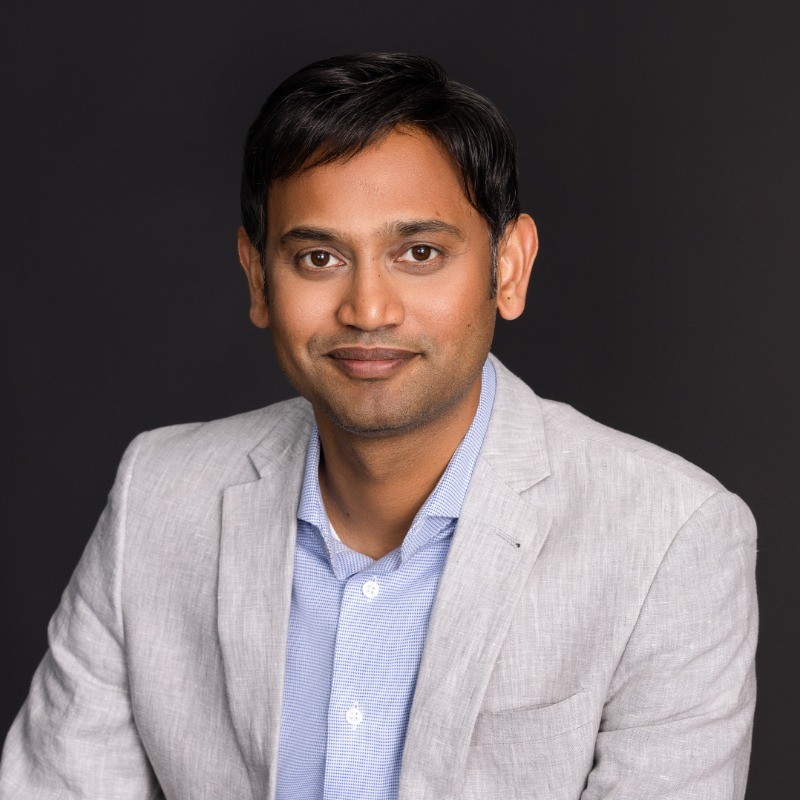
>> Welcome back, everyone, to theCUBE here in the Palo Alto Studios. I'm John Furrier, host of theCUBE. Part of our Crypto Trailblazers two-day series, celebrating the growth and emerging liquidity, the emerging mainstreaming of crypto infrastructure, businesses, doing businesses on applications, and of course, money-making technology development, all kind of happening in this next wave hitting. Raghu Yarlagadda's here, the CEO in FalconX. Welcome to theCUBE. Thanks for joining us on our Crypto Trailblazers. You're certainly a trailblazer. The performance is there. You guys are doing great. Thanks for coming on.
Raghu Yarlagadda
>> Thanks so much for having me, John. Truly a pleasure.>> You guys are doing great. Talk about the numbers that you have. Well, first of all, talk about FalconX for folks that don't know what you do. What's the main business model? Give us an update.
Raghu Yarlagadda
>> Sure. FalconX is one of the largest digital asset brokerage. What that means is we are a one-stop shop for institutions all the way from trading, short-term financing, credit, clearing, all of what an institution needs. So to put all of that in perspective, you can think of us like the Goldman Sachs or the J.P. Morgan for digital assets. So to give you a sense of scale to your question, we did about a trillion dollars in the last year or so. What's interesting within that, John, is the market is moving from just trading. It's a sign of maturation that you're talking about, right? Now derivatives are one of the fastest growing segments within crypto. So within derivatives, FalconX does about 12% of global options volume, but one of my proudest things is like Bitcoin ETF was one of the most seminal moments for crypto. And for that event on Bitcoin ETF launch, we did 30% of all Bitcoin ETF creates on day one. So that was a very proud moment for FalconX.>> Also, you recently at the White House.
Raghu Yarlagadda
>> Yeah.>> So that's another private proud moment. But this is now the culture we're in. The US is open for business. I won't say the hurricane forced headwinds, but certainly calm down swinging to a tailwind. As you see real finance come into the market. This is a huge moment in time. You guys started in what, 2018 roughly?
Raghu Yarlagadda
>> That's correct. Yeah.>> Okay. You've come out the other side. Business is phenomenal. Congratulations.
Raghu Yarlagadda
>> Thank you.>> What's the success for this? Was it timing? The platform? The mainstreaming?
Raghu Yarlagadda
>> Yeah.>> The money? What was the moment? What was the driver?
Raghu Yarlagadda
>> Yeah, absolutely. To the point that you alluded, just want to touch on that, too, it truly was a privilege and a proud moment for being hosted in the White House. It's not just for me personally, but for the industry. A lot of crypto CEOs were targeted over the last two years. Going from that to being celebrated, I think it's a very proud moment for the industry, irrespective of who was in that room.>> What was it like in the White House? I'm curious. I've never been.
Raghu Yarlagadda
>> It was one of the best museums that I've seen. The collection, the history, the care that everyone put into, that was just incredible.>> And the people that were there with you, what was it like? Were people kind of pat each other on the back? Was everyone smiling, they had a spring in their step? What was the vibe?
Raghu Yarlagadda
>> Yeah. The curation of the 27 people was really good. It was competitors, it was partners. But being put in one single room talking about US innovation and US companies being competitive in the crypto landscape was a very powerful message. Now, to your earlier question, you asked about why are customers coming, what is behind this growth.>> The driver. Yeah.
Raghu Yarlagadda
>> I would think about three reasons. First, like with anything in finance, finance is very heavily driven by economies of scale. The large have tremendous amount of advantages. And that is one of the things that customers come to us. As one of the largest, if not the largest in the space, I have the deepest liquidity there is on the planet on digital assets. What that means is whether it's a $10 trade or even half a billion dollar trade, we have sufficient liquidity that I can price things really well. So, pricing is extremely important. Margins are really good When you have that amount of liquidity. Risk management becomes even better when you have large flows coming that are canceling on both sides. So, economies of scale is one part. The second part is we're always focused on regulation. Like two years back when going into a regulator is not the common approach within crypto, we went to CFTC and got the first and still the only swap dealer in crypto market. That gave a sense of confidence to the market. And to a lot of traditional institutions coming in, that's a very powerful attribute.>> And that must've been really difficult. Walk me through that because that's a bold move. That's a breakthrough.
Raghu Yarlagadda
>> Yeah.>> That's a very strong move. What was it like when you going in? Was it like, "Okay, we're going to get thrown out," or, "We're going to have to fight hard?" Was it really a dog fight? Was it calm? Was it professional? What was the back-and-forth like? Because the climate wasn't good. We all know what the climate was like. But I think people have common sense and they go, "Okay, let's..." Take me through that.
Raghu Yarlagadda
>> Yeah. It was a big decision. It was a contrarian bet at that point, John. First I'll start with the intent and the process of going through all of that. The intent was we started FalconX with a perspective that a lot of technology that we're building for crypto can actually help power other asset classes, too. I'll give you a specific example. We moved a trillion dollars. And to move that trillion dollars, it's a very complex settlement process. We had 25 people in the back office. Now, you compare the same trillion dollars of movement in traditional finance, some of the largest banks in the US, they need 300 people to do the same thing. It's not just the power of FalconX's technology, it's the power of blockchain. It's the power of tokenization. So our belief is this technology is going to spill into other asset classes, like in a fixed income, Forex commodities, and eventually maybe equities. If we want to be a company that's bigger than just crypto, I want to make sure that we play well with regulators. So that was our intent. Now, going into regulators, even when a lot of things in crypto were going wrong, including the FTX collapse and all of that, some of the regulators, especially CFTC, appreciated the power of tokenization, the technology that's driving all of this. So it was a lot of education, a lot of convincing, a lot of systems built out to basically get a regulator comfortable. As a result of it, just putting numbers, last year we moved $25 billion of volume through the FalconX Bravo entity, which is a swap dealer, $25 billion that would have gone offshore without the US entity, which is regulated->> You had data. You brought in real data. But again, bold move, good bet, paid off. Talk about the platform. Talk about the performance that you're seeing. Why are you winning? What's the reason behind the success?
Raghu Yarlagadda
>> Yeah. I think first and foremost, the market is heavily moving towards derivatives. In traditional finance, derivatives are typically three to five times the stock market. Today, derivatives are about two times the stock market. We think crypto derivatives are going to be three to five times, like in TradFi. We have been investing into crypto derivatives for a long time, and it's not easy, John. Because risk management in crypto is so much more complex because there are a lot of idiosyncratic risk specific to crypto markets. So it's a combination of risk management, piling liquidity, making sure that we have the right traders on the desk and powering them with the right technology so that investment in derivatives is paying off significantly not just in our customers, but in general, the brand for crypto. And maturation of derivatives actually matures the whole space, and that's powerful.>> Yeah. I mean, it's interesting. You mentioned JP Morgan. You mentioned Goldman, that you guys are the Goldman for the market in this area. They all have liquidity. There's requirements. You hit a few of them.
Raghu Yarlagadda
>> yeah.>> They also invest heavily in technology.
Raghu Yarlagadda
>> Yeah.>> Okay. So that's a big part. How much of the tech equation and the market work you're doing on the product side and the fit you're doing there is the balance that you're probably dealing with. What's the optimization mindset for you as you look at that? Because if you don't optimize fully in that right percentages, you got to play a little bit of timing. Maybe it's a bad word. Priorities. What's your priorities on optimizing your efforts as you use your funds? You've got to have the liquidity. That's what we'll come back in a second, but I want to talk about how you're thinking about your priorities optimizing for the front end or technology. Because technology also gets operating leverage. So you got the liquidity. Operating leverage with the platform is a huge advantage.
Raghu Yarlagadda
>> Yeah. So John, I think that's an excellent point. I come from Google before starting FalconX, so I understand the power of technology. If I'm getting into traditional finance, eventually technology is going to be my advantage. That's going to be my differentiation. And here we're sitting on the back of two massive technology curves. One, tokenization powered by blockchain. The second one is AI. When we first started the company, the biggest challenge in the industry to aggregate liquidity is that tremendous amount of fake volume. Because crypto was not as regulated at that point, there was all sorts of volume. And differentiating the real volume from fake volume, there's no traditional financial literature on that, so we had to use a lot of machine learning. That became a huge edge in terms of how we aggregated liquidity. So fast-forward to today, technology is a part of everything that we do, all the way from machine learning to actually make sure that liquidity is very, very strong and the integrity is perfect there to the back office of moving a trillion dollars with just 25 people. But what I'm really excited is to be using the power of AI to accelerate this even further.>> I mean, got to love the Google DNA. I can see it coming out. It's kind of breathing out of your skin. Google had the concept of an SRE, site reliability engineer. You probably know that-
Raghu Yarlagadda
>> Yeah.... >> obviously at Google, one person managing a farm of servers, but it points at scale. Scale's huge for Google. The entire cloud and how they run their infrastructure, again, is that everyone wants to be like Google, as the expression. That is a great mindset to come in. What is that SRE like? You have 25 people powering over a trillion dollars. Okay, so I get that. I can see it playing out. So I'm trying to understand, what's the SRE-like configuration? Is there an operating model that you like that you're settling into? Are there areas you want to improve on? Take me through how you're thinking about that piece of it.
Raghu Yarlagadda
>> John, in my seven years of FalconX, no one asked that question, and that's one of the most important questions for me. Because one of the most unique aspects of crypto is its 24/7. Most traditional finance works 40 hours, 60 hours, 80 hours at the very most. What that means is they have the luxury to basically do maintenance overnight, and I don't. So what that means is I have follow-the-sun model in not just developing the code, but also site reliability, and DevOps, and maintenance. So what we have is we have three centers around the world where had to have full stack all the way from code development to SREs to DevOps. So because we have a footprint back in India, because we have footprint in Europe, because we have footprint in the US, we're able to basically do a 24/7 operation in terms of keeping the trading running. The interesting part is we don't get to take a break even on Saturday or Sunday. Bitcoin is moving like 10% over the weekends, and we are facing half a billion to a billion dollars of trading on a Saturday morning.>> There's no trading hours. It's 24/7. No, that's a great point. I'm glad we're going there because one of the things that's key is the old expression we used to say during the old search days, certainly Google was printing money, making money while you sleep is a joke. "I want to make money while I'm sleeping." Well, a lot of people do that on the internet, right? So, you're actually operationalizing that. It sounds like FalconX regions is a big part of your strategy, so getting a global footprint is instrumental. Now, when you tie it all together, you got to have the information systems to all make that happen. You guys build that in-house? Is it all homegrown? What's the strategy there?
Raghu Yarlagadda
>> So in crypto, we don't have the luxury for signing up for a software service. We have to build a lot of things in-house, whether it's risk management, back office, accounting systems. So, a lot of it was homegrown, home-built. But now we are actually using the composability of some of the DeFi elements to actually power some of the services that we're doing. We're a centralized company. In three years, we are going to be a AI company powering finance, and we're going to be using decentralized components from the DeFi side as well.>> Yeah. I mean, not to go in the weeds, I love talking tech, because we love talking tech all the time, but get back to your machine learning comment, because I think machine learning is stable enough to manage from the risk management piece. Certainly fraud detection machine learning's been steady state for years.
Raghu Yarlagadda
>> Yeah.>> Gen AI, okay, maybe a resilient bar's a little high enough there. It's got a couple more years to go. I'm assuming that's on your radar. But this becomes an important part of your liquidity options, right?
Raghu Yarlagadda
>> Yeah.>> So as you do your derivative work, you're cranking on some compute cycles, and you got to use machine learning. How far are you away from some generative AI? Because generative AI gives you what we all know is prompting, but gen is not static. So this is where it gets better. Machine learning's certainly doing great for you right now. I'm sure it's great stories there, but generative AI is not yet proven. You agree or not? What's your view on that?
Raghu Yarlagadda
>> That's a very good question. I mean, I look at the world as where do we need deterministic solutions? Where do we need generative solutions? Which are not as deterministic, but very broad and powerful. So in terms of determinism, one of the areas where we use it is everything in crypto is tracked on chain. There was a famous story of a popular hedge fund called Archegos, which went to seven prime brokers and levered the same instrument with all the seven people. And none of them knew that it's being levered. And unfortunately things went wrong, and it turned out very sour and bad for a lot of banks.
Now in crypto, what we do is we use a whole slew of on-chain services, on-chain data sets. So there is a machine learning model that basically is looking at all the on-chain data for customers and using that to actually inform the risk about a customer. That makes it safer for all the other customers who are on the platform. So that's one place where we need deterministic answers. We use machine learning.>> This is great mojo, too. You're probably with the regulators, right?
Raghu Yarlagadda
>> Yeah.>> Because it's like they got blind spots.
Raghu Yarlagadda
>> Yep.>> Manual business, old business, a lot of intermediaries, a lot of moving parts. Who knows what their systems are, what they're using. All great stuff. Let's get back to the numbers. Can you share some other KPIs that you're tracking? Because Brian Baumann with NYSE we were talking about... That's a brand that is recognized as high quality as crypto gets the confidence. There's going to be some public offerings.
Raghu Yarlagadda
>> Yep.>> You guys clearly looking good. The numbers are there. I mean, you could go public tomorrow with the numbers you got. So I'm sure that's on your radar, but there's more behind that, right? What's the typical public? What are some KPIs you're tracking? What can people know about how you think about success?
Raghu Yarlagadda
>> Yeah.>> It's like this expression in chess. You can't play chess if you don't know what checkmate looks like. So, what does the KPI end game metric look like for you?
Raghu Yarlagadda
>> I do think public market investors, having spoken with some of the largest, including some who are on the cap table for FalconX. I think public markets are looking for three things. "Give me the upside of crypto. When Bitcoin and the rest of crypto goes up, I want you to actually perform better than that." Some companies are giving that to the markets. But what's not there is number two, cap the downside. In a bear market, I don't want the stock to be just reflection of Bitcoin price and falling down.>> Volatility's huge.
Raghu Yarlagadda
>> Exactly. And the third thing is the growth story beyond crypto. One of the things that I'm focused on is building all these three prongs as we think about public markets as one of our options. I want to make sure that our revenues, not just our revenues, are beating crypto as a market and the benchmarks within crypto. I want to be profitable, because there's a lot of power in terms of your unit economics being extremely strong. So that's the first prong. The second prong, I want to make sure that we cap the downside of crypto. As an institutional player who's basically serving a lot of market makers and also giving short-term financing, I have the stability of market makers doing market making even in a bear market, so my actual bottom lines are not fluctuating as wildly. And number three, with the power of tokenization and AI, we are hoping to go beyond crypto. That's a growth story that's going to be compelling.>> Yeah, and there's multiple products there. I love that downside protection. That's a really strong value proposition. I have to ask you about the liquidity on the market side. I know you've got a lot of liquidity as money to help you run the engine, FalconX. That's awesome. Very strong execution. But in crypto, generally there's liquidity in the investments coming out. So you got public markets. People are going to get benefits there. Love the three pillars of the strategy. There's going to be IPOs in this market, clearly. And we see the Magnificent Seven, and stock talks about that. NVIDIA, everyone loves that. We'll be at their event next week. Acceleration is a big theme, by the way, on their side, too. Sounds like it's aligned with what you're talking about here.
Raghu Yarlagadda
>> Exactly.>> You're accelerating. Love that. You got the Google mentality. You see the scale. What's that look like? What does that Magnificent Seven look like? Are there enough companies to put that together now? Do you think there's enough players? You guys certainly qualify. What would be that portfolio, that future portfolio that I would be as a retail, "I'm in the crypto seven," or that group of leaders?
Raghu Yarlagadda
>> Yeah, a lot of thoughts on that. I think the first thing, crypto reminds me of the 2002, 2003 of the internet as of today. What that means is because of->> That was post-bubble, by the way.
Raghu Yarlagadda
>> Post-bubble. Exactly. Because the next phase for crypto is going to be a lot of regulated growth. And anytime there is regulation, there'll be consolidation in the market. This happened in the early days of internet as well, net neutrality privacy. And that made Google acquire DoubleClick, YouTube, and there's massive consolidation on the internet side. I think the same thing is going to happen in crypto where it'll boil down to seven or nine companies in crypto basically being the biggest. So, we are going to go through a wave of consolidation before really strong, healthy IPOs. Now, after the wave of consolidation... For example, we are looking at one or two other companies this year. After that wave of consolidation, that Mag Seven equivalent in crypto will include not just retail side, but the institutional side is a very important component effect. So it's going to be a combination of retail, it's going to be a combination of institutional, but all across the stack regulated companies.>> So you see a Magnificent Seven-like scenario coming out of the crypto-
Raghu Yarlagadda
>> Yes.... >> for sure?
Raghu Yarlagadda
>> Yes.>> Well, you guys certainly meet that. I want to ask you one final question before we break, because I think this is more of a generational mindset. Again, you've seen that wave. You kind of pointed out . I love that example of YouTube, DoubleClick with Google. Great. I mean, YouTube just is one of the best.. VMware with EMC, that's another great acquisition, but-
Raghu Yarlagadda
>> That's right.... >> YouTube was beautiful. Obviously the numbers still... It is YouTube. They are TV. There's two mindsets, steady state/old world, emerging future steady state/new world. I mean you guys, like I said, probably could go public tomorrow with your performance or you guys what doing now, but a lot of mechanisms get caught up in the old world. You're in a spot where you're pulling people over into a new world with headroom, with new products, as you mentioned. A lot of people get stuck in their mind because the way they do business, it has mechanisms that have nothing to do with what their outcome is. It could be a philanthropist organization that they're doing all that impact investing wrong because they want to have impact, but they don't want to put money because we don't do it that way, or some software mechanism gets stuck. What are those mechanisms that you see that you're breaking down or are causing people to be stuck? Because clearly the train is leaving the station. No doubt about it. And a lot of people just don't know that they're stuck and that they actually, what they're trying to do, whether it's returns, they can get it. But their vehicles don't go there. They're on the horse and buggy. What is the mechanisms that are holding people back or other blockers you see? I know it's a big question, but what's your thoughts on that piece?
Raghu Yarlagadda
>> It's a very complex question. Change management is one of the hardest things for humans, right? I mean, there's no question about it. But I think of all the industries that I've worked in, built products on, finance is one of the fastest evolving simply because whoever evolves fastest has the best probability to basically capture the alpha. So there is a very clear line of sight on why they need to improve. So the two things which are difficult and which I see finance companies leapfrogging and trying to basically overcome, one is this notion of 24/7 trading. In a world where we are living in a high interest rate regime, what that means is if your balance sheet is sitting idle nights and in the weekends, you're actually losing money. As you said, if your money is not put to work when you're sleeping, you're not doing it right.>> Exactly.
Raghu Yarlagadda
>> So the faster you rotate the balance sheet, the more probability you have For alpha. And crypto being a 24/7 market, it gives you the natural room for alpha because it's a 24/7 market. So I think a lot of financial institutions, when they think about 24/7 mindset for trading, that is one of the hard barriers. But you know what? I think players like FalconX... We take care of nights and weekend, settlements and all of that for our customers, so we're helping bridge that gap. The second thing is AI and finance is going to be one of the most powerful intersections in the next five years. We launched a platform called Focal, which is a LLM orchestration platform. Essentially what that means is we took a contrarian bet two years back. Everyone thought there'll be one or two LLMs that'll rule the world. As someone with applied machine learning background, what I believe is there's going to be hundreds of LLMs, open source, closed source, multimodal, like voice, video, text, image, all sorts of LLMs. But what's important for financial institutions is using the right LLM for the right query, grounded in the right dataset, because finance is deterministic. And wrapping all of that in an agentic framework, we launched a platform called Focal. I thought because change management is hard, I thought it's going to scale slowly. But in less than about nine months or so, we have 80 customers representing $10 billion of AEM in less than nine months. So I think people are embracing change. Change is coming at the->> Well, I mean, the market you're in, there's enough people who are highly acute to the money. Everyone wants the cash. And again, back to the AI piece, data drives two critical sectors, security and AI, the hottest areas that affect you. Because one, if you're not secure, you're dead in the water. AI is a top line and bottom line opportunity. So you've got data. And in finance, data's rich, but it's not open. Huge thing. So you're thinking about that from a platform standpoint. What's your reaction to that? What's your thoughts on data as a competitive advantage, both to have a security posture but also maintain that innovation, operating leverage that's critical for the service growth?
Raghu Yarlagadda
>> John, that's a great question. And I underestimated this before getting into finance. There are industries where data is not siloed and publicly available, and there are industries where data is heavily siloed. Finance data is heavily siloed. What that means is you can't go to a simple LLM and ask a query of, "Tell me how to make 200% profit in three years," because the data sets are not accessible. So what we're doing is we are giving our customers Focal, and the Selenium orchestration platform basically goes through your own enterprise data. Your data is yours. You have the big red button to basically say that, "It is all my data," within Focal, and it's gone. So Focal trains and lives within your data infrastructure. That is the way to harness->> On-prem or in the cloud, whatever-
Raghu Yarlagadda
>> Exactly.... >> security parameters they have.
Raghu Yarlagadda
>> Exactly. Because some of the big financial companies still have on-prem infrastructure. So Focal works both on on-prem and within your cloud infrastructure, whichever way you want it.>> It's funny you mention that. Again aside. I talked to a lot of the OpenAI-type companies, certainly, and others, as well as large enterprises and banks, JP Morgan, Chase. Talked to all of them. The banks have more data than OpenAI. So imagine the training costs required just to get that data. And they will never put it in the public because they've got regulations. They got trillions of dollars at risk, also privacy. Huge concern. So there's a huge unlocking opportunity with the data. You see that?
Raghu Yarlagadda
>> I think so, John. I mean, because in three years, I do believe that we'll see the first hedge fund that's completely run by agents. And the only advantage and differentiation that hedge fund will have is the unique access to the data. So, I completely agree with your picture.>> Final question. I love the fact that you have the technical background, too, and the Google background scale and all that good stuff, so I got to ask you. Obviously, we love high-frequency insights. We put content out. That's our mission. High frequency-trading was a great... Well, it was a change in the industry. "Hey, I get the packets first. I'll make the trade." That goes back. Date myself. But, what's the equivalent version of high-frequency trading today in crypto or any sector? Because people now know that trick. What's the edge? What's the edge that people are going to want to have? Is it downside protection and everyone's a free-for-all? Is it having better agents? What is your vision on that edge using technology and the service?
Raghu Yarlagadda
>> That's such a fun question. I think 15 years back when the entire markets became electronified, the fastest fiber won. So people were buying satellite bandwidth. People were digging holes under the mountains and all of that. But ultimately, they all got... It's the 99th percentile already, so it got flat out, right? People got faster access. Now people with the best model and best LLM orchestration are going to win. So if you can have the world's best model with the best LLM orchestration counter to your data, that's a new arms race in finance. It's no longer the->> That's insight. That's insight.
Raghu Yarlagadda
>> Yeah.>> Highest frequency insights.
Raghu Yarlagadda
>> Yep.>> Raghu, thank you so much for coming in and spend some valuable time with theCUBE and part of our Crypto Trailblazers. And public offering is in your future?
Raghu Yarlagadda
>> Yes. That is one of the options.>> Well, you got the numbers of proof for you. It's great to see the success. And I think the leadership around getting some good names up there... The market will consolidate. I think your thesis is right on that one. We are in that web 2.0 phase where the next growth wave is coming. And remember, those acquisitions you mentioned, what came after? Mobile, App Store, AWS.
Raghu Yarlagadda
>> There you go.>> Okay. That spawned startups, innovation across the board. And Amazon today has the largest enterprises out there. So they're not startups anymore, although still a lot of startups. So you see that wave that's coming to you.
Raghu Yarlagadda
>> I think.>> All right.
Raghu Yarlagadda
>> Well, crypto is going to follow similar trends as well.>> Thank you so-
Raghu Yarlagadda
>> Thanks so much, John.>> Thanks so much. Okay. I'm John Furrier. We are here at the Crypto Trailblazers. We're bringing all the best people come in, investors, companies who have set the agenda for the crypto wave from a liquidity standpoint, IPO perspective, also innovation. And a new world is here, and of course we're bringing to you from theCUBE and the NYSE open community. NYSE Wire and theCUBE bringing together content and people. I'm John Furrier. Thanks for watching.
>> Welcome back, everyone, to theCUBE here in the Palo Alto Studios. I'm John Furrier, host of theCUBE. Part of our Crypto Trailblazers two-day series, celebrating the growth and emerging liquidity, the emerging mainstreaming of crypto infrastructure, businesses, doing businesses on applications, and of course, money-making technology development, all kind of happening in this next wave hitting. Raghu Yarlagadda's here, the CEO in FalconX. Welcome to theCUBE. Thanks for joining us on our Crypto Trailblazers. You're certainly a trailblazer. The performance is there. You guys are doing great. Thanks for coming on.
Raghu Yarlagadda
>> Thanks so much for having me, John. Truly a pleasure.>> You guys are doing great. Talk about the numbers that you have. Well, first of all, talk about FalconX for folks that don't know what you do. What's the main business model? Give us an update.
Raghu Yarlagadda
>> Sure. FalconX is one of the largest digital asset brokerage. What that means is we are a one-stop shop for institutions all the way from trading, short-term financing, credit, clearing, all of what an institution needs. So to put all of that in perspective, you can think of us like the Goldman Sachs or the J.P. Morgan for digital assets. So to give you a sense of scale to your question, we did about a trillion dollars in the last year or so. What's interesting within that, John, is the market is moving from just trading. It's a sign of maturation that you're talking about, right? Now derivatives are one of the fastest growing segments within crypto. So within derivatives, FalconX does about 12% of global options volume, but one of my proudest things is like Bitcoin ETF was one of the most seminal moments for crypto. And for that event on Bitcoin ETF launch, we did 30% of all Bitcoin ETF creates on day one. So that was a very proud moment for FalconX.>> Also, you recently at the White House.
Raghu Yarlagadda
>> Yeah.>> So that's another private proud moment. But this is now the culture we're in. The US is open for business. I won't say the hurricane forced headwinds, but certainly calm down swinging to a tailwind. As you see real finance come into the market. This is a huge moment in time. You guys started in what, 2018 roughly?
Raghu Yarlagadda
>> That's correct. Yeah.>> Okay. You've come out the other side. Business is phenomenal. Congratulations.
Raghu Yarlagadda
>> Thank you.>> What's the success for this? Was it timing? The platform? The mainstreaming?
Raghu Yarlagadda
>> Yeah.>> The money? What was the moment? What was the driver?
Raghu Yarlagadda
>> Yeah, absolutely. To the point that you alluded, just want to touch on that, too, it truly was a privilege and a proud moment for being hosted in the White House. It's not just for me personally, but for the industry. A lot of crypto CEOs were targeted over the last two years. Going from that to being celebrated, I think it's a very proud moment for the industry, irrespective of who was in that room.>> What was it like in the White House? I'm curious. I've never been.
Raghu Yarlagadda
>> It was one of the best museums that I've seen. The collection, the history, the care that everyone put into, that was just incredible.>> And the people that were there with you, what was it like? Were people kind of pat each other on the back? Was everyone smiling, they had a spring in their step? What was the vibe?
Raghu Yarlagadda
>> Yeah. The curation of the 27 people was really good. It was competitors, it was partners. But being put in one single room talking about US innovation and US companies being competitive in the crypto landscape was a very powerful message. Now, to your earlier question, you asked about why are customers coming, what is behind this growth.>> The driver. Yeah.
Raghu Yarlagadda
>> I would think about three reasons. First, like with anything in finance, finance is very heavily driven by economies of scale. The large have tremendous amount of advantages. And that is one of the things that customers come to us. As one of the largest, if not the largest in the space, I have the deepest liquidity there is on the planet on digital assets. What that means is whether it's a $10 trade or even half a billion dollar trade, we have sufficient liquidity that I can price things really well. So, pricing is extremely important. Margins are really good When you have that amount of liquidity. Risk management becomes even better when you have large flows coming that are canceling on both sides. So, economies of scale is one part. The second part is we're always focused on regulation. Like two years back when going into a regulator is not the common approach within crypto, we went to CFTC and got the first and still the only swap dealer in crypto market. That gave a sense of confidence to the market. And to a lot of traditional institutions coming in, that's a very powerful attribute.>> And that must've been really difficult. Walk me through that because that's a bold move. That's a breakthrough.
Raghu Yarlagadda
>> Yeah.>> That's a very strong move. What was it like when you going in? Was it like, "Okay, we're going to get thrown out," or, "We're going to have to fight hard?" Was it really a dog fight? Was it calm? Was it professional? What was the back-and-forth like? Because the climate wasn't good. We all know what the climate was like. But I think people have common sense and they go, "Okay, let's..." Take me through that.
Raghu Yarlagadda
>> Yeah. It was a big decision. It was a contrarian bet at that point, John. First I'll start with the intent and the process of going through all of that. The intent was we started FalconX with a perspective that a lot of technology that we're building for crypto can actually help power other asset classes, too. I'll give you a specific example. We moved a trillion dollars. And to move that trillion dollars, it's a very complex settlement process. We had 25 people in the back office. Now, you compare the same trillion dollars of movement in traditional finance, some of the largest banks in the US, they need 300 people to do the same thing. It's not just the power of FalconX's technology, it's the power of blockchain. It's the power of tokenization. So our belief is this technology is going to spill into other asset classes, like in a fixed income, Forex commodities, and eventually maybe equities. If we want to be a company that's bigger than just crypto, I want to make sure that we play well with regulators. So that was our intent. Now, going into regulators, even when a lot of things in crypto were going wrong, including the FTX collapse and all of that, some of the regulators, especially CFTC, appreciated the power of tokenization, the technology that's driving all of this. So it was a lot of education, a lot of convincing, a lot of systems built out to basically get a regulator comfortable. As a result of it, just putting numbers, last year we moved $25 billion of volume through the FalconX Bravo entity, which is a swap dealer, $25 billion that would have gone offshore without the US entity, which is regulated->> You had data. You brought in real data. But again, bold move, good bet, paid off. Talk about the platform. Talk about the performance that you're seeing. Why are you winning? What's the reason behind the success?
Raghu Yarlagadda
>> Yeah. I think first and foremost, the market is heavily moving towards derivatives. In traditional finance, derivatives are typically three to five times the stock market. Today, derivatives are about two times the stock market. We think crypto derivatives are going to be three to five times, like in TradFi. We have been investing into crypto derivatives for a long time, and it's not easy, John. Because risk management in crypto is so much more complex because there are a lot of idiosyncratic risk specific to crypto markets. So it's a combination of risk management, piling liquidity, making sure that we have the right traders on the desk and powering them with the right technology so that investment in derivatives is paying off significantly not just in our customers, but in general, the brand for crypto. And maturation of derivatives actually matures the whole space, and that's powerful.>> Yeah. I mean, it's interesting. You mentioned JP Morgan. You mentioned Goldman, that you guys are the Goldman for the market in this area. They all have liquidity. There's requirements. You hit a few of them.
Raghu Yarlagadda
>> yeah.>> They also invest heavily in technology.
Raghu Yarlagadda
>> Yeah.>> Okay. So that's a big part. How much of the tech equation and the market work you're doing on the product side and the fit you're doing there is the balance that you're probably dealing with. What's the optimization mindset for you as you look at that? Because if you don't optimize fully in that right percentages, you got to play a little bit of timing. Maybe it's a bad word. Priorities. What's your priorities on optimizing your efforts as you use your funds? You've got to have the liquidity. That's what we'll come back in a second, but I want to talk about how you're thinking about your priorities optimizing for the front end or technology. Because technology also gets operating leverage. So you got the liquidity. Operating leverage with the platform is a huge advantage.
Raghu Yarlagadda
>> Yeah. So John, I think that's an excellent point. I come from Google before starting FalconX, so I understand the power of technology. If I'm getting into traditional finance, eventually technology is going to be my advantage. That's going to be my differentiation. And here we're sitting on the back of two massive technology curves. One, tokenization powered by blockchain. The second one is AI. When we first started the company, the biggest challenge in the industry to aggregate liquidity is that tremendous amount of fake volume. Because crypto was not as regulated at that point, there was all sorts of volume. And differentiating the real volume from fake volume, there's no traditional financial literature on that, so we had to use a lot of machine learning. That became a huge edge in terms of how we aggregated liquidity. So fast-forward to today, technology is a part of everything that we do, all the way from machine learning to actually make sure that liquidity is very, very strong and the integrity is perfect there to the back office of moving a trillion dollars with just 25 people. But what I'm really excited is to be using the power of AI to accelerate this even further.>> I mean, got to love the Google DNA. I can see it coming out. It's kind of breathing out of your skin. Google had the concept of an SRE, site reliability engineer. You probably know that-
Raghu Yarlagadda
>> Yeah.... >> obviously at Google, one person managing a farm of servers, but it points at scale. Scale's huge for Google. The entire cloud and how they run their infrastructure, again, is that everyone wants to be like Google, as the expression. That is a great mindset to come in. What is that SRE like? You have 25 people powering over a trillion dollars. Okay, so I get that. I can see it playing out. So I'm trying to understand, what's the SRE-like configuration? Is there an operating model that you like that you're settling into? Are there areas you want to improve on? Take me through how you're thinking about that piece of it.
Raghu Yarlagadda
>> John, in my seven years of FalconX, no one asked that question, and that's one of the most important questions for me. Because one of the most unique aspects of crypto is its 24/7. Most traditional finance works 40 hours, 60 hours, 80 hours at the very most. What that means is they have the luxury to basically do maintenance overnight, and I don't. So what that means is I have follow-the-sun model in not just developing the code, but also site reliability, and DevOps, and maintenance. So what we have is we have three centers around the world where had to have full stack all the way from code development to SREs to DevOps. So because we have a footprint back in India, because we have footprint in Europe, because we have footprint in the US, we're able to basically do a 24/7 operation in terms of keeping the trading running. The interesting part is we don't get to take a break even on Saturday or Sunday. Bitcoin is moving like 10% over the weekends, and we are facing half a billion to a billion dollars of trading on a Saturday morning.>> There's no trading hours. It's 24/7. No, that's a great point. I'm glad we're going there because one of the things that's key is the old expression we used to say during the old search days, certainly Google was printing money, making money while you sleep is a joke. "I want to make money while I'm sleeping." Well, a lot of people do that on the internet, right? So, you're actually operationalizing that. It sounds like FalconX regions is a big part of your strategy, so getting a global footprint is instrumental. Now, when you tie it all together, you got to have the information systems to all make that happen. You guys build that in-house? Is it all homegrown? What's the strategy there?
Raghu Yarlagadda
>> So in crypto, we don't have the luxury for signing up for a software service. We have to build a lot of things in-house, whether it's risk management, back office, accounting systems. So, a lot of it was homegrown, home-built. But now we are actually using the composability of some of the DeFi elements to actually power some of the services that we're doing. We're a centralized company. In three years, we are going to be a AI company powering finance, and we're going to be using decentralized components from the DeFi side as well.>> Yeah. I mean, not to go in the weeds, I love talking tech, because we love talking tech all the time, but get back to your machine learning comment, because I think machine learning is stable enough to manage from the risk management piece. Certainly fraud detection machine learning's been steady state for years.
Raghu Yarlagadda
>> Yeah.>> Gen AI, okay, maybe a resilient bar's a little high enough there. It's got a couple more years to go. I'm assuming that's on your radar. But this becomes an important part of your liquidity options, right?
Raghu Yarlagadda
>> Yeah.>> So as you do your derivative work, you're cranking on some compute cycles, and you got to use machine learning. How far are you away from some generative AI? Because generative AI gives you what we all know is prompting, but gen is not static. So this is where it gets better. Machine learning's certainly doing great for you right now. I'm sure it's great stories there, but generative AI is not yet proven. You agree or not? What's your view on that?
Raghu Yarlagadda
>> That's a very good question. I mean, I look at the world as where do we need deterministic solutions? Where do we need generative solutions? Which are not as deterministic, but very broad and powerful. So in terms of determinism, one of the areas where we use it is everything in crypto is tracked on chain. There was a famous story of a popular hedge fund called Archegos, which went to seven prime brokers and levered the same instrument with all the seven people. And none of them knew that it's being levered. And unfortunately things went wrong, and it turned out very sour and bad for a lot of banks.
Now in crypto, what we do is we use a whole slew of on-chain services, on-chain data sets. So there is a machine learning model that basically is looking at all the on-chain data for customers and using that to actually inform the risk about a customer. That makes it safer for all the other customers who are on the platform. So that's one place where we need deterministic answers. We use machine learning.>> This is great mojo, too. You're probably with the regulators, right?
Raghu Yarlagadda
>> Yeah.>> Because it's like they got blind spots.
Raghu Yarlagadda
>> Yep.>> Manual business, old business, a lot of intermediaries, a lot of moving parts. Who knows what their systems are, what they're using. All great stuff. Let's get back to the numbers. Can you share some other KPIs that you're tracking? Because Brian Baumann with NYSE we were talking about... That's a brand that is recognized as high quality as crypto gets the confidence. There's going to be some public offerings.
Raghu Yarlagadda
>> Yep.>> You guys clearly looking good. The numbers are there. I mean, you could go public tomorrow with the numbers you got. So I'm sure that's on your radar, but there's more behind that, right? What's the typical public? What are some KPIs you're tracking? What can people know about how you think about success?
Raghu Yarlagadda
>> Yeah.>> It's like this expression in chess. You can't play chess if you don't know what checkmate looks like. So, what does the KPI end game metric look like for you?
Raghu Yarlagadda
>> I do think public market investors, having spoken with some of the largest, including some who are on the cap table for FalconX. I think public markets are looking for three things. "Give me the upside of crypto. When Bitcoin and the rest of crypto goes up, I want you to actually perform better than that." Some companies are giving that to the markets. But what's not there is number two, cap the downside. In a bear market, I don't want the stock to be just reflection of Bitcoin price and falling down.>> Volatility's huge.
Raghu Yarlagadda
>> Exactly. And the third thing is the growth story beyond crypto. One of the things that I'm focused on is building all these three prongs as we think about public markets as one of our options. I want to make sure that our revenues, not just our revenues, are beating crypto as a market and the benchmarks within crypto. I want to be profitable, because there's a lot of power in terms of your unit economics being extremely strong. So that's the first prong. The second prong, I want to make sure that we cap the downside of crypto. As an institutional player who's basically serving a lot of market makers and also giving short-term financing, I have the stability of market makers doing market making even in a bear market, so my actual bottom lines are not fluctuating as wildly. And number three, with the power of tokenization and AI, we are hoping to go beyond crypto. That's a growth story that's going to be compelling.>> Yeah, and there's multiple products there. I love that downside protection. That's a really strong value proposition. I have to ask you about the liquidity on the market side. I know you've got a lot of liquidity as money to help you run the engine, FalconX. That's awesome. Very strong execution. But in crypto, generally there's liquidity in the investments coming out. So you got public markets. People are going to get benefits there. Love the three pillars of the strategy. There's going to be IPOs in this market, clearly. And we see the Magnificent Seven, and stock talks about that. NVIDIA, everyone loves that. We'll be at their event next week. Acceleration is a big theme, by the way, on their side, too. Sounds like it's aligned with what you're talking about here.
Raghu Yarlagadda
>> Exactly.>> You're accelerating. Love that. You got the Google mentality. You see the scale. What's that look like? What does that Magnificent Seven look like? Are there enough companies to put that together now? Do you think there's enough players? You guys certainly qualify. What would be that portfolio, that future portfolio that I would be as a retail, "I'm in the crypto seven," or that group of leaders?
Raghu Yarlagadda
>> Yeah, a lot of thoughts on that. I think the first thing, crypto reminds me of the 2002, 2003 of the internet as of today. What that means is because of->> That was post-bubble, by the way.
Raghu Yarlagadda
>> Post-bubble. Exactly. Because the next phase for crypto is going to be a lot of regulated growth. And anytime there is regulation, there'll be consolidation in the market. This happened in the early days of internet as well, net neutrality privacy. And that made Google acquire DoubleClick, YouTube, and there's massive consolidation on the internet side. I think the same thing is going to happen in crypto where it'll boil down to seven or nine companies in crypto basically being the biggest. So, we are going to go through a wave of consolidation before really strong, healthy IPOs. Now, after the wave of consolidation... For example, we are looking at one or two other companies this year. After that wave of consolidation, that Mag Seven equivalent in crypto will include not just retail side, but the institutional side is a very important component effect. So it's going to be a combination of retail, it's going to be a combination of institutional, but all across the stack regulated companies.>> So you see a Magnificent Seven-like scenario coming out of the crypto-
Raghu Yarlagadda
>> Yes.... >> for sure?
Raghu Yarlagadda
>> Yes.>> Well, you guys certainly meet that. I want to ask you one final question before we break, because I think this is more of a generational mindset. Again, you've seen that wave. You kind of pointed out . I love that example of YouTube, DoubleClick with Google. Great. I mean, YouTube just is one of the best.. VMware with EMC, that's another great acquisition, but-
Raghu Yarlagadda
>> That's right.... >> YouTube was beautiful. Obviously the numbers still... It is YouTube. They are TV. There's two mindsets, steady state/old world, emerging future steady state/new world. I mean you guys, like I said, probably could go public tomorrow with your performance or you guys what doing now, but a lot of mechanisms get caught up in the old world. You're in a spot where you're pulling people over into a new world with headroom, with new products, as you mentioned. A lot of people get stuck in their mind because the way they do business, it has mechanisms that have nothing to do with what their outcome is. It could be a philanthropist organization that they're doing all that impact investing wrong because they want to have impact, but they don't want to put money because we don't do it that way, or some software mechanism gets stuck. What are those mechanisms that you see that you're breaking down or are causing people to be stuck? Because clearly the train is leaving the station. No doubt about it. And a lot of people just don't know that they're stuck and that they actually, what they're trying to do, whether it's returns, they can get it. But their vehicles don't go there. They're on the horse and buggy. What is the mechanisms that are holding people back or other blockers you see? I know it's a big question, but what's your thoughts on that piece?
Raghu Yarlagadda
>> It's a very complex question. Change management is one of the hardest things for humans, right? I mean, there's no question about it. But I think of all the industries that I've worked in, built products on, finance is one of the fastest evolving simply because whoever evolves fastest has the best probability to basically capture the alpha. So there is a very clear line of sight on why they need to improve. So the two things which are difficult and which I see finance companies leapfrogging and trying to basically overcome, one is this notion of 24/7 trading. In a world where we are living in a high interest rate regime, what that means is if your balance sheet is sitting idle nights and in the weekends, you're actually losing money. As you said, if your money is not put to work when you're sleeping, you're not doing it right.>> Exactly.
Raghu Yarlagadda
>> So the faster you rotate the balance sheet, the more probability you have For alpha. And crypto being a 24/7 market, it gives you the natural room for alpha because it's a 24/7 market. So I think a lot of financial institutions, when they think about 24/7 mindset for trading, that is one of the hard barriers. But you know what? I think players like FalconX... We take care of nights and weekend, settlements and all of that for our customers, so we're helping bridge that gap. The second thing is AI and finance is going to be one of the most powerful intersections in the next five years. We launched a platform called Focal, which is a LLM orchestration platform. Essentially what that means is we took a contrarian bet two years back. Everyone thought there'll be one or two LLMs that'll rule the world. As someone with applied machine learning background, what I believe is there's going to be hundreds of LLMs, open source, closed source, multimodal, like voice, video, text, image, all sorts of LLMs. But what's important for financial institutions is using the right LLM for the right query, grounded in the right dataset, because finance is deterministic. And wrapping all of that in an agentic framework, we launched a platform called Focal. I thought because change management is hard, I thought it's going to scale slowly. But in less than about nine months or so, we have 80 customers representing $10 billion of AEM in less than nine months. So I think people are embracing change. Change is coming at the->> Well, I mean, the market you're in, there's enough people who are highly acute to the money. Everyone wants the cash. And again, back to the AI piece, data drives two critical sectors, security and AI, the hottest areas that affect you. Because one, if you're not secure, you're dead in the water. AI is a top line and bottom line opportunity. So you've got data. And in finance, data's rich, but it's not open. Huge thing. So you're thinking about that from a platform standpoint. What's your reaction to that? What's your thoughts on data as a competitive advantage, both to have a security posture but also maintain that innovation, operating leverage that's critical for the service growth?
Raghu Yarlagadda
>> John, that's a great question. And I underestimated this before getting into finance. There are industries where data is not siloed and publicly available, and there are industries where data is heavily siloed. Finance data is heavily siloed. What that means is you can't go to a simple LLM and ask a query of, "Tell me how to make 200% profit in three years," because the data sets are not accessible. So what we're doing is we are giving our customers Focal, and the Selenium orchestration platform basically goes through your own enterprise data. Your data is yours. You have the big red button to basically say that, "It is all my data," within Focal, and it's gone. So Focal trains and lives within your data infrastructure. That is the way to harness->> On-prem or in the cloud, whatever-
Raghu Yarlagadda
>> Exactly.... >> security parameters they have.
Raghu Yarlagadda
>> Exactly. Because some of the big financial companies still have on-prem infrastructure. So Focal works both on on-prem and within your cloud infrastructure, whichever way you want it.>> It's funny you mention that. Again aside. I talked to a lot of the OpenAI-type companies, certainly, and others, as well as large enterprises and banks, JP Morgan, Chase. Talked to all of them. The banks have more data than OpenAI. So imagine the training costs required just to get that data. And they will never put it in the public because they've got regulations. They got trillions of dollars at risk, also privacy. Huge concern. So there's a huge unlocking opportunity with the data. You see that?
Raghu Yarlagadda
>> I think so, John. I mean, because in three years, I do believe that we'll see the first hedge fund that's completely run by agents. And the only advantage and differentiation that hedge fund will have is the unique access to the data. So, I completely agree with your picture.>> Final question. I love the fact that you have the technical background, too, and the Google background scale and all that good stuff, so I got to ask you. Obviously, we love high-frequency insights. We put content out. That's our mission. High frequency-trading was a great... Well, it was a change in the industry. "Hey, I get the packets first. I'll make the trade." That goes back. Date myself. But, what's the equivalent version of high-frequency trading today in crypto or any sector? Because people now know that trick. What's the edge? What's the edge that people are going to want to have? Is it downside protection and everyone's a free-for-all? Is it having better agents? What is your vision on that edge using technology and the service?
Raghu Yarlagadda
>> That's such a fun question. I think 15 years back when the entire markets became electronified, the fastest fiber won. So people were buying satellite bandwidth. People were digging holes under the mountains and all of that. But ultimately, they all got... It's the 99th percentile already, so it got flat out, right? People got faster access. Now people with the best model and best LLM orchestration are going to win. So if you can have the world's best model with the best LLM orchestration counter to your data, that's a new arms race in finance. It's no longer the->> That's insight. That's insight.
Raghu Yarlagadda
>> Yeah.>> Highest frequency insights.
Raghu Yarlagadda
>> Yep.>> Raghu, thank you so much for coming in and spend some valuable time with theCUBE and part of our Crypto Trailblazers. And public offering is in your future?
Raghu Yarlagadda
>> Yes. That is one of the options.>> Well, you got the numbers of proof for you. It's great to see the success. And I think the leadership around getting some good names up there... The market will consolidate. I think your thesis is right on that one. We are in that web 2.0 phase where the next growth wave is coming. And remember, those acquisitions you mentioned, what came after? Mobile, App Store, AWS.
Raghu Yarlagadda
>> There you go.>> Okay. That spawned startups, innovation across the board. And Amazon today has the largest enterprises out there. So they're not startups anymore, although still a lot of startups. So you see that wave that's coming to you.
Raghu Yarlagadda
>> I think.>> All right.
Raghu Yarlagadda
>> Well, crypto is going to follow similar trends as well.>> Thank you so-
Raghu Yarlagadda
>> Thanks so much, John.>> Thanks so much. Okay. I'm John Furrier. We are here at the Crypto Trailblazers. We're bringing all the best people come in, investors, companies who have set the agenda for the crypto wave from a liquidity standpoint, IPO perspective, also innovation. And a new world is here, and of course we're bringing to you from theCUBE and the NYSE open community. NYSE Wire and theCUBE bringing together content and people. I'm John Furrier. Thanks for watching.