We just sent you a verification email. Please verify your account to gain access to
theCUBE + NYSE Wired: Crypto Trailblazers. If you don’t think you received an email check your
spam folder.
Sign in to theCUBE + NYSE Wired: Crypto Trailblazers.
In order to sign in, enter the email address you used to registered for the event. Once completed, you will receive an email with a verification link. Open this link to automatically sign into the site.
Register For theCUBE + NYSE Wired: Crypto Trailblazers
Please fill out the information below. You will recieve an email with a verification link confirming your registration. Click the link to automatically sign into the site.
You’re almost there!
We just sent you a verification email. Please click the verification button in the email. Once your email address is verified, you will have full access to all event content for theCUBE + NYSE Wired: Crypto Trailblazers.
I want my badge and interests to be visible to all attendees.
Checking this box will display your presense on the attendees list, view your profile and allow other attendees to contact you via 1-1 chat. Read the Privacy Policy. At any time, you can choose to disable this preference.
Select your Interests!
add
Upload your photo
Uploading..
OR
Connect via Twitter
Connect via Linkedin
EDIT PASSWORD
Share
Forgot Password
Almost there!
We just sent you a verification email. Please verify your account to gain access to
theCUBE + NYSE Wired: Crypto Trailblazers. If you don’t think you received an email check your
spam folder.
Sign in to theCUBE + NYSE Wired: Crypto Trailblazers.
In order to sign in, enter the email address you used to registered for the event. Once completed, you will receive an email with a verification link. Open this link to automatically sign into the site.
Sign in to gain access to theCUBE + NYSE Wired: Crypto Trailblazers
Please sign in with LinkedIn to continue to theCUBE + NYSE Wired: Crypto Trailblazers. Signing in with LinkedIn ensures a professional environment.
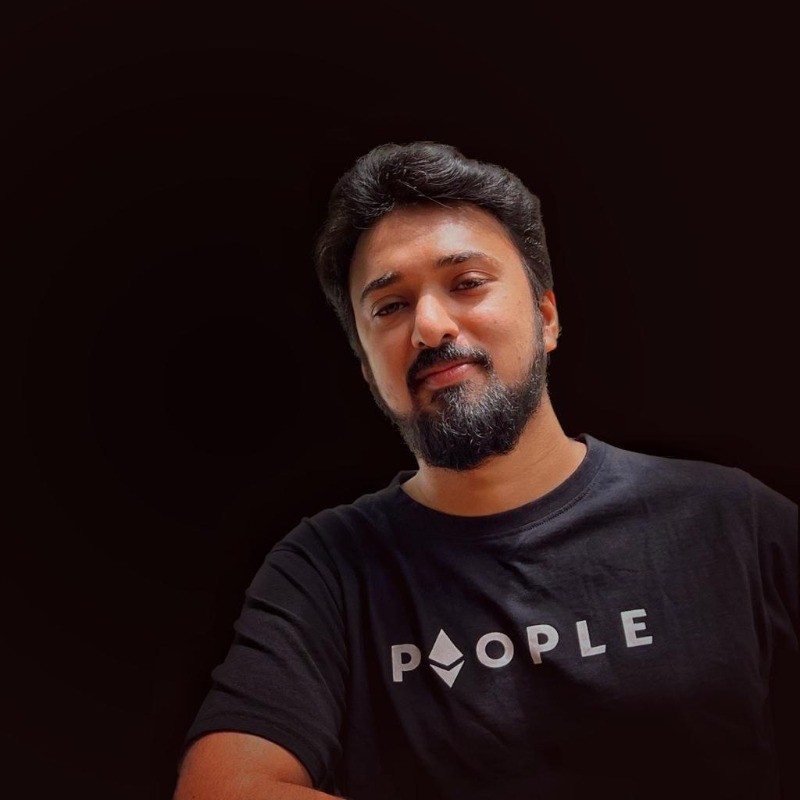
>> Welcome back, everyone, to the Crypto Trailblazers. I'm John Furrier, your host of theCUBE, here at our Palo Alto Studio two-day digital event. We're bringing all the top people in the crypto blockchain infrastructure and this wave, as things move to decentralized. Apps are being built, entrepreneurs and inventors and mainstream businesses are moving over, not just finance. A great time to be a builder. Got a great guest, Denver Dsouza here, co-founder of Devfolio. Denver, thank you for coming on theCUBE. Love your name. Not to be confused with Denver, the city. Mile-high Denver. Great to have you on. Thanks for coming on.
Denver Dsouza
>> No, for sure. It was funny was I was just in the city of Denver and that made it all the more hilarious.>> Yeah, you must get a lot of that going on. But one of the things you're working on that I think is awesome is you're very community-oriented. You do a lot of hackathons, scaling that business, which is first of all, great that you do that. Thank you for doing that and to your community, people. Hackathons create innovation and also relationships. People get together, so great stuff there. Give a quick overview of Devfolio for the folks watching. Put a plug in real quick.
Denver Dsouza
>> Yeah, for Devfolio, we started just running hackathons since a while, since 2015. And then, now we have really burgeoned into this community of 700K developers on our platform. And then, we partner up with hackathon organizers all across the world to help them host hackathons because we really think that hackathons are the life force of innovation. And we've seen companies come out of there, turn into million dollars, even one billion-dollar company. And yeah, it is been amazing to witness all of that.>> And also too, they're fun and people meet each other and co-founders meet people... It's like serendipity, that's what entrepreneurship is and inventing. And also, just playing around and then that sparks creativity. Love hackathons. Love that equation. Talk about the crypto side of it. Obviously, blockchain, we're seeing Bitcoin price is up, that mainstream's at big time. Certainly, the government adopting a pro-crypto stance is massive. So, you're seeing everyone go, "Okay, it's real. Winter's over. Welcome to spring." You're starting to see the trees blossom a little bit, but it's moving in the right direction. What are some of the things you're seeing at the hackathons?
Denver Dsouza
>> Yeah, Ethereum, at least the whole of , particularly Ethereum has a very strong hackathon culture, even since the very beginning. We've been doing hackathons since a while now and it's probably now when we get to the limelight, it's probably now when all of these projects that are being built really get to the mainstream and people can actually use the products that have been built, we are finally at that stage. So, it's the moment for crypto to shine. And for us, that's really amazing to see that builders who have been building through the bear markets, through the bull markets, now they finally get their time to shine.>> Yeah, I got to say Ethereum attracts developers because it's not Bitcoin, not just layer one. There's layer two and the roll-ups, huge composability opportunity, lots of white spaces for innovation. The technical stuff are being worked on. People who are pedaling as fast as they can on the bicycle. As Steve Jobs says, bicycle's very powerful. But this is where the action is. Here, Ethereum Foundation's in the Bay Area, the whole team is here. Whole communities have come to the Bay Area. High concentration, Stanford, Cal, Berkeley, major epicenter, San Francisco, we're in Palo Alto. What have been some of the stories? Stories fuel the movements and Ethereum is a movement, period. We've seen that. What are some of the stories you're seeing come out of this week from the visits and the hackathons and the conversations happening this week? What are some of the cool good stories you can share?
Denver Dsouza
>> Just the energy of the whole space. Crypto is back in the Bay Area, right? Because throughout the past few years, I think when crypto had its hey times back in '21, when everyone was about the NFT craze, but then after a bit, it dipped for a while and then AI, understandably, took over because you could really see things more immediate. But now, I think there's a resurgence, once people have realized that crypto leads to a lot of efficiencies. It's just a much more efficient system. And then, we have companies like Coinbase leading the way and really trying to build a better system.>> And we have a lot of other exchanges. We Had Kraken on, the CEO, they're going to go public. You're starting to see in-migration back to the US. Another big thing. Again, Ethereum Foundation's in the US, it's a huge news item right there in and of itself. The thing about crypto is that in the entrepreneurial side of it, it's been very technical to start with. All the early adopters and early engineers, they were working on stuff. And role of NVIDIA has been a very big part of mining, we know that piece on the Bitcoin side. Gaming mining. AI. Now, AI is huge here in the Valley too. So, the Bay Area, high concentration of AI talent and infrastructure talent, semiconductors here, NVIDIA just replaced Intel. New stuff's going on. The role of systems and chips. So, more horsepower is coming. I just interviewed a bunch of entrepreneurs are doing grid computing, basically, using cycle times to bring in more energy and more scale. So, that's going to power a Cambrian explosion of development. What is the state there? Because you start to see... Again, the crypto phase that got kind of... I would say the unregulated side of crypto in that dark period, there was chaos everywhere, right? Arbitrage, money taking, fraud. Now, that's reined in a bit, enough. So, we're seeing a surge of builders. What's the thing? What are some of the things they're working on? What is the projects? What's the hackathon agenda look like? Is it build the next Facebook? Is it build the next social game? Is it efficiency?
Denver Dsouza
>> So, we are starting to see some light emerge through. So, the chaos is still there. It depends on who you ask about the chaos. So, we right now have a whole frenzy of meme coins that's coming in, ebbing and flowing along, but that's just the fundamental thing, people are going to use->> They're going to take advantage of the system.
Denver Dsouza
>> Yeah, they're going to use it in the most obvious way. So, speculation is the most obvious use case, which people are just taking it to the max. But through that, now we are seeing things which we earlier thought are not feasible come out. So, I was talking to a couple of founders yesterday and one of the projects that came across was a project called Sweron. What they're trying to do is trying to, all the latent compute that is there in everybody's home computers, they're trying to use that. If that can be a decentralized network, which people can plug into and that can be cheaper than the alternatives that we have. So, at the same time, you get the power of being able to use any home computer around the world. Your computer is just useless->> Harness the cycle times of the computer. Storage, compute maybe.
Denver Dsouza
>> Exactly. So, some people are working on compute, some people are working on storage, like Filecoin. So, we are seeing a renaissance of all of these sort of technologies really come in and that's probably the light. And now, it's probably feasible for that. The other thing that's really coming in is the whole agentic Ethereum space. So, we have all of these AI agents that are trying to talk to each other. Now, each one of them has a wallet in itself and they can take really autonomous decisions. So, people are->> Great for tokens.
Denver Dsouza
>> Exactly. Yeah.>> Talk about the agent piece, I think that's super important because it's definitely hyped up, but there is low-hanging fruit for agents. How do you see that coming across in some of the hackathons in your view?
Denver Dsouza
>> Yeah, people are building really fun stuff. I think the last hackathon, I was just at the ETHDenver hackathon and one of the projects there was they could now just create a wallet address for you just on your face and on the basis of every time the camera catches your face, it knows which wallet you're supposed to really interact with.>> Got to love that computer vision.
Denver Dsouza
>> Yeah, exactly.>> Get on TV at a sports event, cha-ching. Advertising a little reach. I'm not making that up, but I'm just riffing on this. This is valuable.
Denver Dsouza
>> So, there's a saying that the early iterations of everything start looking out like toys when they start off, but this is really powerful. Imagine everyone with a wallet attached and that just replaces that friction between a traditional bank, the amount of paperwork you have need to file in to just get a bank account. You suddenly have an address which you're getting in less than 10 seconds, and then you can do whatever you want with that. So, that's kind of the difference between snail mail and email. So, it's a whole new paradigm and a whole new->> It's a step function, for sure. I want to get your thoughts, Denver, if you don't mind, on the layer one, layer two roll-up piece because I think a lot of people get confused by this. And I've seen... It's no message board. It's basically Twitter, it's X, other Reddits. "Oh, yeah. Bitcoin. Ethereum is different. They're apples and oranges. They're not really the same. Layer one is still a chain." But the builder, developer side of it with composability looks and feels a lot like AWS in a way. So, talk about the distinction between the layer one, layer two and the roll-ups that are going on in the Ethereum community and what people say, "Oh, Bitcoin is true on-chain." There's pros and cons on both sides and there's benefits to each one. Talk about Ethereum's approach because I think that's misunderstood right now in the market. The value is different. Talk about that.
Denver Dsouza
>> Exactly. I think so Bitcoin was the first mover, is the one true North Star that, I think the whole industry looks up to, but let's face it, there's not a lot you can do with it, right? That's why the other alt L1s compared to Bitcoin came around, namely Ethereum. Ethereum was one of the first major ones and now we have many more. So, I'll not dive too much into->> Did you say alt L1s, you mean Ethereum, Solana and others, instead of doing blockchain layer one?
Denver Dsouza
>> Yeah. So, I think a lot of people like to make it very tribal, but in my view, I think everybody's doing a great job. It's just different philosophies. And the Ethereum philosophy is really based on Ethereum being the settlement layer for a lot of L2s, for a lot of layer twos. And layer twos are where people can really go and do the experimentations and they can be purpose-built for what kind of things we want to solve. So, there are a lot of chains there. There's Base by Coinbase, there's Polygon, there's Arbitrum, there's Optimism, and I think off the top of my head, at least I could get to about a 50 odd chains if I really try. But right now, there are like hundreds of chains. But all of them are differentiated in a way with a feature set. They're starting to be a little more opinionated, that's where we are getting to. As the layer-two ecosystem is maturing, everybody's kind of finding their place in the whole ecosystem set. And then, the app builders will simply choose what feature set they need and do that accordingly.>> And they get all the benefits to the alt L1s, whatever they're out there, depending on what they want to do. Okay. So, talk about the excitement right now. Obviously, the growth on the builder's side's ramping up, usage is high. You're seeing a lot of that going on. How does that translate from a momentum standpoint to reality in your mind? So, we've got momentum, more growth. That might not translate into the price right now, but like AWS got more apps on it, it became bigger.
Denver Dsouza
>> Exactly. So, what we are all right now trying to do, I always use the analogy of the App Store or the Play Store, that's what all of these chains are right now. And they need people to come and build apps on it. And the best way to attract early-stage developers is hackathons. And there are many other ways, but that's where people can really go from hackathons to building companies on top of it. But it wouldn't make a lot of sense, even in App Store or the Play Store, if Google or Apple went out and built all the apps. You want people to come and build businesses on top of this. So, I think there's a lot of experimentation that's happening now and that's where we are getting all sorts of new use cases.>> Talk about the aspect of developers right now and the hackathon relationship. And how many hackathons do you guys do? What's the pattern? If you can point to a pattern in the ecosystem in this experimentation, is there use cases that are emerging fast that people are jumping on? One of them you mentioned earlier was the compute, leveraging the utility of machines. That's an infrastructure advantage. Is there an app pattern that's emerging with the role of data and the role of the blockchain playing together? Is there a fashion, if you will, in terms of what people like right now? Or what's the shiny new toy, if you will, on the app side? What are people gravitating towards?
Denver Dsouza
>> So, right now, people are really gravitating towards a lot of social... Social trading is really big. So, there's this new alternative to Twitter, in a sense. It's not really an alternative Twitter, it's an alternative to a lot of different media apps. It's called Farcaster and that's a whole new paradigm. So, that's a sufficiently-decentralized way of building a Twitter-like interface. And then, there, because now almost every Farcaster account is connected with a wallet and an identity, you actually know what your friends are trading. So, people are actually trading and buying stuff, what their friends are, and that's really fun for them to do. And that's what we are seeing how people are getting onboarded onto crypto. And then, once they are on crypto, there's a whole new paradigm that's emerging. Even there are apps like Blackbird, which you can use in real life. And there are many other such apps that are emerging, which are->> Yeah, I mean it's interesting, tokens offer unique capability. You mentioned agents having a wallet, whether it's computer vision, recognizing your face. But other utility... It's utility, utility-based economics. In your mind, what are you excited most about when you think about, "Okay, I got tokens. There is a paradigm shift. There's economics involved." What's getting you most excited?
Denver Dsouza
>> Yeah, my thoughts differ a bit from just speculation-based use cases. I think they're great for onboarding the masses because who doesn't like to get rich, right? That's super obvious. And so, I'm not surprised that that's what's the first use case->> Abitrage happens in all markets.
Denver Dsouza
>> Yep, exactly. But what we are seeing on the other end is that crypto really being used in the real world. So, there was this news story that came out two days back. So, land records are finally being actually put on the blockchain. And this has been implemented in a city in India. In the city of Dantewada in India, they've actually put up land records on the blockchain and that leads to a lot of efficiencies. So, I think there is a lot to be said about crypto. We are finally getting to the place where people understand that it's something interesting, but we are finally going to see some concrete use cases and real world->> I mean in every wave I've ever been involved in my career, there's always an underbelly form. You get some early adopters and then arbitrage comes in. Whoa, whoa, whoa. A little governance kicks in. And then, real-world opportunities, that are financial too, by the way, and social benefits. And you go, "Okay." And there's a little bit of a clearing out, if you will, going on. And that's happening now. You'd agree?
Denver Dsouza
>> Yep.>> All right, so put a plug in for what you guys are doing. Really appreciate you coming in. How many hackathons you do? How are you scaling them? How do people get involved? Talk about what you're working on and share with the audience some of the things you've got going on.
Denver Dsouza
>> Yeah, so we do about 200 hackathons on our platform every year. That means all of these hackathon organizers are really using our platform to be able to host your own hackathons. We typically get involved in a few major hackathons over the past year. I think last year we really worked together with Base, which is an L2 by Coinbase, and really did their major hackathons. Have many more planned across the year. We just got done with ETHDenver. So, the best way to really keep up with everything that we have going on is our Twitter, that's where we maximize all our presence. And yeah, looking forward to all builders coming on and innovating.>> Denver, thank you for coming on theCUBE. We appreciate you coming in for our Crypto Trailblazers. You're blazing the trail. Again, hackathons create innovation, they create sparks of creativity. People can have fun, meet new friends, unite with existing friends, and again, build new things.
Denver Dsouza
>> Exactly.>> That's how it gets done. Appreciate you coming on theCUBE.
Denver Dsouza
>> Thank you.>> I'm John Furrier here inside theCUBE. We are here for the Crypto Trailblazers CUBE Plus the NYSE Wired, an open community of people gravitating around content and sharing that, of course. We love the ideas of getting sparked. And if builders are coming to Ethereum, they're in town. Two great cities and colleges at Stanford and Cal, and the entire Bay Area is uniting around Ethereum with the momentum continuing, the movement continues here on theCUBE. Thanks for watching.
>> Welcome back, everyone, to the Crypto Trailblazers. I'm John Furrier, your host of theCUBE, here at our Palo Alto Studio two-day digital event. We're bringing all the top people in the crypto blockchain infrastructure and this wave, as things move to decentralized. Apps are being built, entrepreneurs and inventors and mainstream businesses are moving over, not just finance. A great time to be a builder. Got a great guest, Denver Dsouza here, co-founder of Devfolio. Denver, thank you for coming on theCUBE. Love your name. Not to be confused with Denver, the city. Mile-high Denver. Great to have you on. Thanks for coming on.
Denver Dsouza
>> No, for sure. It was funny was I was just in the city of Denver and that made it all the more hilarious.>> Yeah, you must get a lot of that going on. But one of the things you're working on that I think is awesome is you're very community-oriented. You do a lot of hackathons, scaling that business, which is first of all, great that you do that. Thank you for doing that and to your community, people. Hackathons create innovation and also relationships. People get together, so great stuff there. Give a quick overview of Devfolio for the folks watching. Put a plug in real quick.
Denver Dsouza
>> Yeah, for Devfolio, we started just running hackathons since a while, since 2015. And then, now we have really burgeoned into this community of 700K developers on our platform. And then, we partner up with hackathon organizers all across the world to help them host hackathons because we really think that hackathons are the life force of innovation. And we've seen companies come out of there, turn into million dollars, even one billion-dollar company. And yeah, it is been amazing to witness all of that.>> And also too, they're fun and people meet each other and co-founders meet people... It's like serendipity, that's what entrepreneurship is and inventing. And also, just playing around and then that sparks creativity. Love hackathons. Love that equation. Talk about the crypto side of it. Obviously, blockchain, we're seeing Bitcoin price is up, that mainstream's at big time. Certainly, the government adopting a pro-crypto stance is massive. So, you're seeing everyone go, "Okay, it's real. Winter's over. Welcome to spring." You're starting to see the trees blossom a little bit, but it's moving in the right direction. What are some of the things you're seeing at the hackathons?
Denver Dsouza
>> Yeah, Ethereum, at least the whole of , particularly Ethereum has a very strong hackathon culture, even since the very beginning. We've been doing hackathons since a while now and it's probably now when we get to the limelight, it's probably now when all of these projects that are being built really get to the mainstream and people can actually use the products that have been built, we are finally at that stage. So, it's the moment for crypto to shine. And for us, that's really amazing to see that builders who have been building through the bear markets, through the bull markets, now they finally get their time to shine.>> Yeah, I got to say Ethereum attracts developers because it's not Bitcoin, not just layer one. There's layer two and the roll-ups, huge composability opportunity, lots of white spaces for innovation. The technical stuff are being worked on. People who are pedaling as fast as they can on the bicycle. As Steve Jobs says, bicycle's very powerful. But this is where the action is. Here, Ethereum Foundation's in the Bay Area, the whole team is here. Whole communities have come to the Bay Area. High concentration, Stanford, Cal, Berkeley, major epicenter, San Francisco, we're in Palo Alto. What have been some of the stories? Stories fuel the movements and Ethereum is a movement, period. We've seen that. What are some of the stories you're seeing come out of this week from the visits and the hackathons and the conversations happening this week? What are some of the cool good stories you can share?
Denver Dsouza
>> Just the energy of the whole space. Crypto is back in the Bay Area, right? Because throughout the past few years, I think when crypto had its hey times back in '21, when everyone was about the NFT craze, but then after a bit, it dipped for a while and then AI, understandably, took over because you could really see things more immediate. But now, I think there's a resurgence, once people have realized that crypto leads to a lot of efficiencies. It's just a much more efficient system. And then, we have companies like Coinbase leading the way and really trying to build a better system.>> And we have a lot of other exchanges. We Had Kraken on, the CEO, they're going to go public. You're starting to see in-migration back to the US. Another big thing. Again, Ethereum Foundation's in the US, it's a huge news item right there in and of itself. The thing about crypto is that in the entrepreneurial side of it, it's been very technical to start with. All the early adopters and early engineers, they were working on stuff. And role of NVIDIA has been a very big part of mining, we know that piece on the Bitcoin side. Gaming mining. AI. Now, AI is huge here in the Valley too. So, the Bay Area, high concentration of AI talent and infrastructure talent, semiconductors here, NVIDIA just replaced Intel. New stuff's going on. The role of systems and chips. So, more horsepower is coming. I just interviewed a bunch of entrepreneurs are doing grid computing, basically, using cycle times to bring in more energy and more scale. So, that's going to power a Cambrian explosion of development. What is the state there? Because you start to see... Again, the crypto phase that got kind of... I would say the unregulated side of crypto in that dark period, there was chaos everywhere, right? Arbitrage, money taking, fraud. Now, that's reined in a bit, enough. So, we're seeing a surge of builders. What's the thing? What are some of the things they're working on? What is the projects? What's the hackathon agenda look like? Is it build the next Facebook? Is it build the next social game? Is it efficiency?
Denver Dsouza
>> So, we are starting to see some light emerge through. So, the chaos is still there. It depends on who you ask about the chaos. So, we right now have a whole frenzy of meme coins that's coming in, ebbing and flowing along, but that's just the fundamental thing, people are going to use->> They're going to take advantage of the system.
Denver Dsouza
>> Yeah, they're going to use it in the most obvious way. So, speculation is the most obvious use case, which people are just taking it to the max. But through that, now we are seeing things which we earlier thought are not feasible come out. So, I was talking to a couple of founders yesterday and one of the projects that came across was a project called Sweron. What they're trying to do is trying to, all the latent compute that is there in everybody's home computers, they're trying to use that. If that can be a decentralized network, which people can plug into and that can be cheaper than the alternatives that we have. So, at the same time, you get the power of being able to use any home computer around the world. Your computer is just useless->> Harness the cycle times of the computer. Storage, compute maybe.
Denver Dsouza
>> Exactly. So, some people are working on compute, some people are working on storage, like Filecoin. So, we are seeing a renaissance of all of these sort of technologies really come in and that's probably the light. And now, it's probably feasible for that. The other thing that's really coming in is the whole agentic Ethereum space. So, we have all of these AI agents that are trying to talk to each other. Now, each one of them has a wallet in itself and they can take really autonomous decisions. So, people are->> Great for tokens.
Denver Dsouza
>> Exactly. Yeah.>> Talk about the agent piece, I think that's super important because it's definitely hyped up, but there is low-hanging fruit for agents. How do you see that coming across in some of the hackathons in your view?
Denver Dsouza
>> Yeah, people are building really fun stuff. I think the last hackathon, I was just at the ETHDenver hackathon and one of the projects there was they could now just create a wallet address for you just on your face and on the basis of every time the camera catches your face, it knows which wallet you're supposed to really interact with.>> Got to love that computer vision.
Denver Dsouza
>> Yeah, exactly.>> Get on TV at a sports event, cha-ching. Advertising a little reach. I'm not making that up, but I'm just riffing on this. This is valuable.
Denver Dsouza
>> So, there's a saying that the early iterations of everything start looking out like toys when they start off, but this is really powerful. Imagine everyone with a wallet attached and that just replaces that friction between a traditional bank, the amount of paperwork you have need to file in to just get a bank account. You suddenly have an address which you're getting in less than 10 seconds, and then you can do whatever you want with that. So, that's kind of the difference between snail mail and email. So, it's a whole new paradigm and a whole new->> It's a step function, for sure. I want to get your thoughts, Denver, if you don't mind, on the layer one, layer two roll-up piece because I think a lot of people get confused by this. And I've seen... It's no message board. It's basically Twitter, it's X, other Reddits. "Oh, yeah. Bitcoin. Ethereum is different. They're apples and oranges. They're not really the same. Layer one is still a chain." But the builder, developer side of it with composability looks and feels a lot like AWS in a way. So, talk about the distinction between the layer one, layer two and the roll-ups that are going on in the Ethereum community and what people say, "Oh, Bitcoin is true on-chain." There's pros and cons on both sides and there's benefits to each one. Talk about Ethereum's approach because I think that's misunderstood right now in the market. The value is different. Talk about that.
Denver Dsouza
>> Exactly. I think so Bitcoin was the first mover, is the one true North Star that, I think the whole industry looks up to, but let's face it, there's not a lot you can do with it, right? That's why the other alt L1s compared to Bitcoin came around, namely Ethereum. Ethereum was one of the first major ones and now we have many more. So, I'll not dive too much into->> Did you say alt L1s, you mean Ethereum, Solana and others, instead of doing blockchain layer one?
Denver Dsouza
>> Yeah. So, I think a lot of people like to make it very tribal, but in my view, I think everybody's doing a great job. It's just different philosophies. And the Ethereum philosophy is really based on Ethereum being the settlement layer for a lot of L2s, for a lot of layer twos. And layer twos are where people can really go and do the experimentations and they can be purpose-built for what kind of things we want to solve. So, there are a lot of chains there. There's Base by Coinbase, there's Polygon, there's Arbitrum, there's Optimism, and I think off the top of my head, at least I could get to about a 50 odd chains if I really try. But right now, there are like hundreds of chains. But all of them are differentiated in a way with a feature set. They're starting to be a little more opinionated, that's where we are getting to. As the layer-two ecosystem is maturing, everybody's kind of finding their place in the whole ecosystem set. And then, the app builders will simply choose what feature set they need and do that accordingly.>> And they get all the benefits to the alt L1s, whatever they're out there, depending on what they want to do. Okay. So, talk about the excitement right now. Obviously, the growth on the builder's side's ramping up, usage is high. You're seeing a lot of that going on. How does that translate from a momentum standpoint to reality in your mind? So, we've got momentum, more growth. That might not translate into the price right now, but like AWS got more apps on it, it became bigger.
Denver Dsouza
>> Exactly. So, what we are all right now trying to do, I always use the analogy of the App Store or the Play Store, that's what all of these chains are right now. And they need people to come and build apps on it. And the best way to attract early-stage developers is hackathons. And there are many other ways, but that's where people can really go from hackathons to building companies on top of it. But it wouldn't make a lot of sense, even in App Store or the Play Store, if Google or Apple went out and built all the apps. You want people to come and build businesses on top of this. So, I think there's a lot of experimentation that's happening now and that's where we are getting all sorts of new use cases.>> Talk about the aspect of developers right now and the hackathon relationship. And how many hackathons do you guys do? What's the pattern? If you can point to a pattern in the ecosystem in this experimentation, is there use cases that are emerging fast that people are jumping on? One of them you mentioned earlier was the compute, leveraging the utility of machines. That's an infrastructure advantage. Is there an app pattern that's emerging with the role of data and the role of the blockchain playing together? Is there a fashion, if you will, in terms of what people like right now? Or what's the shiny new toy, if you will, on the app side? What are people gravitating towards?
Denver Dsouza
>> So, right now, people are really gravitating towards a lot of social... Social trading is really big. So, there's this new alternative to Twitter, in a sense. It's not really an alternative Twitter, it's an alternative to a lot of different media apps. It's called Farcaster and that's a whole new paradigm. So, that's a sufficiently-decentralized way of building a Twitter-like interface. And then, there, because now almost every Farcaster account is connected with a wallet and an identity, you actually know what your friends are trading. So, people are actually trading and buying stuff, what their friends are, and that's really fun for them to do. And that's what we are seeing how people are getting onboarded onto crypto. And then, once they are on crypto, there's a whole new paradigm that's emerging. Even there are apps like Blackbird, which you can use in real life. And there are many other such apps that are emerging, which are->> Yeah, I mean it's interesting, tokens offer unique capability. You mentioned agents having a wallet, whether it's computer vision, recognizing your face. But other utility... It's utility, utility-based economics. In your mind, what are you excited most about when you think about, "Okay, I got tokens. There is a paradigm shift. There's economics involved." What's getting you most excited?
Denver Dsouza
>> Yeah, my thoughts differ a bit from just speculation-based use cases. I think they're great for onboarding the masses because who doesn't like to get rich, right? That's super obvious. And so, I'm not surprised that that's what's the first use case->> Abitrage happens in all markets.
Denver Dsouza
>> Yep, exactly. But what we are seeing on the other end is that crypto really being used in the real world. So, there was this news story that came out two days back. So, land records are finally being actually put on the blockchain. And this has been implemented in a city in India. In the city of Dantewada in India, they've actually put up land records on the blockchain and that leads to a lot of efficiencies. So, I think there is a lot to be said about crypto. We are finally getting to the place where people understand that it's something interesting, but we are finally going to see some concrete use cases and real world->> I mean in every wave I've ever been involved in my career, there's always an underbelly form. You get some early adopters and then arbitrage comes in. Whoa, whoa, whoa. A little governance kicks in. And then, real-world opportunities, that are financial too, by the way, and social benefits. And you go, "Okay." And there's a little bit of a clearing out, if you will, going on. And that's happening now. You'd agree?
Denver Dsouza
>> Yep.>> All right, so put a plug in for what you guys are doing. Really appreciate you coming in. How many hackathons you do? How are you scaling them? How do people get involved? Talk about what you're working on and share with the audience some of the things you've got going on.
Denver Dsouza
>> Yeah, so we do about 200 hackathons on our platform every year. That means all of these hackathon organizers are really using our platform to be able to host your own hackathons. We typically get involved in a few major hackathons over the past year. I think last year we really worked together with Base, which is an L2 by Coinbase, and really did their major hackathons. Have many more planned across the year. We just got done with ETHDenver. So, the best way to really keep up with everything that we have going on is our Twitter, that's where we maximize all our presence. And yeah, looking forward to all builders coming on and innovating.>> Denver, thank you for coming on theCUBE. We appreciate you coming in for our Crypto Trailblazers. You're blazing the trail. Again, hackathons create innovation, they create sparks of creativity. People can have fun, meet new friends, unite with existing friends, and again, build new things.
Denver Dsouza
>> Exactly.>> That's how it gets done. Appreciate you coming on theCUBE.
Denver Dsouza
>> Thank you.>> I'm John Furrier here inside theCUBE. We are here for the Crypto Trailblazers CUBE Plus the NYSE Wired, an open community of people gravitating around content and sharing that, of course. We love the ideas of getting sparked. And if builders are coming to Ethereum, they're in town. Two great cities and colleges at Stanford and Cal, and the entire Bay Area is uniting around Ethereum with the momentum continuing, the movement continues here on theCUBE. Thanks for watching.